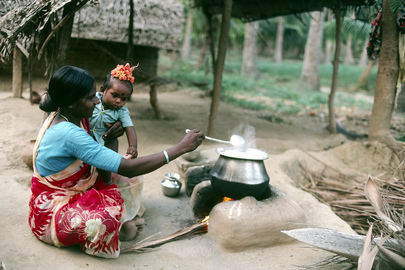
Health officials are conducting a new randomized trial approach to get parents to take their children to clinics for immunizations in developing nations.
Using a reward system based on the “randomist” economics principle, parents are given gifts for the primary and final round of immunizations their children successfully complete, raising the number of children protected against life-threatening and preventable illnesses.
Immunizations are currently one of the most cost-effective and reliable methods available to prevent childhood death and illness.
Yet, despite the fact that standard immunizations are free at public clinics throughout India, an estimated two to three million people die each year due to diseases that could have been prevented by vaccination. Vaccinating children at a young age can help significantly reduce the number of preventable deaths in India.
Currently, 70 local clinics in the Indian state of Haryana are running trials to see if gift giving will improve immunization rates. In these clinics, parents are given one kilogram of sugar for bringing their children in to start the first of a standard series of vaccinations.
Parents are given further incentives to make sure that their child completes the entire series by being promised a free liter of cooking oil if they comply.
The 70 clinic test group is a part of a larger scale experiment using randomized controlled trials, where some clinics are randomly chosen to give gifts and others are not, to see if communities with chronically low immunization rates can be improved with little incentives.
The results for the larger trial are not expected to be available until next year, but smaller trials conducted in India have already produced amazingly positive results. In 2010, a pilot program set up monthly medical camps in locations with poor immunization rates.
The establishment of these camps tripled completion rates. Taking it a step further, camps started to offer families a kilogram of lentils and a set of plates for their compliance, increasing completion rates sixfold.
Economist Esther Duflo, from the Massachusetts Institute of Technology (MIT) in Cambridge, who was involved in the 2010 trial and is currently working with the Haryana trial, says that it’s not a sense of greed or lack of care for their children that creates low immunization rates.
Experts involved in the 2010 and other regional studies found that families were generally interested in vaccinating their children but, due to external factors, such as distance, cost and time commitment, could not do so.
A full course of immunizations typically requires a minimum of five visits, so many families cannot justify the effort without the incentive provided by the randomized trials.
Although randomized trials and using economics to combat poverty-related issues is a fairly new practice, the popularity of randomized trials is gaining momentum throughout the international development community due to their incredibly successful results.
According to one of the leading randomist economists, Dean Karlan, at Yale University in New Haven, CT, “We’ve changed the conversation.”
Duflo is hopeful that this shift in conversation will lead to radical strides in poverty reduction.
Through her efforts in co-creating the Abdul Latif Jameel Poverty Action Lab (J-PAL) in Cambridge with two fellow MIT economists, more than 600 evaluations in 62 countries have been conducted and 6,600 people have been trained to administer and measure the results of randomized trials.
– Claire Colby
Sources: Nature, Poverty Reduction Lab
Photo: United Nations

Electricity Sparks Decline of Poverty Rates in India
Electricity has played a big role in the recent decrease of poverty rates in India. The country has received a lot of praise recently due to its strides in decreasing poverty.
The country has garnered attention in a lot of right ways from the rest of the world through serving as an example of progress. According to the World Bank, the success is largely due to electricity.
“India has reduced its poverty rate to 12.4% from the 2011-12 estimate of 21%, according to new data released by World Bank, which identified rural electrification as an important driving factor for everything from greater rural spending to schooling for girls.”
It is no secret that access to power is one of the key solutions to poverty. Rural electrification, the process of bringing electrical power to rural and remote areas, is one of the ways to increase that access. India has utilized rural electrification as the main solution to its power problem, and the results have been reportedly positive.
“By late 2012, the national electricity grid had reached 92 percent of India’s rural villages, about 880 million people.”
In areas that the grid was not able to reach, renewable energy has been promoted. This reflects well on India’s environmental and human consciousness, since those who rely on wood and biomass for heat end up producing air pollution, which is not only harmful to the planet, but “attributable for 4.3 million deaths each year,” according to World Bank.
This is why the UN created the Sustainable Energy for All initiative, which aims to achieve the following three objectives by 2030:
85 countries have already opted into the initiative, including India, through its CLEAN Energy Access Network. CLEAN’s goal is to grow the clean energy sector in India and improve energy access for the rural and urban poor over the next three years.
Prime Minister Modi of India has already showed his support for renewable energy, as he stated solar energy as the ultimate solution to India’s energy problem in August.
This is all a good indication that India is capitalizing on its recent success in order to increase its energy access and efficiency.
– Ashley Tressel
Sources: Indian Infoline, World Bank 1, Se4all, World Bank 2, India Times
Photo: Bloomberg
Kids are the Future: Increasing Youth Employment Rates
The youth unemployment rate in developing countries does not reflect the same trends as in developed economies. Increasing education and improving job quality are proven solutions to this trend.
Globally, youth employment rates have increased since 2012. However, the progress does not seem to be reflected in developing countries.
“The jobless rate…increased in most of Asia and the Pacific, the Middle East and North Africa,” as compared to the EU, Latin America and sub-Saharan Africa.
According to the International Labour Organization, global youth unemployment has plateaued from 2009 to present, hovering around 13 percent. Unsurprisingly, the countries with the highest rates include North Africa (at 30.5 percent, 2014 expected) and the Middle East (at 28.2 percent, 2014 expected) and those rates are actually on the decline.
The most recent report done by the ILO, Global Employment Trends for Youth 2015, argues that the youth markets in developing countries suffer from instability and structural issues.
The report highlights a lack of participation in education, poor quality of jobs and gender gaps as key issues that need reform.
Most importantly, the report places an emphasis on education and training opportunities for youth.
“Ideally, these [findings] will shape future investments in youth employment as countries continue to prioritize youth in their national policy agendas,” says the ILO.
The ILO calls for macroeconomic policies and fiscal incentives that support employment, as well as demand-side interventions, among numerous other concrete solutions.
Yellowwood, an independent brand consultancy in South Africa, has started a project to confront local youth employment challenges. Called Harambee, the project prepares first-time employees for work through an intensive bridging program that leads to permanent jobs.
“Harambee provides a model for a long-term solution to youth unemployment, by showing the importance of business and government working together to address the problem.”
Using Harambee as an example, both developing governments and businesses should work together to find solutions to the youth unemployment crisis.
– Ashley Tressel
Sources: VOA News, ILO 1, ILO 2, McKinsey On Society
Photo: Flickr
UNICEF Sends Aid for Typhoon Victims in Philippines
“Typhoon Koppu’s slow moving path includes mountainous and hard-to-reach areas, and we are concerned about the wellbeing of all affect children,” UNICEF Philippines Representative Lotta Sylwander said.
Days before Typhoon Koppu hit, UNICEF activated its emergency preparedness measures via its Disaster Risk Reduction (DRR) plan. The DRR is a systematic approach that assesses and reduces risk before, during and after a disaster.
UNICEF collaborated with the Philippine government in the pre-emptive evacuation plan which minimized casualties and property damage.
Mike Bruce, a spokesperson for Plan International, said the typhoon hit many poor communities that would struggle to rebuild their livelihoods without assistance.
“UNICEF’s first priority is to ensure children are safe and protected. Following a typhoon, children face risks from contaminated water sources, lack of food, epidemics such as cholera, hypothermia, diarrhea and pneumonia,” said Sylwander.
Save the Children estimates that 4.5 million children could be affected. In addition to restoring a safe water supply for families in the evacuation centers, UNICEF will include nutritional aid for breastfeeding mothers.
Typhoon Koppu caused floods, landslides, power outages and damaged roads and bridges, consequently isolating several towns and villages. However, the Philippines disaster agency said they have evacuated more than 65,000 people from low-lying and landslide-prone areas.
UNICEF has provided about 12,000 families with water purification tablets, hygiene kits, medicines, schools supplies, food, tents and generators.
“Secondly, we must ensure that the rhythm of children’s lives are restored and that they get back to school as soon as possible,” continued Sylwander.
DRR is also working in collaboration with Save the Children, Plan, World Vision and the Institute for Development Studies to ensure that policies recognize child safety.
Save the Children’s Country Director in the Philippines, Ned Olney, said, “From our own experience responding to other storms in the Philippines we know that children are always the most vulnerable in a disaster, in the coming days we will determine what support they will need.”
Many poor communities were destroyed many typhoon victims are attempting to return to their villages to salvage as much as possible.
UNICEF will conduct an assessment of the destruction of banana, coconut, rice and corn plantations in the most affected areas to estimate the extent of the needs of the typhoon victims. The assessment will also determine the damage done to education facilities and what will be needed to restore them as soon as possible.
– Marie Helene Ngom
Sources: Huffington Post, UNICEF 1, UNICEF 2
Photo: Flickr
Experts’ New Plan for Eradicating Tuberculosis
In a new study published in The Lancet, experts introduced an all-encompassing approach to achieving the Zero TB Declaration, which urges the rapid eradication of tuberculosis (TB).
The study was prompted by Salmaan Keshavjee, Director of Harvard Centre for Global Health Delivery, and co-edited by Soumya Swaminathan, Director-General of the Indian Council of Medical Research (ICMR).
Currently, the strategy for treating TB is to target those in serious condition; the study done by Keshavjee and Swaminathan states that early detection is crucial to eradicating tuberculosis.
They suggest finding individuals infected with TB before they can transmit and thoroughly treat them for all strains of TB. It is also important to treat individuals in close contact and at high risk.
“The drivers of TB include poverty, poor housing, under- nutrition and HIV infection, underscoring the need to address this problem holistically,” Swaminathan said.
The study also draws attention to the importance of focusing on middle and low-income settings, as poverty and malnutrition make people vulnerable to airborne diseases. In addition to stopping transmission, the study suggests addressing “the social mechanisms that fuel tuberculosis.”
The World Health Organization’s End TB Strategy also supports the prevention aspect of the Swaminathan and Keshavjee study. The End TB Strategy also aims to treat those in close contact and high-risk individuals through collaborative tuberculosis/HIV activities.
Swaminathan stated: “We have to hit this bug hard and hit it quickly. Cutting transmission in the community is key to the control of any infectious disease. Many cities in the world are seeing worrying increases in transmission of drug-resistant tuberculosis. All of us are vulnerable and, therefore, we must all act.”
– Marie Helene Ngom
Sources: Zeenews, TheLancet, WHO
Photo: United Nations
Lighting Global Initiative and Energy Solutions for Poverty
The conference was hosted by the Global Off-Grid Lighting Association (GOGLA), a non-profit formed by the World Bank that works in the private sector to encourage investments in developing countries.
Anita Marangoly George, World Bank Group senior director, stated: “Lack of energy limits job creation and access to health and education. Supporting universal access to reliable modern energy is a priority. Ending poverty will not be possible without adequate energy.”
In partnership with the International Finance Corporation (IFC), the World Bank and GOGLA have launched the Lighting Global initiative which aims to expand the international off-grid lighting market to reach people not connected by grid electricity.
The Lighting Global initiative has three regional programs – Lighting Africa, Lighting Asia and Lighting Pacific.
In Kenya, the off-grid lighting market has undergone dramatic changes; there has been a shift in lighting technologies and power sources between 2009 and 2014. Incandescent lighting, dry-cell batteries and cheap plastic torches have been replaced by LED lighting, solar power and quality-verified lighting systems with warranties.
In India, the consumer awareness campaign has reached over 250 villages and almost 15,000 people in rural Rajasthan. In partnership with local solar product distributor Frontier Markets, IFC educates rural households on the benefits of clean lighting and on marketing and sales.
Frontier Markets also recruits rural women, “Solar Sahelis,” who aid in educating households on clean energy and marketing. This opportunity for employment has reached 250 women thus far and there are plans to grow the network to 20,000 in the next 4 years.
Anjali Garg, the program manager of the Lighting Asia/India program, said: “We are working on a series of interventions with manufacturers and distributors of solar lighting products to widen access to quality solar lights for rural consumers.”
In 2009, Lighting Global began providing small solar lanterns and solar lighting systems. To date, over 12 million quality verified products have been made available to over 25 million people. The program is advancing into larger home system kits that will support items like fans, radios and TVs.
– Marie Helene Ngom
Sources: The National, Lighting Global, Lighting Asia
Photo: Flickr
India Offers Rewards to Parents for Vaccinating Children
Health officials are conducting a new randomized trial approach to get parents to take their children to clinics for immunizations in developing nations.
Using a reward system based on the “randomist” economics principle, parents are given gifts for the primary and final round of immunizations their children successfully complete, raising the number of children protected against life-threatening and preventable illnesses.
Immunizations are currently one of the most cost-effective and reliable methods available to prevent childhood death and illness.
Yet, despite the fact that standard immunizations are free at public clinics throughout India, an estimated two to three million people die each year due to diseases that could have been prevented by vaccination. Vaccinating children at a young age can help significantly reduce the number of preventable deaths in India.
Currently, 70 local clinics in the Indian state of Haryana are running trials to see if gift giving will improve immunization rates. In these clinics, parents are given one kilogram of sugar for bringing their children in to start the first of a standard series of vaccinations.
Parents are given further incentives to make sure that their child completes the entire series by being promised a free liter of cooking oil if they comply.
The 70 clinic test group is a part of a larger scale experiment using randomized controlled trials, where some clinics are randomly chosen to give gifts and others are not, to see if communities with chronically low immunization rates can be improved with little incentives.
The results for the larger trial are not expected to be available until next year, but smaller trials conducted in India have already produced amazingly positive results. In 2010, a pilot program set up monthly medical camps in locations with poor immunization rates.
The establishment of these camps tripled completion rates. Taking it a step further, camps started to offer families a kilogram of lentils and a set of plates for their compliance, increasing completion rates sixfold.
Economist Esther Duflo, from the Massachusetts Institute of Technology (MIT) in Cambridge, who was involved in the 2010 trial and is currently working with the Haryana trial, says that it’s not a sense of greed or lack of care for their children that creates low immunization rates.
Experts involved in the 2010 and other regional studies found that families were generally interested in vaccinating their children but, due to external factors, such as distance, cost and time commitment, could not do so.
A full course of immunizations typically requires a minimum of five visits, so many families cannot justify the effort without the incentive provided by the randomized trials.
Although randomized trials and using economics to combat poverty-related issues is a fairly new practice, the popularity of randomized trials is gaining momentum throughout the international development community due to their incredibly successful results.
According to one of the leading randomist economists, Dean Karlan, at Yale University in New Haven, CT, “We’ve changed the conversation.”
Duflo is hopeful that this shift in conversation will lead to radical strides in poverty reduction.
Through her efforts in co-creating the Abdul Latif Jameel Poverty Action Lab (J-PAL) in Cambridge with two fellow MIT economists, more than 600 evaluations in 62 countries have been conducted and 6,600 people have been trained to administer and measure the results of randomized trials.
– Claire Colby
Sources: Nature, Poverty Reduction Lab
Photo: United Nations
Bernie Sanders Praises Pope Francis on Poverty Reduction
In February this year, Sanders addressed the Senate, stating that the pope “shows great courage in bringing up issues that we rarely hear discussed here in the Congress.”
In the address, Sanders praises Pope Francis on his leadership. On multiple occasions, he read quotes from the pope to the Senate, publicly acknowledging his admiration for the religious leader.
“Pope Francis is clearly one of the important religious and moral leaders not only in the world today but in modern history,” he said. “He forces us to address some of the major issues facing humanity: war, income and wealth inequality, poverty, unemployment, greed, the death penalty and other issues that too many prefer to ignore.”
Sanders read a quote from the pope: “‘Today everything comes under the laws of competition and the survival of the fittest, where the powerful feed upon the powerless. As a consequence masses of people find themselves excluded and marginalized without work, without possibilities, without any means of escape.'”
Sanders continued by commenting on the quote: “My interpretation of what he is saying is that money cannot be an end in itself. The function of an economic system is not just to let the marketplace reign, and end up in a situation where a small number of people have incredible wealth, while so many people have virtually nothing.”
Sanders especially notes the pope’s comments about exclusion and marginalization when it comes to government austerity. He strongly disagrees with right-wing Republicans on the federal budget committee about their continuous cuts on public benefits like Medicare and Social Security.
He says that right-wing Republican austerity measures are “the Robin Hood principle in reverse. This is taking from the poor and working people, and giving it to the millionaires and billionaires.” Sanders instead argues for tax hikes on the wealthiest Americans.
Sanders welcomed the pope when he arrived, calling him “a brilliant man.” He voiced optimism at the thought of members of Congress taking to heart the pope’s remarks about inequality and poverty reduction.
Sanders has noted that income inequality has reached a point where the wealthiest in America are becoming richer while the impoverished are becoming poorer. He insists that “the pope is right in saying all of us must address the grotesque income and wealth inequality we are seeing throughout the world.”
Sanders urged lawmakers to think about the pope’s speech when discussing balancing the 2016 federal budget. “Give us a budget which works for the most vulnerable people in this country, which works for tens of millions of working families, and does not simply work for large campaign donors.”
Senator Sanders is currently in the running for the Democratic Party presidential nomination.
“I know that people think that Bernie Sanders is a radical… read what the pope is writing about because he is not only talking about poverty,” Sanders said, “he is getting to the heart of hyper capitalism, and he is saying, ‘Why as a society are we worshiping money?'”
– Michael Hopek
Sources: Senate, C-SPAN, MSNBC
Photo: Flickr
Game On! SOCCKET: The Energy-Harnessing Soccer Ball
In the remote village community of Abuja, access to reliable, environmentally friendly and affordable electricity is difficult to come by.
The village’s primary source of electricity is produced from gas-operated generators that kick out hazardous emissions. But an innovative company, Uncharted Play, intends to change this with the SOCCKET.
The SOCCKET is an energy-harnessing soccer ball that generates electricity through harnessing the kinetic energy created when it is kicked and played with.
With the look, feel and durability of a traditional soccer ball, the SOCCKET can produce more than three hours of light with as little as 30 minutes of play.
As an off-the-grid, internally powered generator, the airless ball is designed to be able to be charged and used anywhere by any age group. Because of this feature, the ball is a great tool for school children whose educations are often hindered by a lack of reliable light sources.
James Ajah Eiche, the proprietor of Ajah Villa Community Academy in Abuja, is a huge fan of the SOCCKET. “The most striking thing in this environment that we need is light. When there is no light, how do you read?” Eiche said. “Light is life.”
In a community where soccer is a favorite pastime of school children and adults alike, the SOCCKET has proven to be a smart platform for sustainable and renewable energy.
“This is the most modern type of production of electricity,” said Eiche. “It is not dangerous. It is portable. It is not dirty.” Since being developed four years ago, the SOCCKET has provided clean power to more than 35,000 families in Nigeria alone.
However, Nigeria is not the only beneficiary of the product. Uncharted Play hopes to bring the SOCCKET to developing nations throughout the world, bringing sustainable power to the nearly 1.2 billion people who don’t have access to reliable or affordable energy sources globally.
“Just a little bit of power can make such a huge difference,” said Jessica Matthews, co-inventor of SOCCKET.
The company is so passionate about making the SOCCKET more readily available to children in developing nations that with every purchase of Uncharted Play’s energy-harnessing products, one is donated to a child in need.
“In a world where there are very few win-wins, this one is a win-win and it’s a good one.”
– Claire Colby
Sources: Play, USAToday
Photo: Uncharted Play
FACE Africa Fights Poverty in Liberia through Education
FACE Africa, a nonprofit created by Liberia native Saran Kaba Jones, works to end poverty by alleviating Liberia’s water crisis through educating future leaders.
The organization uses hands-on projects to implement water and sanitation facilities, as well as educate youth about proper health and hygiene rituals. Each year, 12,000 more people gain access to clean water, 25 communities are served and over 200,000 hours of productivity is saved.
Saran Kaba Jones left Liberia when she was eight years old to escape the civil war that killed thousands of people and left millions without a place to live. Jones returned to Liberia in 2008 with a plan to lift under-served communities out of poverty.
Originally, FACE stood for Fund a Child’s Education, but Jones and her colleagues soon realized that the lack of clean drinking water was the number one impediment to a child’s education.
Soon after, they switched gears and focused their efforts on increasing the amount of clean water and sanitation in Liberia and other countries in Sub-Saharan Africa.
FACE Africa uses local resources, materials and labor to come up with solutions for this global epidemic. Once these solutions have proven to be sustainable, FACE Africa transfers ownership of their solutions to locals in Liberia.
Some of their methods include building wells, creating systems to clean water and educating individuals on proper hygiene techniques.
FACE Africa differs from many nonprofits because they form lifelong partnerships with the communities they help. Their mission is to provide 100 percent water coverage to all of Sub-Saharan Africa.
This may require employees at FACE Africa to walk many miles to reach villages cut off from roads and to fetch sand and rocks to build sustainable wells, but the team still strives to incorporate better sanitation systems within remote villages.
Since 2009, FACE Africa has hosted the annual WASH (Water, Sanitation and Hygiene) Gala event. This year, the gala’s goal is to raise $300,000 in support of clean water in Africa.
The gala connects FACE Africa with people from around the world who pull together and combine their efforts to assist those facing challenges with water. FACE Africa continues to help Liberians gain access to clean water to this day.
Since its creation in 2010, FACE Africa has successfully launched multiple projects and has assisted many towns all across Liberia.
– Julia Hettiger
Sources: Face Africa, Black Enterprise, CNN
Photo: Pixabay
What Exactly Does Sustainable Mean?
The goals focus on reducing hunger and inequality as well as increasing good health, quality education and economic growth around the globe. All of this must be done sustainably. But what exactly does sustainable mean?
The word sustainable or sustainability is used more than 75 times in the SDGs and has really become a buzzword among ecologists, researchers and policy makers.
Douglas Beal, who is the managing director of the Boston Consulting group, points out that sustainability was first used in the business world and really just means “longevity—something that can continue.”
The programs and public policies developed and instilled to accomplish the standards set through the SDGs must be able to be maintained long term in order to make prolonged effective progress.
While the SDGs are a recent set of targets, sustainable development is not a new goal.
The concept first appeared during the World Commission on Environment and Development’s report Our Common Future in which they stated that sustainable development is that which “meets the needs of the present without compromising the ability of future generations to meet their own needs.”
So while we need to feed people through agriculture in order to end hunger and starvation, we must also ensure that we do not deplete natural resources in the process.
These conflicts occur in almost every aspect of our social, political, economic and environmental spheres, which is why development goals must balance meeting our current needs while still guaranteeing that we can continue to meet those needs in the future.
Some of the ways we can work to avoid depletion is through innovations that create renewable and clean energy. Natural resources are limited; they take far more time to be replenished than the amount provided by how fast we need them. Therefore, part of the sustainable aspect of our future will need to include renewable energy.
Sustainability is more than a noble goal or a catchy buzzword, it is a requirement for creating development that not only lasts but also improves our global policies and thereby our future.
– Brittney Dimond
Sources: World Bank, Global Giving, NPR
Photo: Flickr