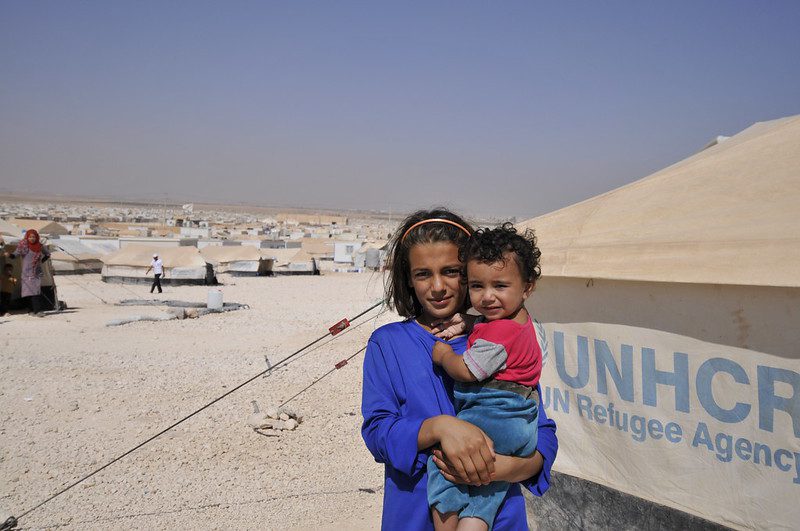
 Jordan’s Za’atari and Azraq refugee camps, which collectively host more than 650,000 Syrian refugees, have evolved beyond their initial purpose of providing emergency shelter. These camps have become hubs for female empowerment and grassroots activism, fostering a supportive environment for change. What began as basic shelters to protect those fleeing the devastating conflict in Syria has grown into vibrant spaces where women are actively redefining refugee resilience and showcasing strength.
Through the efforts of innovative community organizations and strategic partnerships with various nongovernmental organizations (NGOs), Syrian women in Jordan are addressing critical issues such as gender-based violence, gaps in education and economic exclusion. At the same time, they are challenging longstanding stereotypes about the capabilities and roles of refugees, demonstrating resilience, agency and the potential for positive transformation within refugee communities.
Building Women-Led Governance Structures
Leading this important movement within the camps is the Women’s Committee in Za’atari camp, a pioneering female-majority decision-making body that has been at the forefront of advocating for meaningful improvements across the entire camp community. Its initiatives include the installation of better lighting in key areas to enhance safety—significantly reducing risks of gender-based violence in the dark alleyways—and establishing comprehensive childcare centers that allow mothers to participate in work opportunities or training programmes, thereby promoting economic independence and empowerment.
These grassroots efforts are further bolstered and expanded through support from centres like the United Nations Women’s “Oasis” safe spaces, which actively operate in both Za’atari and Azraq camps. These centres serve 4,000 women monthly, offering a wide range of services such as cash-for-work opportunities, gender-based violence prevention workshops, leadership and skills training and psychosocial support. Additionally, the organization makes a concerted effort to involve men and boys in gender equality discussions, recognizing the importance of engaging the whole community in creating sustainable change and promoting gender equality at all levels.
Economic Empowerment Through Skills and Solidarity
Economic initiatives have proven especially transformative for refugee women navigating the challenges posed by Jordan’s strict and often difficult work permit system. One prominent example is the Made in Za’atari Center, a facility funded by the United Nations High Commissioner for Refugees (UNHCR) that focuses on empowering women by training them in various marketable skills, such as food processing, handicraft production and other vocational trades. This program also generously provides free childcare services, which are a vital support system that enables women to participate actively in the workforce or skill development activities without the concern of unpaid caregiving responsibilities.
Similarly, the United Nations Children’s Fund’s (UNICEF) neonatal kit programme actively employs Syrian women in Jordan, engaging them in the assembly of essential baby supplies, such as diapers, clothing and health items. This initiative not only provides a reliable source of income for the women involved but also plays a crucial role in improving maternal health outcomes within the refugee camps. Collectively, these programmes illustrate how humanitarian aid can extend beyond mere short-term relief efforts, evolving into comprehensive approaches that foster sustainable livelihood opportunities, empower women and contribute to the long-term resilience of refugee communities.
Educating the Next Generation
Education has increasingly become a vital and symbolic arena in the ongoing struggle for women’s rights and empowerment across the globe. In particular, Syrian refugee women have taken on a significant role in this arena, exemplifying resilience and leadership.
They constitute more than 60% of UNICEF’s 413 education volunteers in Za’atari, serving not only as teachers but also as mentors who provide crucial support to young girls, encouraging them to stay in school despite numerous challenges. Their dedicated efforts are further bolstered by recent initiatives such as the expansion of kindergarten facilities within both refugee camps, which now offer educational spaces for nearly 4,000 preschool-aged children.
Advocates highlight this development as a critical step, emphasizing that quality early childhood education is a fundamental right and a necessary safeguard against child marriage and other harmful practices. Additionally, organizations like the Jordanian Women’s Union (JWU) have played a pivotal role in strengthening these initiatives by creating links between Syrian activists and Jordanian feminist networks. This collaboration fosters cross-community solidarity and reinforces shared commitments to gender equality, social justice and the protection of girls and women in these vulnerable settings.
Lighting the Way Forward
The achievements of Syrian women in Jordan’s refugee camps offer insights for humanitarian response worldwide. They have demonstrated that refugee women are not just vulnerable populations in need of aid but also capable leaders who can drive meaningful and lasting change when provided with the right resources, opportunities and platforms.
The women have shown resilience and innovation in overcoming numerous challenges, such as legal exclusion, funding instability and social barriers. Their efforts have laid the groundwork for more sustainable, community-led approaches to crisis response, including establishing governance structures, economic cooperatives and educational initiatives that empower others in their communities.
The lights installed by Za’atari’s Women’s Committee, which illuminate the camp each night, reflect their broader contribution: even in the darkest and most difficult circumstances, Syrian women in Jordan are finding ways to light the path forward and inspire hope for a brighter future.
– Emilia Bartle
Emilia is based in Watford, UK and focuses on Good News and Politics for The Borgen Project.
Photo: Flickr

Syrian Women in Jordan Redefining Advocacy
Through the efforts of innovative community organizations and strategic partnerships with various nongovernmental organizations (NGOs), Syrian women in Jordan are addressing critical issues such as gender-based violence, gaps in education and economic exclusion. At the same time, they are challenging longstanding stereotypes about the capabilities and roles of refugees, demonstrating resilience, agency and the potential for positive transformation within refugee communities.
Building Women-Led Governance Structures
Leading this important movement within the camps is the Women’s Committee in Za’atari camp, a pioneering female-majority decision-making body that has been at the forefront of advocating for meaningful improvements across the entire camp community. Its initiatives include the installation of better lighting in key areas to enhance safety—significantly reducing risks of gender-based violence in the dark alleyways—and establishing comprehensive childcare centers that allow mothers to participate in work opportunities or training programmes, thereby promoting economic independence and empowerment.
These grassroots efforts are further bolstered and expanded through support from centres like the United Nations Women’s “Oasis” safe spaces, which actively operate in both Za’atari and Azraq camps. These centres serve 4,000 women monthly, offering a wide range of services such as cash-for-work opportunities, gender-based violence prevention workshops, leadership and skills training and psychosocial support. Additionally, the organization makes a concerted effort to involve men and boys in gender equality discussions, recognizing the importance of engaging the whole community in creating sustainable change and promoting gender equality at all levels.
Economic Empowerment Through Skills and Solidarity
Economic initiatives have proven especially transformative for refugee women navigating the challenges posed by Jordan’s strict and often difficult work permit system. One prominent example is the Made in Za’atari Center, a facility funded by the United Nations High Commissioner for Refugees (UNHCR) that focuses on empowering women by training them in various marketable skills, such as food processing, handicraft production and other vocational trades. This program also generously provides free childcare services, which are a vital support system that enables women to participate actively in the workforce or skill development activities without the concern of unpaid caregiving responsibilities.
Similarly, the United Nations Children’s Fund’s (UNICEF) neonatal kit programme actively employs Syrian women in Jordan, engaging them in the assembly of essential baby supplies, such as diapers, clothing and health items. This initiative not only provides a reliable source of income for the women involved but also plays a crucial role in improving maternal health outcomes within the refugee camps. Collectively, these programmes illustrate how humanitarian aid can extend beyond mere short-term relief efforts, evolving into comprehensive approaches that foster sustainable livelihood opportunities, empower women and contribute to the long-term resilience of refugee communities.
Educating the Next Generation
Education has increasingly become a vital and symbolic arena in the ongoing struggle for women’s rights and empowerment across the globe. In particular, Syrian refugee women have taken on a significant role in this arena, exemplifying resilience and leadership.
They constitute more than 60% of UNICEF’s 413 education volunteers in Za’atari, serving not only as teachers but also as mentors who provide crucial support to young girls, encouraging them to stay in school despite numerous challenges. Their dedicated efforts are further bolstered by recent initiatives such as the expansion of kindergarten facilities within both refugee camps, which now offer educational spaces for nearly 4,000 preschool-aged children.
Advocates highlight this development as a critical step, emphasizing that quality early childhood education is a fundamental right and a necessary safeguard against child marriage and other harmful practices. Additionally, organizations like the Jordanian Women’s Union (JWU) have played a pivotal role in strengthening these initiatives by creating links between Syrian activists and Jordanian feminist networks. This collaboration fosters cross-community solidarity and reinforces shared commitments to gender equality, social justice and the protection of girls and women in these vulnerable settings.
Lighting the Way Forward
The achievements of Syrian women in Jordan’s refugee camps offer insights for humanitarian response worldwide. They have demonstrated that refugee women are not just vulnerable populations in need of aid but also capable leaders who can drive meaningful and lasting change when provided with the right resources, opportunities and platforms.
The women have shown resilience and innovation in overcoming numerous challenges, such as legal exclusion, funding instability and social barriers. Their efforts have laid the groundwork for more sustainable, community-led approaches to crisis response, including establishing governance structures, economic cooperatives and educational initiatives that empower others in their communities.
The lights installed by Za’atari’s Women’s Committee, which illuminate the camp each night, reflect their broader contribution: even in the darkest and most difficult circumstances, Syrian women in Jordan are finding ways to light the path forward and inspire hope for a brighter future.
– Emilia Bartle
Photo: Flickr
Things To Know About the Income Gap in Italy
Income Gap in Italy
Italy, as a country, has experienced numerous economic hardships. Italy’s poverty rate exceeds the European Union (EU) average, with nearly one in 12 Italians living in absolute poverty. Southern Italy holds significantly less of the nation’s wealth than the North. More than two million people in the region live in absolute poverty, which is defined as having low incomes to meet basic needs such as food, shelter, education and health care.
Southern Italy holds significantly less gross domestic product (GDP) and wealth than the North. In Lombardy, a northern region, GDP per capita reaches 127% of the EU average. In contrast, Calabria, a southern region, sits at just 56%, a gap of nearly 75%. The South has historically lagged behind in industrial development. It has had limited access to both domestic and foreign markets compared to the North, deepening the economic divide.
Solutions to the Income Gap
To address the country’s income gap, the Italian government has introduced a program called Assegno di Inclusione (Inclusion Allowance). This financial support targets households with at least one member who is disabled, a minor or aged 60 or above. Eligible families can receive up to €6,000 annually (approximately $7,050), with an additional €3,360 per year (around $3,950) to help cover rent. The allowance is issued for 18 months and can be renewed every 12 months thereafter.
Another effort to reduce income inequality in Italy comes from international nonprofit organizations, such as the Italian Food Bank Network. These organizations work to combat poverty and food scarcity via charity and international coalitions dedicated to ending poverty and hunger. The Italian Food Bank collects surplus food from the supply chain and redistributes it through its network of 21 regional organizations. This system supports nearly 9,000 charitable groups across the country, helping deliver essential resources to those in need.
Conclusion
Italy’s regional income divide is more than an economic issue; it’s a social and structural issue. While programs like the Inclusion Allowance and initiatives from nonprofits like the Italian Food Bank offer relief, long-term solutions require systemic investment in Southern infrastructure, job creation and inclusive policy reform. Without bridging this gap, Italy risks deepening the economic and social rift that holds back its national progress.
– Caelan Caukin
Photo: Flickr
Russia’s Resilient Petrostate: Oil Economy and Poverty Reduction
Russia is a leader in oil and gas production. Natural resource rents account for 16.7% of Russia’s GDP as of 2024. Around 30-50% of the federal government’s revenue comes from Russia’s hydrocarbon sector. Any abrupt change in demand for energy can stimulate economic growth or trigger a recession. The government adopted various measures and policies to create and sustain Russia’s resilient petrostate.
Stabilization Fund
Minister of Finance Alexei Kudrin set out to limit vulnerability to and dependence on volatile energy prices. Kudrin put the Stabilization Fund into operation in 2004. The Fund accumulated surplus revenues from oil production and exports. The Fund helps the Central Bank accommodate external shocks to maintain a balanced budget and reduce inflationary pressures.
When raw material prices decreased in 2008, Russian GDP shrank by 8%. This prompted Kudrin to create a buffer to withstand larger fluctuations. The Stabilization Fund was split into the National Reserve and the National Wealth Fund in 2008. Despite continued dependence on oil and gas exports, Russia maintained macroeconomic stability.
Private-Public Partnership
President Putin improved state control over natural resources in the early 2000s. While two national champions, Rosneft and Gazprom, dominate, private companies still operate in a semi-competitive environment. Independent firms help generate output and investment in new technologies and infrastructure. Novatek is now a leader in the production of LNG. The Russian style “public-private partnership” improved the ability of the energy sector to absorb fluctuations in oil and gas prices.
Russia’s Pivot to the East
China surpassed America in energy consumption in 2009, which heightened hydrocarbon demand. In the 2010s, Putin launched Russia’s “Pivot to the East.” This shift in policy emphasis to Asia required new oil and gas routes. The Russian government developed production areas in Eastern Siberia and built two vast pipeline systems. The Eastern Siberia-Pacific Ocean (2012) and Power of Siberia (2019) represented a crucial diversification of Russian export markets.
When Russia invaded Ukraine in 2022, Western governments decided to cut imports of Russian energy. This put more pressure on Russia to redirect export flows toward Asia. Robust global prices for fossil fuel commodities softened the shock of Russia’s “Pivot to the East.” Moreover, Russia overcame unprecedented trade restrictions and avoided a forced oil output reduction.
Russia’s Resilient Petrostate
The crisis in Ukraine provoked massive Western economic and political sanctions. Oil and gas exports are instrumental in Russia’s relative economic security. A resilient petrostate, Russia recorded GDP growth of 3.6% in 2023 and managed to keep inflation in check at 7.4%. Overall macroeconomic stability allows the Russian government to fulfill the social contract with citizens.
– Alessandra Lewis
Photo: Flickr
Colton Dixon Uses Music To Fight Poverty and Inequality
Partnering With Mercy Ships To Bring Healing
In Dixon’s song “Build a Boat,” he partners with Mercy Ships to create the music video that shows the lives of two twins being changed and the boat Global Mercy being built. Dixon hopes to open more people’s minds to the idea that they are capable of doing anything.
Mercy Ships is a nonprofit organization that builds and operates hospital ships to deliver medical care to those without access. The charity addresses poverty by providing health care essentials and care services to some of the world’s most underserved communities. Operating in countries with limited health care infrastructure, Mercy Ships offers free surgical care and dental services, as well as medical training to local professionals in developing nations.
By delivering health care to impoverished communities and training local professionals, Mercy Ships helps alleviate suffering, improve health outcomes and enhance host countries’ capacity to provide medical care.
Championing Child Sponsorship With Compassion International
Dixon has also supported Compassion International through multiple tours and by spreading the word with his music. Compassion International is a Christian humanitarian organization dedicated to releasing children from poverty through child sponsorship and holistic care. During his “Build a Boat” tour, Dixon partnered with Compassion International and celebrated 1,000 sponsored children.
Compassion International combats poverty by partnering with local churches to deliver holistic child-centered support that spans nutrition education, health care, emotional care and spiritual guidance. Rooted in a Christ-centered mission, its model reaches more than 2.3 million children in 29 countries, helping them build resilience and fostering long-term community impact. By equipping children with resources and mentorship, the charity not only improves individual lives but also creates ripple effects of change as graduates return to uplift their communities.
Dixon has also made an impact in the fight against poverty by partnering with Compassion International through various tours, including “A Night with Colton Dixon,” set for this spring. His 2023 Love and Light tour also gave children in need the opportunity to be sponsored. These events not only featured inspiring music and personal stories but also encouraged the audience to give. This resulted in hundreds of lives being transformed. By combining entertainment with support for poverty, Dixon continues to use his platform to raise awareness.
Conclusion
Through heartfelt music, powerful partnerships and a commitment to uplifting those in need, Dixon proves that advocacy doesn’t require grand gestures. It starts with using your platform to inspire action by joining forces with organizations like Mercy Ships and Compassion International. He not only changes lives but empowers others to do the same. His journey reminds us that hope, compassion and purpose-driven art can truly shape a better world.
– Karisma Polly
Photo: Flickr
Healthy Learners: Zambia’s School Health Program
The Poverty Trap: Preventable Illness = Lost Learning
Worm infections, vitamin A deficiency and other routine ailments quietly siphon school days and future earnings for Zambian children. Absenteeism forces caregivers to miss work too. By moving first‑line care into classrooms, Zambia’s Healthy Learners School Health Program targets that cycle where it begins: illness that keeps kids out of class.
Clinic in a Classroom: How the Model Works
Healthy Learners partners with the Ministries of Health and Education to train and equip teachers as School Health Workers. In 598 public primary schools, more than 5,300 teachers now use a mobile app (built with THINKMD). The app mirrors physician logic to triage, treat mild conditions (deworming, vitamin A, first aid) and fast‑track severe cases to clinics, plugging schools straight into the national health system.
The Numbers That Matter
These improvements mean fewer sick days now and more substantial earning potential later.
Small Price, Massive Payoff
After an initial setup cost of $10 to $15 per child, the ongoing cost falls to about $1.50 thanks to economies of scale and government integration. That frugality is why Zambia’s Healthy Learners School Health Program is financially realistic for national ownership and replicable elsewhere.
In 2022, the Ministries of Health and Education signed an MoU to scale the program nationally, embedding data systems and training inside state structures. Spring Impact highlights this “design for integration” as the core reason the model can scale without ballooning costs.
A Call to Action
Zambia’s Healthy Learners School Health Program is a ready‑made template for any country where schools reach kids more reliably than clinics.
A child walks back to class, symptoms eased, lesson saved. Indeed, one tablet tap at a time, Zambia’s Healthy Learners School Health Program is proving that health in schools is one of the cheapest, most innovative ways to fight poverty.
– Arabella D’Aniello
Photo: Flickr
Vaccinations in Africa: How Gavi Advances Economic Development
To reshape this narrative, Gavi, the Global Vaccine Alliance, is laying the foundations for a thriving, self-sustaining vaccine economy for the continent. Through continental partnerships, investments and innovations, the international organization created to ensure vaccine security is working to transform African health policy. The goal is to shift it from a long-standing area of weakness into a pillar of long-term economic strength.
Initiating Local Manufacturing
The COVID-19 pandemic exposed the risks of global supply chain disruptions and the weakness of economies reliant on vaccine importation. Many African countries struggled to access vaccines in the early rollout, sparking calls for regional self-reliance. In response, the African Union set a bold goal: to produce 60% of the continent’s vaccine needs locally by 2040, with Gavi central to achieving that ambition.
Through initiatives like the African Vaccine Manufacturing Accelerator, Gavi is shaping markets, lowering barriers and mobilizing funding to grow production capacity across the continent. More than 30 African vaccine manufacturing initiatives are now in motion, supported by a mix of government leadership and international investment. These efforts aim to build a sustainable, locally based supply of vaccines for routine immunizations. By producing vaccines within the continent, Africa is taking direct action to reduce its dependence on external sources and strengthen its resilience against future global health crises.
The strength of Gavi’s procurement and demand-forecasting models is crucial to growing an African vaccine economy. It allows local producers to see and rely on predictable, long-term vaccine demand figures. This crucial step sustains the development of a successful and relevant supply chain of vaccines within Africa, ensuring the local industries remain viable and successful as the continent builds to its 2040 goal.
Economic Growth Through Immunization
Gavi’s core mission of expanding access to immunization has driven development in Africa far beyond vaccine manufacturing. Vaccinations across Africa continue to deliver strong economic benefits, improving public health while boosting productivity and long-term growth. Healthier populations lead to fewer missed school days, lower health care costs and higher workforce productivity. According to Gavi, every $1 spent on vaccinations in Africa yields up to $21 in economic benefit through avoided illness, improved wages and long-term growth.
Since its inception in 2000, Gavi’s efforts have helped immunize more than 800 million children, averting more than 14 million deaths. In Africa alone, since 2000, coverage of the diphtheria, tetanus and pertussis (DTP3) vaccine across Gavi-supported African countries has increased from 52% to more than 70%. By building health systems around vaccine delivery, such as training workers, investing in cold chains and digitizing records, Gavi has strengthened public infrastructure in regions where such systems are often underfunded. This progress has not only saved lives but also helped countries make strides toward the Sustainable Development Goals.
Toward a Resilient Vaccine Future
A more secure future for African public health begins with Gavi’s support for the African Vaccine Manufacturing Accelerator. This initiative not only increases vaccine supply but also strengthens regional resilience against future pandemics. This resilience, however, is seen as only the starting point for an African vaccination economic sector. The developmental transition of African nations from Gavi support to self-financed immunization programs is hoping to create not just independence but also leadership in global health manufacturing.
In this vision, Gavi in Africa is more than a health initiative; it is an economic strategy, a security policy and a development model. As African-made vaccines begin protecting African communities, the continent moves closer to a future where health equity and economic strength go hand in hand.
– Tom Finighan
Photo: Flickr
How Zzapp Malaria Uses AI Technology To Fight Malaria in Africa
Despite decades of progress, including a 38% reduction in malaria incidence and a 60% drop in mortality from 2000 to 2022, gains have stalled. Challenges such as drug and insecticide resistance, underfunding and changing climatic conditions continue to hamper efforts. As traditional tools fall short, technology to fight malaria is becoming increasingly vital.
AI as a Solution
Malaria has been eliminated in several countries that are able to carry out comprehensive control operations, particularly by targeting mosquito breeding grounds in stagnant water bodies. However, such interventions require significant investment.
To overcome these barriers, innovative initiatives like Zzapp Malaria are using technology to fight malaria. They are transforming control operations with AI and mobile tools to offer scalable, cost-effective solutions to one of Africa’s most persistent public health threats.
How Zzapp Malaria Works
Zzapp Malaria is an Israeli nonprofit startup. It uses AI-driven software to plan and execute malaria control operations, particularly larviciding and house spraying, in low-resource and urban settings across Africa.
Its approach combines several key steps:
The app works offline, supports low-end smartphones and uses icons for low-literacy users. It recognizes traditional huts and modern homes and training is simple. For many field workers, using the app is their first digital experience, empowering them with new skills.
Proven Impact and Cost-Effectiveness
Zzapp Malaria remains active in Ghana, São Tomé and Príncipe and has expanded to Mozambique, Zanzibar in Tanzania, Ethiopia and Kenya. Its pilots have reached 500,000 people, with expansion agreements aiming for at least five million.
Recent Developments
Why Zzapp Malaria’s Solutions Matter
Despite large global investments, conventional tools often fall short and progress has stalled. Technology to fight malaria, like Zzapp Malaria, enables task-shifting to community health workers while enhancing surveillance, diagnosis and treatment. Its AI-powered mapping, targeted larviciding and drone-assisted detection fill key gaps:
Zzapp Malaria exemplifies the transformative potential of technology to fight malaria through digital health solutions:
In a world where malaria continues to claim hundreds of thousands of lives each year, Zzapp Malaria shows how technology to fight malaria can provide scalable, cost-effective solutions to one of the world’s most persistent health challenges.
– Jacobo L. Esteban
Photo: Flickr
Community Programs in Johannesburg and Pretoria
From setting up life training sessions and job safety nets to raising awareness through volunteer experience, the communities of Johannesburg and Pretoria are selflessly committed to poverty reduction in the cities.
U-Turn Homeless
One of the community programs in Johannesburg and Pretoria is U-turn Homeless Ministries (U-turn). The program is focused on raising awareness and correcting misconceptions about the homeless population in South Africa.
One of its most popular events involves citizens volunteering to spend a night on the streets to experience homelessness for one night. The event is done to raise awareness among citizens who are in a position to help and honor the homeless population.
The most recent U-turn event occurred on May 17, 2025, in Cape Town and Johannesburg, South Africa. The event also served as a fundraiser for homeless communities. Thanks to the strong turnout, enough funds were raised to provide 13,000 nights of shelter for 300 unhoused individuals.
The Community Work Program
One program prevalent in Johannesburg and Pretoria is the Community Work Program (CWP), which focuses on creating job safety nets for individuals. It offers many services to individuals looking for work and the unemployed youth.
The CWP helps establish mentorships to guide youth through difficult life situations and teach them how to handle them. In 2020, 43.2% of working-age youth in South Africa were unemployed. Programs like the CWP aim to reduce this number by creating safer and more accessible job opportunities for young people.
The Integrated Community Registration Outreach Program
The Integrated Community Registration Outreach Program (ICROP) focuses on reaching excluded and isolated individuals and communities. While its primary goal is inclusion, the broader objective is to reduce poverty significantly.
One of its biggest achievements was helping lower the national poverty rate from 57% to 45% in just four years. Furthermore, ICROP has also facilitated hundreds of thousands of child grant registrations and continues to expand its impact.
The University of Pretoria
The University of Pretoria (UP) stands out as a key driver of poverty reduction among South Africa’s many community programs. Indeed, UP has become a hub for integrating poverty solutions at both the local and national levels. The university has supported numerous student-led initiatives and volunteer efforts to tackle poverty in Pretoria.
It has also collaborated with international partners to address the root causes of poverty in South Africa. One example is the UP Law Clinic, which provides free legal assistance to low-income individuals. It involves law students directly in helping resolve legal issues that can trap people in cycles of poverty.
Conclusion
While the road to ending poverty in South Africa is still long and difficult, it’s encouraging to see that the fight isn’t left to the government alone. Citizens and communities across the country are stepping up with determination and compassion to drive real change.
– Russell Bivins
Photo: Flickr
Education Reforms in Mexico
The current President of Mexico, Claudia Sheinbaum, took office in late 2024 and has since introduced a series of education reforms. These education reforms in Mexico fall under the Comprehensive Plan of the National Baccalaureate System, part of the New Mexican School framework originally developed by former President Andrés Manuel López Obrador. The plan is built on three core pillars:
Comprehensive Strengthening
Sheinbaum aims to modernize the curriculum through conversations with educators and the establishment of educational equity programs. To achieve these goals, her administration would implement two programs: the Benito Juarez Universal Scholarship and the extension of the School is Ours program.
The Benito Juarez Universal Scholarship encourages students to enroll in upper secondary school by providing financial support to more than 5.6 million secondary school students. In the same vein, Sheinbaum plans to invest around 4.6 billion pesos (about $243 million) into the School is Ours program, which will ultimately benefit more than 6,000 schools nationwide by improving educator salaries and encouraging community involvement.
Integration
In addition to providing scholarships, the plan consolidates the existing 31 systems of secondary education into two: the National General Baccalaureate and the General Technological Baccalaureate. The unification brings about various benefits, including the reduction of administrative barriers when transferring between schools, easier transfer processes for students and teachers and equity in the quality of education.
As a part of the plan, the two systems of education will be validated by the National Polytechnic Institute and the National Technological Institute of Mexico, thus simplifying the transition between secondary and higher education.
Expansion
Sheinbaum hopes to expand educational offerings throughout the nation in an effort to increase equity and access. Through the plan, her administration sets forward to create 37,500 new spaces for students in upper secondary schools. She plans to achieve this by erecting 20 new high school campuses and expanding 30 already-existent but high-in-demand campuses.
In addition, 35 secondary schools that currently only offer morning classes will be converted to afternoon and evening schools, allowing more students to attend at flexible hours. By the end of six years, Sheinbaum hopes to have created more than 100,000 high school spots and 330,000 university slots.
Final Remarks
Though Sheinbaum has only been in office for a few months, her administration has made tangible progress in expanding educational access. With her six-year plan in action, she seeks to create an education system built on unity and equity. Suppose she continues to progress as she has in these past months. In that case, Mexico is on the way to ensuring quality education for its people.
– Ariana Wang
Photo: Unsplash
The Hidden Burden of Depression in Africa
In Africa, the situation is particularly acute. The continent has the highest suicide rate in the world, at 11 per 100,000 people, compared to nine globally. It is estimated that more than 20 million individuals in Africa have depression, representing 9% of the global burden. North, West and Central Africa are particularly affected, grappling with fragile health care systems, conflicts, stigma and limited mental health services.
The Central African Republic (CAR) has one of the highest suicide rates worldwide, often linked to untreated depression. In contrast, Nigeria has more than seven million sufferers. Even in better-resourced countries like Egypt, Tunisia and Morocco, depression rates remain high.
Africa’s Mental Health Crisis
Mental health systems in Africa are underfunded. African governments allocate less than $0.50 per person annually to mental health. This is far below the recommended $2 per capita for low-income countries. In 2020, only 94 mental health outpatient visits were recorded per 100,000 people compared to 2,001 worldwide, indicating a lack of formal treatment access for most Africans with mental health issues.
In West and Central Africa, psychiatric hospitals are scarce and located in large cities. The situation is further complicated by conflicts in Mali, the Democratic Republic of Congo (DRC), CAR and Libya, where many health facilities have been destroyed or are difficult to access. On average, sub-Saharan Africa has just one psychiatrist per million people. Specialists are often concentrated in capitals or major cities, leaving rural populations underserved. Patients usually face long-distance travel costs to tertiary hospitals, which are cost-prohibitive for many and rely on general practitioners with limited psychiatric training.
Furthermore, antidepressants and psychotropic drugs are often out of stock or unaffordable for many patients. According to the WHO, more than 75% of people with mental disorders in low- and middle-income countries, including most of Africa, receive no treatment for depression. Second-line TRD treatments, such as atypical antipsychotics and dopaminergic drugs, are rarely stocked in public health facilities or private clinics in Sudan, South Sudan, Niger, Mali and CAR. Even in Nigeria, Uganda and Ghana, which have better health care infrastructures, access to these treatments remains limited to tertiary referral hospitals in major cities, with frequent shortages.
Initiatives Addressing Mental Health in Africa
Despite challenges, promising efforts are underway, from policy reforms to community-led interventions.
Conclusion
Depression in Africa is not just a personal struggle but a public health emergency driven by limited funding, poor access to care and deep-rooted stigma. With suicide rates among the highest globally and millions untreated, the call for action is urgent. Expanding community care, improving mental health training and ensuring access to essential medications are critical.
– Juliette Delbarre
Photo: Flickr