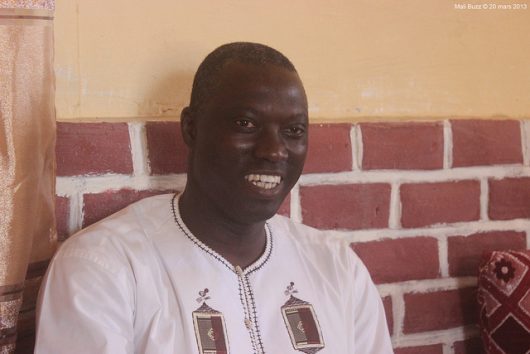
Mali Presidential Candidate Niankoro Yeah Samake is promoting self-reliance through his Empower Mali Foundation. Samake spoke at a forum on the Brigham Young University-Idaho campus on May 17, discussing how consistent small actions focused on others can bring about great change.
To begin the change for his home village of Ouelessebougou, Samake ran for mayor when he noticed that the government wasn’t utilizing the taxpayers’ money effectively and was becoming more corrupt. Samake won the election by 86 percent and his first order of business was to get the community to trust the government again.
Members of the community started to pay their taxes and Samake showed them exactly where the money was going, where it was coming from and how much they had, unlike previous government rule. Those in Ouelessebougou were able to build a hospital, high school, have running water, electricity and solar panels. Within two years, Samake was able to move Ouelessebougou from the bottom five of Mali’s 704 districts to the top ten.
“The citizens were able to see the power of integrity,” Samake said. “They could see what could be achieved when leaders and citizens work together in an honest and productive way.”
Samake said that Mali needs a leader that would put them first, and he is running in Mali’s next presidential election.
Creating the Empower Mali Foundation
While he was a mayor, Samake created the Empower Mali Foundation to address the growing need in the areas of education, healthcare and access to basic necessities in the rural communities of Mali. The foundation’s goal is to have the issues of individual communities resolved by the community members themselves.
This foundation wants each community within Mali to become self-reliant. The communities initiate the demand for projects and also contribute through cost, land or labor. By being involved, community members are more likely to maintain their project and become self-sustainable.
Empower Mali Foundation works in five main sections:
- Education
- Healthcare
- Clean Energy
- Clean Water
- Leadership Training
Education
At 31 percent, Mali has one of the lowest literacy rates in the world. Many Malian villages don’t have the adequate funding for schools or training for teachers. The foundation focuses on resources in school construction and repair, school supplies, adult literacy, job skills training and technology skills.
Healthcare
The average life expectancy for a citizen of Mali is 52 years. This can be due to many different diseases in the area, and the fact that there isn’t adequate training for doctors in more rural parts of Mali.
The Empower Mali Foundation focuses on providing additional health care training, arranging and implementing healthcare expeditions and supplying hygiene kits to communities in need.
Clean Energy
Less than one percent of Mali has access to electricity. The majority of Mali citizens rely on wood and charcoal burning fires to supply energy to their village. The Empower Mali Foundation focuses its resources on the installation of solar panels.
Clean Water
The second leading cause of death in low-income countries is diarrheal diseases. This is because of poor sanitation and no access to clean water. More than one-third of Mali does not have access to clean water. To address this, the Empower Mali Foundation is focusing its resources to install water tanks and water pumps, dig wells and cover current water sources.
Leadership Training
Many people locate in rural Mali don’t have enough information on what local governments do for them. Along with little communication, the poor level of skills and capacities of the duty-holders restrict the full involvement of the people.
The Empower Mali Foundation wants to focus its resources on training local leaders for success by arranging governance summits between local leaders in Mali and other countries. The foundation also wants to implement local participation in order to teach youth to better understand and engage in the local governance process.
The Empower Mali Foundation has completed many projects such as the donation of school kits, hygiene and dental kits and the successful installation of the first electricity-generating playground in Ferekoroba.
The Empower Mali Foundation’s projects take steps to make communities in Mali more self-reliant and sustainable. It is continuing to pursue its goal to raise Mali out of poverty, one community at a time.
– Victoria Fowler
Photo: Flickr

Jim Yong Kim and the World Bank’s Goal to End Poverty
Since 2012 (and now in his second term), physician and anthropologist Jim Yong Kim has served as the president of the World Bank Group. After assuming leadership of the World Bank, he took up two goals: “to end extreme poverty by 2030; and to boost shared prosperity, focusing on the bottom 40 percent of the population in developing countries.” His career has revolved around health, education and improving the lives of the poor.
Milken Institute and Global Poverty
On May 19, Jim Yong Kim spoke at the Milken Institute Global Conference which focuses on “advancing collaborative solutions that widen access to capital, create jobs and improve health.”
The Milken Institute hosts its Global Conference from April 29 to May 2 in Los Angeles, California, and possesses various centers focused on topics such as the Center for Financial Markets, Center for the Future of Aging, and Center for Jobs and Human Capital. One of the organization’s foci is children — 150 million children around the world are affected by poor nutrition, undersized growth, and cognitive impairment, and live primarily in South Asia and African countries.
According to VOA, if leaders don’t focus on investing in their people, then “many, many, many people will find themselves undereducated and without the skills to be able to compete in the economy of the future and so many countries are going to go down the path of fragility, conflict, violence, and then of course, extremism and migration.”
Business, Health and Development
In the talk, Jim Yong Kim stated there should be a business-like mindset when talking about health and development of individual; in fact, Kim has made it his mission to make this world a better place by working towards a common goal of reducing poverty.
According to Forbes, Kim wants to “reduce extreme poverty levels to below 3 percent of global people, and grow the incomes of the bottom 40 percent of each country.” His organization also lends out cash — almost $59 billion a year.
Before Kim assumed his position as president of the World Bank, he was president at Dartmouth College and “from 2003 to 2005, as director of the World Health Organization’s HIV/AIDS department, he led the “3 by 5” initiative, the first-ever global goal for AIDS treatment, which greatly to expand access to antiretroviral medication in developing countries.”
From A Ted Talk to Today
In a Ted Talk in April of 2017, Kim spoke about going to Haiti when everyone told him that the best thing to do was to focus on vaccination and possibly a feeding program. Since Kim’s parents had emigrated from Korea to flee the Korean war, though, Kim had a different perspective — what he saw in Haiti was what he saw in parents: to give their children the opportunity that they didn’t have.
In the Ted Talk, he goes on to say, “the Haitians wanted a hospital. They wanted schools. They wanted to provide their children with the opportunities that they’d been hearing about from others, relatives, for example, who had gone to the United States. They wanted the same kinds of opportunities as my parents did.”
In conclusion, Jim Yong Kim is a accredited president of the World Bank Group, and a charitable person who traveled to Haiti to help build hospitals and schools, and give children increased opportunities. All in all, if more people follow Kim’s example, the world will be a stronger and more sustainable place.
– Valeria Flores
Photo: Flickr
Promoting Self-Reliance with the Empower Mali Foundation
Mali Presidential Candidate Niankoro Yeah Samake is promoting self-reliance through his Empower Mali Foundation. Samake spoke at a forum on the Brigham Young University-Idaho campus on May 17, discussing how consistent small actions focused on others can bring about great change.
To begin the change for his home village of Ouelessebougou, Samake ran for mayor when he noticed that the government wasn’t utilizing the taxpayers’ money effectively and was becoming more corrupt. Samake won the election by 86 percent and his first order of business was to get the community to trust the government again.
Members of the community started to pay their taxes and Samake showed them exactly where the money was going, where it was coming from and how much they had, unlike previous government rule. Those in Ouelessebougou were able to build a hospital, high school, have running water, electricity and solar panels. Within two years, Samake was able to move Ouelessebougou from the bottom five of Mali’s 704 districts to the top ten.
“The citizens were able to see the power of integrity,” Samake said. “They could see what could be achieved when leaders and citizens work together in an honest and productive way.”
Samake said that Mali needs a leader that would put them first, and he is running in Mali’s next presidential election.
Creating the Empower Mali Foundation
While he was a mayor, Samake created the Empower Mali Foundation to address the growing need in the areas of education, healthcare and access to basic necessities in the rural communities of Mali. The foundation’s goal is to have the issues of individual communities resolved by the community members themselves.
This foundation wants each community within Mali to become self-reliant. The communities initiate the demand for projects and also contribute through cost, land or labor. By being involved, community members are more likely to maintain their project and become self-sustainable.
Empower Mali Foundation works in five main sections:
Education
At 31 percent, Mali has one of the lowest literacy rates in the world. Many Malian villages don’t have the adequate funding for schools or training for teachers. The foundation focuses on resources in school construction and repair, school supplies, adult literacy, job skills training and technology skills.
Healthcare
The average life expectancy for a citizen of Mali is 52 years. This can be due to many different diseases in the area, and the fact that there isn’t adequate training for doctors in more rural parts of Mali.
The Empower Mali Foundation focuses on providing additional health care training, arranging and implementing healthcare expeditions and supplying hygiene kits to communities in need.
Clean Energy
Less than one percent of Mali has access to electricity. The majority of Mali citizens rely on wood and charcoal burning fires to supply energy to their village. The Empower Mali Foundation focuses its resources on the installation of solar panels.
Clean Water
The second leading cause of death in low-income countries is diarrheal diseases. This is because of poor sanitation and no access to clean water. More than one-third of Mali does not have access to clean water. To address this, the Empower Mali Foundation is focusing its resources to install water tanks and water pumps, dig wells and cover current water sources.
Leadership Training
Many people locate in rural Mali don’t have enough information on what local governments do for them. Along with little communication, the poor level of skills and capacities of the duty-holders restrict the full involvement of the people.
The Empower Mali Foundation wants to focus its resources on training local leaders for success by arranging governance summits between local leaders in Mali and other countries. The foundation also wants to implement local participation in order to teach youth to better understand and engage in the local governance process.
The Empower Mali Foundation has completed many projects such as the donation of school kits, hygiene and dental kits and the successful installation of the first electricity-generating playground in Ferekoroba.
The Empower Mali Foundation’s projects take steps to make communities in Mali more self-reliant and sustainable. It is continuing to pursue its goal to raise Mali out of poverty, one community at a time.
– Victoria Fowler
Photo: Flickr
How Wells in Africa Can Ease the Continent’s Water Crisis
In most developed nations across the globe, water is taken for granted. What is so vital for existence is easily dispensed from numerous faucets in each home.
However, in less developed nations, particularly across Africa, water is much more difficult to come by. Across the continent, the number of people without access to quality water has increased by 66 million since 1990. Many are forced to spend hours per day collecting heavy water from far away sources. Others use contaminated water that is ridden with bacteria and unsafe for consumption. Still others go without.
Wells in small towns and villages provide an effective way to address issues surrounding proper sanitation and access to high quality drinking water. Here are five reasons that water wells in Africa are the smart choice for progress and investment.
How Water Wells in Africa Can Solve Water Scarcity
The water crisis in Africa is one that is affecting millions of lives daily. The construction of wells in Africa is a potential solution to an issue that must be dealt with in order to reach a more stable and equal global society.
– Jessie Serody
Photo: Flickr
Five Facts About Food Insecurity and How to Combat It
Food insecurity is, by definition, “the state of being without reliable access to a sufficient quantity of affordable, nutritious food.” For many people around the globe, securing a reliable source of nutritious food is a daily struggle. One of the greatest challenges that faces the world today is ensuring that the world’s growing population has enough food to meet its needs. Below are five facts about food insecurity and possible solutions to the world’s growing food requirements.
Facts About Global Food Insecurity
This issue is a growing problem in the world today. One of the largest challenges of today’s generation is figuring out a way to reliably feed the world’s ever-increasing population. Preventing food waste and changing agricultural practices will certainly be the first step to ending food insecurity worldwide. Preventing armed conflicts around the globe and providing nutritious food to the world’s youth will also be on the agenda for those facing food insecurity head-on. Those fighting this major issue have a long road and many challenges ahead in ending food insecurity around the globe.
– Dalton Westfall
Photo: Flickr
Understanding the Issues With Girls’ Education in Malaysia
Girls’ education and access to education have been improving around the world, particularly because of the United Nations Millennium Development Goals which set access to education as a major focus. In particular, girls’ education in Malaysia has been on an upward trend for the past few years.
Enrollment levels for girls are equal to or higher than enrollment for boys across the nation, and a higher number of girls complete advanced education than boys. Enrollment trends are a major way of assessing access to education and inclusion in the education system.
Malaysian Female Participation in STEM
However, while these statistics show real progress and effective attempts at change by the government and other organizations, there are still a number of issues that need to be addressed. For example, the number of girls participating in science, technology, engineering and mathematics (STEM) in Malaysia is significantly lower than that of boys.
Girls in Malaysia need to be encouraged to pursue STEM fields and teachers and programs need to be more gender inclusive and sensitive. As STEM fields continue to grow in the nation, gender disparities will continue to increase unless they are targeted by policy and programs.
Gender Inequality in Girls’ Education in Malaysia
Another issue is that girls’ education in Malaysia is not translating into equal opportunities and empowerment once they finish school. In 2016, the World Economic Forum produced the Global Gender Gap Report which scored and ranked nations on the Global Gender Gap Index. It focused on five main aspects of equality: economic participation and opportunity, educational attainment, health and survival and political empowerment. Malaysia ranked 106 in the world, with a score of 0.666, where 1.00 indicates gender parity and 0.00 indicates the worst inequality.
While Malaysia scored a .985 for educational attainment, girls still do not have equal economic opportunities or political empowerment. This is an area that the government must focus on by implementing programs to target these issues and ensuring that education translates into tangible advantages once girls have left the school system and entered the workforce.
Working to Improve Education in Malaysia
There are a number of organizations that have committed to working on girls’ education in Malaysia, such as UNICEF Malaysia and the All Women’s Action Society Malaysia. These organizations can be an asset to the government and can further the progress that has already been made.
While these are not the only issues challenging gender parity, using a more targeted approach will be beneficial in the long run. With this approach to education and strong planning for the future, Malaysia may be on its way to a more well-rounded society.
– Liyanga de Silva
Photo: Flickr
Girls’ Education in Venezuela Suffers Amid Political Crisis
The people of Venezuela are currently suffering as a result of the economic and political crisis occurring in the nation, which has affected girls’ education in Venezuela severely. Public schools that used to be ranked among the top in South America are now rarely opened for class. The annual dropout rate has doubled and more than one-quarter of teenagers are not enrolled in school. Additionally, according to Foundation Bengoa, a quarter of Venezuelan children missed class in the 2017-2018 school year because of hunger.
The many protests and high crime rate put students at risk and disrupt the school day often. According to Business Insider, more than one-quarter of teenagers are not even enrolled in school due to fear and lack of resources. According to Tupac Amaru Rivas, the head of El Sistema school in Caracas, parents often prefer to keep their children at home and teachers often cannot attend school so the school is forced to cancel class.
How the Venezuelan Government is Reacting
Although there is proof of a decline in the quality of education, the government refuses to acknowledge this by insisting that 75 percent of the national budget goes to the social sector. President Maduro released a statement saying, “Amid the economic war, the fall of oil prices, international harassment and financial persecution, not a single school has closed.” Venezuela currently ranks last globally in the Rule of Law Index. The lack of transparency and press coverage means that some official information is inaccurate or unavailable.
Ever since former President Hugo Chavez came into power, delivering a high-quality education to the youth was a priority in Venezuela. However, due to the recent economic and political crisis, girls’ education in Venezuela and education, in general, has taken a hit.
Issues Affecting Girls’ Education in Venezuela
School in Venezuela is often canceled because of the lack of basic utilities and food. The Caracas Public High School has even had to close down for weeks at a time. A group of parents has said that Venezuelan children have missed an average of 40 percent of class time because of canceled classes.
The schools have also been affected by crime and instability in the country. Teachers are among those who have been shot, murdered or are missing. Additionally, teachers even exchange a passing grade for food. It is also common for teachers not to show up to class because they are waiting in food lines for their families.
Issues Within the Venezuelan School System
Even when school is open, what is being taught in schools is often flawed. The Associated Press has reported that some schools even leave textbooks delivered by the government unopened because teachers see them as “too full of pro-socialist propaganda to use.” This not only affects girls’ education in Venezuela but also education in the nation as a whole.
Education itself it suffering enough and the gender gap continues to increase in the midst of the economic crisis. In 2017, Venezuela scored 0.71 on the Gender Gap Index compared to 0.69 for the three previous years, meaning that women are approximately 29 percent less likely than men to have equal opportunities.
Although this is concerning, Venezuela is known to have very little discrimination in educational and social institutions. Rates of school enrollment and years of education in Venezuela are about the same for girls and boys.
The issue of the educational decline in Venezuela needs to be addressed before it is too late. A spokeswomen from the Movement of Organized Parents in Venezuela told the Associated Press, “This country has abandoned its children. By the time we see the full consequences, there will be no way to put it right.” Education, specifically girls’ education in Venezuela, will continue to suffer until these issues are dealt with.
– Luz Solano-Flórez
Photo: Flickr
Top 10 Facts About Poverty in Riyadh
Riyadh is an expansive metropolis located in Saudi Arabia and is also its capital city. It is home to about seven million of the country’s 32.5 million people. Despite there being a plethora of information on the country’s steadily growing economy, updated statistics and data on the poverty rates in Saudi Arabia and Riyadh are lacking, as the Saudi government seems to keep such information under wraps. Nevertheless, these 10 facts about poverty in Riyadh and Saudi Arabia can shed some light on the situation.
Facts About Poverty in Riyadh
Saudi and American analysts report that, regardless of the efforts to alleviate poverty, large quantities of money are acquired by the royal family through corrupt tactics and schemes. Perhaps through the actions of Saudi Vision 2030 and the charitable and religious nature of the country, a long-term solution may be implemented in the future.
– Camille Wilson
Photo: Flickr
How the Media Misrepresents Thailand
The popular Australian mini-series Bangkok Hilton, about the arrest of Australians for drug-running in Thailand, is one of a number of media portrayals that feeds into the many stereotypes of Thailand. The media misrepresents Thailand by covering the problems that the country faces instead of the progress the country has made or the fact that Thailand is ranked as one of the world’s best tourist destinations. Negative aspects that the media often sensationalize include sex trafficking, drugs and AIDS.
Fighting Sex Trafficking Through Tourism
Although sex trafficking continues to be a problem within Thailand, the media often covers only the bad and not what the country is doing to fight sex trafficking. Thai authorities and officials have committed themselves to cleaning up the country through advocacy and tourism. “The Thai government alone cannot solve the problem. We need the hotel groups, we need the tourists, we need everybody who can to join in,” said Malina Enlund, a member of the anti-trafficking group A21.
Because of Thailand’s huge tourism sector, making up 19.3 percent of the country’s total GDP, the country has used its tourism to combat sex trafficking. Not only has the country begun training hotel employees and airline staff about how to spot sex trafficking, but the government has even insisted that its airline, Thai Airways, show an in-flight video about sex trafficking to all incoming tourists.
Replacing Opium Poppy Farming With Cash Crop Production
For decades, Thailand has been known as the epicenter of drugs in Southeast Asia. Thailand is developing at a fast pace, the culture is changing and people want a better standard of life. Unfortunately, drug trafficking gives many the economic means to do so.
However, the media misrepresents Thailand as a drug-stricken country with no escape, rather than focusing on what the Thai government has done to address the issue. One effective program instituted under King Bhumibol worked to “replace opium poppy farming with cash crop production.” This program has helped more than 100,000 people transform their drug crop production into “sustainable agricultural activities.” Stanford postdoctoral fellow Darika Saingam stated that the program “is [a] win-win because it stymies drug trade and provides economic opportunity while also being ecologically sound.”
The Media Misrepresents Thailand by Ignoring Its Efforts to Combat HIV/AIDS
The media misrepresents Thailand by only reporting when Thailand sees an increase of HIV/AIDS within its population, such as a 2016 report that stated there were an estimated 450,000 Thai people living with HIV. In 2017, the Ministry of Public Health of Thailand launched the National AIDS Strategy, a 13-year plan to end the epidemic, “ensuring an effective, cost-efficient and high-impact HIV response” by 2030. It is evident that the country has listened to the outcry of its people and the international community and is taking action.
Although Thailand faces many problems, an obsession with the negative aspects is how the media is able to misrepresent the country as a whole. Such news reports fail to represent the culture and people of Thailand. Furthermore, it is important to understand that Thailand is taking the appropriate steps to become a safe, flourishing, and integrated country in the world and should be further recognized for its significant development.
– Emma Martin
Photo: Flickr
UNAIDS’ Efforts to End HIV/AIDS in East and Southern Africa
UNAIDS is the international movement working to end the HIV/AIDS epidemic worldwide by 2030, which aligns with the U.N.’s Sustainable Development Goals. Its fight against HIV/AIDS in East and Southern Africa has seen encouraging results.
In 2016, UNAIDS created the 90-90-90 targets for 2020, aiming to have 90 percent of all people with HIV know they are HIV positive, 90 percent of those who know their status receive antiretroviral therapy (ART) consistently and 90 percent of those receiving treatment show viral suppression (having no symptoms of HIV/AIDS).
HIV/AIDS in East and Southern Africa a Main Target of UNAIDS
East and Southern Africa is the region of the world most impacted by HIV/AIDS. UNAIDS estimates that 19.4 million people in that region have HIV/AIDS. However, since the creation of the 90-90-90 targets and the subsequent implementation of more rigorous prevention and treatment programs, tremendous progress has been made towards curbing the transmission of and deaths from HIV/AIDS.
These statistics show how East and Southern Africa are faring in each of the 90-90-90 categories:
According to a UNAIDS Special Analysis from 2017, in 2016, 14.7 million of an estimated 19.4 million people with HIV/AIDS in East and Southern Africa knew their status. That is 76 percent, up from 72 percent the previous year.
Seven million people with HIV/AIDS in East and Southern Africa are on ART. This means that 60 percent of all people with HIV (up from 53 percent in 2015)—or 79 percent of those who know their status—are receiving treatment.
Seven million people on ART in this region show suppressed viral loads. Thus, 50 percent of people with HIV in East and Southern Africa (up from 45 percent in 2015)—which is equivalent to 83 percent of those receiving ART—show viral suppression.
Both the infection rate and death rate from HIV/AIDS are improving. Infection rates peaked between 1995 and 1998, when UNAIDS estimates that 1.7 million people in East and Southern Africa were newly infected each year. The decline began in 1990 and has continued. In 2016, UNAIDS estimated that 790,000 people contracted HIV/AIDS, down from 850,000 a year before.
Deaths from HIV/AIDS in East and Southern Africa peaked about a decade later than infection rates did, with approximately one million people dying annually between 2004 and 2006. In 2010, 720,000 people died from HIV/AIDS. By 2016, that number had dropped by nearly 50 percent to 420,000 deaths. As UNAIDS notes, it is extraordinary to see a death rate cut nearly in half in just six years.
Much of this recent success must be attributed to the work of UNAIDS, which is working to make testing and treatment of HIV/AIDS available to everyone. Its programs specifically target young women, pregnant mothers-to-be and males who, because of the stigma around HIV/AIDS, are often the least likely to receive proper treatment.
Multi-Pronged Efforts Reach Most Vulnerable Populations
Efforts aimed at young females including getting comprehensive sex education into all primary and secondary schools in East and Southern Africa, encouraging girls to stay in school (and away from dangerous sex work), and providing easily accessible female and reproductive healthcare.
UNAIDS is also helping to equip maternity clinics with what they need to ensure that all pregnant women will be aware of their HIV status and are able to get the care they need to have a healthy pregnancy.
Along with working to end the stigma around HIV/AIDS and providing accessible places to receive testing and treatment, UNAIDS aims to distribute 30 male condoms to every man living in the region each year. It also offers voluntary male circumcision programs, which can help prevent female to male HIV transmission.
East and Southern Africa may be the region most affected by HIV/AIDS, but UNAIDS is doing tremendous work towards achieving its 90-90-90 goals by 2020 and its goal of ending the HIV/AIDS epidemic by 2030. Continuing to spread awareness about HIV/AIDS and making testing and treatment increasingly available will ensure that these successes continue.
– Abigail Dunn
Photo: Flickr
Girls’ Education in Lebanon Strives to Reach Those Most in Need
Girls’ education in Lebanon not only includes its female citizens, but also the female refugees who have recently become part of the country. Lebanon hosts almost one million registered Syrian refugees, in addition to other unregistered refugees from Syria, Palestine and Iraq.
This huge influx of people has had a negative impact on the country’s education system, which is already facing severe challenges. All these things have caused major setbacks for girls’ education in Lebanon, which suffers from gender inequality and social discrimination against women.
Girls’ Participation in Education
The net enrollment rates of female and male students in Lebanon vary from primary to tertiary education, with the ratio being almost equal in primary education. However, in the secondary and tertiary stages, there is a gender gap, with the percentage of girls attending schools and colleges higher than boys.
Although these statistics show progress, traditional stereotyping and the age-old patriarchal culture still prevents some girls from participating in the education system. In particular, girls from poor and less fortunate families are still considered a burden and are married off at an early age. Compulsory free education has not yet been imposed by the government of Lebanon, making the situation more difficult for girls who are eager to study but unable to do so.
The Impact of the Refugee Crisis on Girls’ Education in Lebanon
The huge inflow of refugees in recent years has put enormous pressure on the existing public education system, which is fragile and has insufficient capacity to educate all of the children in Lebanon. Gaining access to formal education is hard for the refugees and is even more difficult for girls coming from conservative backgrounds whose families disapprove of co-ed education, as there are few girls-only schools in Lebanon.
A Helping Hand Provided by UNICEF and Other NGOs
In 2010, the National Adult Education Program, with the help of the Lebanon Young Women’s Christian Association, introduced literacy programs which have aided almost 800 women in Lebanon. In 2017, the Kayany Foundation built a new girls’ school for Syrian refugees in the Bekaa valley, making formal education accessible to girls whose families will not allow them to attend co-ed schools.
UNICEF has funded a wide range of programs and facilities to educate girls in Lebanon irrespective of their nationality. These include:
The Malala Fund, which was founded by Malala Yousafzai, the youngest Nobel Laureate, has funded projects undertaken by the Kayany Foundation. Together, they have established the Malala Yousafzai All-Girls School in Bekaa. This school provides quality secondary education for almost 200 Syrian girls residing in informal refugee camps in the area.
UNICEF, along with other nonprofit organizations, are making efforts to improve girls’ education in Lebanon so that they can learn the skills they need to better their lives.
– Mahua Mitra
Photo: Flickr