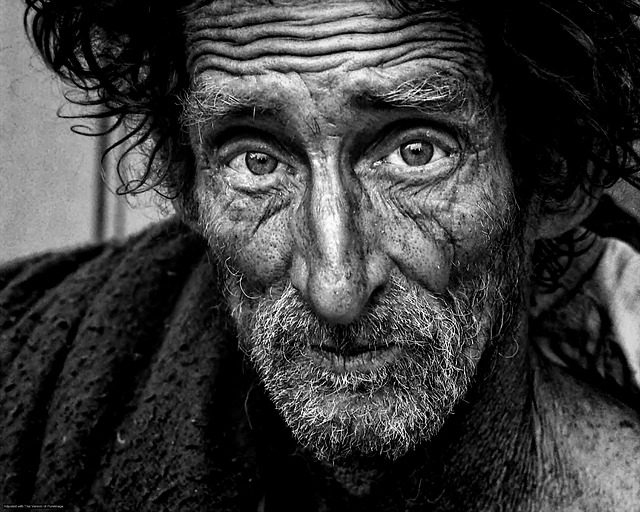
Many of our articles at The Borgen Project examine human rights abuses around the world and how different organizations and people help to combat them. However, many people may not understand what human rights are, where our modern understanding came from and what rights everyone is granted under international law. Human rights and global poverty are at-odds concepts that must be understood.
Some of the most basic human rights are the right to life, work and a standard of living that promotes health and well-being and does not allow for global poverty. It wasn’t until 1948 and the creation of the Universal Declaration of Human Rights (UDHR) by the United Nations that specific rights were first defined, written into international law and accepted as universal to all human beings. Ending the injustice of global poverty is tightly tied to the support and upholding of universal human rights.
What Are Human Rights?
The United Nations (U.N.) defines human rights as rights inherent to all people regardless of race, nationality, sex, color, religion, language or any other status. The principle of universal human rights that are free from discrimination and that all humans deserve is the key to international human rights law. Under these laws, human rights are broken up into three generations — first, second and third.
First generation rights are characterized as civil and political rights and were mainly fought for in the 18th and 19th centuries. Individuals struggled to free themselves from oppressive governments, and so these rights protect citizens from abuses of his/her liberties by the state. These rights include free speech, the right to vote, the right to peaceful protest and assemblies and the right to participate in government.
Second generation rights developed as a response to the creation of the UDHR and a more industrialized world with greater income inequalities. These rights are classified as social, economic and cultural rights and instead of providing protection from governments, they delineate what governments are supposed to provide their citizens.
This group of rights is crucial to fighting global poverty. Examples of second generation rights are the right to adequate levels of food and sustenance, housing, favorable work conditions, education, health and cultural identity.
Third generation rights emerged with the increased globalization and a greater awareness of similar concerns worldwide. An awareness of extreme poverty around the world has contributed to rights such as the right to development, self-determination and a healthy environment. Additionally, minority rights have received greater attention and importance in this third generation of rights.
How Are Human Rights and Global Poverty Related?
With an understanding of the human rights under international law, it is even more apparent why fighting global poverty is such a worthy cause. Millions of people around the world are deprived of work, shelter and food despite their inherent right to these needs and legal recognition of these rights. Therefore, many governments, organizations and individuals have felt a moral (and legal) responsibility to end global poverty and provide basic rights for any and all humans suffering from poverty.
By valuing second generation rights, organizations like The Hunger Project are making an impact on global poverty. The Hunger Project is working for a world where everyone is able to lead a healthy life based on self-reliance and dignity. Their programs are women-centered and work to move communities from, “I can’t,” to “I can,” to “we can” and improve clean water, education, health and the environment. They currently work in twelve countries and more than 16,000 communities, and have helped over 17 million individuals.
International Advocacy
Some organizations fight for each generation of human rights and global poverty by providing food, shelter, water and more while also advocating for political solutions and civic engagement. One such organization is Oxfam. Oxfam fights the injustice of global poverty by saving lives with humanitarian aid, starting lasting programs to overcome poverty, campaigning for social justice and educating the public about human rights. Last year alone they helped 22.2 million people worldwide and gave 730,000 villagers access to savings and loans.
Under international human rights law, no human being should be living in poverty; all people deserve food, shelter and a healthy life. By supporting and fighting for human rights, people around the world are fighting to end global poverty.
– Alexandra Eppenauer
Photo: Pixabay

The Growing Importance of Credit Access in Mali
Mali is a landlocked country located in West Africa with a population of approximately 18 million people. While the national poverty fell from 55.6 percent in 2001 to 43.6 percent in 2010, Mali remains 175th out of 188 countries on the United Nations Human Development Index.
Diagnosing the Problem
Credit access in Mali stands out as one the leading impediments to economic growth. A smallholder farmer is refused a loan seven times out of ten because of the high risk and unpredictable nature associated with the agricultural sector. This difficulty accessing credit is only further compounded by the fact that about 80 percent of the entire labor force actively participates in farming.
Credit serves an important role in the growth of developing countries’ economies. Increased credit access in Mali is essential for allowing farmers, businesses and consumers across Mali to utilize investment capital and thus help expand economic activity. If 70 percent of farmers are refused loans from the start in a country where 80 percent of the workforce is engaged in farming, significant economic growth becomes nearly impossible.
Moussa Sylvain Diakite, a mango producer and exporter in Bamako, explains this discrepancy noting that “Malian banks have a commercial focus and not an agricultural one which is why they struggle to accompany agricultural activities.”
Improving Credit Access in Mali
One of the leading initiatives to improve credit access in Mali is the Agricultural Competitiveness and Diversification Project. Led by the Malian government and the World Bank, the program hopes to provide financial support to both individual Mali farmers seeking credit and commercial banks. By enfranchising Mali farmers and reducing risk for commercial banks that offer them loans, the Agricultural Competitiveness and Diversification Project will help scale agricultural production and the number of small and medium enterprises throughout Mali.
Above all, the Project works to “reduce the risk of investing in agriculture endeavors through technical assistance, new technologies, and greater knowledge of the supply chain and key actors,” according to World Bank Agribusiness Specialist Yeyande Kasse Sangho.
Benefits of Greater Credit Access in Mali
Researchers who partnered with Soro Yiriwaso, a microfinance institution in Mali, conducted a two-stage randomized evaluation in 198 villages in rural Mali. The findings point to agricultural lending as an effective means of increasing investments in the agricultural sector, as well as increasing profits and yields.
Village households which were offered loans spent about $10.35 more on fertilizer and $5.08 more on herbicides and insecticides than the households in villages that did not get loans. These loans also contributed to an increase in the value of agricultural output by $32. Many of these households also received grants invested 14 percent more on inputs than households that did not receive grants. Those households also saw output and farm profits increase by 13 percent and 12 percent, respectively.
As the relationships between farmers and commercial banks strengthen, credit access will only continue to spread in Mali and enable further economic growth. With continued efforts and projects as the ones mentioned above, there’s significant hope that the focus on credit access in Mali will serve as an example for the economic development of other impoverished regions.
– McAfee Sheehan
Photo: Flickr
Beyonce, Jay-Z To Headline Global Citizen Mandela 100 Festival
Singer Beyonce and her spouse, rapper Jay-Z, will be among several major artists to perform at Global Citizen’s Mandela 100 Festival in December 2018 in Johannesburg, South Africa. Other artists scheduled to perform are Ed Sheeran, Chris Martin, Pharrell Williams, D’banj, Femi Kuti, Sho Madjozi, Tiwa Savage and Wizkid. This latest concert campaign is said to be Global Citizen’s ”biggest campaign on the Global Goals to end extreme poverty ever.”
According to Global Citizen, the festival is to represent a celebration of Mandela’s legacy as an exemplary leader, his fight against apartheid, and his methods of non-violent protest that shaped the future of South Africa, setting an example worldwide. The Mandela 100 festival will be the first-ever musical event organized by Global Citizen in Africa
A Global Initiative
As an organization that is composed of members worldwide, Global Citizen is a model example of a successful nongovernmental organization (NGO), a true grassroots movement. The organization has projected some major numbers for 2018: an estimated 2.25 billion people worldwide are expected to receive some form of poverty relief from Global Citizen, ranging from a year of free education for children to clean water for an entire community.
Global Citizen divides its goals into nine separate categories, each representing a broad set of issues that need to be resolved. They are:
Global Citizen’s goal is to eliminate extreme poverty worldwide by 2030—just 12 years from now. And it seems that the organization may accomplish its goals, having secured a whopping $2.9 billion in funding from government organizations worldwide for 2018 alone.
How Everyone Can Help
But besides relying on funding from government bodies, Global Citizen asks that individuals take action as well, through twitter, email or petition. Global Citizen’s website offers a streamlined way for its constituents to influence representatives not only in their own country but in countries worldwide.
Some of the most recent and significant contributions to Global Citizen have come from the U.K., Norway and the E.U. These nations gave £225 million, Kr.2.07 billion and €337.5 million to Global Citizen’s Global Partnership for Education project, respectively.
Mandela 100 Festival: A Festival For The People
The Mandela 100 Festival begins on December 2, 2018, and besides the proceeds going toward Global Citizen’s international fight against poverty, the other goal of the festival experience is to ignite a passion in young people to feel empowered to make changes in the world. Global Citizen wants to involve youth, on an international level, in the fight against extreme poverty.
Global Citizen’s website states it wishes to “galvanize young, passionate people across Africa to pressure their leaders to make important strides.” In fact, the motto for the festival is “Be The Generation.” Considering that Global Citizen is expecting to end abject poverty worldwide in little over a decade, millennials may just become the generation to tip the scales in the ongoing fight to elevate all members of our global community.
– Jason Crosby
Photo: Google
10 Important Facts About Girls’ Education in Costa Rica
Costa Rica is a country known for its dedication to its diverse environment. But less known is its dedication to educating its youth, predominantly girls. The range of resources offered throughout the country, whether institutional or grassroots oriented, are just as diverse as its environment. The following are ten facts that help illuminate the successes and improvements of girls’ education in Costa Rica.
10 Facts About Girls’ Education in Costa Rica
Costa Rica has taken strides to ensure that its population consists of well-educated, globally-minded citizens. These 10 facts about girls’ education in Costa Rica exemplify how an already progressive state will continue to work hard to maintain this standard well into the future.
– Taylor Jennings
Photo: Flickr
Persistence and Prevention: Zika in Mexico
The zika virus is a mosquito-borne infection that — although relatively harmless to adults who catch it — can irreparably damage unborn children and cause microcephaly. A pregnant woman who contracts zika will show minimal signs of sickness, such as a fever or rash; her child, however, will be born with microcephaly — a disease that causes abnormal brain development. The child will most likely never lead a normal life.
What is the Zika Virus?
Zika has often been referred to as a ‘disease of poverty,’ because it falls under the sect of disease that are significantly more widespread among impoverished communities. An epidemic is also costly for the country affected. The total cost of the Zika epidemic in Latin American countries is estimated to be around $7 billion.
Zika in Mexico
The first reported cases of zika in Mexico occurred in November of 2015. When a mother contracts Zika and gives birth to a child with microcephaly, it puts a great financial and emotional strain on the family. With a zika-impaired child, the parents are unable to go back to work as soon as they would with a healthy baby, or continue to work as much as they were able to in the past.
Poor households in Mexico have the greatest likelihood of exposure to the virus and they generally tend to be the least able to handle the effects. Women in impoverished communities are not likely to have access to healthcare services that can protect them from contracting zika. In addition, the female populations in these areas are also not likely to have the resources to take care of a child with microcephaly.
Zika also has the potential to widen gender gaps in Latin American countries such as Mexico, as it creates a higher demand for women to stay home to care for impaired children. In cases like this, women may choose to give up working in order to become full-time caregivers for their children with microcephaly.
Access to proper housing and sanitation can also influence the risk of getting zika in Mexico. Low-income areas also do not typically have quality healthcare systems, and due to such factors numerous impoverished people bear the brunt of disease epidemics like zika. For pregnant women between 2015 and 2016, over 5,000 cases of Zika in Mexico were reported, although it is likely that thousands of cases in rural areas went unreported.
The Fight Against Zika in Mexico
Before zika spread to Mexico, the incidence of microcephaly in infants was 3.7 per 100,000 births; after zika was introduced, that number rose to 11.7 per 100,000. Women were weighed down more and more by the pressures of pregnancy and childcare — specifically in low-income communities — and the lack of resources available for improvement only worsened matters.
The epidemic of zika in Mexico has ameliorated significantly since the days of 2015. As of 2017, Mexico’s Secretariat of Health reported only 602 confirmed cases of zika in pregnant women. Now, thanks to a greater awareness of the dangers and effects of the disease, the people of Mexico can better protect themselves and their children from life-changing viruses such as zika. But as with any health concern, preventative measures and proactive efforts domestically in Mexico and abroad to keep zika in Mexico at bay.
– Amelia Merchant
Photo: Google
US Benefits from Foreign Aid to Guinea
Guinea is one of the world’s most impoverished countries. More than half of its population lives below the poverty line and 17.5 percent struggle for food security. In 2010, Guinea established its first elected, civilian government. The U.S. benefits from foreign aid to Guinea and its strong economic potential. Assistance with Guinea’s health, stability and effective governance is not only deeply needed by Guinea, but also something from which the U.S. ultimately gains.
Strong Economic Potential
Guinea has rich mineral resources, possessing over half of the world’s bauxite (aluminum ore) reserves. The country is also abundant in high-grade iron ore, diamonds, gold and uranium. The mining sector in Guinea is thus a major part of its economy: about 80 percent of Guinea’s foreign exchanges consist of joint-venture bauxite mining and alumina operations. Compagnie des Bauxites de Guinee (CBG), one of the major two routes for exporting Guinea’s bauxite, is a venture jointly owned by the Government of Guinea, a U.S. company called Alcoa, and an Anglo-Australian company Rio Tinto Group. The other major export force is Chinese conglomerates as well as small and midsize business.
Guinea is also blessed with reliable rainfall, abundant sunshine and natural geography that are favorable for renewable energy. The 240MW Kaleta Dam project, constructed and financed by China, began operating in 2015 and has since more than doubled Guinea’s electricity supply. The country’s climate means that it has great potential for commercial agriculture as well.
Investment Friendly
Pressed to improve development, Guinea has been increasingly open to foreign investment. The country’s government has been depleted of financial resources to improve the economy, especially since the Ebola outbreak in 2014-2015. Meanwhile, enterprises in Guinea are in need of more credit than is available.
In 2016, the government launched a new website via the Investment Promotion Agency of Guinea (APIP). The website is meant to promote transparency and help make investments more smooth. The APIP also offers services to foreign investors, including creating and registering businesses, helping with access to benefits of the new investment code, providing information and research studies to interested investors, etc.
The Guinea government does not allow any foreign investor to own media in the country, but besides that, there are no restrictions discriminating against foreign investors. The U.S. also helped a group of foreign investors in Guinea and the government of Guinea form a liaison in 2015.
Barriers to Overcome
While Guinea has extremely investment-friendly laws, the enforcement of those laws needs a stable political environment and a reliable legal system. It is worth noting the country had its first democratically-elected government in 2010 after the country’s independence in 1958, but state institutions are still recovering from two years of rule by the military junta. It’s also faced a number of security and socio-economic vulnerabilities.
Guinea has a disproportionately large military with serious, deep corruption and human rights abuses. It is also feared by law enforcement because of the potential for military revolt. Even though a panel was formed in 2010 to investigate the violent crushing of tens of thousands of peaceful democracy protesters in 2009, two military commanders that the U.N. revealed to be guilty were able to keep their government positions.
Aid for Stability and Development
U.S. foreign aid would directly address barriers to private sector growth as well as improvement of economic life in Guinea in general. For one thing, the U.S. supported the 2010 election process significantly, which has greatly improved the country’s development prospects.
U.S. foreign aid was restricted in 2008 and 2009 due to the rise of the military coup at the time, but restrictions were lifted after the country’s political transformation. Aid from the U.S. helps improve democratic practices, governance, security sector reform, regional peace and stability, etc. These aspects of society are essential for the alleviation of poverty and the establishment of a solid economic infrastructure. A peaceful Guinea is also viewed as significant for restraining conflict in a region already plagued by political tension and armed struggles.
The Consortium for Elections and Political Process Strengthening, supervised by the USAID, supported the 2015 presidential election and 2018 communal elections. It strengthened Guinea’s Independent National Electoral Commission as well as civil society organizations in monitoring the domestic election.
Ultimately, U.S. foreign aid will assist with areas of life in Guinea that in turn presents a great economic potential for the U.S. In other words, the U.S. benefits from foreign aid to Guinea.
– Feng Ye
Photo: Google
Top 5 Mandela Quotes on Poverty
Nelson Mandela, the former first black president of South Africa and anti-apartheid revolutionary, had constantly implored the world to re-open its dulled senses to the tribulations of poverty. From his years as a lawyer and human rights activist, he successfully overturned apartheid in South Africa and ventured beyond the borders to end the injustice of poverty in all nations.
“He proved that equal respect and treatment of every person is and must continue to be an achievable reality everywhere in the world,” Ruth Messinger, president of American Jewish World Service, said in a statement. “Nelson Mandela was a modern-day prophet for human dignity whose voice was heard around the world.” Below are the top five Nelson Mandela quotes on poverty that invite a renewed and clearer understanding of how his views on poverty can inspire the world.
Top 5 Mandela Quotes on Poverty
These five quotes depict a powerful image of poverty that scrutinizes aspects of status beyond just its basic definition. Mandela chose to focus on an optimistic possibility of overcoming poverty as opposed to becoming overwhelmed by the tragedy of it. The attitude of those who witness poverty can be a force large enough to reinvigorate the world to push for the change it needs.
– Alice Lieu
Photo: Flickr
Reducing the Brain Drain
These professionals have attained high levels of education at home and abroad, but utilize their innovative potential in developed countries, where their opportunities are better. Developed countries reap the majority of the rewards from the innovation of foreign workers while the countries of origin for these professionals merely receive the occasional remittance.
The Economic Dangers of Brain Drain
This trend of skilled and educated citizens living in developed countries is being exacerbated by the growing inequality between the world’s wealthy and poor. Many developing countries have experienced a shortage of high-skilled laborers, taxpayer dollars from would-be members of their upper class and technological innovation. Among the doctoral graduates in science and engineering in the USA, 79 percent of those from India and 88 percent from China remained in the United States.
Overall, there are almost one million immigrants in the United States from South Asia who have achieved above a tertiary level of education. The skills these students acquire in the United States and in other developed nations don’t migrate back to their host countries, which makes reducing the brain drain seem impossible.
Additionally, many of these students become high earning professionals in some of the highest tax brackets; however, their countries of origin do not receive the tax dollars on these high earnings. Some South Asian countries are some of the poorest in the world and could desperately use the funding towards poverty-reducing measures.
More Than Just The Money
Besides higher wages and a better standard of living, professionals leave their origin countries for more developed ones because of a lack of research funding, poor facilities and limited career structures. These issues are extremely important to consider when evaluating how to combat the brain drain. Fortunately, these infrastructural deficiencies have more reasonable solutions that can over time reduce global inequality.
Research has shown that an increase in wages does not provide the sole incentive for educated professionals and students to remain in their origin country. A study in Pakistan revealed that a small portion of people funded for a doctorate faced many disincentives that did not stem from the wage gap.
Although, wage inequalities between the source and destination countries are so significant that a small increase in wages in origin countries will not be enough to reduce the brain drain. The focus then must turn to solving the infrastructural deficiencies that are driving young professionals toward developed nations.
Supercourse
Currently, foreign scientists in developed nations produce 4.5 more publications and 10 times more patents than those in their origin countries. This is mainly due to the infrastructural inequality between developed and developing nations. The solution to bridging the patent and publication gap is to increase the connectivity between professionals in developed and developing countries. One revolutionary network has already been developed to do just that at the University of Pittsburgh; it is called Supercourse.
Supercourse provides free online lectures to all and has already connected over 20,000 scientists to share their knowledge. This network continues to grow and make information less exclusive and contained only in the institutions of developed countries. Scientists around the world will have the materials necessary to create change in their origin countries. Supercourse has the potential to spearhead research and innovation in developing nations that will hopefully reduce brain drain.
Professionals will continue to migrate in search of better opportunities, but increasing access to information and support could be a long-term solution reducing the brain drain effects on developing countries.
– Anand Tayal
Photo: Flickr
Understanding Human Rights and Global Poverty
Many of our articles at The Borgen Project examine human rights abuses around the world and how different organizations and people help to combat them. However, many people may not understand what human rights are, where our modern understanding came from and what rights everyone is granted under international law. Human rights and global poverty are at-odds concepts that must be understood.
Some of the most basic human rights are the right to life, work and a standard of living that promotes health and well-being and does not allow for global poverty. It wasn’t until 1948 and the creation of the Universal Declaration of Human Rights (UDHR) by the United Nations that specific rights were first defined, written into international law and accepted as universal to all human beings. Ending the injustice of global poverty is tightly tied to the support and upholding of universal human rights.
What Are Human Rights?
The United Nations (U.N.) defines human rights as rights inherent to all people regardless of race, nationality, sex, color, religion, language or any other status. The principle of universal human rights that are free from discrimination and that all humans deserve is the key to international human rights law. Under these laws, human rights are broken up into three generations — first, second and third.
First generation rights are characterized as civil and political rights and were mainly fought for in the 18th and 19th centuries. Individuals struggled to free themselves from oppressive governments, and so these rights protect citizens from abuses of his/her liberties by the state. These rights include free speech, the right to vote, the right to peaceful protest and assemblies and the right to participate in government.
Second generation rights developed as a response to the creation of the UDHR and a more industrialized world with greater income inequalities. These rights are classified as social, economic and cultural rights and instead of providing protection from governments, they delineate what governments are supposed to provide their citizens.
This group of rights is crucial to fighting global poverty. Examples of second generation rights are the right to adequate levels of food and sustenance, housing, favorable work conditions, education, health and cultural identity.
Third generation rights emerged with the increased globalization and a greater awareness of similar concerns worldwide. An awareness of extreme poverty around the world has contributed to rights such as the right to development, self-determination and a healthy environment. Additionally, minority rights have received greater attention and importance in this third generation of rights.
How Are Human Rights and Global Poverty Related?
With an understanding of the human rights under international law, it is even more apparent why fighting global poverty is such a worthy cause. Millions of people around the world are deprived of work, shelter and food despite their inherent right to these needs and legal recognition of these rights. Therefore, many governments, organizations and individuals have felt a moral (and legal) responsibility to end global poverty and provide basic rights for any and all humans suffering from poverty.
By valuing second generation rights, organizations like The Hunger Project are making an impact on global poverty. The Hunger Project is working for a world where everyone is able to lead a healthy life based on self-reliance and dignity. Their programs are women-centered and work to move communities from, “I can’t,” to “I can,” to “we can” and improve clean water, education, health and the environment. They currently work in twelve countries and more than 16,000 communities, and have helped over 17 million individuals.
International Advocacy
Some organizations fight for each generation of human rights and global poverty by providing food, shelter, water and more while also advocating for political solutions and civic engagement. One such organization is Oxfam. Oxfam fights the injustice of global poverty by saving lives with humanitarian aid, starting lasting programs to overcome poverty, campaigning for social justice and educating the public about human rights. Last year alone they helped 22.2 million people worldwide and gave 730,000 villagers access to savings and loans.
Under international human rights law, no human being should be living in poverty; all people deserve food, shelter and a healthy life. By supporting and fighting for human rights, people around the world are fighting to end global poverty.
– Alexandra Eppenauer
Photo: Pixabay
Nine Facts About Human Rights in Iraq
Nine Facts about Human Rights in Iraq
The country of Iraq has witnessed a myriad of internally and externally caused turmoil. However, since the takeback of Mosul and other ISIS-occupied territories, human rights may finally be respected and upheld by the Iraqi government. As the genocide committed by ISIS is recognized, it may pave the way for a safer life in Iraq where human rights are both respected and implemented.
– Trelawny Robinson
Photo: Flickr
Girls’ Education in Cameroon
Facts about Girls’ Education in Cameroon
A variety of factors influence the lack of education among girls in Cameroon. Traditional values stifle chances of prolonged schooling or any schooling for girls. Poverty often forces women to leave school and to work and earn an income for their families. In addition, high rates of youth pregnancy and child marriage impede continued education for many girls. Although Cameroon ratified the 1989 United Nations Convention on the Rights of the Child which sets the minimum age of marriage at the start of adulthood, yhe legal age of marriage in the country is still 15 with parental permission. In 2014, the UNICEF found that over 31 percent of teenage girls in Cameroon were married before age 18.
Patriarchal norms drive down girls’ education in Cameroon as well. Patience Fielding from the University of California, Berkeley found that women’s educational pursuits are further restricted in higher educational institutions as well, especially in the fields of math, science and technology. Even as girls struggle to enroll in schools, obstacles meet them in the classroom. Girls face a disproportionate amount of discrimination, sexual harassment and violence.
What’s Happening
Nelson Mandela once said, “Education is the most powerful weapon which you can use to change the world”.
International organizations are supporting Cameroonian girls and increasing female enrollment in schools. UNICEF works to advocate early childhood education as well as supply resources and classroom materials to students and teachers.
Cameroonian women are also spearheading efforts to make social change and promote girls’ education in Cameroon. In a 2016 Times article, Leila Kigha talks about her grandmother’s efforts to inspire other Cameroonian women and the ripple effect a single woman’s hope for the future can have on others. She refused to accept the status quo and sent her children to school against all odds. Her descendants went on to establish the Shine A Light Africa initiative — a nonprofit that works to allow women to sell farm products in groups.
This work has been monumental in ensuring that change happens. Research shows the positive externalities resulting from girls having access to better and continued education consequently leading to a higher standard of living. In addition, improving girls’ education can reduce maternal death and infant mortality rates substantially.
Conclusion
The Republic of Cameroon’s constitution outlines that the State shall guarantee a child’s right to education. However, equal and prolonged access to education is often not a reality for Cameroonian girls. Thus, it requires international attention from political leaders and focused agendas to help reduce the gender gap in education to greatly influence individual lives in such nations.
– Isabel Bysiewicz
Photo: Flickr