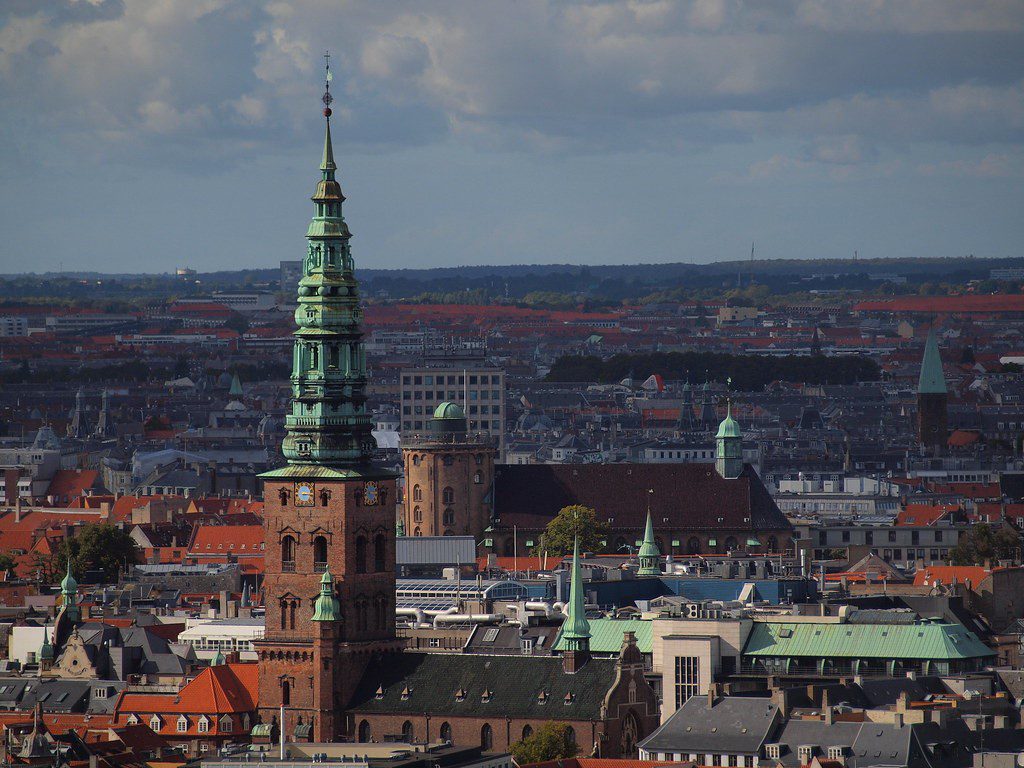
When most people picture poverty, they do not usually imagine Denmark. Denmark is an affluent, Scandinavian country renowned for its welfare state. Most Danish people and many people worldwide see Denmark as a model society to look to when dealing with poverty and creating a more egalitarian society. Yet, despite the programs in place to support its citizens, poverty in Denmark is still a problem. In a worrying trend, levels of poverty and inequality have been steadily rising in the last two decades.
A report from the Danish National Center for Social Research (SFI) says that the number of homeless people in Denmark has increased by 23% between 2009 and 2015. In 2015, estimates determined that there were 6,138 homeless people throughout the country, with the increase in homelessness greatest in people aged 25 to 29.
Changes to Welfare State Benefits
So, why are things suddenly changing in Denmark? The country still has a welfare state, so why do people lack financial security or even homes? The answer lies in reductions to social assistance programs that began in 2002 and left many Danes behind.
In 2002, the Liberal-Conservative government enacted changes, cutting significant social assistance benefits for specific groups, such as refugees, new immigrants and ethnic minorities. It pitched these changes as a part of immigration policy reform. However, these changes have had lasting impacts on the welfare system and on poverty in Denmark as a whole. The government justified the cuts to social assistance as necessary to increase immigrants’ and refugees’ incentive to find work.
Many within Denmark have seen the intention behind these reductions as a power play to show “outsiders” in Denmark that they would not receive equal treatment until they actively earned the right through work. Denmark has been a historically isolated and homogeneous society. Denmark’s coming to terms with newcomers has been, and continues to be, wrought with debate as to whether or not “foreigners” deserve to be a part of the welfare state. Refugees have fled to Denmark by the thousands, the numbers climbing from around 3,000 in 2011 to a peak of over 17,000 in 2015, before decreasing steadily each year afterward.
Who Does Poverty Affect?
There is a noticeable divide between the haves and the have nots in Danish society. Most Danes are well-off, do not struggle financially and have the assurance that their taxes will pay for their children’s higher education, most of their medical expenses and other basic necessities. Meanwhile, the poor have experienced marginalization.
Poverty among some of the most vulnerable members of Danish society has risen. The makeup of the poor is mostly single mothers and families composed of refugees and immigrants. In fact, one-fifth of all homeless people are foreigners. Additionally, a whopping four out of five homeless people have mental health or dependency issues and are not getting the help that they desperately need.
Poverty in Danish children provides many of the most devastating figures of poverty in Denmark. Child poverty increases by thousands every year. By 2017, there were about 64,500 children living in poverty. Not only are the children in poverty suffering, but childhood poverty has lasting effects that make it difficult for poor Danish children to prosper as adults. Studies confirm that Danish children who grow up in poverty will likely achieve less education. Moreover, they might receive a lower wage when they themselves enter the Danish job market. Child poverty in Denmark not only hurts Danish children in the present but Danish society in the future. Yet, many Danes continue to tout their welfare system without examining what needs fixing.
Falling Short
Though Denmark has lower levels of poverty than many other countries, its poverty demographic is changing and has been for the last two decades. These numbers call into question Denmark’s worldwide renown as an inclusive and dependable welfare state, and as a model that other nations should follow. Though most Danish politicians across party lines claim to support the welfare system, many support cuts to social assistance benefits. The leader of the Alternative Welfare Commission, Per Shulz Jorgensen claimed that “the welfare society is not living up to its own principles,” and as poverty climbs in the Danish welfare state, it would seem that he is right.
Caritas Denmark
The good news is that many NGOs have been taking action to help fight poverty in Denmark. Caritas Denmark has sought to empower poor people both in Denmark and around the world, running programs and giving relief to refugees worldwide. It is sending aid to communities that the Syrian civil war has affected as many refugees have fled from Syria to Denmark. Estimates have determined that it will provide health care and support to 12,886 people.
At home, Caritas Denmark runs programs focused on providing training to the poor and supporting integration projects for refugees in Denmark, as well as trying to prevent domestic disputes. It is addressing these issues to ensure that everyone has an equal chance of employment and housing, and an escape from poverty. As an affiliate of the Catholic Church of Denmark, Caritas Denmark works with 42 parishes and about 40,000 Catholics annually in Denmark. More work is necessary, but there are many Danes still fighting against poverty, both at its roots in the refugee crisis and at home through training and social programs for the poor.
Though Denmark has held on tightly to its status as one of the happiest countries on earth, poverty in Denmark requires attention. Danish people have begun to admit that poverty is a growing issue within Denmark, with a 2008 poll finding that 59% of Danes polled believed the wealth gap between well-off Danes and Danes in poverty required reducing. Nonprofits, advocacy groups and the hope of possible government action to support the vulnerable and the poor show that there is still a possibility of curbing the growth of poverty in Denmark. This way, Denmark can aspire to be the happiest country on earth for all Danes.
– Julia Ortiz
Photo: Flickr

Protesting Period Poverty in Thailand
Gender Equality in Thailand
Thailand is one of the most gender-equitable countries in Asia, yet women are not represented in the government, police force or military and are excluded from certain schools in each sector. The leader of the 2014 coup, Prime Minister Prayut Chan-o-cha, runs the national committee of gender equality but has sparked protests for his “male supremacy” actions.
Since July 2020, pro-democracy rallies have erupted in Thailand, millions demanding a voice in the government after the military seized power in the 2014 coup and rewrote the constitution to control the 2019 elections. In Thailand, people caught criticizing the king are sent to jail, so the protestors are risking their freedom.
Women are the main organizers, speakers and participants, and they use the platform to expose gender inequality. Some issues they protest include reproductive rights, the price of menstrual products, sexist school dress codes, the wage gap and rape culture. The pro-democracy rallies turned into Thailand’s first gender-political movement, one feminist pointing out to The New York Times.
At a protest in August 2020, activist Kornkanok Kamta said, “We cannot claim to be a true democracy when decisions about our bodies and reproductive health are still controlled by the government.”
Sunny Cotton
Kesinee Jirawanidchakorn operates a brand called Sunny Cotton that produces and sells reusable pads. When she sold her products in Chiang Mai, a city in Thailand, older women approached the booth excited to see that the cloth pad was coming back in style. In hopes of breaking the stigma around menstruation, Jirawanidchakorn’s company encourages women in Thailand to talk about their periods.
The Sunny Cotton cloth pads are slightly more expensive than disposable ones, but they are much cheaper in the long run. Customers will never again feel the anger and oppression of paying taxes on a basic necessity, and the products are luxurious and sustainable, making the one-time tax seem reasonable. Sunny Cotton also boosts Thailand’s economy by creating jobs as Chiang Mai villagers make the products. In the future, Jirawanidchakorn plans to donate the products and share her period knowledge with girls, underprivileged women and women in prison.
Looking Ahead
Eventually, Sunny Cotton hopes to uplift Thai women out of period poverty by giving them free access to pads and the confidence to talk about their periods. Period poverty in Thailand is just one aspect of the patriarchy that protestors hope to dismantle. While organizations like Sunny Cotton are working to alleviate period poverty in Thailand, more action needs to be done to lift women out of poverty and establish gender equality.
– Rebecca Pomerantz
Photo: Flickr
What It is Really Like Living on Less Than $2 a Day
The term “extreme poverty” is often used in political and humanitarian discussions. However, what does it really mean? About 734 million people around the globe live in extreme poverty. This means they live on $2 or less every day. It can be difficult for many people to grasp this concept. As a result, discussions about extreme poverty often focus on statistics in order to rationalize the issue. To truly comprehend what living in extreme poverty is like, statistics are not the only important information to take into consideration. Anecdotes and firsthand accounts from people living in this type of poverty are necessary for comprehensive understanding. They are the ones who can truly tell about their experiences and everyday lives as people living on less than $2 a day.
Serin Dossa of Lagos, Nigeria
Serin wakes up every day and begins making Koko, or porridge, to sell throughout the day. She makes the equivalent of $1.12 each day. Her husband does not have a job. Consequently, she has to take out loans to feed her family, including her young children. Although she works to save her money, it is difficult to do so when her family members fall sick so frequently due to unhygienic living conditions. She is the provider for the family like so many other Nigerian women in communities like hers.
Lal Mohammed of Kolkata, India
Lal pulls people and packages behind him on his rickshaw every day not because he likes to, but because it is the only stable job he can find. He supports himself, his wife and their three children. Lal takes the bus into the city every day where he then picks up his rickshaw and begins his long day of work. He sometimes walks up to 10 kilometers in just one day. Lal hopes his children will grow up to have a better education than himself. However, their family simply cannot afford to have any savings.
Akolgo A. of Salpiiga, Ghana
Akolgo is a peasant farmer, and his only source of income is his crop yield. In 2017, he put all of his money towards his farm crops in hopes of raising money to rebuild his home that was falling apart. Although he raised enough money to do so, his house flooded later that same year. His family has been homeless ever since. He receives $26 every three months from his government, but this is far too little money to rebuild his home how his family needs it to be.
Devli Bai of Rajasthan, India
Devli works as a day laborer doing manual labor. She takes the bus into the nearby city each day and waits for a contractor to hire her for the day. Her most common tasks include shoveling rocks and carrying rocks on her head at construction sites. She typically earns a little more than $2 each day, but the cost of her daily bus tickets dwindle that amount down so that she is living on less than $2 a day. She is divorced from her husband and raising her two children alone.
Who is Helping?
Although these stories are upsetting, they are crucial in understanding what living on less than $2 a day really looks like. The good news is there are several organizations doing great work to help those who live in extreme poverty. With over 70 years of experience, Oxfam International works with over 90 countries across the globe. In 2019 it directly helped 19.5 million people with their programs. It focuses on collaboration with communities who need help the most and long-lasting solutions driven by innovation.
The Organization for Poverty Alleviation and Development is another nonprofit organization. It is currently working on 31 global projects across several countries. One of its aims is to tackle issues one at a time in whichever community needs its help the most at a given time. It also has well-established emergency relief and response programs to prepare for the unexpected.
Another nonprofit fighting extreme poverty is Concern Worldwide. Its reach extends to 23 countries and its initiatives in those countries are guided by six central themes of poverty. In 2019 alone, Concern Worldwide helped 11.5 million people through their emergency response programs and 15.1 million people through their long-term development programs.
Living on less than $2 a day is something no human should have to endure, which is why nonprofits like these are so important in our contemporary global community.
– Natalie Tarbox
Photo: Flickr
The Agricultural Sector in Kenya
Agriculture is one of the most critical production sectors in society. Proper agricultural techniques and efficient transportation of goods are crucial in reducing food insecurity. They are also vital in ensuring that everyone is provided with adequate nutrition. Based on a 2020 food insecurity projection by the European Commission, between 6% and 9% of Kenyans have faced food insecurity this year. This is a result of many factors in the agricultural sector in Kenya.
In Kenya, the agricultural sector makes up 24% of its GDP via direct agricultural production. It makes up an additional 3% via agricultural manufacturing and distribution. More than 80% have jobs in the farming sector in Kenya. Unfortunately, many barriers over the past decade have inhibited agrarian success in Kenya.
Political Climate and Environmental Barriers
Following a controversial presidential election in December 2017, conflict broke out in Kenya. Throughout the months of conflict, more than 1,000 Kenyans were killed. More than 500,000 fled their homes to avoid violent areas. This displacement negatively impacted the agricultural sector in Kenya. It separated farmers from their property and destroyed crops.
Additionally, the climate of Kenya makes it susceptible to drought, flooding and landslides. Roughly 83% of Kenya is on “arid” or “semi-arid” land. These areas are much more likely to suffer from droughts, which drastically diminish crop yields. These droughts also impact livestock in Kenya by depleting water availability and grazing locations. Many areas in Kenya also experience periods of continued rainfall that can cause flooding. Flooding can overwater crops and cause an increase in livestock-related diseases.
Increasing Cost of Agricultural Inputs
The rising price of necessary agricultural inputs, such as fertilizer, has been making it difficult for farmers to compete with importers. Importers can sell their products at lower costs and push local producers out of the market. In the first half of 2018, food imports rose by more than 50%. For a country whose economy is mainly dependent on agriculture, this can be very detrimental.
Policy
In recent years, the Kenyan government has begun implementing subsidies on farm inputs such as fertilizer. These subsidies have made local farmers equip to compete in the agricultural market. In tandem with this, the government has been improving rural infrastructure so that these farmers have access to a broader customer pool.
In addition to these policies, the Kenyan government has been working on implementing educational programs. These programs provide farmers with a comprehensive understanding of agricultural diversification techniques and irrigation strategies. The climate of Kenya can make it exceedingly difficult to sustain agricultural growth. Therefore, educational resources could improve the crop yields of farmers.
Nonprofit Work
It is estimated that each day, 83 tons of produce grown on Kenyan farms are rejected after being deemed aesthetically imperfect for export. In many cases, these products end up in landfills. In January 2017, the World Food Programme began an initiative to reduce the amount of wasted food in Kenya.
This program diverted these “ugly” fruits and vegetables from landfills to schools. These products help make school lunches for those in disadvantaged communities. This program both combats childhood hunger and reduces food waste. Within the first four months of this program being enacted, it provided more than 11,000 pounds of produce to schoolchildren.
To combat food insecurity and help raise the GDP in Kenya, innovations in its agricultural sector need to be made. These changes will require investment in crop-related technologies and resources, either by the government or by international donors.
– Danielle Forrey
Photo: Flickr
Plastic Free Lebanon is Tackling Lebanon’s Waste Crisis
The United Nations Economic and Social Commission of Western Asia highlighted that “Lebanon is crippled by the impact of multiple shocks that have exhausted its economy and caused an unprecedented increase in its headcount poverty rate.” More than 55% of Lebanon’s population lives in extreme poverty. As a result of corruption, the economic crisis, ongoing protests and the health crisis, poverty rates continue to increase.
The Beirut Explosion
Beirut’s explosion severely affected the already existing waste crisis. Rubble, glass and plastic covered the city following the blast. Moreover, the disaster damaged the Karantina and Bourj Hammoud sorting, recycling and composting facilities. Consequently, poverty rates skyrocketed as the volume of waste increased.
How the Youth are Making a Difference
The Plastic Free Lebanon initiative is an environmental project created by Roberto Helou, Florence Ryan, Jad Irani, Yasmina Keyrouz and Caroline Chaptini. It also collaborates with The Green Community NGO. The organization aims to create a systematic change and bring awareness to the ongoing waste crisis in Lebanon. Its efforts focus on mobilizing citizens to create a positive change. Thus, people gather and collect plastic bottles from north to south Lebanon. The organization’s goal is to collect 500,000 plastic bottles by November 2020.
The Plastic Free Lebanon Project
Unfortunately, Lebanese homes do not have access to clean drinking water. Thus, most of the population relies on plastic bottles for water consumption. Roberto Helou told The Borgen Project that one day he started piling bottles in the corner of his workspace instead of throwing them in the bin. The number of bottles that he collected shocked him.
Helou’s perspective toward environmental responsibility changed. He discovered that only 14% of the world’s plastic is recycled, and the remaining 86% pollute the land and sea. Plastic is one of the most invasive pollution factors in Lebanon’s waste crisis, and Helou wanted to make a difference. Helou argues that sorting your own trash in different bins is the easiest way. “It is such a simple habit to implement, and if every Lebanese did this, we would already be playing our part as citizens,” he assures.
Steps to Make it Happen
Looking Ahead
The Plastic Free Lebanon aims to raise awareness and educate people on Lebanon´s waste crisis, inspire behavioral changes to create a long-term impact and give back hope to the Lebanese people by showing them that a positive change is possible. Helou hopes that with its efforts it will be able to affect “the habits of people in the long term to become more sustainable and environmentally aware.” After all, just with any positive or reformative change, “change start with our individual mindsets.”
– Paola Arriaza
Photo: Flickr
Poverty in Denmark and the Welfare State
When most people picture poverty, they do not usually imagine Denmark. Denmark is an affluent, Scandinavian country renowned for its welfare state. Most Danish people and many people worldwide see Denmark as a model society to look to when dealing with poverty and creating a more egalitarian society. Yet, despite the programs in place to support its citizens, poverty in Denmark is still a problem. In a worrying trend, levels of poverty and inequality have been steadily rising in the last two decades.
A report from the Danish National Center for Social Research (SFI) says that the number of homeless people in Denmark has increased by 23% between 2009 and 2015. In 2015, estimates determined that there were 6,138 homeless people throughout the country, with the increase in homelessness greatest in people aged 25 to 29.
Changes to Welfare State Benefits
So, why are things suddenly changing in Denmark? The country still has a welfare state, so why do people lack financial security or even homes? The answer lies in reductions to social assistance programs that began in 2002 and left many Danes behind.
In 2002, the Liberal-Conservative government enacted changes, cutting significant social assistance benefits for specific groups, such as refugees, new immigrants and ethnic minorities. It pitched these changes as a part of immigration policy reform. However, these changes have had lasting impacts on the welfare system and on poverty in Denmark as a whole. The government justified the cuts to social assistance as necessary to increase immigrants’ and refugees’ incentive to find work.
Many within Denmark have seen the intention behind these reductions as a power play to show “outsiders” in Denmark that they would not receive equal treatment until they actively earned the right through work. Denmark has been a historically isolated and homogeneous society. Denmark’s coming to terms with newcomers has been, and continues to be, wrought with debate as to whether or not “foreigners” deserve to be a part of the welfare state. Refugees have fled to Denmark by the thousands, the numbers climbing from around 3,000 in 2011 to a peak of over 17,000 in 2015, before decreasing steadily each year afterward.
Who Does Poverty Affect?
There is a noticeable divide between the haves and the have nots in Danish society. Most Danes are well-off, do not struggle financially and have the assurance that their taxes will pay for their children’s higher education, most of their medical expenses and other basic necessities. Meanwhile, the poor have experienced marginalization.
Poverty among some of the most vulnerable members of Danish society has risen. The makeup of the poor is mostly single mothers and families composed of refugees and immigrants. In fact, one-fifth of all homeless people are foreigners. Additionally, a whopping four out of five homeless people have mental health or dependency issues and are not getting the help that they desperately need.
Poverty in Danish children provides many of the most devastating figures of poverty in Denmark. Child poverty increases by thousands every year. By 2017, there were about 64,500 children living in poverty. Not only are the children in poverty suffering, but childhood poverty has lasting effects that make it difficult for poor Danish children to prosper as adults. Studies confirm that Danish children who grow up in poverty will likely achieve less education. Moreover, they might receive a lower wage when they themselves enter the Danish job market. Child poverty in Denmark not only hurts Danish children in the present but Danish society in the future. Yet, many Danes continue to tout their welfare system without examining what needs fixing.
Falling Short
Though Denmark has lower levels of poverty than many other countries, its poverty demographic is changing and has been for the last two decades. These numbers call into question Denmark’s worldwide renown as an inclusive and dependable welfare state, and as a model that other nations should follow. Though most Danish politicians across party lines claim to support the welfare system, many support cuts to social assistance benefits. The leader of the Alternative Welfare Commission, Per Shulz Jorgensen claimed that “the welfare society is not living up to its own principles,” and as poverty climbs in the Danish welfare state, it would seem that he is right.
Caritas Denmark
The good news is that many NGOs have been taking action to help fight poverty in Denmark. Caritas Denmark has sought to empower poor people both in Denmark and around the world, running programs and giving relief to refugees worldwide. It is sending aid to communities that the Syrian civil war has affected as many refugees have fled from Syria to Denmark. Estimates have determined that it will provide health care and support to 12,886 people.
At home, Caritas Denmark runs programs focused on providing training to the poor and supporting integration projects for refugees in Denmark, as well as trying to prevent domestic disputes. It is addressing these issues to ensure that everyone has an equal chance of employment and housing, and an escape from poverty. As an affiliate of the Catholic Church of Denmark, Caritas Denmark works with 42 parishes and about 40,000 Catholics annually in Denmark. More work is necessary, but there are many Danes still fighting against poverty, both at its roots in the refugee crisis and at home through training and social programs for the poor.
Though Denmark has held on tightly to its status as one of the happiest countries on earth, poverty in Denmark requires attention. Danish people have begun to admit that poverty is a growing issue within Denmark, with a 2008 poll finding that 59% of Danes polled believed the wealth gap between well-off Danes and Danes in poverty required reducing. Nonprofits, advocacy groups and the hope of possible government action to support the vulnerable and the poor show that there is still a possibility of curbing the growth of poverty in Denmark. This way, Denmark can aspire to be the happiest country on earth for all Danes.
– Julia Ortiz
Photo: Flickr
Examining and Reducing Poverty in Libya
Following the 2009 overthrow of the authoritarian Libyan dictator Moammar Qaddafi, the country underwent serious social upheaval. Many citizens faced an increase in poverty in Libya. Libya is home to a wealth of natural resources. Markers such as life expectancy and literacy rates are substantially higher than other countries in the region. Nevertheless, ongoing political conflict combined with various refugee crises has dramatically elevated the number of people living below the poverty line. In fact, roughly one-third of the population lives in poverty, which is about 2.2 million people.
Violence and Politics
Numerous domestic parties and foreign countries have a stake in the political landscape. As a result, violence and fractured political relationships characterize Post-Qaddafi governance in Libya. Current Prime Minister Fayez al-Sarraj leads the Government of National Accord (GNA). It has garnered substantial support from the international community. However, the presence of militias and former Qaddafi supporters in the region have created lasting violence and contributed greatly to the impoverishment of its citizens. Opposition leader Khalifa Haftar has been leading a violent campaign against the GNA for the past several years. He envisions himself “a bulwark against extremists,” but his ties to the Islamic State worry his critics.
The Economic Aspect
Additionally, there are various international actors with an economic interest in the region. Countries like Italy, Russia and Turkey all have investments in Libya’s economic prosperity, and these investments tie closely to its remarkable oil and natural gas reserves. Historically, these countries have contributed to poverty in Libya by exploiting these natural resources. Ultimately, the conflict prolonged and intensified. It led to an increase in poverty in Libya by foreign leaders with personal interests in the outcome of the war. The fighting has destroyed important infrastructures such as roads and functioning sewage systems. This leaves many Libyans without access to clean water or food.
Improvements to Fight Libya’s Poverty
The political instability and constant violence increased poverty in Libya over the last decade. Moreover, the 90% of refugees migrating to Europe from Libya has compounded it. About 217,002 Libyans are currently displaced within the country, according to the UNHCR. This is in addition to another 43,113 asylum seekers who are passing through in search of a country that will take them in. Also, the number of “people of concern,” or those in dire need of aid, has increased by 50% since 2018. The political and social infrastructure to handle such numbers of displaced people is not available. However, groups like the IRC and UNHCR are working to improve the lives of Libyan citizens and asylum seekers. These organizations, among others, provide services such as community development centers and telephone hotlines in order to help identify, register and assist those who need it.
Furthermore, they work to provide humanitarian assistance to refugee camps and end the practice of detention centers in the region. Although terrorist and militia attacks on foreign aid centers have complicated efforts, there is noticeable improvement due to programs like these.
The Outlook
Ultimately, political violence and the competing desires of colonial powers have resulted in the increase of poverty in Libya in recent years. Religious conflict and foreign involvement have made the road to progress difficult. Aid will only reach 39% of those identified to be in need of critical assistance in 2020, according to the U.N. However, the outlook is not entirely bleak: the international aid community is working to provide relief to those in need. Also, the natural resources Libya possesses put the country in a unique position to recover and prosper. The region draws more international attention and humanitarian organizations continue to direct resources to Libyans in need. Therefore, there is reason to be hopeful that the country will soon be out of poverty.
– Leo Posel
Photo: Flickr
How Democracy Can Help Reduce Poverty in Sudan
At the end of June 2020, the United States Agency for International Development (USAID) announced that it would assist Sudan in its democratic transition by committing $356.2 million to aid. The funding comes as a result of Sudan’s successful revolution at the end of 2018. To curb an economic crisis, the former government took steep measures, decreasing fuel and bread subsidies. This ultimately resulted in protests in Khartoum, the capitol. At its core, the protests demanded a higher standard of living for all of Sudan’s people. In April 2019, at the peak of the demonstrations, a coup removed President Omar al-Bashir. A transitional government made up of shared civilian and military councils now aims to promote a pro-democracy movement to eventually hold elections. It also hopes to help reduce poverty in Sudan.
An Ideal Government
Specifically, the civilians want a government that will support a better quality of life for everyone. This would curb the number of people living in poverty, thus reducing poverty in Sudan. A transition to democracy often provides a country representation of the people, increased social rights, economic gain and collaboration. However, failing to prioritize a financial gain can result in a corrupt government followed by a reduced faith in democracy. The transitional government’s commitment to accountability and transparency is of the utmost importance while democracy is forming.
The Poverty Issue
With a transitional government in place for three years, the country is looking to shift its way of thinking to better its citizens’ lives. According to the Minister of Finance, Ibrahim Elbadawi, around 65% of Sudanese lived below the poverty line. On top of that, ever since conflict began growing in 2014, 5.8 million people required humanitarian assistance. With additional funding, these numbers can decrease.
The money granted by USAID will go towards conducting valid elections, building more vital institutions and growing political engagement. This will significantly benefit disadvantaged people like women, children and religious groups. Primarily, USAID works in South Kordofan, Blue Nile and the Darfur region to assist. USAID has a Rapid Response Fund run through the International Organization for Migration on a larger scale. It allocates money for short-term funding to national and international relief agencies.
The Help of USAID
Programs that USAID provides to Sudan fall under the themes of food security, conflict and human rights. A database system through USAID’s Famine Early Warning Systems Network tracks crucial data on food security and potential crises. Then, they are relayed to Sudan and other donors. In conjunction with the database, during the fiscal year of 2016, USAID donated $175.1 million to food security programs through the U.N. World Food Program and UNICEF benefiting Sudan. Aside from the database, USAID works to better human rights in the area. In partnership with U.N. Women and the U.N. Population Fund, USAID advocates for promoting women’s rights and gender-based violence prevention. Additionally, other programs target youth and women groups in Sudan “to reduce vulnerabilities to conflict and build leadership skills to foster peacebuilding. They also improve livelihoods and help create enabling conditions for development.
With more funding from USAID, Sudan’s transitional government can not only strengthen its growing democracy but also help reduce poverty in Sudan. As civilians see the potential of democracy in Sudan, they will invest more faith in the transition and thus receive more.
– Adrianna Tomasello
Photo: USAID
The Movement of Biotechnology in Uganda
About Uganda’s Biotechnology
While this form of technology covers a wide range of live organism manipulation, biotechnology in Uganda solely deals with technology associated with transgenic organisms and recombinant DNA alteration. This form of modern scientific technology became prominent in 1993. This was when the Ugandan Department of Animal Science and Faculty of Agriculture at Makerere University proposed using the transgenically derived bovine somatotropin (BST) hormone for cattle growth and lactate production. Genetic engineering of agrobacteria produces the BST hormone and boosts the agriculture economy in return. However, due to the controversy over growth hormones at the time, the import of BST halted.
Two years later, biotechnology usage was necessary for Phase 1 trials of a potential HIV-1 vaccine (ALVAC vCP 205). It was the first HIV-1 preventative vaccine study in Uganda and Africa as a whole. This vaccine was a live recombinant canarypox vector expressing HIV-1 glycoproteins. Both the BST and HIV-1 vaccine proposals provided a basis for the foundation for the national biosafety guidelines. They led to the establishment of the National Biosafety Committee in 1996.
Research into biotechnology continues to pose an advantage for Uganda. Moving these transgenic products to the commercial market requires a full governmental understanding within the biotechnology innovation market.
Effects on Ugandan Healthcare and Agriculture
Over the years, Ugandan biotechnology has widely helped both the healthcare and agriculture industry. Laboratory projects regarding genetic resistance to pathogens, droughts and other disasters aid the crop growth throughout the nation. Ongoing research on animal vaccines such as East Coast Fever and Foot and Mouth Disease has facilitated the animal life expectancy. The study has also improved food production in Uganda.
Characterization of crop pathogens such as sweet potato feathery mottle virus through molecular markers has led to better disease prevention techniques. For example, east African Highland bananas are being genetically modified to resist banana bacterial wilt, weevils and overall improve the nutritional value of the plant. Established in 2007, these modified bananas have been able to confer resistance against the black Sigatoka disease.
Additionally, the crops’ genetic diversity multiplies more now than ever, prompting a path towards a more complicated and safe GMO industry. Bananas and pineapples are artificially bred using tissue culture techniques, providing more products annually. Agro-Genetic Technologies Ltd’s (AGT) coffee bean proliferation is also underway.
Regarding the health sector, pharmacokinetics and drug resistance techniques receive heavy study. Multi-drug and drug-resistant diseases widespread in Uganda, such as tuberculosis, HIV/AIDS and malaria, are especially heavily studied. Clinical trials for DNA-based vaccines utilizing the recombinant adenovirus five vectors are also in progress.
Population Participation Increases
In the past few years, an average biotechnology worker in Uganda earned around 3,520,000 UGX per month. Biotechnology in Uganda has led to sufficient wages. However, this form of science has also increased the participation of different demographic groups, namely women. Women in the field have strongly encouraged the use of agricultural biotechnology.
Dr. Priya Namanya Bwesigye is the lead Ugandan banana researcher at the National Agricultural Research Laboratories (NARL) in Kawanda. She claims that African women are looking for new solutions. They are also looking into how they can use technology to give their people and themselves better and improved crop varieties to fight hunger and improve living quality. Bwesigye and her team use genetic engineering to make disease-resistant bananas and provide more nutrition. One of these modified bananas provides vitamin A as well. Her program provides farmers with these improved bananas and a foundation for the multiplication of said fruit with proper restraints.
For biotechnology in Uganda to take off, the population must be adequately educated about the effects of this form of science and its changes. Bwesigye, for one, explains agricultural biotechnology to farmers and why it is necessary. The Uganda Biosciences Information Center (UBIC) began training teachers in this modern form of science. This was done to popularize the technology in local communities. UBIC trained 27 teachers and 12 textbook authors after the education department mandated that the national curriculum in secondary schools integrated this new form of science. The National Crops Resources Research Institute (NaCRRI) held a one-week training course. Participants visit field trials of genetically modified crops and other research laboratories. These trials and laboratories involved different aspects of agriculture and health.
The Biosafety Bill of Uganda
With the use of biotechnology rising, ethical problems have started to arise. To ease integrating this new form of technology into the mainstream market, the Ugandan government established the Biosafety Bill of Uganda. This bill’s mission is to provide a proper framework that enforces safe development and biotechnology in Uganda. Its mission is also to regulate research and the release of these GMOs into the public. The population was torn between the ethical controversy surrounding biotechnology. However, the bill was able to go into effect in 2018 after much deliberation.
Overall, Ugandan biotechnology has dramatically impacted the country, especially in its agriculture and the healthcare industry. As time progresses, biotechnology in Uganda has improved and heavily aids as an asset to the country.
– Aditi Prasad
Photo: Flickr
Women’s Rights in Sierra Leone
Sierra Leone, located in Western Africa, has long been a question of concern to humanitarian organizations. People have widely debated women’s rights in Sierra Leone and the government has made little progress in gender equality. Gender equality is also a prerequisite for diminishing poverty in the future.
Women’s Primary Function in Society
An outbreak of the Ebola virus burdened Sierra Leone in 2014. Not only did the outbreak cause significant hardship, but Ebola also particularly affected women as they made up 59% of the deceased. The mass female mortality is due to an underlying theme of women as primary caregivers and the country’s gender norms. Historically, women have had no consensual role in marriage and family would give them away in exchange for a bride price. The traditional bride price is even more evidence of women’s objectification and use as a status symbol. Also, women hold lower positions than men in almost every field of work.
A major setback for women advancing in society is the lack of women in government. Sierra Leone’s patriarchal system has influenced the cultural boundaries that women must abide by. The identities of women in Sierra Leone are dependent entirely on male power and male-controlled institutions.
Reproductive Rights
The effect of deep-rooted patriarchy on Sierra Leonean culture is visible, especially with the limited protection of women’s bodily rights. Women’s rights in Sierra Leone have recently been more geared to gaining autonomy over their bodies. There is limited resources and capabilities to enforce punishment of domestic abuse, sexual violence and rape of adults and minors. Another aspect of women’s limitations is the lack of health services for mothers. Sierra Leone has one of the highest female mortality rates in the world with 1,165 of every 100,000 women dying.
With inadequate rights to their maternal health, women have taken it upon themselves to fund their health initiatives and groups. Many women have become health promoters to teach workshops for mothers on nutrition, hygiene, prenatal and postnatal care. The act of becoming leaders of health empowers women to demand change within communities. Women have decided that they will begin offering female healthcare if the government will not.
Change in the Future
The higher power structures must address meaningful change, but some women have already begun to start the change from the bottom. The major changes that have led up to today are the 2007 Domestic Violence Act, Devolution of Estates Act, the Registration of Customary Marriage and Divorce Act and honoring the Convention the Elimination of All Forms of Discrimination against Women. These four acts ensure more consensual marriage practices, allowing female inheritance of property, a minimum quota for women in elected positions and more. While these are major steps forward, the road ahead is long. Women’s rights in Sierra Leone still do not have protection in the country’s constitution and need amending.
The work of non-governmental organizations has been instrumental in introducing new perspectives to the Sierra Leonean government. Evidence of change is already emerging. Women’s rights in Sierra Leone are expanding every day, and women’s function in society is continuing to evolve. The future of women relies on breaking gender norms, adhering to higher standards of protecting females, access to healthcare and inclusive politics.
– Eva Pound
Photo: Flickr
Coopera’s NGO Rehabilitation Combats Instability in the Congo
With a population of 84,068,091 in 2018, 50.1% of the Congo’s population are women, while 49.9% are men. The population has a nearly equal gender ratio, though women face significant challenges in gender equality. As in many developing countries, women are not respected equally and typically do not hold positions of power. In the Congo, beginning in 1996, sexual violence has been used as a war weapon to intimidate and control women during and after the war.
According to the U.N., women in the Congo suffer drastically from a lack of rights and increasing vulnerability during the rise of military operations in 2018. With cases and reports of sexual violence increasing by 34% in 2018, the need for change is apparent. The U.N. quickly addressed these issues, working with the Congolese government to negotiate for peace with the Patriotic Resistance Front of Ituri. This brought about a decrease in sexual abuse cases committed by such military groups. Though the issue remains, there was a reported 72% decrease in sexual abuse cases following the UN’s intervention.
Poverty and Poaching
A decrease in the Congo’s poverty line has also occurred over the past two decades, although according to the World Bank, 72% of the population remains under the poverty line, living on less than $1.90 a day. With more than half of the Congo’s citizens struggling to make ends meet, poaching is an increasingly significant issue. Conservation is particularly essential in developing countries in which biodiversity and wildlife create tourist attractions that provide crucial economic income. Much of the country’s wildlife, such as elephants and primates, are subject to dangerous conditions. Primates are particularly vulnerable to threats such as the bushmeat trade and the pet trade. These trades are directly linked to poverty and instability in the Congo. This is because the industry provides a source of income and food. Therefore, in order to end poaching, baseline levels of infrastructure, employment and socioeconomic stability must be attained. Until this happens, many conservation establishments, such as the Pan African Sanctuary Alliance (PASA), Kahuzi National Park and Lwiro Primates Rehabilitation Center are working to eliminate poaching and protect endangered wildlife.
Protection and Rehabilitation of Wildlife
Lwiro Primates Rehabilitation Center was established in 2002 by the Institut Congolais pour la Conservation de la Nature (ICCN) and the Centre de Recherche en Sciences Naturelles (CRSN). Following the establishment of Lwiro, Coopera NGO stepped up to support the center’s rehabilitation and educational practices. Lwiro gained the support of the Ivan Carter Wildlife Conservation Alliance (ICWCA) and the Mountain Gorilla Veterinary Project (MGVP). Two women now run Lwiro: Lorena Aguirre Cadarso works as the country director, and Itsaso Vélez del Burgo works as the technical director. These two women strive to ensure that Lwiro is actively addressing cultural and conservation issues in the Congo.
The fact that Lwiro is run by women is unusual, as women in the Congo have been subject to significant gender inequality for decades. They are breaking gender barriers while protecting at-risk wildlife and helping improve instability in the Congo.
Lwiro Primates Rehabilitation Center
Lwiro is home to 92 chimpanzees and 108 monkeys, adding up to a total of 13 different species. Rehabilitation and preservation of primates in the Congo mean saving the lives of the endangered animals, whether they have been injured due to poaching or other reasons. Typically young primates are brought to the center because their families have been taken from them and they will be unable to provide for themselves. Lwiro offers multiple dormitories for the chimpanzees and monkeys and includes a five-acre enclosure for the primates to play while the staff ensures that the dormitories are safe and clean. The rehabilitation of primates requires care and attention, just as the care of humans requires. Infant primates are treated with particular love and attention. Caretakers strive to teach social skills to primates that might have lost their families and would not otherwise be socialized. Lwiro’s mission is to ensure that resident animals acquire the necessary social skills for reintegration into wild chimpanzee communities after completing rehabilitation.
Sexual Abuse Treatment and Rehabilitation
Along with primate rehabilitation, Lwiro also offers rehabilitation and treatment for local sexual abuse victims. Sexual abuse is a pervasive issue in the Congo. The center provides treatment for victims ages 2 to 18 years old. Treatment can be modified to meet the needs of particular victims. According to Cadarso, the center helps “victims of sexual violence, victims of gender violence and widows.” The staff uses methods such as Tension and Trauma Release Exercises (TRE), meditation and prayer. Lwiro focuses specifically on survivors’ mental health. “You need to give psychological support that aims to provide the tools to resolve their trauma and skills to promote their resilience,” Cadarso stated. Lwiro has worked with nearly 350 victims and counting, most being women and children. The center also provides therapy for individuals for three months and three weeks. It reports an 85% patient improvement rate after treatment. Lwiro’s therapy offerings reveal that addressing instability in the Congo can start at the level of individual people.
A New Psychological Reference Center
Lwiro is expanding its center in 2020, starting a new project to build the first Psychological Reference Center (PCR). In the past, victims have not had a physical place to conduct their psychotherapy sessions. Therefore, this project will be massively impactful. Additionally, the Psychological Reference Center (PCR) will implement new practices such as training primary healthcare workers training to recognize mental disorders like PTSD, depression and anxiety. The second phase will provide similar training specialized for teachers, teaching “skills to recognize children with severe problems so they can be referred for more specialized treatment,” Cadarso states, and “providing listing resources available in their communities.” This initiative will enable individuals to recognize and assist those who are struggling physically and mentally. They will be able to determine proper care or treatment.
The project’s implementation and funding would not be possible without the support of many NGOs, such as the Jane Goodall Institute, the Ivan Carter Wildlife Foundation and more. To address instability in the Congo, multiple approaches are required, and Lwiro ensures that no person — or chimp — is left behind.
– Allison Lloyd
Photo: Flickr