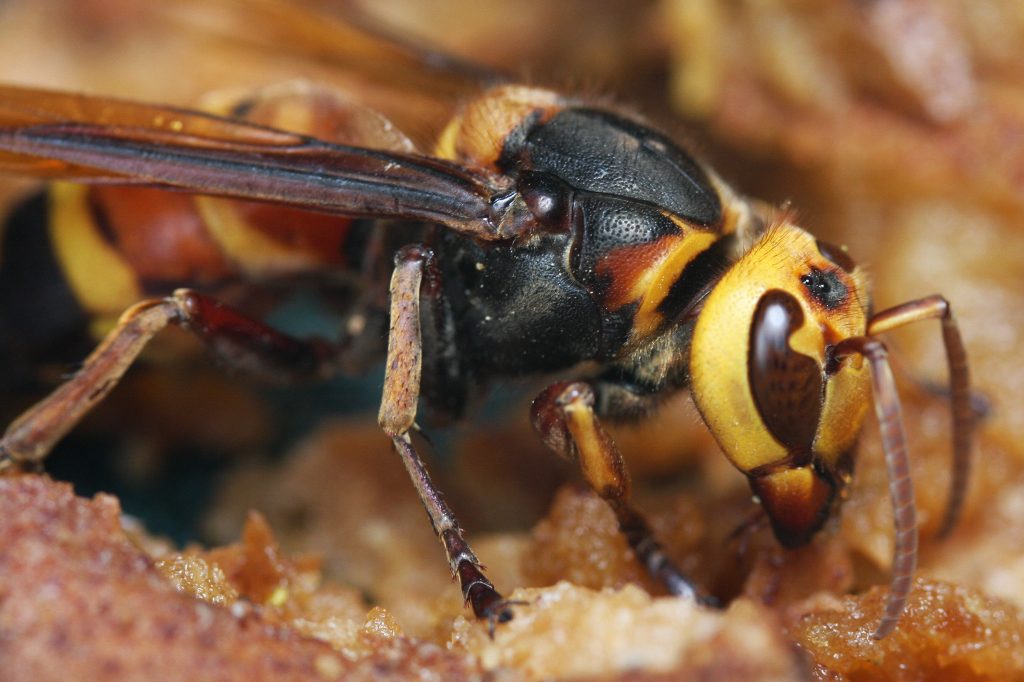
Arriving for the first time in the U.S. in late 2019, Asian giant hornets are a concern for many due to their potential to massacre honeybee populations, which are significant in helping plants grow, breed and flower. However, while this worry is new in sweeping the nation, the U.S. is not the first nor only country to deal with the Asian giant hornets. The hornets originate in Asia, where countries like Sri Lanka and India struggle with food security and endure the Asian giant hornet populations. Developing nations do not offer the same guarantee regarding food security as these countries struggle to meet the production demands of the rest of the developed world, all the while supporting their own population’s infrastructural needs. Here is some information about Asian giant hornets and their impact on food security in Asia.
The Hornets
Asian giant hornets are the world’s largest hornet with a wingspan of 76 mm and a length of 50 mm, set with a 6 mm barb that can inject their potent venom into victims. Asian giant hornets generally do not sting people, although their sting is highly venomous and in rare cases, can be fatal. They tend to build their nests underground, placing them close to where they can wreak havoc on agricultural processes.
While food security has long since been a concern in the developing nations in Asia, organizations focused on fixing this issue seem undisturbed by the presence of these hornets, even concerning nations that are only a few poor harvests away from having a malnourished population. This is due to how honeybees in the area have coevolved with the Asian giant hornets, and as a result, have developed defenses to combat their attacks on the honeybee population.
For example, Japanese honeybees have taken to form a sort of ‘bee ball’ around the hornet, working their wing muscles to generate heat and raise carbon dioxide levels until it kills the offending hornet. The honeybees avoid succumbing to this increase in temperature since they can withstand temperatures up to 122°F whereas hornets start to die at temperatures that exceed 115°F.
Under circumstances where the honeybee population has not adapted to the Asian giant hornet, it only takes 15 to 30 hornets to massacre 30,000 to 50,000 worker bees in just a few hours. Moreover, hornets seek to siege hives and use the larvae they find to feed their own.
Sri Lanka
In Sri Lanka, one of the nation’s the hornets are native to, a significant amount of agriculture relies on bee pollination, while the country invests the majority of what it produces into its population.
As Sri Lanka recovers from a 30-year civil war that ended in 2009, the nation has come miles in improving education, maternal and child mortality and poverty levels. However, food security and improved nutrition are still major obstacles the country grapples with. Out of a population of 21 million, 22% of people experience undernourishment in Sri Lanka in comparison to 2.5% of the population of 328.2 million in the United States.
Honeybees and Coconuts
Much of Sri Lanka’s fruit and vegetable output, as well as their oilseed crops, are reliant on the honeybee population for pollination. For example, coconuts are heavily reliant on Sri Lanka’s honeybee population for the pollination process.
Coconuts are a substantial part of Sri Lanka’s life, not only integral for many employment opportunities and trade but also a valuable resource for cuisine, nutrition and rural income. About 20% of crop-suitable land in Sri Lanka goes toward the cultivation of coconuts and people consume about 63% of production domestically.
If Asian giant hornets were to overrun the honeybee population in Sri Lanka, the coconut harvests would suffer significantly at the hands of poor pollination, resulting in a major hit to Sri Lanka’s production. More specifically, its agriculture sector would suffer, which primarily goes toward domestic consumption. Additionally, the hunted honeybee population would become a protein-rich meal for Asian giant hornet larvae, nourishing a new generation of honeybee killers.
India
Asian giant hornets are also native to India, where food insecurity largely derives from unequal food distribution and a lack of agricultural diversity. Overall, honeybees are responsible for pollinating more than 70% of major crops around the world, and with the decline of the honeybee population due to insecticides and deforestation the global food supply is already threatened to reduce by a third.
With 195 million malnourished people, India holds a quarter of the world’s hunger burden. With chronic malnourishment stunting the growth of four out of 10 children in India, these children are more prone to performing poorly at school, meaning limited employment and earning opportunities in adulthood. Malnourished mothers are also more prone to giving birth to underweight infants, and a lifetime of stunting bodes poorly for an individual’s chances with non-communicable diseases throughout their life.
The Nationa Food Security Act (NFSA) and Malnourishment
In India, legislation like the Nation Food Security Act (NFSA) and the public distribution system ensures that virtually the entire Indian population has access to food, however, due to a lack of agricultural diversity, food security still remains a problem. As of 2019, 36% of children under the age of 5 were underweight and 75% of the total population was not getting enough vitamins from their food intake. The same study reported that 51% of women within the reproductive age were iron deficient.
India’s food insecurity issues have roots in issues of distribution and accessibility – things that India’s legislation has been combating throughout the years. However, with the further decline of the honeybee population, exacerbated by the Asian giant hornets, food supplies drop, further limiting accessibility and stretching distribution even thinner.
South Korea
South Korea has long maintained its ‘developing country’ label as a means of protecting its agricultural industry, despite boasting low maternal mortality rates, a high life expectancy and the world’s fourth-largest economy.
The nation maintains its food security and self-sufficiency through tariffs and high administrative prices within select agricultural markets. Like many of the other Asian nations that the hornets are native to, their honeybee populations have adapted to be more resilient to hornet attacks. This resilience is not the only attribute aiding in South Korea’s current food security though. Due to the country’s flourishing economy, the nation has been able to shift its position as a recipient of aid from the Food and Agriculture Organization of the UN (FAO) to that of one of the top 15 contributors, in both financial aid and in terms of supplying interns.
South Korea is secure enough currently, that if the hornets were to massacre whatever remaining bee population exists in the country, South Korea would have a sound enough infrastructure to weather the poor resulting harvest. However, the issue still lies that South Korea’s bee population is suffering heavily, even if not necessarily at the hands of the hornets – and even if the low honeybee populations aren’t starving the people, that does not mean there are no consequences to neglecting this issue.
Challenges for the Honeybee Population
In 2010, a sacbrood virus outbreak ravaged Korea’s bee population and wiped out almost 90% of them. Years passed, and the country did not take measures to restore the population, as the country did not view bees as economically viable.
Honeybees, while valuable for the pollination of many crops, are also necessary for maintaining a balanced ecosystem. The obliterated bee population in South Korea not only posed a threat to the nation’s wildlife in failing to pollinate and spread seeds that would feed nonhuman species but would subsequently fail to pollinate crops reliant on animal-driven pollination if such species died out.
Despite the panic that has overtaken the U.S., the Asian honeybee populations have adapted to survive Asian giant hornet attacks. Despite this success, still developing production sectors that struggle to keep up with demand, a lack of agricultural diversity (and the resources to navigate this problem), as well as the political conflicts countries are perpetuating food insecurity in Asia. Hopefully, with continued efforts, food security in Asia should improve.
– Catherine Lin
Photo: Wikipedia Commons

Nzeve Helps Teach Deaf Children in Zimbabwe
With the current pandemic, it can be easy for countries to focus primarily on themselves. The coronavirus is a pressing issue, but that does not mean that all of the other issues in the world have gone away. In fact, the coronavirus compounds many of these issues as well as takes focus away from their solutions. Deaf children in Zimbabwe are an example of those who still need help despite the focus being on the pandemic. COVID-19 has shut down economies and closed off borders between nations. Necessary aid for these children has not been able to reach them as well as before. They still need to progress in their education with teachers who know how to teach and work with deaf children.
Poverty in Zimbabwe is no friend to the deaf children in Zimbabwe. Families are unable to send their children to special schools because they cannot pay for them. Also, education is such an important component of raising a country out of poverty. This is because educated people are more likely to get higher-paying jobs to support their families and to boost the economy.
Facts about Poverty in Zimbabwe
After seven years, twice as many people lived in extreme poverty as of 2019. The poverty rate in Zimbabwe as of 2019 was 34%. As in many countries, poverty affects the parts of the country outside of cities the most. Of the children that live in these areas, over 70% are impoverished. Malnutrition is also a serious problem; as of 2019, food insecurity affected nearly half of Zimbabwe.
The Nzeve Deaf Center
The Nzeve Deaf Center is a nongovernmental organization that teaches deaf children in Manicaland Province, Zimbabwe how to use sign language. It also teaches them how to survive in the world as a deaf person. It not only teaches the children but is also involved with their families so that the children can have nurturing environments in school and at home. Manicaland is one of the poorest areas of Zimbabwe in regards to the children there.
Nzeve’s Help During COVID-19
Additionally, Nzeve will provide economic relief for families who wish to send deaf children to school. It will teach them ways to make money to pay for their children’s schooling as well as lower the cost of school. Deaf children still need to keep up with their studies while staying in quarantine. Therefore, Nzeve will teach them until they are able to go back to school. Nzeve also reaches out to fellow NGOs, informing them and others about helping disabled children.
In conclusion, the negative effects of COVID-19 have affected Zimbabwe tremendously. The poverty rate has increased because of the external factor of the worldwide shutdown that caused internal factors such as unemployment. Countries do have to focus on their own people in order to protect them and to stop the spread of the virus within their borders. However, there are people in other countries like Zimbabwe who still need help, especially with the current coronavirus crisis. Specifically, the deaf children in Zimbabwe still need access to education, and their families still need help paying for that education. Nzeve has accepted the challenge of helping these children to have a brighter future.
– Moriah Thomas
Photo: Flickr
Indigenous Peoples in Canada Still Face Poverty
Indigenous peoples in Canada have roots in poverty tracing back to the 19th and 20th centuries. They had to relocate to small plots of land called reserves where destruction of their traditional way of life “combined with the poorly organized set-up of reserves resulted in impoverishment for those on the reserves.”
In Canada, 25% of Indigenous peoples live in poverty with 40% of those living under the poverty line being Indigenous children. Many Indigenous peoples died due to lack of shelter, adequate food, access to health care and lack of federal relief services. Today, Indigenous communities continue to suffer at the hands of institutionalized colonial violence.
Housing Inequalities
Several cross-country reserves have declared a State of Emergency due to poor living conditions. Statistics deemed only 56.9% of homes on reserves adequate in 2000 and 43% unsafe and in need of repairs in 2016. In 2016, both reserve shelters and Inuit homes qualified as overcrowded — 28% and 30% respectively.
Some Indigenous people moved off of reserves and into urban centers. Even there, they continued to face economic struggles. Indigenous peoples are twice as likely to live in poverty in comparison to non-Indigenous folk. In 1995, 55.6% of Aboriginal people in urban centers lived in poverty. Meanwhile, in 2003, 52.1% of Indigenous children lived in poverty.
Income Disparities
Impoverishment within the Indigenous community has resulted in fewer on-reserve schools, rising illiteracy and rising unemployment. Indigenous households making an income below $20,000 represented almost 20% of the entire Canadian population; whereas, non-Indigenous homes only represented 9.9%.
Non-Indigenous folk in lower-income homes have a 12.9% outcome of people with major depressive episodes. Meanwhile, Indigenous folk in lower-income homes had a 21.4% outcome — almost double. The values for higher incomes families are much closer; 6.3% for non-Indigenous and 7.7% for Indigenous.
Health Inequities
The Well-Being Index determined that First Nation and Inuit communities ranked on average 20 points lower than non-Indigenous communities. Despite being only 4% of the Canadian population, Indigenous people make up 14% of the population relying on food banks. Smoking and lung cancer statistics also show an overrepresentation of Indigenous peoples. Lower-income Indigenous households reported daily smoking levels at 48.8%.
The lowest-income Indigenous populations also experience disproportionate difficulties in accessing health care. Popular barriers are that Indigenous peoples are “unable to arrange transportation (19.6%); not covered by Non-Insured health benefits (NIHB) (18.4%); could not afford transportation costs (14.6%); prior approval by NIHB denied (14.2%); could not afford the cost of care, service (11.4%).”
Aid
Many community activists and grassroots organizations work tirelessly to help support the Indigenous communities in Canada. Dismantling generational poverty is another focus of activists and organizations. True North Aid is just one of those in the fight for Indigenous peoples in Canada.
True North Aid has decades’ worth of experience. It has an advisory council of four Indigenous Elders, partners and a Board of Directors with over 35 years of experience. Under such leadership, the organization successfully raises awareness for Indigenous struggles. Additionally, it provides home reconstruction aid, water purification technologies and health care aid to Indigenous communities in Canada.
Activists and organizations supporting Indigenous peoples are imperative in the fight to end poverty for Indigenous people. Indigenous communities suffer disproportionately and need advocacy and action.
– Jasmeen Bassi
Photo: Flickr
Cricket Farming in Cambodia
Vendors in bustling Cambodian markets often advertise their wares including dragonfruit, vegetables, freshwater fish and crickets. Since the 1970s, crickets have evolved from being a nutritious but cheap “hunger food” to a Cambodian diet staple. Cambodia traditionally suffers from high levels of malnutrition, with almost 80% of children lacking sufficient nutrients. However, as a result of cricket farming, crickets offer a surprising remedy containing protein, amino acids and micronutrients in each crunchy bite.
The Steps to Farming Crickets
Cricket farms consist of large concrete block pens. They contain large populations of crickets and even produce about 25 to 30 kilograms of insects per cell. Depending on farm size, there can be as many as 100 block pens on one farm. Pens are usually covered with mosquito netting to contain and protect the insect livestock. Inside the cells is the cricket’s bedding of layered rice husks or egg cartons.
The most expensive cost of cricket farming is feed. Crickets require high protein animal feed, commonly chicken feed. However, before harvesting the crickets, their diet changes from feed to fruits and vegetables. This is a less expensive feeding option and also improves the taste of the insects.
The breeding process within the pens is also relatively simple. As soon as the male crickets can stridulate, or make the characteristic chirp associated with the insect, they can breed. Cricket farmers then place bowls of sandy mixtures in the pen where females lay their eggs. Farmers patiently wait for one to two weeks to give females adequate time to lay their eggs before removing the bowls and transferring them to a new pen. They wait for the crickets to hatch and mature, which takes about 45 days, before starting the process over again. Cricket farming is a simple process with low overhead costs. Farmers can begin production with limited resources and grow from their profits.
Angka Changrit Kampuchea
Angka Changrit Kampuchea (ACK), which translates to Cambodian Cricket Farming Organization, sees cricket farming as a crucial solution to Cambodia’s poverty and hunger problems. ACK’s headquarters are in Cambodia’s capital, where they support micro livestock farmers in need. The organization provides education about insect agriculture. It also provides supplies to help farmers start insect herds.
Giving struggling farmers the tools and knowledge to farm crickets provides two crucial elements to the end of their poverty. These elements are sustainable food and sustainable income. The farmers can feed their families with their livestock and then sell the remaining product for profit. Furthermore, ACK recognizes the environmental benefits of cricket farming. It requires fewer resources, takes up less space, and emits fewer greenhouse gases than other protein production like poultry.
A Tasty Solution
To make fried crickets, one needs a tablespoon of salt, two tablespoons of sugar and some umami followed by a dash of water. Then, add flour and mix to create a frying batter. Dip the crickets in the batter then throw them in the frying pan to sizzle. The resulting cricket retains its crunchy shell with a smooth texture on the inside. Fried crickets line the streets of Cambodian markets and offer the perfect protein to any dish. The food provides more than just taste. It is stuffed with nutrients to improve the health of Cambodia’s malnourished population and provides employment and income to impoverished farmers. The six-legged creatures are becoming the new face of poverty reduction in the nation.
– Abigail Gray
Photo: Wikipedia
The Effective Altruism Movement and UK Aid
The effective altruism movement explores the concept of how cost-effectiveness can improve the world. The U.K. recently formed a merged Foreign, Commonwealth and Development Office, reshaping its foreign aid program. Effective altruism ingrained in foreign aid programs can create more sustainable institutional change.
The Basics of Effective Altruism
Dominic Cummings, an influential advisor of the U.K.’s Prime Minister, is a proponent of the effective altruism movement. The concept of guiding the campaign promotes the use of reasoning and resources to maximize the good and apply it to the world to make it a better place.
The principles of effective altruism are scale, solvability, neglectedness and long-termism. Scale pertains to the range of effect and potential for positive impact. Therefore, if applied, U.K. aid and international development can render significant change through the multilateral system. This can lead other powerful actors to make their governments’ spending cost-effective. Solvability refers to the probability of growth regarding the relationship between the number of resources and eradicating epidemics. Neglectedness relates to the specific significance and size of under-resourced issues. Meanwhile, long-termism undoubtedly regards the long-run effects of projects’ decisions. They could either increase or decrease the expected value.
In the past, the U.K. considered the benefits and costs of projects’ impacts on the poorest and most conflict-affected regions. Its significant influence is in the multilateral system due to its contribution to official development assistance. It embodies effective altruism through pushing for greater cost-effectiveness and evidence to create a more significant impact on the development system. Department for International Development (DFID) projects, for example, tend to be high-risk and high-return.
How UK Aid Can Go Further
The UK currently funds thousands of projects. However, effective altruism principles suggest that the government merely focuses solely on the most significant projects to prioritize optimal allocation. The government must also consider relatively neglected countries while focusing on critical partnerships. Furthermore, as the U.K. works to fulfill its high-risk, high-return pledge, it should also increase research aid productivity to maximize the impact of support.
The Center for Global Development displays that adding additional objectives onto focused single-objective programs weakens the project, becoming more ineffective. Additionally, due to the U.K.’s significant influence in the multilateral system, DFID needs to hold funds accountable. This can occur by measuring its agencies’ achievements first and by multilateral spending. This is preferred over spending aid via large organizations.
Becoming More Effective
Due to the focus on systemic change, the U.K. can adhere to effective altruism values through investments in energy infrastructure, transportation infrastructure and market integration. Effective altruism principles also suggest that foreign aid can benefit national interests and the economy. Investing more in a global system for different funds for assistance and research helps the U.K. and other countries in its more notable impact.
The U.K.’s foreign aid programs are changing due to the recent formation of the Foreign, Commonwealth and Development Office. By applying the principles of the effective altruism movement, the U.K. can ensure that aid reaches the poorest and most affected countries. Government aid programs can create institutional change by depending on the evidence that displays where and how they should give support and through which agencies.
– Isabella Thorpe
Photo: Flickr
Chocolate and Child Labor on the Ivory Coast
When a person craves a quick snack or pick-me-up and runs to the store to grab their favorite chocolate bar, they may not wonder where the chocolate came from in the first place. However, much of cocoa production takes place in West African in places like the Ivory Coast and Ghana. The result of this cocoa harvest is sweet, but the process is quite bitter. Currently, 2 million children in these countries labor to produce chocolate. Over the last few years, measures have removed children from this labor. However, the problematic relationship between chocolate production and child labor has increased from 30% to 41%.
The Conditions of the Children
Children often work on small cocoa farms in the Ivory Coast, and mostly as victims of human trafficking. They work day in and day out using machetes and harmful pesticides to harvest cocoa pods. The children are very young and overworked with hunger. Most of them have not even gone to school for many years.
Raising Awareness
The world’s chocolate companies are aware of the atrocities of chocolate production and child labor that are part of their products’ creation. Many have pledged to eradicate child labor in the industry, but have consistently fallen short. In an article in the Washington Post, Peter Whoriskey and Rachel Siegel addressed this issue. They outlined the continuous failure of many large companies to remove child labor from their chocolate supply chain. As a result of these companies’ negligence, the odds are substantial that a chocolate bar in the United States is the product of child labor. Some of the biggest chocolate brands, such as Nestle or Hershey, cannot even claim that child labor is not involved in their chocolate production.
Addressing the Issue
The U.S. Department of Labor’s Bureau of International Labor Affairs (ILAB) is combatting child labor in the chocolate production process. It has been creating plans and programs to break the cycle. Its research and data show that the Ivory Coast and Ghana produce 60% of the world’s chocolate, with a steadily increasing demand for chocolate worldwide. This will likely exacerbate child labor issues instead of stopping them. As the leading funders of child labor combatting programs, ILAB has raised $29 million to fight child labor in chocolate production in the Ivory Coast and Ghana.
ILAB formed the Child Labor Cocoa Coordinating Group (CLCCG). It brought together the governments of the Ivory Coast and Ghana and representatives from the International Chocolate and Cocoa Industry together. They had essential conversations that are integral in eradicating child labor in the chocolate industry.
The CLCCG works toward eradicating child labor. It has also been integral in raising awareness about this issue and creating resources to combat it. However, it cannot do it all by itself. Governments, stakeholders and large chocolate companies must commit themselves to removing children from harmful environments for the sake of cocoa production.
Looking Ahead
Chocolate production and child labor have gone hand in hand for decades. However, through the efforts of government organizations, the cocoa production process could become as sweet as its end product.
– Kalicia Bateman
Photo: Unsplash
Incentivizing Female Education in India
Around the world, school years often begin with back-to-school shopping. Students buy new notebooks and fresh pencils, but what about motor scooters? New scooters just might be on the shopping list in India. In Assam, a state in northeastern India, the government has started a new program to incentivize female education. This program provides scooters to school-age girls, promoting female education in India through safer transportation.
Female Education and Literacy in India
In recent years, rates of female education in India have increased. More than 10% of young women from 11-14 did not attend school in 2006. However, this number dropped to 4.1% by 2018. However, the dropout rate for women remains unusually high. Save the Children, a nonprofit organization dedicated to fighting for children’s needs, found that around 70% of girls in India will drop out of school. Higher dropout rates among young women cause disproportionate literacy rates. Approximately 65% of Indian women are literate in contrast to 82% of men. The gap in literacy rates is even higher in rural areas than in urban areas. As of 2011, around 50% of females in rural areas are educated compared to 74.1% of men. In urban areas, 88.3% of men are literate in comparison to 76.9% of females.
The Culprit: Unsafe Transportation
A former sarpanch (elected head of a village government in India), Savita Parmar, told the Times of India that the reason for this distinction might be a lack of access to secondary schools in rural areas. In particular, a lack of safe transportation might caution parents against sending their daughters to study far away from home. One of the most significant barriers to education that women face is hassle-free transport to school. The Thomson Reuters Foundation conducted a poll to determine the worst countries for women to use public transport in 2014. India ranked quite high as the fourth most unsafe country.
Scooters to Keep Girls in School
Assam’s new policy aims to mitigate this problem and increase rates of female education in India. Education Minister Siddhartha Bhattacharya explained to the Thomson Reuters Foundation that “this will help many girl students to have hassle-free transportation to their respective colleges.” For girls that score the highest on their final exams, the government will reward them with a brand new scooter. The top 22,000 female students that score 60% or higher will be rewarded sometime in mid-October 2020.
Everyone Benefits from Female Education
The lack of safe transport options for women in India highlights the importance of Assam’s new policy. By providing scooters, not only is the government incentivizing girls to stay in school and rewarding them for academic achievement, but it is also providing a way for girls to continue their secondary education. By fighting for female education in India, Assam is working towards creating a better society for girls and women in India. Better-educated women are able to make more informed choices and earn higher levels of income, and they are equipped with better family planning skills, all of which can elevate their respective households and communities. Higher literacy rates can also boost the economy. According to Bloomberg, higher rates of female literacy can “yield a growth premium in GDP.”
There are still barriers preventing universal female education in India. However, with innovative solutions like Assam’s, India has the potential to empower its young women and ensure their equal access to education. A new scooter today could mean better literacy rates tomorrow.
– Anushka Somani
Photo: Flickr
Improving Electricity in the Philippines
Electricity in developed countries is free-flowing and abundant, but there is a struggle to find a reliable and consistent power source in developing countries. In the Philippines, there is a struggle to provide the people there with sustainable electricity, particularly in rural areas. Reliable energy sources are a constant problem for those trying to live their daily lives and create a steady local economy.
The Situation
Nearly 30% of Filipinos do not have access to electricity or experience brownouts. Brownouts are unintentional or intentional drops in the amount of voltage that an electrical grid puts out. This reduction in electrical power occurs when there is an increased use of electricity and too much demand on the system. At times, energy providers will deliberately reduce the amount of power to avoid a full blackout of the entire system. Brownouts are common occurrences in the Philippines and can severely impact the lives of the people and those who rely on a rural-based economy.
Economic Impacts
According to a study that the Philippine Institute of Development published, those in rural households who run their own businesses would benefit directly from a steady stream of electricity going to their homes. For example, farmers who operate in rural areas will be able to increase production on their farms by bringing in equipment that can run during the day and night. This type of access could also allow them to expand their businesses into food processing and food storage to bring additional income to their household. Electricity in the Philippines can be a significant determinant in the daily lives of business owners.
Solutions
Despite the current state of access to electricity in the Philippines, there are signs of significant growth and improvement. The Philippines Development Plan for 2017-2022 has set a target to achieve universal electrification by 2022. A company called Solar Philippines that operates out of Manila is making strides to reduce brownouts and lack of electricity access. It has installed a solar-powered battery farm in Paluan, a remote area of the country that had previously had no access to electricity. Now, this area has enough consistent electricity for the nearly 20,000 people who live there. The company hopes to build solar farms like these in every town in the Philippines and provide lost cost electricity for those who use it.
Recently, the company proposed replacing the coal power plants currently in use throughout the country with 5,000 MW solar farms to provide clean energy. With these solar panels, the Filipino government will be able to save over 20 billion pesos in subsidies, which can go toward other programs to help the countries poor.
Brownouts are a severe problem for those living in rural areas of the Philippines. Economic growth must occur so that the country can improve the electricity it provides. Solutions are available that will give millions of people access to electricity in the Philippines, improving the lives of those who so desperately need it.
– Sam Bostwick
Photo: Flickr
The Process of Reducing Poverty in Russia
Russia is the largest country in the world by landmass, and it covers an expansive 6.6 million miles. The country spans from Europe to Asia and shares 14 borders with neighboring states: Azerbaijan, Belarus, China, Estonia, Finland, Georgia, Kazakhstan, North Korea, Latvia, Lithuania, Mongolia, Norway, Poland and Ukraine. Despite the size of the country, it has a modest population of nearly 146 million people. However, poverty has taken a toll on the country’s people and reducing poverty in Russia will not be an easy task. An estimated 22% live in the “poverty zone,” which refers to the people unable to purchase anything other than items for subsisting. Furthermore, one-fifth of the total population lives in poverty, but Russian President Vladimir Putin has devised a plan to halve the poverty rate by 2024.
Poverty in the Soviet Union
The dissolution of the Soviet Union began on November 9, 1989, when the Berlin Wall, a structure intended to separate communist occupied East Germany from the west, came down. However, The Soviet Union dissolved on December 26, 1991, when Boris Yeltsin, the newly appointed Russian president, seized the reigns of an independent Russia from Mikhail Gorbachev.
Fifteen republics comprised the Soviet Union, and “at least 20 percent of the population” lived in poverty. As of 1989, the poverty level for a moderately sized family was $339.24 a month, or around $85 per person. At least 5 million families fell below the poverty line, and 20% of the overall population received 75 rubles per month.
At the time, there were no state plans to eliminate or reduce poverty, and no governmental support existed.
Poverty in the Pandemic
The pandemic has created a downward trend in the global economy, which has adversely affected Russia’s crude oil industry. This decline in the country’s economy is causing the ruble to weaken and Russia to enter a recession, creating an even bigger poverty problem for the 18.6 million people still living below the poverty line.
COVID-19 has proven to be an economic disaster for the Russian Federation and the World Bank projected a fall in GDP by 1% in 2020 due to the pandemic. Moreover, the World Bank anticipated a rise in the poverty rate to 2.2% in 2020 in comparison to 2.1% in 2019.
Poverty is Different Across Russia
Poverty in Russia is widespread and varies for rural and urban areas. For example, densely populated cities like Moscow and Saint Petersburg have a poverty rate below 8%, but in the case of rural regions, the Kalmyk Republic has 20% and the Tuva Republic has 40%.
People across the country experience poverty differently. In Siberia, villagers may struggle due to disproportionate job opportunities and little support from the state. In urban centers, citizens may lack proper skills to gain work or may have expensive medical bills, which hinders their ability to support themselves in other areas.
Reducing Poverty in Russia
As of 2018, the poverty rate was 13.2%, but the Russian Federation’s goal is to cut that in half. President Vladimir Putin aims to do this by 2024, reducing the poverty rate to 6.6%. According to the World Bank, the country would need a growth rate of 4.4% to achieve that reduction. The country could achieve its goal, but the annual growth would have to be 1.5% with the redistribution of 0.4% for GDP. Policy reforms that increase productivity and higher investment could boost the growth rate to 2.5%.
Russia’s progress at reducing poverty has been steady over the last decade due to oil prices, yet more work is necessary for it to improve. Additional assets could help push Russia, especially considering its low debt, energy resources and labor force. Russia is also ahead of other countries in space technology, which could bolster its economy further. Modernizing the economy is how reducing poverty in Russia will come into fruition. However, as of July 21, 2020, Putin has pushed his hefty goal of reducing poverty in Russia to 2030.
– Michael Santiago
Photo: Wikipedia Commons
Gender Disparity and Women’s Rights in Bolivia
Bolivia has a rich history and emerged on the idea of respecting its ancient cultural traditions. As the country developed, it has been difficult to stray away from traditional values that place importance on strict gender roles. The patriarchal ideologies that Bolivia originated with have silenced women for centuries. One aspect of these ideologies has created the idea that women take up positions in politics solely to take away the jobs of men. Here is some information about the challenges regarding women’s rights in Bolivia as well as how the country is trying to improve.
Gender Inequality in Bolivia and Latin America
Gender inequality and violence against women have been pervasive issues across Latin America for centuries. In the modern-day, women in politics continually face harassment and assault due to their fight for parity and equality. As a result, Bolivia and many other Latin American countries have experienced diminished economic growth due to increased poverty rates and a lack of female participation in the labor markets. A 2009 study showed that 63% of women worked as apprentices without pay or were family workers and only 9% of Bolivian women had formal employment with access to social security benefits. However, the country of Bolivia, despite its deeply ingrained traditions and cultural history, is now setting the standard for gender parity across Latin America.
The Effects of Gender Disparity
The World Bank has explained that evidence has shown that gender disparities can hinder economic growth, facilitate an increase in poverty rates and undermine well-being outcomes for men and women alike. The educational enrollment gap is an example of the challenges regarding women’s rights in Bolivia. For example, a 2014 survey showed that one in five female students aged 15 to 24 reported having felt discriminated against in academic environments. Because of this and other factors (lack of economic resources, pregnancy, domestic and care work, etc.), the education gap has increased between men and women leaving more women uneducated and limiting them from joining the labor market. Regardless of these economic consequences due to gender disparity, many Bolivian men, including politicians, have continued to insite physical and psychological violence against women in order to prevent them from taking up political positions to improve such issues.
Gender Parity: A Movement
The Bolivian government originally began its mission toward gender parity in 1997. It began with the passing of a law that required 30% of political candidates to be women. Since then, the development and creation of laws have continued in order to increase female political representation and participation.
Beginning in 1997 into the present day, gender disparity within the Bolivian government has changed dramatically. Only a few decades ago, people thought of most women as second-class citizens with only a 4% rate of holding municipal assembly posts. Today, Bolivia now ranks second in the world for the most gender-equal government with a council which is 53% female.
Although these women continuously face backlash for this increase in representation, this has not stopped the mission towards true gender equality. With the increase in the number of laws fighting against the physical and psychological abuse that these women have faced, these changes have aided in creating awareness of the violence these women have experienced and implementing the plan to further address topics relating to women’s sexual health.
Aiding Women in Poverty
Furthermore, programs aimed toward aiding women in poverty have begun emerging. For example, the Joint Programme on Productive Patrimonial Assets Building and Citizenship Programme for Women in Extreme Poverty (the Programme) targets aid to indigenous rural women from the poorest areas of Bolivia. The Programme aims to assist these women in attaining sustainable livelihoods for themselves and their families through a two-element strategy. The first element involves a non-reimbursable direct monetary transfer component that provides seed capital, startup grants, joint venture and risk capital. Meanwhile, the second element focusses on providing training and advisory services to these women. Furthermore, the Programme aims to strengthen Women’s abilities to fully exercise their citizenship and political rights. The results have led to a decrease in poverty rates by providing financial support and financing to women entrepreneurs. The Programme has aided over 4,000 Bolivian women by giving them access to services such as savings accounts and credit lines, among others.
It is clear that the mission to end gender disparities in the Bolivian government is a movement that will not end abruptly due to long-standing patriarchal ideologies. However, Bolivia’s mission to end gender discrimination and improve women’s rights in Bolivia has set forth a movement across Latin America. Addressing such issues will not only aid in the country in achieving gender equality but also help reduce poverty amongst women and improve female participation in the labor market.
– Caroline Dunn
Photo: Flickr
Asian Giant Hornets and Food Security in Asia
Arriving for the first time in the U.S. in late 2019, Asian giant hornets are a concern for many due to their potential to massacre honeybee populations, which are significant in helping plants grow, breed and flower. However, while this worry is new in sweeping the nation, the U.S. is not the first nor only country to deal with the Asian giant hornets. The hornets originate in Asia, where countries like Sri Lanka and India struggle with food security and endure the Asian giant hornet populations. Developing nations do not offer the same guarantee regarding food security as these countries struggle to meet the production demands of the rest of the developed world, all the while supporting their own population’s infrastructural needs. Here is some information about Asian giant hornets and their impact on food security in Asia.
The Hornets
Asian giant hornets are the world’s largest hornet with a wingspan of 76 mm and a length of 50 mm, set with a 6 mm barb that can inject their potent venom into victims. Asian giant hornets generally do not sting people, although their sting is highly venomous and in rare cases, can be fatal. They tend to build their nests underground, placing them close to where they can wreak havoc on agricultural processes.
While food security has long since been a concern in the developing nations in Asia, organizations focused on fixing this issue seem undisturbed by the presence of these hornets, even concerning nations that are only a few poor harvests away from having a malnourished population. This is due to how honeybees in the area have coevolved with the Asian giant hornets, and as a result, have developed defenses to combat their attacks on the honeybee population.
For example, Japanese honeybees have taken to form a sort of ‘bee ball’ around the hornet, working their wing muscles to generate heat and raise carbon dioxide levels until it kills the offending hornet. The honeybees avoid succumbing to this increase in temperature since they can withstand temperatures up to 122°F whereas hornets start to die at temperatures that exceed 115°F.
Under circumstances where the honeybee population has not adapted to the Asian giant hornet, it only takes 15 to 30 hornets to massacre 30,000 to 50,000 worker bees in just a few hours. Moreover, hornets seek to siege hives and use the larvae they find to feed their own.
Sri Lanka
In Sri Lanka, one of the nation’s the hornets are native to, a significant amount of agriculture relies on bee pollination, while the country invests the majority of what it produces into its population.
As Sri Lanka recovers from a 30-year civil war that ended in 2009, the nation has come miles in improving education, maternal and child mortality and poverty levels. However, food security and improved nutrition are still major obstacles the country grapples with. Out of a population of 21 million, 22% of people experience undernourishment in Sri Lanka in comparison to 2.5% of the population of 328.2 million in the United States.
Honeybees and Coconuts
Much of Sri Lanka’s fruit and vegetable output, as well as their oilseed crops, are reliant on the honeybee population for pollination. For example, coconuts are heavily reliant on Sri Lanka’s honeybee population for the pollination process.
Coconuts are a substantial part of Sri Lanka’s life, not only integral for many employment opportunities and trade but also a valuable resource for cuisine, nutrition and rural income. About 20% of crop-suitable land in Sri Lanka goes toward the cultivation of coconuts and people consume about 63% of production domestically.
If Asian giant hornets were to overrun the honeybee population in Sri Lanka, the coconut harvests would suffer significantly at the hands of poor pollination, resulting in a major hit to Sri Lanka’s production. More specifically, its agriculture sector would suffer, which primarily goes toward domestic consumption. Additionally, the hunted honeybee population would become a protein-rich meal for Asian giant hornet larvae, nourishing a new generation of honeybee killers.
India
Asian giant hornets are also native to India, where food insecurity largely derives from unequal food distribution and a lack of agricultural diversity. Overall, honeybees are responsible for pollinating more than 70% of major crops around the world, and with the decline of the honeybee population due to insecticides and deforestation the global food supply is already threatened to reduce by a third.
With 195 million malnourished people, India holds a quarter of the world’s hunger burden. With chronic malnourishment stunting the growth of four out of 10 children in India, these children are more prone to performing poorly at school, meaning limited employment and earning opportunities in adulthood. Malnourished mothers are also more prone to giving birth to underweight infants, and a lifetime of stunting bodes poorly for an individual’s chances with non-communicable diseases throughout their life.
The Nationa Food Security Act (NFSA) and Malnourishment
In India, legislation like the Nation Food Security Act (NFSA) and the public distribution system ensures that virtually the entire Indian population has access to food, however, due to a lack of agricultural diversity, food security still remains a problem. As of 2019, 36% of children under the age of 5 were underweight and 75% of the total population was not getting enough vitamins from their food intake. The same study reported that 51% of women within the reproductive age were iron deficient.
India’s food insecurity issues have roots in issues of distribution and accessibility – things that India’s legislation has been combating throughout the years. However, with the further decline of the honeybee population, exacerbated by the Asian giant hornets, food supplies drop, further limiting accessibility and stretching distribution even thinner.
South Korea
South Korea has long maintained its ‘developing country’ label as a means of protecting its agricultural industry, despite boasting low maternal mortality rates, a high life expectancy and the world’s fourth-largest economy.
The nation maintains its food security and self-sufficiency through tariffs and high administrative prices within select agricultural markets. Like many of the other Asian nations that the hornets are native to, their honeybee populations have adapted to be more resilient to hornet attacks. This resilience is not the only attribute aiding in South Korea’s current food security though. Due to the country’s flourishing economy, the nation has been able to shift its position as a recipient of aid from the Food and Agriculture Organization of the UN (FAO) to that of one of the top 15 contributors, in both financial aid and in terms of supplying interns.
South Korea is secure enough currently, that if the hornets were to massacre whatever remaining bee population exists in the country, South Korea would have a sound enough infrastructure to weather the poor resulting harvest. However, the issue still lies that South Korea’s bee population is suffering heavily, even if not necessarily at the hands of the hornets – and even if the low honeybee populations aren’t starving the people, that does not mean there are no consequences to neglecting this issue.
Challenges for the Honeybee Population
In 2010, a sacbrood virus outbreak ravaged Korea’s bee population and wiped out almost 90% of them. Years passed, and the country did not take measures to restore the population, as the country did not view bees as economically viable.
Honeybees, while valuable for the pollination of many crops, are also necessary for maintaining a balanced ecosystem. The obliterated bee population in South Korea not only posed a threat to the nation’s wildlife in failing to pollinate and spread seeds that would feed nonhuman species but would subsequently fail to pollinate crops reliant on animal-driven pollination if such species died out.
Despite the panic that has overtaken the U.S., the Asian honeybee populations have adapted to survive Asian giant hornet attacks. Despite this success, still developing production sectors that struggle to keep up with demand, a lack of agricultural diversity (and the resources to navigate this problem), as well as the political conflicts countries are perpetuating food insecurity in Asia. Hopefully, with continued efforts, food security in Asia should improve.
– Catherine Lin
Photo: Wikipedia Commons