
In October 2020, Representative Wilson (R-SC-2) introduced House Resolution 4868, titled the Stop U.N. Support for Assad Act of 2019. The bill, referred to to the House Committee on Foreign Affairs, is one of the latest pieces of legislation to acknowledge dictator Bashar Al-Assad’s alleged human rights abuses. It also refers to several cases in which his regime and its associates may have exploited or hindered humanitarian aid projects in Syria. The regime is largely responsible for the challenges in Syria necessitating foreign aid. It has also cultivated intricate ties to businesses and entities used by the United Nations and related regional NGOs. This has resulted in procurement contracts that are financially advantageous to the regime. H.R. 4868 has spotted this cycle in which the Assad regime benefits from the very problems it has created. The bill hopes to install mechanisms to prevent the corruption of foreign aid.
Humanitarian Response in Syria
The United Nations Humanitarian Response in Syria is a multinational project. Currently, the United States is at the helm as the largest donor to the cause. Since 2011, the U.S. has provided about $6 billion USD to Syria through the United Nations. The U.S. government donated $435 million USD in 2018 alone. The returns on these massive payments are less than satisfactory, however. For the past eight years, the Assad regime has maintained what the bill refers to as “weaponized access to U.N. aid.” In so doing, it extracts funds to continue the regime’s inhumane and notorious “starve or surrender” siege campaign. The regime has notably used this tactic to control entire cities.
In February 2018, the U.S. Ambassador to Syria said it was clear that the aid is “not neutral.” Instead, the Syrian government turns aid into a weapon for the government and not an edge for humanitarian groups. The U.N. Office for the Coordination Humanitarian Affairs, or OCHA, echoed this concern. It was obvious that the Syrian government was obstructing the places in greatest need. The reality is that the Assad regime orchestrated the U.N.’s choices in terms of procurement contracts. This left the U.N. no choice but to use local companies or state-owned industries to operate. In the process, it essentially became a customer of the Assad regime business and a potential source of funding for Assad’s human rights abuses.
Interfering with Aid
A 2016 study found that U.N. operations in Syria gave $4 million USD to Syria’s state-owned fuel industry, $5 million USD to Syrian Arab Army-operated blood banks and $8.5 million to charities that Assad family members co-opted. The NGOs working in Syria with the U.N. effectively must select Assad-affiliated local partners. For example, the U.N. required its agencies and related NGOs to purchase mobile phones from Syriatel, a company that Rami Makhlouf, a cousin of Bashar al-Assad, owned.
The Stop U.N. Support for Assad Act lays out a strict set of guidelines for the United States to follow. These guidelines ensure that funds reach their expected recipients without seizure by Assad-related entities. Priority, the bill says, must go to where the need for humanitarian aid is greatest, not where delivery is easiest. Potentially adversarial groups, including the Syrian, Russian and Iranian governments and any entities controlled thereof, must be actively circumvented in the funding process. While extremely necessary for the delivery and use of humanitarian aid, procurement contracts have become the doorway groups like the Assad regime enter to interfere and profit from the donated funds.
According to the Stop U.N. Support for Assad Act, an organization must set up a separate, strong and impartial mechanism to police the procurement contract procedure. With such a mechanism, the act would ensure that no Assad-backed companies or any other associated entities will benefit. The Secretary of State, the bill says, has a limited time period to investigate potential procurement contracts. Then, they must report their findings to the House Committee on Foreign Affairs, or any other relevant committee.
Aiding the People, Not the Government
Foreign aid to Syria must make it there impartially, adhering to the U.N. Supplier Code of Conduct by avoiding all possible links to record human rights abuses. If the bill passes, the United States will likely be the creative force in the conceiving and operating of a procurement contracts vetting mechanism. It will be the latest creation in the fight against poverty. Such a step would ensure that no government or entity profits from humanitarian aid, but instead that the aid goes wherever it is most necessary.
– Stirling Macdougall
Photo: Flickr
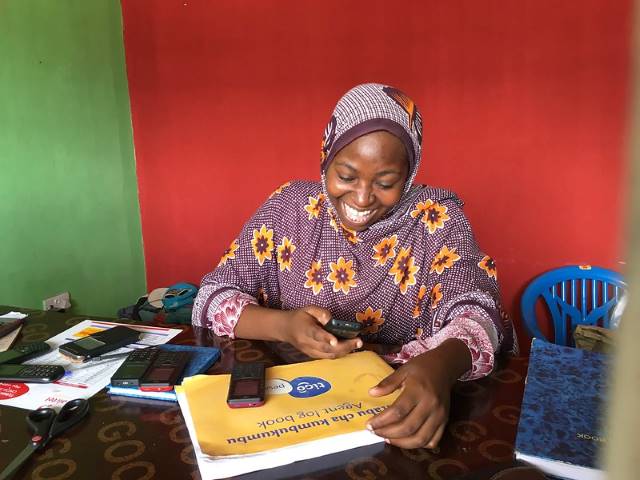 It is no secret that cash is becoming more and more obsolete in developed nations. Venmo, Cash App, Square, PayPal, Zelle and Google Pay — none of these popular money transfer services require a physical transfer of cash. The onslaught of a global pandemic has only accelerated the shift to cashless transactions amid efforts to minimize physical contact. China is rapidly moving forward with
 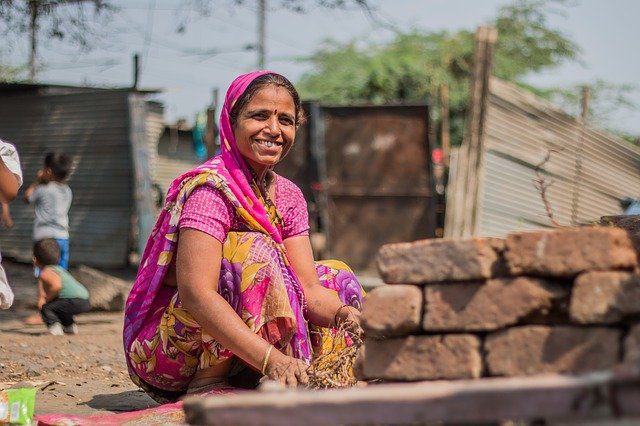 Several failed humanitarian efforts can be attributed to the fact that some programs developed with good intentions fail to take into account the local context in which they are implemented. Others are
  Vanuatu is a southwestern Pacific Ocean country made up of about 80 islands with a small population of around 300,000. Vanuatu has recently graduated from the list of least developed countries (LDC) despite setbacks due to ongoing natural disasters and other factors. Vanuatu’s
  Since the United Nations created the least developed countries (LDCs) list in the 1970s, only six nations have moved off of the list to a higher ranking of development. Vanuatu, an island nation in the South Pacific, became the sixth country to do so on December 4, 2020, after being designated an LDC in 1985. Vanuatu’s graduation from the LDCs list can serve as a beacon of hope for more LDCs to achieve higher rates of development.
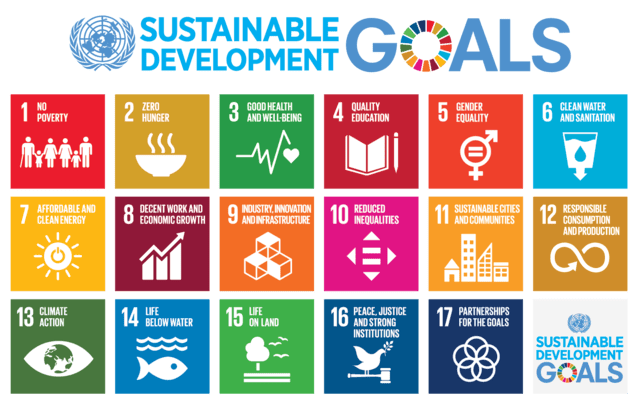 In Argentina, the COVID-19 pandemic and ensuing economic unrest has stalled efforts to close the inequality gap. Before the pandemic hit, Argentina was making progress on a series of Sustainable Development Goals (SDGs), which is a
 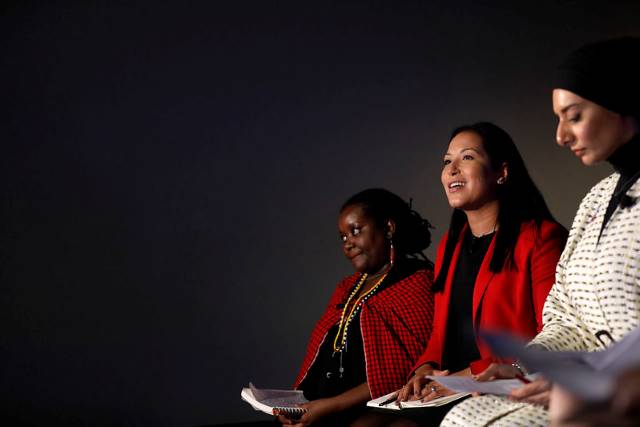 The U.N. Sustainable Development Goals (SDGs), to be met by 2030, are 17 goals aimed at increasing environmental and socially sustainable solutions to poverty, inequality and injustice, among other things. The goals are both ambitious and achievable but funding gaps hamper the progress of these goals. Through conscious investments toward SDGs, private sector businesses could close this gap. The U.N. Secretary-General António Guterres
 Quinoa is a species of goosefoot original to the Andes of Peru and Bolivia. For more than 6,000 years, Peruvians and Bolivians considered quinoa a sacred crop because of its resistance to high altitudes, heat, frost and aridness. Because of its sudden rise in worldwide popularity, the U.N. declared 2013 the “
