
The Russian Federation is the largest nation by land area in the world, and its approximately 146 million people, according to Worldometer, are remarkably diverse and varied across this vast territorial expanse. While this broad and beautiful nation has problems both similar and different to all nations of the world, one real issue that is relatable across all borders, regardless of culture, is the danger of losing one’s child at the time one gives birth. The fetal mortality rate in Russia is no exception.
This is a problem that purveys all species of animals, yet for humans, the struggle to survive childbirth has become easier in many places across the world with the succeeding decades. For Russia, remedying its fetal mortality rate will go hand in hand with fixing their nations own blighted poverty, as the two play off of one another in a Sisyphean loop.
The Poverty and Fetal Mortality Rate in Russia
The numbers across the board in 2021 are markedly better than those at the start of the century. However, in comparison to 50 years ago, the fetal mortality rate in Russia has actually been improving at a steady rate, even as national poverty, currently at just 13% nationally, continues on its own uneven road.
The U.N. Inter-Agency Group for Child Mortality Estimation estimates that nationally in 1970, approximately every 31 out of 1,000 births resulted in the death of the child in the Soviet Union. That number is today on par with the fetal mortality rate of far poorer nations, yet during this time, the Soviet Union was, under Leonid Brezhnev, still a powerful, if declining, force across the globe. The succeeding decades have since produced a consistent decline in these numbers, yet they have remained alarming to varying degrees, and for varying constituents, during this time.
By 2002, a bit more than a decade after the fall of the Soviet Union, the Russian Federation, now led by ex-KGB agent Vladimir Putin, had shaved the number of estimated infant deaths per 1,000 children nationally from approximately 31 to 14.8 across 30 years. However, regions and cities like Tula, amongst the poorest regions in Russia, still recorded nearly 17 per 1,000. But, as a scathing report on the conditions on the ground told at the time, even these numbers, high as they are, might yet be untrustworthy and lower than in reality.
In this report, the infant mortality rate in St. Petersburg in 2001 was just 9.3 per 1,000 births. Meanwhile, in the region of Chuktskity Okrug, that number was actually more than four times higher than the national average at just over 42 per 1,000 live births. Therefore, one can surely conclude that the wealth and internal infrastructure of the region certainly has a part to play in the fetal mortality rate both regionally and nationally.
The Numbers Today
Today, the national number has continued to shrink in comparison to the old data, yet this onus remains a terrible burden on the massively expansive nation; in 2019, estimates determined that Russia had only 4.93 infant deaths on a national scale, which is a far cry from approximately 31 out of 1,000 just slightly more than 50 years ago. While Russia’s rates have officially dropped, again buoyed by the more readily available healthcare of the larger cities like Moscow, the country’s official standing regarding the fetal mortality rate is nuanced.
However, while some facts change across the decades, other things remain the same. Available reports from all of these periods show that the nation was not infrastructurally integrated enough to sustain mothers or their children with the necessary resources, education or medical attention. Today, like in 2010, 2000 and 1970, the poorest regions in the federation, as well as within cities themselves, continue to suffer this trauma and unfair indignity at higher rates than their city-dwelling fellow citizens.
Russia: Between a Proverbial Rock and Hard Place
With sanctions against Russia omnipresent and the nation’s government itself outwardly hostile towards global nonprofits since 2012, external as well as internal human rights and advocacy groups have struggled to positively affect change. Population and Development was a Russian NGO that focused primarily on the promotion and protection of the reproductive health of Russian citizens before it shut down alongside so many others. The United States Agency for International Development, which has previously invested time and energy towards the betterment of Russian society through education and health initiatives, has had limited power and prestige in Russia in the years since 2012, as the country kicked it out in September of that year. Vladimir Putin’s government’s newest crackdown in April 2021 has left still fewer external or internal options for advocates to effectively affect positive change across the society, apart from the World Bank.
While the Russian government has largely discontinued or silenced internal and external assistance, cooperation with the World Bank has continued and might be the surest recourse for the fetal mortality rate in Russia. While Vladimir Putin has said that “Russia’s fate and its historic prospects depend on how many of us there are…,” his government alone has not been up to fixing all that ails the nation’s fetal mortality rate, and so continues to place its population in the most dangerous of positions. On the other hand, since 1992, the World Bank has been helping the Russian Federation advance the internal dynamics of their nation, from the hard and soft infrastructure necessary to producing stable economic circumstances to the education and resources necessary to create healthy environments for mothers to have, and then subsequently care for, their children.
Helping Russia
In such an unforgiving natural environment, the people require all of the help they can to sustain themselves and their families from generation to generation. Ultimately, organizations like the United Nations, USAID, Population and Development and other organizations can still help Russia with its poverty and fetal mortality rate, should they only receive the chance to do so once again.
– Trent Nelson
Photo: Flickr
 Childbirth in Botswana carries high risks, especially because remoteness threatens safe deliveries for women. If complications arise, it can take hours to transport patients to adequate medical facilities. The lengthy travel time to get medical assistance can prove lethal. In response, the U.N. devised a solution involving drone technology. Drones protect Botswana’s mothers by delivering essential medical supplies. Excessive bleeding is a
 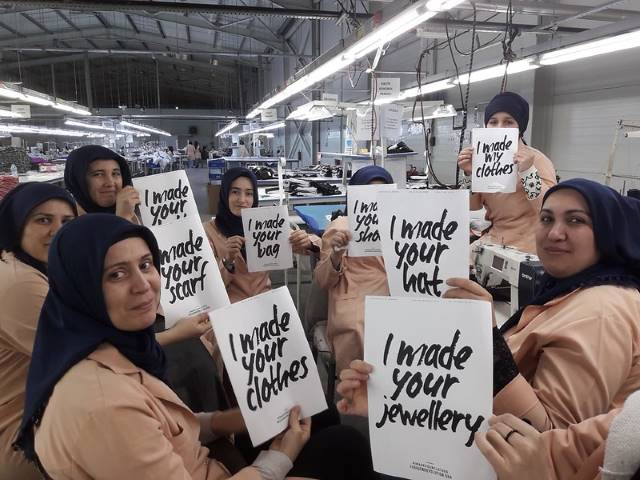 Fashion can contribute to poverty, but it is also a powerful force that lifts women out of poverty as it has stirred up a feminist movement. Brands that provide a living wage for female garment workers empower them to lead dignified lives. Additionally, these fashion brands give women access to a fair supply chain, proper work and fair wages. As a result, fashion consumers that support ethical fashion brands help advocate for women’s rights through their shopping decisions.
 As social distancing measures and lockdowns isolated people, the internet helped keep communities connected and functioning. Households ordered groceries online, adults telecommuted to work and students attended school via distance learning. The internet asserted itself as a necessary utility. However, affordable internet access is far from universal. The United Nations has partnered with the Alliance for Affordable Internet (A4AI) to address this by increasing affordable internet access in developing countries as a means of

 Fashion as a feminist movement is a powerful force to lift women out of poverty. Brands that provide their female garment workers a living wage empower them to lead a dignified life. Fashion consumers advocate for women’s rights based on the equality of the sexes through ethically produced clothing. Consumer brand choices have the power to uplift ethical brands that support labor sustainability and female garment workers experiencing oppression. Considering these facts, poverty in the fashion industry is a feminist issue.
 The opuntia, better known as the prickly pear, could be the key to food security in the world’s most arid countries, according to the U.N.’s Food and Agriculture Organization (FAO). This statement is born from the results of a five-year study conducted by the University of Nevada, Reno. The study sought to examine the potential
 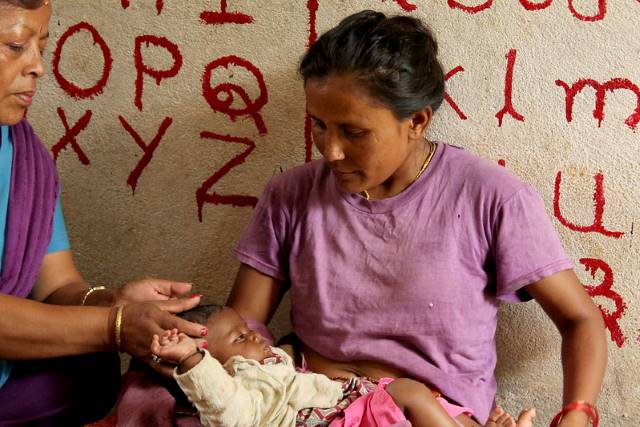 Maternal health is a pressing issue in developing countries as they often lack infrastructure and facilities to adequately care for pregnant women. Women often lack the incentive to use health service centers and choose to rather give birth at home, resulting in high maternal mortality rates. In Nepal, attempts to remedy this issue have led to a cash transfer scheme, which seeks to encourage pregnant women to use medical facilities to give birth by giving them a certain amount of cash to do so. Known as the Aama (or mother) program, the initiative aims to address Nepal’s poor maternal health by making sure that more births are overseen by health professionals.
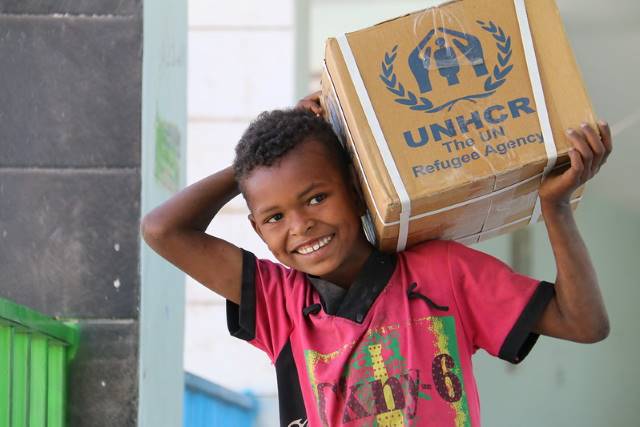 Relief for Yemen has long been a goal of humanitarian politicians and activists. A bipartisan letter, signed by four U.S. senators, urges the Biden administration to allocate more federal funding for aid to Yemen.