• Link to X
  • Link to Facebook
  • Link to Instagram
  • Link to TikTok
  • Link to Youtube
  • About
    • About Us
      • President
      • Board of Directors
      • Board of Advisors
      • Financials
      • Our Methodology
      • Success Tracker
      • Contact
  • Act Now
    • 30 Ways to Help
      • Email Congress
      • Call Congress
      • Volunteer
      • Courses & Certificates
      • Be a Donor
    • Internships
      • In-Office Internships
      • Remote Internships
    • Legislation
      • Politics 101
  • The Blog
  • The Podcast
  • Magazine
  • Donate
  • Click to open the search input field Click to open the search input field Search
  • Menu Menu

Tag Archive for: U.S. Congress

Posts

Global Poverty

Mental Health in the Solomon Islands

Mental Health in the Solomon Islands
Best known for its exquisite marine life, the Solomon Islands is a nation of approximately 700,000 in Oceania. Furthermore, the World Health Organization’s depression rate estimates put the country as the least depressed nation in the entire world. To make this even more impressive, the Solomon Islands’ GDP per capita is lower than that of the 10 most depressed countries.

So, what is its secret? How does an impoverished nation grow to boast the world’s lowest rates of depression? Unfortunately, the answer is that these numbers grossly misrepresent the situation.

The Problem of Diagnosis

Mental health statistics rely on diagnoses, which are not widespread in impoverished nations. Mental health in the Solomon Islands seems low. However, this is because of inadequate healthcare which results in undiagnosed and untreated mental illnesses.

Though one cannot simply say that all impoverished nations have higher rates of depression, their statistics may be untrustworthy or undocumented. Additionally, merit exists regarding the idea that citizens of some less wealthy nations are actually happier. This is often because of spirituality or a closer community. However, several factors suggest that this is not the case in the Solomon Islands.

Equality and Depression

The two most striking examples of this phenomenon revolve around equality. The first is gender inequality. This problem is easy to see through statistics of domestic abuse. According to the National Institute of Health, more than three in five women in the nation revealed that they suffered from “physical[ly] and/or sexual[ly]” abused. This rate is among the highest in the world.

The second suggestive element of the Solomon Islands’ reported depression rate is lower than in reality is sexuality intolerance. Gay marriage remains illegal for men, as does adoption. Non-straight people do not receive equal protection under the law, and conversion therapy is legal. These all take substantial tolls on the mental health of homosexual people. The community already reports higher than average rates of depression and suicide.

Looking Forward

The outstanding mental health in the Solomon Islands does in fact seem to be a grave case of misleading data. However, such an investigation does yield two significant and optimistic takeaways. First, the case of the Solomon Islands shows the importance of fighting for equality. Misleading statistics can entirely conceal the struggles of minority groups through the impression that the nation is not in need of development aid. Australia, a close partner to the west of the Solomon Islands, is doing great work to fight this inequality, which includes increasing mental health resources.

Second, an integral part of foreign aid needs to look out for psychological well-being. Poor nations do not have the proper training in diagnostics to communicate that mental health should be a priority, but that is part of healthcare, another key component of development. Thankfully, this idea underwent a recent proposal to the U.S. Congress through the MINDS Act. This act would force the world’s richest nations to consider the mental health of the nations to which they provide aid. Hopefully, with adequate support, these organizations and partnerships will address mental health in the Solomon Islands.

– Sam Konstan
Photo: Flickr

August 20, 2021
https://borgenproject.org/wp-content/uploads/borgen-project-logo.svg 0 0 Lynsey Alexander https://borgenproject.org/wp-content/uploads/borgen-project-logo.svg Lynsey Alexander2021-08-20 13:40:012024-05-30 22:25:01Mental Health in the Solomon Islands
COVID-19, Global Poverty

Native American Communities During COVID-19

Native American communities During COVID-19
As of July 20, 2021, the World Health Organization (WHO) reports more than 190 million confirmed COVID-19 cases with almost 4 million deaths and the administering of almost 3.5 million vaccine doses. The Centers for Disease Control and Prevention (CDC) reported in December of 2020 that Native American communities are 3.5 times more likely to fall sick with the novel coronavirus and 1.8 times more likely to die from COVID-19 than non-Hispanic white people.

Harvard field research teacher Eric Henson calls what the tribes are having as “the worst of both worlds at the same time.” Businesses entirely stopped their services at the start of this health crisis. These communities had their tax base reduced entirely to zero. All tribal businesses closed. Like other minority groups, Native American communities often work jobs that do not provide proper medical insurance. Many of these jobs are ‘essential work,’ meaning these individuals nevertheless face an increased risk of contracting COVID-19. However, efforts are providing aid to Native American communities during the COVID-19 pandemic.

COVID-19 Vaccine for Minorities

Native American communities during COVID-19 are accepting safety measures to prevent the novel coronavirus. Early discussions considered giving priority to minorities with the first vaccine dose, at odds with the Trump Administration. While little data exists regarding vaccination rates amongst ethnicities during the vaccine rollout under President Biden, several prominent Native Americans were prioritizing vaccines in their communities. As a result of the American Indian communities’ core values of putting the community first before the individual, their stance to accept the first wave of vaccines is for the health of their whole tribe as well. One individual’s health protected through the vaccine keeps other non-infected community members in a safer environment.

A recent survey that the Urban Indian Health Institute conducted showed that 75% of Native Americans are willing to receive vaccinations. Surveys show 75% of American Indians are concerned with side effects from novel coronavirus protection measures. However, two out of three participants are confident they are safe.

Funding For Native Americans During a Global Pandemic

The CDC has given $219.5 million to aid tribal communities during this health crisis. Its approach has ensured that these communities have access to necessary materials to prevent, provide for and respond to outbreaks. The U.S. Congress directs $165 million of the funding from the CDC through two acts. The acts are H.R 6074, a bill providing $8.3 billion in emergency funding for COVID-19, and the CARES Act, a bill protecting the healthcare system, employed workers and the economy against the health pandemic.

The Administration for Native Americans has a branch referred to as the Administration of Children and Families (ACF). The branch exists within the U.S. Department of Health and Human Services. ACF has supported Native American communities during COVID-19. Its website provides resources to grant programs providing Native tribes, families and individuals access to funding for the pandemic. Resources include administrative relief, human services activities and natural disaster alleviation for Native Americans during COVID-19.

A Return to Normalcy

The effects of COVID-19 are detrimental to many communities, especially those already in the minority before the pandemic. As Native Americans are some of the first to receive vaccines, the families are back on their way to normalcy.

– Libby Keefe
Photo: Flickr

June 26, 2021
https://borgenproject.org/wp-content/uploads/borgen-project-logo.svg 0 0 Jennifer Philipp https://borgenproject.org/wp-content/uploads/borgen-project-logo.svg Jennifer Philipp2021-06-26 01:30:172024-05-30 22:23:37Native American Communities During COVID-19
Foreign Aid, Global Poverty

Congresswoman Ilhan Omar’s YouthBuild International Act

YouthBuild International Act
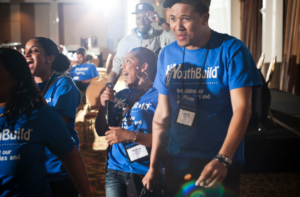
Around the world, over 200 million youth live in extreme poverty, earning less than $2 a day. On February 12, 2020, Congresswoman Ilhan Omar, Representative for Minnesota’s 5th congressional district, introduced her sponsorship for the YouthBuild International Act. The Act aims to amend and improve upon the Foreign Assistance Act of 1961. In doing so, it strives to program educational opportunities and employment training for underprivileged youth in developing countries.

The bill adds a new point to Section 105 of the indispensable Foreign Assistance Act of 1961. Following the original Act, the bill adds: “Program to provide disadvantaged youth in developing countries with opportunities to receive education and employment skills.” Following this broad point, the text describes five distinct goals for the bill: economic self-sufficiency, community engagement, leadership development, affordable housing and improvement of facilities.

Goals of the Bill

To begin, the bill states its goal to make higher education and employment skill-training more accessible to underprivileged youth. By providing these opportunities, the bill aims to equip youth with economic self-sufficiency. Secondly, the bill promises to provide poverty-ridden youth with opportunities for “meaningful work and service to their communities.” Thereafter, the bill promises to enhance the development of marketable leadership skills for youth in low-income communities.

Next, the bill proposes the establishment of affordable and permanent housing initiatives for homeless and low-income families. The final section of the bill promises to improve the energy efficiency and overall quality of community facilities. This is meant to benefit nonprofit and public facilities that protect homeless and low-income families. Youth participants in the program will contribute directly to these efforts.

Domestic Success

The potential for the YouthBuild International Act is demonstrated by the successes of the United States YouthBuild program. That program provides educational, employment and leadership opportunities to thousands of young Americans who lack education and employment. As of 2019, 70% of YouthBuild participants earned a certificate or a degree, 62% improved their literacy or mathematical skills and 54% gained earned education or employment.

Next Steps

The positive results of the United States YouthBuild program prove how successful the YouthBuild International Act could be. However, the odds are not in this bill’s favor. Although Congresswoman Omar introduced it nearly six months ago, the bill has neither gained any cosponsors nor moved past the House Foreign Affairs Committee. The Act remains stagnant despite its immense potential for change. According to Skopos Labs, the bill only has a 3% chance of being enacted into law.

Although domestic poverty legislation is more pressing than ever, these issues must not put foreign aid on the back-burner. It is vital to bring awareness to under-supported aid legislation, especially when it can lead to economic self-sufficiency. Passing the YouthBuild International Act could significantly uplift millions of vulnerable communities and break the cycle of poverty for future generations. This will not happen unless more Americans contact their senators and representatives about the YouthBuild International Act and other under-prioritized aid legislation.

– Stella Grimaldi
Photo: Flickr

September 10, 2020
https://borgenproject.org/wp-content/uploads/borgen-project-logo.svg 0 0 Kim Thelwell https://borgenproject.org/wp-content/uploads/borgen-project-logo.svg Kim Thelwell2020-09-10 10:01:522020-09-10 08:49:07Congresswoman Ilhan Omar’s YouthBuild International Act
Global Poverty, Politics

What Are the Requirements for Serving in the House?

What are the requirements for serving in the House?
The House of Representatives is one of two chambers of Congress, which is the legislative branch of the federal government that is tasked with creating and passing national laws. Like the Senate, the House of Representatives was established by the U.S. Constitution. The House first convened in 1789. Today, the nation is witnessing the 115th United States Congress.

This current meeting of Congress will end in 2019, just after the new year. In anticipation of this upcoming changeover, congressional elections are taking place throughout the country later this year. In light of these elections, many people may be asking: what are the requirements for serving in the House?

Outlined by the Constitution, there are three simple requirements to serve in the House of Representatives. In order to become a representative, candidates must be:

  1. At least 25 years of age
  2. A citizen of the United States for at least seven years
  3. A resident of the state they wish to represent at the time of election

With the exception of the age minimum – which was initially set at 21, the voting age at the time – these requirements have remained largely unchanged. Of course, these criteria only partially answer the question, “what are the requirements for serving in the House?” Any additional requirements are established by the individual states. For instance, some states also require that House candidates live in the district that they intend to represent, while others do not.

Congress is the only branch of the federal government that is directly elected by the people. The House of Representatives is the largest Congressional body, and the Constitution dictates that seats in the House be allocated based on the population of each individual state. To ensure that representatives adhere to their namesake by representing the will of their electorate, the Constitution requires representatives to stand for election every two years, hence the 2018 midterm elections currently taking place.

Though the requirements for serving in the House are straightforward, the requirements for appearing on a ballot come with additional considerations. Specific ballot filing requirements are determined by the individual states. Generally, anyone who meets the Constitutional requirements and wishes to run for a seat in the House of Representatives must accumulate a certain number of signatures on a petition and/or pay registration fees to the state.

The road to election may be rigorous, but the barriers to entry into the race for a seat in the House are few. Anyone who meets the three Constitutional requirements and the criteria of their state of residence is free to campaign to serve within the House of Representatives.

– Chantel Baul

Photo: Flickr

April 9, 2018
https://borgenproject.org/wp-content/uploads/borgen-project-logo.svg 0 0 Borgen Project https://borgenproject.org/wp-content/uploads/borgen-project-logo.svg Borgen Project2018-04-09 01:30:122024-05-29 22:40:06What Are the Requirements for Serving in the House?
Global Poverty, Politics

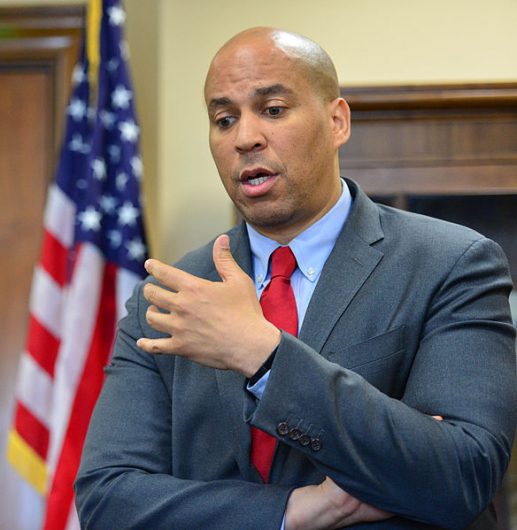
Spotlight: New Jersey Senator Cory Booker

Senator Cory Booker
With people looking ahead to the 2020 presidential election, New Jersey Senator Cory Booker is in the spotlight for many Americans. Advocacy for foreign aid and establishing good relations with other countries have been prioritized in his campaign and throughout his congressional leadership. This advocacy is reflected in his speech, campaigning and most importantly, his sponsorship and co-sponsorship of several bills.

AGOA & MCA Modernization Act

The African Growth and Opportunity Act (AGOA) and the Millennium Challenge Act (MCA) have already gone into effect and have been successful in sub-Saharan African countries. Senator Booker supports updating these acts, which will enhance the successes the U.S. is seeing from the original laws. Modernizing these programs will benefit the U.S. by increasing transportation, communication and energy networks, and will open the U.S. market to these sub-Saharan African countries.

READ Act

As a Rhodes Scholar recipient, it is not surprising that Senator Booker cares deeply about education. Booker co-sponsored the Reinforcing Education Accountability in Development Act (READ Act) to support the right to basic education in developing nations. The READ Act partners with impoverished nations to develop a quality curriculum, stabilize the education system and help children become successful in literacy and numeracy. Achieving these goals will increase the number of skilled workers in the future, which will benefit the nation’s development.

Burma Human Rights and Freedom Act of 2018

Another example of Senator Booker’s interest in humanitarian and foreign aid is his co-signing of the Burma Human Rights and Freedom Act of 2018. This bill calls for U.S. action and aid regarding the thousands of displaced Rohingya people of Burma. Booker agrees that the U.S. should invest $104 million of foreign aid in Burma to help the victims of the Burmese civil war, restore the nation’s economy and establish democracy in the nation. It will also call for those responsible for crimes against humanity to be held accountable.

Syrian War Crimes Accountability Act of 2017

Senator Booker and several other senators, both Republican and Democrat, co-signed the Syrian War Crimes Accountability Act of 2017. This bill would hold Syrian President Bashar Al-Assad accountable for his war crimes and brutalities against Syrian people over the last seven years. As stated on his official website, Booker sees the issue of violent extremism, whether foreign or domestic, as a priority issue for Congress.

Combating Global Corruption Act of 2017

The Combating Global Corruption Act of 2017 aims to decrease corruption in designated countries. Many countries, especially those in sub-Saharan Africa, struggle with government corruption and very little is being done about it. Senator Booker has already expressed his concern for the ongoing political crisis in the Democratic Republic of the Congo, so it comes as no surprise that he co-signed this bill to alleviate global corruption.

As a member of the Committee on Foreign Relations, Senator Booker supports several foreign policy and aid bills that The Borgen Project advocates for. His hard work, advocacy and relentless fight for humanitarian aid and foreign relations for the U.S. make Senator Cory Booker one of the most popular junior senators America has seen.

– Courtney Hambrecht

Photo: Wikimedia Commons

April 3, 2018
https://borgenproject.org/wp-content/uploads/borgen-project-logo.svg 0 0 Borgen Project https://borgenproject.org/wp-content/uploads/borgen-project-logo.svg Borgen Project2018-04-03 07:30:242024-05-29 22:40:03Spotlight: New Jersey Senator Cory Booker
Global Poverty

What are the Major Qualifications to Become a Senator?

qualifications to become a senator

The legislative branch of the U.S. government, known as Congress, is made up of two different chambers. The lower chamber, the House of Representatives, is made up of 435 representatives who are also called Congressmen and Congresswomen. The number of Congressmen and Congresswomen in the House of Representatives is determined by the population in each congressional district.

The upper chamber, the Senate, is made up of 100 senators. Each state elects only two senators to ensure each state has equal representation. The Senate is meant to be the check to the House of Representatives.

Many people who wish to make a difference in their communities and country would wish to run for a political office, such as senate. However many ask, what are the qualifications to become a senator?


Age Requirement

Despite being the least known of the qualifications to become a senator, any person wanting to run for Senate must be at least 30 years old. This rule has been in place since the conception of the Senate with the creation of the constitution in 1787. However, in our history, the United States has had a couple of noticeable exceptions — the youngest senator to ever serve was Senator John Henry Eaton of Tennessee who was sworn in on November 17, 1818.

Senator Eaton was only 28 years old at the time, but due to inefficient birth records, this fact was not realized until after he took the oath. Senator Joe Biden of Delaware was the youngest to be sworn in while still aligning with all the qualifications to become a senator; when he was sworn in on January 1973, Senator Biden was 30 years old and 45 days.


United States Citizenship

To become a senator, a candidate must be a United States citizen for at least nine years. In this sense, they must be a legalized citizen but they can be from any other country in the world.

Some United States senators who were not born in the United States include Colorado’s Senator Michael Bennet who was born in India, Texan Senator Ted Cruz who was born in Canada and Senator Tammy Duckworth from Illinois who was born in Thailand.


Which State to Represent

When a person runs for Senate, they run for a certain state, such as Senator of Indiana or Senator of Florida. He or she must live in the state that they run for, not necessarily the state they were born in. For example, Former president and Senator Barack Obama was born in Hawaii but campaigned for Senate in the state of Illinois, where he was currently living.

There is no set amount of time that a person must live in the state he or she wishes to represent before running for Senate, just that the candidate must be a legal resident of that state.


Making a Difference

These constitutional requirements answer the question: “What are the qualifications to become a senator?” Many citizens who have run for Congress in the past have studied law, political science and public service, though a degree is not required. Also, many Congressmen and Congresswomen have military experience, though this is not required either.

These are some of the answers to the question of “what are the qualifications to become a senator?” Anyone who fits these qualifications can legally run for Senate in the United States and have the possibility to make a difference in their communities and the country as a whole.

– Courtney Wallace

Photo: Flickr


Read: How many Senators are there


February 26, 2018
https://borgenproject.org/wp-content/uploads/borgen-project-logo.svg 0 0 Borgen Project https://borgenproject.org/wp-content/uploads/borgen-project-logo.svg Borgen Project2018-02-26 07:30:462019-12-16 13:24:42What are the Major Qualifications to Become a Senator?
Global Poverty

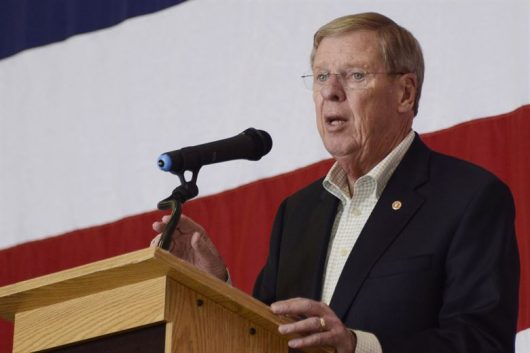
Spotlight: US Republican Sen. Johnny Isakson

Senator Johnny IsaksonNow in his third term, Sen. Johnny Isakson is among a group of bipartisan senators trying to find the right formula for an immigration deal. Although his run as Senator began in 2005, his political and public service career started long before.


Road to the Senate


Finishing his education at the University of Georgia, Isakson served in the Georgia Air National Guard from 1966 to 1972. He was elected to the Georgia State Senate in 1993 and furthered his career as residing chair to the Georgia board of education.

Isakson continued his path in politics by becoming a U.S. Representative in the One Hundred Sixth U.S. Congress, filling Newt Gingrich’s open seat. He was re-elected twice more to the House of Representatives. In 2004, Isakson was elected to the U.S. Senate.


Legislation for Foreign Aid


Sen. Johnny Isakson has done substantial work in the Senate and is willing to push forward in Congress when times seem troubling.

He has introduced the African Growth and Opportunity Act (AGOA) and Millenium Challenge Act (MCA) Modernization Act, which encourages U.S. commercial relationships with African countries that are committed to principles of good governance and looking to improve the trade environment between all parties.

The Economic Growth and Development Act is another bill Sen. Isakson sponsored through his career. This bipartisan legislation helps the private sector work with the U.S. to strengthen economic development, fight disease and alleviate poverty in developing countries.

Sen. Isakson has continued to promote and further U.S. capabilities in regards to foreign aid. He introduced the Reach Every Mother and Child Act, which aims to alleviate preventable mother and child deaths by 2035. This bill alone will help save lives and allow for mothers and children to receive medical help.

Sen. Johnny Isakson has done remarkable work through introducing bills and promoting foreign aid to strengthen U.S. international diplomacy. His work never ends as a U.S. Senator; Isakson’s office told The Borgen Project that his next priority in legislation is to ensure “the life-saving food security programs managed under the Feed the Future Initiative will continue for another five years.” The program not only helps neighboring countries abroad but also is an investment in U.S. national security.

Striving to assist other developing countries and further the growth of U.S. foreign aid is greatly shown in Sen. Isakson’s efforts in Congress. He is looking to promote through legislation an international environment for business to grow. Sen. Isakson’s office told The Borgen Project that “when you empower individuals, communities and businesses, you can help drive economic growth.” Action in communities and government go a long way to help the impoverished and this action is seen in Sen. Johnny Isakson’s career in Congress.

– Bronti DeRoche

Photo: U.S. Air Force

February 6, 2018
https://borgenproject.org/wp-content/uploads/borgen-project-logo.svg 0 0 Borgen Project https://borgenproject.org/wp-content/uploads/borgen-project-logo.svg Borgen Project2018-02-06 13:30:192024-12-13 17:58:35Spotlight: US Republican Sen. Johnny Isakson
Foreign Policy, Global Poverty, Government

The AGOA and MCA Modernization Act Passes in the House

AGOA and MCA Modernization ActOn Jan. 17, 2018, the House of Representatives passed H.R. 3445, the AGOA and MCA Modernization Act. The legislation adds on to the original African Growth and Opportunity Act, or AGOA, which was passed into law on May 18, 2000, by the 106th Congress.
As an extension of AGOA, the AGOA and MCA Modernization Act encourages plans to promote trade and cooperation while also providing aid to countries that are AGOA eligible. The region of focus of the legislation is sub-Saharan Africa, with the goal being to build private sector growth. Under the bill, the President will be directed to create a website with information about AGOA along with encouraging embassies in chosen countries to promote export opportunities to the United States.

In addition, the​ ​bill​ ​would​ ​give​ ​the​ ​Millennial Challenge Corporation (MCC)​ ​the​ ​authority​ ​to​ ​develop​ ​a​ ​second​ ​concurrent​ ​compact​ ​with countries,​ ​provided​ ​the​ ​compact​ ​focuses​ ​on​ ​regional​ ​economic​ ​development.​ The​ ​ability​ ​to​ ​enter​ ​into​ ​a​ ​second​ ​compact​ ​will​ ​be​ ​limited​ ​to​ ​countries​ ​that​ ​demonstrate​ ​progress toward​ ​meeting​ ​the​ ​objectives​ ​of​ ​the​ ​first​ ​compact​ ​and​ ​capacity​ ​to​ ​handle​ ​an​ ​additional​ ​compact.

The MCC was created in 2004 by the Bush administration, with the aim to reduce poverty through economic growth. The MCC has committed more than $10 billion in 58 projects in 25 countries. Around 70 percent of this investment has gone into infrastructure projects like highways and ports and an increasing percentage is being invested in energy.

On the House floor prior to the vote, House Foreign Affairs Committee Chairman Rep. Ed Royce (R-CA-39) said that the AGOA and MCA Modernization Act “seeks to facilitate trade and private sector-led growth in poor but relatively well-governed countries, particularly in Africa, so they can grow their own way out of poverty.”

“Through AGOA, goods produced in eligible African countries enter the U.S. on a duty-free basis. To be eligible, countries must be committed to the rule of law, eliminating barriers to U.S. trade and investment, combating corruption and supporting counterterrorism activities. So AGOA advances U.S. interests on many levels.”

Trade being a driver of economic development and increased civilian participation in politics is one of the main arguments for passing the AGOA and MCA Modernization Act. Economists and experts agree that the legislation does not just benefit sub-Saharan Africa, but also the United States, as it helps create jobs and benefits consumers and companies through free-market principles.

Rep. Karen Bass (D-CA-37) was enthusiastic about the passage of the AGOA and MCA Modernization Act by a unanimous vote. Bass is a ranking member of the House Africa Subcommittee. She is an avid supporter of the legislation and said the policy would foster economic development, as well as strengthen the United States as an international leader and boost the domestic job market and economy.

The bill was introduced to the House by Rep. Royce. At the time the bill was initially introduced, Rep. Royce along with fellow representatives Bass, Eliot Engel (D-NY) and Chris Smith (R-NJ), stated that steering developing countries toward trade and away from aid helps African countries and women. Africa’s consumer spending nearing $1 trillion was what prompted the four to push for the passing of the AGOA and MCA Modernization Act.

The AGOA and MCA Modernization Act still needs to be approved by the Senate. The bill has been introduced by Sens. Ben Cardin (D-MD), Johnny Isakson (R-GA) and Chris Coons (D-DE) as S.832. Sen. Coons stated that it is vital that Congress does all it can do to promote economic growth in developing countries and expand American business access to foreign markets. He is excited that the act will encourage trade with sub-Saharan Africa.

The recent passing of the AGOA and MCA Modernization Act in the House may give the legislation the momentum it needs to soon be accepted in the Senate. Visit The Borgen Project Action Center to contact your representative about this critical legislation.

– Blake Chambers

Photo: Wikimedia Commons

January 19, 2018
https://borgenproject.org/wp-content/uploads/borgen-project-logo.svg 0 0 Borgen Project https://borgenproject.org/wp-content/uploads/borgen-project-logo.svg Borgen Project2018-01-19 07:30:522019-12-26 17:08:30The AGOA and MCA Modernization Act Passes in the House
Global Poverty, Government

What is a Senator?

What is a Senator?
Since 1787, the U.S. Senate has existed to bring representation to individual states and a minority opinion to the United States of America. Senators are an integral part of the news cycle. They are a voice for the electorate. They are composers of history. But what is a senator?

America is a country of democracy and relative stability in spite of bipartisanship. Surrounded by a world in which many are starving and living in poverty, however, it is important to look at the basics. Doing so gives Americans the ability to make a difference to those less fortunate. This is made possible by having a population of 323 million speak through elected representatives.

Qualifications of a U.S. Senator

The qualifications of a U.S. senator are simple. A senator must be at least 30 years old, must have been a U.S. citizen for nine years and must be a resident of the state which he or she is elected to represent. Their terms last for six years and there is no limit to the number of terms, as long as it is the will of the population in the senator’s state. Each state has two elected senators, who exist to bring individual voice and to be a part of the vital checks-and-balances system. This goes some of the way to answering the question ‘what is a senator?’.

Responsibilities of a Senator

The most important job of a U.S. senator is to be the voice of his or her constituents. As the accountable party to the state, a U.S. senator is responsible for voting on legislation that is to the benefit of the state as a whole. It also means that senators are responsible for taking phone calls, reading letters and meeting with his or her constituents.

In addition to their responsibility to the state, senators also serve on committees. Committees exist to examine major sectors of American life, including energy, health and the U.S. budget. It is a Senator’s responsibility to meet with lobbyists and determine amendments to existing legislation through the committee on which they serve.

U.S. senators also introduce and vote on legislation. Once a bill is introduced, it must be examined by the Senate. If it passes muster, the bill will then go to the House of Representatives (or vice versa). If the bill passes both houses of Congress, it will then go to the President of the United States to become a law.

What is a Senator?

So, what is a senator? A senator is someone that individuals elect to ensure that the country is going in a direction in which they want it to go. A senator is a voice for the state; an elected official responsible for ensuring the protection of human rights.

Unfortunately, much of the world does not have that same representation. The U.S has the power to create change and it starts with individual voices.

It is essential to exercise the right to vote and voice opinions through elected officials. Once senators are in office, citizens can write letters, email or call them to hold them accountable. They can make sure they are carrying out the state’s interest as well as using their position for good in the world.

– Eric Paulsen

Photo: Flickr

January 15, 2018
https://borgenproject.org/wp-content/uploads/borgen-project-logo.svg 0 0 Borgen Project https://borgenproject.org/wp-content/uploads/borgen-project-logo.svg Borgen Project2018-01-15 07:30:432019-12-16 13:24:52What is a Senator?
Global Poverty, Politics

What Are the Qualifications for the House of Representatives?

qualifications for the house of representatives

The House of Representatives is the first line of defense for legislation in the United States. Some may not consider the House to be as elite as the Senate, but there is no denying that it is vital to the legislative process. Nineteen former presidents once served in the House of Representatives, more than the 16 who served in the Senate. But what qualifies someone to be elected to this legislative body?

The House of Representatives includes 435 members, with population size determining the number of representatives a state receives. The qualifications for the House of Representatives are less stringent than those for the Senate and the presidency. This was purposely done to limit the obstacles for ordinary people to become members. There are three formal qualifications, which are outlined in Article I, Section 2 of the U.S. Constitution.

The first qualification outlined in the Constitution states that members of the House must be at least 25 years old. Despite this, the youngest member of the House of Representatives, William Charles Cole Claiborne, was only 22 when elected and only 24 when he was elected for a second time. Currently, the youngest member of the House, Elise Stefanik, is 33 years old, exceeding the requirement by eight years.

The second qualification, like that of the Senate, deals with citizenship. The constitution states that members of the House of Representatives must have U.S. citizenship for seven years upon election. This allows citizens who were not born in the United States, which is required for the presidency, to be elected into the House, which is crucial to immigrant representation. However, the number of immigrants serving has decreased significantly since the 1960s.

As of 2015, only 407 past and present members of Congress had been born outside of the United States out of the more than 12,000 who had served. 347 of these members served in the House of Representatives. From 1967 to 1974, no immigrants served in either the House or the Senate.

The last of the qualifications for the House of Representatives concerns residency and is the same for those serving in the Senate. Those elected to the House must be residents of the state which they represent at the time of election. However, this qualification does not require that representatives live in the district they represent.

The same article of the Constitution which outlines these qualifications also includes how members will be elected. Members of the House of Representatives are elected every two years without term limits. In addition to this, the House must confirm members who are elected before they may take the Oath of Office.

The House of Representatives was modeled for the people. It was designed to be accessible as well as an integral part of the legislative process. In addition, the Speaker of the House remains a prominent political figure within the government. Every moving part within our government serves a purpose and without one the system simply could not work. These qualifications for the House of Representatives ensure that these parts continue to work to the absolute best of their ability.

– Megan Burtis

Photo: Google

January 13, 2018
https://borgenproject.org/wp-content/uploads/borgen-project-logo.svg 0 0 Borgen Project https://borgenproject.org/wp-content/uploads/borgen-project-logo.svg Borgen Project2018-01-13 01:30:052019-10-30 09:41:28What Are the Qualifications for the House of Representatives?
Page 1 of 212

Get Smarter

  • Global Poverty 101
  • Global Poverty… The Good News
  • Global Poverty & U.S. Jobs
  • Global Poverty and National Security
  • Innovative Solutions to Poverty
  • Global Poverty & Aid FAQ’s
Search Search

Take Action

  • Call Congress
  • Email Congress
  • Donate
  • 30 Ways to Help
  • Volunteer Ops
  • Internships
  • Courses & Certificates
  • The Podcast
Borgen Project

“The Borgen Project is an incredible nonprofit organization that is addressing poverty and hunger and working towards ending them.”

-The Huffington Post

Inside The Borgen Project

  • Contact
  • About
  • Financials
  • President
  • Board of Directors
  • Board of Advisors

International Links

  • UK Email Parliament
  • UK Donate
  • Canada Email Parliament

Get Smarter

  • Global Poverty 101
  • Global Poverty… The Good News
  • Global Poverty & U.S. Jobs
  • Global Poverty and National Security
  • Innovative Solutions to Poverty
  • Global Poverty & Aid FAQ’s

Ways to Help

  • Call Congress
  • Email Congress
  • Donate
  • 30 Ways to Help
  • Volunteer Ops
  • Internships
  • Courses & Certificates
  • The Podcast
Scroll to top Scroll to top Scroll to top