Posts

greek_startups
Young owners of Greek startups are finding their businesses launched onto the international market directly after conception.

With economic degradation and youth unemployment at 50 percent, many are faced with a choice: to join the brain drain and move to Western Europe or to stay home and fight to make a living amongst stagnant mainstay industries such as shipping, olive oil, cheese and tourism. Very few jobs in the traditional sectors are available, and the country has long been resistant to global competition and innovation. With a bailout and increased regulation looming, the Greek economy hardly seems like the ideal ground to plant a business.

And yet, in this backwards business environment, the young entrepreneurial class is making it work. They are calling on Greece’s ancient mercantile roots to foster a host of new companies that are taking the initiative to begin rebuilding the country’s faltering economy. These young workers have taken advantage of the end of regulations, protections, tax breaks and provisions that have sheltered Greek businesses for years and hindered competition and new ventures.

Investors, both Greek and international, have jumped on the bandwagon as well. The Hellenic Initiative, a nonprofit sponsored by Greeks abroad, funds business initiatives including a custom folding bicycle designer, cosmetic safety lab and online fuel auctioning website.

Such companies have received funding from investors in Europe, the U.S. and Australia. Other examples of growing companies are Taxibeat, an Uber-like driving service and Workable, an employment tool that is now used in small and medium-sized companies in 39 countries.

With a large population of well-educated young labor force eager to work and jump into a new sector, workers are relatively inexpensive to employ and exhibit more loyalty to start-ups.

“There is no shortage of really smart kids, driven kids, with a lot of zeal and a lot of drive, a lot of hunger, and a pretty good business plan,” said Jeremy Downward, an investor for Alpheus Advisors.

Although many start-ups remain small and employ fewer than 20 people and can not transform the Greek economy alone, workers stay positive.

“Talking about all the negative aspects of this huge economic depression in this country doesn’t help that much. It helps if you can start building something that makes sense, and makes sense both for business and for society,” said start-up founder, Dimitris G. Kalavros-Gousiou.

Jenny Wheeler

Sources: New York Times, BRW
Photo: New York Times
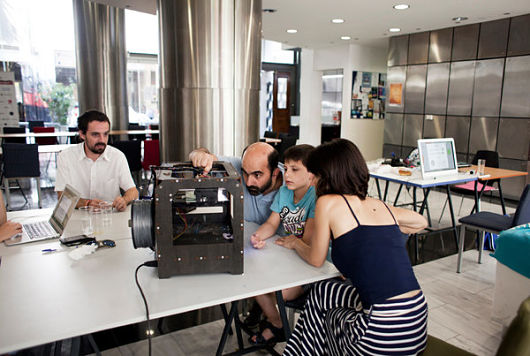
The U.S. Agency for International Development (USAID) has recently funded startup programs aiming to address global poverty at several universities. The agency hopes investments will promote innovative projects that will be economically sustainable once start-up dollars run dry.

“The old model was we need something built, we hire a contractor,” USAID head Rajiv Shah said. “The new model is solve these huge and challenging problems with innovators and entrepreneurs who can come together and create the kind of solutions that can scale up to reach tens of millions of households.”

Development labs at seven major universities so far have received funding from USAID. The labs are field-testing a variety of new products, ranging from hand-held medical diagnostic technology to sanitation devices.

While diverse, all products are consistently cheap enough to dispense broadly and efficiently, according to a report from the Los Angeles Times.

Most recently, the agency granted Kansas State University $50 million towards their Feed the Future Initiative.

“With four Feed the Future Innovation Labs now hosted by the College of Agriculture and K-State Research and Extension,” said dean of the College of Agriculture at Kansas State University, John Floros. “USAID is making a nearly $100 million investment in Kansas State University’s ability to provide leadership to the global food systems research, teaching and extension efforts.”

Feed the Future works to promote research and innovation, expand proven workable technologies, and expand nutritional programs for global food producers and their families. Last year alone, the campaign expanded new technologies and management to more than 7 million farmers

Another project endorsed by USAID is Gram Power, an entrepreneurial firm considered a pioneer in off-grid renewable energy in India. This project was kickstarted by Yashraj Khaitan, a UC Berkeley student originally from India.

“I wanted to use technology to work on something high impact,” said Khaitan.

The firm’s model is projected to vastly expand electrical power to Indian homes, according to vice president of infrastructure at Google and guide to the Gram Power effort, Eric Brewer.

“We are looking for ways to find more Gram Power type projects,” said Ticora Jones, director of university-based projects for USAID. “We want to populate a pipeline of innovators.”

Gabrielle Sennett

Sources: USAID, LA Times
Photo: The Guardian,

As a whole, the African continent has one of the most rapidly growing economies in the world. The area averages a remarkable rate of 5 percent growth per year. And yet a host of problems that hover in the near future threaten to impede such progress. The African continent, as a result, must increasingly rely on the private sector to ensure growth does not stagnate.

One such problem is the worldwide urbanization boom that will experience a 3.5 billion urban population increase to 6.3 billion people. It is expected that Africa will mirror this growth, percentage wise. Additionally, for Africa to stay relevant as a hub for business, it will need to play an integral role in creating jobs for the 500 million who will enter the workforce by 2020.

Technology will always be a key to the future, and experts suggest that by harnessing the power of cloud-based computing, the African continent can grow steadily. Here are some of the reasons and ways in which cloud-based computing is a model for the future.

Easy for Startups

To put it simply, cloud computing systems offer a much cheaper way to get businesses off the ground. Old, stack-oriented servers required entrepreneurs to hire workers, rent an office space and market the company. Cloud-based systems require just a few dollars and mediocre broadband access.

Mobile Access

“Africa is a Disneyland for entrepreneurs!” said Derek Kudsee. The 600 million mobile users in Africa are great consumers. And what these consumers need is new apps, content and mobile services. Cloud technology provides this speed that old stack-based technology simply cannot.

Business Agility

Consider the influx of individuals coming into the cities. Studies have shown that cloud computing is excellent for business agility (which is the ability of the business to adapt rapidly and efficiently in response to changes in the business environment).

Helping Big Data

Managers across Africa are beginning to notice some of the fallout of the urban population influx—clogged roads, for example. Big data that is powered by cloud computing provides quick and cost-efficient analysis of this problem. By pairing these two together, individuals will be able to quickly improve African infrastructure.

While technology should not be the only solution we look to, it can certainly be helpful in guiding the way to the future.

– Andrew Rywak

Sources: IT News Africa 1, IT News Africa 2, ITWeb Africa
Photo: Humanipo

In recent years, Israel has often been dubbed “Startup Nation” – a hub for entrepreneurship and innovation. Tel Aviv is ranked the world’s second startup ecosystem behind California’s Silicon Valley, and Israeli entrepreneurs set up around 600 to 700 million new tech companies each year. These entrepreneurs are extraordinary when it comes to implementing creative ideas and raising early stage funding, contributing to Israel’s record of having the largest venture capital industry per capita in the world.

There are certainly explanations for the success of Israel’s startup scene; a well-educated entrepreneurial population, long work hours, strong funding and high employment for new startups can all be seen as contributing factors. But while Israeli citizens are doing an incredible job of setting up their companies, they have not yet established a history of building long-lasting ones. Instead, it is common for Israeli startups to sell out to larger firms after a few years. These larger firms are almost always foreign companies, who quickly acquire the startups and convert them into research and development centers.

Lately, however, the trend appears to be shifting. Israeli entrepreneurs are making efforts to build lasting, full-fledged businesses. Additionally, more Israeli companies are striving to go public in the United States. Around 70 companies listed on the NASDAQ are Israeli or affiliated with Israel in some way – the most out of any other country, with the exceptions of only the United States and China.

Israel is also looking to use its booming startup scene to contribute to global development. A Devex article noted that new companies should focus on pressing issues like poverty and child mortality, emphasizing the need to concentrate “not only on creating the next Waze to help people navigate around traffic, but also to find solutions for some of the world’s most pressing development challenges.”

Currently, 1.2 million people live in extreme poverty, and 19,000 children under the age of five die each day. Many of those deaths are preventable, and Israel’s track record of startup victories could be the answer. Recently, 70 young entrepreneurs, innovators and international development professionals met at the 2014 Israeli Designed International Development (ID2) to discuss entrepreneurship for global development. These 70 people are at the vanguard of social entrepreneurship – designing medical devices to fight cervical cancer, developing online platforms to address high unemployment in rural areas, providing a way for the poor to design and pursue their own community impact projects.

Helen Clark, the head of the United Nations Development Program, was reportedly “blown away” by the entrepreneurial strength of the ID2 participants. And ID2’s venue of choice – Israel – was well-chosen. Israeli entrepreneurs are already making great strides toward development challenges and social betterment. For example, the Chilean government successfully alerted millions of citizens to an approaching tsunami in early April with the help of eVigilo, an Israeli startup that serves as a mass notification and emergency communication platform. With its innovative spirit and entrepreneurial clout, Israel is capable of producing many more social enterprises like this. In time, “Startup Nation” could truly make its mark in global development.

– Kristy Liao

Sources: Devex, Forbes, Wharton, JNS
Photo: Baruch College

Tech Hub for Rwanda Startups
To make positive change in the world, we don’t just need tons of money, popularity or political influence, we need the right tools.

By getting the right people together in one place, specifically one that fosters intellectual development and creativity, we can make great things happen.

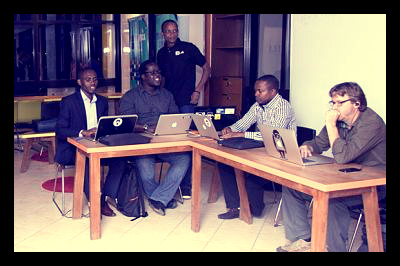
This is the belief of kLab, a tech hub in Rwanda where young people can bring their startup ideas and receive free Wi-Fi, workspace and mentorship from professors, business owners, and community leaders.

kLab – which stands for “knowledge lab” – has been operating for over a year and was officially launched in October 2013. The center is funded by the Rwanda private Sector Federation, the Rwanda Development Board and the Japan International Cooperation Agency.

“The knowledge lab is an innovation center where fresh and young graduates come to work on their projects, especially in the tech industry,” said Jovani Ntabgoba, kLab’s general manager, at the launch.

kLab currently offers the services of 21 different mentors to its over 80 tenants. The startups at the center range from online shopping websites to improved medical technology. The mentors offer these young people the ability to truly flesh out their ideas and turn them into much more.

“The culture is collaboration, but it’s not just collaboration; it’s positioning oneself at an age where you receive the best mentorship that you cannot find anywhere else in Rwanda,” Ntabgoba said. “At kLab we have all of the knowledge that is required for a tenant to develop their business.”

The power of this collaboration has led to the beginning of many bright futures for startups that focus on the vision of the country of Rwanda: to turn the nation into a knowledge-based economy. However, young Rwandans are challenged daily by a lack of skills due to the fact that the educational curriculum is not yet “innovation-oriented.”

One of the more recent kLab successes is GIRA ICT – a startup that combats a large roadblock to widespread internet usage in Africa: hardware prices. By partnering with big name manufacturers like Apple, Samsung, HP and Lenovo, GIRA ICT allows consumers to pay for their devices in monthly installments in order to increase hardware ownership across the country.

“We started as a group of five entrepreneurs, so we came into kLab and they gave us a free space to work in. We could enjoy internet… they provided us with mentors,” said project supervisor Alphonse Ruhigira.

GIRA ICT has also been collaborating with the government to supplement the One Laptop per Child program. Founded by Nadia Uwamahoro, this effort provides teachers with laptops that they can pay off over a span of four years. So far, this has helped about 100 teachers to attain laptops and the number is steadily increasing.

“It’s a brilliant innovation and she is doing brilliant business,” says Jean Philbert Nsengimana, Rwandan Minister for Youth and ICT of Uwamahoro. “She’s taken computers to places where they were seeing and touching them for the first time by lowering the affordability challenge.”

Through efforts such as GIRA ICT, kLab is pushing Rwanda towards its goal of becoming a middle-income country by the year 2020.

“I want you to understand the uniqueness of this kLab compared to many other iHubs in the region. The uniqueness of this one is that you are in this building and you are not alone in this building,” said Michael Bezy, associate director of Carnegie Mellon University in Rwanda, who works with kLab in order to provide mentorship to its tenants.

“You look at that and you say ‘I have entrepreneurs here, I have a world-class university, I have IT businesses and I have IT infrastructure.’ That looks to me like a mini Silicon Valley,” said Bezy.

– Samantha Davis

Sources: Wired, kLab, Wired
Photo: Wired

Africa_Ghana_Entrepreneurs
For any aspiring tech giant, setting foot on the coveted ground of the Silicon Valley is like entering Hollywood for the aspiring actor. A veritable hot bed for up and coming technology, Silicon Valley serves as a who’s who of past, present, and future industry players.

The prospect of an undeveloped African country gaining footing in the tech industry seems far-fetched. For three young men from Ghana, however, their dreams of entering the industry are coming to fruition sooner than expected. While, for many in Ghana, having a home computer is still not a reality, Ghanaian entrepreneurs, David Osei, Kamil Nabong, and Philips Efah are bringing their startup Dropifi to Silicon Valley.

Through the unique mentoring program, 500 Startups, Osei, Nabong, and Efah have been awarded a four-month boot camp in Silicon Valley where they will learn all angles of the startup industry. At its heart, 500 startups is a venture capital firm aimed at building the next generation of startups from the ground up. With their inclusion of the Ghana trio, however, the firm has begun to set their sights beyond Silicon Valley, and into the developing world.

With the goal of streamlining businesses contact forms, Dropify, aims to provide a seemingly underutilized resource to businesses the world over. Despite worldly ambitions, however, the group has kept their feet firmly rooted on the ground and hopes to bring the brunt of business back to Ghana. “I never thought of moving to the Valley as soon as this, because basically we want to build a global startup company right from Ghana that is going to service the whole world,” Osei told CNN.

While there remains a lot of work for the four entrepreneurs, they have their goals set. Osei went on to tell CNN, “Our immediate goal is building a sustainable product that is going to deliver continuous value to our business,” says Osei. “Currently we are focused on the U.S. and international market – the U.S., U.K., Canada – but in a couple of years we want to become leaders in Africa.”

For a country such as Ghana, the hope of entering into the tech industry certainly serves as a goal worth fighting for. With globalized free trade, serving as a business hub in Africa will certainly be a boon to the country’s economy as well as surrounding African countries.

– Thomas van der List

Sources: CNN, Government of Ghana, 500
Photo: The Guardian