• Link to X
  • Link to Facebook
  • Link to Instagram
  • Link to TikTok
  • Link to Youtube
  • About
    • About Us
      • President
      • Board of Directors
      • Board of Advisors
      • Financials
      • Our Methodology
      • Success Tracker
      • Contact
  • Act Now
    • 30 Ways to Help
      • Email Congress
      • Call Congress
      • Volunteer
      • Courses & Certificates
      • Be a Donor
    • Internships
      • In-Office Internships
      • Remote Internships
    • Legislation
      • Politics 101
  • The Blog
  • The Podcast
  • Magazine
  • Donate
  • Click to open the search input field Click to open the search input field Search
  • Menu Menu

Tag Archive for: Soccer

Posts

Global Poverty, Sports

Using Football to Protect Vulnerable Women from Exploitation

Football to Protect Vulnerable Women from ExploitationFootball has long been known as the game of the people, bringing joy to millions of watchers and players in all corners of the world. Still, perhaps it is less clear how the Homeless World Cup Foundation used football to protect vulnerable women from exploitation. Alongside the FIFA Foundation, the Homeless World Cup Foundation launched the Football to Protect Vulnerable Women from Exploitation program in partnership with four African countries that deal with extreme poverty (Kenya, Tanzania, Zimbabwe, and Zambia). Alongside fun football training and competitions, they developed tools to support women recovering from, or at risk of, exploitation.

Homeless World Cup

Poverty and football are complexly and deeply entangled. As an accessible game for most people, football holds great power as a catalyst for social change with grassroots programmes creating jobs and opportunities, developing vocational and life skills and empowering marginalised groups through social cohesion.

The Homeless World Cup has one vision –  to create a world in which homelessness does not exist. According to the U.N., there are more than 1.8 billion people who lack suitable housing worldwide, despite it being a human right. Through both its one-of-a-kind Homeless World Cup tournaments and by delivering year-round programs in 75 countries, they help to achieve their mission by helping players into stable housing, education programs, and employment.

Football to Protect Vulnerable Women from Exploitation Project

The FIFA Foundation and the Homeless World Cup Foundation recognized the transformative power of football to protect vulnerable women from exploitation and create safer communities. They partnered with four Homeless World Cup countries to develop and implement a curriculum of both football and non-football related activities: Kenya, Tanzania, Zambia and Zimbabwe. Programs in each country have used the power of sports to focus on and improve on local issues. The overall project had several goals:

  • Identifying vulnerable women who are recovering from or are at current risk of exploitation
  • Creating safe spaces for these women, both on and off the pitch, and ensuring close ties to local women’s shelters
  • Engaging women in training sessions, including football, coaching, safeguarding, women’s empowerment, and vocational skills to improve employment prospects
  • Supporting and guiding these vulnerable women to productive, tangible and sustainable alternatives to exploitation and out of homelessness and poverty
  • Targeting young men on and off the pitch to develop positive masculinities in an effort to promote equality between men and women
  • Hosting and delivering women’s tournaments; the first Africa Women’s Cup happened in Tanzania in 2024, and the second in Kenya in 2025

Kenya

Around 45% of the Kenyan population lives below the global poverty rate of $3.00 a day. Additionally, around 1.4 million Kenyans live with HIV. As such, the partnership between the FIFA Foundation, the Homeless World Cup Foundation and Vijana Amani Pamoja (a football club formed in 2003 in an area of Kenya with a high rate of HIV), this project to use football to protect vulnerable women also had a large focus on sexual reproductive health and rights for girls and young women. Young women and girls who are vulnerable to sexual exploitation due to poverty and inadequate housing are at an increased risk of HIV, which makes this project all the more important.

Tanzania

Despite seeing significant growth in their economy and a major reduction in poverty since 2000, the poverty rate remains high, with around 29 million people still living in poverty, and 3 million houses are necessary to address the current shelter shortage. Gender-based violence remains a large issue in Tanzania; around 10%, or 2 million, girls and women have experienced female genital mutilation despite the law prohibiting it on girls under the age of 18. Consequently, the project to use football to protect vulnerable women from exploitation in Tanzania focuses largely on tackling gender-based violence to ensure sustainable and safe social development for young people.

Zambia

An astonishing 71% of the Zambian population lives below the poverty line, making it one of the poorest countries in the world. There has been a rapid rate of urbanisation with ‘higher’ paid jobs concentrating in urban areas; there remains a 1.3 million urban housing unit deficit. Zambia’s project partner is Bauleni United Sports Academy, which focuses on children and young people aged 6 to 20 who struggle with poor economic situations and social injustices. They provide resources and facilitate opportunities for 10,000 children to access high-quality sports programmes for positive impacts that last a lifetime.

Zimbabwe

Approximately 9.9 million people live on less than $4.20 a day, and around one in five people live in slums with limited access to water and electricity. Partnering with the FIFA Foundation and the Homeless World Cup Foundation, Zimbabwe’s Young Achievement Sports for Development is a community-based organisation that uses football and education to reach young people and help increase their confidence and prevent substance abuse.

Project Outcomes

This partnership and project have already helped and empowered many girls and women throughout the four partner countries through football and wider initiatives. Sport and football are powerful and effective transformative forces, helping create safer communities by protecting vulnerable women and girls from exploitation. Football and this initiative are far more than a game, but a lifeline for so many experiencing social injustices such as poverty and gender-based violence.

– Stephanie Gable

Stephanie is based in Wales, U K and focuses on Global Health and Politics for The Borgen Project.

Photo: Flickr

May 14, 2026
https://borgenproject.org/wp-content/uploads/borgen-project-logo.svg 0 0 Naida Jahic https://borgenproject.org/wp-content/uploads/borgen-project-logo.svg Naida Jahic2026-05-14 11:55:472026-05-14 11:55:47Using Football to Protect Vulnerable Women from Exploitation
Child Poverty, Global Poverty

Being Poor in Portugal: Ending the Cycle for Future Generations

Being Poor in PortugalPortugal, located in southwestern Europe, borders Spain to the north and east and stretches along nearly 1,800 kilometers of Atlantic coastline to the west. The capital of Lisbon was once a symbol of prosperity and influence among European nations, but being poor in Portugal was not uncommon for children and other disadvantaged groups. Today, Portugal is home to roughly 1.7 million children, many of whom still live below the poverty line.

A Society of Inequality

Many nations viewed Portugal as the world’s most powerful empire, despite its small size. During the 15th and 16th centuries, Portuguese explorers established routes to major regions, including India, Brazil and China. Yet, the prosperity concentrated in urban centers stood in sharp contrast to the poverty in rural areas.

By the mid-18th century, several major events weakened Portugal’s position on the world stage. The 1755 Lisbon earthquake devastated the capital and Napoleon’s invasion in 1807 further destabilized the country. With limited financial resources, Portugal struggled to keep pace with industrialization. Political instability, inadequate infrastructure and a fragile economy deepened poverty across the nation. Children were among the most vulnerable, facing restricted access to both health care and education.

In the early 2000s, major cities such as Lisbon experienced modest economic growth, driven by tourism and foreign investment. Yet being poor in Portugal remained a reality for many children, as poverty continued to affect a significant portion of the population.

Addressing the Challenge

Nations around the world often praise Europe for its education and health care systems, yet childhood poverty remains a pressing issue in Portugal. In 2021, UNICEF reported that nearly one in five Portuguese children were living in poverty, highlighting the work still needed to ensure equal opportunities for all.

Efforts to combat childhood poverty in Portugal are gaining momentum through advocacy and government programs. In 2023, the country launched the Child Guarantee National Action Plan, a major EU initiative aimed at improving children’s lives. The plan focuses on expanding access to health care, increasing educational opportunities, providing nutritious meals and ensuring adequate housing for those in need. Philanthropists and organizations like AMI are also driving meaningful change.

From the Pitch to the People: Soccer Star Gives Back

Cristiano Ronaldo, a native of Portugal, is one of the world’s most famous footballers. Fans will never forget his soccer achievements, and his advocacy continues to make a difference off the field.

In 2015, DoSomething.org recognized him as the world’s most charitable athlete. His generosity includes funding life-saving brain surgery for a 10-month-old baby suffering from seizures and donating $165,000 to the cancer center that treated his mother. More recently, during the coronavirus pandemic, he reportedly gave $1 million to hospitals in Lisbon and Porto.

One of Ronaldo’s greatest contributions to Portugal goes beyond financial donations. By using his platform to advocate for the world’s most vulnerable, he leaves a lasting impact not only on those he directly helps, but also by setting an example of generosity and compassion.

Solutions and Hope

Identifying the causes of child poverty in Portugal is the first step toward creating sustainable solutions and the Portuguese government has taken key measures to build a country where children have the opportunity to thrive.

Biennial reports on the Child Guarantee National Action Plan will track the program’s impact and help lawmakers make necessary adjustments to combat childhood poverty in Portugal. The 2024 report highlights new initiatives, including reduced health care costs for children and youth, expanded access to education for vulnerable communities and key housing reforms.

Being poor in Portugal is still a reality for many children, but growing advocacy, stronger government initiatives and rising public awareness are paving the way toward meaningful change. Improved data collection, especially for migrant children, will further strengthen efforts to build lasting solutions.

– Fernanda Nilson

Fernanda is based in North Charleston, SC, USA and focuses on Good News and Technology for The Borgen Project.

Photo: Unsplash

September 27, 2025
https://borgenproject.org/wp-content/uploads/borgen-project-logo.svg 0 0 Jennifer Philipp https://borgenproject.org/wp-content/uploads/borgen-project-logo.svg Jennifer Philipp2025-09-27 01:30:562025-09-27 02:18:26Being Poor in Portugal: Ending the Cycle for Future Generations
Charity, Global Poverty, UNICEF

The Effect of Louis Tomlinson’s Participation in Soccer Aid

Louis Tomlinson's participation in Soccer AidThousands of fans come together to watch a charity match called Soccer Aid each year. Professional soccer players and celebrities are on the match’s opposing sides. Amid the competitive spirit, these teams face off to raise both awareness and money for the United Nations Children’s Fund (UNICEF). Old Trafford Stadium hosted the annual Soccer Aid match on June 15, 2025, with several remarkable participants. In particular, the former “One Direction” star Louis Tomlinson’s participation in Soccer Aid rallied impressive support.

What is Soccer Aid?

Soccer Aid is an annual charity event that raises money for UNICEF, a U.N. agency that brings development and stability to children globally. The event represents what UNICEF strives for: “to protect play for every child.”

First, celebrities and athletes alike form two teams. One team’s participants are from England and the other team contains players from across the globe. Then, in the spirit of charity and competition, the two teams – England and World IX – face off. Over the years, notable participants such as Usain Bolt, David Beckham and “One Direction” members have taken to the field.

Thanks to the efforts of these participants, Soccer Aid has raised more than $121 million for UNICEF since 2006. This money, from ticket sales and generous donations, brings children out of poverty globally. Every match played brings more and more children access to health care, nutrition, education and emergency relief.

Louis Tomlinson’s Participation in Soccer Aid

Tomlinson has been a long-term supporter of the Soccer Aid program. This year, he took to the field wearing his lucky number, 28. Even without being a professional soccer player, the 90 minutes he spent playing right back attracted much attention to the cause. The singer’s touches on the ball caused the crowd’s cheers to become especially noticeable to those watching the match live.

Tomlinson’s participation in Soccer Aid doesn’t just exist in his effort on the field. He made great strides as an ambassador off the field as well. He used his significant influence on social media as a means to encourage the public to make donations. In one video, he illustrated the value of giving by comparing what $27 (20 pounds) could buy — either a takeaway pizza for children or 80 exercise books.

Beyond his involvement in Soccer Aid, Tomlinson has taken multiple steps to fight global poverty. He supported the ONE Campaign, which aims to end extreme poverty worldwide, backed a movement to tackle food poverty in U.K. schools and hosted a livestream concert to raise funds for a U.K.-based organization focused on food relief. Tomlinson is a long-time advocate for the impoverished community and his participation in the 2025 Soccer Aid match only reinforced that.

Funds Raised and Purpose

This year, the match raised more than $15 million. According to the nonprofit, the funds will provide “food, health care, safe spaces and crisis support around the world — all helping children grow up safe, healthy and able to play.” By delivering essential resources to thousands of children, Soccer Aid gives them something powerful: freedom. The freedom to play, to enjoy childhood and to grow into whoever they choose to be.

Moving Forward

UNICEF benefited greatly from Tomlinson’s participation in Soccer Aid and it hopes that this level of support from the general public continues. This match brings stability and hope to thousands of children worldwide every year. It helps minors escape from the depths of poverty and creates a brighter version of their future.

Soccer Aid aims to unite people under the shared love of soccer and use it to support impoverished children. Under this mission, thousands of children have lived better and escaped poverty.

– Caroline May

Caroline is based in Denver, CO, USA and focuses on Good News and Technology for The Borgen Project.

Photo: Flickr

July 15, 2025
https://borgenproject.org/wp-content/uploads/borgen-project-logo.svg 0 0 Hemant Gupta https://borgenproject.org/wp-content/uploads/borgen-project-logo.svg Hemant Gupta2025-07-15 01:30:412025-07-15 02:08:26The Effect of Louis Tomlinson’s Participation in Soccer Aid
Global Poverty, Sports

Soccer Without Borders: How Soccer Is Fighting Poverty

Soccer Without BordersSoccer (football) is regarded as the world’s most popular sport, with massive viewing numbers globally. However, beyond the superstar players’ money and fame, soccer is a powerful tool to combat poverty and create opportunities for marginalized communities. Indeed, around the globe, grassroots soccer programs address critical social issues, from access to education and health care to social inclusion and employment. Here are five global soccer initiatives that have made measurable impacts in reducing poverty and improving lives:

Street Child United

Street Child United (SCU) utilizes soccer as a platform to raise awareness about the struggles of homeless and working children, giving them a voice and helping to secure their rights. SCU’s flagship event, the Street Child World Cup, gathers thousands of vulnerable youths from countries including Brazil, India and Kenya to compete in soccer tournaments alongside workshops on legal rights and advocacy.

Beyond the competition, SCU advocates for vital identity documentation like birth certificates, essential for accessing education and health care. In recent years, SCU has helped secure hundreds of identity documents, impacting children’s ability to attend school and receive medical care. Since its creation, SCU has reached more than 1.4 million in more than 30 countries.

Common Goal

Established by Spanish midfielder Juan Mata in 2017, Common Goal encourages soccer professionals to pledge 1% of their earnings to a collective fund supporting worldwide soccer-based social initiatives. More than 200 players and managers from 48 different nationalities and 60 leagues have joined the movement, contributing to causes such as gender equality, education and social inclusion.

One of the beneficiaries of Common Goal’s funding is Soccer Without Borders in Uganda. More than 1,600 refugee and local youth are served annually by Soccer Without Borders Uganda through soccer, education and community-building programs. In 2023, one of the Soccer Without Borders initiatives, the Kampala Girls League, reached more than 1,000 girls, promoting gender equity and inclusion through soccer.

Kick4Life

Kick4Life is a charity based in Lesotho, a country facing one of the world’s highest HIV rates in the world alongside widespread youth unemployment. The program uses soccer for health education, life skills training and academic support, helping young people improve their chances of escaping poverty. Operating a soccer academy, school and social enterprise hotel, Kick4Life has directly reached more than 200,000 young people with health education programs and HIV testing services.

Additionally, more than 25,000 children have undergone voluntary HIV testing, with more than 1,000 testing positive and receiving ongoing treatment and counseling through referral networks.

Football for Peace

Football for Peace works in fragile and conflict-affected communities worldwide. It uses soccer to bridge ethnic, religious and social divides. Furthermore, Football for Peace runs “peace matches,” educational workshops and leadership camps targeting marginalized youth.

In Colombia, in partnership with the Ankle Foundation and funded by the UEFA Foundation for Children, it implemented a project to promote reconciliation between ex-Revolutionary Armed Forces of Colombia (FARC) combatants and local communities. The initiative involved 615 children of ex-combatants, providing them with soccer training and psychosocial support to facilitate social integration and prevent the resurgence of violence.

Aspire Academy

Aspire Academy, based in Qatar but with a significant scouting and outreach presence in West Africa, identifies promising soccer talent from countries. The Academy provides full scholarships, world-class training facilities, education and nutrition to talented boys from low-income backgrounds. Aspire’s Football Dreams program has scouted more than 3.5 million boys since its inception, with 18 to 20 elite scholarships being handed out annually after a rigorous selection process.

Beyond soccer, the Academy emphasizes academic education and life skills that can help propel young people into a working environment and reduce unemployment. Indeed, many who have successfully reached the Academy have secured professional contracts in Europe and Asia and actively contribute to development in their home communities.

These initiatives help bring change and fight poverty in marginalized and vulnerable regions. As one of the largest sports globally, the reach is limitless, leaving an opportunity for progression. These initiatives are just five examples.

– James Harwood

James is based in England, UK and focuses on Good News and Global Health for The Borgen Project.

Photo: Pexels

June 10, 2025
https://borgenproject.org/wp-content/uploads/borgen-project-logo.svg 0 0 Hemant Gupta https://borgenproject.org/wp-content/uploads/borgen-project-logo.svg Hemant Gupta2025-06-10 07:30:032025-06-10 01:41:53Soccer Without Borders: How Soccer Is Fighting Poverty
Global Poverty

Poverty-Related Crime and Extracurricular Activities

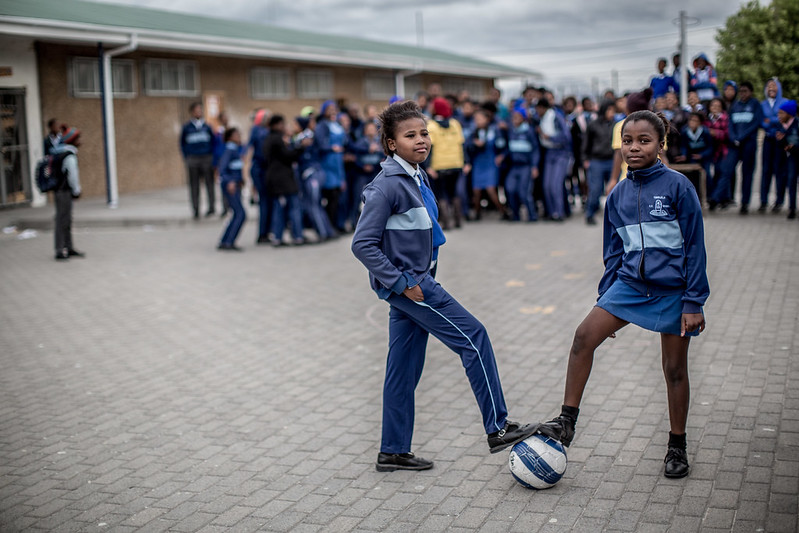
Poverty-related crimeCrime is a significant issue around the world, especially in developing countries where limited resources contribute to higher poverty-related crime rates. In countries such as South Africa, high crime rates are prevalent among children and adolescents. Correlations exist because of increased time and fewer resources to productively fill children’s free time after school. Because of this, many nonprofit organizations and individuals have worked to provide more after-school activities for children as a deterrent from the path to criminal activity. Although many nonprofit-sponsored activities contribute to children’s education while discouraging criminal behavior, sports have been one of the most impactful extracurriculars due to a focus on discipline, responsibility and guidance.
Criminal Behavior in South Africa by the Numbers

Crime in South Africa is a significant issue that is rooted in poverty and inadequate access to basic resources. According to PLOS ONE, an online journal, “recent statistics show 2,250,257 crimes reported for 2015 alone [1]. Further all crimes have increased since 2013, when 2,217,862 crimes were reported [1]. Also the rate of interpersonal violence in South Africa is the sixth highest in Africa and fifteenth in the world, with an intentional homicide rate of 31.8 per 100,000 population [2].”

Based on the criminal activity report, criminal activity in South Africa is increasing from year to year and is largely tied to violent crimes such as homicide. These crimes are oftentimes fueled by a lack of economic resources in addition to psychological factors. Racial and gender inequality also exacerbate issues. Although these crime statistics include offenders of all ages, dangerous behavior and crimes are also significant issues in South African schools.

An organization called Safer Spaces conducted an observational study in which pupils from several South African schools and various grade levels were asked about their school experience. “Of all learners, 15.3% had been victimized (Burton, 2008). Of the secondary school learners, 22% had been victimized (Burton & Leoschut, 2013).” This is a large portion of the student body that is experiencing violence or other dangerous behavior while at school, making early intervention a necessary effort.

Extracurricular Solutions

Although poverty-related crime among youth is a big issue in South Africa as it can lead to more serious crimes in adulthood, extracurricular activities can make a significant impact in decreasing the number of children that engage in criminal behavior. For example, The International Committee of the Red Cross works with AMANDLA Edu Football to use soccer as a safe activity for South African children to spend their time with after school. The latter organization is a nonprofit that is paving the path for early intervention for criminal activity in South Africa. It is located in Capetown and runs during the peak crime hours, offering children and other individuals an alternative activity to crime.

In Capetown, this means that kids can spend their weekday afternoons from 3-6 p.m. and weekend nights on a soccer field where they learn discipline, respect, and have fun away from dangerous activities. This is especially impactful as it ensures that these children will have adult supervision and guidance between the time school ends and their parents get home from work, further decreasing opportunities for dangerous behaviors.

Poverty-related crime among youth is a serious issue in South Africa that contributes to high levels of violent crime in adulthood, making this a pressing issue to address. Moreover, criminal behavior is commonly linked with poverty, inadequate access to food and other daily necessities and other issues of discrimination. Partnering or contributing to organizations that provide extracurricular alternatives for children is key. These efforts ensure that children are equipped with the resources and guidance that will deter them from criminal behavior in the present and future and will decrease the overall levels of poverty-related crime.

– Kristen Quinonez
Photo: Flickr

September 6, 2021
https://borgenproject.org/wp-content/uploads/borgen-project-logo.svg 0 0 Lynsey Alexander https://borgenproject.org/wp-content/uploads/borgen-project-logo.svg Lynsey Alexander2021-09-06 09:55:062021-10-05 04:20:59Poverty-Related Crime and Extracurricular Activities
Global Poverty

President of Kenya Launches Campaign to Address HIV-Related Stigma

President of Kenya Launches Campaign to Address HIV-Related Stigma
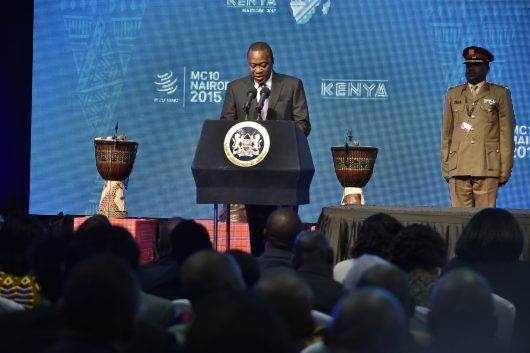
The president of Kenya, Uhuru Kenyatta, launched a new HIV-related stigma campaign at State House, in Nairobi, in order to raise awareness and mobilize young people to be HIV tested, treated and cared for in case of a positive diagnosis.

The national initiative called “Kick out HIV stigma” occurs during the Kenyan Maisha County Football League. The Maisha County Football League is a nationwide 30-week project that aims to diminish HIV infections among young people by using the power of sports in order to terminate HIV.

HIV is considered to be the most crucial and severe health threat dominating people in Kenya. Specifically, it is estimated that during 2015, there have been 35,776 HIV infections and 3,853 deaths among young people aged 15 to 24.

Stigma that is related to HIV remains one of the most vital barriers and concerns for young people who are diagnosed. The HIV-related stigma campaign is a collaboration among the Football Kenya Federation, the government, the U.N., the civil society and finally the Kuza Biashara, a company that focuses on innovative digital technology.

The campaign’s strategy focuses on developing 1,426 football matches in which young people participate from 47 countries and 200,000 people will be worldwide reached every week. By the end of the program, on Dec. 1, the Maisha County League Awards will arise in which both regional and international football winners will be announced by Kenya’s president as part of a celebration of the World AIDS Day.

– Eliza Karampetian-Nikotian

Photo: Flickr

October 30, 2016
https://borgenproject.org/wp-content/uploads/borgen-project-logo.svg 0 0 Borgen Project https://borgenproject.org/wp-content/uploads/borgen-project-logo.svg Borgen Project2016-10-30 01:30:372024-12-13 17:55:45President of Kenya Launches Campaign to Address HIV-Related Stigma
Global Poverty

Where Soccer and Global Poverty Innovation Collide

soccer_and_Global_Poverty
Soccer unites people. It is one of the few things that crosses social, geographic, ethnic and religious boundaries. It is widely understood and played by many. This is why Uncharted Play tapped into the love of soccer to make a difference in the world. They believed in the power of play.

Uncharted Play was founded in 2011 with the strong belief that through the pursuit of play and happiness, they could create something that “would show the world how play could be a tangible tool for inspiring social invention.”

The two founders of Uncharted Play, Jessica O. Matthews and Julia Silverman, met during their junior year at Harvard University, where they teamed up to create the SOCCKET as a class project.

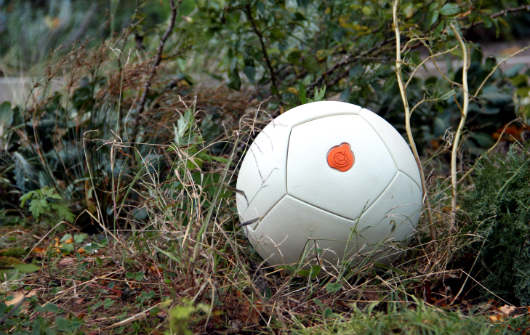
The SOCCKET is a soccer ball with an LED light and a plug off the side. It has a mechanism on the inside that converts kinetic energy to electricity, which powers an LED light for three hours after just thirty minutes of play.

Uncharted Play’s first large-scale success was in Mexico in March 2013, where the largest television station, Televisa, gave out 150 SOCCKETs for free at a ceremony.

https://www.youtube.com/watch?v=DtgpRo-Jd5k

However, the first big problem that users ran into with the SOCCKETs was the invention’s low durability. Uncharted Play took this into account and began making improvements. Matthews said, “We’re not Nike. We’re not Walmart… We’re a group of eight people in an apartment in New York City.” She later added, “Things may not always go right, but we are always, always, always… trying to do our best and doing it for the bigger picture.”

Since the creation of the SOCCKET in 2008 and the establishment of Uncharted Play in 2011, they have created a second product—energy-storing jump ropes—and have improved on the first.

Uncharted Play recognized that nearly 1.2 billion people live without electricity and sought to find a solution that not only reduced this number, but also increased happiness. The SOCCKETs are used to light homes and help children do their homework, and most importantly, it gets the kids out to play. Here, soccer and global poverty truly do collide—with positive results.

– Hannah Resnick

Sources: Smithsonian, Public Radio International, Uncharted Play, World Bank
Photo: Development Crossing

Source via a nice article published in SoccerTimes

August 6, 2015
https://borgenproject.org/wp-content/uploads/borgen-project-logo.svg 0 0 Borgen Project https://borgenproject.org/wp-content/uploads/borgen-project-logo.svg Borgen Project2015-08-06 07:56:542020-02-28 09:38:51Where Soccer and Global Poverty Innovation Collide
Activism, Education, Global Poverty

FC Barcelona Players Talk Education And Sports For UNICEF

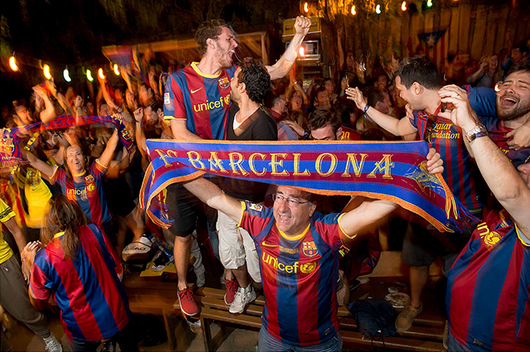
UNICEFAt an event presented by FC Barcelona and UNICEF, soccer players Andrés Iniesta and Marc-André Ter Stegen met with Los Angeles kids to discuss the importance of children’s education.

The FC Barcelona players shared with the kids their thoughts and memories of playing soccer during their school days. Iniesta and Ter Stegen donned their red, yellow and blue team colors during the meeting and answered questions after their initial comments.

On the players’ jerseys, the UNICEF logo can be seen, signifying FC Barcelona’s involvement and association with the organization. Iniesta, FC Barcelona’s midfielder, said that he is proud to be linked with an important organization like UNICEF.

“For us as individuals, and as a club, it’s an honor to wear the jersey because of the values that UNICEF represents,” he said.

In addition, Iniesta voiced his and UNICEF’s similar opinions about the value of education in children’s lives.

“Alongside UNICEF, we want to reinforce the importance of providing the most vulnerable children with access to education,” Iniesta said. “Especially as parents, we are aware that children are the most precious things in our lives. It’s difficult knowing that there are children in other countries who don’t have the same opportunities.”

In agreement with his teammate, Ter Stegen, the team’s goalkeeper, noted the significance of education with his personal testimony.

“I had a lot of coaches and each of them advised me how to reach my goals,” he said. “But it’s not enough to have coaches or just to play soccer: education has been really important for me.”

UNICEF’s choice to partner with FC Barcelona was a strategic one. According to Quora, a question and answer website, soccer is the most popular sport in the world. An estimated 3.5 billion people are either fans of the sport or watch the sport.

By teaming up with one of the most popular clubs in professional soccer, UNICEF gains an unfathomable amount of notoriety by people who have the ability to make a change.

UNICEF and FC Barcelona first began their partnership in September 2006, and since then, the FC Barcelona Foundation has donated more than 12 thousand euros, or a little over $13,000.

The programs put in place by the organizations have aided in improvements in health for several countries in Africa and South America where sports are an integral part of a child’s physical and mental development. UNICEF and FC Barcelona have helped create better education systems for children and greater training programs for teachers.

Albert Soler, Director of Professional Sports of FC Barcelona, said that these projects have created a monumental amount of educational opportunity.

“Through these programs, more than 300,000 children are being reached,” Soler said.

According to a New York Times article, students who play sports in school tend to perform better later in life.

“Participating in sports, like playing in the school band or competing on the debate team, are cognitively and organizationally demanding activities that help convey self-discipline and leadership skills,” the article said.

In agreement with The New York Times, U.S. Fund for UNICEF Regional Managing Director, Amber Hill, said that the power of sports has helped children all over the world receive an education that fosters the skills needed to succeed.

“All children have the right to learn,” Hill said. “The focus of the FC Barcelona and UNICEF partnership is creating a world inspired by the power of quality education, where sports and play are key elements in the development of all children.”

With the help of Iniesta, Ter Stegen and all of the UNICEF and FC Barcelona supporters, thousands of children are receiving a quality education. Sports have always played an important role in a child’s development. Now it can be said that sports, like soccer, have helped children succeed in education and in life.

– Fallon Lineberger

Sources: FC Barcelona, Look to the Stars, The New York Times, Quora
Photo: Flickr

August 5, 2015
https://borgenproject.org/wp-content/uploads/borgen-project-logo.svg 0 0 Borgen Project https://borgenproject.org/wp-content/uploads/borgen-project-logo.svg Borgen Project2015-08-05 01:30:272024-05-27 09:27:15FC Barcelona Players Talk Education And Sports For UNICEF
Activism, Health, Nonprofit Organizations and NGOs

Soccer Star Creates Kanu Heart Foundation

Nwankwo Kanu is not only the former captain of the Nigerian national soccer team, but he also goes to a great length in doing charity work. Born in Nigeria, he started to show his soccer talent on the Dutch Ajax team by scoring 25 goals in 54 performances in his first year in Ajax. He also led the Nigerian team win the Olympic Gold Medal in 1996. He was named African Footballer of the Year in the same year. In his charity path, he launched Kanu Heart Foundation, which he claimed as his proudest achievement. At the same time, he is a UNICEF ambassador.

Just after winning the Olympics, he was diagnosed with a heart valve defect, underwent surgery and did not return to his career for almost a year. Because of his experience, he started his Kanu Heart Foundation to make sure children with heart problems are able to obtain heart surgeries, especially underprivileged children in Africa. Through this organization, hospitals provide surgical heart transplants, laser surgeries and more.

“These kids remind me of when I was growing up as a little boy,” Kanu said to BBC Sport. “There’s no amount of success on the football pitch that can give me more smiles than the numbers of lives I’ve touched.” He wants to put smiles on the face of every child who deserves the chance to pursue their dreams.

According to its official website, the Kanu Heart Foundation has undertaken 452 open heart surgeries since the foundation was first established in 2000. All sponsored surgeries are done in countries such as England, Israel, India and Sudan. The Cardiac Specialist Hospital will offer free surgeries for children from 1 to 12 years old and those for adults will be subsidized.

– Jing Xu

Sources: BBC News, Wikipedia, Kanu Heart Foundation 1, Kanu Heart Foundation 2
Photo: Connect Nigeria

July 30, 2014
https://borgenproject.org/wp-content/uploads/borgen-project-logo.svg 0 0 Borgen Project https://borgenproject.org/wp-content/uploads/borgen-project-logo.svg Borgen Project2014-07-30 08:58:432024-12-13 17:50:21Soccer Star Creates Kanu Heart Foundation
Global Poverty, Women, Women & Children, Women and Female Empowerment

Prostitution Increases for World Cup

Prostitution has increased during the World Cup as Brazilian women are turning to prostitution for the lucrative duration of the competition, which takes place June 12 – July 13 throughout 12 cities in the host country. Five to 6 of Brazil’s top cities are the targets of these workers, many of whom took up prostitution just before the tournament started.

The women are reported to be taking English classes to converse with clients from English-speaking countries. Interviews with some of the prostitutes revealed that many of them, especially the younger women, have high hopes of being swept off to another country and a more comfortable lifestyle as the result of a transaction.

Maria, an 18-year-old student, stated to a journalist, “I’m here to find a gringo to take me away and give me a quiet life. I do not want luxury but just to live with a little more dignity and to help my family.”

England fans seem to be the biggest target for the girls who can be seen in brothels, near the beaches and amongst street vendors near the football stadiums, some even wearing English football team shirts.

While some of the women have dreams of being whisked away by a wealthy foreigner, all the women have their own reasons for taking up the profession, whether temporarily or permanently. Some women have seen an opportunity to earn extra money; some have a more severe need for the income.

One woman, according to social worker Cleide Almeida in Vila Mimosa, took on prostitution as a second job due to financial necessity after her husband passed away. It is legal for women in Brazil to sell sex if they are over the age of 18, but women as old as 77 are reported to work in the industry. Many foreign clients are looking for something they can’t get legally, however, and underage workers are often available by delivery to various hotels.

There are 120,000 sex workers in the state of Rio, and Almeida expects trade to double to 10,000 serviced men per day during the World Cup. Women are charging the equivalent of about $27 for a half hour of their time and $44 for an hour.

The World Cup is one of the world’s most celebrated occasions, and for good reason. Through competition, the football tournament unites nations for a month of good sport and excited nationalism. Whether increased prostitution can provide access to money for these women or not, the trend reflects bigger issues concerning demand for sex work and lack of other opportunities.

 — Edward Heinrich

Sources: IBN Live, Mirror Online, Liverpool Echo
Photo: Flickr

June 20, 2014
https://borgenproject.org/wp-content/uploads/borgen-project-logo.svg 0 0 Borgen Project https://borgenproject.org/wp-content/uploads/borgen-project-logo.svg Borgen Project2014-06-20 07:36:402024-05-26 23:48:32Prostitution Increases for World Cup
Page 1 of 212

Get Smarter

  • Global Poverty 101
  • Global Poverty… The Good News
  • Global Poverty & U.S. Jobs
  • Global Poverty and National Security
  • Innovative Solutions to Poverty
  • Global Poverty & Aid FAQ’s
Search Search

Take Action

  • Call Congress
  • Email Congress
  • Donate
  • 30 Ways to Help
  • Volunteer Ops
  • Internships
  • Courses & Certificates
  • The Podcast
Borgen Project

“The Borgen Project is an incredible nonprofit organization that is addressing poverty and hunger and working towards ending them.”

-The Huffington Post

Inside The Borgen Project

  • Contact
  • About
  • Financials
  • President
  • Board of Directors
  • Board of Advisors

International Links

  • UK Email Parliament
  • UK Donate
  • Canada Email Parliament

Get Smarter

  • Global Poverty 101
  • Global Poverty… The Good News
  • Global Poverty & U.S. Jobs
  • Global Poverty and National Security
  • Innovative Solutions to Poverty
  • Global Poverty & Aid FAQ’s

Ways to Help

  • Call Congress
  • Email Congress
  • Donate
  • 30 Ways to Help
  • Volunteer Ops
  • Internships
  • Courses & Certificates
  • The Podcast
Scroll to top Scroll to top Scroll to top