• Link to X
  • Link to Facebook
  • Link to Instagram
  • Link to TikTok
  • Link to Youtube
  • About
    • About Us
      • President
      • Board of Directors
      • Board of Advisors
      • Financials
      • Our Methodology
      • Success Tracker
      • Contact
  • Act Now
    • 30 Ways to Help
      • Email Congress
      • Call Congress
      • Volunteer
      • Courses & Certificates
      • Be a Donor
    • Internships
      • In-Office Internships
      • Remote Internships
    • Legislation
      • Politics 101
  • The Blog
  • The Podcast
  • Magazine
  • Donate
  • Click to open the search input field Click to open the search input field Search
  • Menu Menu

Tag Archive for: Soccer

Posts

Global Poverty

Soccer Stars with Humble Beginnings

As John Oliver so eloquently stated, for any fanatical fan, soccer (or football) is not just a sport; it’s a religion, and the players are gods. They are symbols of faith and inspiration. They are the key holders of success, the gatekeepers of heaven. But unlike the biblical God, a glorified, elusive entity, these gods started from humble beginnings. It was indeed their supernatural gift that elevated them to deity. Here are five soccer “gods” that ascended to become soccer stars despite impoverished roots.

Rivaldo

Growing up in the northeast port town of Recife, one of Brazil’s most poverty-ridden slums, Rivaldo endured the hardship that comes with poverty. Due to malnourishment, he lost several teeth and was left bow-legged. His passion for football was his vehicle for prevailing through adversity. When he was 16 he signed his first professional contract with Paulistano and from then on, he rose to stardom. He competed in the World Cup in 1998 and 2002, helping Brazil reach the final round both years.

Pelé

One of the greatest legends of the game, Pelé too was raised in the unforgiving streets of Brazil. With not enough money to invest in his own soccer ball, he improvised by using a sock stuffed with newspaper or a grapefruit. Talent and grit were the ingredients for his successes. Throughout his career, he was elected “Athlete of the Century” by the International Olympic Committee and in 1999 was voted “Player of the Century.” Since his retirement, he has been a worldwide advocate for the promotion of soccer as a vehicle for change in developing countries.

Diego Maradona

Raised in the shantytown of Villa Fiorito, Argentina, Maradona shared one bedroom with all seven of his siblings. He did not receive any formal education; football was his only hope. In his astounding career, he played in four FIFA World Cups, was recognized for his “Goal of the Century” and was crowned FIFA “Player of the Century.”

Salomon Kalou

A current member of the Cote d’Ivoire national team, Kalou was raised in a nation in which 42.7 percent of citizens live below the poverty line. He rose to international prominence for his exceptional ability on the soccer field. Aside from serving as a figurehead of faith, he has taken an active role in inspiring his people and alleviating poverty. In 2010, he established the Kalou Foundation, which provides social services and recreation facilities for vulnerable populations.

Samuel Eto’o

Though he lived better than many in a country rampant with poverty, Eto’o began his career in Cameroon as a “street footballer.” He has since risen to be the highest paid player in the world, earning $17 million per year. His well-earned money goes toward his foundation, which funds development work in Africa.
These soccer stars have utilized their high profiles to inspire and ignite change. The good thing about the religion of soccer is that there is no hierarchy; there is no secret attribute that all of the gods possess. The most inspiring part of it all could in fact be the democratic nature of the sport. You do not even need a pair of shoes to pick up the game, or even a ball. You never know; bare feet and a ripe grapefruit could get you to big places.

 — Samantha Scheetz

Sources: BBC, Bread for the World, Sportskeeda, AA Registry
Photo:Next Pulse Sports

June 18, 2014
https://borgenproject.org/wp-content/uploads/borgen-project-logo.svg 0 0 Borgen Project https://borgenproject.org/wp-content/uploads/borgen-project-logo.svg Borgen Project2014-06-18 20:09:382024-05-26 23:49:31Soccer Stars with Humble Beginnings
Children, Extreme Poverty, Global Poverty

When Art and Sports Collide for Street Children

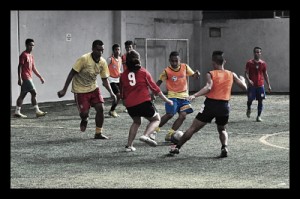
street_soccer_world_cup_kids_plaing_red_orange_soccer_ball_vest_goal_fun_children_somebody_photo__opt
The second Street Child World Cup has officially kicked off as of March 28 where it first originated in Rio de Janeiro, Brazil.

With the excitement surrounding the highly anticipated FIFA World Cup, the Street Child World Cup was set to precede FIFA.

The Street Child World Cup is an event made to focus on the plight of street children around the world while incorporating their love of soccer and arts to share their experiences with one another as well as bringing awareness to the public.

You may be asking yourself, what is a street child? The answer is as simple as the name sounds. A street child is a child forced to live a life on the streets doing whatever they can to survive with poverty more often than not being the heart of the problem.

Many street children are without homes or even families to go back to. Some have been torn away from their families during the outbreak of a war and others have lost their parents to HIV/AIDS.

There are also those children who are left to live a life on the streets as a means to provide for their family the best they can.

Warchild.org reports that the number of street children in the world is estimated to be over 100 million. To put this statistic in perspective, that is nearly one-third of the United States population.

The Street Child World Cup is more than just a soccer game where children around the world gather together. It is a global campaign to bring recognition to a marginalized youth and push for the protection of an easily overlooked group.

This 10-day event brings together teams of street children from up to 20 countries that will get the opportunity to interact with one another throughout the various workshops hosted.

In fact, rather than making the games the main focus, the campaign provides children with a creative outlet enabling them to express their plight through various workshops.

The workshops offer something for all of the participants ranging from technology based workshops, to the choir, photography, cooking, yoga, etc.

This campaign is being used to challenge the negative perceptions and treatment of street children around the world.

Street Child World Cup places the hardships that street children endure everyday at the forefront of the public consciousness by putting street children in the spotlight as media coverage and interest levels rise around the soccer games.

“Street Child World Cup is an initiative of UK registered charity Street Child United. The aim is to provide a platform for street children to be heard, to challenge negative stereotypes of street children and to promote the rights of street children.”

UNICEF reported that one billion children are deprived of at least one service essential to development and survival. Street children fall under this category all too well.

The Street Child World Cup gives the children a place to escape the dangers that have unfortunately become just another aspect of their lives.

 – Janelle Mills

Sources: Street Child World Cup (1), Street Child World Cup (2), War Child, The Borgen Project
Photo: WordPress

April 7, 2014
https://borgenproject.org/wp-content/uploads/borgen-project-logo.svg 0 0 Borgen Project https://borgenproject.org/wp-content/uploads/borgen-project-logo.svg Borgen Project2014-04-07 04:00:432018-02-14 09:21:46When Art and Sports Collide for Street Children
Global Poverty

2014 Match Against Poverty

The 11th annual United Nations Development Programme (UNDP)  Match Against Poverty concluded on March 5 as soccer stars joined together to fight global poverty. With international income inequality at extremely high levels, the United Nations has enlisted the help of famous soccer players and the world’s most popular sport to garner increased attention to combating poverty.

UN Goodwill Ambassadors Zinédine Zidane and Ronaldo are some of the famous players playing in the charity match against local Swiss team Young Boys Bern in Bern, Switzerland. Other players included Czech Pavel Nedved and the Portuguese Luis Figo. The squad of retired players beat the Young Boys 8-6, with two goals scored by Zidane.

The charity match is expected to raise up to $250,000 through the sale of tickets and broadcasting rights for the game, and two-thirds of the funds taken in will go towards rebuilding the Philippines after the devastating Typhoon Haiyan hit in November 2013 and toward reducing poverty in Brazil.

Proceeds will be allocated towards the UN’s short-term work program, designed to provide enough money to cover basic necessities in the Philippines. The 2012 Match Against Poverty was held in Porto Alegre, Brazil and raised $360,000 to support UNDP projects in the country. The first Match Against Poverty, held in 2003, took place in Basel, Switzerland and raised approximately $1 million.

Soccer continues to be the most popular sport around the world, partly due to its incredible accessibility. Some kids from poor countries simply use paper and string to make a soccer ball while others use balled-up grocery bags. Soccer is capable of joining people together and making people excited about a topic that seems foreign to people living in developed countries. Increased partnerships between the public and private sectors, along with increased partnerships between the public and private sectors with civil society will continue to be the key in reducing global poverty.

– Jeff Meyer

Sources: Independent, Daily Mail
Photo: MSN Sports

March 15, 2014
https://borgenproject.org/wp-content/uploads/borgen-project-logo.svg 0 0 Borgen Project https://borgenproject.org/wp-content/uploads/borgen-project-logo.svg Borgen Project2014-03-15 04:00:312024-06-05 01:57:162014 Match Against Poverty
Technology

How the 2022 World Cup Could Help Alleviate Poverty

How the 2022 World Cup Could Help Alleviate Poverty
Qatar will be hosting the World Cup in 2022 which creates the problem of dealing with the high climate experienced by the region. Temperatures in Qatar reach roughly 104 Fahrenheit and while the World Cup has relatively little effect of many impoverished nations the developments made to assist in cooling the stadium could be implemented throughout the Middle East.

Nasser Al-Khelaifi, a former professional tennis player and current sports businessman, is acting as the organizing committee’s director of communications and marketing. The stadium has already had a cooling system installed which has earned it the title of being the first and only cooled stadium in the world. However, the main element of the 2022 World Cup that could help alleviate poverty is the method in which they power the cooling system.

Al-Khelaifi is working with companies in Germany to develop a more resilient solar power grid to help power the stadium. Germany has thus far been leading the way in solar power technology and should prove useful in developing a new technology to deal with the conditions of harvesting power in the desert. The main problems in harvesting solar energy in the desert are keeping the grids clean enough to run efficiently.

By working to develop grids more resistant to the harsh environment of the desert, Al-Khelaifi could be producing a useful technology to assist in powering the impoverished communities which lie in some of the world’s harshest environment.

When the new solar power grids are not using the energy gathered by the grids for the World Cup in 2022, it will be put toward powering the neighboring communities.

– Pete Grapentien

Source: Arab Times
Photo: Ahram Online

April 24, 2013
https://borgenproject.org/wp-content/uploads/borgen-project-logo.svg 0 0 Borgen Project https://borgenproject.org/wp-content/uploads/borgen-project-logo.svg Borgen Project2013-04-24 08:35:532024-06-10 03:06:29How the 2022 World Cup Could Help Alleviate Poverty
Global Poverty

One World Futbol Spreading the Love of Soccer

One World Futbol Spreading the Love of Soccer
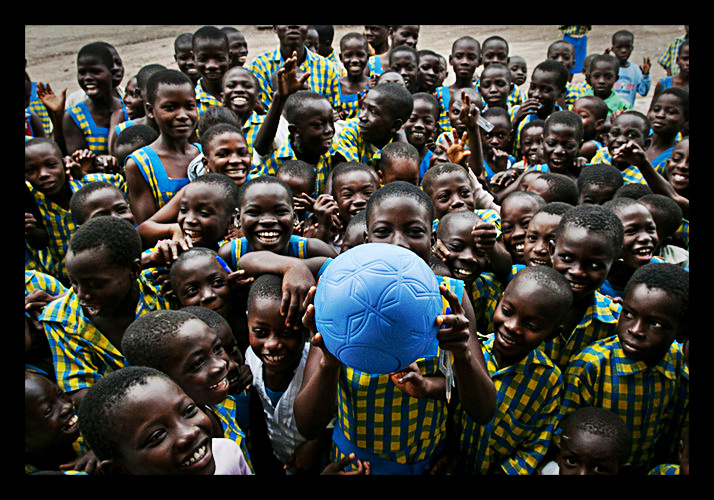
Growing up, many of our toy boxes were full of tennis balls, NERF balls, and soccer balls. As no surprise, even these simple toys are expensive and hard to come by in developing countries such as Darfur and Malawi. But with soccer being the most popular sport in the world, it has come to symbolize a strong sense of community. It is an obsession and passion with children who can barely afford a meal but will scavenge through trash to find anything that could remotely serve as a makeshift soccer ball.

In 2006, Tim Jahnigen was moved by a report on children in Darfur using pieces of trash and rocks as toys. A musical producer and multi-patent holding inventor, he decided to put his connections and passion for soccer to use. With a starting grant of $30,000 from friend and fellow musician Sting, Jahnigen created a prototype for an indestructible soccer ball. Made out of a material called ‘PopFoam’ (think the flexible but tough plastic used for Crocs), these balls can be left outdoors in rough conditions, played on dirt fields, and basically be beaten up and still have a natural bounce to them. These characteristics make them perfect for the environments children play in developing countries.

Within the past two years, One World Futbol has delivered over 200,000 balls. Despite these efforts, Jahnigen is determined to reach millions, if not all 1.3 billion children under the age of 12, through his organization. With financial support from Chevrolet, manufacturing is still continuing but the organization needs much more funding.

OWF is not a non-profit. It functions more or less like TOMS Shoes does (buy-one-donate-one) so about 25% of its soccer balls have been bought through their website and delivered with this business model. However, Jahnigen is much keener on having partner organizations and donors to help with the production costs since online purchases actually cause the price of the balls to go-up.

Ever so optimistically, Jahnigen has already been in talks with creating PopFoam cricket balls, focusing specifically on the South Asian market, where cricket is widely played. With the support of five major cricket organizations for this project, it boosted Jahnigen’s confidence in not only expanding the indestructible balls to cricket but to other sports such as football, volleyball, rugby, and basketball.

With so many intensive organizations around the world, it is always important to remind ourselves how a child’s life can be so easily changed. Soccer brings together the rich and the poor, the hungry and the full, and has the power to break across political boundaries. Supporting ventures such as One World Futbol can have an immediate impact on those worried about donating their money to other causes. Humanitarian aid can take many shapes and forms but the most basic ones, whose goals are simply to bring joy to children, also have the strongest impact.

– Deena Dulgerian

Source: Co.Exist

March 30, 2013
https://borgenproject.org/wp-content/uploads/borgen-project-logo.svg 0 0 Borgen Project https://borgenproject.org/wp-content/uploads/borgen-project-logo.svg Borgen Project2013-03-30 11:43:502024-06-10 02:51:28One World Futbol Spreading the Love of Soccer
Page 2 of 212

Get Smarter

  • Global Poverty 101
  • Global Poverty… The Good News
  • Global Poverty & U.S. Jobs
  • Global Poverty and National Security
  • Innovative Solutions to Poverty
  • Global Poverty & Aid FAQ’s
Search Search

Take Action

  • Call Congress
  • Email Congress
  • Donate
  • 30 Ways to Help
  • Volunteer Ops
  • Internships
  • Courses & Certificates
  • The Podcast
Borgen Project

“The Borgen Project is an incredible nonprofit organization that is addressing poverty and hunger and working towards ending them.”

-The Huffington Post

Inside The Borgen Project

  • Contact
  • About
  • Financials
  • President
  • Board of Directors
  • Board of Advisors

International Links

  • UK Email Parliament
  • UK Donate
  • Canada Email Parliament

Get Smarter

  • Global Poverty 101
  • Global Poverty… The Good News
  • Global Poverty & U.S. Jobs
  • Global Poverty and National Security
  • Innovative Solutions to Poverty
  • Global Poverty & Aid FAQ’s

Ways to Help

  • Call Congress
  • Email Congress
  • Donate
  • 30 Ways to Help
  • Volunteer Ops
  • Internships
  • Courses & Certificates
  • The Podcast
Scroll to top Scroll to top Scroll to top