• Link to X
  • Link to Facebook
  • Link to Instagram
  • Link to TikTok
  • Link to Youtube
  • About
    • About Us
      • President
      • Board of Directors
      • Board of Advisors
      • Financials
      • Our Methodology
      • Success Tracker
      • Contact
  • Act Now
    • 30 Ways to Help
      • Email Congress
      • Call Congress
      • Volunteer
      • Courses & Certificates
      • Be a Donor
    • Internships
      • In-Office Internships
      • Remote Internships
    • Legislation
      • Politics 101
  • The Blog
  • The Podcast
  • Magazine
  • Donate
  • Click to open the search input field Click to open the search input field Search
  • Menu Menu

Tag Archive for: Slums

Posts

Development, Global Poverty, Slums

Local Architecture and Government Planning in Rocinha, Brazil

Government_Planning
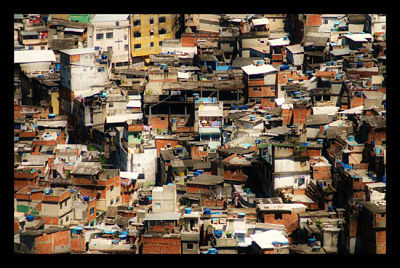
Rocinha, a neighborhood in Rio de Janeiro, Brazil, is one of the largest and densest slums in Latin America. The neighborhood that still struggles with drug cartels, lack of access to education and healthcare, and seemingly inescapable poverty is beginning to slowly change with the visionary architectural work of Ricardo de Olivera, as well as impactful government planning initiatives.

Featured in the series Rebel Architecture, architect Olivera has no formal training. This has given him the adaptable ability to work with the material of the local context of his favela, rather than imposing ineffective westernized techniques. “Ricardo is famous around here. Everyone wants his services,” says a local resident in the film entitled “The pedreiro and the master planner” directed by May Abdalla.

“A foreign architect would not get into this hole and dig. He would hire someone or would hire machines. But here in the favela, we are hands on… Most of the buildings here were built by pedreiros like me… I did all three things. I didn’t need an engineer or an architect or a decorator,” says Olivera in the film.

Olivera has built over 100 houses, as well as supermarkets and parking garages. He is visionary and passionate about improving the quality of life of his birthplace. Olivera’s simple designs meet the needs of his clients and neighbors both socially and financially. Favelas arise spontaneously with no help or design from the government, explains the film. Rocinha is considered Brazil’s most urbanized slum. The tiny 0.8 by 0.8 square mile, steep area is home to 100,000 to 200,000 people. Residents live in states of extreme poverty, in small shanties stacked on top of each other, up to 11 stories high.

Residents of Rocinha rarely have access to education. Citizens on average have had only 4.1 years of formal schooling, and less than one percent of adults have earned a degree above a high school diploma. Jobs in Brazil are reserved for citizens with formal degrees—so Rocinha residents do not have easy access to escaping the impoverished conditions they were born into.

“It has its problems—sanitation, access to quality housing. The other problem is because of the narrow streets where the police can’t go, drug traffickers settled in Rocinha. The government closed its eyes to the arrival of those forming the favelas because they didn’t have the resources to provide housing and they needed cheap manpower. This logic is present in each and every city in which there is a poverty belt,” says Luis Carlos Toledo, the architect behind the master plan for the government’s improvement plan for Rocinha in the film.

As Rio preps itself for the upcoming Olympic games, there are competing forces at play determining the future of Rocinha. The city has implemented pacification programs, which destroy slums in an attempt to make the city look cleaner and less impoverished to outsiders.

The city has also created an ambitious transportation plan— a cable car system that connects downtown Rio with Rocinha. Citizens are against this system, seeing it simply as an investment in the tourism industry rather than a viable transportation solution.

At the same time, various foreign urban planners, NGOs, and architects have come to Rocinha with good intentions, but without a working knowledge of the local community, threatening to bring gentrification to Rocinha.

Amidst these various forces, citizens of Rocinha are speaking up more than ever before. Community meetings in Rosinha have raised a collective voice against the cable car system. “Only the population of Rohica can preserve the spirit. And without that, there is no future for Rohinca,” declares the film.

“The residents have aspirations for the whole favela, not just their house,” explains the film.

Despite the Brazilian government’s mixed history with creating helpful change, localized urban planning by the government has brought improvements to parts of Rocinha. In 2011, an ambitious project to change the district called Rua 4 was successfully implemented. Residents were moved to public housing within their neighborhood, rather than being moved to the outskirts of the city which is often the case in attempts to improve housing.

Before the changes, the Rua 4 area was a 60 centimeter ally, known for having the highest tuberculosis rate in the world.

Dictated by the urban planning project, roads were widened in Rua 4 to about 12 meters. Buildings were improved structurally and painted brightly. Gardens and plazas shot up. Staircases were built to connect different levels. Residents have contributed to building playgrounds, a stage, mosaics and murals.

Here, people relax on their porches outside and no evidence of the drug trade is present. Head architect Luiz Carlos Toledo said “Rua 4 is… an example of how you can, without abandoning the traditional pathways of a favela, improve them, adapt them to the scale and the topography of the site.”

The successful government project and Olivera’s rebel architecture demonstrate that impactful change in favelas is possible. As the community begins to demand more change collectively, hope and greater improvements in Rocinha seem to be in the favela’s future.

– Margaret Mary Anderson

Sources: Arch Daily, Al Jazeera, Mundoreal, Rio On Watch
Photo: Flickr

July 24, 2015
https://borgenproject.org/wp-content/uploads/borgen-project-logo.svg 0 0 Borgen Project https://borgenproject.org/wp-content/uploads/borgen-project-logo.svg Borgen Project2015-07-24 10:53:072020-07-07 14:03:27Local Architecture and Government Planning in Rocinha, Brazil
Global Poverty

Solar-Powered iShack Lights Up South Africa

solar-powered_iShack
In 2012, South Africa’s subsidized housing program had built about 2.8 million houses since 1994. As impressive as that is, the country still faced a backlog of nearly 2 million homes. Facing these numbers, the government decided to shift its focus from providing new-made homes for every household to improving current living conditions. Approximately 1.2 million households, or 3 million people, are still living in informal homes today. These shacks have no electricity or running water. Many are uninsulated and poorly ventilated, creating unhealthy environments for those inside.

Mark Swilling decided to address this problem back in 2011. Swilling, the academic head of the Sustainability Institute in Stellenbosch, asked his students, “‘What can be done while people are waiting?’ We wanted to orientate [our research] towards what the average shack dweller could do while they are waiting for the state.”

His question led to the solar-powered iShack. The shiny metal walls of these ‘improved shacks’ stand out in shantytowns where wooden pallets and corroded sheets of zinc are the building norm. The shacks also feature insulation made of recycled plastic products, a layer of insulating bricks around the bases of the walls, windows designed to improve airflow, and a coat of fire-retardant paint.

The most popular feature by far, however, is the solar electricity. The shacks are equipped with a photovoltaic panel on the roof that powers a porch light and interior lights, as well as an electrical outlet that makes it possible for residents to charge their cell phones.

Damian Conway, manager and director of the Sustainability Institute Innovation Lab, the main team behind the implantation of the iShack, says that part of their research methodology was paying close attention to what they community really wanted. “Electricity is the number one thing that most people in Enkanini say they need,” Conway says. “The needs are all there: sanitation, water … but the main thing is energy.”

The iShack has been warmly received. Nosango Plaatjie, a mother of three living in one of the iShack prototypes, commented that the ability to keep her phone charged and her lights on has made a huge difference to her family.

“The solar [lights] are better,” Plaatije said. “Now we don’t need to go to sleep early anymore because now we have lights. My daughter must do her homework now, she doesn’t have any more excuses. And I like the light outside because we can see what is going on, I feel safer.”

The iShack model of incremental improvements to already-existing settlements has a lot of people excited. In 2013, the Bill and Melinda Gates Foundation supplied the organization with a grant that would allow the project to roll out across the informal settlement of Enkanini.

With much success and steadily rising support from the local community, other groups are beginning to take notice. Slum Dwellers International, a global nonprofit that serves the urban poor, is watching iShack with an eye toward implementing the project across many countries in Africa.

The secretariat-coordinator Joel Bolnick gave the impression of hopeful patience when he said, “Our intention is to give the institute some time to develop the model. They’re almost there now.”

– Marina Middleton

Sources: Mashable, The Guardian iShack Project CNN Live Science Mail & Guardian
Photo: Street News Service

June 17, 2015
https://borgenproject.org/wp-content/uploads/borgen-project-logo.svg 0 0 Borgen Project https://borgenproject.org/wp-content/uploads/borgen-project-logo.svg Borgen Project2015-06-17 12:00:532024-12-13 17:51:25Solar-Powered iShack Lights Up South Africa
Global Poverty

Rising Poverty in Pune, India

A history of deep-seated poverty and vulnerability lies within the urban city of Pune, India. It is estimated that 40 percent of the population lives in slum dwellings—and this number is projected to increase in the future. Because of the rise in population and scarce affordable housing, slums endure and contribute to the persistent poverty in Pune.

Pune is considered to be the third city in India with the largest number of slums. These dwellings fail to provide basic human needs: access to clean water, proper sanitation and infrastructure and quality housing. Tenants also struggle with overcrowding and secure residential status.

Without these basic needs, communities are unlikely to thrive. For instance, proper sanitation majorly contributes to health and the success of future generations. In 2012, it was estimated that over 100,000 people did not have a toilet within walking distance. This issue not only challenges health, but also safety.

“Many toilets are not safe or useable: they are used as meeting places by criminals, do not have adequate water, or do not have electricity,” reports InfoChange, an online source for social justice and development in India.

While these factors determine safety, they also challenge health, especially for children. Lack of proper sanitation is detrimental to a child’s health, and causes diarrhea, cholera and typhoid. In India, roughly 1,600 children under the age of five die every day from these illnesses.

But what about access to health facilities? The story is the same. Often times, there is no access to a public health facility, or the wait time is too long, creating a perception of poor service in public health.

A woman who was interviewed by InfoChange states, “When we tell staff in government hospitals to cater to us promptly, they say: ‘This is a government hospital…not private. If you have money why don’t you go to a private hospital?’” Perceptions like these force communities to seek out private institutions, which can be expensive.

Private education is also expensive, which represents almost half of children’s education in Pune. In 2008, it was determined that 44 percent of school-going children were going to private-aided institutions, and only 26 percent were going to public schools. The main reason for this, again, is that there are not enough public offerings in slum areas.

While these statistics present a multi-layered issue of poverty in Pune, there is a much larger disconnect. The disconnect is between slum communities and people in position of power. For instance, slum households face broken toilets, clogged drains and flooding; however, there is little action taken to fix these problems. Overall, administrations have created a pattern of inaction (sometimes linked to class prejudice), which has spawned distrust from locals.

How can efforts, then, be redirected for poverty in Pune? People are seeking out NGOs to fix the problem.

Sunil Bhatia, a professor of human development at Connecticut College, is currently contributing to this idea. Recently receiving the American Psychological Association’s 2015 International Humanitarian Award, he states, “Poverty is the result of social and economic inequality, so we need to address this challenge globally, via effective policies and mobilizing the people affected by it.”

– Briana Galbraith

Sources: Connecticut College, InfoChange, The Times of India
Photo: Flickr

April 22, 2015
https://borgenproject.org/wp-content/uploads/borgen-project-logo.svg 0 0 Borgen Project https://borgenproject.org/wp-content/uploads/borgen-project-logo.svg Borgen Project2015-04-22 12:00:452024-05-27 09:23:46Rising Poverty in Pune, India
Global Poverty, Slums

The Osaka Slum with No Name

osaka slumJapan currently ranks fourth globally with the highest percentage of people living in relative poverty. ‘Relative poverty’ is a term that means the population does not have enough resources to live on, and individuals are unable to provide themselves with basic and essential needs. Japan has approximately 16.1 percent of its population existing in this status. This condition is exemplified in the Osaka slum discussed below.
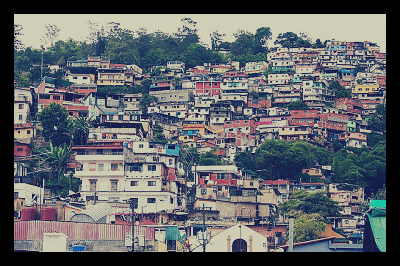
 

Kamagasaki: The Osaka Slum


Within Japan, a slum exists that is a prime example of foreign global poverty. It is a small area, only .24 square miles. The city itself cannot be found on maps of Japan. It is where the poorest people in Osaka, Japan reside. It is the largest slum in Japan: Kamagasaki.

Almost 40 years ago, Kamagasaki was a thriving area in Osaka, due to its construction businesses, and many laborers came from throughout Japan to work there because of such high demand. Three historical events changed Kamagasaki. In 1995, the Hanshin earthquake killed over 6,000 people throughout Japan. Then, in 2010, the rate of economic growth began decreasing in Japan, and it no longer had the second largest growing economy in the world. The demand for labor in Kamagasaki further declined and created more poor. And finally in March 2011, the Great East Japan earthquake occurred. In Kamagasaki, of the 330,000 workers evacuated after the earthquake, 200,000 were estimated to be out of work.

There was a rapid decline into poverty in this specific area of Osaka after 1995 as people began to leave the area. As a result, currently, due to the lack of employment, it is now home to only 25,000 aspiring elderly workers. Of the aspiring workers, 1,300 of them are homeless. The employment options are few and far between—there are very few jobs available. The lack of technology and access to the Internet affects the ability for the unemployed to connect with employers and better paying jobs. Picking through garbage has become a common source of income for residents, allowing them to earn from $9 to $13 per day.

Unskilled laborers after the age of 50 rarely get work and do not qualify for government assistance until the age of 60, leaving a gap of 10 years without income or eligibility for government assistance—including healthcare. The prevalence of tuberculosis infection rate in Kamagasaki is three in every 100 residents.The rate of tuberculosis infection is estimated to be between 30 and 40 times the national average in Japan.

Kamagasaki is a poverty stricken area in Osaka, Japan, the country with the third highest growth of economy in the world. The area was given a new name decades ago: Airin-chiku.

Continued focus on Millennium Development Goal 1, eradication of extreme hunger or poverty, needs to reflect further progress in this area, regardless of what it is called.

– Erika Wright

Sources: The Guardian, The Japan Times, Pulitzer Center
Photo: Epoch Times

April 4, 2015
https://borgenproject.org/wp-content/uploads/borgen-project-logo.svg 0 0 Borgen Project https://borgenproject.org/wp-content/uploads/borgen-project-logo.svg Borgen Project2015-04-04 12:00:422020-07-03 08:37:44The Osaka Slum with No Name
Global Poverty

Slum Destruction in Venezuela

slum_destruction
After a long-standing 20 years, a would-be abandoned bank in Caracas, Venezuela will be demolished. In most cases, the destruction of an abandoned building is hardly notable. However, this abandoned building, commonly called the Tower of David, is home to 1,145 families.

This unfinished building has become a home to hundreds of homeless people and families, creating a community that fully depends on the existence of this empty 45 story tower.

In Venezuela, few squatters find safety in the slums within the city borders. The Tower of David is a vertical beacon, offering refuge to those seeking a long term way of living in the streets.

The future of the bank tower is unclear, with Venezuelan president Nicolas Maduro telling media, “Some are proposing its demolition. Others are proposing turning it into an economic center. Some are proposing building homes there.” Maduro acknowledges the purpose it serves to many, while still acknowledging that this building represents the failed hopes of deceased dictator Hugo Chavez, whose goal was to create a dominant economy within Venezuela.

The building now holds social significance, appearing in multiple films and television shows as the Tower of David, the symbolic slum of Venezuela. Yet this has not coerced leaders into leaving the structure as is; the evacuation of residents has already begun.

The demolition project was suggested after several children were killed falling out of the building, proving it as a safety hazard to Venezuelans. With evacuations beginning on July 22, occupants have agreed to peacefully leave with the promise of homes and aid.

The refuge sought by the inhabitants will not be forgotten, as many reminisce on the solace the tower offered them. One resident, Yuraima Perra, 27, tells NPR, “Necessity brought me here, and the tower gave me a good home,” as the soldiers removed her valuables and belongings from her makeshift apartment.

Parra is one of what many Venezuelans call “invaders” that staked claim in the tower. These “invaders” rigged up electricity and controlled the elevators, essentially turning the abandoned building into subsidized housing for those in need. Due to the fact that there was little internal violence within the tower, civilians respected it, and  thus families were allowed to safely flourish in a protected area.

President Maduro recognizes the tower as, “a symbol of a strange situation, a vertical ‘barrio’.” With regrets of allowing its continuation for so long with little monitoring and even less consideration, Maduro looks to the people for suggestions as to what should happen to this symbolic tower. One thing is clear: the end of the era may have come for the Tower of David, but those who called it home will forge on in search of another safe refuge in the dangerous streets of Caracas.

– Elena Lopez

Sources: Reuters, NPR
Photo: Flickr

July 29, 2014
https://borgenproject.org/wp-content/uploads/borgen-project-logo.svg 0 0 Borgen Project https://borgenproject.org/wp-content/uploads/borgen-project-logo.svg Borgen Project2014-07-29 15:39:272020-07-28 07:18:50Slum Destruction in Venezuela
Global Poverty

Favelas and the World Cup

June 12, 2014 marks one of the most exhilarating international competitions that spreads to millions of homes across the world. This year, the FIFA World Cup is taking place in Brazil. As a country that lives and breathes soccer, it makes a fitting choice. However, as the tournament draws nearer, more pressure and focus is being put on Brazil’s ability to step up to expectations.

In the midst of excited anticipation, Brazil has been faced with many threatening obstacles including strikes by police as well as government workers, causing fear that Brazil may not be ready in time. On the other side of the glorious soccer stadiums that will be filled with thousands of international visitors, lies the sprawling hills of favelas outside of Rio de Janeiro.

A favela is the Portuguese term for slum, and just outside of the bustling city center lies miles of low socioeconomic life, a juxtaposed sight to the nearby city. The contrast of life is extreme. As charter jets fly in holding national teams from participating countries, drug gangs still rule the favelas, not far from where foreign tourists will be staying.

Brazil has been making efforts to keep the areas under a state of control, implementing pacification programs. This effort may come too little too late, with CNN acknowledging “Rio’s favelas were neglected by authorities, considered no-go zones even by police” for many years, so the actions that began in 2008 when Brazil was announced host for the World Cup and 2016 Summer Olympics were necessary long before action was taken.

Since the beginning of the pacification program, only 176 of about 600 favelas are monitored with any consistency, leaving much unknown to neighboring cities and tourists. While the program has helped decrease the number of violent crimes and murders in Brazil since 2008, 6,000 people are killed a year, turning Brazil into basically an active war zone.

The city of Rio lacks a sense of calm as the government scurries about trying to finish stadiums on time while maintaining a professional international appearance. As the World Cup begins, tourists swarm into the country and will send the government into high alert to maintain safety for such a high number of visitors who may be lacking understanding the severity of the situations in the favelas.

Due to the around the clock media focus on the World Cup, the reports are sure to fly in should anything go awry. The world is watching Brazil as it stands on unstable footing.

— Elena Lopez

Sources: Truth-Out, CNN, The Guardian 1, The Guardian 2, Real Truth
Photo: For the love of the beautiful game

June 20, 2014
https://borgenproject.org/wp-content/uploads/borgen-project-logo.svg 0 0 Borgen Project https://borgenproject.org/wp-content/uploads/borgen-project-logo.svg Borgen Project2014-06-20 10:06:312024-05-26 23:46:47Favelas and the World Cup
Global Poverty

Why Do Slums Exist?

Why do Slums Exist?
Put simply, the term “slum” refers to “a heavily populated urban area characterized by substandard housing and squalor.” But why do slums exist? In an effort to include quantifiable data in the definition, a group of UN experts suggested expanding it to refer to areas that combine inadequate access to safe water, sanitation and other infrastructure, structurally poor housing, overcrowding, and an unstable residential population.

Today, slums are becoming the most obvious materialization of urban poverty in developing world cities; in Nairobi, Kenya, 60% of the population lives in slums. That 60% is crowded onto only 5% of the land.

The existence of slums is caused and sustained by a number of forces, including rapid rural-to-urban migration, insecure tenure, and globalization.


Why Do Slums Exist? 4 Illuminating Facts


Rural-to-urban migration amplifies slum formation because city planning and management systems are unable to effectively manage the considerable population influx. For perspective, consider these facts:

  • UN-HABITAT projects that by 2030, Africa will no longer be a rural continent, as more than 50% of its population will be in cities.
  • Today, 75% of the population of Latin America lives in urban areas as the result of a significantly rapid rate of urbanization since the 1970’s
  • Asia, home to 80% of the world’s population, currently sustains 36% of their population in cities.
  • Mumbai, Calcutta and Bangkok are home to over 10 million people; between one-third and one-half of them live in slums.

Insecure tenure means tenants are not protected from unpredictable rent increases and eviction processes. Insecure tenure inhibits opportunities for residents to acquire credit, which limits tenants’ ability to improve upon their homes. A revolving door of tenants does little to inspire feelings of community or pride in one’s home.

Globalization also promotes slum living. Global economic booms and busts lead to uneven wealth distribution. Historically, global economic cycles have been responsible for creating many of major city slums in the developed world, and it is likely globalization will do the same to the developing world.

Addressing slums and their contributing factors are keys to sustaining progress toward the Millennium Development Goal to significantly improve the lives of at least 100 million slum dwellers by 2020. Although the percentage of people living in urban slums has decreased from 39% in 2000 to 33% in 2012, 863 million people are estimated to still be living in slums as of 2012.

– Dana Johnson

Sources: UN-HABITAT, Business Dictionary, UN
Photo: Portal OZK

August 27, 2013
https://borgenproject.org/wp-content/uploads/borgen-project-logo.svg 0 0 Borgen Project https://borgenproject.org/wp-content/uploads/borgen-project-logo.svg Borgen Project2013-08-27 15:11:342024-06-05 01:53:37Why Do Slums Exist?
Slums

Google Earth Shines Spotlight on Slums

Google_earth_shows_slums
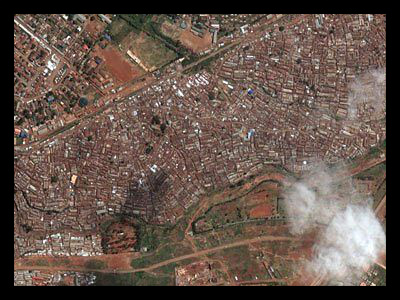
Government officials in India are notorious for ignoring the millions of people who live in the slums near big cities. Sangli is one such city. Over 3,900 families occupy makeshift huts in Sangli and, for the first time, Good Earth is documenting their existence. International Aid Organizations are thrilled that these images will put a face, so to speak, to the thousands of people living in these slums. Now that the unbelievable conditions of the slums are documented for the world to see, Sangli officials are being held to a higher accountability and progress is being made towards providing real homes for those living in the slums.

These images make public the sanitation issues inherent in the slums, as occupants of the slum exist without access to toilets or faucets. When and if new buildings are constructed for those living in the slum, sanitation is one of the first problems that will be addressed.

Even though it would be easier to build a new community in the suburbs of Sangli, research shows that most people cannot afford to commute into the city every day for work. Those who previously moved to the suburbs to escape the slums actually ended up moving back within a short period of time. Shelter Associates, a nonprofit geared toward improving the lives of those living in slum conditions, plans to create living spaces that will mimic the communal environment slum occupants have grown accustomed to.

The reason why Shelter Associates is having difficulties following through with the new building plans is because the local government continues offer limited concern and attention to slum dwellers. For the most part, the Sangli government has acted as if these people do not exist. Now, with the images provided by Google Earth, Shelter Associates is hopeful that the government can no longer continue its negligence policies.

The slums in Sangli are not the only slum communities being exposed by Google Earth. Slums in Altos de Cazuca, Colombia (50,000 people), Comuna 13, Columbia (135,000 people), Kamagasaki, Japan (30,000 people per every 200 meter radius), Ashaiman, Ghana (200,000 people), Kibera, Kenya (170,000 – 250,000 people), Rocinha, Brazil (250,000 people), Sultanbeyli, Turkey (250,000 people), Petare, Venezuela (600,000 – 1 million people), Dharavi, India (1 million people), Sadr City, Iraq (2 million people), Orangi town, Pakistan (700,000 – 2.5 million people) and Neza-Chalco-Itza barrio, Mexico (4 million people) are now all shown on Google Earth.

Without these images, international aid organizations sometimes struggle to verbally describe the horrific conditions in the slums. Hopefully, Google Earth will be able to erase apathy towards those who live in these slums and support for aid efforts will grow.

– Mary Penn
Sources: Time, Business Insider

August 2, 2013
https://borgenproject.org/wp-content/uploads/borgen-project-logo.svg 0 0 Borgen Project https://borgenproject.org/wp-content/uploads/borgen-project-logo.svg Borgen Project2013-08-02 04:42:172024-05-25 00:12:19Google Earth Shines Spotlight on Slums
War and Violence

Angola Remains in Poverty Despite Economic Growth

Angolan children in Uige Angola
Though Angola is one of Africa’s leading exporters of oil, the country ranks 148 out of 187 countries on the United Nations Human Development Index. More than a decade has passed since a 27-year civil war displaced millions of Angolans and killed thousands more.

While the violent conflict involving three liberation movements and several foreign interventions has come to an end, many of Angola’s people continue to live in poverty.

Angola’s GDP has improved significantly since the war ended in 2002, growing 12 percent in 2012. Despite this progress, 67.4 percent of the country’s population lives on less than $2 a day, down from 70.2 percent in 2002. This reduction shows that poverty rates are decreasing, but the economy is growing at a much faster rate.

Foreign investors have provided funds for a national reconstruction program to rebuild the infrastructure destroyed during the civil war. The slums to which many fled during the war are being made over, and landmines are being cleared from formerly uninhabitable areas of the countryside.

While economic indicators seem to tout Angola’s transformation from a war-stricken wasteland to an up-and-coming African power, social indicators reveal that poverty remains an issue yet to be addressed.

President Jose Eduardo Dos Santos and the ruling MPLA party fiercely protect Angola’s image, controlling everything from the country’s economy to private media, but the peaceful image they project is far from the reality of most Angolan citizens.

While Angola’s investors and leaders enjoy immense material wealth, the country remains one of the most undeveloped states in the world. One in five children die before reaching the age of five, and almost 66 percent of people live in slums. Life expectancy hovers at around 51 years.

As Angola becomes an important part of the global economy, millions of its citizens continue to suffer from the long-lasting effects of a brutal civil war and a government focused more on abstract economic measures than true social change.

– Katie Bandera

Source: BBC, United Nations, Rural Poverty Portal
Photo: Reuters

July 11, 2013
https://borgenproject.org/wp-content/uploads/borgen-project-logo.svg 0 0 Borgen Project https://borgenproject.org/wp-content/uploads/borgen-project-logo.svg Borgen Project2013-07-11 04:00:012024-05-24 23:57:45Angola Remains in Poverty Despite Economic Growth
Children, Development, Extreme Poverty, Health, Sanitation

Slums, Sanitation and Misery

Slums, Sanitation and Misery

For the people living in the Korogocho slums in Nairobi, Kenya, life can be a constant struggle. The threat of disease and unclean drinking water looms in the minds of those who have no other options but to live in areas with broken sewage pipes and “flying toilets.” These unsanitary conditions put the people in Korogocho at risk for health problems and leave them vulnerable to exploitative water companies.

The typical day for someone living in the slums may involve the use of a flying toilet, a plastic bag used to dispose of human waste. While there are some pay-toilets, most people cannot afford the money to use one. As a result, these plastic bags can be found discarded in the streets of the slums among the broken sewer lines.

As the population in Nairobi grows, more slums are popping up. In Kenya, the number of people without access to toilets has risen to 20%. Access to piped water is even lower in urban areas, 38.4% (and 13.4% of the rural population). These numbers are likely to mimic the sanitation circumstances in Nairobi.

The health implications of unsanitary water systems are illnesses including malnutrition, diarrhea, cholera and typhoid fever. When water mixes with sewage, it creates a breeding ground for inimical viruses and germs. International health organizations and Kenya’s government are eager to improve sanitation in order to save lives. Currently, one in five African children dies from diarrhea before the age of five.

Simple ways to improve the sanitation system in Korogocho include mobile toilets, bucket removal, and dry composting toilets. However, even these solutions can result in human remains ending up in the Nairobi River. The Kenyan population is expected to increase by one million people every year, which will further exacerbate the struggling water and sanitation system. Until these problems are seriously addressed, Kenyans will continue to endure preventable illnesses.

– Mary Penn

Source: IRIN News
Photo: The Guardian

July 1, 2013
https://borgenproject.org/wp-content/uploads/borgen-project-logo.svg 0 0 Borgen Project https://borgenproject.org/wp-content/uploads/borgen-project-logo.svg Borgen Project2013-07-01 11:20:262020-07-12 20:50:34Slums, Sanitation and Misery
Page 4 of 512345

Get Smarter

  • Global Poverty 101
  • Global Poverty… The Good News
  • Global Poverty & U.S. Jobs
  • Global Poverty and National Security
  • Innovative Solutions to Poverty
  • Global Poverty & Aid FAQ’s
Search Search

Take Action

  • Call Congress
  • Email Congress
  • Donate
  • 30 Ways to Help
  • Volunteer Ops
  • Internships
  • Courses & Certificates
  • The Podcast
Borgen Project

“The Borgen Project is an incredible nonprofit organization that is addressing poverty and hunger and working towards ending them.”

-The Huffington Post

Inside The Borgen Project

  • Contact
  • About
  • Financials
  • President
  • Board of Directors
  • Board of Advisors

International Links

  • UK Email Parliament
  • UK Donate
  • Canada Email Parliament

Get Smarter

  • Global Poverty 101
  • Global Poverty… The Good News
  • Global Poverty & U.S. Jobs
  • Global Poverty and National Security
  • Innovative Solutions to Poverty
  • Global Poverty & Aid FAQ’s

Ways to Help

  • Call Congress
  • Email Congress
  • Donate
  • 30 Ways to Help
  • Volunteer Ops
  • Internships
  • Courses & Certificates
  • The Podcast
Scroll to top Scroll to top Scroll to top