• Link to X
  • Link to Facebook
  • Link to Instagram
  • Link to TikTok
  • Link to Youtube
  • About
    • About Us
      • President
      • Board of Directors
      • Board of Advisors
      • Financials
      • Our Methodology
      • Success Tracker
      • Contact
  • Act Now
    • 30 Ways to Help
      • Email Congress
      • Call Congress
      • Volunteer
      • Courses & Certificates
      • Be a Donor
    • Internships
      • In-Office Internships
      • Remote Internships
    • Legislation
      • Politics 101
  • The Blog
  • The Podcast
  • Magazine
  • Donate
  • Click to open the search input field Click to open the search input field Search
  • Menu Menu

Tag Archive for: Slums

Posts

Development, Poverty Reduction

Arco do Futuro

Arco do Futuro
São Paulo’s visionary new mayor, Fernando Haddad, plans to elevate the city’s sprawling and overcrowded slums out of abject poverty by 2020. His goal is to improve the horrible living conditions of the favelas while also halting their insurgent growth.

The favela slums of São Paulo remain a brazen example of the poverty and income inequality that still lingers in Brazil despite its recent (and remarkable) economic growth. They serve as hotbeds for violence and crime as well as uncontained waste and rampant pollution.

In a campaign promise during last year’s election, Haddad created what will become the city’s main development plan named “Arco do Futuro.” This plan promises to provide more housing and jobs for the favela’s cramped and unemployed populations. He maintains that the improvements will occur as a result of economic growth, government funding, and demographic changes.

Previously, the government’s efforts to develop a 100-acre area around Luz, which is notorious for drug activity and known as Cracolândia, sparked intense protests within the community. According to Haddad, this was because the public did not trust the private companies in charge of the housing programs.

The mayor plans to allow members of the community to have a greater voice in order for the development plan to not be seen as a threat. He emphasized that giving individuals a greater sense of ownership would negate the negative feelings toward the project.

This mentality fits well with the message of the New Cities Summit, which was hosted by São Paulo this year. The message is this: “The Human City, placing the individual and the community at the heart of discussions on our urban future.”

The New Cities Summit, held in São Paulo this year echoed this idea as a way of developing solutions to the challenges of rapid urbanization. São Paulo was chosen to host last week’s New Cities summit because it faces many of the same problems as other metropolises across the developing world. If São Paulo can find ways to alleviate their problems of crime, pollution, overcrowding and waste, then the hope is that other cities can too.

By 2030, it is estimated that 60% of the world’s total population will be living in urban areas. Each year, a million people are added to this figure in China, India and the Middle East. Latin American countries have the highest percentage of urban populations with 87% of the population of Brazil living in cities.

“We need more just cities. Not just playgrounds for the wealthy, but cities where all people can thrive,” said John Rossant of the New Cities Foundation, “This is a global summit to look at problems facing cities in the 21st century, but also opportunities. There are lots of interesting solutions.”

– Kathryn Cassibry

Source: The Guardian,New Cities Foundation,Estado Sao Paulo
Photo: Mind Map-SA
June 23, 2013
https://borgenproject.org/wp-content/uploads/borgen-project-logo.svg 0 0 Borgen Project https://borgenproject.org/wp-content/uploads/borgen-project-logo.svg Borgen Project2013-06-23 07:14:382020-07-03 00:32:00Arco do Futuro
Global Poverty

The Queen of Katwe

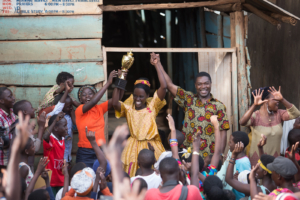
Imagine living in a slum. There is little food to split between you and your family and you are a minority in your age group because you have regularly attended school before. This was exactly the situation that teenager Phiona Mutesi found herself in when she started learning chess.

The slum where Phiona lives is called Katwe, and it is located right in the Ugandan capital of Kampala, where veteran and refugee Robert Katende began a chess program for children, giving them food in return for completing a lesson. Of his program, Katende has said that he had started it hoping to teach analytic and problem-solving skills that the children could apply to succeed in their own lives.

This was the program that would come to change Phiona’s life and turn her into “The Queen of Katwe”.

“I was living a hard life, where I was sleeping on the streets, and you couldn’t have anything to eat in the streets. So that’s when I decided for my brother to get a cup of porridge,” Mutesi told CNN.

Although she was unfamiliar with the game, as is most of Uganda, Phiona worked hard, practicing every day for a year. Eventually, she began to win against older children and compete for titles. Since those early days, Phiona has represented her country in several international chess competitions in countries such as Sudan, Siberia, and Istanbul.

Although life for her is still hard – she still lives in the Katwe slum with her family – winning competitions and working hard to one day become a Grandmaster keeps her hopeful. A grant that she has received through her competing has even allowed her to go back to school and develop her reading and writing skills.

While Phiona’s story of success has yet to win her the chess title of Grandmaster, she has gained another, unofficial reputation as the ultimate underdog. She is an underdog on the global chess stage both because she comes from Africa, a continent where chess is culturally absent in most countries, and because she is from Uganda specifically, a nation that is one of the poorest on the continent. The fact that she is from Katwe, a slum, is a strike against her even to other Ugandans. However, despite these odds, she has achieved enormous success given her circumstances.

Phiona Mutesi’s inspiring story was written into a book called “The Queen of Katwe,” by Tim Crothers, and was published in October of 2012. Since then, Disney has bought the rights to the story and has started making a movie to chronicle Phiona’s journey to the international chess stage. The Queen of Katwe remains steadfast in attaining her dream of becoming a Grandmaster and is an inspiration to us all.

– Nina Narang

Source: CNN

February 9, 2013
https://borgenproject.org/wp-content/uploads/borgen-project-logo.svg 0 0 Borgen Project https://borgenproject.org/wp-content/uploads/borgen-project-logo.svg Borgen Project2013-02-09 11:51:132020-04-05 15:34:41The Queen of Katwe
Page 5 of 512345

Get Smarter

  • Global Poverty 101
  • Global Poverty… The Good News
  • Global Poverty & U.S. Jobs
  • Global Poverty and National Security
  • Innovative Solutions to Poverty
  • Global Poverty & Aid FAQ’s
Search Search

Take Action

  • Call Congress
  • Email Congress
  • Donate
  • 30 Ways to Help
  • Volunteer Ops
  • Internships
  • Courses & Certificates
  • The Podcast
Borgen Project

“The Borgen Project is an incredible nonprofit organization that is addressing poverty and hunger and working towards ending them.”

-The Huffington Post

Inside The Borgen Project

  • Contact
  • About
  • Financials
  • President
  • Board of Directors
  • Board of Advisors

International Links

  • UK Email Parliament
  • UK Donate
  • Canada Email Parliament

Get Smarter

  • Global Poverty 101
  • Global Poverty… The Good News
  • Global Poverty & U.S. Jobs
  • Global Poverty and National Security
  • Innovative Solutions to Poverty
  • Global Poverty & Aid FAQ’s

Ways to Help

  • Call Congress
  • Email Congress
  • Donate
  • 30 Ways to Help
  • Volunteer Ops
  • Internships
  • Courses & Certificates
  • The Podcast
Scroll to top Scroll to top Scroll to top