• Link to X
  • Link to Facebook
  • Link to Instagram
  • Link to TikTok
  • Link to Youtube
  • About
    • About Us
      • President
      • Board of Directors
      • Board of Advisors
      • Financials
      • Our Methodology
      • Success Tracker
      • Contact
  • Act Now
    • 30 Ways to Help
      • Email Congress
      • Call Congress
      • Volunteer
      • Courses & Certificates
      • Be a Donor
    • Internships
      • In-Office Internships
      • Remote Internships
    • Legislation
      • Politics 101
  • The Blog
  • The Podcast
  • Magazine
  • Donate
  • Click to open the search input field Click to open the search input field Search
  • Menu Menu

Tag Archive for: Refugees and Displaced People

Posts

Charity, Global Poverty, Refugees

Organizations Supporting Haitians in the Dominican Republic

Haitians in the Dominican RepublicIn Haiti, turmoil punctuates the past and pervades the present. Successive natural disasters and social upheavals have stunted the Caribbean nation’s development and rendered its political landscape a minefield. Chaos exploded in 2019 when an onslaught of armed gangs rose against the acting prime minister. They now occupy around 80% of the country’s capital. The International Organization for Migration (IOM) reports the displacement of more than 360,000 people, 93% of whom are fleeing violence and, according to the World Bank, food insecurity has tripled since 2016. Many Haitians seek refuge in the Dominican Republic, Haiti’s comparatively stable neighbor. However, deeply entrenched hostilities, inflamed by this recent surge of immigration, await them across the border. Therefore, many international organizations and local charities have taken action, fervently supporting Haitians in the Dominican Republic.

A Population in Crisis

The tensions straining the island of Hispaniola, which Haiti and the Dominican Republic share, can be traced back to its complex colonial past and reached boiling point during the virulently anti-Haitian regime of Rafael Trujillo, a dictator who ruled the Dominican Republic from 1930 until 1961. Today, Haitians exist largely on the periphery of Dominican society, according to the Minority Rights Group.

Amid the violence in Haiti, organizations such as the United Nations (U.N.) and Amnesty International have expressed their concern over the forced deportation of Haitians from the Dominican Republic, including asylum seekers, pregnant women and unaccompanied children. They have also spoken out against reports of racial profiling and xenophobia on the part of authorities.

Moreover, Dominicans of Haitian descent are often highly vulnerable to poverty and exploitation. A 2013 law revoked the nationality of all Dominicans born to undocumented parents, rendering generations of people stateless overnight. In 2014, the government introduced a citizenship reclamation process. However, an estimated 130,000 people remained barred from legal work, education and property ownership as of 2023.

Haitians and Haitian Dominicans lacking civil status are heavily concentrated in “Bateyes,” isolated rural settlements once erected around sugar plantations to house Haitian migrant workers. These marginalized communities lack basic resources and are paralyzed by chronic insecurity. However, there are numerous nongovernmental organizations (NGOs) that support Haitians and Dominican descendants of Haitian migration.

Project Esperanza

Project Esperanza, a charity based in Puerto Plata, a city in the Dominican Republic, facilitates the integration of Haitian refugee and immigrant children into Dominican society through education. Its vision is self-sustaining empowerment for vulnerable Haitian families engulfed in poverty.

The organization operates two schools where teachers from various cultural backgrounds deliver elementary-level education in Haitian Creole and Spanish, giving students a basis for engagement in Dominican life.

Given that many of these young people have not attended school regularly, Project Esperanza operates a specific program for older students, allowing them to access the essential knowledge they have thus far been excluded from. The organization also runs a six-week summer program where students develop their English skills alongside native speakers. Tourism is central to the local economy, so this initiative multiplies their prospects.

ASCALA

ASCALA is another NGO working across the country’s Eastern Region. It advocates for the rights of immigrants and refugees by offering legal advice, representation, assistance with obtaining residency or citizenship and preparing necessary documentation. Furthermore, the NGO works with state and civil societies to develop education-based initiatives to equip adults and children with the necessary literary level to participate in Dominican society.

ASCALA also provides social services such as counseling and support navigating health services. Another of ASCALA’s focuses is food insecurity within the country’s borders. It supports food and income-generating family and community gardens. It helps to organize “solidarity markets,” where essential products can be accessed at low prices.

Batey Relief Alliance

Another nonprofit supporting Haitians in the Dominican Republic is the Batey Relief Alliance (BRA), a U.S. charity established in 1997 to bridge the socioeconomic gulf dividing Dominican Bateyes from the rest of society. It has since expanded into several American countries, aiding 2.5 million people. BRA established its clean water initiative in 2006 to combat the spread of water-borne infections in impoverished rural enclaves lacking sufficient WASH infrastructure. To date, it has installed 19 water systems supplying 70,000 families. Similarly, it has distributed more than 23 million water purifier sachets across three countries, including the Dominican Republic.

In 2006, the charity installed the first modern health center in a Dominican hospital, serving more than 35,000 patients yearly. The charge of the center shifted to the Dominican Ministry of Health in 2017 and it continues to serve vulnerable populations. Furthermore, the “Women Empowerment” program, established in 2018, fosters community development by delivering vocational training and microloans to rural women. So far, the organization has engaged 850 women in agriculture-based economic activity, benefiting 25,000 people in Dominican Bateyes and Haiti’s border regions.

Looking Ahead

As the crisis in Haiti unfolds, binational tensions are keenly felt by those who seek safety in the Dominican Republic. Many organizations are therefore advocating for and supporting Haitians who find themselves impacted. Working from various angles and on differing scales, they are united in their common commitment to peace and compassion.

– Leila Powles

Leila is based in Cheltenham, Gloucestershire, UK and focuses on Global Health and World News for The Borgen Project.

Photo: Flickr

August 11, 2024
https://borgenproject.org/wp-content/uploads/borgen-project-logo.svg 0 0 Hemant Gupta https://borgenproject.org/wp-content/uploads/borgen-project-logo.svg Hemant Gupta2024-08-11 07:30:442024-08-10 14:40:29Organizations Supporting Haitians in the Dominican Republic
Global Poverty

Resource Distribution in Refugee Camps

Refugee CampsRefugee camps house people who had to migrate as a result of unsafe conditions in their home countries. Displaced people hve to leave everything behind in order to find safety. Recently, the United Nations reported that two refugee camps in Ethiopia were on the verge of running out of food. The refugees, dependent on organizations to bring them that food, were at risk of starvation.
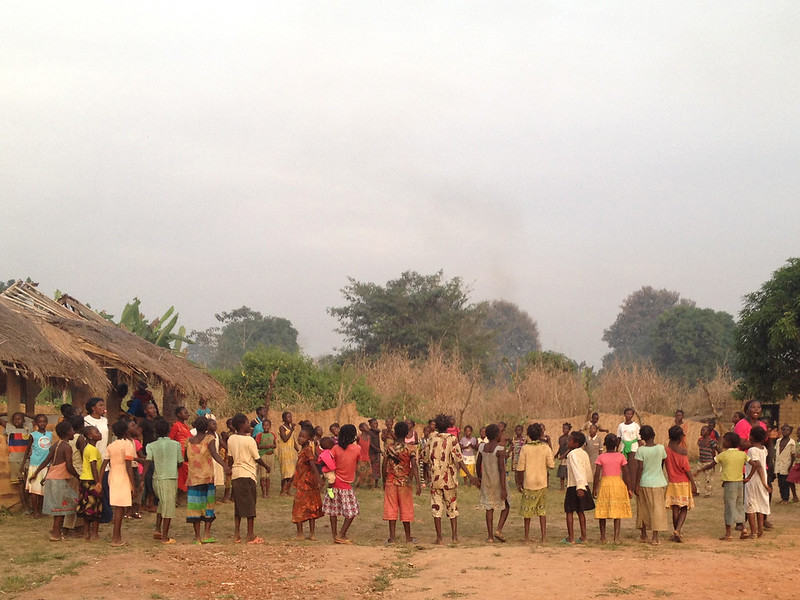
What is Happening in Ethiopia?

Conflict has enveloped the Tigray region of Ethiopia. In November 2020, The Tigray People’s Liberation Front and the government began fighting. Two refugee camps in this region containing 24,000 refugees recently could not access aid. About 170 food trucks transporting the necessary food supplies ended up in the Afar region and were unable to move. Without these resources, the refugees will likely starve.

The United Nations High Commissioner for Refugees (UNHCR) is working to relocate the refugees. They are also trying to ensure safe travel out of the camp by discussing the issues with Tigrayan authorities.

The Increase of Refugees

The amount of refugees and displaced people around the world is higher than ever. As of 2020, the world had the largest refugee population ever recorded. About 25 million people experienced displacement, including 11 million children. This has only made conditions in refugee camps worse, as overcrowding compounds with a lack of resources.

The Problems with Refugee Camps

Displaced people who come to live in refugee camps often have nothing. They have no income, few to no possessions and no food. They rely entirely on what humanitarian organizations can provide for them. Unfortunately, what organizations can provide often falls short of what is necessary to survive. Two main problems that refugee camps deal with are inadequate food and water. The malnutrition and dehydration that occurs in refugee camps increase the risk of disease, like diarrhea and cholera, for the people living in the camps. Improving amounts and access to food and water will help to improve health conditions at refugee camps.

The UNHCR recommends at least 2,100 calories and 20 liters of water per person per day. However, in 2006, refugees in Tanzania received only 1,460 calories per person per day. A 1987 study of a Thailand camp showed that 30% of the camp’s population suffered from malnutrition. The UNHCR also estimates that more than half of the refugee camps across the world are unable to provide refugees with the 20 liters of water a day that they need.

Part of the problem with water is that it must also be accessible to all people in the camps. One way the UNHCR aspires to provide this is by ensuring there are water taps within 200 meters of every household. This way, individuals do not have to travel long distances to retrieve water, burning the already limited amount of calories they have.

Ways to Improve

There are a few things that can improve living conditions at refugee camps around the world. One important way is to begin to place a higher emphasis on making camps a long-term solution. When a refugee experiences displacement for more than five years, the UNHCR calls their situation a protracted refugee situation. Currently, two-thirds of refugees live in a protracted situation and the time they spend in this situation increased to 20 years. This means that more people live in camps for longer periods of time.

If displaced people are living in camps for such extended periods of time, then they are no longer temporary placements. This translates into a need to make refugee camps more permanent and more equipped to support people actually living there. The construction of more permanent housing, rather than tents, and fully functioning toilets and showers would help achieve permanent living conditions.

Camps can also allow refugees to set up businesses like barbershops and fruit stands. Some camps in Bangladesh currently allow refugees to farm patches of land to grow fruits, vegetables and spices. This is another way to increase food production and better conditions in the camps.

Looking to the Future

The struggle will continue to ensure that people living in refugee camps have enough resources to adequately survive and have livable conditions in camps. Transporting goods becomes especially difficult in war-ravaged regions. Roads are unreliable and food trucks are vulnerable to attack. Displaced persons, however, often have nowhere else to go and deserve for the world to put in its best effort toward helping them. This can begin with creating refugee camps as more permanent establishments, as cities and homes in and of themselves.

– Alessandra Heitmann
Photo: Flickr

August 25, 2021
https://borgenproject.org/wp-content/uploads/borgen-project-logo.svg 0 0 Kim Thelwell https://borgenproject.org/wp-content/uploads/borgen-project-logo.svg Kim Thelwell2021-08-25 21:20:012024-05-27 09:34:48Resource Distribution in Refugee Camps
Global Poverty, Refugees, Refugees and Displaced Persons

Improving Conditions for the Central African Republic Refugees

Improving Conditions for Refugees in the Central African RepublicRefugees are beginning to return home to the Central African Republic after years of religious internal conflict. Around 600,000 people have been displaced internally and another 600,000 displaced internationally since the start of the conflict. Now, about 2.6 million people that once resided peacefully in the CAR are reliant on humanitarian assistance. The U.N. has been heavily involved in peacekeeping missions and is beginning the process of transferring the Central African Republic refugees back to home soil.
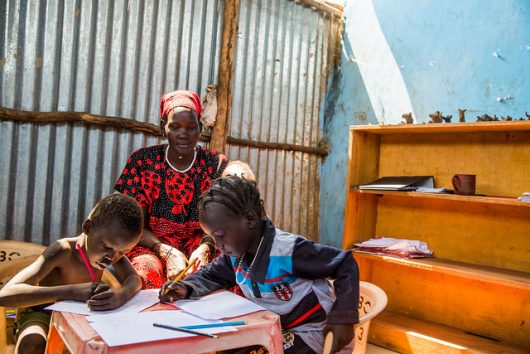
Political Progress in the CAR

The Central African Republic’s politics are one way that citizens will regain their freedom within the country. The U.N. Security Council is interacting with the CAR government to get humanitarian war crimes accounted for and penalized. The war has led to numerous human rights violations and international forums have condemned the actions. Other political progress is being made to elect leaders based on a democratic method. The proposed elections are seen as a method of peacefully negotiating between political differences without force. This holistic method of finding peace incurs that the problem be examined from all angles and solutions will be diverse.

Refugees’ Experience and Local Aid

Since the CAR is land-locked, refugees have scattered in camps in the Democratic Republic of Congo, the Republic of Congo, Chad, Cameroon and Sudan. The journey for many leaving the territory of the CAR was extreme. Many refugees walked for weeks, hid in forests and were plagued with malnutrition. The resilience of the refugees is coming to fruition in the current transition to peace. Much progress is being made on the ground in the CAR that would create more stability in the government and society.

The problems faced by the displaced are numerous but also change from one area to the next. Much is being done to ease their basic needs, as the area is veiled in violence. The United Nations has adapted to local aid initiatives that provide effective assistance. Additionally, the U.N. has contributed $14.3 million to “help support local aid agencies deliver clean water, education, healthcare, livelihoods support, nutrition, protection and shelter.” Each of these assists makes the return of refugees more possible and more likely.

Humanitarian Aid

One institution committed to helping the Central African Republic refugees is UNICEF. The major ways the organization has contributed to the cause has to do with basic needs being met. For children, the organization is delivering Ready-to-Use-Therapeutic-Food that fights malnutrition and providing immunizations against diseases. Additionally, UNICEF is providing clean water, setting up temporary shelters, training teachers and encouraging education in camps and opening accessible sanitization stations. These major provisions are invaluable and majorly supporting the needs of refugees.

Another high priority for UNICEF is the resettlement of refugees within the country. The Central African Republic refugees, either internally or externally displaced, have begun rebuilding their lives. In 2019, the United Nations Refugee Agency (UNHCR) propelled a $430 million campaign to assist displaced refugees of the Central African Republic. Although funding and donations have not fulfilled this expensive plan, the campaign has certainly made headway. The coordination of funds is extremely beneficial in restructuring the country and enforcing the progress made in the developing peace agreements.

Major strides in assistance, both political and humanitarian, are making peace possible in the Central African Republic. The basic relief provided by both UNICEF and UNHCR is stabilizing the situation for refugees worldwide. As displaced groups transition back to their homes, currently and in the future, the assistance will be instrumental in securing a steady return.

– Eva Pound
Photo: Flickr 

December 19, 2020
https://borgenproject.org/wp-content/uploads/borgen-project-logo.svg 0 0 Kim Thelwell https://borgenproject.org/wp-content/uploads/borgen-project-logo.svg Kim Thelwell2020-12-19 01:30:392024-05-30 07:53:17Improving Conditions for the Central African Republic Refugees
Economy, Global Poverty, Refugees, Refugees and Displaced Persons

Economic Impact of Refugees on Neighboring Countries

impact of refugees on neighboring countries
Refugees taking asylum within other countries’ borders affect the economy of the host country and surrounding countries. People fleeing usually choose neighboring countries of their homeland, some of these being lower-income developing countries. While the effects are varying, several outcomes influence the economy of the host country in a positive manner and indirectly act as an economic impact of refugees on neighboring countries.


Education for Refugees

One such outcome is the development of education for refugees. This provides education for children in the host country that originally could not obtain such an opportunity. The use of international aid organizations has furthered the building of schools and training of teachers. These organizations seek to invest in the host countries development to ensure that the needs of the refugees are met, and thus bolstering that country’s economy.

Each individual person seeking asylum also brings a skill from home to the new country. As unemployed refugees come, there are a variety of skills and occupational backgrounds that are also brought — for instance, doctors, lawyers, nurses and carpenters. This influx of vocational skills can alleviate issues of a demographic crisis or an in-country population decrease.


Refugee Economic Status

Establishing desirable economic status as an individual provides an economic gain to the country and allows refugees to more easily integrate or move into other surrounding countries. An economic gain to the host country in the form of a working-class can result in positive economic impacts on neighboring countries.

Economic stimulus for the host country can further be developed through local food purchase, non-food items such as shelter materials, disbursements made by aid workers and assets brought by refugees. Purchasing products from neighboring countries is another of the positive impact of refugees on neighboring countries.


Refugee Strain on Infrastructure and Foreign Aid

A large influx of refugees to host countries does strain the country’s current economic infrastructure and call for emergency financial assistance. In a case study done on the 1999 Kosovar refugees, the International Monetary Fund and the World Bank estimated that host countries needed $52 to $188 million to appropriately deal with humanitarian needs. To accomplish this, these countries often look to developed countries to provide foreign aid.

Foreign aid given by countries can help increase the host country’s economy while also providing a peaceful presence to aid the in-need nation. Aid simultaneously benefits the receiving countries economy and the giving-country’s future economic gain and presence in foreign affairs.

Although hosting a large population of refugees can create a burden (especially on developing countries), the positive impact of refugees on neighboring countries is extremely apparent. These benefits provide an incentive to give asylum to those fleeing from conflict.

– Bronti DeRoche

Photo: Flickr

February 2, 2018
https://borgenproject.org/wp-content/uploads/borgen-project-logo.svg 0 0 Borgen Project https://borgenproject.org/wp-content/uploads/borgen-project-logo.svg Borgen Project2018-02-02 01:30:372019-12-18 05:44:22Economic Impact of Refugees on Neighboring Countries
Global Poverty, Human Rights, Refugees, Refugees and Displaced Persons

10 Famous People Who Are Actually Refugees

10 famous refugeesThe world has witnessed the severe effects of violence, poverty and injustice throughout the globe, and innocent people continue to suffer the consequences. The United States and several other countries have often offered refuge to those fleeing war and injustice. Below are 10 famous people who are actually refugees who made iconic contributions in various fields.
  1. Gloria Estefan
    Estefan is a singer, writer and actress who fled Cuba for the United States in the 1960s as a result of Castro’s communist revolution.
  2. Albert Einstein
    Einstein was a Nobel Prize-winning physicist who escaped Nazi Germany in 1938. Einstein took matters into his own hands, providing visa applications and vouching for other refugees also fleeing Nazi Germany.
  3. Madeleine Albright
    Albright fled Czechoslovakia with her family in 1938, settling in the U.K. before moving to the U.S. She became the first woman appointed to the position of U.S. Secretary of State in 1997.
  4. Alek Wek
    Wek was nine years old when she fled South Sudan for Britain with her family in the wake of a civil war. Wek was discovered by a modeling agent and rose to international fame.
  5. Elie Wiesel
    Writer, professor, political activist, Nobel laureate and Holocaust survivor, Wiesel wrote several books about the horrors of the Holocaust. Elie and his wife, Marion, started the Elie Wiesel Foundation in remembrance of the Holocaust and to combat intolerance and injustices.
  6. Freddie Mercury
    Singer, songwriter and producer, Freddie Mercury is best known as the frontman for the rock band Queen. Born in a British Protectorate of the Sultanate of Zanzibar, now Tanzania, Mercury and his family fled during the Zanzibar Revolution in 1964, settling in the U.K.
  7. Marlene Dietrich
    Dietrich was a German-born actress and singer whose career spanned decades. She applied for U.S. citizenship after being offered an acting contract by members of the Nazi Party. Dietrich was also known for her humanitarian efforts during WWII, housing exiles and advocating for their U.S. citizenship.
  8. Wyclef Jean
    Another of these 10 famous people who are actually refugees is Wyclef Jean, Haitian rapper, musician and actor. Jean immigrated to the U.S. as a child with his family during the Duvalier regime in Haiti.
  9. Andy Garcia
    Garcia and his family fled Cuba after the failed Bay of Pigs invasion when he was five years old. He is best known for his role in The Godfather Part III, receiving a Golden Globe for his portrayal of Vincent Santino Corleone. Garcia celebrates his roots and challenges Latino stereotypes in Hollywood.
  10. Theanvy Kuoch
    Kuoch was a slave of the Khmer Rouge between 1975 and 1979, before being found by the Red Cross. With her family, she relocated to the United Nations refugee camp and spent two years working as a nurse in various camps before moving to the U.S. In 1982, she founded Khmer Health Advocates with three American nurses to provide health services for survivors of the Cambodian genocide.

These 10 famous people who are actually refugees have paved the way for themselves and others. Refugees are simply people seeking out a better life in a new country; this is a humanitarian issue, and refugees need our help in rebuilding their lives.

– Jennifer Serrato

Photo: Pixabay

January 28, 2018
https://borgenproject.org/wp-content/uploads/borgen-project-logo.svg 0 0 Borgen Project https://borgenproject.org/wp-content/uploads/borgen-project-logo.svg Borgen Project2018-01-28 01:59:442024-06-05 02:12:1710 Famous People Who Are Actually Refugees
Global Poverty, Refugees, Refugees and Displaced Persons

Ten Facts About Refugee Camps, Home to 2.6 Million Worldwide

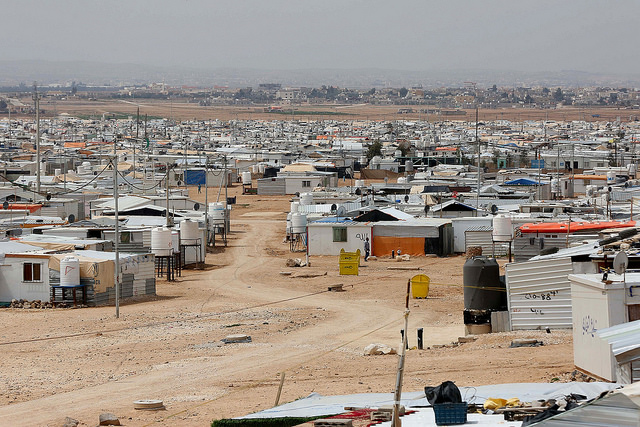
facts about refugee campsPeople from all over the world seek asylum in refugee camps. But what exactly is a refugee camp? A refugee camp is a quickly built shelter for refugees who are fleeing for their lives because of violence and persecution. Approximately 28,300 people are forced to flee their homes every day because of persecution and crises. Refugee camps serve as a temporary safe haven for people in need and provide aid such as food, water and medical attention. Understanding key facts about refugee camps better explains their purpose and their struggles.

Here are the top 10 facts about refugee camps.

  1. 2.6 million refugees live in refugee camps.
  2. 80,000 refugees live in the Za’atari refugee camp in Jordan. In comparison, this is about the same as the population of Scranton, Pennsylvania. Jordan has sheltered approximately 635,000 Syrian refugees since its development, equaling 10 percent of Syria’s population.
  3. Fifty-five percent of refugees come from Afghanistan, South Sudan and Syria.
  4. Refugee camps are most often found near the border of neighboring countries.
  5. More than half of the people seeking asylum in refugee camps are children.
  6. Most refugee camps are created to be temporary, but some of them have turned into functioning cities because of the continued needs of the refugees.
  7. People living in refugee camps often suffer from chronic malnutrition because there is not always enough food for everyone within the camps.
  8. In October 2017, Bangladesh announced that they will be building one of the biggest refugee camps yet. They plan to house the 800,000-plus Rohingya Muslims who are seeking refuge from violence and crisis in Myanmar. More than half a million Muslims arrived and were dispersed among 23 scattered refugee camps. Bangladesh authorities plan to bring all of those refugees together into one large refugee camp.
  9. Most refugee camps lack schools, which is detrimental to children’s development, especially if they are there for long periods of time.
  10. On average, refugees remain in refugee camps for more than 12 years. Their temporary solution often has to become more permanent.

These facts about refugee camps give people insight into what exactly refugee camps are, how they help and the complications they face. Although refugee camps face extreme difficulties, they help countless numbers of refugees every single day, whether it be temporary or long-term. This is why it is imperative to continue to spread awareness and ensure that forms of assistance like refugee camps continue to be a priority across the globe.

– McCall Robison

Photo: Flickr

January 13, 2018
https://borgenproject.org/wp-content/uploads/borgen-project-logo.svg 0 0 Borgen Project https://borgenproject.org/wp-content/uploads/borgen-project-logo.svg Borgen Project2018-01-13 07:30:502024-12-13 17:49:12Ten Facts About Refugee Camps, Home to 2.6 Million Worldwide
Food & Hunger, Global Poverty, Refugees

10 Important Facts About Refugees in Lebanon

Refugees in Lebanon
Lebanon hosts an ever-increasing refugee population, largely the result of an ongoing five-year civil war in Syria. Though Syrians comprise the majority of the approximately 1.5 million refugees in Lebanon, Palestinians and a small number of Iraqis have also sought refuge in the country.

Here are 10 important facts about refugees in Lebanon:

  1. There are over 1.5 million refugees in Lebanon, principally from Syria, Palestine and Iraq. The European Commission’s Humanitarian Aid and Civil Protection Department (ECHO), reports that there are currently over 1.1 million Syrian refugees seeking protection in the host country.
  2. According to the U.N. Refugee Agency (UNHCR), 1.02 million Syrian refugees as of Sept. 30 are officially registered with the Lebanese government.
  3. Lebanon, according to the CIA World Factbook July 2015, estimates the population of Lebanon to be 6.1 million. Consequently, they host the largest refugee population per capita in the world, with close to 25 percent of the population having sought refuge in the country.
  4. Lebanon is not a signatory of the 1951 Refugee Convention nor the 1967 Protocol, which elucidates the international community’s responsibility to protect refugees. In addition, there is no national legislation regarding refugees, but in 2003 a Memorandum of Understanding (MOA) was signed between the UNHCR and the Lebanese government. The MOA gives those in need of asylum a temporary residence permit as their refugee status is decided and a permanent solution is obtained. Since there are no official refugee camps, Syrian refugees are in some of the neediest and most at-risk neighborhoods in the country.
  5. In 2016, the European Commission has promised a total of 87 million euros to Lebanon in humanitarian assistance for refugees. Fifteen million euros specifically for Palestinian refugees from Syria were allocated by the European Commission to assist the U.N.’s Relief and Works Agency for Palestine Refugees in the Near East (UNRWA), in their effort to supply much-needed cash assistance and educational services.
  6. The UNCHR is doing an extensive amount of work with the help of partners to develop educational prospects for thousands of young Syrian refugees. The UNCHR recently reported that in Lebanon almost 158,000 children, up from 62,664 a year earlier, were enrolled in school.
  7. According to the EU, its humanitarian response to Syrian refugees in Lebanon has for the most part been in cash assistance to help people with basic necessities; and providing health care, shelter, water and sanitation support.
  8. The UNHCR has had much success with the launch of a Facebook group in 2014. The “I am Syrian in Lebanon” group has 30,000 members and it assists people on many things including school enrollment and reporting abuse.
  9. The World Bank Group (WBG) has, with the help of partners, introduced several projects to assist Lebanese communities hosting Syrian refugees. The Municipal Services Emergency Project assists local governments to address crisis issues more in terms of development rather than strictly humanitarian focused.
  10. The WBG project is assisting in the delivery of supplies, such as garbage compactors, service vehicles, water filters, water supply systems, sewage systems and the revitalization of public infrastructure.

The results of WBG projects have had an immensely positive impact on the Lebanese communities where its efforts have been directed.

– Heidi Grossman

Photo: Flickr

November 8, 2016
https://borgenproject.org/wp-content/uploads/borgen-project-logo.svg 0 0 Borgen Project https://borgenproject.org/wp-content/uploads/borgen-project-logo.svg Borgen Project2016-11-08 01:30:092024-12-13 17:54:0310 Important Facts About Refugees in Lebanon
Economy, Global Poverty, Refugees and Displaced Persons

Economics and Refugees

Economics and Refugees-TBPWhen there is an influx of people to a new area, in an effort to escape the horrors of war, disaster and other hardships, local economies can be significantly strained. A humanitarian effort to help those in need is beneficial, but oftentimes the number of people in need can create circumstances where it is extremely difficult to provide everyone with their basic needs.

Normally, local economies are structured to provide for a relatively stable amount of people. The equilibrium of local supply and demand is stable, however, when an influx of people grows the demand for all types of goods at once, it creates a supply vacuum. This increase in demand and lack of supply creates a whole host of problems.

Turkey has absorbed about 200,000 Syrians. Many have become beggars, wandering in traffic, looking for spare change and unable to find employment. Others take up trades on the street, taking customers from existing Turkish vendors and businesses. These two cases are examples of the lack of supply and the increase in demand. The beggars along with the increased competition for some small Turkish businesses have created a hostile atmosphere against the Syrian refugees.

Lebanon is a more extreme example of the strain that refugees can put on an economy. One in 10 of Lebanon’s residents is now a Syrian refugee, escaping the war and famine that has eviscerated their homeland. This has created a range of problems similar to those seen in Turkey, however, the magnitude of the number of refugees seen in Lebanon is much worse.

Lebanon is a much smaller country than Turkey, and it is also taking in many more refugees than Turkey. Food prices in Lebanon have skyrocketed due to the increased demand from more than a half-million refugees entering the country in the span of a few years. Electricity was already faulty and has now been hit with a 27 percent increase in demand due to the housing of many of the new refugees. Again, similar patterns are immerging within Lebanon as they did in Turkey.

Just as Turkey experienced similar economic disruptions, the social aspect of the new population has put social tensions on the list of concerns for government officials in Lebanon. Some economists argue that the new populace has actually been beneficial to the local economies of rural areas in Lebanon because of an increase in spending in the local area.

In places like Canada, the effects of refugees are somewhat different. Typically, when developed nations accept refugees from other countries they are not accepting hundreds of thousands at a time. This difference is important because it means that local economies are not strained to the same extent.

A study by the Institute for the Study of Labor found that employed refugees in Canada were no worse off than average. However, the study also showed that the unemployed did end up needing significant government assistance.

The study concluded that refugees were not damaging to the economy and identified discrimination and lack of credential recognition as potential factors in unemployment rates amongst refugees. Better job training programs could help refugees adjust to a new economic landscape and help them integrate into the economic system.

The case of the Syrian refugees is one of the best modern-day examples of how massive amounts of refugees can disrupt local economies. In the case of Canada and other developed nations, it exemplifies how a smaller amount of refugees entering the country does not affect the economic and social situation in ways that are comparable to Turkey and Lebanon.

Context is important to see how refugees can affect local economics, but it is clear is that events that create massive migrations can be harmful to neighboring economies. Perhaps programs that help disperse refugees across more countries could be improved or expanded to reduce the impact that refugees have when overwhelming local areas. Nonetheless, it is important to recognize that it is in everyone’s interest to take in those in need and help them adjust to their own new realities.

– Martin Yim

Sources: New York Times, Reuters, Institute for the Study of Labor
Photo: Flickr

August 5, 2015
https://borgenproject.org/wp-content/uploads/borgen-project-logo.svg 0 0 Borgen Project https://borgenproject.org/wp-content/uploads/borgen-project-logo.svg Borgen Project2015-08-05 01:30:532020-07-02 13:14:51Economics and Refugees
Global Poverty

Education Crisis for Pakistan’s Internally Displaced Persons

internally_displaced_persons
As of 2015, there have been approximately 700,000 internally displaced persons in the volatile North Waziristan region of Pakistan as a consequence of Taliban insurgency. Of these 700,000, around 300,000 are children of a school-going age range. For these children, a stable education remains a dream.

In late 2009, militant threats in the northwestern tribal areas of North Waziristan escalated dramatically. After various military offensives against militants in the surrounding regions of South Waziristan and Swat, the Pakistani army launched Operation Zarb-e-Azb in January 2014. The military has since been conducting an extensive yet lengthy military operation against the Taliban militants in North Waziristan.

The increasingly dangerous circumstances in the Taliban stronghold has led to a mass exodus of the region’s residents. This military intervention, despite its exigent need, has created significant issues for the displaced people as well as the Pakistani government. The already financially-crippled Pakistani government is thus faced with the immense challenge of providing relief for the refugees.

The refugees from Northern Waziristan add to the almost 1 million refugees who have been displaced during the war on terrorism in the country. The cost of providing basic healthcare and resources to the refugees has been allotted $1 million from the Pakistani government, with substantial bolstering from the United States and China.

Despite the funding, the conditions in the refugee camps are less than satisfactory. As the provision of shelter and food becomes an issue, the educational needs of refugee children have taken a backseat. Temporary schools established for refugee children are in abysmal conditions and are impossibly short-staffed. Many parents are told to enroll their children in far-off government schools. However, many government-run schools are being used as temporary shelters, and not as schools.

According to UNHCR, of the 300,000 children in refugee camps, only 5% are enrolled in schools, whether public, private or NGO-run. Many students old enough to work are choosing menial jobs over continuing their education so as to financially support their families.

Prior to the refugee crisis, the literacy rates in the Northern Waziristan district were only 16% overall and a deplorable 1.67% for girls. The increased presence of fundamentalists in the region who target schools—and, specifically, female education—has adversely affected the state of education in the region.

Unfortunately, for the families returning home this summer, the conditions for education have not improved. Many of the schools have been destroyed through the course of the clashes between the army and the Taliban; others are still occupied by the army as temporary bases. As schools across the country reopen in September, students in North Waziristan continue to face an uncertain, unstable future.

The government has so far failed to come up with a successful and effective plan for the rehabilitation of these students. Recently, the higher education commission announced a stipend of Rs. 2,000 for every student enrolled in post-secondary education; however, no such plan has been revealed for the elementary, middle or high school students.

The director of education for the Federally Administered Tribal Areas (FATA)—the education authority for North Waziristan—has suggested that UNICEF aid be used to establish schools in tents for IDPs who continue to reside in the camps. Additionally, the director has recommended a second shift for schools in neighboring areas, like Bannu and Lakki Marwat, specifically for IDPs. The feasibility and potential for success of both these measures have been met with criticism and apprehension from many nonprofit agencies, as well as the refugees themselves.

As the government deadline for the complete return of North Waziristan IDPs to their homes—set for January 2016—fast approaches, it is imperative that the educational authorities within the government focus on the rehabilitation of these students. The Pakistani government, with assistance from its aides, needs to make education in the region a priority in its budget. The goal of the provincial government should not be pre-2009, but to bring the region to a literacy rate at least on par with the rest of the country, especially for girls. An effective strategy and delegation of resources to educate the children of North Waziristan are crucial to the long-term stability of the region.

– Atifah Safi

Sources: UNHCR, FATA Disaster Management Authority, Aljazeera, Aljazeera, Dawn, Pakistan Today
Photo: Flickr

July 30, 2015
https://borgenproject.org/wp-content/uploads/borgen-project-logo.svg 0 0 Borgen Project https://borgenproject.org/wp-content/uploads/borgen-project-logo.svg Borgen Project2015-07-30 09:08:312024-12-13 17:52:05Education Crisis for Pakistan’s Internally Displaced Persons
Global Poverty, Refugees and Displaced Persons

Water Access for Displaced Iraqis

foreign_aid_successes
The International Organization for Migration has estimated that since January of 2014, over 3 million Iraqis have been displaced by ISIS militants and forced to relocate. In the past two months, over 276,000 have been forced to relocate out of fear or danger. Many of the refugees have chosen to abandon their homes and flee to the mountains in Northern Iraq to avoid the constant fear of attacks and violence from the Islamic State. Unfortunately, in addition to protection from violence, there is a desperate need for basic supplies such as food and water.

Amnesty International researcher, Donatella Rovera says, “The civilians trapped in the mountain area are not only at risk of being killed or abducted; they are also suffering from a lack of water access, food and medical care. We urge the international community to provide humanitarian assistance.”

In response to the conflict, UNICEF has worked to set up many transition camps in the Kurdistan region of Iraq. Baherka is one such camp that was formerly a concrete factory outside outside the town of Erbil. The makeshift facility currently accommodates approximately 3,000 refugees. In the camp, every family has access to a kitchen, shower, latrine and 150 liters of water per day.

Adding to the numerous fears and concerns, there is also a reluctance for some Iraqis to join the refugee camps. Many of the refugee camps are overcrowded and can present their own unique set of dangers such as violence, disease or abduction. Separation from family members is another serious concern. For these reasons, many of these families choose to take their chances in the remote mountains where their communities are smaller. Access to clean water is also scarce due to the rough, mountainous terrain.

“The plight of displaced people caught up in the fighting in Iraq is increasingly desperate and all parties to the conflict must do more to ensure their safety,” states Rovera.

Thankfully, there are nongovernmental organizations working towards providing aid to these displaced Iraqis. UNICEF’s Water, Sanitation & Hygiene (WASH) division has received funding from Germany’s KfW Development Bank and has been tasked with aiding 25 families living near the town of Dohuk in the mountains of Northern Iraq.

Fortunately, there are times when complex issues can be solved with ordinary and conventional methods. This has been the case thus far with the aforementioned Iraqi families. A tractor hitched to a 4,000 liter water tank has been providing water to over 62,000 people every day. Families fill up as many buckets and tin cans as they can carry and use the water for drinking in addition to bathing, washing and cooking.

However, funding needs are a constant reminder that this service is not permanent. Without access to clean water, Ghassan Madieh, the UNICEF WASH Specialist in Dohuk, states “There would be sewage in the streets… You will see people getting unchlorinated water. You will see less water quantity. It will have a negative impact on health, especially on children and the most vulnerable.”

– The Borgen Project

Sources: BBC, Telegraph, UNICEF 1, UNICEF 2
Photo: International Business Times

July 23, 2015
https://borgenproject.org/wp-content/uploads/borgen-project-logo.svg 0 0 Borgen Project https://borgenproject.org/wp-content/uploads/borgen-project-logo.svg Borgen Project2015-07-23 10:09:262024-12-13 17:51:59Water Access for Displaced Iraqis
Page 3 of 41234

Get Smarter

  • Global Poverty 101
  • Global Poverty… The Good News
  • Global Poverty & U.S. Jobs
  • Global Poverty and National Security
  • Innovative Solutions to Poverty
  • Global Poverty & Aid FAQ’s
Search Search

Take Action

  • Call Congress
  • Email Congress
  • Donate
  • 30 Ways to Help
  • Volunteer Ops
  • Internships
  • Courses & Certificates
  • The Podcast
Borgen Project

“The Borgen Project is an incredible nonprofit organization that is addressing poverty and hunger and working towards ending them.”

-The Huffington Post

Inside The Borgen Project

  • Contact
  • About
  • Financials
  • President
  • Board of Directors
  • Board of Advisors

International Links

  • UK Email Parliament
  • UK Donate
  • Canada Email Parliament

Get Smarter

  • Global Poverty 101
  • Global Poverty… The Good News
  • Global Poverty & U.S. Jobs
  • Global Poverty and National Security
  • Innovative Solutions to Poverty
  • Global Poverty & Aid FAQ’s

Ways to Help

  • Call Congress
  • Email Congress
  • Donate
  • 30 Ways to Help
  • Volunteer Ops
  • Internships
  • Courses & Certificates
  • The Podcast
Scroll to top Scroll to top Scroll to top