Reducing Poverty with Emerging Technologies in Sub-Saharan Africa
 Sub-Saharan Africa is experiencing a discreet but profound digital revolution. The region has long been seen as being on the fringes of global innovation but is now experiencing rapid connectivity and technological development growth. Between 2005 and 2011, mobile phone subscriptions rose by 400% and internet access increased from 2.1% to 24.4% of the population between 2005 and 2018. Additionally, the 2022 Global Innovation Index ranks five countries in sub-Saharan Africa, including Kenya, Ghana and Senegal, among the world’s 100 most innovative countries. This dynamic is not just a question of infrastructure; it also reflects the rise in power of a local ecosystem of innovators, entrepreneurs and social startups that design solutions adapted to the realities on the ground. In this context, emerging technologies in sub-Saharan Africa, such as blockchain, artificial intelligence (AI) and the Internet of Things (IoT) are becoming concrete levers for poverty reduction.
Blockchain: A Tool for Financial Inclusion
In a region where a large part of the population remains excluded from traditional banking systems, blockchain offers a secure, transparent and decentralized alternative. In East Africa, the startup AZA Finance (formerly BitPesa) enables companies and individuals to make cross-border transactions faster and cheaper than traditional banking services.
Blockchain technology is also used to track the distribution of humanitarian aid, reduce the diversion risk and digital identities to populations lacking official documents and denied access to basic services. Thanks to these identities, millions can now open a mobile account, access microcredit or sign up for a health program.
AI for Health, Agriculture and Education
AI offers new perspectives in key areas of poverty reduction. In health, AI-based programs analyze X-rays for diseases such as tuberculosis, filling the acute shortage of doctors in rural areas. In agriculture, tools like UjuziKilimo in Kenya use sensors and algorithms to recommend the most profitable crops for farmers based on soil composition and climate forecasts.
On the education side, the M-Shule platform combines artificial intelligence and SMS to offer personalized educational content to primary school students. Each lesson adapts to the pace and level of the student, which is particularly useful in educational systems where class overcrowding and teacher shortages hinder learning.
IoT: Connecting Isolated Areas
The Internet of Things (IoT) is also transforming critical infrastructure. In areas not served by the national electricity grid, smart mini-solar grids managed remotely through connected sensors allow populations access to reliable electricity. IoT devices also monitor tank water levels or alert when a pump fails.
According to 360 Mozambique, these technologies are profoundly changing access to essential services and foreshadowing a new way of thinking about development centered on autonomy and local resilience.
M-Pesa: A Kenyan Success Story
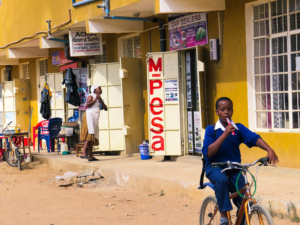
Among the most emblematic examples of technological innovation against poverty, M-Pesa is central. Launched in 2007 by the operator Safaricom in Kenya, this mobile payment system allows its users to send, receive and save money via a basic mobile phone without a bank account.
According to a Massachusetts Institute of Technology study, M-Pesa helped lift some 194,000 Kenyan households out of extreme poverty between 2008 and 2014, including facilitating cash transfers, saving and access to microcredit. Many women, in particular, have used M-Pesa to create small businesses and gain economic autonomy.
The Case of Togo: When AI Helps to Target Emergency Aid
Beyond the private sector, African governments are also beginning to integrate emerging technologies into their social policies. The Novissi program, launched by the Togolese government in 2020, is a striking example. Using satellite data and artificial intelligence models, this program has automatically targeted the most vulnerable populations without requiring them to register manually.
Recipients received money transfers directly to their phones through the mobile money system. This device, deployed in a few weeks, helped more than 500,000 people affected by the COVID-19 crisis while limiting fraud and bureaucratic delays.
An Opportunity To Transform the Fight Against Poverty
The emergence of technology hubs, social incubators and public-private partnerships across Africa shows the potential. Organizations like the World Bank, the United Nations Development Programme (UNDP) and private foundations actively support this inclusive digital transition.
Emerging technologies alone cannot eradicate poverty in sub-Saharan Africa, but in a context where traditional solutions are reaching their limits, they represent a powerful lever to strengthen resilience, promote empowerment and improve access to basic services. In sub-Saharan Africa, they empower millions of marginalized people to build a more just, dignified and sustainable future.
– Eléonore Bonnaterre
Eléonore is based in London, UK and focuses on Technology and Solutions for The Borgen Project.
Photo: Flickr
