• Link to X
  • Link to Facebook
  • Link to Instagram
  • Link to TikTok
  • Link to Youtube
  • About
    • About Us
      • President
      • Board of Directors
      • Board of Advisors
      • Financials
      • Our Methodology
      • Success Tracker
      • Contact
  • Act Now
    • 30 Ways to Help
      • Email Congress
      • Call Congress
      • Volunteer
      • Courses & Certificates
      • Be a Donor
    • Internships
      • In-Office Internships
      • Remote Internships
    • Legislation
      • Politics 101
  • The Blog
  • The Podcast
  • Magazine
  • Donate
  • Click to open the search input field Click to open the search input field Search
  • Menu Menu

Tag Archive for: International Affairs Budget

Posts

Food Security, Global Poverty

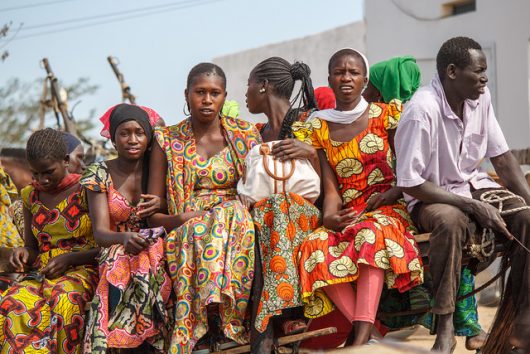
How to Help People in Senegal

How to Help People in SenegalSenegal is a West African nation on the coast of the Atlantic Ocean. To give an idea of its size, Senegal is slightly smaller than South Dakota in terms of square miles. The population is about 14 million people. Like other African nations, Senegal is considered a developing nation. This means that the country experiences problems that other more developed nations do not face, like a lack of resources such as food and clean water. Food is especially a problem in underdeveloped countries, and Senegal is no exception. If you want to know how to help people in Senegal, nutrition and food security are excellent places to start, and can ultimately save lives.

Good indicators of a nation’s issues with sufficient food are obesity as well as underweight statistics, especially for underweight children. According to the CIA World Factbook, Senegal has an obesity rate of 8.3 percent as of 2014. Among other nations, this ranks them close to the bottom, at 145 out of 191 nations. The percentage of children below age 5 that are underweight is 12.8 percent, putting them close to the top of nations with underweight children (based on percentage).

One organization dedicated to fighting hunger in Senegal is Caritas Internationalis. Caritas is a group that was created to reach out to the poor of the world, regardless of race or religion, and to assist those in need when a disaster strikes. Caritas, inspired by the Catholic church, seeks to take on extreme poverty through the grassroots method, putting people on the ground in impoverished communities in order to lend a direct helping hand.

For Senegal itself, Caritas is “launching an emergency project” to help families that are in urgent need of care. Due to bad harvests, natural disasters and a dramatic rise in food prices, poor families have experienced the harshness of poverty even more severely, which means even less food. One out of five households in Senegal are going hungry.

Caritas seeks to help the Senegalese by providing food, such as rice, millet and oil, to over 1,000 families for at least three months. Their goal is to have these families eating three meals a day. There are also cereal banks throughout Senegal, providing 600 families with regular access to food. There are many other projects as well, including projects to ensure that farmers have proper amounts of seeds and tools.

For the person looking for how to help people in Senegal, helping Caritas might be a great way to assist those in need. One way to help this organization is by donating. Caritas has a very old-fashioned sort of charm, and also operates using older methods (being an organization that has existed for over a hundred years); this means that donating to them is not done directly through the computer. To give to Caritas, a check can be mailed to their headquarters, or you can make a direct transfer through a bank account.

If you are looking to go a little further in helping, Caritas also take volunteers from all over the world, especially those willing to help when disaster strikes. Discover where they work and contact them in regards to volunteering.

Of course, another great way to help can be found on the Borgen Project website, and is perhaps one of the simplest ways of all to help the impoverished. Calling Congress can get bills passed that allocate large amounts of funding to helping the poor and hungry of the world looked at by leaders.

Every call made about an issue gets tallied up by the interns who answer the phone and shown to the representative or senator. All that needs to be said is, “Hello, I’m a Borgen Project supporter and I support protecting the International Affairs Budget,” or whatever bill you choose to support (a list can be found in the link). And that’s the whole phone call. It can be done in an easy 30-second call, and becomes even more effective when one gets their family and friends to do it as well.

– Stephen Praytor

Photo: Flickr
October 5, 2017
https://borgenproject.org/wp-content/uploads/borgen-project-logo.svg 0 0 Kim Thelwell https://borgenproject.org/wp-content/uploads/borgen-project-logo.svg Kim Thelwell2017-10-05 07:30:442024-05-24 23:55:23How to Help People in Senegal
Global Poverty, USAID

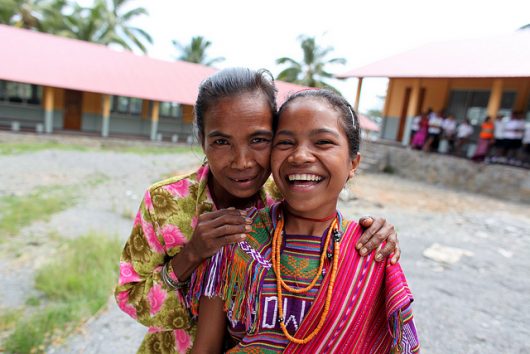
How to Help People in Timor-Leste

How to Help People in Timor-LesteTimor-Leste is a Southeast Asian country home to about 1.1 million people. The country is currently in a transitional period, recovering from political instability that occurred from 2006 to 2007. Progress has been made: since Timor-Leste’s 2002 independence, infant and child mortality have decreased by 50 percent, gains have been made in health and education and state institutions and democratic processes have strengthened. However, poverty in Timor-Leste is still high, particularly in rural areas. Here are a couple of ways to help people in Timor-Leste during this crucial post-conflict period.

1. Support NGOs working for the people of Timor-Leste
Nongovernmental Organizations (NGOs) are working to advance social and economic causes. CARE Australia is working to decrease the country’s 35 percent literacy rate and they are also working to improve maternal health in under-resourced rural communities. Oxfam Australia is also working to lift rural communities out of poverty through efforts to improve food security, essential services and infrastructure development. Peace Fund Timor-Leste collaborates and funds NGOs that focus on peace-building activities in the youth development area. Using these organizations as examples, a great way to help the people of Timor-Leste is to research more organizations, evaluate their impact and donate or volunteer your time.

2. Call Congress
United States Agency for International Development (USAID) is doing essential work in Timor-Leste. They’ve deployed USAID community police officers to 442 villages to contribute to post-independence stability. USAID is also working to improve the skills of the Ministry of Health staff in reproductive, maternal and newborn health; Timor-Leste still has the highest maternal and under five mortality rates in Southeast Asia. USAID also assists in increasing farm income and improving nutrition for rural households throughout the nation. USAID has been working in Timor-Leste since the early 1980s, with both the government and other development partners; in the fiscal year 2016, the agency spent about $14 million in Timor-Leste. As of now, the 2017 fiscal budget is still under debate and USAID may be at risk of receiving budget cuts. One way to help is to contact Congress and urge them to protect the international affairs budget, particularly for the country of Timor-Leste.

On average, post-conflict countries take between 15 and 30 years to transition into stability. Considering this, Timor-Leste has made excellent progress thus far; however, there is still work to be done. The people of Timor-Leste deserve to live in a resilient nation where economic stability, political rights and social welfare are guaranteed to its citizens.

– Hannah Seitz

Photo: Flickr

September 29, 2017
https://borgenproject.org/wp-content/uploads/borgen-project-logo.svg 0 0 Kim Thelwell https://borgenproject.org/wp-content/uploads/borgen-project-logo.svg Kim Thelwell2017-09-29 01:30:312024-06-05 02:36:40How to Help People in Timor-Leste
Economy, Global Poverty

On the Overseas Private Investment Corporation

Arguments for and Against the Overseas Private Investment CorporationSince the Trump administration has taken office, the International Affairs budget has come under attack. Among the many potential items to be cut, the Overseas Private Investment Corporation (OPIC) has been singled out by the administration as a particularly unnecessary agency.
As a result, a slew of arguments for and against the Overseas Private Investment Corporation have been published in recent months. This article is an attempt to provide clarity about the role of OPIC and suggest that its overall benefits outweigh its costs.

Established by President Nixon in 1971, OPIC provides loans and political risk insurance to private American companies seeking to invest in developing countries. Developmental financing was conceived as a complement to governmental aid insofar as it facilitated the transference of private capital to developing economies.

Critics of OPIC often argue that, as a public institution, the agency crowds out private banks that should, in theory, be more efficient financiers of international development.

The truth is that, although a robust private market for developmental finance exists, private capital oftentimes averts especially risky and poor countries due to the inevitably high premiums and interest rates.

OPIC, on the other hand, is in a unique position to support investments in these countries.

With the backing of the U.S. government, OPIC has been able to recover over 90 percent of its political risk claims. This fact has allowed the agency to offer affordable loans and political risk insurance in countries deemed too risky by private finance institutions.

Other critics of OPIC claim that it represents a form of “corporate welfare,” citing the fact that the agency gives loans to some of the largest U.S. firms, like J.P. Morgan, Citibank, and Wells Fargo.

Although all American firms are welcome to apply for financing, year after year, more than half of OPIC’s commitments go to small- and medium-sized businesses.

Even if one remains unconvinced about the benefits of OPIC, it is important to recognize that the agency imposes virtually no cost on the U.S. government. While OPIC does require federal backing to insure its $20 billion worth of outstanding loans, the agency has been self-sustaining for almost four decades. In fact, it has used its interest receipts to contribute nearly $4 billion to U.S. deficit reduction.

In the end, while there are many arguments for and against the Overseas Private Investment Corporation, the truth is that the agency has a net positive effect on American firms and developing economies alike.

– Nathaniel Sher

Photo: Flickr

September 26, 2017
https://borgenproject.org/wp-content/uploads/borgen-project-logo.svg 0 0 Kim Thelwell https://borgenproject.org/wp-content/uploads/borgen-project-logo.svg Kim Thelwell2017-09-26 01:30:382024-06-05 04:52:33On the Overseas Private Investment Corporation
Aid, Global Poverty, United Nations, USAID

10 Facts About the International Affairs Budget


International Affairs Budget

The Trump Administration recently released its federal budget proposal for Fiscal Year 2018 (FY18), proposing deep cuts for the International Affairs Budget. The proposal includes plans to cut State Department and USAID funding by 31 percent and the Treasury International Programs budget by 35 percent. The proposed $37.6 billion total budget cut for the State Department and USAID starkly contrasts the $54 billion increase proposed for the Department of Defense.

There has already been pushback to the proposal, including a letter signed by more than 120 retired generals and admirals against the cuts, and another opposition letter signed by more than 100 faith leaders.

Top 10 things you need to know about the International Affairs Budget

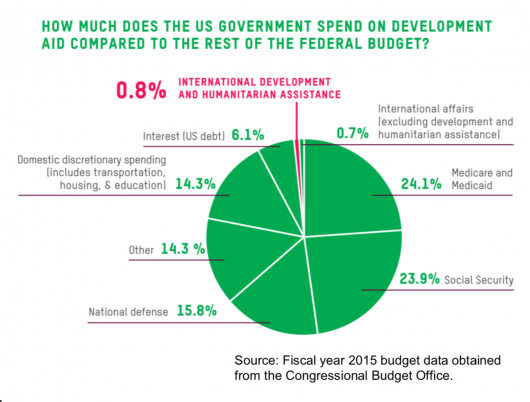
  1. It’s tiny. The International Affairs Budget accounts for less than one percent of the federal budget. The amount spent on foreign aid is often overestimated by the general public. A Kaiser Family Foundation poll published in 2015 asked respondents: “What percentage of the federal budget is spent on foreign aid?” — the average response was 28 percent.
  2. The International Affairs Budget is also referred to as the “150 account.” Foreign aid can be split into two functions: economic and development assistance (151), and security assistance (152). For FY17, the State Department requested $25.6 billion for the 151 account and $16.8 billion for the 152 account.
  3. Seven out of the top 10 recipients of economic and development assistance are African nations. Afghanistan is the largest recipient of economic and development assistance, as part of the ongoing reconstruction of the country after the U.S. military invasion in 2001.
  4. Money allocated to help alleviate global poverty is mutually exclusive from money allocated to help fund domestic poverty-reducing programs. In the overall federal budget, the International Affairs Budget is a completely separate account from the domestic expenditure. Therefore, spending money on global poverty does not have to compete with spending money on poverty here at home. Mattis Foreign Aid Quote
  5. The U.N. suggests that developed countries put 0.7 percent of their Gross National Income (GNI) toward overseas development and assistance. According to 2015 OECD statistics, the U.S. spends just 0.17 percent on overseas development and assistance — missing the U.N. target by 76 percent.
  6. The International Affairs Budget funds vital programs that have profound impacts on major global health threats. USAID assistance helped stall the recent Ebola outbreak in West Africa and continues to partner with local governments and organizations to ensure any further outbreaks are mitigated.
  7. USAID is the largest provider of food assistance in the world. Nearly 800 million people worldwide suffer from chronic hunger. Since its inception, around three billion people have benefited from USAID’s assistance programs.
  8. The International Affairs Budget has bipartisan support in Congress. U.S. Senator Ben Cardin (D-MD) led three of his bipartisan Foreign Relations Committee members in proclaiming that funding for the budget is “every bit as essential to ensuring America’s national security as funding for the Department of Defense, the Intelligence Community and law enforcement.”
  9. The soft power of foreign assistance and development is supplementary to the hard power of the military. In 2013, U.S. Secretary of Defense James Mattis, as Commander of U.S. Central Command, remarked to Congress, “If you don’t fully fund the State Department, then I need to buy more ammunition.” Foreign aid and development can undoubtedly play a role in fostering positive growth and warm feelings toward the U.S. in societies that are at risk of succumbing to terrorist groups.
  10. Spending money on international development is not just a moral decision. In an ever-connected world, funding the International Affairs Budget creates jobs for American workers and boosts the American economy. In 1996, 39 percent of exports went to developing countries. Now, more than half of U.S. exports go to developing economies. Through aid and development, people living in developing economies are becoming more wealthy and more capable of affording American products.

The International Affairs Budget is a tiny component of the overall federal budget, but its impact in myriad areas is enormous. American jobs, economic growth, national security, and global health are just a few areas that will be affected if the proposed cuts by the Trump Administration are implemented.


– Michael Farquharson

Photo: Oxfam

April 22, 2017
https://borgenproject.org/wp-content/uploads/borgen-project-logo.svg 0 0 Borgen Project https://borgenproject.org/wp-content/uploads/borgen-project-logo.svg Borgen Project2017-04-22 01:30:402024-12-13 17:57:4510 Facts About the International Affairs Budget
Aid, Aid Effectiveness & Reform, Global Poverty, USAID

Studies Find Americans Overestimate Foreign Aid Spending

Foreign Aid Spending
Much of what Americans believe about foreign aid spending is wrong. A recent Kaiser Family Foundation poll of 1,505 people found most couldn’t accurately place the percentage of its federal budget the U.S. spends on foreign aid. The average amount they guessed is 26 percent; the answer is less than 1 percent. Only one in every 20 people answered the question correctly.

Where do these misconceptions come from?

The U.S. spends more in net amount than any other country on foreign aid; the total came to some $32 billion in 2014. However, when looking at aid spending as a percentage of gross national income (GNI) , the amount the country and residents abroad take in as income, the U.S. spends a mere 0.19 percent of the wealth it receives each year in aid.

The American contribution falls flat behind larger benefactors like Sweden which donates 1.1 percent of its GNI, or Luxembourg at 1.07 percent and Norway at 0.99 percent.

The misconceptions of Americans regarding foreign aid are showing no signs of clearing up on their own. Another poll conducted by WorldPublicOpinion.org in 2010 found the median estimate Americans believe their country spent on foreign aid was 25 percent. When the poll asked them what would be an “appropriate” amount, the median answer was 10 percent.

These findings might even be humorous if so many people around the world weren’t living amid crushing levels of poverty. The erroneous views Americans hold of foreign aid spending have a direct impact on millions of people who struggle each day with hunger and a lack of economic opportunities.

Americans also host conflicting views regarding foreign aid based on their party affiliation. A survey conducted by yougov.com in 2016 revealed 49 percent of Americans identifying as Democrats believed U.S. aid should go to the poorest countries, while 59 percent of those identifying as Republicans believed aid should go to countries who support U.S. foreign policy.

Overall, 39 percent of Americans believed in aid for poor countries and 41 percent believed aid should be directed based on foreign policy support.

Our misconceptions of foreign aid influence how we think about the topic. In the Kaiser Family Foundation poll, 56 percent of those interviewed believed the U.S. spends too much on foreign aid.

However, when presented with the actual situation, namely the fact that the U.S. spends less than 1 percent of its $4 trillion federal budget on foreign aid, the poll found the number of Americans who think the U.S. is overspending on the aid dropped to 28 percent.

The wording of the questions also makes a difference. When the poll posed the question to Americans, “Do you think the U.S. is now spending too much, too little, or about the right amount on foreign aid?” 56 percent of respondents said too much.

However, when researchers modified the question to ask, “Do you think the U.S. is now spending too much, too little, or about the right amount in efforts to improve health for people in developing countries?” the percentage of those saying too much dropped to 28 percent.

Despite perceptions of corruption, elected officials tend to act in accordance with public opinion when faced with overwhelming support for spending measures. By dispelling the myths surrounding U.S. foreign aid spending, aid legislation will face less opposition as more Americans come forward to support it.

– Will Sweger

Photo: Flickr

November 26, 2016
https://borgenproject.org/wp-content/uploads/borgen-project-logo.svg 0 0 Borgen Project https://borgenproject.org/wp-content/uploads/borgen-project-logo.svg Borgen Project2016-11-26 01:30:462024-12-13 17:55:51Studies Find Americans Overestimate Foreign Aid Spending
Global Poverty, Refugees

Top Five Facts You Should Know about Haitian Refugees

Haitian RefugeesAfter six years of recovering from the 7.0 magnitude earthquake that claimed the lives of more than 200,000 people and left 1.5 million Haitians homeless in 2010, Haitian refugees continue to face marginalization and poor living conditions. As a growing number of refugees from Haiti flock to the U.S. border seeking asylum, here are the top five current facts you should know about the Haitian refugee crisis and what is being done to alleviate it:

    1. An estimated 60,000 people live in Haitian refugee camps, according to Public Finance International (PFI). This is a 96% reduction from the initial number of refugees that moved to makeshift encampments after the earthquake that rocked Haiti’s foundation. The improvement can be largely attributed to the effectiveness of Haiti’s relocation programs.
    2. Food insecurity and cholera are on the rise in Haiti’s refugee camps after El Niño and three years of drought. The effects of the tropical storm and years of drought have left 3.6 million people in Haiti food insecure, according to the World Food Programme (WFP). To deal with the crisis, the UN Office for the Coordination of Humanitarian Affairs calls for increased medical treatment, access to clean water, and nutrition interventions in Haiti according to PFI.
    3. Tense ties with the neighboring Dominican Republic, threaten mass deportations of Haitians and Dominicans of Haitian descent. With the possible expulsion of nearly 200,000 stateless people, a new refugee crisis with devastating consequences looms in the distance, according to UN News. Last spring, the New York Times reported that an estimated 3,000 people had arrived in Haiti’s makeshift encampments after fleeing or being forced out of the Dominican Republic.
    4. Brazil is striving to improve immigration services on a community-level in order to decrease xenophobia and improve the living conditions of Haitian refugees. Brazilian organizations, such as the Association of Haitians in Balneário Camboriú, is filling in the gaps left by the government by managing work opportunities and improving integration services for refugees from Haiti, according to the Huffington Post.
    5. There has been a recent surge of Haitian refugees camping near the San Diego-Tijuana border as they await processing for asylum in the United States. Most of the refugees originally sought asylum in Brazil, but a worsening recession and lack of immigration support services drove refugees from Haiti to seek better living conditions elsewhere, according to the San Diego Union-Tribune.

As the poorest country in the northern hemisphere, Haiti continues to strive for economic and political stability years after the quake. While the Haitian government rebuilds Haiti’s economic and social infrastructure, the U.S. and other countries play a major role in supporting the integration and well-being of Haitian refugees abroad.

One way to ensure that the U.S. provides vital humanitarian support to refugees is by expanding the International Affairs Budget. The funds of the International Affairs Budget are imperative to helping refugees and the world’s poor but unfortunately, this resource is grossly underfunded.

To help alleviate the Haitian refugee crisis, call or email your congressional leaders in support of increased funding for the International Affairs Budget.

– Daniela Sarabia

Photo: Flickr

September 24, 2016
https://borgenproject.org/wp-content/uploads/borgen-project-logo.svg 0 0 Borgen Project https://borgenproject.org/wp-content/uploads/borgen-project-logo.svg Borgen Project2016-09-24 01:30:532024-12-13 17:55:33Top Five Facts You Should Know about Haitian Refugees
Page 2 of 212

Pages

Nothing Found

Sorry, no posts matched your criteria

Get Smarter

  • Global Poverty 101
  • Global Poverty… The Good News
  • Global Poverty & U.S. Jobs
  • Global Poverty and National Security
  • Innovative Solutions to Poverty
  • Global Poverty & Aid FAQ’s
Search Search

Take Action

  • Call Congress
  • Email Congress
  • Donate
  • 30 Ways to Help
  • Volunteer Ops
  • Internships
  • Courses & Certificates
  • The Podcast
Borgen Project

“The Borgen Project is an incredible nonprofit organization that is addressing poverty and hunger and working towards ending them.”

-The Huffington Post

Inside The Borgen Project

  • Contact
  • About
  • Financials
  • President
  • Board of Directors
  • Board of Advisors

International Links

  • UK Email Parliament
  • UK Donate
  • Canada Email Parliament

Get Smarter

  • Global Poverty 101
  • Global Poverty… The Good News
  • Global Poverty & U.S. Jobs
  • Global Poverty and National Security
  • Innovative Solutions to Poverty
  • Global Poverty & Aid FAQ’s

Ways to Help

  • Call Congress
  • Email Congress
  • Donate
  • 30 Ways to Help
  • Volunteer Ops
  • Internships
  • Courses & Certificates
  • The Podcast
Scroll to top Scroll to top Scroll to top