 According to the World Health Organization (WHO), approximately 2 billion people live beyond the reach of essential medicines and quality health care. However, drone technology is helping resolve this “last mile” problem. In Latin America and the Caribbean (LAC), more than 200 million people face poverty, struggling without access to basic needs such as clean water, housing and electricity. The World Bank estimates that as of 2023, one in four people in these regions lives on less than $6.85 per day, a clear reflection of widespread poverty. While there was a slight 1% decrease in poverty rates between 2022 and 2023, projections indicate that without further intervention, progress may stagnate.
TECHO: Housing and Social Programs
Founded in 1997, TECHO is a nonprofit organization that mobilizes youth volunteers to combat extreme poverty in Latin America and the Caribbean. The organization’s mission includes providing housing, clean water and access to social inclusion programs. In the aftermath of the 2010 earthquake in Haiti, TECHO was among the first groups to initiate reconstruction. Indeed, the organization was able to rebuild 10,000 homes. Currently, with the help of more than 500,000 volunteers, the organization has constructed homes for more than 86,000 families across 19 countries.
Advancements Through Drone Technology
In 2019, TECHO and DroneDeploy collaborated to enhance TECHO’s home rebuilding efforts in Brazil through drone technology. This partnership helped 634 communities by employing drone mapping—a technique involving aerial photography that produces comprehensive 3D visual maps. These maps improve visibility in urban settings, helping identify critical areas needing attention and the optimal approaches for intervention. The use of drones enabled TECHO to accurately assess the number of families living in poverty and in substandard conditions, pinpointing risk areas to prioritize for high-quality housing reconstruction.
Enhancing Urban Planning and Infrastructure in São Paulo
In São Paulo, TECHO aimed to introduce various social inclusion programs targeting poverty eradication and community integration. It expanded its partnership with DroneDeploy to use drones for assessing housing needs, a task complicated by often outdated data. Drones provided a precise count of families requiring improved living conditions and basic services like clean water, sewage and electricity. For instance, initial estimates suggested that a community housed 250 families; however, drone surveys revealed the actual number to be at least 520. This accurate data is crucial for TECHO to allocate sufficient resources to these communities effectively.
Looking Ahead
TECHO’s initiatives in Latin America and the Caribbean aim to address the widespread poverty affecting millions in the region. Indeed, by leveraging drone technology, the organization has been able to precisely assess housing needs. Furthermore, drones have been able to identify the most vulnerable areas for targeted intervention. In São Paulo, drones revealed a significant undercount in the number of families living in poor conditions, allowing TECHO to more efficiently allocate resources. These ongoing efforts underscore the importance of innovative approaches to tackling poverty and improving living conditions across the region.
– Charlotte Johnston
Charlotte is based in London, UK and focuses on Good News and Technology for The Borgen Project.
Photo: Flickr

 On the surface, China has been a powerhouse in diminishing global poverty. Measured by individuals living with less than $6.85 a day,
  Technology increasingly offers more and more solutions to help reduce poverty across the globe. Considering South Sudan’s unpredictable climate and scarce resources, new technologies in South Sudan can provide a gateway of opportunities and security to the locals. This can be through new farming methods and equipment, schooling, banking and monetary management.
 Mumbai’s Dharavi is one of the world’s largest slums and is home to
 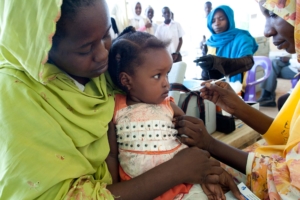 For many people around the world, the COVID-19 pandemic was an eye-opening event that revealed the dangers and inadequacies of the world’s global health systems. However, for other people, outbreaks of epidemic diseases might be more of a lived reality. On the continent of Africa, many know a certain geographic region in sub-Saharan Africa as the “meningitis belt.” These 26 countries face the dangers of meningitis more than other places around the world, and the outbreak of the COVID-19 pandemic delayed the vaccination of the MenAfriVac meningitis vaccine to 50 million children in these countries. African governments collaborated with the World Health Organization (WHO), the Bill and Melinda Gates Foundation and PATH, a nonprofit health organization, to develop
 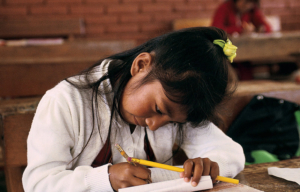 Much of Mexico’s population faces economic struggles that have only magnified amidst the ongoing COVID-19 pandemic, one of which includes the high dropout rate for school-age children, a challenge education in Mexico is facing.
 In a move to fight competition, Safaricom in Kenya expanded its technical staff by
  Joining the fight to
  While Japan is one of the most developed countries in the world, the country has a pressing issue to solve — child poverty. According to a report by the Organisation for Economic Co-operation and Development (OECD), in 2017, Japan’s