Posts

In a new report released by the Alliance for a Green Revolution in Africa, African farmers, small-scale farmers in particular, are facing serious risks from climate change.

Accounting for approximately 80 percent of farmers in Africa, small-scale farmers are at risk especially due to their small plots of land and lack of resources, hampering their ability to develop effective and reliable irrigation systems. With insufficient labor and resources, these farmers have low input and low-yields, resulting in essentially subsistence level agriculture.

Released at the African Green Revolution Forum, which drew approximately 1,000 delegates including heads of state and government, scientists and business leaders, the report highlighted the consequences of the changing climate of the continent, both in the short and long term.

The report estimates that climate change could increase the number of malnourished from the current 223 million to 355 million by 2050, a 40 percent increase.

The variation in climate, such as prolonged droughts or torrential downpours, has introduced the concept of “failed seasons;” growing seasons that are particularly hampered by the effects of climate change. Increased temperatures have already plagued farmers and average temperatures are expected to continue to rise, with a 1.5 to 2.5°C increase expected by 2050.

Changing climate conditions also has the potential to lower mineral concentrations such as iron and zinc in crops, aggravating the existent problem of nutrient deficiency in Africa.

For some basic crops, the conditions have already become too extreme to tolerate. In East and Central Africa where beans are grown, the effects of climate change could reduce its current seven million hectares by 25 to 80 percent. Land in West Africa and the Sahel suitable for growing bananas could also see a drop of eight and 25 percent respectively.

With food production difficult even now, climate variations threaten to exacerbate the situation further with intense food shocks and cement a perpetual cycle of rural poverty.

Such extreme effects have already begun to take place. Parts of Angola can no longer be used for agriculture after a prolonged three year period of little rainfall and drought.

To adjust to the almost inevitable effects of climate change, the report recommends small-scale farmers adopt a number of ‘climate-smart’ techniques and policies.

Dr. Ameyaw, director of strategy monitoring and evaluation for AGRA, stressed the “efficient use of water—groundwater, surface water and rainwater” in a system that is 98 percent reliant on rainfall.

Included among these climate-smart investments are improved soil and water management, utilizing new crop varieties and improved efficiency through mechanization.

Furthermore, a shift in culture toward sustainability is encouraged. Developing stronger land rights, for women in particular; improving information systems; investing in research and encouraging the preservation of biodiversity are all potential areas of expansion that would help improve the situation.

The authors of the report also emphasize other trends to be concerned about such as rapid population growth and urbanization, which both can affect development and growth.

William Ying

Sources: Africa Agriculture Status Report 2014, BBC, Phys.org, AllAfrica 1, AllAfrica 2
Sources: MSU
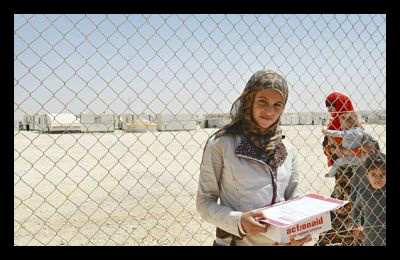

ActionAid USA
ActionAid USA is working to end global poverty and further enhance human rights. Operating in over 40 countries around the world, through their work the organization has been able to reach and impact the lives of approximately 25 million people.

ActionAid addresses a variety of issues that affect the daily lives of people in an assortment of countries. The organization works to change policies surrounding biofuels (in the hopes of stabilizing food prices) and to help countries in poverty adjust to the shifting changes in climate.

It also focuses its attention on aiding countries that are hit by natural disasters and do not have the resources to help themselves. In providing relief, they have been able to respond to 87 of these occurrences and help about 7 million people.

Additionally, the organization has been looking for new ways to empower women, engage the youth and improve the overall quality of life for people across the globe.

One of ActionAid’s most recent projects has been advocating for President Obama to approve the Assessing Progress in Haiti Act, which he signed on August 8, 2014.

In the aftermath of the Haiti earthquake in 2010, although billions of dollars were donated to Haiti, the money was not always  spent in the most efficient way. The new act  requires that the U.S. government submit an extremely detailed report stating exactly how the money donated to provide relief for the Haitian people is being spent.

The organization, however, is not so supportive of President Obama’s backing of the “New Alliance” plan regarding agriculture in Africa. It claims putting agriculture into the hands of big businesses will hurt smaller farming communities and increase poverty levels. Buba Khan, the ActionAid International Advocacy Officer, stated that, “Companies should be part of Africa’s cultural future, but profit should not be prioritized over people’s rights.”

 As part of their efforts to effectively combat global hunger and poverty, ActionAid works to make sure that their opinions on what the U.S. government is doing right and what the U.S. government is doing wrong are clearly expressed. 

– Jordyn Horowitz

Sources: Lee House
Photo: ActionAid USA

Institute for International Medicine Partnerships for Children is an organization dedicated to preventing and combating the harm that comes to children through violence, disease, hunger and neglect.

INMED Partnerships for Children values taking a holistic approach to improve children’s health worldwide through addressing the causes of disease and hunger and attempting to remedy them from the source. INMED is dedicated in implementing long-term solutions to enhance both the quality and longevity of children’s lives.

Founded 27 years ago, INMED has stuck by its original goal of helping to improve the health and safety of children all over the globe.  Led by President and CEO Linda Pfeiffer, INMED has been targeting programs and delivering care to help children in both urban and rural areas of the world.  INMED also has offices worldwide, in places such as Virginia, Peru, Brazil, South Africa and the Caribbean.

INMED has partnered with a diverse group of companies in order to make sure they best spread their mission. They have partnered with companies such as Macy’s, the Ronald McDonald House Charities, the International Foundation, United States Agency for International Development, Kids in Distressed Situations, Johnson and Johnson and many more.

INMED maps out large areas they want to improve and then tailors specific projects to fall into those categories. These broader categories include health and nutrition, youth development, education and skill building, and adaptive agriculture and aquaponics.

One of INMEDs upcoming events will be the 2015 Harvest the Future International Conference, which is set to take place June 14-17, 2015 in Montego Bay, Jamaica.  Experts from across the globe will gather at this conference in order to discuss possible solutions to problems such as water scarcity, income generation sustainable livelihoods, nutrition and health, food security and climate change adaptation.

Conference speakers include Christopher Somerville, an Urban Agriculture Consultant at Food and Agriculture Organization of the United States, Denise A. Herbol, Mission Director at US Agency for International Development, and Thad M. Jackson, Executive Vice President of INMED Partnership.

Jordyn Horowitz

Sources: INMED, INMED 2, INMED 3, Middleburg Women
Photo: Zimbio

It’s widely accepted by scientists today that natural disasters are on the rise and there’s increased risk for everyone. It’s more likely that people are going to experience a natural disaster in their lifetime.

One reason for this is that there are simply more people and many are concentrated in areas that are prone to disaster. The proportion of people living in cities of developing countries has doubled since 1960. This is important because 13 of the world’s 19 largest cities are located in coastal regions that are naturally at risk for disaster. This proportion is expected to rise 55 percent, too, by the year 2030.

It’s important to note also that developing countries, harboring the greatest populations in the world, experienced 94 percent of the world’s natural disasters between 1990 and 1998.

On the other hand, there are more natural disasters today than there used to be. The earth’s southern hemisphere is most likely to bear the brunt of climate change, a fairly well-known driver of the planet’s increase in the frequency of natural disasters. Since 1950, there have been more droughts, hurricanes, floods and windstorms than there used to be. And most developing countries can be found in the global south.

But regardless of what’s causing these disasters to tear cities and lives apart, the experiences are costly. Since the 1960s, the costs of natural disasters have increased sevenfold and low-income economies are at the greatest risk. Here, the poor stand to suffer the most. Consequently, natural disasters are quickly rising as a major issue in efforts at global poverty reduction.

Recall the recent typhoon Rammasun in the Philippines, which flooded streets in Quezon City, killed thirty-eight and left eight missing. It came on the heels of the devastating Typhoon Haiyan which killed more than 5,000. These storms left the already-poor coconut farmers of the nation in devastation after having lost their livelihoods in the storm. Poor fishers, whose boats were destroyed, were threatened with relocation away from coasts, as well.

In southern Karnataka in India, coffee growers fear for their yield as the yearly monsoon rains have delivered 14 percent more water than normal.

But there is hope. Despite the increasingly costly nature of natural disasters, data shows that this year represents a leveling-out in disaster costs, which have generally been on the increase over the past ten years. The first six months of 2014 have had costs nearly 50 percent lower than the $95 billion average.

As climate change moves across the globe as an unstoppable force behind disaster and people concentrate in vulnerable regions, we can only hope that losses continue to fall with increased responsiveness and preparation.

Rachel Davis

Sources: IMF, CBC, The Hindu, Actuarial Post
Photo: The Stress Surfer

The effects of climate change are numerous: ocean levels are rising, meteorological events are becoming stronger and increasingly unpredictable and the incidence of heat-related illness is increasing across the world. Yet experts are just beginning to understand one effect of a changing climate: the capacity for pathogens to migrate around the globe and infect populations that have previously never been in contact with these microorganisms.

Combined, these effects have the potential to cause extreme poverty. Loss of property and life resulting from rising sea levels and strong storms deprive people of both wealth and other resources.

However, the global health conundrum that is changing pathogen ranges is also a poverty issue in its own right. Poor human health places burdens on individuals and their family members that may cause them to lose employment opportunities and large sums of money. Being ill is no easy fortune, but the impoverishment that often accompanies illness can be worse yet.

As warming weather drives animals toward more hospitable environments, pathogens too are expanding their ranges and at the same time, are finding hosts they’ve never met. While it’s working out well for these pathogens, humans, other animals and plants aren’t faring too well.

A species of sea otters in the Pacific Ocean off the coast of Alaska has become ill from a virus that originated in the northern Atlantic Ocean; science writer Chris Solomon suggests that due to declining sea ice levels, “disease is finding new lanes of travel.”

It makes sense – pathogens are highly dependent on temperature for survival, and many bacteria and viruses thrive in the type of warm, wet environments that are becoming more and more prevalent as the climate changes. Not only do rising sea levels give pathogens access to a wider range of space (and accordingly, hosts) but also as animals move around seeking cooler climates, they take pathogens and parasites along with them, allowing them to infect entirely new populations.

What does this mean for humans? Well, the effects of expanding pathogen ranges are manifold. First, like Alaska’s sea otters, humans may soon fall prey to microorganisms not previously seen in their parts of the world. Prevention and treatment of illnesses caused by unfamiliar pathogens will be difficult and costly.

Inevitably, some humans – though it is impossible now to estimate just how many – will die.

Since human health is directly related to poverty outcomes, the expanding pathogen ranges means expanded poverty “ranges;” if more people fall ill due to pathogens, more people will experience poverty.

Secondly, and this is an effect that agricultural communities are already beginning to observe, new pathogens will infect crops and jeopardize the livelihood of the peoples who depend on the harvest for either food or for employment.

According to a study from the Universities of Exeter and Oxford, crop threats include pests and pathogens spreading toward the poles at a rate of 3.2 kilometers per year. A fungus that infects yeast harvests has already wreaked havoc in Brazil, threatening farmers there with impoverishment.

It’s difficult to fathom that such tiny organisms could have such large effects, but pathogens have the potential to cause a lot of harm, in terms of both illness and poverty. Despite that their migration is one of the least publicized effects of climate change; however,  it is one of which humans should be wary.

Elise L. Riley

Sources: NPR, NASA
Photo: Phys.org

Al Gore
Despite his many successes in Washington and Silicon Valley, Former Vice President Al Gore continues to struggle in the battle against climate change, and clearly laments the lack of progress made toward fighting global warming. Americans continue to rank global warming toward the bottom of national priorities, while greenhouse gas emissions continue to rise.

In a recent interview by Australia’s Fairfax Media, Gore emphasized that “history will not be kind to those politicians” who continue to challenge the science and validity of human driven climate change.

As a former Washingtonian, Gore remains a “policy wonk,” and remains committed to his work promoting policies to address climate change. In a two hour interview with Darren Samuelsohn at Gore’s Nashville office, when prompted to describe his job, Gore answered, “I want to catalyze the emergence of a solution to the climate crisis as quickly as possible. Period.”

Nevertheless, Gore has been careful not to give too much criticism on the handling of the climate change agenda, considering the fact that a fellow democrat is in office. Certainly, this is coupled with his own failures in office and the desire to maintain a low profile.

According to accounts by friends and family, it is not by accident, but rather deliberate intent, that Gore remains under the radar. As a polarizing figure for climate issues, he does not want to make this issue about him.

It is is difficult to appeal to those in the middle when there is a clear bias toward one political side of the climate change debate. As put by Missouri Democratic Senator, Claire McCaskill, during an interview, “any politician with a background like Gore’s is bound to be a problematic face of the climate fight. I’d vote for a scientist..He may be a statesman, but I think once a politician, always a politician in the eyes of many.”

However, this has not stopped Gore from continuing to lead the fight against global warming, even if it is from behind the curtains. With almost unlimited access to the White House, he prefers to lobby the President and private organizations behind closed doors. Even when he was invited by Congress to present an update on climate change, he chose to do it at the Capitol’s weekly luncheon.

While successes in the global warming fight are still few and far apart, Gore continues to work on various fronts with the clear mindset that, unless something is done, our planet will be much less habitable by the end of the century.

Sahar Abi Hassan

Sources: Politico, Huffington Post Photo: Urban Splatter

population action international
Population Action International is a nonprofit organization that “advocates for women and families to have access to contraception in order to improve their health, reduce poverty and protect their environment.” Its goal is to stem rapid population growth which will help lift families out of poverty and prevent damage to the environment caused in high population density areas.

The organization divides its work into a few different areas including advocacy and research. Each area strives to increase access to contraception around the world.

In terms of advocacy, Population Action International works both in the United States and abroad to create political support behind contraception programs.

For example, in the U.S., the organization works directly with Congress to promote reproductive health programs. Population Action International has made significant progress doing so over the last few years, including helping to significantly increasing funding for family planning. PAI is currently “working hard to protect these gains in the face of spending cuts and attacks on women’s health programs.”

On the global level, the organization supports countries by providing grants to fund family planning advocacy programs, often in developing countries. Because access to contraception is not a high priority in certain countries, these Population Action International grants are often the only source of funding for in-country advocacy programs.

One of Population Action International’s key research areas is identifying “links between demographics for governments and global institutions to combat poverty, ensure growing nations develop sustainably, and create a more stable world.”

When countries have uncontrolled population growth with little to no access to contraception, poverty is often a result, which can lead to conflict. PAI’s research in this field has identified relationships between large population growth and a number of factors including food security, health, climate change, violent conflict and economic progress.

Because of the results of this research, the organization believes that providing high population, low socioeconomic communities with contraception will enable them to thrive again.

In addition, Population Action International focuses its research on the effects large population growth areas have on climate change. Larger populations put increased pressures on the environment, whether that means using more resources or occupying more land. Supporting family planning, therefore, also supports environmental protection, the organization argues.

According to Population Action International, they exist “because providing women the family planning they want can save hundreds of thousands of lives.” The organization is a leader in the field of contraception, providing women around the world with access to reproductive health services in the hopes that it will help stem population growth and, among other things, alleviate poverty.

– Emily Jablonski

Sources: Charity Navigator, Population Action International, Vimeo

In the fight against climate change, nothing is more important than mutual cooperation. Organizations like the U.S. Climate Action Network (USCAN) facilitate networks of NGOs who share the common goal of helping the environment. Such networks maximize the impact of individual organizations.

USCAN operates under a theory of change which includes three dimensions: relationships, process and results. The network provides the space to foster each. Relationships are built on the local, national and international levels between organizations with diverse approaches to climate change mitigation. USCAN facilitates the process of sharing information through issue briefings and coordination. Ultimately, these three dimensions serve to exponentially increase the impact of the organizations.

Members of USCAN have access to information, resources and services from a coalition of like-minded organizations. Members collaborate over policy recommendations for all levels of government, share information on campaign information such as IPCC reports and spread each other’s message.

To become a member an organization must share the vision that climate change must be fought by both mitigation and adaption. USCAN seeks to understand how climate processes and events affect communities, wildlife and businesses. It recognizes that these effects negatively impact not just the environment but the economy as well. This is why USCAN believes it is in the world’s best economic and environmental interest to fight climate change.

The Guardian highlights the importance of coalitions for affecting change and gives “13 tips on building a coalition to tackle climate change.” One tip is given by Robert Laubacher, the project director of MIT Climate CoLab. He writes that even a small level of collaboration can have a strong influence. Laubacher cautions against focusing too much on government progress, which is slow, and instead to see the virtue in small coalitions of non-governmental organizations — coalitions that USCAN helps to build.

Individual efforts to mitigate climate change are organized through societal organizations. USCAN, in turn, coordinates the efforts of the societal organizations, thus transforming the passion and desire of an individual into lasting change in the fight against climate change.

– Julianne O’Connor 

Sources: The Guardian, USCAN
Photo: news.com.au

A recent study by NASA’s Jet Propulsion Lab in California has shown that soybeans can be re-engineered to grow in more arid environments without losing standard crop yield. If the new varieties prove durable, the cultivation of soybeans in Sub-Saharan Africa and South Asia will help address food insecurity issues in the region. Here are five reasons why soybeans are important in addressing global food security:

1. Food production must increase by 70 percent to meet the world’s food needs by 2050.

There are a number of factors that will affect global food security in the coming decades including: population increase, movement away from rural areas and toward urban centers, food production and climate change.

Today, undernourishment affects 870 million people worldwide. Between now and 2050, there will be an additional two billion people on our planet, with around 24 million children pushed into hunger due to food security issues.

2. Soybeans are one of the world’s most important protein crops.

Soybeans have a protein content of over 35 percent, as well as healthy unsaturated fats and carbohydrate fibers, making them some of the healthiest food sources around. They are also one of the least expensive sources of protein when compared to eggs, milk, beef and cow peas.

Due to the use of soybeans in both the food and animal feed industries, soybean farmers can earn a substantial amount of cash because the crop can be successfully grown at a low cost of production.

3. Modifying soybeans can address both climate challenges and food insecurity.

In a recent study led by NASA’s Jet Propulsion Lab (JPL,) computer models have been applied to look for a super soybean. The research study determined that soybean plants can be redesigned to increase crop yield by 7 percent without using more water. The study also demonstrated that soybeans can be redesigned to use either 13 percent less water, or reflect 34 percent more light back into space without reducing crop yields–good for both food security and climate change.

While other geo-engineering solutions for climate change tend to be expensive, such as spraying sulfates into the upper atmosphere in order to reduce incoming sunlight or loading the ocean with iron in order to increase plankton photosynthesis, modifying annual crops is inexpensive and can be implemented quickly.

4. Soybean cultivation is growing in Africa.

Research by the University of Agriculture Makurdi in Nigeria in collaboration with the International Institute of Agriculture (IITA), aims to help improve the lives and livelihoods of small-hold farmers in the drought-prone areas of sub-Saharan Africa and South Asia by providing more durable soybean varieties that can stand up against more arid conditions. Like the redesigned varieties in the JPL study, new varieties being promoted in Africa can help increase crop yields without using more water.

Soybean production remains relatively isolated in Africa, with Nigeria as the largest soybean producer, followed by South Africa and Uganda. However, the new, more durable varieties may allow for more countries to begin cultivating soybeans, helping improve the health of their populations as well as reducing local poverty.

5. Soybeans could have a long-term impact on poverty.

Food and water security will be a major national security focus in the coming decades as both climate change and population increases affect food production worldwide. Countries lacking basic food resources to feed their growing urban populations may become hotbeds for conflict, unrest and terrorist activities.

While many solutions for food insecurity should be addressed and considered by lawmakers, scientists and farmers alike, soybean technology is a first step in addressing the needs of poverty stricken regions by providing a modified crop that can meet multiple goals.

Re-engineered soybeans are an innovative (and healthy) way to help address local food security issues worldwide. Not only do they provide a good food source, but their wide use in products from oils to food to animal feed guarantee a lucrative market for local farmers. Reducing poverty through innovative changes in the way staple crops are traditionally grown is an economical and feasible way to bring food security, in light of climate and population challenges, to developing regions of the world.

– Andrea Blinkhorn

Sources: Daily Trust, United Nations Conference on Trade And Development, Intech, NASA, VOA News, World Food Programme, Stop Hunger Now
Photo: HD WAll IMG

They are small, green and Mexico’s staple fruit, but they are also rising steadily in price.

Mexico’s lime prices are soaring upwards of 50% each month this year, and it is taking a devastating toll on the Mexican working class. The prices are currently at an all-time high.

What is the cause of the hyperinflation? Limes have always been the most dependable fruit to sell in Mexico, so what are the reasons behind this sudden disruption?

Tax reform has caused a spike in inflation this year, and products such as sodas, junk foods and now limes are all incredibly expensive.

Limes were added to the list of pricey groceries after a disease struck the citrus fruits in Colima, Mexico. The disease is called “huanglongbing” (or “citrus greening disease”) and it infects fruit by way of tiny insects that infect both the tree and the fruit. The trees are left producing bitter, hardened limes until it ultimately dies.

Climate change is also to blame. “With the arrival of winter there has been a cold snap in nearby states,” stated Juan Leana Malpica, a Morelos state lime grower. The fruit do not taste as fresh; the quality of the Mexican limes is suffering.

A bartender from Mexico City, Manuel Ambrosio, states that because of the lack of limes he is unable to give his customers the same sized portion margaritas as before. Customers are upset that the quality of the fruit has gotten worse and Ambrosio’s business is declining because of it.

Margarita sales are down 30% because of the poor lime conditions and Ambrosio stated that “this is the worst [he’s] seen prices in four years.”

A safe fix is hard to find though. The violent outbreaks in Michoacan make the importation of limes difficult for growers because they do not want to risk putting their products on the roads. Vigilante groups are destroying dangerous drug cartels, and the threat of having lime growers’ livelihood intercepted is too high and too much of a hazard.

The United States is concerned about the risk of imported limes bringing in disease. Some importation services have been limited, including airlines, and this is also bringing up costs in Mexico.

Mexico is attempting to squelch this problem by cutting off infected lime tree branches and using nitrogen in October 2014 to make the trees flower “in February, March and April” of 2015. Rafael Abriz Cervantes of the Agriculture Ministry also mentioned that technology is being tested in hopes that it will help remedy the situation and bring back their staple fruit.

– Becka Felcon

Sources: BloombergCNNLA Times
Photo: Westword