Posts

Garment IndustryThe fashion tastes of consumers in advanced nations can have serious impacts on the well-being of workers that manufacture clothing products in developing nations.

Not only are these workers often paid unfair wages, but they also often suffer from extremely unsafe working conditions. In 2013, for instance, the collapse of a poorly-built factory in Bangladesh killed over 1,000 people, according to The Guardian.

Garment Industry in Bangladesh

Bangladesh, like many other developing countries, is highly dependent on the garment industry. This means that companies who fail to treat workers respectfully can defend themselves against critics by claiming they provide jobs to people who would not otherwise be able to work.

There is some sense to such a claim. According to The Guardian, 80 percent of Bangladesh’s GDP relies on the ready-made garment industry.

Nevertheless, it is certainly possible for garment companies to do more, both to protect workers as well as to support support development of the economies and societies in which those workers live.

People Tree: A Company Making Changes

One company that has proven to be true is People Tree, a London and Tokyo-based brand that aims to be 100 percent Fair Trade throughout its supply chain.

People Tree has attracted the attention of The Guardian, The Telegraph and other prominent publications for its commitment to Fair Trade policy.

In 2013, it became the first clothing company in the world to receive the product mark of the World Fair Trade Organization.

On its website, People Tree states that “people and the planet are central to everything we do.”

Central to its business model is what the People Tree calls “Slow Fashion,” which is a philosophy that rebels against the high-speed mode of trade that is standard in the fashion industry. It is that rushed mentality that leads to socially and environmentally hazardous practices.

As People Tree’s website defines it, “Slow Fashion means standing up against exploitation, family separation, slum cities and pollution—all the things that make fast fashion so successful.”

With regard to the environment, People Tree engages in a number of sustainable practices ranging from the use of certified organic cotton to dyeing with safe and azo-free chemicals. Products are sourced locally and from recycled material when possible. Once the products are made, People Tree prioritizes shipping by sea over shipping by air, thereby reducing the company’s impact on global warming.

Perhaps most importantly, People Tree’s fabric is woven by hand. Specifically, by the hands of real people whom the company strives to pay well and treat with dignity.

Indeed, one of the reasons People Tree cares so much about environmental friendliness is that it understands the effect pollution has on the environments in which their workers live. Environmentally conscious practices lead to sustainable development and happier workers, which in turn lead to higher productivity and more business, according to the company.

People Tree makes 50 percent advance payments on orders so that farmers and producers can more easily finance Fair Trade. And it manages its Collections so that workers will have enough time to produce garments by hand without being crunched, which the company says “is rare in the fashion industry.”

Setting the Stage for Sustainable Fashion

People Tree goes beyond paying fair wages and maintaining safe conditions, however. In some communities, it provides clean water and offers free education to poor families. In many cases, People Tree partners with organizations that empower disadvantaged workers, such as women and the physically disabled.

A new precedent has been established for the garment industry, as social business and corporate responsibility become increasingly popular in other industries. People Tree’s success demonstrates the potential for companies to think beyond profit and consider the wider impact business can have on impoverished communities in developing countries.

Joe D’Amore

Sources: Telegraph 1, Telegraph 2, People Tree, The Guardian 1, The Guardian 2
Photo: Flickr
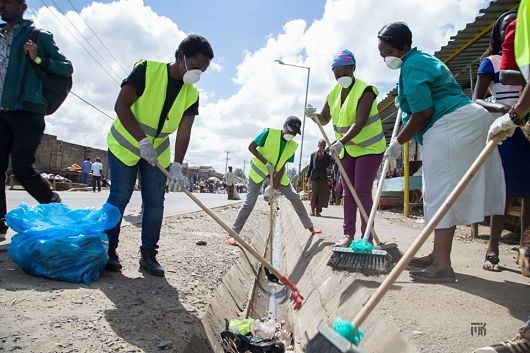
trash in NairobiDavid Kimani is a Kenyan man who grew up across the street from the largest landfill in the country. Being raised in the slums of Nairobi, Kimani dropped out after primary school.

Kimani, now a father of three, currently owns and operates a garbage recycling company, according to the Xinhua News Agency. He now earns about $30 a day selling recyclable trash in Nairobi. He has also hired five young people from similar backgrounds who face socioeconomic struggles.

Despite pressure from friends and family to pursue education, Kimani wanted to start a business. “I had done my own research and consulted widely with established players who convinced me that waste recycling promised returns. An older relative had earlier bought a car from the proceeds of garbage collection,” Kimani said.

According to UNICEF, approximately two-thirds of the population of Nairobi lives in informal settlements where they face issues of overcrowding, lack of health and educational resources, poor sanitation and social exclusion. According to ISID, only 12 percent of the households in the Nairobi slums have access to piped water.

Youth living in slums across Africa are less likely to attend school than children living in non-slum areas, according to the Institute for the Study of International Development (ISID).

The Nairobi county governor, Evans Kidero, honored Kimani’s young workers by agreeing to a government-funded contract that will help to clear trash in Nairobi out of residential areas.

He stated, “We will be spending 10,000 dollars every day for the next 45 days to ensure that Nairobi is restored to its former status as a green capital. Private contractors will partner with the National Youth Service to alleviate the garbage menace.” In addition, Kidero intends to form an incentives plan to encourage the youth to become full-time garbage collectors.

Caleb Kidali, a youth mentor for low-income children in Nairobi, noted the positive changes that employers can make to help youth from poor backgrounds afford to move out of the slums. “During its formative stages, garbage collection was like a hobby for bored youth until it evolved into a money minting exercise,” Kidali said.

Other companies, like Taka ni Pato (Trash is Cash), have started to hire young people to give them an employment and income opportunity and to enhance their communities by creating cleaner living spaces. In fact, Taka ni Pato has hired more than 100 young people to collect trash in Nairobi, benefiting the young people directly and the community as a whole.

Kelsey Lay

Sources: Global Giving, Institute for the Study of International Development, UNICEF, Xinhua
Photo: Google Images

mozambikes
Mozambique entrepreneurs have created the award-winning social enterprise Mozambikes builds low-cost bicycles to improve the livelihoods of thousands of people in Mozambique. Affordable and efficient bicycle transportation can greatly impact the pace of development in a country with 54 percent of citizens living below the poverty line, especially in rural areas.

In addition to bringing economic opportunities, Mozambikes is committed to improving the lives of 50,000 Mozambicans by 2018. The company and affiliated non-profit Mozambikes Social Development intends to reach this goal through the sale and donation of affordable branded bicycles.

Mozambikes’ unique branding strategy has created three avenues of distribution. The first allows customers to brand and purchase bicycles for their own business needs, such as employee incentive programs. Other customers choose to brand bicycles sold to low-income markets.

Branding customers allow Mozambikes to sell the bicycles at a subsidized rate. For advertisers, it is an opportunity to tap into remote rural markets. Bicycles can also be donated through Mozambikes Social Development for about $100.

These bicycles are purchased at cost from Mozambikes and donated to those who still cannot afford a bicycle. Co-Founder and Chief Executive Officer Lauren Thomas said in an article published on The Guardian, “A bicycle may seem like such a small item to many, but it is quite literally life-changing in rural Africa.” Mozambique_entrepreneurs

The bicycles are specifically designed for use on the bumpy roads in Mozambique with large luggage racks for transporting goods. The design also accommodates traditional skirts with a diagonal crossbar. Local technicians assemble the bicycles and after-market maintenance has created a demand for more bicycle technicians.

In comparison with regional competitors, Mozambikes’ product is better quality and more affordable. The company hopes to improve the bicycle industry of Mozambique through these innovations.

Bicycles can have a significant impact in low-income communities and aid development. In Mozambique, two-thirds of people walk more than an hour to the closest health center. Bicycles provide increased access to education, health care and are a clean energy solution.

In five years, Mozambikes has sold or donated over 7,000 bicycles and plans to increase that number to 125,000 by 2020. In rural Africa, a bicycle is generally considered a household items aiding not only individuals but also entire families.

It is estimated that 70 percent of Mozambicans rely on income from what they can produce, largely through subsistence farming. Transportation is essential in this informal economy. Fetching water, maintaining crops and getting products to market are all made easier with access to bicycles.

As a Mozambique business, Mozambikes employs about 12 workers and pay salaries above minimum wage. The company also strives to empower women, provide training for bike technicians, and educate cyclists about safety.

Mozambikes hopes to benefit a million Mozambicans through low-cost, efficient transportation. Each bicycle improves another Mozambican’s livelihood.

Thomas affirms the company’s long-term vision: “Some people come and go, but we are really committed to making this an ongoing, sustainable business, and there is still so much more we can do.”

Cara Kuhlman

Sources: The Guardian, How We Made It In Africa, Mail & Guardian, Mozambikes, Mozambikes YouTube Channel
Photo: Wikimedia, Flickr

She Leads Africa: Supporting African Women in Business
South Africa has the highest rate of female entrepreneurship in the world; however, the majority of the female-led startups are small-sized, individual-owned business. In order to foster female-led high-growth startups, She Leads Africa (SLA) provides African female entrepreneurs with the knowledge, financing and networks.

In Africa, female entrepreneurs face four major barriers to their success in entrepreneurship: unequal access to education, limited access to financing, constricted traditional stereotypes, and limited access to networks. SLA supports female entrepreneurs through hosting annual business pitch competition and building a community for female entrepreneurs.

Women in Africa don’t have equal chances to get an education since the primary level, which makes them lack business knowledge and work experience to create high-profit companies. Since 2014, SLA has hosted an annual pitch competition to identify the most promising African female entrepreneurs.

The finalists can get six-week training and business plan development with experienced mentors, who are from premier consulting, finance and venture capital companies. Moreover, SLA also creates an online platform for potential female entrepreneurs to share their business knowledge.

The unequal treatment does not only show in education but also in financial access. According to the report by SLA, women face fewer options, higher interest rates, and shorter terms when they look for loans. Thus, SLA’s pitch competition offers winners more than $55,000 in cash and kind prizes, including legal services and office supplies.

Besides the support in financing, SLA creates valuable networking chances for female entrepreneurs. By now, more than 380 entrepreneurs from more than 27 countries apply for a coveted finalist spot. The pitch competition has been a platform for African female entrepreneurs to network with other entrepreneurs and look for investors and mentors.

In a male-dominated society, women are always valued by their domestic contributions. However, with the popularity of SLA pitch competition, people raise the awareness of female entrepreneurship. In the 2015 Entrepreneur Showcase, six finalists were selected. On the final pitch competition, they will compete for a $10,000 prize and access directly to investors and international media attention.

“We are excited about our second cohort of young African female entrepreneurs for mentoring, training and investment and if I must say so myself, they are quite dope,” said Afua Osel, co-founder of SLA.

SLA emphasizes the role of the female in economic development. According to its Press kit, SLA is “a social enterprise dedicated to ensuring that women are not left out of Africa’s Growth Story.” Starting from a feminist concept, by offering them training and business development, providing financial support, enlarging their social network and rise social approval, SLA is the forefront of supporting African women in business.

Shengyu Wang

Sources: Black Enterprise, SLA 1, SLA 2, SLA 3
Photo: Flickr

japan
Japan is rethinking its higher education programs, forgoing liberal arts subjects in cooperation with a business-first society keen on better-skilled graduates.

Prime Minister Shinzo Abe’s aspiration is to change Japan’s government-sanctioned universities into global frontrunners in scientific exploration or vocational training schools. Abe has called on Japan’s higher educational programs to “redefine their missions” and transform their expected criteria.

The 86 Japanese public universities were instructed by the ministry of education to send their plans to restructure their educational format by the end of June to continue receiving their funds contributed by the government.

In accordance with this decision for adjustment, many of the country’s companies have altered their training programs, counting on universities to train more for business skills. The expectation for young professionals with teamwork, managerial and social abilities is higher than ever in Japan.

This change is inspired by Abe’s decision to rejuvenate the country to become a world leader. The Prime Minister wants universities to include innovative schooling techniques that are more demanding of students for the betterment of the Japanese economy.

Despite Abe’s assurance of this success, many feel as though exempting liberal arts subjects will be detrimental to the experience and value of learning in higher education. This debate started long before Japan’s educational reformation, earning a lasting presence in the United States’ arguments over education. Nevertheless, Japan’s critics are worried about the quality of educational instruction because of the miscommunication between expectations of Japanese employers.

The Dean of Temple University’s Japan campus, Bruce Stronach, said that society needs people who contribute to all aspects of humanity, including social issues.

“That’s why those traditional fields like arts, literature, history and social sciences are also—and will always be—important,” Stronach said.

Despite Stronach’s negative reaction to these changes, not all Japanese educators are displeased with Abe’s declarations.

Katsushi Nishimura, a law professor at Ehime University in Japan, said that students need to learn how to work according to society’s expectations.

“We also need to come out of the ivory tower and listen to the real world,” he said.

According to Nishimura, the university’s funding for the humanities and education departments’ courses will be cut and given to an improved business training plan created by a board of business and academic leaders. Originally, according to Nishimura, the teaching staff was in charge of altering education courses.

In addition, Nishimura said that the new programs will highlight training for local industries such as tourism and fisheries.

Like Nishimura, Japanese educators will likely abide by Abe’s decisions. Education in Japan fueled the country’s rapid economic growth and is one of the driving forces toward the production of high technology.

No doubt, even without liberal arts courses, Japan will continue to be a large contributor to the international economy.

Fallon Lineberger

Sources: Ehime, OECD Observer, The Australian, Wall Street Journal
Photo: GaiginPot

The BOMA Project Mentors Kenyans in Running Successful Businesses

The BOMA Project works with women living in Kenya and other arid and drought-prone regions in helping them receive the resources, training and funds they need to start up their own businesses. Another aspect of the BOMA Project also helps Kenyan women pay for school, food and healthcare. Since 2009, 8,481 women have enrolled with the BOMA Project to successfully launch 2,651 businesses. In total, women who have enrolled with the BOMA Project have been able to provide care for over 42,250 dependent children.

The BOMA Project was started by Kathleen Colson after she was invited by a local elected official, with whom she attended Saint Lawrence University, to visit Northern Kenya. After many years of working as president of African Safari Planners and leading many excursions through Africa, she came to the conclusion something needed to be done to help those affected by drought.

When drought strikes, livestock die in herds, leaving families with no source of income, which in turn hinders them from being able to buy the food and supplies that they need to survive. After drought occurs, the men of the family leave the women and children at home to go find suitable grazing land. Oftentimes, women are left with no means for food or aid for up to six months. The BOMA Project works to train these women to find other sources of income from starting up their own businesses.

During her many trips to Northern Kenya, Colson met with village elders, faith leaders, local residents and community development workers to gain a true understanding of life in Kenya. While she spent lots of her time there listening to these people, she also focused on hearing what the women of Kenya had to say about life there. Her compassion was piqued by the struggles, challenges and failing solutions about which the Kenyan women spoke.

Colson and Kura Omar, her guide and translator, concluded training women to start and maintain their own businesses would help best alleviate poverty during droughts. Through the BOMA Project, they enacted the Rural Entrepreneur Aspect Project (REAP), which provides women with a two-year poverty graduation program that gives them a cash grant, training in the business and sustainability field and training from local mentors.

Once the businesses are earning profits, usually after six months, members of REAP work with BOMA representatives in establishing savings accounts to prepare for droughts in the future. The BOMA Project has successfully helped over 50,000 women and children in surviving drought season. By 2018, the BOMA Project hopes to double that to over 100,000.

Julia Hettiger

Sources: BOMA Project, Aid for Africa, Dining for Women
Photo: BOMANomad

Fair Trade Model
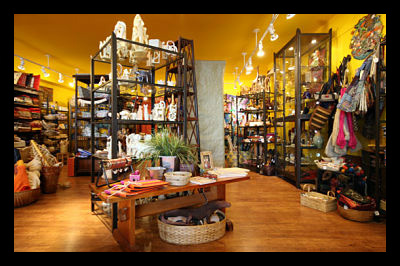
Stopping into any Ten Thousand Villages store, there are multicolored products as diverse as the countries they are produced in. The Akron-based company runs on a Fair Trade business plan with craftsmen in over 38 countries. With over 65 years of business, Ten Thousand Villages has become one of the most prominent Fair Trade businesses in the world.

Many of the artisans employed by Ten Thousand Villages are underprivileged and the long-term contracts with the business create opportunities to alleviate their poverty. Many of the people who receive contracts are women who generally have fewer opportunities in their countries.

As a founding member of the World Free Trade Organization, Ten Thousand Villages has formed a business plan that is being used as a template for other companies with business dealings in poorer nations. Fair Trade models enable the craftsmen to be paid reasonable salaries, generally much higher than those they would be paid by businesses in their home country.

The payment is given in two parts: half when the order is placed and the rest after the product is completed. Together, the artists negotiate a deal with the company to cover their costs of production, as well as an adequate fee.

Through the contracts with Ten Thousand Villages, the artists are able to provide health care, education and nourishment to their families which they might have otherwise not had access to. The trickle-down effect of Fair Trade lasts for generations. More children are able to continue their education and then have more opportunities than the previous generation.

The contracts typically last several years, which provides a stable source of income for the artisans, as well as reliable products for the stores. The products are a homage to the unique cultures and materials accessible.

Though Ten Thousand Villages was one of the pioneers of the Fair Trade model, said model has proliferated to over 350 organizations in more than 70 countries united in the WFTO. One of the cornerstones of the Fair Trade model is to eliminate global poverty through raising wages to livable standards; so far, Ten Thousand Villages is helping achieve this goal.

Kristin Ronzi

Sources: Ten Thousand Villages, WFTO
Photo: Blogto

Cash-based systems for holding money are inefficient and hold a lot of risk, with especially high consequences for the world’s poor. With ‘digital cash’ and saving methods, more people are able to experience financial inclusion in modern banking, suffer less risky consequences and begin investing in their future.

Much of this banking is done through mobile phones, which have become increasingly available to developing countries. About 89 mobile phones exist per 100 people in these areas. Even non-financial institutions, such as small businesses, use mobile payments in order to perform faster business and expand their customer base.

Studies in Mexico have shown that in areas where more banking institutions were introduced, there was a rise in informal small businesses, as well as a seven percent rise in incomes. This demonstrates that greater access to banking systems can lead to economic stimulation.

Having financial transactions performed on mobile phones makes banking services cheaper and more feasible for the poor. Digital banking also comes with better financial records, making it easier for banks and other lending programs to develop credit scores, and lending methods that are tailored to their clients.

With digital banking, immediate transactions can be made from the comfort of one’s home, saving people time and money by avoiding a possibly long commute and day away from work in order to get to a bank. Digital banking also makes money less susceptible to common risks such as thievery, natural disasters, or manipulative friends and relatives.

Some people in these situations even pay others to keep their money safe, adding another unnecessary payment to their expenses.

Long distance transfers also become easier to accomplish. Many households in developing countries receive their income from a family member working in other parts of the country who sends money periodically.

A poll was conducted in 11 sub-Saharan African countries that discovered that 83 percent of those polled had made a payment to someone far away using cash. This involved giving money to bus drivers, asking friends to carry money, or taking time off work to deliver the money themselves.

These processes are not only unsafe, but they can be unreliable and slow.

After a bank was set up in a region in Malawi in 2002, farmers used it to hold their money after the harvest, so that they would be able to continue buying fertilizer throughout the year. Their crop yields grew, therefore increasing overall income, while allowing these farming families to send children to school for even more future investment.

Recently in Kenya, clients of M-Pesa, a mobile money program, were observed and compared to Kenyans without the program. When natural disasters or unexpected events came, M-Pesa clients were able to receive financial assistance from friends and relatives at a much faster rate, making any negative impact much smaller, and allowing their regular lives to be interrupted as little as possible.

The success of M-Pesa has sparked motivation for other countries to create similar programs. Tanzania has over 47 percent of their population using mobile banking, and Uganda has begun the process, and already has 26 percent of their population as a member of a mobile banking system.

Even governments benefit from mobile banking. Since Mexico’s adoption of digital banking in 1997, their government lowered their spending on wages, pensions and social welfare by $1.3 billion, or 3.3 percent annually.

A study was done in India that concluded the government could save $22 billion annually just by digitizing all payments and transfers.

Although digital banking is expanding throughout the developing world, there are still 2.5 billion people without any banking system. Governments, non profits and private groups are now working on making banking more digital, and therefore more accessible to these bank less people.

-Courtney Prentice

Sources: Skoll World Forum, Bill & Melinda Gates Foundation, Forbes, Global Envision, TIME, Foreign Affairs
Photo: Gulf Business

Over half of the world’s population lives on $2.50 a day or less. Yet the world’s poor constitute the world’s largest untapped market.

CK Prahalad’s 2004 book, “The Fortune at the Bottom of the Pyramid,”  brought companies’ attention to the huge profits to be made by tapping into the bottom of the pyramid, as well as the benefits this move could yield for the poor. Yet, many companies still wonder, what’s in it for us? As it turns out, that is the right question to ask. Too many altruistic endeavors have failed because companies were not business-oriented or profit-minded enough.

For example, Hewlett Packard’s project, dubbed “e-inclusion,” was founded under the noble goal of providing access to all the available modern digital, social and economic opportunities to everyone in the world. The project was quickly abandoned because it did not fall in line with HP’s overall mission. Proctor & Gamble introduced a product called PUR, which was a water purification powder, aimed at bottom of the pyramid markets. The product failed commercially and Proctor & Gamble stopped distributing it. DuPont attempted to reduce the suffering of millions of people from malnutrition by selling soy-fortified food. After a test run in India, the company gave in because it seemed impossible to make a profit.

Mark Martin is the vice president of international marketing at SC Johnson. He points out what he believes is the biggest challenge of harnessing bottom of the pyramid markets: “each consumer makes a very small purchase. You need lots and lots of consumers.” Because of the small purchasing power of each consumer, it is vital that costs of production are kept low.

Despite these challenges, advocates of Prahalad’s book, as well as the general public, feel corporations have a role to play in alleviating poverty. In a poll conducted by The Guardian, 83 percent responded that they believe corporations have an important role to play in the poorest markets. Seventy-three percent believe there is money to be made by serving the poor, and 89 percent see the importance of financial inclusion to enable poor people to participate in the economy.

In a live chat with a panel consisting of Mark Martin and other professionals in similar positions at different companies, all agreed that the primary focus of a company tapping into the Bottom of the Pyramid should be making a profit. Getting carried away by altruistic theories is neither practical nor efficient.

“Our customers design our products,” explains Donn Tice, CEO of d.light, a company that provides solar energy to poor rural areas. By entering a new market with a focus on making profits and the willingness to adapt the product to fit the needs and wants of target consumers, success can be achieved.

As many companies have become disillusioned with Prahalad’s premise, the professionals participating in the live chat concluded that the bottom of the pyramid still represents a vast market of untapped potential. The key to success is in adaptability, patience and attention to details.

Martin describes one of SC Johnson’s strategies, in which adaptability, patience and attention to detail are utilized. Farmers in Rwanda are trained in agricultural practices, sustainability and financial management. SC Johnson sources pyrethrum, a product used in Raid, from these farmers. This is accomplished through partnerships with nonprofits in Rwanda.

SAB Miller has a similar technique of adapting to local needs. The company adapts the beer it sells in a particular region to the local crops of the region. For example, in Mozambique, the beer is made with cassava, and in Uganda it is made with sorghum. By using local crops it not only tastes better to the consumers, but also supports local farmers and keeps costs low.

“The reason for focusing on profits for us is so we can demonstrate sustainability and stay in the markets to truly make a difference in the area we are focused,” Martin explains. Businesses, after all, survive off profits, and financial needs cannot be sacrificed for social gains. It may seem counter intuitive to noble-minded companies, but focusing less on charity and more on making a profit will benefit both the company and the consumers in the target area.

— Julianne O’Connor

Sources: The Guardian 1, The Guardian 2, The Guardian 3, Marketwatch, Reuters
Photo: Architonic

Economists, public officials and humanitarian leaders across the globe are all echoing a new stance on foreign aid: treat it like an investment.

Sure, many areas of the world still require immediate relief in the form of solid goods, but what these communities absolutely require is the stability and means to sustain themselves long-term. In order to break the cycle of poverty, impoverished people need a new cycle altogether characterized by improved economic infrastructure and stability.

The best aspect of the investment approach is that it promises profit. Business executives are now realizing the untapped workforce potential of the world’s destitute. By developing interest in these areas from an economic standpoint, companies are not only opening up access to the world market, but they are seeing positive returns as well.

Companies like Samasource, a Silicon Valley-based startup, have illustrated success in the private sector. Samasource’s model involves big data projects that they break down into manageable tasks for their overseas workers. American tech giants such as Google and LinkedIn benefit from the work and finance of the paychecks of their outsourced employees. As a result, Samasource is profitable and growing while people in rural areas have new access to the technological world market.

Now, imagine taking the approach a step further and funding industries that directly address the critical issues impoverished people face, such as global health investments. Could financing ventures that treat HIV, malaria and infant mortality help those in need and actually boost the economy? More and more people are answering this question with a solid “yes.”

The solution won’t be so simple, however. Devex editor Rolf Rozenkranz recently sat down with Annie Baston who is the chief strategy officer at PATH, an international nonprofit that specializes in long-term solutions to break cycles of poverty. Baston explained the common challenges faced when determining a “best buy” for global health investment. Multiple factors come into play involving technological solutions and systemic reform. These elements need to be carefully orchestrated and illustrated to investors to generate interest and maintain longevity.

In fact, organizations such as The Lancet and their team of researchers have laid out a complex global health investment plan, titled “Global Investment Framework for Women and Children’s Health,” that will secure high health, social and economic returns. Through simulation modeling, The Lancet has found that “increasing health expenditure by just $5 per person per year up to 2035 in 74 high-burden countries could yield up to nine times that value in economic and social benefits.” Their models, published late last year, approach maternal and newborn health, children’s health, malaria, HIV/AIDS, family planning and immunization.

– Edward Heinrich

Sources: DEVEX(1), DEVEX(2), The Lancet, Samasource
Photo: University of Delaware