• Link to X
  • Link to Facebook
  • Link to Instagram
  • Link to TikTok
  • Link to Youtube
  • About
    • About Us
      • President
      • Board of Directors
      • Board of Advisors
      • Financials
      • Our Methodology
      • Success Tracker
      • Contact
  • Act Now
    • 30 Ways to Help
      • Email Congress
      • Call Congress
      • Volunteer
      • Courses & Certificates
      • Be a Donor
    • Internships
      • In-Office Internships
      • Remote Internships
    • Legislation
      • Politics 101
  • The Blog
  • The Podcast
  • Magazine
  • Donate
  • Click to open the search input field Click to open the search input field Search
  • Menu Menu

Archive for category: Refugees and Displaced Persons

Information and news on Energy and Electricity

Aid, Global Poverty, Refugees and Displaced Persons

Anera: Providing Relief in Gaza

Anera: Providing Relief in GazaIn Gaza, a region marred by conflict and instability, the plight of refugees and civilians caught in the crossfire is often dire. Among the organizations dedicated to alleviating this suffering is American Near East Refugee Aid (Anera), which focuses on the development and relief needs of refugees and others impacted by conflicts in Gaza, the West Bank, Lebanon and Jordan.

Anera’s Mission and Scope

Anera was established to address the pressing needs of those affected by conflict in the Middle East. With a particular focus on Palestinians and residents of East Jerusalem, Anera provides humanitarian relief through various programs aimed at health, education and economic development. The organization’s holistic approach ensures that immediate needs are met while also paving the way for long-term improvements.

Providing Vital Medical Supplies

In conflict zones like Gaza, medical supplies are often scarce and health care facilities are overwhelmed. Anera’s intervention is critical in this context. According to its website, a donation of $30 can supply the Central Blood Bank Society in Gaza with 16 blood bags. This seemingly small contribution can have a significant impact, as it supports the health care system in handling emergencies and routine medical needs. Blood bags are essential for surgeries, trauma care and treating chronic conditions, making them a vital resource in any medical facility.

Hygiene and sanitation are fundamental to preventing the spread of diseases, particularly in areas with high population density and inadequate infrastructure. Anera’s hygiene kits, costing $80 each, can support two displaced families. These kits typically include items such as soap, disinfectants, sanitary pads and other essentials. By providing these kits, Anera helps maintain the health and dignity of displaced individuals, reducing the risk of outbreaks of illnesses that can thrive in unsanitary conditions.

Food Aid for Families

Food security is a significant concern in Gaza and the West Bank, where economic instability and blockades have severely limited access to necessities. Anera’s food assistance programs are a lifeline for many families. A donation of $100 can provide enough food for a displaced family to last seven to 10 days, ensuring that they have access to nutritious meals. For $200, Anera can supply food to two families, doubling the impact. These food parcels often include staples such as rice, lentils, canned goods and cooking oil, offering a balanced diet to those in need.

Impact on Gaza and the West Bank

Anera’s efforts in Gaza and the West Bank have been particularly impactful. In Gaza, where the blockade has created severe shortages of almost everything, Anera’s provision of medical supplies, food and hygiene kits has alleviated some of the immediate suffering. In the West Bank, Anera’s projects support not only refugees but also residents facing economic hardships. The organization’s work in these regions addresses both the symptoms and the root causes of poverty and hunger.

Beyond Gaza and the West Bank, Anera’s work extends to Lebanon and Jordan, where many Palestinian refugees reside. In Lebanon, the economic crisis and political instability have exacerbated the challenges faced by refugees. Anera’s programs in Lebanon include education, vocational training and health care services, aimed at improving the quality of life and fostering self-reliance among refugees. In Jordan, Anera supports Palestinian and Syrian refugees through similar initiatives. The organization’s comprehensive approach ensures that the assistance provided is relevant and effective, addressing the unique needs of each community.

Looking Ahead

Anera’s comprehensive aid efforts in Gaza, the West Bank, Lebanon and Jordan address the immediate humanitarian needs of refugees and civilians affected by conflict. By providing essential medical supplies, hygiene kits and food assistance, Anera helps to improve the quality of life for vulnerable populations. These ongoing efforts not only offer relief from current hardships but could contribute to long-term stability and development in the region.

– Sakshi Bhagat

Sakshi is based in Kolkata, West Bengal, India and focuses on Good News, Global Health for The Borgen Project.

Photo: Flickr

July 13, 2024
https://borgenproject.org/wp-content/uploads/borgen-project-logo.svg 0 0 Precious Sheidu https://borgenproject.org/wp-content/uploads/borgen-project-logo.svg Precious Sheidu2024-07-13 07:30:402024-07-13 02:54:10Anera: Providing Relief in Gaza
Conflict, Global Poverty, Refugees and Displaced Persons

How Conflict Fuels Poverty in Syria

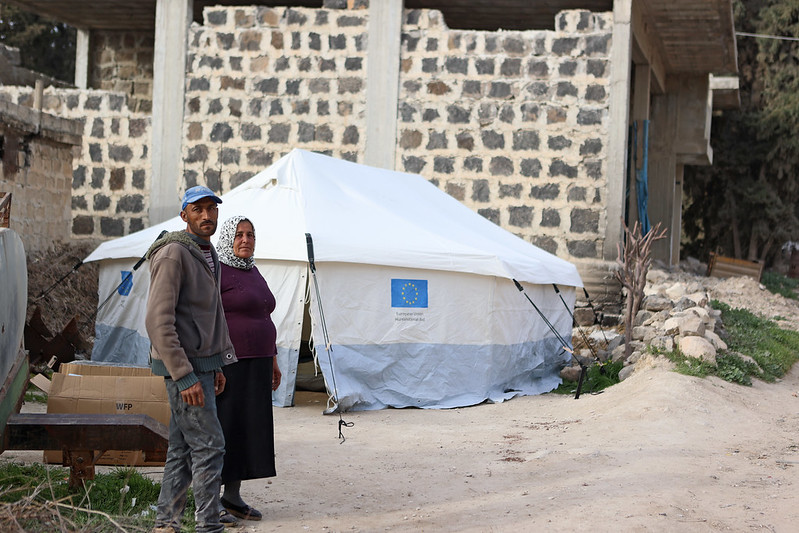
How Conflict Fuels Poverty in Syria The Syrian conflict, now stretching into its second decade, has profoundly reshaped the nation’s socio-economic landscape. As the fighting persists, the humanitarian and economic toll intensifies, creating a vicious cycle of poverty in Syria.

Destruction of Infrastructure

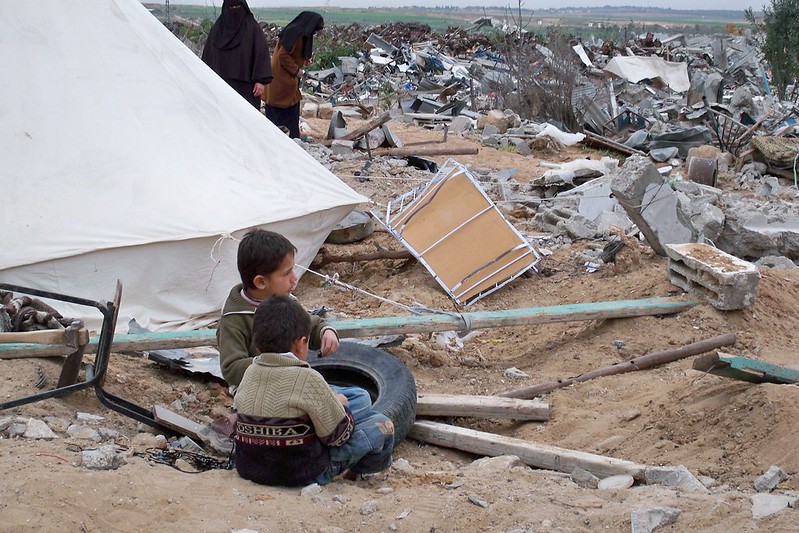
Destruction of infrastructure is one of the most immediate and visible widespread consequences of the Syrian conflict. Attacks on various types of infrastructure, including public, private and health care facilities, remain largely unaccounted for. Bombings, artillery fire and ground battles have reduced cities to rubble, destroying homes, schools, hospitals and utilities. With basic infrastructure demolished, economic activities stall. Factories, farms and businesses cannot operate effectively, resulting in significant productivity losses. The lack of electricity, clean water and transportation further hampers efforts to resume normal economic functions, exacerbating poverty in Syria.

Displacement and Loss of Livelihoods

The crisis in the Syrian Arab Republic has displaced more than 12 million people across the region, with 6 million Syrians finding refuge in Egypt, Türkiye, Iraq, Jordan and Lebanon. Displacement uproots families from their homes and communities, stripping them of their assets and means of income. In displacement camps and host communities, refugees face high unemployment levels. Competition for scarce resources and jobs often results in lower wages and poor working conditions. For those attempting to rebuild their lives, limited access to employment, education and health care perpetuates a cycle of poverty in Syria that is difficult to break.

Health Crisis

Almost a quarter of Syria’s hospitals are nonfunctional and cannot meet the growing health needs. More than 12.2 million people urgently need health assistance, but a shortage of workers and health care infrastructure has led to the collapse of the health care system. This collapse exacerbates poverty by increasing disease and disability burdens. Families must spend limited resources on medical care, often sacrificing other basic needs such as food and shelter. Chronic illnesses and untreated injuries impair individuals’ ability to work, further reducing household incomes and deepening poverty in Syria.

Education Disruption

The war in Syria has severely disrupted the education system, with many schools damaged, destroyed or repurposed as shelters for displaced people. This crisis has left more than 7,000 schools destroyed and resulted in two million children being out of education. A generation of children in Syria is growing up without ever having enrolled in school or received a proper education. To make ends meet, families often rely on child labor, pulling children out of school to work. This not only deprives children of their childhood but also limits their future economic prospects, perpetuating poverty in Syria.

Efforts by UNICEF and OXFAM

Efforts are underway to reverse the cycle of poverty in Syria. UNICEF is addressing this crisis by investing in climate-resilient technologies and systems, promoting learning, rehabilitating schools and scaling up unconditional cash transfers. In addition, OXFAM works across eight of 14 Syria governorates, providing clean water, distributing hygiene kits, promoting good hygiene practices in schools and giving families cash and food to meet their urgent needs.

Looking Ahead

The ongoing conflict in Syria has deeply entrenched poverty, disrupting infrastructure, displacing millions and collapsing essential services such as health care and education. Organizations like UNICEF and OXFAM are actively working to mitigate the crisis by providing crucial resources, rehabilitating schools and supporting basic needs. Despite the significant challenges, these ongoing efforts offer a pathway toward alleviating the severe economic and social impacts on the Syrian population, highlighting the critical importance of sustained international support.

– Rika Mokal

Rika is based in London, UK and focuses on Global Health for The Borgen Project.

Photo: Pixabay

July 2, 2024
https://borgenproject.org/wp-content/uploads/borgen-project-logo.svg 0 0 Precious Sheidu https://borgenproject.org/wp-content/uploads/borgen-project-logo.svg Precious Sheidu2024-07-02 03:00:362024-07-01 09:22:32How Conflict Fuels Poverty in Syria
Developing Countries, Global Poverty, Refugees and Displaced Persons

Refugee Employment Programs in Jordan

Refugee Employment Programs in JordanJordan is home to more than 700,000 refugees of different nationalities, including Syrians and Palestinians. In response to the refugee crisis, Jordan has implemented several programs to address the employment needs of its refugee populations. The Jordanian government has recognized the urgent need to integrate refugees into the labor market. Therefore, in collaboration with international organizations and nongovernmental organizations (NGOs), it has introduced a range of customized refugee employment programs in Jordan.

​​Jordan Compact

This landmark deal, concluded in 2016 between Jordan and the international community, aims to create jobs for Jordanians and Syrian refugees. The Compact aims to spur economic growth that will eventually generate jobs through instruments such as preferential trade access and financial assistance. A World Bank study cited the role of the Compact in economic resilience and improving the livelihood of refugees and the communities hosting them. 

Cash for Work Programs

Cash for Work programs by agencies like the United Nations High Commissioner for Refugees (UNHCR) and Mercy Corps entail the short-term employment of refugees in sectors that include agriculture, construction and infrastructure development. Apart from offering a source of income to the refugees, the programs provide back-to-community development initiatives. The International Labor Organization (ILO) believes that cash-for-work programs have helped and they continue to have a huge impact on poverty alleviation and the promotion of social cohesion. 

Vocational Training and Skill Development

Since skill development is an important factor in refugees’ employability, Jordan has taken steps to increase investments in vocational training programs. Programs such as the Vocational Training and Employment Services for Syrian Refugees within the Jordan Compact help provide refugees with market-relevant skills that will be relevant in their labor markets. According to a UNHCR study, vocational training facilitates integration and self-reliance for refugees. 

Challenges and Opportunities

The challenges persist, even though the programs of Jordanian refugee employment are making some strides. Other main barriers to the integration of refugees relate to limited access to formal employment opportunities, legal restrictions on the employment of refugees and competition with hosts. The economic shock from COVID-19 will exacerbate the existing vulnerabilities, so sustained support and investment in refugee livelihoods will be crucial.

Employment programming for refugees in Jordan has been one of the most crucial steps toward meeting economic and social needs among displaced populations. These programs not only reduce the poverty burden among the refugees by providing access to employment but also socially integrate them into the Jordanian community. Continuous efforts in this regard will help overcome the prevailing challenges and ensure long-term refugee livelihoods.

– Honorine Lanka Perera

Honorine is based in Highland, NY, USA and focuses on Good News and Politics for The Borgen Project.

Photo: Flickr

June 7, 2024
https://borgenproject.org/wp-content/uploads/borgen-project-logo.svg 0 0 Lynsey 2 https://borgenproject.org/wp-content/uploads/borgen-project-logo.svg Lynsey 22024-06-07 07:30:262024-06-06 09:44:56Refugee Employment Programs in Jordan
Global Poverty, Humanitarian Aid, Refugees, Refugees and Displaced Persons

Cash-For-Work Transforming Lives of Syrian Refugees in Jordan

Cash-for-WorkIn the expansive refugee camps of Zaatari and Azraq in Jordan, a beacon of hope shines brightly through the implementation of cash-for-work programs. These initiatives, resulting from a partnership between the United Nations High Commissioner for Refugees (UNHCR), the Jordanian government and a consortium of humanitarian organizations, offer more than mere employment opportunities; they provide a crucial pathway to empowerment and self-reliance for thousands of displaced Syrians seeking refuge from the turmoil of their homeland.

A Closer Look at Cash for Work Initiatives

Meticulously designing cash-for-work programs serves a dual purpose: aiding refugee communities by integrating them into the workforce and contributing positively to the local economy. Refugees take on various roles, from essential waste management tasks to teaching positions, each specifically tailored to meet the unique needs of the camp’s inhabitants. A notable project within the Zaatari camp saw refugees actively involved in constructing durable shelters, effectively transitioning their living conditions from temporary tents to more stable and permanent homes. This project gave refugees valuable construction skills and instilled a sense of accomplishment and community contribution.

Quantifying Impact: A Data-Driven Perspective

The success of these programs is more than merely anecdotal; compelling data and statistics support it. In 2021, the government and UNHCR released figures indicating that they granted a record-breaking 62,000 work permits to Syrians, marking the highest yearly figure since it was introduced. The financial injection is significant, but the psychological and social benefits extend beyond monetary measures.

For instance, Etidal, the primary caregiver of her severely diabetic husband, gained the ability to support her family financially through a volunteering opportunity with CARE International.

Over time, she transitioned into a hydroponics trainer, preparing others for similar opportunities. She expressed, “Through my job in the camp, I became the sole financial supporter of my beautiful family.”

Comprehensive Benefits and Psychological Impacts

The programs offer multifaceted benefits, significantly impacting participants’ mental health and community cohesion. Engaging in meaningful work allows refugees to regain a sense of normalcy, control and pride in their lives, combating the despair and idleness that can pervade camp life. These jobs fulfill immediate financial needs and foster a productive environment where refugees can contribute and feel valued by their community.

Despite their evident success, cash-for-work programs encounter challenges. Critics caution against potential risks, such as creating dependency or inadvertently distorting local labor markets. Furthermore, maintaining consistent funding and effectively scaling these initiatives to meet growing demands without compromising quality or sustainability remains an ongoing battle.

Conclusion: A Model for Humanitarian Aid

Cash-for-work programs in Syrian refugee camps exemplify humanitarian aid prioritizing dignity, empowerment and active community engagement. These initiatives provide immediate financial relief and pave the way for long-term development and self-sufficiency. By interweaving direct aid with strategic development efforts, these programs support refugee populations in reclaiming autonomy and preparing for a hopeful future.

As the world grapples with unprecedented displacement levels, success stories from Jordan’s refugee camps serve as a powerful testament to the potential of innovative, work-based solutions in humanitarian crises. These programs illuminate the path toward a more sustainable and dignified approach to refugee aid, offering valuable lessons and inspiration for global responses to displacement and poverty.

– Hana Al-Khodairi
Photo: Flickr

March 4, 2024
https://borgenproject.org/wp-content/uploads/borgen-project-logo.svg 0 0 Lynsey 2 https://borgenproject.org/wp-content/uploads/borgen-project-logo.svg Lynsey 22024-03-04 07:30:572024-03-04 01:54:41Cash-For-Work Transforming Lives of Syrian Refugees in Jordan
Humanitarian Aid, Refugees, Refugees and Displaced Persons

The Danish Refugee Council’s Humanitarian Aid Efforts In Lebanon

Humanitarian Aid Efforts In LebanonThe Danish Refugee Council (DRC) is an esteemed non-governmental organization that focuses on offering aid and safeguarding the rights of refugees and internally displaced persons (IDPs). Since its establishment in 1956, the DRC currently operates in 40 countries, and its ultimate mission revolves around fostering long-lasting solutions for individuals forcibly uprooted from their homes, including its humanitarian aid efforts in Lebanon.

Crisis in Lebanon

The DRC is providing humanitarian aid efforts in Lebanon because the ongoing refugee crisis in the region heavily affects the Middle Eastern nation. Despite its small size, it plays host to a large number of refugees in proportion to its population, with around 1.5 million Syrian refugees seeking shelter. Ever since the onset of the Syrian conflict in 2011, Lebanon has witnessed a substantial influx of Syrian refugees. Furthermore, the country already accommodates a significant number of Palestinian refugees who have been struggling with displacement since long before the outbreak of this conflict.

Lebanon is also currently grappling with one of the most severe economic catastrophes. By 2023, the Lebanese currency has lost 98% of its value. This significant decline has caused a distressing rise in poverty levels, leading to the closure of several businesses and a surge in unemployment rates. Consequently, the prices of basic goods have skyrocketed, making it difficult for people to afford basic necessities such as food, shelter and health care.

The refugees face many significant challenges, including the lack of access to adequate housing and health care. Many live in overcrowded settlements or informal tented settlements, which only puts them at risk of further exploitation and marginalization.

Humanitarian Aid Efforts In Lebanon

DRC has been distributing humanitarian aid efforts in Lebanon since 2004, working closely with local communities, government authorities, such as the U.S. Department of State and other humanitarian agencies to address the needs of refugees and displaced people. Its presence and expertise provide rapid and effective assistance to those most in need. One of the ways this is done is through the CHASE program.

The Capable, Hopeful, Accepted, Safe and Engaged (CHASE) youth empowerment program aims to enhance social and economic empowerment and foster self-reliance among young Syrian refugees and other youths who feel the impacts of conflict. Before creating this program, the DRC conducted a study and found that Lebanese and Syrian youth are facing widespread feelings of hopelessness due to limited opportunities for further education and decent employment, leading to a lack of optimism for the future.

The program employs a holistic approach to support communities, incorporating activities such as skills training, capacity building, awareness campaigns and advocacy efforts.

Economic Recovery Programming

The DRC’s Economic Recovery Programming is a program that aims to support individuals and their households in rebuilding their financial stability after a crisis or shock. Its main focus is to empower individuals to sustain themselves through self-production for income generation in a secure manner. Within this program, there are three sub-sectors: Food Security, Financial Inclusion and Decent Livelihoods.

  1. Food security initiatives work to guarantee that people and families have the necessary resources to access an adequate amount of safe and high-quality food through various interventions that enhance their ability to fulfill their essential food requirements. By providing economic support and facilitating access to markets, these efforts ensure that individuals have both the financial means and physical access necessary to acquire the food they need.
  2. Financial inclusion initiatives aim to provide individuals and businesses with access to affordable and tailored financial products and services, delivered responsibly and sustainably. This may involve educating and assisting individuals, households and communities in understanding and utilizing these financial tools, such as through financial literacy workshops.
  3. Decent livelihood activities aim to ensure that individuals and households have the resources necessary to meet their needs by offering a variety of income opportunities from sustainable work. These activities involve providing employment assistance to individuals and households by improving life and technical skills, social connections and hands-on experiences. They also help give access to important assets such as natural resources and tools, which are essential for participating in both agricultural and non-agricultural labor markets either as wage earners or self-employment.

Supporting Refugees and IDPs

The DRC’s humanitarian aid efforts in Lebanon demonstrate its commitment to supporting refugees and IDPs. Through a comprehensive range of services, the DRC empowers displaced individuals to rebuild their lives. With a focus on long-term solutions and advocacy, the DRC contributes significantly to humanitarian efforts in Lebanon.

– Sara Hatab
Photo: Flickr

March 2, 2024
https://borgenproject.org/wp-content/uploads/borgen-project-logo.svg 0 0 Naida Jahic https://borgenproject.org/wp-content/uploads/borgen-project-logo.svg Naida Jahic2024-03-02 07:30:292024-03-01 02:36:29The Danish Refugee Council’s Humanitarian Aid Efforts In Lebanon
Global Poverty, Refugees, Refugees and Displaced Persons, United Nations

3 charities helping refugees in the UK

Refugees in the UKWith multiple crises currently affecting the world, more and more people find themselves needing assistance. According to the U.N., 6.1 million people have been forced to flee from Ukraine since Russia’s invasion, with a further 1.5 million people fleeing from Afghanistan since the Taliban take over in 2021. Additionally, climate-related disasters cause people to flee to safer areas. In 2019 alone, 25 million people sought refuge in other countries as a result of weather events, such as fires, floods and droughts.

Refugees fleeing from extreme weather events will become more common as the climate crisis intensifies, according to the U.N.  Charities that seek to offer assistance to refugees are essential. The following are charities that are helping refugees in the U.K.

Refugee Action 

Refugee Action, founded in 1981, is a charity that provides refugees in the U.K. with the basic support that they need to survive. For instance, in 2019-2020 alone, 3,000 refugees were given accommodation and access to financial support. This support ensures that refugees in the U.K. have a stable foundation that they can build on. 

Ahmed’s story best exemplifies the work of Refugee Action. After fleeing Egypt in fear for his life, Ahmed was greeted with nothing but a place on the streets. He was homeless, with no hope of securing stable accommodations, due to the Home Office withholding access to identification. Fortunately, Refugee Action was able to intervene and help Ahmed secure long-term accommodation and provide him with official identification, so he could gain stable employment.

Refugee Council 

Refugee Council was founded in 1951, after the creation of the U.N. refugee convention. It is an organization that not only seeks to support refugees in the U.K. but also campaigns for a fairer and more just asylum system.

Each year, this organization provides several forms of assistance for 13,000 refugees in the U.K. This includes offering to support them while they integrate into their new society, along with supplying aid to children who have arrived without parents. Since the majority of refugees are fleeing from dangerous situations, it is likely that they have experienced some form of trauma. Because of this, Refugee Council offers mental health support to every refugee that they come into contact with. 

Additionally, this organization works to highlight and change the inequities in the U.K.’s asylum system. For example, 25% of asylum seekers wait four to six weeks for official documents. These documents enable them to gain official employment or accommodation.

Without these documents, refugees either cannot work or are forced to work in dangerous, low-paid and unregulated jobs. Furthermore, refugees in the U.K. are only permitted to stay in government accommodation for 28 days, so many refugees are forced into homelessness, while they wait for their documents. Refugee Council campaigns to bring an end to this policy, as it causes countless vulnerable refugees to become homeless.

Other campaigning work by this organization includes a successful effort to improve the protections offered to women who are fleeing abusive situations. Before Refugee Council’s campaign, adequate protections were not in place, and female refugees were still left vulnerable to the same kind of abuse that they had fled from.

Young Roots 

Young Roots, founded by Rachel Yarrow, Roz Evans and Kathy Brook in 2004, is a charity that works directly with refugees in the U.K. to improve their life chances. This organization employs refugees at all levels to ensure that the charity is driven by people with personal experience of the plight of refugees in the U.K. 

Focusing their efforts in Croydon and Brent, Young Roots provided casework services and advice hubs for 873 people in 2019 alone. These services provide refugees with legal support and offer therapy for those who need it. 

In addition, Young Roots seeks to increase the confidence of young refugees in the U.K. by offering different classes, such as dance and drama. 

Raena, who arrived in the U.K. in 2018, has benefited greatly from these classes. Upon arriving in the U.K., Raena was very shy and was also apprehensive about becoming a part of her new community. Fortunately, Young Roots reached out to her, and she began attending the young women’s group, where she could mix with other young, female refugees. Over time, her confidence grew, so she was now able to volunteer for the organization, offering interview classes for fellow young refugees. This improved Raena’s life chances, as holding the classes imparted her with valuable experience for taking part in interviews to get a job of her own. 

What’s Next?

While these three organizations are doing fantastic and much-needed work, there is still more to be done. Refugees in the U.K. are an incredibly vulnerable group, and they are only going to become increasingly common as the climate crisis intensifies.

– Tom Eccles
Photo: Flickr

August 23, 2023
https://borgenproject.org/wp-content/uploads/borgen-project-logo.svg 0 0 Lynsey Alexander https://borgenproject.org/wp-content/uploads/borgen-project-logo.svg Lynsey Alexander2023-08-23 07:30:332026-04-16 10:20:593 charities helping refugees in the UK
Global Poverty, Migration, Refugees and Displaced Persons

Migration to Poland Amid the Conflict in Ukraine

Migration to PolandAs the Ukrainian-Russian war persists, Ukrainians seek refuge in the major cities of neighboring countries. With Poland bordering the west of Ukraine, several migrants have opted for migration to areas such as Gdańsk, Kraków and Warsaw.

The Big Picture

Ukraine has faced devastating losses within the past two years, including 23,606 civilian casualties and 8,791 civilian deaths, as revealed by U.N. statistics. Along with these impacts, medical services such as clinics and hospitals have been severely disturbed in southern and eastern Ukraine due to destruction and unpredictable attacks from the Russians and restrictions on civilian activity.

According to Intereconomics, approximately 3.5 million Ukrainians have opted for migration to Poland since the beginning of the war, increasing Poland’s population drastically. Poland’s capital, Warsaw, has increased in population by 17% since the beginning of the war.

The Perceptions of Locals

Some locals find this change difficult to deal with, seeing the constant flow of Ukrainians as a burden to the city’s regular day-to-day flow. However, many of those who welcome refugees with open arms see it as a chance for Ukrainians to show their hard work and entrepreneurship in the Polish workforce.

One of these individuals includes 33-year-old Monika Kryszcuk, a Polish citizen born and raised in Warsaw who has witnessed how immigration rates have progressed firsthand. During an interview with The Borgen Project, Kryszcuk explains the Ukrainian migration to Poland is prevalent but not bothersome to her. She says that part of the reason she feels sympathetic for the migrants is that Poland has been where Ukraine is in past years.

“Poland was one of the most damaged countries in the second world war. Therefore we know how it is to flee your home, leave everything behind and just try to survive,” states Kryszcuk.

Present vs. Past

According to BBC News, by July 4, 2022,  almost 1.2 million Ukrainians had applied for temporary residence in Poland. Kryszcuk says that the number of Ukrainians still migrating to Poland is now much lower than last year. She remembers several Ukrainian concerts, marches and protests in Warsaw’s streets, in the months of May and March 2022, calling for an end to the war. Now, she says that protests still happen but are less ostentatious.

In 2022, Kryszcuk and her mother would go to Warsaw’s train stations and pass out critical supplies such as clothes, water and canned food to Ukrainians migrating to other parts of Poland. Kryszcuk says people, including herself, now prefer to offer help by sending aid to organizations working inside Ukrainian borders, considering the escalating humanitarian situation there.

Efforts to Help

Kryszcuk says that she sees Ukrainian grandmothers every day on the streets of Warsaw who have most likely never before left the borders of Ukraine. Now, they are in a foreign country, scared and lost, not knowing what to do next.

The situation many Ukrainians have faced for the past year and a half is dire and there is no resolution in clear sight. However, Kryszcuk explains that people can help struggling Ukrainians through online donations. With Poland being one of the top countries for Ukrainian refugees to migrate to, Polish Humanitarian Action is a notable charitable organization to support to help the cause.

Janina Ochojska established PAH in 1992 and has helped more than 14.5 million people globally. The organization provides resources such as food and aid for those internally displaced or outside refugees fleeing their homes.

Additionally, anyone can support Ukrainian refugees through Poland’s government website under the title “Pomagam Ukraine” (Help Ukraine). Through the website, any individual is able to donate food, clothes and other essentials to refugees. The website includes updates on the refugee situation in Poland as well as a guide for donors who want to effectively support people in these types of difficult circumstances.

Looking Ahead

Overall, Warsaw, and Poland as a whole, have welcomed Ukrainian refugees with open arms. Organizations working on the ground in Poland provide assistance and crucial aid to these vulnerable Ukrainians, providing them with another chance at living normally as the war rages on back in their home country.

– Nina Donlin
Photo: Flickr

June 27, 2023
https://borgenproject.org/wp-content/uploads/borgen-project-logo.svg 0 0 Kim Thelwell https://borgenproject.org/wp-content/uploads/borgen-project-logo.svg Kim Thelwell2023-06-27 16:09:292023-07-06 03:28:50Migration to Poland Amid the Conflict in Ukraine
Food & Hunger, Food Insecurity, Global Poverty, Refugees and Displaced Persons

Supporting Refugees During Ramadan

Supporting Refugees During RamadanRamadan is the holiest month of the year for Muslims globally. During this month, Muslims fast from dawn to sunset every day for 30 days as an act of worship, a way to practice self-discipline and a period to empathize with the needy and less privileged. Every evening in the holy month, Muslims break their fast with a meal known as ‘iftar’.

Apart from being a fast-breaking meal, iftar plays a vital role in balancing health and nutrition. Unfortunately, in a world where 11.7% of the entire global population experiences extreme food insecurity, millions of Muslims often have no food to break their fast with. Food insecurity is a major issue affecting refugees and displaced people who rely on donations and aid to access food. In a bid to alleviate the issue, charities like Restless Beings are supporting refugees during Ramadan by providing them with iftar meals.

Restless Beings is a U.K.-based human rights organization that is making efforts to address food insecurity during Ramadan. Through distributing food packages in nations with high numbers of refugees and displaced people, such as Syria and Bangladesh, it provides iftar meals for Muslims around the world.

The Borgen Project spoke with one of the directors of Restless Beings, Rahima Begum, to find out more about the organization’s food packages and other ongoing efforts aimed at supporting refugees during Ramadan.

Food Packages

In 2023, Restless Beings is distributing food packages in Gaza, Turkey, Syria and the Rohingya refugee camps in Bangladesh. The content of the food packages varies for each nation depending on dietary requirements and cultural sensitivities. According to Rahima Begum, “As Restless Beings is a highly consultative organization, we ensure that at all stages, we speak to the community about their needs and what they want in their food packs.”

For example, the packages for refugees in Bangladesh include food items such as rice, chickpeas, lentils, vitamin supplements, oil, onions and seasonings. These are all staple items in a typical Bangladeshi diet. In Gaza and Syria, the packages include tea, pasta, beans, feta cheese, dates and bulgar. The Turkish food packages include most of the aforementioned as well as olives, tahini and ingredients for making traditional Turkish bread. Each food package contains enough to feed a family for at least one month.

The food packages are distributed by the organization’s on-the-ground teams. As of April 2023, Restless Beings has provided food packages and other forms of assistance to over 50,000 refugees globally.

Feeding Refugees in the UK

For Restless Beings, supporting refugees during Ramadan in the U.K. is just as important as supporting refugees abroad. It partners with other organizations that specialize in assisting refugees and migrants arriving in the U.K. to provide occasional free, warm iftar meals throughout Ramadan. It also donates baked snacks, including bread and pastries, which refugees can take away. The service is not exclusive to only Muslims, as Restless Beings is committed to helping refugees from all religious and cultural backgrounds. The organization is affiliated with two food banks in East London, both of which provide free or discounted food to the homeless and those affected by extreme food insecurity.

Gifting Presents and Haircuts

Restless Beings is supporting refugees during Ramadan in ways other than providing food. It also aims to restore joy and hope in the lives of refugee children. Many of the children that Restless Beings works with have witnessed extreme violence and experienced severe political conflict and displacement. This has stripped them of their fundamental human right to safety and deprived them of their childhood.

The organization is making efforts to give children something to look forward to while encouraging them to believe that there is hope for a better future. It gifts children in the Rohingya refugee camps hampers, new clothes, shoes and fresh haircuts to celebrate Eid al-Fitr, the day that follows the end of Ramadan. For Rahima Begum, the gifting service is of utmost importance because it bestows a sense of normalcy and dignity on the recipients that aids their emotional healing. She says “When a child is reminded of their dignity and given an opportunity to feel and look fresh… this child feels like they are seen, heard and most of all, valued.”

Concluding Thoughts

Through their work in supporting refugees during Ramadan, Restless Beings is addressing global food insecurity and bringing nourishment and familiarity to affected people. A Muslim herself, Rahima reflects that “feeding a fasting person is a blessed action” and doing so provides her with the opportunity to ensure Muslims less fortunate than herself can “observe the religious duties that [she is] personally adhering to, in the most comfortable way possible.”

– Mohsina Alam.
Photo: Flickr

April 25, 2023
https://borgenproject.org/wp-content/uploads/borgen-project-logo.svg 0 0 Kim Thelwell https://borgenproject.org/wp-content/uploads/borgen-project-logo.svg Kim Thelwell2023-04-25 07:30:252023-04-26 10:48:28Supporting Refugees During Ramadan
Global Poverty, Refugees and Displaced Persons

New Bike Campaign to Help Ukrainian Refugees

Bike Campaign to Help Ukrainian RefugeesThousands of Ukrainians fleeing Ukraine enter the city of Lviv daily, about 40 miles from the Polish border. With 200,000 additional residents due to the influx of Ukrainian refugees, the city of Lviv faces logistical challenges as buses and trains become overcrowded. Bikes4Ukraine is a new bike campaign to help Ukrainian refugees move around the city of Lviv.

The War

Russia attacked and invaded Ukraine on February 24, 2022. By June 15, 2022, around 5 million Ukrainians had fled to neighboring countries while others faced internal displacement. According to Al Jazeera, by March 2022, more than 10 million Ukrainians faced displacement and hundreds of civilians had lost their lives. The invasion, led by President Vladimir Putin, marks the “biggest war on a European state since World War II.” The invasion of Ukraine has had a global impact —  amid “recovery from the COVID-19 recession,” the world now grapples with further economic downturn. However, in the grips of another world crisis, the international community is stepping up to assist Ukrainians in need.

Helping Those in Need

Due to overcrowding in Lviv as a result of the influx of Ukrainian refugees, individuals are finding it difficult to access public transportation to move around the city. Lviv, now with 200,000 more residents, faces challenges as more people now need living spaces and require transportation to move around the city.

A new bike campaign to help Ukrainian refugees, called Bikes4Ukraine, looks to address these logistical issues. According to Fast Company, Bikes4Ukraine began in May 2022 with the help of Copenhagen-based cycling infrastructure guru Mikael Colville-Andersen, founder of the urban bike consultancy Copenhagenize. In May 2022, Orest Oleskiv, head of the Transport Office in Lviv, reached out to Colville-Andersen to find out how to bring in surplus bikes from Denmark.

Colville-Andersen quickly established the Bikes4Ukraine campaign in response to the need for transportation in Lviv. Bikes4Ukraine will donate bicycles to Lviv from Copenhagen, Denmark, a city famous for having “more bikes than people,” Fast Company reports. Lviv is also addressing logistical issues by adding “more than 12 miles of new bike lanes with protective barriers” to make it easier for those on bikes to get around.

The short-term goal of the bike campaign to help Ukrainian refugees is to get 2,000 bikes in healthy condition for people to ride without complications. Colville-Andersen hopes to see the campaign “grow to 100,000 bikes or even a million,” Fast Company reports.

The Solution

Considering that the war has displaced around 10 million people, bikes are necessary to ease the pressure on existing public transport systems. During the Russia-Ukraine crisis, bikes hold multiple benefits in light of high fuel costs and road infrastructure damage. Bikes can stand as advantageous transport options because they do not require fuel and can travel off-road.

Similar campaigns also look to collect bikes for Ukrainian refugees by involving not just Denmark but also other countries with bike surpluses, like Ireland and Canada. However, Bikes4Ukraine is the first large-scale initiative to also send bike donations to Ukraine itself.

Through the efforts of the international community, Ukrainian refugees can look to a brighter tomorrow.

– Alexis King
Photo: Wikimedia Commons

June 21, 2022
https://borgenproject.org/wp-content/uploads/borgen-project-logo.svg 0 0 Kim Thelwell https://borgenproject.org/wp-content/uploads/borgen-project-logo.svg Kim Thelwell2022-06-21 01:30:162022-06-20 05:57:32New Bike Campaign to Help Ukrainian Refugees
Global Poverty, Refugees, Refugees and Displaced Persons

The Different Types of Displaced Persons

Displaced Persons
Mainstream news mentions the term “refugees” a lot. At many points, such as during the migrant crisis at the U.S.-Mexican border and when the Taliban took control of the government in Afghanistan, the word appeared often in the media. However, there are many different types of displaced persons, with each type having its own definition. Additionally, many displaced people are living in poverty.

The Correlation Between Displaced Persons and Poverty

A correlation exists between displaced persons and poverty as those who leave their homes or their native countries are unable to support themselves while trying to find a new place to make a life for themselves. According to a U.N. Refugee Agency (UNHCR) estimate, in 2020, 82.4 million people experienced displacement throughout the world due to reasons including persecution, conflict and violence. About 48 million internally displaced people, 26.4 million refugees and 4.1 million asylum seekers made up that number.

On the topic of education, child refugees are more likely to be out of school than children living in ordinary circumstances. Out of the 7.1 million school-age refugees around the world, only 3.4 million of these children attended either primary or secondary education. In terms of gender inequality among refugees, for every 10 refugee boys in primary school, there were fewer than eight refugee girls. In secondary school, the number diverges more with fewer than seven refugee girls in school for every 10 refugee boys. Currently, there are 3.7 million school-age refugee children not in school.

Types of Refugees

  1. Refugee: The news often uses the term refugee as a coverall term. However, UNHCR defines a refugee as “a person forced to flee their country because of violence or persecution.” People may be refugees if they have a strong fear of persecution for reasons including race, religion, nationality, political opinion or participation in specific social groups. The leading causes of people becoming refugees are conflict and violence as well as ethnic and religious intolerances. Out of all of the refugees in the world, 68% are from Syria, Venezuela, Afghanistan, South Sudan and Myanmar. In the United States, the government has expanded the definition of a refugee from the definition that the UNHCR provides. The United States considers a refugee a person situated in a country that is not the U.S., a person whom the U.S. considers to be of “special humanitarian concern,” someone who has faced or may face persecution in their home country, a person without proper resettlement in any country or one who “is admissable to the United States.”
  2. Internally Displaced Person: An internally displaced person is a person who became displaced within their home country. In-country fighting and/or natural disasters are the two major causes of internally displaced persons. Unlike refugees, internally displaced persons are not able to receive protection under international law since they are still under the protection of their government. Because these people are still in their own country, they cannot receive certain aid. The Democratic Republic of the Congo (DRC), Colombia, Syria and Yemen contain the most internally displaced people globally. In total, 48 million people are internally displaced around the world.
  3. Stateless Person: A stateless person is someone who does not have citizenship in any country. “People can become stateless for several reasons including sovereign, legal, technical, administrative decisions or oversights.” Without a nationality or citizenship to claim, the person does not receive any political, social or economic rights that citizens usually obtain. The UNHCR’s estimated number of stateless persons is 4.2 million, however, some believe that this number could be much higher due to limited data.
  4. Asylum Seeker: An asylum seeker is someone who leaves their own country to seek protection or sanctuary in another country. Once they arrive in another country, they apply for asylum which grants them “the right to be recognized as a refugee and receive legal protection and material assistance.” According to the UNHCR, countries only accept refugees if they can prove that their fear of persecution is legitimate. In 2020 alone, 1.1 million new asylum claims emerged.

Refugees International

Refugees International is a nonprofit that focuses on aiding and protecting displaced persons. It began in 1979 to provide support for people who experienced violence in Vietnam, Cambodia and Laos. However, since then, the organization has expanded across the world. The group operates by traveling around the world to see and speak to refugees firsthand in order to best provide the policy and solutions necessary to solve the problems leading to these crises.

The world’s displaced persons deserve to receive protection just like citizens of any country and that protection should not only be from their country of origin or their temporary place of retreat. Fortunately, organizations like Refugees International are providing aid to displaced people across the globe, bringing hope for a better tomorrow.

– Julian Smith
Photo: Wikipedia Commons

February 3, 2022
https://borgenproject.org/wp-content/uploads/borgen-project-logo.svg 0 0 Jennifer Philipp https://borgenproject.org/wp-content/uploads/borgen-project-logo.svg Jennifer Philipp2022-02-03 07:30:492024-12-13 17:49:12The Different Types of Displaced Persons
Page 3 of 29‹12345›»

Get Smarter

  • Global Poverty 101
  • Global Poverty… The Good News
  • Global Poverty & U.S. Jobs
  • Global Poverty and National Security
  • Innovative Solutions to Poverty
  • Global Poverty & Aid FAQ’s
Search Search

Take Action

  • Call Congress
  • Email Congress
  • Donate
  • 30 Ways to Help
  • Volunteer Ops
  • Internships
  • Courses & Certificates
  • The Podcast
Borgen Project

“The Borgen Project is an incredible nonprofit organization that is addressing poverty and hunger and working towards ending them.”

-The Huffington Post

Inside The Borgen Project

  • Contact
  • About
  • Financials
  • President
  • Board of Directors
  • Board of Advisors

International Links

  • UK Email Parliament
  • UK Donate
  • Canada Email Parliament

Get Smarter

  • Global Poverty 101
  • Global Poverty… The Good News
  • Global Poverty & U.S. Jobs
  • Global Poverty and National Security
  • Innovative Solutions to Poverty
  • Global Poverty & Aid FAQ’s

Ways to Help

  • Call Congress
  • Email Congress
  • Donate
  • 30 Ways to Help
  • Volunteer Ops
  • Internships
  • Courses & Certificates
  • The Podcast
Scroll to top Scroll to top Scroll to top