• Link to X
  • Link to Facebook
  • Link to Instagram
  • Link to TikTok
  • Link to Youtube
  • About
    • About Us
      • President
      • Board of Directors
      • Board of Advisors
      • Financials
      • Our Methodology
      • Success Tracker
      • Contact
  • Act Now
    • 30 Ways to Help
      • Email Congress
      • Call Congress
      • Volunteer
      • Courses & Certificates
      • Be a Donor
    • Internships
      • In-Office Internships
      • Remote Internships
    • Legislation
      • Politics 101
  • The Blog
  • The Podcast
  • Magazine
  • Donate
  • Click to open the search input field Click to open the search input field Search
  • Menu Menu

Archive for category: Humanitarian Aid

Global Poverty, Humanitarian Aid

A Closer Look at Humanitarian Aid in Pakistan

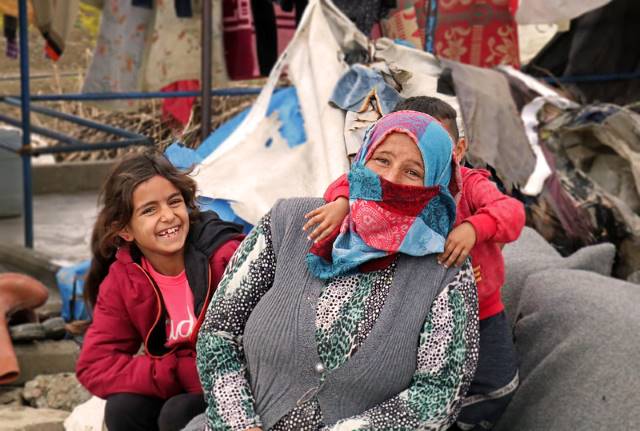
Humanitarian Aid in PakistanThe country of Pakistan struggles with several issues. Military operations against insurgent activities within the country have caused many Pakistani people to become displaced. Pakistan is also home to 3 million Afghans, with 1.4 million being registered refugees. This makes Pakistan the second-largest refugee host country in the world. Additionally, Pakistan suffers from natural disasters and food shortages. Pakistan’s economy suffers from imbalance because, for short periods, the economy does well, and then, it declines. This is what the World Bank terms “boom-bust cycles.” These collective issues mean humanitarian aid in Pakistan is imperative in order to address the country’s pressing issues.
The European Union Assists

The European Union (E.U.) has contributed a fair amount of humanitarian aid to Pakistan. In 2020, the E.U. addressed some of the concerns regarding internally displaced Pakistani people and Afghan refugees by providing around €40 million worth of aid. Around 60% of this amount goes towards resolving health concerns that the COVID-19 pandemic has caused. The pandemic has put the Pakistani healthcare system under strain, which makes aid increasingly important. The humanitarian aid in Pakistan is also helping to give displaced Pakistanis access to quality education and sanitation facilities.

Aid also reaches Afghan refugees who have not integrated into Pakistani society and instead live in isolated communities within Pakistan. The E.U. helps these Afghan refugees by providing them with proper healthcare, education and sanitation facilities. The E.U. support also addresses the natural disasters that occur in Pakistan. The E.U. provided €1.15 million to Pakistan in August 2020 when the country experienced severe flooding. The aid that the E.U. provided allowed for shelter toolkits, personal hygiene supplies and access to reliable water and sanitation for families that these events impacted.

The International Rescue Committee Helps

The International Rescue Committee (IRC) is another organization providing significant humanitarian aid in Pakistan. From 2013 to 2019, the IRC worked with Pakistan on the Pakistan Reading Project (PRP), which aimed to improve the reading skills of 1.3 million Pakistani children. The program reached more than 1.7 million students and trained more than 27,000 teachers. The IRC further supports the education of Pakistani children by building and repairing schools. Considering the amount of displaced Pakistani people and Afghan refugees, the IRC provides what it calls “child-friendly places.” These are areas where children are safe to interact with other children and learn and heal from traumatic events they have experienced.

The Aga Khan Agency for Habitat

The Aga Khan Agency for Habitat (AKAH) is an organization that has been providing humanitarian aid in Pakistan since 1988. One area, in particular, is disaster response. The AKAH trains Pakistani volunteers on how to deal with any natural disasters they may encounter. These volunteers would be the first responders if a natural disaster occurs in the area they live in. These volunteers are called Community Emergency Response Teams (CERTs). The AKAH has been able to establish 162 CERTs and a total of 36,000 volunteers serve as first responders. More than 50% of the 36,000 volunteers are women.

Pakistan is an impoverished nation and therefore needs humanitarian assistance to deal with the many challenges it faces. These three organizations provide aid that addresses these pressing issues.

– Jacob E. Lee
Photo: Flickr

May 24, 2021
https://borgenproject.org/wp-content/uploads/borgen-project-logo.svg 0 0 Kim Thelwell https://borgenproject.org/wp-content/uploads/borgen-project-logo.svg Kim Thelwell2021-05-24 07:30:522024-05-30 22:23:24A Closer Look at Humanitarian Aid in Pakistan
Global Poverty, Humanitarian Aid

Biden Pledges $600 Million in Syrian Aid

Syrian AidIn March 2021, the Biden administration announced it would provide roughly $600 million in humanitarian assistance to Syria. This Syrian aid aims to help the millions of refugees in the country as well as the native Syrian population. In addition to this pledge, the U.N. is seeking $4.2 billion to help Syrians and about $5.8 billion for countries hosting Syrian refugees. These efforts are being made as the war in Syria reaches its 10th year and continues to be one of the worst humanitarian crises.

US Aid to Syria

Secretary of State Anthony Blinken announced that the U.S. would contribute $600 million in aid during a conference titled “Supporting the Future of Syria and the Region” in Brussels. At the conference, Blinken said, “There is no military solution that will bring peace, security and stability to Syria and the region.” He then continued, “Systemic corruption and economic mismanagement at the hands of the Assad regime have exacerbated the dire humanitarian crisis, which has been further compounded by the challenge of COVID-19.”

At the figure of roughly $600 million, this amount is slightly less than the 2020 pledge from the U.S. where the U.S. aimed to contribute $700 million in Syrian aid. However, the United States still remains the largest donor in Syrian response efforts. In fact, the U.S. has contributed almost $13 billion to the cause since 2011.

The U.S. ambassador to the United Nations, Linda Thomas-Greenfield, also addressed the announcement of the Syrian aid at a press briefing. She confirmed, “This funding brings the total U.S. government humanitarian assistance to nearly $13 billion since the start of the decade-long crisis.” She further stated that the monetary assistance includes nearly $141 million in support of the COVID-19 pandemic efforts in the Syrian region. This assistance will provide humanitarian relief to the Syrians still living inside Syria as well as the 5.6 million Syrian refugees in asylum countries like Turkey, Lebanon, Jordan and Iraq.

A Commitment to Continued Support

The pledge of $600 million from the U.S. also illustrates a break from the Trump administration’s efforts to cut aid to Syria and foreign assistance funding. However, even despite Trump’s opposition, Congress for the most part disagreed and U.S. assistance to Syria remained steady throughout his term. This continued funding comes at a good time as humanitarian needs in Syria has never been greater, according to the United Nations. Roughly 66% of Syrians need humanitarian assistance. Across Syria, UNICEF estimates that more than half a million malnourished children are experiencing stunted growth due to inadequate food and nutrition.

Vulnerable Palestinian Refugees

Meanwhile, the U.N. Relief and Works Agency for Palestine Refugees in the Near East (UNRWA) is still advocating for the support of the 440,000 Palestinian refugees in Syria. The UNRWA reports that a shocking 90% of these refugees in Syria are living in absolute poverty. Since the Biden administration pledged to restore relations with Palestinians, the U.S. is expected to resume aid to the relief agency since Trump ceased funding to the UNRWA in 2018.

With significant support from the U.S. and the rest of the international community, the humanitarian crisis in Syria may finally come to an end. Supporting Syrian aid ultimately means supporting the most vulnerable people in desperate need of relief.

– Elisabeth Petry
Photo: Flickr

May 20, 2021
https://borgenproject.org/wp-content/uploads/borgen-project-logo.svg 0 0 Kim Thelwell https://borgenproject.org/wp-content/uploads/borgen-project-logo.svg Kim Thelwell2021-05-20 01:31:112021-05-19 00:45:04Biden Pledges $600 Million in Syrian Aid
COVID-19, Global Poverty, Humanitarian Aid

NGOs Support Germany During COVID-19

Germany During COVIDCOVID-19 forced Germany to adapt to a new reality as it heavily impacted poverty, unemployment and inequality rates. NGO coalitions are supporting Germany during COVID-19 by providing relief sources for vulnerable individuals and children. On December 16, 2020, Germany initiated a COVID-19 lockdown that received an extension until March 7 to keep citizens safe from new COVID-19 variants. As Germany had suffered approximately 3.4 million cases and 3.1 million recoveries by May 5, 2021, the country has needed to adapt to a new reality during 2020. Government and NGO support formed the backbone for this transition.

Caritas Germany Association

Caritas Germany is a Catholic Welfare Charity Association that pioneered Catholic charity work in Germany since 1897. Recently, the association integrated safe volunteering methods while maintaining services in Caritas hospitals, elderly care facilities and other centers. It even created online services to train people as online counselors as part of a COVID-19 strategy to support Germany.

Approximately 693,082 people work with the association to support 13 million beneficiaries. To maintain contact with everyone during COVID-19, Caritas Germany utilized the Youngcaritas volunteer platform to teach people how to use digital devices through remote tutorials. Caritas Germany’s Press Spokeswoman, Mathilde Langendorf, talked with The Borgen Project. She explained that “our big aim is that no one falls through, that we continue to be able to reach out to people.”

Caritas’ counseling services received an “enormous boost from the pandemic,” making its aim even more crucial. The coalition trained thousands in counseling online during the first year of COVID-19. Langendorf described how 3,000 new people sought help every month on Caritas Germany’s online counseling platform in 2020. The platform even initiated two new counseling topics, regarding young adults and migration, in addition to the 15 already available.

In December 2020, Caritas Germany received 750,000 euros from the Generali insurance company. Langendorf told The Borgen Project that the funds will go toward approximately “21 [COVID-19] projects in 12 locations.” The projects range from training people to use digital tools to help families cope with the challenges of homeschooling.

The Association for Development Aid and Humanitarian Aid (VENRO)

The VENRO Germany coalition represents and advocates for the interests of 140 NGOs while strengthening NGO engagement in the field of development cooperation and humanitarian aid. VENRO’s 2017 to 2022 strategy focuses on protecting human rights, reducing poverty and conserving natural resources. Managing Director, Heike Spielmans, told The Borgen Project that VENRO Germany’s members include “almost all major German NGOs in this field.”

The coalition advocated for decreasing the value of government grants that NGOs have to match with their own funds from 25% to 10%. Spielman’s described how the coalition anticipates progress in a campaign “focused on a supply chain law to make companies take responsibility for their production and sourcing overseas with regard to human rights and environmental protection” before national elections in September 2021.

Government Policies Supporting Germany During COVID-19

A 2017 project authorized by the German Federal Ministry for Economic Cooperation and Development (BMZ) and the German Society for International Cooperation (GIZ) was still in progress when COVID-19 hit. The project seeks to achieve Sustainable Development Goals 1 and 10 from the UN Agenda 2030, where no one is left behind. To continue this work, authorities implemented tax and unemployment schemes for vulnerable populations as companies reduced hours and even closed. Germany passed a bill in March 2020 prohibiting landlords from terminating leases or evicting tenants for unpaid rent. The bill also provides rent extensions until June 30, 2022.

On February 12, 2021, Germany’s Federal Government expanded the Bridging Aid II into the Bridging Aid III and Restart Help application portal for companies of all sizes to provide a restart grant of up to 7,500 euros until June 30, 2021. Businesses and self-employed individuals can apply for monthly assistance of up to 1.5 million euros.

Beyond the in-country support, Germany’s government also increased its 2020 humanitarian assistance in Venezuela in a virtual donor conference in May 2020. It promises to increase its contributions by 4 million euros, bringing the total to over 50 million. Germany also seeks to aid refugees. As its refugee cap decreased from 5,500 to 1,178 refugees in 2020, Germany is working to migrate the remaining refugees in 2021.

A Look Ahead

Germany’s government and NGOs stepped up to support Germany during COVID-19’s debilitating effects. Yet another example is how the German Parity Welfare Association, which represents 10,000 NGO organizations, transferred member seminars and workshops online to introduce NGO members to topics ranging from protecting child rights to digitizing work processes during COVID-19. Another NGO, the International Rescue Committee (IRC) in Germany, is helping German NGOs acquire laptops for beneficiary employment support, PPE and vaccinations. With so many organizations willing to help those in need, Germany can be optimistic about its future.

– Evan Winslow
Photo: Flickr

May 13, 2021
https://borgenproject.org/wp-content/uploads/borgen-project-logo.svg 0 0 Kim Thelwell https://borgenproject.org/wp-content/uploads/borgen-project-logo.svg Kim Thelwell2021-05-13 07:31:232024-06-04 01:03:19NGOs Support Germany During COVID-19
Food & Hunger, Global Poverty, Humanitarian Aid

Addressing Malnutrition in Venezuela

Malnutrition in VenezuelaA meager 3% of Venezuelan families are considered food secure in a country where more than 96% of people live in poverty. Child malnutrition in Venezuela rose to 26% from December 2019 to March 2020. Maduro’s government, a hotbed of mismanagement, corruption and cronyism, has done little to help the poverty and malnutrition in Venezuela. Hyperinflation continues to suppress economic activity, and U.S. sanctions imposed to pressure Maduro into reform or exit, have limited Venezuela’s access to imported food, medicine and other basic goods. On April 19, 2021, the World Food Programme announced that it would be implementing a program to address food insecurity and malnutrition in Venezuela.

Child Malnutrition in Venezuela

A 2021 policy brief by medical researchers called Venezuela’s public health system “practically non-existent.” Especially with U.S. sanctions, many healthcare facilities are unable to obtain the medicine or medical equipment needed to properly function. The impact of the COVID-19 pandemic puts further strain on already limited health resources. As of April 2021, the Venezuelan Government has vaccinated less than 1% of the Venezuelan population.

According to a UNICEF report, 13% of children in Venezuela suffered from malnutrition between 2013 and 2018. Without access to sufficient calories, protein or generally diverse foods, many of these children will be held back developmentally, far beyond their childhood years. Venezuelan nutritionist, Raquel Mendoza, tells Thompson Reuters that “A population suffering from malnutrition implies we are going to have adults with less physical and intellectual potential.” Mendoza states further that “We’re going to see a regression in the development of the country because human resources are diminished.” These words express the urgency and importance of speedily addressing malnutrition in the country.

Before 2009, Venezuela’s infant mortality rate was steadily declining. In the first decade of the Chavez presidency, which began in 1999, infant mortality dropped by half. However, under Venezuela’s ongoing economic and sociopolitical crisis, the infant mortality rate has regressed to where it was in the 1990s. Even though many cases go unreported, statistics show that child mortality increased by 30% in 2016.

The World Food Programme Alleviates Malnutrition

Starting in July 2021, the World Food Programme (WFP) will provide school lunches for children between 1 and 6 years of age. The WFP’s goal is to reach 185,000 students by the end of 2021 and 1.5 million by the end of 2023. These meals will mainly go to preschool and special education schools, but public and private schools will receive aid too.

Despite the pressing need for foreign aid, the Maduro government has historically rebuffed aid attempts by international organizations and governments. According to the Washington Post, Maduro blocked almost $60 million worth of U.S. aid in 2019 and insisted that Venezuela was not a country of beggars.

The agreement reached between Maduro and the WFP Executive Director David Beasley on April 19, 2020, came after months of resistance by the government. The program’s operations will remain independent of the political turmoil and uncertainty of Maduro’s rule.

The Road Ahead

Although the aid cannot catapult Venezuela out of its current crisis, the WFP program will improve the lives of many families who do not know how or when they will eat next. Although rarely dissolving geopolitical tensions or toppling an unjust regime, humanitarian aid organizations can and do protect those who suffer from the impacts of corruption, mismanagement and conflicts of others.

– Alexander Vanezis
Photo: Wikimedia Commons

April 29, 2021
https://borgenproject.org/wp-content/uploads/borgen-project-logo.svg 0 0 Kim Thelwell https://borgenproject.org/wp-content/uploads/borgen-project-logo.svg Kim Thelwell2021-04-29 06:17:482021-06-09 06:18:19Addressing Malnutrition in Venezuela
Humanitarian Aid

Displacement in Mozambique Needs Humanitarian Aid

displacement in MozambiqueThe ongoing insurgency in northern Mozambique started in 2017. Four years later, the revolt has resulted in hundreds of thousands of people becoming displaced.  The UNHCR has stated that as of March, the number of displaced people in Mozambique nears 700,000 and the total may exceed one million people by June 2021. As a result of this dire situation, Mozambique’s population is more susceptible to food insecurity and malnutrition. Additionally, those suffering from displacement in Mozambique are at an increased vulnerability to this continuing violence.

Violence in Cabo Delgado

The province of Cabo Delgado in northern Mozambique has the highest population of people suffering from food insecurity in the country. According to The Integrated Food Security Phase Classification (IPC), 770,000 people in Cabo Delgado are suffering from crisis and emergency levels of food insecurity. The community is desperate for aid, but it has been a struggle to obtain.

The violence in Cabo Delgado has interfered with the ability of humanitarian aid to provide people with food, water and health services. However, community members have stepped up. Displaced people have been able to find support from host communities in neighboring provinces. This decreases displacement issues but exacerbates the food crisis. Taking in extra families may jeopardize the food security of the host communities. It places an increased demand on already limited supply of resources.

Humanitarian Response

The nonprofit organization Doctors Without Borders has been helping Pemba, Cabo Delgado’s capital, since 1984. The nonprofit has seen a growing mental health crisis among the displaced people that come to Pemba. In response, Doctors Without Borders has also utilized games and activities to give people a place to grieve their losses and share their stores. The nonprofit has used conversation circles as a tool to allow people to safely express their emotions, as the experiences of many internally displaced people is traumatic. Doctors Without Borders also has a focus on physical health. The organization has built latrines in Mozambique and provided internally displaced people with clean water. Additionally, the nonprofit has teamed up with Mozambique’s Department of Health to respond to COVID-19, HIV, tuberculosis and hepatitis C.

Save the Children is another humanitarian aid organization working in Cabo Delgado. So far, the organization has reached over 70,000 people, 50,000 being children. In Cabo Delgado, more than 27% of children have been displaced by violence and are unable to attend school. Save the Children offers adolescence programs that provide children with nutrition and the support they need to complete their education. There are also programs for younger children to ensure they don’t suffer from malnutrition and can attend pre-school. In terms of mental health, Save the Children provides therapy to help children deal with the trauma of being displaced. The organization also works toward prevention in addition to treatment, specifically through politics. Save the Children collaborates with the local government to mitigate the effects of displacement in Mozambique. The joint effort strives to prevent illness, strengthen agriculture and prepare children to be self-sufficient through formal skill training.

Looking Forward

Mozambique is in a difficult position to combat the persisting violence within the country. It cannot fight this crisis alone. The country needs aid from outside organizations. As the violence continues, displacement in Mozambique becomes a growing issue requiring a stronger humanitarian response. However, there is hope thanks to organizations like Doctors Without Borders and Save The Children. With continued and increased humanitarian aid in conjunction with the local government’s efforts, displacement in Mozambique can be diminished and the country can strive toward an end to its persisting violence.

– Gerardo Valladares
Photo: Flickr

April 28, 2021
https://borgenproject.org/wp-content/uploads/borgen-project-logo.svg 0 0 Kim Thelwell https://borgenproject.org/wp-content/uploads/borgen-project-logo.svg Kim Thelwell2021-04-28 07:31:042021-04-27 12:59:41Displacement in Mozambique Needs Humanitarian Aid
Global Poverty, Humanitarian Aid

A Look into USAID Support to Yemen

USAID Support to Yemen
USAID support to Yemen has been incredibly necessary for the past six years. As Yemen enters the sixth year of the largest humanitarian crisis in the world, over 20 million people are on the brink of starvation. There are many factors causing this crisis to persist.

Religious Conflict

The rise of the Houthi movement, fueled by the Shiite rebellion to overthrow the Sunni government, began in 2014. Since then, the former Yemeni president not only joined the insurgence but also died at the hands of the rebels. From airstrikes that the Saudi government issued to the expansion of religious polarization, Yemen’s population remains in the middle of the turmoil.

Humanitarian Issues

Currently, 1.8 million children die each year on average primarily due to malnutrition. Before the start of the internal conflict, the economy was already on the decline. Now, most families lack access to basic necessities like food and vaccinations. The issue is not that these commodities are not physically available. Inflation has caused items such as drinking water or fruits and vegetables to no longer be affordable or accessible.

Still, in the early stages of development, the structural and financial state of Yemen has only worsened in the past six years. Though coalitions exist to help fight the rebellion and offer further support for Yemen, the Houthi continues to retaliate only continuing the warfare. This results in more than 17,500 innocent civilians either severely injured or deceased since the beginning of the war.

USAID Support to Yemen

The United States remains one of the largest donors of support for Yemen and provides help to over 8 million people each month. On March 1, 2021, Secretary of State Antony J. Blinken announced almost $200 million in humanitarian aid for the humanitarian crisis in Yemen. So far, the U.S. has donated approximately $3.4 billion in support of Yemen. While this includes funding towards the United Nations Food Program, the money also helps provide rehabilitation for the economy as well as communities across the country.

The crisis has left the general Yemeni public with dwindling medical support, food and water, and stay caught in the crossfire. With no end in sight, USAID support to Yemen is essential. Without help from the U.S., the statistics aforementioned could perhaps double over the next while. Moreover, although people may best know USAID for contributing financial support, it also works to move other donors into action. With continuous support each year, USAID is the main source of hope and support for not only Yemen but also other countries facing extreme poverty.

– Caroline Kratz
Photo: Flickr

April 25, 2021
https://borgenproject.org/wp-content/uploads/borgen-project-logo.svg 0 0 Kim Thelwell https://borgenproject.org/wp-content/uploads/borgen-project-logo.svg Kim Thelwell2021-04-25 10:46:352021-05-12 10:46:51A Look into USAID Support to Yemen
Developing Countries, Development, Global Poverty, Humanitarian Aid, NGOs

Community-Based Safeguarding Toolkit for Aid Efforts

Safeguarding ToolkitThe Organization for Economic Co-operation and Development (OECD) created a report to address why aid effectiveness and quality are so important to development goals. Increasing effectiveness is defined as ensuring that the most impoverished populations are receiving quality aid to improve their quality of life. In order to achieve this, donors and developing countries must be mutually respectful of one another in order to achieve the desired development goals. This means countries providing aid and on-the-ground development need to be mindful of and respectful to the communities they are aiming to lift out of poverty. A community-based safeguarding toolkit was launched to ensure that people are aware of their rights and protections when it comes to developmental aid efforts.

Dignity at the Center of Aid

Jonathan Glennie of Open Democracy presents the question, “What if dignity was placed at the heart of all development work, from planning, through implementation, to evaluation of its impact?” Glennie explains the importance of a dignity-centered approach when lifting individuals and communities out of poverty and how such an approach is a more effective way of alleviating poverty. Engaging in foreign aid with dignity for communities experiencing extreme poverty leads to the empowerment of these populations. According to Glennie, when communities are empowered they can reach their real goals, resulting in concrete benefits such as improved health and food security, quality education and higher incomes.

Safeguarding Toolkit

The concept of mutual respect and dignity is now generally accepted as a norm in the development world. However, communities are not always aware of their rights. Given this, Habitat for Humanity, Oxfam International and WaterAid collaborated to launch a “community-based safeguarding visual toolkit” in February 2021, with plans to review and update the toolkit in 2022, resources allowing. The toolkit was created to allow humanitarian and development organizations to give visual information regarding the Six Core Principles Relating to Sexual Exploitation and Abuse to the community members these organizations are working with.

NGOs are continuously evolving and many have recognized that safeguarding measures will be most effective with intentional and focused community engagement. This toolkit was designed to protect and embolden communities in which development is taking place to understand their rights, prevent exploitation and abuse and promote a speak-up culture in the world of development globally. The toolkit has been released in 24 languages so far and can be downloaded for free, making it widely and equitably accessible.

Encouraging Ethical Development

The toolkit contains 11 key messages with 29 corresponding visuals. Some examples of these messages are “aid workers are not allowed to ask for or accept bribes for aid” and “aid organizations encourage complaints — there are safe ways to complain.” Other visuals explicitly state community members’ rights against sexual abuse and/or exploitation by aid workers. These visuals are not intended to be a stand-alone effort in creating respectful and ethical development efforts but are to be utilized in conjunction with wider training and conversations.

Strategic and ethical aid promotes the economic prosperity of developing communities while creating self-reliance. It is important that such communities are aware of their rights and are engaged in the development process. This community-based safeguarding toolkit is working to ensure that efforts to lift people out of poverty respect the basic rights of the communities humanitarian organizations serve.

– Tatiana Nelson
Photo: Flickr

April 19, 2021
https://borgenproject.org/wp-content/uploads/borgen-project-logo.svg 0 0 Kim Thelwell https://borgenproject.org/wp-content/uploads/borgen-project-logo.svg Kim Thelwell2021-04-19 02:31:352021-05-19 02:31:55Community-Based Safeguarding Toolkit for Aid Efforts
Global Poverty, Humanitarian Aid, Refugees

The US Provides Humanitarian Aid in Jordan

Humanitarian Aid in JordanThe U.S. provides foreign and humanitarian aid to countries around the world. In the country of Jordan where more than one million of its people live in poverty, humanitarian aid goes a long way. Providing aid from the United States means stronger U.S.-Jordan relations. Of the top 10 countries that received the most aid from the United States in 2019, Jordan was ranked at number three. Without a doubt, the U.S. provides for the overall well-being of this crucial ally through humanitarian aid in Jordan.

The Importance of Humanitarian Aid

The U.S. provided $1.5 billion worth of humanitarian aid to Jordan in 2020. The U.S. has additionally provided $1.7 billion to specifically help Syrian refugees in Jordan from the time the Syrian crisis began. This aid has been extremely crucial considering that many Syrian refugees have fled to Jordan in search of safety. Some of the aid contributes to updating medical facilities and enhancing critical infrastructure, which helps support the refugee crisis.

The U.S. and Jordan are also part of a non-binding Memorandum of Understanding that both countries signed in 2018. Under this Memorandum, the U.S. will provide $6.375 billion worth of assistance to Jordan over a span of five years. Much of this assistance helps improve infrastructure and contributes to the construction of schools across Jordan. The United States has also trained Jordanian citizens in various skills in the U.S. itself. By doing this, the U.S. is giving Jordanians a chance to take the skills back to their own country to start businesses or to apply for higher-skilled jobs in Jordan, which will all stimulate the economy of Jordan.

An Increasing Population

The humanitarian aid and other forms of assistance that the U.S. provides to Jordan are important for a variety of reasons. Jordan has also become home to refugees that have fled from conflict in Iraq. In just the last 20 years, there has been a population increase of 10 million within the country. Such a large increase in population in just a short time has raised the cost of living within Jordan. The healthcare system of the country has been stressed along with the education system and the available water supply due to this intense population growth. Humanitarian aid in Jordan is all the more important because it helps alleviate the strain.

How Providing Aid Benefits the US

Humanitarian aid in Jordan helps the U.S. in several ways. Both countries have similar values and goals with regard to peacekeeping, such as a positive Israel-Palestine relationship. Additionally, both countries want “an end to violent extremism that threatens the security of Jordan, the region and the entire globe.” Jordan’s commitment to bring lasting peace between Israel and Palestine and eradicate terrorism in the region assists broader U.S. interests. The reason Jordan is so invested in the Israel-Palestine relationship is that Jordan is home to many Palestinians, most of which are the descendants of Palestinian refugees. Therefore, Jordan feels a deep sense of responsibility to the Palestinian people.

U.S. humanitarian aid in Jordan has far-reaching benefits. Aid is vital to the well-being of the Jordanian people, its Syrian refugees and the broader relationship between the U.S. and Jordan.

– Jacob E. Lee
Photo: Flickr

April 19, 2021
https://borgenproject.org/wp-content/uploads/borgen-project-logo.svg 0 0 Kim Thelwell https://borgenproject.org/wp-content/uploads/borgen-project-logo.svg Kim Thelwell2021-04-19 01:31:292024-05-30 22:23:19The US Provides Humanitarian Aid in Jordan
Developing Countries, Global Poverty, Humanitarian Aid

The Value of CARE’s Aid to Egypt

CARE’s Aid to EgyptDespite the richness of Egypt’s history, the country faces several issues that affect the nation’s people. Among them are education, women’s rights, agricultural development and governance. However, the organization called CARE is working extensively to help resolve these pressing issues in Egypt. CARE’s aid to Egypt provides the necessary support to a struggling population.

Current Issues in Egypt

Egypt’s education system has made a number of improvements. As of 2017, the literacy rate in Egypt among youths was at 94%. Furthermore, the amount of elementary-aged children in Egypt not attending school has decreased to 50%. One particular concern regarding the Egyptian education system, however, is the increasing population in Egypt. The population increase puts strain on the educational system because it leads to overcrowded classrooms, capacity shortages and a greater need for educational funding to support this.

Women’s rights in Egypt is another issue of concern for the country. In 2015, the Global Gender Index gave Egypt a rank of 136 out of 145 countries regarding inequities between men and women of Egypt. This low ranking is evidenced by the fact that women’s participation in the labor force is only 26% in comparison to 79% for men. Furthermore, women’s literacy stands at 65% in comparison to 82% for men.

Agriculture is vitally important to the Egyptian economy. About 11.3% of Egypt’s GDP comes from this sector. Of the entire Egyptian workforce, around 28% of it is employed in the agricultural sector. Upper Egypt relies heavily on agriculture with 55% of the population employed in the sector. The Egyptian agricultural sector struggles due to the use of traditional farming methods that hinder productivity and do not align with international standards.

CARE Addresses Egyptian Education

One of CARE’s focuses regarding Egyptian education is children who live in poverty. CARE works to ensure that children still have access to education despite the economic situation they find themselves in. CARE works to improve education in Egypt by assisting the Egyptian Ministry of Education (MOE). The MOE has what is called Readability Units to help improve literacy among students. CARE works directly with these Readability Units to better improve teaching methods and monitor the progress of both students and teachers.

CARE Supports Women’s Rights

CARE helps to support women’s rights by fighting gender-based violence (GBV) in Egypt. CARE’s women’s rights program helps support efforts to raise awareness about GBV and provide assistance to survivors.

The Safe Cities Free of Violence project has been protecting Egyptian women and girls since 2012 by ensuring GBV-free, safe neighborhoods in specific areas. Through field activities, people are educated on gender-based violence matters. Furthermore, survivors are provided help through four pillars: health access and medical care, safety, legal and psychosocial. During the 2016-2017 period, the GBV program directly benefited more than 16,000 women and girls.

CARE’s aid to Egypt also helps women economically by using the village savings and loan associations (VSLA) strategy. The purpose of the VSLA is to give lower-income people the opportunity to save money and access loans to improve economic stability. This also contributes to ensuring financial inclusion for impoverished people. Since 2009, the VSLA has helped more than 54,000 people, 95% of whom were women.

CARE Helps Agriculture and Governance

CARE recognizes that the traditional agricultural practices in Egypt are not the most beneficial or productive. CARE reaches out to small-scale farmers to teach them more efficient farming techniques to better improve their productivity. Our Children’s Wheat program has provided agricultural training to 172 farmers growing maize. An additional 2039 farmers were trained on growing wheat crops productively.

Furthermore, CARE has long been working toward improving governance in Egypt. Focusing on regional level governance, CARE wants to better improve the way regional governments provide for citizens. CARE also wants these regional governments to be more accountable when it comes to addressing the needs of citizens. It has established governance and social accountability initiatives and practices to ensure improvement in this area.

The Road Ahead

Despite the hardships Egypt faces, the country is receiving significant support from CARE. This support is especially significant in areas where the government lacks the resources to fulfill the needs of its citizens. CARE’s aid in Egypt provides hope to a struggling population for a future that goes beyond simply surviving to fully thriving.

– Jacob E. Lee
Photo: Flickr

April 19, 2021
https://borgenproject.org/wp-content/uploads/borgen-project-logo.svg 0 0 Kim Thelwell https://borgenproject.org/wp-content/uploads/borgen-project-logo.svg Kim Thelwell2021-04-19 01:30:262024-05-30 22:23:17The Value of CARE’s Aid to Egypt
Global Poverty, Humanitarian Aid, Women and Children

NGOs Helping Women and Children in Yemen

Women and Children in YemenThe impacts of the war in Yemen continue to cause tremendous humanitarian suffering, with more than 24 million people in need of assistance. The persisting armed and political conflicts in Yemen have already reversed human development by 21 years, leaving around 19.9 million lacking sufficient healthcare and 16.2 million experiencing food insecurity. The humanitarian crisis disproportionately impacts women and children in Yemen as they are more vulnerable to mortality, malnutrition, violence and health issues.

Women and Children in Yemen

In 2019, more than 12 million children in Yemen needed humanitarian assistance and 2 million children were not attending school before COVID-19 even set in. In 2020, the Integrated Food Security Phase Classification (IPC) Acute Malnutrition analysis analyzed 133 districts in southern Yemen. The analysis reveals a 15.5% increase in young children experiencing severe acute malnutrition. This fact puts 98,000 children at risk of death unless an urgent intervention exists.

In 2018, Yemen’s Gender Inequality Index (GII) value was 0.834 compared to the world average of 0.439. This reflects the female struggle to improve well-being due to gender disparities that affect reproductive health, education, employment and more. The conflict and impact of COVID-19 in Yemen have increased food insecurity and affected nutrition and access to health services, leaving at least 250,000 pregnant or breastfeeding women requiring malnutrition care in 2020.

The crisis in Yemen has disproportionately affected women and increased their rates of poverty, hunger and displacement.

The Effects of the Crisis in Yemen on Women and Children

  • Increased gender-based violence and sexual violence.
  • Roughly 75% of the displaced population consists of women and children.
  • Increased widowhood leaving women susceptible to poverty.
  • Lack of adequate healthcare access can severely damage women’s reproductive health.
  • Increased incidents of child marriage.
  • Lack of educational access due to destroyed infrastructure and school closures.

Save the Children

Save the Children is the largest aid organization in Yemen. Its teams are assisting children in receiving essential care. The organization, which began responding to the crisis in Yemen in 2015, has provided more than 3 million children with life-saving care. The teams attend to children younger than 5 years old who are experiencing malnutrition. Save the Children also has temporary learning programs in place to address the lack of education during the conflict. The organization has also supported nearly 100,000 parents to secure the basic needs of their children.

UNICEF

UNICEF responded to the crisis in Yemen by providing physical, mental and medical health care services to children and families. In 2019, UNICEF reached more than 390,000 children and parents/guardians with psychosocial support. UNICEF also gave measles inoculations to more than 556,000 children and reached 2.3 million children under 5 with primary healthcare services.

Women, Peace and Security (WPS)

The Women, Peace and Security (WPS) Agenda aims to strengthen women’s participation, reallocate power and protect women’s rights in various countries. Women’s organizations, civil society, government agencies and U.N. entities collaborated to develop a National Action Plan (NAP) for Yemen in 2019 that aligns with the WPS Agenda to protect women and increase women’s involvement in political, economic and social expansion. The NAP should meet its goals between 2020-2022. The main objectives are:

  • Increase women’s engagement in decision-making roles.
  • Prevent violence against women and increase women’s protection from violence.
  • Provide support to girls and women affected by violations and abuse.
  • Make efforts for women’s empowerment and education.
  • Include women in humanitarian aid and relief programs.

The above organizations and strategies work to ensure the health, protection and well-being of millions of women and children in Yemen. This support can safeguard the world’s most vulnerable groups during times of crisis and conflict.

– Violet Chazkel
Photo: Flickr

April 12, 2021
https://borgenproject.org/wp-content/uploads/borgen-project-logo.svg 0 0 Kim Thelwell https://borgenproject.org/wp-content/uploads/borgen-project-logo.svg Kim Thelwell2021-04-12 07:30:262024-05-30 22:23:12NGOs Helping Women and Children in Yemen
Page 14 of 34«‹1213141516›»

Get Smarter

  • Global Poverty 101
  • Global Poverty… The Good News
  • Global Poverty & U.S. Jobs
  • Global Poverty and National Security
  • Innovative Solutions to Poverty
  • Global Poverty & Aid FAQ’s
Search Search

Take Action

  • Call Congress
  • Email Congress
  • Donate
  • 30 Ways to Help
  • Volunteer Ops
  • Internships
  • Courses & Certificates
  • The Podcast
Borgen Project

“The Borgen Project is an incredible nonprofit organization that is addressing poverty and hunger and working towards ending them.”

-The Huffington Post

Inside The Borgen Project

  • Contact
  • About
  • Financials
  • President
  • Board of Directors
  • Board of Advisors

International Links

  • UK Email Parliament
  • UK Donate
  • Canada Email Parliament

Get Smarter

  • Global Poverty 101
  • Global Poverty… The Good News
  • Global Poverty & U.S. Jobs
  • Global Poverty and National Security
  • Innovative Solutions to Poverty
  • Global Poverty & Aid FAQ’s

Ways to Help

  • Call Congress
  • Email Congress
  • Donate
  • 30 Ways to Help
  • Volunteer Ops
  • Internships
  • Courses & Certificates
  • The Podcast
Scroll to top Scroll to top Scroll to top