• Link to X
  • Link to Facebook
  • Link to Instagram
  • Link to TikTok
  • Link to Youtube
  • About
    • About Us
      • President
      • Board of Directors
      • Board of Advisors
      • Financials
      • Our Methodology
      • Success Tracker
      • Contact
  • Act Now
    • 30 Ways to Help
      • Email Congress
      • Call Congress
      • Volunteer
      • Courses & Certificates
      • Be a Donor
    • Internships
      • In-Office Internships
      • Remote Internships
    • Legislation
      • Politics 101
  • The Blog
  • The Podcast
  • Magazine
  • Donate
  • Click to open the search input field Click to open the search input field Search
  • Menu Menu

Archive for category: Health

Information and stories on health topics.

Children, Developing Countries, Education, Global Poverty, Health

Brands in the Kitchen Fighting Global Poverty

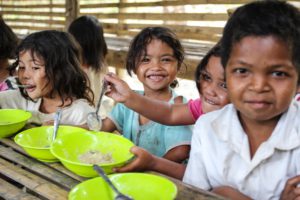
Kitchen Fighting Global PovertyIn 2015, the U.N. put out a list of Sustainable Developmental Goals (SDGs) to reach by 2030. The focus of these SDGs is to build a better, more sustainable world, inclusive of all countries. While the first SDG is specifically geared towards ending poverty as a whole, the rest of the goals have direct and indirect ways of addressing poverty as well. There are quite a few popular brands in the kitchen fighting global poverty and many are using the SDGs as a guideline for launching campaigns toward ending facets of poverty.

Brands in the Kitchen Fighting Global Poverty

1. Kellogg’s: In an effort toward achieving the second SDG, zero hunger, Kellogg’s launched its Kellogg’s® Better Days campaign. Since 2015, it has donated 2.4 billion servings of food to people around the world suffering from hunger. Among those receiving Kellogg’s food donations have been 3.2 million children. The goal is to feed 375 million people in need by the end of 2030. Kellogg’s also supports Breakfast Clubs in 21 different countries.

2. General Mills: Another cereal brand in the fight against poverty is General Mills. In 2008, CEO, Ken Powell, founded the nonprofit, Partners in Food Solutions. Various other companies have since joined the organization and work together to help African food processors succeed. The goal is to improve food security, nutrition and economic development in Africa. Over 100,000 volunteer hours have been put towards advising these food processors and planning technical or business projects in Africa. Additionally, volunteers from world-class corporations have developed 651 customized projects for their African clients.

3. Nestlé: The company Nestlé has identified a few of the SDGs to target in its sustainability strategy. The third SDG promotes good health and well-being. To support this SDG, Nestlé launched its global initiative, Nestlé for Healthier Kids, with which it hopes to help 50 million kids around the world live healthier lives through nutritional education by 2030. So far, the campaign has reached 27.2 million children. Nestlé also recognizes the need for addressing extreme poverty among workers around the world. As a stride towards SDG 8, decent work and economic growth, Nestlé launched the Nestlé Needs YOUth campaign. The initiative’s goal is to help 10 million young people access economic opportunities by providing them with skills, education and help in making agriculture a more thriving field. Yet another SDG Nestlé aims to help with is SDG 6, clean water and sanitation. Its global initiative, Caring for Water, involves “reducing withdrawals, reusing water and working with others to protect water at a catchment or community level.” Ultimately, the initiative seeks to increase access to safe water and sanitation around the world.

4. Kraft Heinz: With ending world hunger as a pillar of its foundation, Kraft Heinz is yet another brand in the kitchen fighting global poverty. In 2013, it partnered with the nonprofit Rise Against Hunger, which aids in global hunger relief. Kraft Heinz employees have since packaged 15.2 million meals in 30 to 40 countries. Furthermore, the company launched its Micronutrient Campaign in 2001. This campaign resulted in the creation of a micronutrient packet with essential vitamins and minerals, which promotes healthy growth and development in those suffering from hunger. On the 2019 World Food Day, Kraft Heinz employees from around the world included the micronutrient packet in over one million meal packages for families in need worldwide.

– Sage Ahrens-Nichols
Photo: Flickr

December 8, 2020
https://borgenproject.org/wp-content/uploads/borgen-project-logo.svg 0 0 Kim Thelwell https://borgenproject.org/wp-content/uploads/borgen-project-logo.svg Kim Thelwell2020-12-08 04:56:062020-12-08 04:56:06Brands in the Kitchen Fighting Global Poverty
Developing Countries, Education, Global Poverty, Health

Fighting Period Poverty in Tanzania

Fighting Period Poverty in TanzaniaPeriod poverty, or the inability to access sanitary products for menstruation, remains a problem in many impoverished areas of the world, with millions of women and girls denied access to products and forced to stop attending school during their menstrual cycles. This problem persists in Tanzania, where only 8% of girls finish secondary school and the average menstruating student misses three to four classes during each cycle. Menstruation is a taboo subject in many developing countries, teaching young girls that their cycles are unhealthy, dirty or something to hide and be ashamed of. However, several organizations are fighting period poverty in Tanzania to ensure that all girls receive the sanitary products and education they need to continue school and defeat the stigma around menstruation. UNFPA Tanzania, WomensChoice Industries and Made With Hope are just a handful of the groups working to make sure that period poverty in Tanzania becomes a thing of the past.

UNFPA Tanzania is Educating Both Girls and Boys on Menstruation

The United Nations Population Fund’s (UNFPA) branch in Tanzania has noted the lack of education surrounding menstruation for both men and women. In various places throughout the nation, the organization has noted girls learning that menstruation is shameful and should be hidden (even from other women) or girls are taught nothing about it at all. That is why UNFPA Tanzania has enacted various programs in the country’s Kigoma region to normalize education around menstruation for both sexes. These initiatives include Ujana Wangu Nguvu Yangu (My Youth, My Power), a four-year series of classes that teach Tanzanian adolescents about sexual and reproductive health, including menstruation.

In addition to initiating these programs, UNFPA has taken further steps to ensure that period poverty in Tanzania does not worsen due to the COVID-19 pandemic. It has kept its Adolescent and Youth Centers open with proper social distancing protocols in place so that women and girls in Tanzania still have access to the sanitary products and support they need during their menstrual cycles.

WomensChoice Industries

Lucy Odiwa, a Kenyan woman, grew up surrounded by harmful stigma about menstruation. This experience inspired her to establish WomensChoice Industries, which creates reusable sanitary products in order to decrease period poverty in Tanzania and ensure that girls in the region do not grow up in the same way she did.

Many women in rural Tanzania cannot afford sanitary products so Odiwa began selling her Salama pads, which can be reused for up to three years, for Sh5,000 ($2). In addition to the pads, WomensChoice Industries also manufactures tampons, breast pads and diapers for children and adults, all at a low cost so that the products are more accessible to Tanzania’s low-income communities.

And the work does not stop there. Like UNFPA, WomensChoice Industries provides reproductive education to Tanzanian boys and girls. Representatives from the organization travel across the region to reduce the stigma around menstruation and ensure that adolescent girls are aware of their own sexual and reproductive health. The group has reached more than 1.8 million women with its menstrual health programs as well as 1.2 million females with its affordable and reusable sanitary products.

Made With Hope

Made With Hope is an organization based in the United Kingdom that focuses on increasing access to education for children in Tanzania, whether by building schools or working to improve schools already established by the government. As girls frequently miss class due to their menstrual cycles, the organization has made it a priority to combat period poverty.

In addition to increasing education surrounding menstruation, Made With Hope has created clean and safe spaces in the girls’ schools it has built so that girls can change their sanitary products safely. It has also helped to create local income-generating programs to manufacture these products. The organization has also worked to spread awareness of period poverty in Tanzania around the United Kingdom, inspiring others to get involved with the issue, even from abroad.

While period poverty in Tanzania remains an issue, UNFPA Tanzania, WomensChoice Industries and Made With Hope are all fighting period poverty in Tanzania to ensure that all Tanzanian women and girls receive the sanitary products and menstrual health education they need.

– Daryn Lenahan
Photo: Flickr

December 8, 2020
https://borgenproject.org/wp-content/uploads/borgen-project-logo.svg 0 0 Kim Thelwell https://borgenproject.org/wp-content/uploads/borgen-project-logo.svg Kim Thelwell2020-12-08 04:21:512022-03-30 07:02:48Fighting Period Poverty in Tanzania
Global Poverty, Health

How Air Pollution in Kosovo is Rooted in Poverty

air pollution in KosovoIn December 2019, children in Kosovo, a disputed territory in Southeast Europe, wore face masks on their way to school. But, this action did not stem from curbing the spread of COVID-19, the deadly contagion that has since gripped the world. Instead, children wore face masks to protect themselves from air pollution in Kosovo.

Causes of Air Pollution

Power plants that are run by burning coal, private residences that burn coal for heat and antiquated automobiles that run on less environmental-friendly engines contribute to air pollution in Kosovo. In particular, the Kosovo B power station, outside Pristina, Kosovo’s capital, released a massive quantity of nitrogen oxide and dust emissions until the plant’s modernization began in 2019. Modernization efforts seek to immediately improve air quality. In the long term, modernization efforts will meet the standards of the European Union’s (EU) environmental safety regulations and improve Kosovo’s domestic infrastructure.

The EU invested in two initiatives that would help Kosovo’s air pollution relief efforts. First, the EU granted $83 million to the Kosovo B power station’s modernization. Second, the EU invested another $7.6 million to renovate heating systems in private and public buildings throughout Kosovo, including schools and homes.

Poverty’s Impact on Methods of Heating Private Homes

Much debate surrounds the question of whether wood is an environmentally responsible source of heat energy. Many scientists fear that acknowledging wood sources as an environmentally friendly form of heat energy will give the green light to deforestation, one of the primary contributors to the world’s environmental crisis. For many citizens of Kosovo, wood and coal are the least expensive methods to heat their homes.

Around the world, indoor air pollution kills more than 1.5 million people. Indoor air pollution is caused by burning substances like coal, wood and human or animal feces in small, enclosed areas with antiquated heating systems. Along with the human toll, indoor air pollution contributes to the environmental crisis.

For example, indoor air pollution is a factor that contributes to overall air pollution in Kosovo. The bulk of the EU’s investment to address air pollution in Kosovo went toward modernizing the Kosovo B power station. The amount of money the EU invested in addressing indoor air pollution amounted to about a tenth of the money the EU invested in modernizing the power station. Former Environment Minister Fatmir Matoshi put the weight of the responsibility in addressing indoor air pollution on Kosovo’s citizens by asking them to refrain from using coal and wood to heat their homes. However, low-income households would face severe challenges in obtaining alternative heating sources as wood and coal are the least expensive methods for families to heat their homes.

Efforts to Address Poverty and Air Pollution in Kosovo

People who live in poverty have to rely on more accessible, less expensive means to heat their homes. Toxic biomass fuels, like coal and wood, are used by approximately 2.5 billion people worldwide. In Kosovo, people are unable to stop using coal and wood because they lack the means to heat their homes with other non-toxic materials.

To reduce air pollution in Kosovo, the nation must first address poverty. Fortunately, some organizations are making strides to mitigate the issue. The Ideas Partnership selects individual families from minority groups in Kosovo to support. Many such families subsist via “garbage picking,” the only source of income and sustenance otherwise available to them. The Ideas Partnership aims to remove families from overcrowded dwellings and provide them with food and shelter so parents can focus on the education and well-being of their children.

The Kosovar Organization for Talent and Education recognizes the role education plays in preparing Kosovo’s youth for the labor force. Kosovo’s population is young; a quarter of the nation’s citizens are younger than 19 years old. In 2017, more than half of Kosovo’s youthful population faced unemployment. The Kosovar Organization for Talent and Education began in 2015. Today, more than 15,000 citizens have participated in the program as volunteers and students. The organization’s goal is to improve the quality of education in Kosovo while preparing students to enter the workforce.

Air pollution in Kosovo links to a variety of factors that the nation must promptly address. Widespread, oppressive poverty in Kosovo stands at the root of this issue. Kosovo must address both poverty and air pollution simultaneously to achieve long-term well-being and sustainability.

—Taylor Pangman
Photo: Pixabay

December 7, 2020
https://borgenproject.org/wp-content/uploads/borgen-project-logo.svg 0 0 Kim Thelwell https://borgenproject.org/wp-content/uploads/borgen-project-logo.svg Kim Thelwell2020-12-07 07:30:112024-05-30 07:52:36How Air Pollution in Kosovo is Rooted in Poverty
COVID-19, Food & Hunger, Food Aid, Food Insecurity, Global Poverty, Health

Lentil as Anything is not an Ordinary Restaurant

Lentil as AnythingRecently, The Borgen Project spoke with Emilie Elzvik, a 21-year-old student at Northeastern University and former volunteer at Lentil as Anything. Elzvik never imagined herself serving gourmet vegan meals to a table filled with backpackers, refugees and homeless people in Newtown, Australia. But, Lentil as Anything changed everything for her.

Lentil as Anything

Lentil as Anything embodies a rare business model. The menu does not have any set prices. Everyone is welcome to “pay as they feel,” either through a financial donation or volunteering their skills. The founder, Shanaka Fernando, was born in Sri Lanka before becoming a restauranteur and world traveler. In 2000, Fernando began the first Lentil as Anything in the Australian city of St. Kilda to provide a space for local communities to come together and share a meal “disregarding any existing economic and social barriers.”

At the time, Fernando’s concept was a wild idea. Twenty years later, it has become a booming success. The restaurant chain now claims four restaurants around Australia. Additionally, Lentil as Anything provides more than 1,000 free meals a week to people most in need.

Elzvik’s Story

Elzvik began working for Lentil as Anything when she was studying abroad for a semester. “It’s like every hippie’s dream cafe, except customers are not just wealthy teenagers. They are from various socio-economic backgrounds. Some live on the street outside. Some are just traveling through.”

Elzvik points out that many of the volunteers were once customers themselves. “When they can’t pay, they offer their time,” said Elzvik. Lentil as Anything provides just as many employment opportunities as they do meals. Elzvik comments, “I think many people come to volunteer because it gives them a sense of purpose.”

According to Elzvik, there is no such thing as a boring day at Lentil as Anything. “It is no gloomy soup kitchen,” she states. Spices like nutmeg and cinnamon waft through the kitchen. Volunteers twist lemons and grate ginger. Servers dance around the floor, jotting orders down on their notepad. It is always noisy inside; laughter bounces across the walls. On some late nights, there is yoga or an open-mic night in the upstairs space.

So how exactly does this seemingly utopian cafe operate?

Sustainable Food Sourcing

Elvzik recalls the kitchen being full of “bruised apples” and “funky looking eggplants” that would get thrown out by most restaurants or stores. “Lentil as Anything takes them and turns them into something beautiful,” says Elzvik.

The Department of Agriculture in Australia reports that food waste costs the economy around $20 billion each year. That amounts to about 300kg per person or one in five bags of groceries.

To stock the kitchen, Lentil as Anything takes in unwanted leftovers from nearby stores. The chain stands by its all-vegan menu. The diet is both inclusive and nutrient-rich. Elzvik mentions that many visitors would not be able to afford something as “dense and hearty” as a Lentil as Anything meal. Fast food is typically the most affordable option and Lentil as Anything aims to change that.

Volunteership

The restaurant relies heavily on volunteer servers and cooks, like Elzvik.  CNBC reports that around 60% of new restaurants fail within the first year. By a restaurant’s fifth year, that rate jumps to 80%.

Lentil as Anything is not an exception. The restaurant cannot stay afloat on its own. The Daily Telegraph reports that “it costs Lentil as Anything up to $23,000 a week to keep [its] doors open – and customer contributions do not come close to covering costs.”

Before coming to Lentil as Anything, Elzvik had no prior customer service experience. She says that volunteering at the restaurant requires no experience at all. Volunteers attend an orientation and receive the necessary training. “What you learn at Lentil can be applied to any future job, especially working with people in a busy environment,” states Elzvik.

Location Matters

Restaurants like Lentil as Anything might not work just anywhere. “You need the perfect equilibrium,” claims Elzvik. She explains that in order for this business model to work, there must be enough people donating above the requirement to cover those who cannot afford these costs.

One of Lentil as Anything’s strategic locations is Newton in Sydney. Newtown is a diverse neighborhood, socially and economically. The Australian Bureau of Statistics reveals that 67% of the Newtown population works full time, 24% part-time and less than 5% identify as unemployed.

Looking forward

Like many businesses, the pandemic hit Lentil as Anything deeply. On September 25, the restaurant reached out to its social media followers and asked for help to keep Lentil alive.

Lentil as Anything is facing its most significant financial challenge to date. The restaurant is working to raise $300,000 by the end of October. If it does not reach its goal, Lentil as Anything may face closing its restaurant doors forever. Donations can be made through its GoFundMe campaign.

The restaurant’s motto is that everyone deserves a seat at the table. Hopefully, Lentil as Anything can serve as a successful business model for many restaurants around the world to address food insecurity.

– Miska Salemann
Photo: Unsplash

December 7, 2020
https://borgenproject.org/wp-content/uploads/borgen-project-logo.svg 0 0 Lynsey Alexander https://borgenproject.org/wp-content/uploads/borgen-project-logo.svg Lynsey Alexander2020-12-07 01:31:362022-03-30 04:13:20Lentil as Anything is not an Ordinary Restaurant
COVID-19, Global Poverty, Health, Technology

Amref Health Africa Fights COVID-19 with LEAP

Amref Health Africa
Amref Health Africa is an NGO based in Kenya that works to empower young Africans. The organization provides people with the skills necessary to become innovative and ethical leaders of Africa. The group created several leadership programs and research programs to transform Africa. Its new program, LEAP, is a mobile phone training platform designed to train employees and students about health precautions and safety outside of the classroom setting.

Who is Amref Health Africa?

Amref Health Africa is an African-led organization founded in 1957 to establish “lasting health change in Africa” with its mission “To increase sustainable health access to communities in Africa through solutions in human resources for health, health service delivery and investments in health.”

The NGO works to improve health care for the people in Africa while also strengthening health care systems. Amref Health Africa has headquarters in Kenya and partners with different organizations around the world to promote power and unity. Amref Health Africa runs 22 global offices and 35 different programs in Africa to bolster health care efforts.

Through Amref Health Africa’s partnership with Accenture, Kenyan Ministry of Health, M-Pesa Foundation, Safaricom and Mezzanine, LEAP, the mobile health learning application, was created. The application has allowed health care workers and students to work effectively outside of a classroom setting.

LEAP’s Benefits during the COVID-19 Pandemic

Recently, LEAP users employed the app to strengthen the COVID-19 response. The program instructs community health workers on how to raise awareness about the virus. LEAP also provides information on the best precaution methods for the community. Thanks to LEAP, health care workers have learned to take the necessary steps to promote safety and awareness in Africa. So far, more than 78,000 community health workers have received training and are using their education to help stop the spread of COVID-19.

In response to the pandemic, LEAP launched a two-month campaign in Kenya. Through the campaign,  health care workers received training to identify, isolate and refer suspected COVID-19 cases. Participants also learned how to identify high-risk areas and reduce the transmission of the disease.

Results

The LEAP app allows customization of the training content to fit the needs of the audience. It takes into consideration the skill level of the people using the app and modifications can be made to the language and audio section depending on user preference. LEAP allows personalization to ensure that the app can be effective for all users.

LEAP has strengthened the health care system in Africa by helping to stop the spread of the COVID-19 virus. The mobile training app also addressed the spread of misinformation on the virus by providing accurate COVID-19 information to users. LEAP has provided Africa with the knowledge necessary to arm and defend itself against the COVID-19 pandemic.

– Isha Bedi
Photo: Flickr

December 6, 2020
https://borgenproject.org/wp-content/uploads/borgen-project-logo.svg 0 0 Lynsey Alexander https://borgenproject.org/wp-content/uploads/borgen-project-logo.svg Lynsey Alexander2020-12-06 07:30:512022-03-30 03:55:08Amref Health Africa Fights COVID-19 with LEAP
Developing Countries, Global Poverty, Health, Water

The Adventure Project’s Initiatives in India

The Adventure Project's Initiatives in IndiaThe Adventure Project (TAP) is a nonprofit that addresses global issues affecting people living in poverty. With innovative entrepreneurial solutions, the organization improves the lives of millions of people in developing countries by addressing issues relating to health, hunger, clean water and environmental safety. The Adventure Project’s initiatives in India involve clean cookstoves and water handpumps.

Clean Cookstoves in India

A particular area of concern for the organization was open fire cooking in India, Many people in India cook over open fires, which leads to about 4 million people dying each year from breathing in toxic cooking smoke. As toxic as the smoke is to people in India, it is just as detrimental to the environment as the percentage of carbon gases in the environment rises. The Adventure Project’s solution to this is clean cookstoves. These environment-friendly stoves save a family 20% of their daily expenses because of the 50% decrease in charcoal use per day. Furthermore, the use of one stove saves six trees from being cut down and also reduces carbon emissions by 1.5 tons.

Handpumps for Water Access

The Adventure Project wanted to create a solution to help with access to clean water in India. Wells provides a source of water and the people in India use handpumps to collect and carry clean water from the wells. The issue is that handpumps often break, and as long as a handpump is broken, people cannot access water. WaterAid partnered with The Adventure Project to run a handpump mechanic business in northern India. The two-year-old business, which trains both males and females, teaches budding mechanics how to fix well handpumps. When a handpump breaks down, villagers call the mechanic shop and someone bikes over to fix it. This means that people are able to fix their own handpumps and assist other villagers with theirs. The business also provides an income for the locals employed there.

Breaking Gender Barriers

Many women are breaking gender barriers by working alongside men in the handpump mechanic business. As the first female well mechanic in Mahoba, India, Ram Rati is inspiring women to follow their dreams. Rati grew sick of the broken handpumps in the village and decided to become a handpump mechanic herself. In her village, traditionally only men ride bikes. At 40 years old, she broke this gender barrier as well by learning how to ride a bike in order to travel around the village and fix handpumps.

By implementing clean cookstoves and creating a handpump mechanic business, The Adventure Project’s initiatives in India contribute to alleviating global poverty.

– Isha Bedi
Photo: Flickr

December 6, 2020
https://borgenproject.org/wp-content/uploads/borgen-project-logo.svg 0 0 Yuki https://borgenproject.org/wp-content/uploads/borgen-project-logo.svg Yuki2020-12-06 01:30:202021-01-29 13:32:56The Adventure Project’s Initiatives in India
Developing Countries, Global Poverty, Health, NGOs

9 Facts About NGOs and Healthcare in Dominica

Dominica, a small country in the Caribbean, has a population of about 72,000. Currently, general taxes are what finance healthcare services in Dominica. There are seven healthcare centers and 44 clinics around the country that provide primary healthcare at no cost.

 9 Facts About Healthcare in Dominica

  1. Dominica spends equivalent to $418 per capita on healthcare. As of 2011, healthcare costs were 4.2% of the GDP. Those healthcare services are provided by the Ministry of Health. Also, as of 2017, there were 1.1 doctors per 1000 people in Dominica.
  2. There are five hospitals in Dominica. Four of these hospitals are government-owned, while the other one is privately owned. The Princess Margaret Hospital has one small intensive care unit, meaning it is most equipped to deal with emergency situations. However, the other three, the Marigot hospital, Grand Bay hospital and Portsmouth hospital, are not as prepared.
  3. Dominicans generally have somewhat long lifespans. For men, life expectancy is 74.4 years, and for women, it’s 80.5 years. Therefore, the total average life expectancy is 77.4 years, exceeding the global average of 72 years. However, as of 2019, 30.9 infants died out of 1000 live births, which is a rate of about 3.29%.
  4. There are both primary and secondary healthcare services in Dominica. There are seven health districts in which primary healthcare services are provided by clinics. These clinics serve about 600 people each within a 5-mile radius of the district in which they are located. Princess Margaret Hospital provides secondary healthcare to the people of Dominica.
  5. Some individuals are exempt from charge for medical treatment. Those who are considered poor or needy, pregnant women, children younger than 17 years old  are exempt from the medical care charges. People who may also have an infectious and contagious disease that can spread through multiple ways (such as bodily contact, contact with bodily fluids, or breathing in the virus) are also exempt from the charges that arise from medical care.
  6. The HIV/AIDS prevalence rate is 0.75%. About 506 people out of a population of 72,293 people in the Dominica have HIV/AIDS. Countries that have a prevalence rate of HIV/AIDS that exceed 1% are considered to have Generalized HIV Epidemics, so Dominica is currently below that even though its rate is higher than places like the U.K. 70% of those infected by HIV/AIDS are male. In 2019, only 95 adults and children were receiving antiretroviral therapy in Dominica.
  7. The Citizenship By Investment program in Dominica helps rebuild medical buildings and infrastructure, as well as provide treatment abroad. After Hurricane Maria in 2017, the CBI program helped fund the rebuilding of six hospitals and three healthcare centers in Dominica. Similarly, the program also sponsored 16 children to receive treatment abroad in 2017-2018. The treatment was critical for the of health of the children in Dominica.
  8. The Order of St. John is an NGO project working to improve healthcare in over 40 countries, including Dominica. This international charity has over 300,000 volunteers and staff and provides multiple services such as healthcare, first aid and other methods of support. This organization, registered as an NGO in 1964, had an income of 1.44 million pounds in 2018. Its mission is to help improve the health of people around the world and alleviate worldwide sickness. Additionally, St. John works to provide volunteers with disaster preparedness training in Dominica in the case of tropical storms or other natural disasters. The organization accepts donations, 100% of which go to their programs.
  9. Another NGO, EACH, also works in Dominica to provide healthcare communication. EACH works to promote healthcare communication that is concentrated around patients. EACH also works to provide healthcare communication research, skills and tools. They strive to ensure that patients worldwide receive specialized care with regard to autonomy and safer, efficient healthcare, as well as ensuring that patients are more likely to recover from diseases. EACH became a nonprofit and charity organization in 2014.

Many organizations and hospitals are working to provide effective healthcare in Dominica. The general public can help assist these organizations through donations or volunteering. Learning more about healthcare in Dominica, as well as in different countries around the world, can help one understand both the domestic and global situation of healthcare today.

– Ayesha Asad
Photo: Unsplash

December 4, 2020
https://borgenproject.org/wp-content/uploads/borgen-project-logo.svg 0 0 Kim Thelwell https://borgenproject.org/wp-content/uploads/borgen-project-logo.svg Kim Thelwell2020-12-04 07:30:432024-05-30 07:55:409 Facts About NGOs and Healthcare in Dominica
Food & Hunger, Food Aid, Food Insecurity, Food Security, Global Poverty, Health, Hunger

Snack Against Hunger and Poverty

Snack Against Hunger and PovertyPeople can often feel hopeless nowadays when addressing global poverty and hunger on a personal level. One can only donate so many times before it feels pointless. For decades there was a decrease in poverty and hunger all around the world. However, with the pandemic in full force, the numbers are once again increasing.

So what should can each individual consumer do to help those in need and bring these statistics down? They must change daily patterns, so nearly all of their “normal” actions start benefitting someone else. One way is to switch up the food consumers eat. Many brands in a variety of food categories use their profits to fight global poverty and hunger. Switching to one of these brands allows people to effectively snack against hunger and poverty. Below are just a few of the brands aiding in poverty and hunger-reduction.

1. Bobo’s

Bobo’s donates their profits from selling oat-based products to eight organizations. Two of the organizations focus on food security in the U.S. (Community Food Share and Conscious Alliance), and one nonprofit provides housing for low-income families (Habitat for Humanity). Get in a dose of nutritious oats to snack against hunger and poverty.

2. This Saves Lives

This Saves Lives has something for everyone. They have 10 different flavor options, a variety of kid’s options and five types of crispy treats. For each purchase, This Saves Lives provides a calorie-dense packet of paste filled with nutrients to a child in need. So far, over 24 million packets have been sent out!

3. Barnana

Barnana is a company that produces plantain-based chips in normal chip form, tortilla style and flavor bites. All consumers can find a chip that will satisfy whether that’s salty or sweet. The plantains used for the chips are upcycled from those that were deemed not perfect enough for mainstream market standards. By upcycling the produce, Barnana fights food waste and secures extra income for small scale farmers that depend on every sale.

4. Project 7

Project 7 is a healthy candy brand that makes gummies, lollipops and everything in between. They partner with nonprofits to help the seven areas of need: healing, saving, housing, food, drink, teaching and hope. Make chewing a life-giving activity and snack against hunger and poverty.

5. Beanfields

Beanfields is another company that creates chips both sweet and salty, similar to Barnana. The company — centered in a kitchen and not a boardroom — cooks up a variety of bean-based tortilla chips and cracklings. They get creative by producing an environment-conscious snack while also supporting people in need. Beanfields partners with Homeboy Industries, an organization that helps ex-gang members find peace and stability in their new lives. Homeboy Industries partners with many nonprofits fighting hunger and poverty that provide ex-offenders jobs and a sense of community.

Buying snacks and snacking are often mindless activities. Helping people should have that same ease and it does. Yet, it often falls on the back burner and gets forgotten. Buying from companies donating to those in need is one easy solution. People can enjoy their favorite foods in a more effective way. Why just snack when one can snack against hunger and poverty?

– Anna Synakh
Photo: Flickr

December 4, 2020
https://borgenproject.org/wp-content/uploads/borgen-project-logo.svg 0 0 Lynsey Alexander https://borgenproject.org/wp-content/uploads/borgen-project-logo.svg Lynsey Alexander2020-12-04 01:30:352024-05-30 07:55:43Snack Against Hunger and Poverty
COVID-19, Global Poverty, Health, Nonprofit Organizations and NGOs

Project C.U.R.E. Helps Clinics Worldwide

.Project C.U.R.E.
Dr. James Jackson, an international economic consultant, went on a trip to Brazil. While there, he visited an empty, under-equipped clinic near Rio de Janeiro. Inspired to help under-resourced parts of the world, he came back to Colorado to create Project C.U.R.E (Commission on Urgent Relief and Equipment). With a $50,000 donation from his friend, Dr. James Jackson founded his nonprofit in 1987. In just 30 days, he collected $250,000 worth of medical supplies — all in his garage. Now, his son, Dr. Douglas Jackson, runs Project C.U.R.E. as CEO and President. This article will explore how Project C.U.R.E. helps clinics worldwide by providing them with the necessary equipment.

Company Accomplishments

Project C.U.R.E. helps clinics and hospitals around the world by providing them with life-saving medical equipment and supplies. It has shipped 2,078 containers to 132 countries since June 2000. Since its inception over three decades ago, Project C.U.R.E. operations have expanded across the United States. Its distribution centers are located in Chicago, Denver, Houston, Kansas City, Philadelphia, Nashville and Phoenix. Additionally, small collection centers span multiple states. The organization has projects in countries such as Mexico, Nigeria, Uganda, Myanmar and the Dominican Republic.

In 2019, Project C.U.R.E. sent 145 containers to 42 countries with the help of nearly 30,000 volunteers. Forty-two global locations received 322 C.U.R.E. kits, and 12,624 patients received treatment at C.U.R.E. clinics in 2019 alone. From 2017 to 2018, the nonprofit trained 584 medical professionals in six different countries. In most of the countries that the nonprofit has worked in, people earn under $5 per day. People in these communities are often unable to afford basic health care and have a lower standard of living.

Methodology

Project C.U.R.E. does not go into these communities at random. It goes into areas that have suffered natural disasters or other desperate situations only after receiving an invite. Once someone identifies a “want,” someone from the organization personally visits the hospital and meets with the doctors for an 18-page need assessment. This need assessment ensures that Project C.U.R.E. can formulate a customized plan that specifically meets the needs of that hospital. After that, Project C.U.R.E. picks items out from the warehouses and ships them in containers from the distribution centers straight to the hospital.

The nonprofit delivers two to three cargo containers of medical supplies every week. With just $25, one can sponsor a delivery of a box of supplies with a $500 value to any country that Project C.U.R.E. does work in.

Partnership with AmerisourceBergen

Project C.U.R.E. works with the AmerisourceBergen Foundation, an American drug wholesale company that specializes in pharmaceutical sourcing and distribution services. Through this partnership, Project C.U.R.E. is able to make a positive impact on developing countries and their communities through improving access and quality of health care. Together, the partnership has gathered donations of medical equipment from medical facilities in the Chester County area. Distribution centers received the supplies for packaging and will eventually send them out to clinics all around the world.

Current Aid

Due to the pandemic, Project C.U.R.E. has shifted its focus to local needs. It packs and delivers personal protective equipment and ventilators to hospitals.

Yet, its mission remains the same: providing medical equipment and supplies to offer relief and critical resources to under-resourced communities. Project C.U.R.E. helps clinics so that they are able to perform safe medical procedures and offer quality health care to those most vulnerable.

– Mizuki Kai
Photo: Flickr

December 3, 2020
https://borgenproject.org/wp-content/uploads/borgen-project-logo.svg 0 0 Lynsey Alexander https://borgenproject.org/wp-content/uploads/borgen-project-logo.svg Lynsey Alexander2020-12-03 10:12:542024-05-30 07:55:43Project C.U.R.E. Helps Clinics Worldwide
Developing Countries, Global Poverty, Health

Garment Factory Closings Drive Sex Work in Myanmar 

Sex Work in Myanmar 
Ten months since the start of the global COVID-19 pandemic, discussions of the numerous economic harms that the lockdown proposed are practically rote. Still, this familiarity does not detract from the importance of addressing these harms, particularly the more vicious and damaging among them. These descriptors apply to the lives of predominantly female former garment workers in Myanmar. Unemployed and facing poverty, many of these workers feel that they have had to enter sex work due to their new circumstances, despite sex work in Myanmar now being riskier and less profitable than it was before the pandemic.

The Situation

At the start of 2020, many considered Myanmar a growing hotspot for apparel manufacturing. The country’s cheap labor, numerous seaports and zero duty benefit on goods exported to the European Union have allowed its industry to follow in the footsteps of garment exporters like China, Vietnam and Bangladesh – garment exports have grown by almost $1 billion annually since 2015, totaling $4.37 billion in the first 11 months of FY 2018-19.

In the following months of lockdown, however, hundreds of thousands of garment workers experienced layoffs as 223 factories closed down. Reports from September 2020 claimed that the year’s garment orders fell by 75%-80% compared to those received in 2019, in line with widespread cancellations filed early on in the pandemic. The result has been a sharp spike in the number of jobless women in Myanmar.

Amid this precarity, many have turned to sex work as a way of sustaining themselves. One interviewee reported to the Guardian that “Especially the girls who worked for factories that have closed during the pandemic… They have to pay their rent and debts and feed their families. They have no option.”

About Sex Work in Myanmar

Besides being illegal, sex work in Myanmar has become more dangerous during the pandemic. Public spaces where workers previously found clients or conducted their business, like bars, massage parlors and hotels, are now largely closed under Myanmar’s social distancing protocols. As a result, workers must place themselves in more compromising scenarios to find clients.

One sex worker, which the Myanmar Times interviewed in June 2020, reportedly “found herself with alcoholics and drug addicts,” lacking the protection of her former “boss.” “At times she thought she’d be abused… assaulted or even killed.” Further, sex work brings workers into direct contact with people who may have COVID-19.

Sex work is also less profitable now. Where typical rates in Yangon rested between K15,000 and K30,000 before the pandemic, “many sex workers have reduced their prices to K5,000 during the COVID-19 outbreak.” This is because of the large influx of workers, but also because of a drop in clients.

Shamed in mainstream society, sex workers in Myanmar lack access to local support networks that are typically present in other countries. Many commonly view prostitution as a form of punishment inflicted for wrongs committed in past lives. International NGOs and medical organizations are providing the brunt of public resources out there.

Solutions

In spite of these hardships, many of Myanmar’s new sex workers feel that the precariousness of their former jobs forced them into their situation. Garment factory strikes in April and May 2020 met with government arrests and anti-union labor laws. Leaders of these protests spent months in prison, missing out on earning time that their families needed to make it through the lockdown.

As an issue with upstream causes, many former garment workers who are now carrying out sex work are facing domestic violence, police stings and jail time, social stigma, STIs and COVID-19. Food Not Bombs (Myanmar), a local branch of the global NGO which has operated since 2013, has made public commitments toward aiding sex workers. Since the start of the COVID-19 outbreak, Food Not Bombs (Myanmar) has distributed foods, such as rice, oil and eggs, to people whose livelihoods have been interrupted due to lockdowns, targeting sex workers, trishaw drivers, food vendors and the elderly in particular. It donates food every other Sunday at community events that occur at the Mandalay Community Center in Mandalay, Myanmar.

Food Not Bombs (Myanmar) has also partnered with Yangon urban redevelopment NGO Doh Eain to provide cash transfers for street workers who can no longer earn a living under lockdown. The hope with these initiatives is that consistent donations of food and money will help out-of-work women sustain themselves through the lockdown. Stable, alternative means of sustenance will help reduce sex work in Myanmar by offering women a third option besides going hungry and putting themselves in danger.

– Skye Jacobs
Photo: Flickr

November 28, 2020
https://borgenproject.org/wp-content/uploads/borgen-project-logo.svg 0 0 Jennifer Philipp https://borgenproject.org/wp-content/uploads/borgen-project-logo.svg Jennifer Philipp2020-11-28 11:32:422021-08-18 12:42:45Garment Factory Closings Drive Sex Work in Myanmar 
Page 93 of 212«‹9192939495›»

Get Smarter

  • Global Poverty 101
  • Global Poverty… The Good News
  • Global Poverty & U.S. Jobs
  • Global Poverty and National Security
  • Innovative Solutions to Poverty
  • Global Poverty & Aid FAQ’s
Search Search

Take Action

  • Call Congress
  • Email Congress
  • Donate
  • 30 Ways to Help
  • Volunteer Ops
  • Internships
  • Courses & Certificates
  • The Podcast
Borgen Project

“The Borgen Project is an incredible nonprofit organization that is addressing poverty and hunger and working towards ending them.”

-The Huffington Post

Inside The Borgen Project

  • Contact
  • About
  • Financials
  • President
  • Board of Directors
  • Board of Advisors

International Links

  • UK Email Parliament
  • UK Donate
  • Canada Email Parliament

Get Smarter

  • Global Poverty 101
  • Global Poverty… The Good News
  • Global Poverty & U.S. Jobs
  • Global Poverty and National Security
  • Innovative Solutions to Poverty
  • Global Poverty & Aid FAQ’s

Ways to Help

  • Call Congress
  • Email Congress
  • Donate
  • 30 Ways to Help
  • Volunteer Ops
  • Internships
  • Courses & Certificates
  • The Podcast
Scroll to top Scroll to top Scroll to top