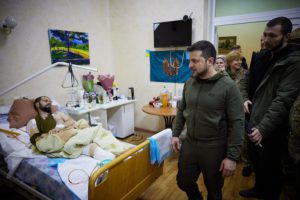
 Months of war leaves a health crisis in Ukraine and its healthcare system strained to provide proper healthcare to the citizens. As many healthcare facilities are destroyed and many more are overwhelmed with the number of patients, healthcare workers work long hours treating patients with short-term to long-term illnesses like HIV, tuberculosis and polio.
World Health Organization Director-General Dr. Tedros Adhanom Ghebreyesus stated that “this war has gone on for 100 days too many,” as the war in Ukraine is “shattering lives and communities and imperiling the short- and long-term health of Ukraine’s people”.
HIV
The HIV virus affects the immune system and leads to AIDS if untreated. Even before the war started, Ukraine suffered an epidemic of HIV, with an estimated 250,000 people diagnosed and many more not realizing they have the virus. HIV is more common among people who struggle with drug addiction and sex workers, in other words, people living on the marginalized side of society.
USAID provides support and services to treat people with HIV. However, with the ongoing war and the health crisis in Ukraine, it is hard for patients to get tested for HIV or receive the proper treatment.
Tuberculosis
Tuberculosis is a bacterial disease in the lungs with about 33% of cases connected with drug use. Meanwhile, only 76% of patients receive successful treatment for the disease, with the remaining 24% not completing or receiving their treatment too late. Additionally, some TB victims are asymptomatic, causing the disease to spread rapidly.
Because of the war and the COVID-19 pandemic, the rate of detecting TB dropped. TB is one of the leading causes of death of HIV patients, and because of the health crisis in Ukraine, TB can spread easily and cause more deaths.
Polio
Similar to HIV, Ukraine experienced an outbreak of polio before the Russian invasion. Polio is a virus that affects the spinal cord that can lead to paralysis or even death. Children under the age of five are especially vulnerable to the virus.
Vaccination is possible, but the Russian invasion interrupted a campaign to vaccinate children against the virus. Even so, vaccination rates for polio are under 50% in Ukraine. Areas similar to Kharkiv, Ukraine’s second-largest city, have struggled to combat polio due to a lack of vaccination.
World Health Organization Increases Its Presence
Before the war started, Ukraine was on a path of progress with health care. In 2014, the Ministry of Health implemented the National Strategy on Health to help improve the quality of health. However, the ongoing war halted progress as hospitals and health care services were destroyed.
Because of the health crisis in Ukraine, WHO increased its presence in Ukraine and in countries with refugees. Since the start of the war, Ukraine confirmed over 260 attacks on their healthcare system as of June 2.
“WHO is doing everything we can to support Ukraine’s Ministry of Health and deliver essential medical supplies and equipment,” Ghebreyesus said. “But the one medicine that Ukraine needs most is the one that WHO can’t deliver – peace. We call on the Russian Federation to end the war.”
To meet the needs of the health crisis in Ukraine, WHO appealed to the U.S. for $147.5 million. WHO wants to use $80 million to provide support to the people still in Ukraine and an additional $67.5 million to support countries with refugees.
A Look Ahead
Even though Ukraine is experiencing a health crisis as a result of the Russian invasion, international organizations similar to the WHO provide medical support while also advocating for monetary support to the U.S. government.
– Chris Karenbauer
Photo: Flickr
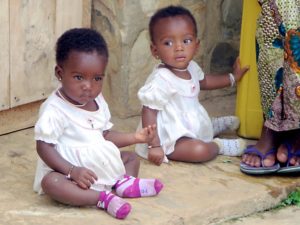 Researchers from Cornell University found a link between extreme heat and child malnutrition in western Africa. The study revealed that there was an increased prevalence of chronic and acute malnutrition in young children due to extreme heat exposure.
 The
The 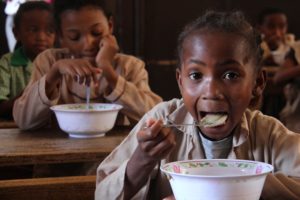 The COVID-19 pandemic forced schools across West Africa to shutter their doors. These widespread school closures had a deleterious effect on the education and well-being of western Africa’s most vulnerable children. Youth were not only deprived of an education but also a chance to receive a meal through their country’s school feeding program. As schools gradually reopened as COVID-19 rates subsided, school feeding in West Africa provided an avenue for children to
 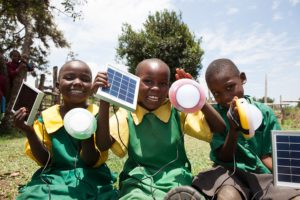 In July 2022, the World Bank announced a
  In 2015, nearly 200 countries signed off on the Paris Agreement to combat changing weather patterns. Since then, the agreement’s host nation, France, has made considerable, yet, insufficient progress towards its goals. The issue of climate has become a common topic of discussion in recent years. Changing weather can have various effects on the planet such as natural disasters. In an effort to confront the matter, the Treaty of Paris originated to get countries around the globe to reduce their greenhouse gas emissions. Interestingly, France, the country in which the treaty emerged, has fallen behind in trying to reach this goal. Here is some information about the state of renewable energy in France as well as the types of energy France uses in addition to it.
 While the COVID-19 pandemic severely exacerbated poverty in Slovakia, further investigation reveals that the damage was not as terrible as it could have been, due to generous monetary assistance and the valuable, effective work of several NGOs. This work has mitigated the impact of COVID-19 on poverty in Slovakia, specifically in the Roma community.
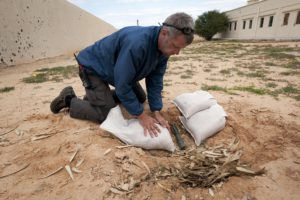 Civilians across Libya face a unique challenge in their daily lives: avoiding landmines. Both the United States and the European Union remain committed to building a safe community for Libyan civilians by working with groups pursuing demining in Libya.
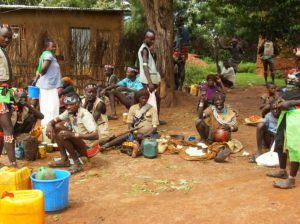 Despite Ethiopia’s
 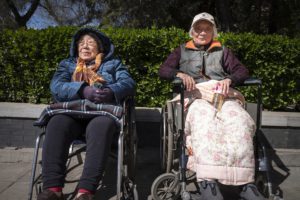 The aging crisis in China will become a key concern for the country, as “