• Link to X
  • Link to Facebook
  • Link to Instagram
  • Link to TikTok
  • Link to Youtube
  • About
    • About Us
      • President
      • Board of Directors
      • Board of Advisors
      • Financials
      • Our Methodology
      • Success Tracker
      • Contact
  • Act Now
    • 30 Ways to Help
      • Email Congress
      • Call Congress
      • Volunteer
      • Courses & Certificates
      • Be a Donor
    • Internships
      • In-Office Internships
      • Remote Internships
    • Legislation
      • Politics 101
  • The Blog
  • The Podcast
  • Magazine
  • Donate
  • Click to open the search input field Click to open the search input field Search
  • Menu Menu

Archive for category: Global Poverty

Key articles and information on global poverty.

Food Security, Global Poverty, United Nations

The Hopes of The First Food Systems Summit

Food Systems SummitThe first global Food Systems Summit will take place on September 23, 2021, preceded by a three-day pre-summit in Rome from July 26 to July 28, 2021. The summit is part of the United Nations’ Decade of Action, in which the U.N. aims to achieve its Sustainable Development Goals (SDGs) by 2030.

Goals of the Food Systems Summit

The Food Systems Summit will examine how food insecurity, climate and human conflicts intersect. According to the United Nations website, the summit has four main goals including:

  1. Establishing a clearer agenda to achieve the U.N.’s SDGs. This means creating action steps for all levels, from national governments to local representatives and from global companies to individual citizens.
  2. Opening up public discussion about food insecurity and creating more awareness.
  3. Formulating guiding principles for governments as they create their own plans to support the U.N.’s SDGs.
  4. Establishing a system of accountability, follow-up and review to ensure tangible progress.

Activists’ Immediate Demands

The summit has long-term strategic potential, but some activists have more immediate concerns as well. The summit comes at a time when food prices, job insecurity and overall global hunger are all rising. On April 20, 2021, more than 250 aid groups and organizations wrote an open letter to the United Nations demanding $5.5 billion in emergency food assistance funding.

Activists’ Criticisms of the Summit

Many activists have major concerns about the Food Systems Summit, particularly regarding who is involved in the program and the direction that the program aims to take for food production. Although small-scale food suppliers such as fishermen, farmers and Indigenous people provide the vast majority of the world’s food, they do not have a seat at the table at the summit. Many feel that the preparation process has not been transparent enough to allow small-scale producers to participate.

Additionally, other activists have concerns about how the summit will approach food insecurity. Many believe it focuses too much on technological solutions to food insecurity and that supporting other systems is necessary to return self-autonomy to people in poverty. Though new technology can play an important role, alternative solutions must undergo consideration as well. For example, agroecology draws upon historical, cultural and scientific knowledge of specific regions, ensuring more sustainable farming and preserving people’s cultural practices. Activists also worry that some high-tech solutions will tighten corporate control over developing countries’ food systems.

Looking to the Future

Though the Food Systems Summit has received criticism, it is still an important step as it will bring countries together to form a plan to address the pressing crisis of food insecurity. According to the United Nations, “Scientists agree that transforming our food systems is among the most powerful ways to change course and make progress toward all 17 Sustainable Development Goals.” With collaboration among governments and citizens, the world can better tackle problems related to food consumption and production.

– Jessica Li
Photo: Flickr

September 3, 2021
https://borgenproject.org/wp-content/uploads/borgen-project-logo.svg 0 0 Kim Thelwell https://borgenproject.org/wp-content/uploads/borgen-project-logo.svg Kim Thelwell2021-09-03 07:30:072024-05-30 22:24:51The Hopes of The First Food Systems Summit
Global Poverty

Artists Striving to End Poverty

Artists Striving to End Poverty
Broadway musical director Mary-Mitchell Campbell created Artists Striving to End Poverty (ASTEP), a charity organization. She and a group of Juilliard students created an organization that will engage underserved children in performing and visual arts in order to break the cycle of poverty. ASTEP connects artists with youth who lack the opportunities to receive a fine arts education. Artists Striving to End Poverty serves youth affected by immigration status, gun violence, HIV/AIDS and systemic poverty.

South Africa Program

Recently, ASTEP partnered with artsINSIDEOUT, an organization that consists of artists who travel to areas that the AIDS epidemic has hit hard. Through this work, they have been able to reach mothers and children that the AIDS epidemic has affected.

Artists Striving to End Poverty and artsINSIDEOUT support Nkosi’s Haven. Nkosi’s Haven is an organization located in Johannesburg that supports women and children living with HIV/AIDS. Nkosi’s Haven received its name from Nkosi Johnson, an AIDS activist who became separated from her mother due to the HIV/AIDS epidemic. She then lived in poverty due to a lack of financial support. Johnson made it her life’s mission to never let another family experience what she experienced. ASTEP Teaching Artists inspire children and mothers to unleash their creative sides. This two-week camp helped families affected by the AIDS pandemic to communicate their feelings with each other, building a strong and safe community of people with shared experiences.

India Program

Artists Striving to End Poverty has two major programs in India. The first program is the Shanti Bhavan Children’s Project, which hosts a two-week arts camp for the students who live at the school. Shanti Bhavan believes that lower caste children in India can rise out of poverty if they receive a proper education early on in life. Shanti Bhavan is working to build a foundation based on the interests of the students that go there and ASTEP has helped Shanti Bhavan implement fine arts education. ASTEP believes that the power of the arts can help enhance education and personal development.

ASTEP has also partnered with Teach for India. Teach for India is an organization that employs the brightest of India’s students to teach in the low-income areas of the country. ASTEP Teaching Artists partnered with Teach for India to create Maya the Musical as a way for low-income children in India to gain the opportunity to participate in musical activities. The Maya Musical helps children discover their true values and potential and the storyline helps them find courage and compassion. ASTEP hopes that the Maya Musical will be able to reach Teach for India’s 32,000 children as well as many more outside the program.

Going Forward

Although Artists Striving to End Poverty is still a very young organization, its commitment is enduring. Based in New York, the organization hopes to expand its platform in order to reach children both in the United States and around the world. ASTEP is looking for teachers to contribute to its cause, with the determination to use the fine arts to help break the cycle of childhood poverty.

– Saanvi Mevada
Photo: Flickr

September 3, 2021
https://borgenproject.org/wp-content/uploads/borgen-project-logo.svg 0 0 Lynsey Alexander https://borgenproject.org/wp-content/uploads/borgen-project-logo.svg Lynsey Alexander2021-09-03 01:30:362024-05-30 22:25:00Artists Striving to End Poverty
Child Labor, Global Poverty, Human Trafficking

5 Facts About Human Trafficking in Timor Leste

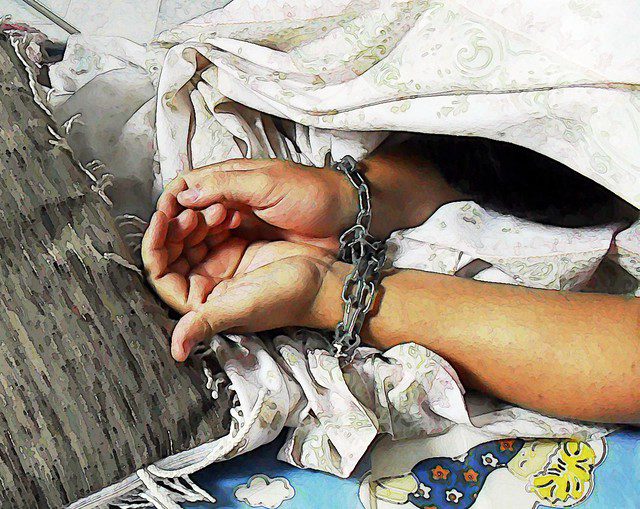
Human Trafficking in Timor LesteHuman trafficking is the exploitation of a human being through the use of force or coercion in order to obtain labor or sexual acts. While human trafficking is a global issue with a large connection to poverty, it is important to recognize that trafficking may look different from country to country. Timor-Leste, also known as East Timor, is a Southeast nation occupying half of the island of Timor and has a significant problem with human trafficking that involves both foreign and domestic victims. According to a trafficking report by the U.S. Department of State, “poor economic conditions and limited educational opportunities create trafficking vulnerabilities for Timorese nationals.” Here are five facts to help explain human trafficking in Timor-Leste.

5 Facts About Human Trafficking in Timor-Leste

  1. Timor-Leste is listed under the Tier 2 Watch List. The tiers, mandated from the Trafficking Victims Protection Act, are based on the size of a country’s human trafficking problem along with government efforts to combat human trafficking. To grow in the rankings, a country has to increase anti-trafficking efforts and maintain acceptable progress. The Tier 2 Watch List is the third listed in the four overall tiers and is similar to Tier 2 except for the fact that the government has failed to show progress in combating forms of trafficking in comparison to previous years. Progress includes investigations, prosecution, and convictions into human trafficking cases. Timor-Leste only fell to the Tier 2 Watch List recently in 2020. From 2016-2019, Timor-Leste was listed under Tier 2 but did not report trafficking convictions; the only identification of a trafficking victim came from a non-governmental organization. It was in the fifth year when the government failed to increase their efforts to report trafficking convictions, that Timor-Leste fell to the Tier 2 Watch List.
  2. Timor-Leste is a destination country for human trafficking. A destination country is a country where there is a large demand for human trafficking. Most of these demands come from large cities. In Timor-Leste, many young men and women are lured to the capital through the promise of job prospects and educational opportunities, and end up in situations of forced labor and prostitution. According to the International Organization for Migration (IOM), “victims trafficked to Timor-Leste have originated from China, Indonesia, Thailand, Myanmar, and the Philippines.”
  3. Timor-Leste is also an origin country. An origin country provides the supply of trafficked persons. The main outgoings of trafficking victims, according to the IOM, “is associated with labor migration out of East Nusa Tenggara Province in Indonesia.” Most of the victims sent to Indonesia are women and girls forced into domestic servitude.
  4. Children are among the victims of human trafficking. The children of Timor-Leste are among the many victims of human trafficking, often taken for sexual exploitation and dangerous agricultural tasks. According to a report from the U.S. Department of Labor, data coming from all 13 municipalities in Timor-Leste show that 55.5% of children in child labor engage in dangerous, hazardous work. It was found that families will place children in household and agricultural labor both in Timor-Leste and in other countries in order to pay off debts.
  5. The majority of victims are women and girls. Many women and girls are vulnerable due to the lack of legal protection, starting from the time they are in school. Research strongly shows that while there are no laws that prohibit pregnant girls from attending school, there are also no laws on providing education for pregnant girls. As a result, many principals will deny the girls access to the school. Obtaining transfer documentation becomes a problem too, as principles control access to documents. The lack of education and access to proper education facilities leaves many women and girls particularly vulnerable to human traffickers.

Looking Ahead

While Timor-Leste has not significantly progressed in its efforts to fight human trafficking, there is still hope for the future. The government of Timor-Leste has used an anti-trafficking curriculum created by a foreign government in order to better inform and train its judicial and legal sections. Organizations and persons that have received training include the national police, judges, prosecutors, and defense attorneys. The government of Timor-Leste is also making efforts to criminalize human trafficking, though many of these plans still stay in a drafted status. One such plan comes from the Ministry of Justice, which drafted a national action plan in 2018 that has not yet been presented to the Council of Ministers. Another drafted policy comes from the Ministry of Education. This policy would encourage girls to return to school after giving birth, though it has remained in draft form for years. Through increased government intervention, through enforcing the policies already made and increasing protection for the vulnerable, the tide can turn in the fight against human trafficking in Timor-Leste.

– Grace Ingles

Photo: Flickr

September 2, 2021
https://borgenproject.org/wp-content/uploads/borgen-project-logo.svg 0 0 Lynsey Alexander https://borgenproject.org/wp-content/uploads/borgen-project-logo.svg Lynsey Alexander2021-09-02 17:30:092021-09-19 03:23:595 Facts About Human Trafficking in Timor Leste
Global Poverty, Slavery

The IAF and AQUIPP Help Brazil’s Quilombola Communities

Brazil's Quilombola communitiesBrazil’s Quilombola communities consist of Africans and Afro-descended people who escaped slavery and established remote mountain communities called quilombos. In 2020, these communities were spread across Brazil and numbered close to 6,000 in total. Brazil brought in more than four million slaves from Africa over the course of its colonial history, only ending the practice when Brazil became the last country in the Americas to ban slavery in 1888. Unfortunately, the legacy of slavery persists as many descendants of enslaved people still live in poverty. Brazil’s Quilombola communities suffer a poverty rate nearly three times that of the country as a whole — 75% compared with about 25% for the country overall, according to 2018 government data.

The Inter-American Foundation in Brazil

The Inter-American Foundation (IAF) began in 1969, giving grants to grassroots projects working to improve poverty, sustainability, resource management, entrepreneurial skills, leadership, civil rights and more across Latin America and the Caribbean. The IAF currently has 343 active projects across 26 countries, investing more than $100 million in these development initiatives.

Brazil is a large beneficiary of IAF grants, with 27 active projects running as of July 2021. Brazil received its first IAF grant in 1972. IAF investment in these projects totals about $7 million and has directly benefited more than 25,700 people in Brazil. The projects work in a variety of areas, from fighting food insecurity and poverty to providing housing and job training to Venezuelan refugees.

AQUIPP and Quilombola Communities

One of the IAF’s many active projects in Brazil is a grant given to the Associação Quilombola do Povoado Patioba (AQUIPP). AQUIPP fulfills a variety of needs for Brazil’s Quilombola communities, especially when it comes to improving the lives of youth. The association provides educational workshops for young Quilombola people that focus on improving their chances of finding employment, leadership roles in the face of discrimination and strengthening their relationships with their Afro-Brazilian heritage. AQUIPP hopes that these young people will go on to become ambassadors outside their local communities, educating others in Brazil and around the world about the importance of Quilombola culture and practices.

AQUIPP and other Quilombola organizations also work in the political and health sectors. As part of their advocacy work on behalf of the Quilombola people, the organizations work with local and national governments to fight discrimination in schools and other public spaces and to protect Quilombola communities’ land rights. In the health sector, AQUIPP plays a key role in providing masks and other personal protective equipment as well as educational information about protection from COVID-19.

The IAF has been supporting AQUIPP’s work in Brazil since 2017. The IAF reports that the efforts of AQUIPP directly benefit 200 people and indirectly benefit an additional 1,000.

Preserving the Future of Quilombola Communities

Brazil’s Quilombola communities remain strong despite centuries of persecution and discrimination both before and after the abolition of slavery in Brazil. Their vibrant Afro-Brazilian traditions of music, dance, clothing, agricultural systems, languages and more, have survived against the odds.

Programs like AQUIPP help amplify Quilombola voices and fight devastatingly high poverty rates in Quilombola communities. With the help of AQUIPP and the IAF’s funding, young Quilombola people can gain access to the education and training they need to acquire well-paying jobs and rise out of poverty.

– Julia Welp

Photo: Wikimedia Commons

September 2, 2021
https://borgenproject.org/wp-content/uploads/borgen-project-logo.svg 0 0 Lynsey Alexander https://borgenproject.org/wp-content/uploads/borgen-project-logo.svg Lynsey Alexander2021-09-02 07:30:312024-05-30 22:24:53The IAF and AQUIPP Help Brazil’s Quilombola Communities
COVID-19, Global Poverty

Domestic Violence in India During COVID-19 Impacts Women

decreasing domestic violence in IndiaThe Indian caste system is a hierarchical structure segmenting the Hindu population into four main categories. These categories are the Brahmins, Kshatriyas, Vaishyas and Shudras. Although these caste systems have officially existed for thousands of years, caste discrimination was technically outlawed in 1950, yet it still influences life in India today. The fifth group, the Dalits or “untouchable” caste, is a caste so low that it does not fall within the official caste system. Untouchables are significantly marginalized as this group occupies the least prestigious standing in Indian society. Yet, caste discrimination is not the only discrimination affecting India today. Rates of domestic violence in India, as in many other nations, saw an increase during the COVID-19 pandemic with strict gender roles compounding domestic violence against women.

India by the Numbers

India is home to the world’s second-largest population and more than two-thirds of its 1.2 billion citizens live on less than $2 per day. These strained and taxing living conditions of poverty hurt women and children most because they also suffer from increased domestic violence. In the United States, women earning less than $10,000 in annual income report a five times greater rate of domestic violence than those with income exceeding $30,000. Most Indian women fall in the former category. Accordingly, reports of domestic abuse to three major Indian newspapers from March to July 2020 increased more than 47%.

The Pandemic’s Effect on Domestic Violence

Like pandemics in years past, COVID-19 produced an increase in domestic violence because it gave greater freedom to abusers. During the pandemic, already high numbers of domestic violence cases in India increased “at an alarming rate.” According to a piece published in the Indian Express, most Mumbai citizens lack running water in their homes. As COVID-19 lockdowns caused people to spend more time at home, more women resorted to underground or early morning markets for water. There, women were subject to more verbal and sexual harassment while waiting in line.

While domestic violence increased both in India and globally during the pandemic, Delhi-based NGO Jagori actually saw a 50% decline in helpline calls. This seems counterintuitive at first glance, but many are likely hesitant to report abusers who are constantly under the same roof and who can also restrict their victims’ access to phones and online resources. The popular phrase “locked down with the abuser” expresses this unfortunate reality.

Solutions

Numerous NGOs in India are working to improve women’s quality of life. Sayodhya Home For Women In Need is a nonprofit created in 2010 with offices in Hyderabad, Andhra Pradesh. The organization provides assistance on issues “related to education, employment, domestic violence, harassment, abuse, mental health and other legal matters.” The organization runs a shelter for vulnerable girls and women and also provides “legal and psychological counseling” to victims of abuse. Since its creation, Sayodhya has given shelter to more than 1,000 vulnerable women. Furthermore, the organization addressed 1,500 “cases of domestic violence, harassment, child marriages, physical and mental abuses.”

Often the problem lies in a lack of accountability in regard to the abuser. Organizations like Sayodhya Home For Women In Need look to create that accountability and empower women with a viable source of help.

– Paolo Emilio Giannandrea
Photo: Flickr

September 2, 2021
https://borgenproject.org/wp-content/uploads/borgen-project-logo.svg 0 0 Kim Thelwell https://borgenproject.org/wp-content/uploads/borgen-project-logo.svg Kim Thelwell2021-09-02 07:30:002021-09-02 01:53:21Domestic Violence in India During COVID-19 Impacts Women
COVID-19, Foreign Aid, Global Poverty

5 Facts About US Foreign Aid During COVID-19

U.S. Foreign Aid During COVID-19The year 2020’s sudden outbreak of COVID-19 caught many countries off guard. The U.S. is demonstrating its status as a global superpower by releasing economic, medical and other foreign aid during COVID-19.

5 Facts About US Foreign Aid During COVID-19

  1. The U.S. Agency for International Development (USAID) has given more than $1.5 billion to different governments and organizations during the pandemic. The government split the money among various humanitarian, developmental and economic programs and organizations. The aid aims to help sustain governments at risk during the pandemic. It also intends to make the public more aware of COVID-19 and how to combat it. Additionally, the aid from the U.S. will go toward improving health education and hospitals, funding quick response teams capable of inhibiting COVID-19’s spread. The U.S. Government has also planned a $4 billion relief fund to aid high-risk countries through COVAX, a program that provides vaccines to low-income countries.
  2. The U.S. State Department works alongside other organizations. USAID and the CDC help the U.S. Government provide the necessary aid to countries at high risk. Congress created an emergency fund of $2.4 billion with the purpose of supporting both humanitarian programs and security and stabilization programs for countries in need. For example, foreign aid helps countries create safe and secure ways for citizens to receive necessary medical care during the pandemic.
  3. The U.S. gave the most foreign aid in 2020. In 2020, the U.S. gave around $35 billion in aid, with Germany close behind at just shy of $30 billion. The global amount of money that has gone toward COVID-19 relief measures is equal to about $16 trillion. U.S. foreign aid during COVID-19 is only around 1% of that. The majority of foreign aid during COVID-19 went toward short-term solutions, such as the aforementioned public health education programs and hospital care programs.
  4. U.S. foreign aid programs help combat more than just COVID-19. Recently, the House of Representatives passed an $11 billion bill to support countries in need, including through the Global Fund to Fight AIDS, Tuberculosis and Malaria.
  5. The U.S. has approved $1.9 trillion in COVID-19 aid. Of that $1.9 trillion, the U.S. has dedicated $11 billion to fight the global pandemic. That $11 billion includes $800 million for aid programs from the U.S. Agency for International Development as well as the CDC Global Fund. The remaining $10 billion will support global health, humanitarian aid and economic aid.

To conclude, the U.S. has provided more aid than any other nation to help countries combat the COVID-19 pandemic. This has allowed many at-risk countries to minimize or at least lessen the impact of the disease.

– Jake Herbetko
Photo: Flickr

September 2, 2021
https://borgenproject.org/wp-content/uploads/borgen-project-logo.svg 0 0 Kim Thelwell https://borgenproject.org/wp-content/uploads/borgen-project-logo.svg Kim Thelwell2021-09-02 01:30:572021-09-02 00:35:015 Facts About US Foreign Aid During COVID-19
Economy, Global Poverty

The Downfall of Romanian Gymnastics

Nadia Comaneci
The dynasty of Romanian gymnastics dates back to the 1976 Montreal Summer Games when Nadia Comaneci earned the first perfect score in gymnastics for her uneven bars routine. Her success kickstarted a legacy of greatness for other Romanian teams in future games.

Fast forward 40 years and the story changed significantly. In 2016, the Romanian team’s fifth-place Olympic qualifying finish terminated their ability to defend their country’s four-decades-long medal streak in the sport. The sole athlete to represent Romania in women’s gymnastics was Catalina Ponor who competed on the floor and balance beam apparatuses but failed to win a medal.

The downfall of Romanian gymnastics is not due to a lack of talent or ability. Rather, it is due to a combination of economic factors that make Olympic glory less lucrative than in years past.

The History of Romania’s Economy

From the mid-1970s to the late 1980s, Romanian communist dictator Nicolae Ceauşescu held a firm grip on the country’s economy. Unlike other Eastern European nations, Ceauşescu felt the best way of controlling the economy was to dictate individual economic transactions and freedom.

In a 1974 speech, he stated that “To give everyone the freedom of spending society’s money on whatever, and however, it might strike one’s mind—this is not possible. We have a planned economy. Nobody has the right to build or produce what is not provided for by the Plan. “The practices of restrictive employment cards and decreased labor movement made individual economic growth difficult to attain.

The Reward of Winning

Each country differs in its rewards for Olympic champions. In 2016, the BBC reported that Romanian athletes earn $79,000 and a monthly income for life if they win gold.

As of 2021, the minimum wage in Romania is just under 500 EUR. Just 10 years ago, it was less than half of the current average.

The prize for winning gold is still relatively high in comparison to the minimum income in Romania. However, the reward may not be worth the cost of lifelong dedication and, at times, abuse.

Abuse in Romanian Gymnastics

The downfall of Romanian gymnastics was inevitable. Just in 2021, Olympic coaches Bela and Martha Karolyi received accusations of abusing Romanian and American gymnasts as early as the 1960s.

In particular, the previously mentioned Nadia Comaneci was one of the athletes who experienced abuse. She was “starved to the point of developing eating disorders, slapped and denied medical treatment,” according to The Washington Post. Romanian author Stejarel Olaru’s book, “Nadia and the Securitate,” further details her abuse.

Olaru further detailed the abuse, saying that “the girls ate toothpaste before going to bed – this is how hungry they were. In some cases, they talked about drinking water from the toilet tank in secret because they were often not allowed to drink water.”

The Karolyis defected to U.S. in 1981. Bela coached all-around gold medalist Mary Lou Retton and the 1992 U.S. national team. Martha coached the gold-medal-winning 1996 U.S. national team.

The Current State of Romania’s Economy

Since 2019, the primary economic focus has been on, according to the World Bank, “strengthening Romania’s institutions, advancing poverty reduction and promoting shared prosperity” through:

  1. Providing equal opportunity for success.
  2. Growth within the private sector.
  3. Prevention of economic shocks.

The International Bank for Reconstruction and Development (IBRD) allocated almost $2 billion. This money went to various sectors such as education, health and the environment.

The Reimbursable Advisory Services (RAS), a World Bank program, dedicated another $114 million for “improved strategic planning and budgeting, evidence-based policymaking, protection of the vulnerable, disaster risk management, human development and strengthened capacity for monitoring and evaluation.”

The Advisory Services and Analytics (ASA) program, also through the World Bank, funds projects such as the inclusion of the minority ethnic group Roma, development of the business sector and improved infrastructure.

The Connection to Gymnastics

The improved economic situation in Romania allows for the average Romanian citizen to achieve moderate economic comfort. If a Romanian wants to succeed economically, they can now attain it through more traditional means such as working or acquiring an education.

Simply put, there is less of a need to dedicate life to sports like gymnastics to live a comfortable life. The wider range of economic opportunities and the abuse that plagued the lives of 1970s Romanian gymnasts like Comaneci attributed to the downfall of Romanian gymnastics.

– Jessica Umbro
Photo: Flickr

September 2, 2021
https://borgenproject.org/wp-content/uploads/borgen-project-logo.svg 0 0 Lynsey Alexander https://borgenproject.org/wp-content/uploads/borgen-project-logo.svg Lynsey Alexander2021-09-02 01:30:372021-09-27 06:54:00The Downfall of Romanian Gymnastics
Foreign Aid, Global Poverty

Luxembourg’s World-Leading Foreign Aid

World-leading Foreign Aid
The world-leading foreign aid of Luxembourg has been noteworthy. Here is an investigation into it involving case studies, motivational theories and theories of wealth redistribution to explore (a) how Luxembourg developed its foreign aid program and (b) how these results may be replicable in other developed nations.

Analysis of Morality

While a nation’s moral values may seem like a logical starting point to understand why countries give foreign aid, the reality is more complex. In 2020, the Latin America Travel Company (LATC) developed the Travel Morality Index to assess “the ethicality and morality of a destination.” While Luxembourg was not included in its analysis, the LATC provided its methodology to assess a country’s morality.

The index uses a combination of five scoring factors, which literature has shown are the prime indicators of an ethical society: human rights, animal welfare, gender equality, workers’ rights and the state of peace. Luxembourg was included in global rankings for three of these five domains (the Voiceless Animal Cruelty Index and the Institute for Economics & Peace’s Global Peace Index omitted the nation from their rankings).

Luxembourg ranks 11th in the Cato Institute’s Human Freedom Index (HFI), tied with Finland and Japan. Of all 12 nations that are either behind or tied with it, Sweden is the only country that also defeats Luxembourg in foreign aid.

Turning now to gender equality, the United Nations Development Programme (UNDP) ranks Luxembourg 23rd among 189 countries included in the Gender Inequality Index. In this case, nine of the 11 nations ahead of Luxembourg in the Gender Inequality Index provide less generous foreign aid. Finally, examining workers’ rights, Luxembourg ranks 14th in the Labour Rights Index, with 12 of its 13 superiors allocating less money towards foreign aid. Across these metrics, there are close to a dozen countries ranked as more ethical than Luxembourg but which give less to foreign aid.

Why Do Nations Give?

An emerging theory in the field of moral responsibility called Motivational Egoism argues that individuals have the motivation to do moral acts because it serves their self-interest. This theory holds for everything including one holding a door open for someone because they know that helping them will them feel good, to devoting one’s life to the betterment of society because of the praise and compensation that they expect to receive. As it pertains to generous foreign aid, this view argues that nations donate to foreign aid because it is beneficial to their self-interest, for example, by benefiting their economies.

Professor Idema and Professor Rueda at the University of Oxford argue that individuals support the redistribution of currency based on how it impacts their expected lifetime income. Decades before, Professor Plotnick (University of Washington) and Professor Winters (Dartmouth) expressed a similar view. They argued that citizens support larger government-led redistribution initiatives because of the way it will benefit them both directly (state of mind) and indirectly (how reducing poverty betters society). The question, then, is how does Luxembourg’s world-leading foreign aid support the nation’s self-interest?

Luxembourg’s Benefit

Fighting global poverty yields countless global benefits. Aside from a humanitarian justification, aiding the global poor also helps the most developed nations in multiple ways. First, it bolsters national security. Testifying to Congress in 2017, Admiral Mike Mullen and General James Jones argued that sheer military might is not enough to “prevent radicalization.” Instead, foreign aid is necessary to maintain national security because many threats stem from poverty and government corruption (both of which Luxembourg’s foreign aid projects address).

Second, it increases productivity and innovation. A Department for International Development report found that economic growth concerning poverty reduction sparks innovation aimed at an increased quality of life. Lastly, foreign aid benefits the job market by increasing consumers. According to Ricardo Michel of USAID, restricting consumers to the richest third of the world limits global revenue. By supporting those lower two-thirds, millions–if not billions–attain the resources necessary to join the global market, create more demand and in turn create more jobs.

Now, the three benefits just mentioned are all global benefits of foreign aid. They are largely independent of the giver of foreign aid, benefitting all developed nations. However, a primary benefit of being the nation to provide foreign aid–rather than just reaping the benefits of the aid of other wealthy nations–is that supporting developing countries builds trade. Essentially, foreign aid is an investment.

Researchers in Copenhagen discovered that aid towards “complementary [capital] inputs” increases direct investment. Coincidentally, Luxembourg has been working to “attract foreign direct investment” since 2002. Luxembourg’s economy revolves primarily around investment, and foreign aid receives treatment as such because of the ways it benefits national security, innovation and the job market and how it produces direct investment in the nation.

Takeaways About Luxembourg’s World-Leading Foreign Aid

Theories in philosophy and political science both suggested promoting self-interest as a reason for providing foreign aid, and Luxembourg’s investment-based economy has certainly benefited from it. Now, it is time to revisit the question that launched this investigation: what takeaways come from Luxembourg’s success?

Luxembourg’s foreign aid spending provides a concrete model for how other developed nations can develop unilateral support for international aid. By framing aid as a way to promote a nation’s security and economy, legislation aimed at poverty reduction could gain bipartisan (or poly-partisan) traction and countries could finally begin competing over their contributions to alleviating global poverty.

– Sam Konstan
Photo: Flickr

September 2, 2021
https://borgenproject.org/wp-content/uploads/borgen-project-logo.svg 0 0 Lynsey Alexander https://borgenproject.org/wp-content/uploads/borgen-project-logo.svg Lynsey Alexander2021-09-02 01:30:322021-10-02 05:13:16Luxembourg’s World-Leading Foreign Aid
Global Poverty, Sustainable Development Goals

Egypt’s Groundbreaking Anti-Poverty Project “Decent Life”

Decent LifeEgypt’s President Abdel Fattah Al-Sisi kicked off the first stage of Egypt’s groundbreaking anti-poverty project, the “Decent Life” (Haya Karima) Initiative, at the first conference on July 15, 2021. Al-Sisi declared that this initiative would kickstart “Egypt’s New Republic” especially in the Egyptian countryside. The massive development and resource injection into education and health infrastructure, primarily in rural areas, appears as if it will significantly improve the Egyptian landscape for the future. This initiative comes at a crucial turning point in a country that has struggled significantly with poverty over the past years. Statistics such as how 32.5% of Egyptians reported being below the poverty line in 2019 or how the pandemic has increased the official unemployment rate to 9.6% as of November 2020 highlight Egypt’s difficult poverty battle. However, with the ‘Decent Life’ Initiative in action with its numerous quality components, Egypt’s economy looks to be turning a corner.

Four Pillars

Within the framework of the UN Egypt Vision 2030 Strategy, the initiative consists of four main pillars:
1. To ameliorate living standards and invest in human capital,
2. To grow infrastructure services,
3. To improve human development services,
4. To spur economic development especially by contributing to the poorest villages with increased access to basic services such as sanitation and education infrastructure.

These pillars provide the foundation for how Egypt is tackling poverty in a more assertive manner.

First Phases

Prior to President Al-Sisi establishing the initiative, he launched an unofficial phase of the project in 2019. This came in the form of him pressuring the Minister of Social Solidarity to develop Egypt’s 1,000 poorest villages. After the success of this stage of the process, the official first phase started in January 2021. This first phase expands the number of targeted villages to 4,500, covering 58% of the country’s population.

Since January 2021, the initiative has taken crucial steps in developing Suhag water and sanitation services in 33 villages, renovating transportation stations at a cost of EGP 183 million (almost $12 million), and creating new transportation stations at a cost of EGP 219 million (almost $14 million). This process forms as the initial stages of the 2021-22 plan of the initiative, which carries with it a budget of EGP 200 billion (almost $13 billion).

The 2021-22 plan for the initiative has specific and bold aims that ensure Egypt is tackling poverty in a decisive and thorough manner. Details of the 2021-22 plan include:

  • To set up 10,828 classrooms,
  • To improve 782 youth centers,
  • To renovate 317 public service buildings,
  • To develop 1,250 health care units, establish 389 ambulances and 510 mobile clinics, and 112 veterinary units,
  • To create 191 agricultural service centers.

Final Targets

The “Decent Life” Initiative has several end goals it aims to achieve which President El-Sisi set out. One of the main goals is that the Egyptian government plans to utilize overall investments amounting to EGP 700 billion (almost $45 billion) by the end of the project, demonstrating that Egypt is tackling poverty in an aggressive manner. President El-Sisi has also made the promise that “the Egyptian countryside will be transformed in three years’ time,” signifying an attempt to minimize the rural-urban inequality.

Regarding education and health services, the initiative is aiming to build 13,000 classrooms and activating the new Universal Health Insurance System by the project’s conclusion. The Universal Health Insurance System will consist of mandatory coverage to all citizens by unifying with the private healthcare sector and minimizing existing health insurance disparities.

UN Response

The UN has responded extremely positively to the official launch of the initiative, with the Executive Director of the International Monetary Fund, Dr. Mahmoud Mohieldin, stating that the UN considers the “Decent Life” project at top spot for the best application for sustainable development goals around the world and has full confidence that it will provide essential job opportunities for Egyptians in impoverished areas. Furthermore, the UN has praised the initiative as it also confirms the country’s willingness to “implement the participatory planning approach through integrating citizens in the need’s identification stage.”

–  Gabriel Sylvan

Photo: Flickr

September 1, 2021
https://borgenproject.org/wp-content/uploads/borgen-project-logo.svg 0 0 Jennifer Philipp https://borgenproject.org/wp-content/uploads/borgen-project-logo.svg Jennifer Philipp2021-09-01 18:13:462024-06-04 01:08:50Egypt’s Groundbreaking Anti-Poverty Project “Decent Life”
Global Poverty

Ryan Reynolds and Blake Lively Help Haiti

Ryan Reynolds and Blake LivelyHaiti’s present reflects its past as a French colony, when the country faced intensive slavery, natural resource exploitation and a costly independence process, among other abuses and challenges. As of 2019, almost 60% of Haiti’s population lives in poverty, experiencing problems such as a lack of access to clean water, electricity and sanitation. Moreover, the Associated Press affirms that the country has not fully recovered from the 2010 earthquake or the 2016 hurricane. The assassination of Haiti’s president Jovenel Moïse on July 7 intensified the nation’s instability at the political level. 

The 7.2 magnitude earthquake that happened on August 14, 2021, exacerbated an already difficult situation. Now, the poorest nation in the Western Hemisphere is even more endangered. Fortunately, the event had an effect on some celebrities including Blake Lively and Ryan Reynolds, who went out of their way to help Haiti after the most recent earthquake. Although the country needs much more help to be lifted out of poverty, donations from celebrities and the general population can make a positive and meaningful impact.

The Earthquake Horror

Geological studies show that Haiti is prone to earthquakes because it sits near a boundary between two tectonic plates. Furthermore, the makeshift material used to construct most of the country’s buildings has proved to be susceptible to the violent shaking of the ground. In 2010, for example, around 100,000 buildings collapsed because of a 7.0 magnitude earthquake. The most recent event on August 14 destroyed more than 50,000 homes, killed at least 2,207 and injured more than 12,200 people. USA Today stated that “more than 3,000 humanitarian nongovernmental organizations operate in Haiti” amid an atmosphere of both sadness and hope. The country stands to benefit from different kinds of aid, including food and personal hygiene supplies. 

A Notable Donation to Haiti

Some celebrities have been pitching in and doing their part to improve Haiti’s situation. A few days after the earthquake, Blake Lively and Ryan Reynolds donated a total of $40,000 to 4 humanitarian organizations assisting the population in the country. Hope for Haiti received a fourth of the amount and thanked the couple on social media. On Instagram, Hope for Haiti posted, “Our entire organization would like to thank @vancityreynolds and @blakelively for their generous donation to our #HaitiEarthquake Response & Recovery efforts.”

The organization also said, “This donation will help empower our team to continue to respond in the hardest-hit areas of southern Haiti in the days and weeks to come.” According to People, the organization stated that the money will be used to build clinics and pay for food delivery costs from World Central Kitchen. The other three organizations that received the donations are Ayiti Demen (Fokal Haiti Relief Fund), Airlink Haiti Relief and Haiti Air Ambulance Service.

The Power Couple’s Philanthropy Example

Blake Lively and Ryan Reynolds have a history of philanthropy that can inspire other celebrities and the public. In 2020, the couple donated $1 million to two food banks in the U.S. and in Canada as a response to the COVID-19 pandemic’s impact. The couple donated another $1 million to the same two organizations at the beginning of 2021. The couple also pitches in to help non-emergency causes; for example, Blake Lively and Ryan Reynolds gave “$250,000 USD to help launch a Canadian mentorship program for Indigenous post-secondary student” this year.

The couple’s most recent move was to help Haiti after the earthquake’s devastation. Considering their philanthropic history, it will not be the last time they give back to those who need it. Events similar to the earthquake in Haiti expose the nation’s vulnerable system and the suffering of a population that calls for broader, global help. Although it is only part of the poverty-reduction equation, the money donated by celebrities inspires the public’s action, draws attention to the cause and equips humanitarian organizations to better provide local services.

– Iasmine Oliveira

Photo: Flickr

September 1, 2021
https://borgenproject.org/wp-content/uploads/borgen-project-logo.svg 0 0 Kim Thelwell https://borgenproject.org/wp-content/uploads/borgen-project-logo.svg Kim Thelwell2021-09-01 13:33:092021-10-09 15:41:01Ryan Reynolds and Blake Lively Help Haiti
Page 708 of 2162«‹706707708709710›»

Get Smarter

  • Global Poverty 101
  • Global Poverty… The Good News
  • Global Poverty & U.S. Jobs
  • Global Poverty and National Security
  • Innovative Solutions to Poverty
  • Global Poverty & Aid FAQ’s
Search Search

Take Action

  • Call Congress
  • Email Congress
  • Donate
  • 30 Ways to Help
  • Volunteer Ops
  • Internships
  • Courses & Certificates
  • The Podcast
Borgen Project

“The Borgen Project is an incredible nonprofit organization that is addressing poverty and hunger and working towards ending them.”

-The Huffington Post

Inside The Borgen Project

  • Contact
  • About
  • Financials
  • President
  • Board of Directors
  • Board of Advisors

International Links

  • UK Email Parliament
  • UK Donate
  • Canada Email Parliament

Get Smarter

  • Global Poverty 101
  • Global Poverty… The Good News
  • Global Poverty & U.S. Jobs
  • Global Poverty and National Security
  • Innovative Solutions to Poverty
  • Global Poverty & Aid FAQ’s

Ways to Help

  • Call Congress
  • Email Congress
  • Donate
  • 30 Ways to Help
  • Volunteer Ops
  • Internships
  • Courses & Certificates
  • The Podcast
Scroll to top Scroll to top Scroll to top