• Link to X
  • Link to Facebook
  • Link to Instagram
  • Link to TikTok
  • Link to Youtube
  • About
    • About Us
      • President
      • Board of Directors
      • Board of Advisors
      • Financials
      • Our Methodology
      • Success Tracker
      • Contact
  • Act Now
    • 30 Ways to Help
      • Email Congress
      • Call Congress
      • Volunteer
      • Courses & Certificates
      • Be a Donor
    • Internships
      • In-Office Internships
      • Remote Internships
    • Legislation
      • Politics 101
  • The Blog
  • The Podcast
  • Magazine
  • Donate
  • Click to open the search input field Click to open the search input field Search
  • Menu Menu

Archive for category: Global Poverty

Key articles and information on global poverty.

Global Poverty, Technology

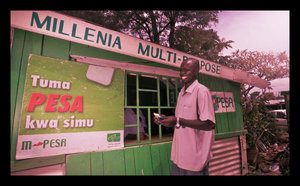
Mobile Banking With M-Pesa

Mobile Banking With M-Pesa
Here in the U.S., cell phone apps such as ‘Venmo’ that allow simple and quick money transfers have revolutionized the way we exchange money. However, with mobile banking as well as Venmo-like apps, they require all users to actually have a bank account. While speed and efficiency are a huge pro about these apps, they, as they are, wouldn’t necessarily be as successful a venture in the developing world.

M-Pesa (meaning mobile ‘money’ in Swahili) has grown to be the most successful mobile financial service in the developing world. Started in 2007, the company’s main goal wasn’t necessarily convenience but had the more objective of creating an app that people without bank accounts can use. Bank accounts usually must maintain a minimum balance or have other requirements many people living in developing areas just cannot meet.

M-Pesa users only need two out of three things: a mobile phone and an ID card or passport. With these in hand, they can do numerous things just from their phone: deposit and withdraw money, transfer between different accounts (even to those without an M-Pesa account), manage their transactions, pay their bills, and even purchase mobile minutes. With about 1 in 5 sub-Saharan Africans actually having a bank account, M-Pesa opens up an entire world for people to exchange money freely without being tied down to a bank.

The company manages an individual’s account through their phone number. As part of Safaricom’s and vodacom’s networks (service operators in Kenya and Tanzania: think Verizon or AT&T), only those who receive their service through these companies can take advantage of the system. Once money is transferred, users can cash out at various retail outlets or stores that normally sell cellphone minutes.

M-Pesa was initially created to help the transfer of funds for people receiving microfinanced loans because it helped keep rates down, as it cut out the direct contact with money. Now, it operates in 5 countries including Afghanistan, South Africa, Kenya, Tanzania, and India. It reaches 15 million users in Kenya alone. 

– Deena Dulgerian

Sources: Co.Exist, Wikipedia
Photo: Hapa Kenya
April 13, 2013
https://borgenproject.org/wp-content/uploads/borgen-project-logo.svg 0 0 Borgen Project https://borgenproject.org/wp-content/uploads/borgen-project-logo.svg Borgen Project2013-04-13 08:03:572024-05-24 23:47:49Mobile Banking With M-Pesa
Global Poverty

#GlobalPOV Project: Who Sees Poverty?

#GlobalPOV Project: Who Sees Poverty?An initiative called the #GlobalPOV Project is merging social theory, art, and digital media to spark discussion and critical thinking on the problem of poverty and how to deal with it.

“We are the millennials and we are on a mission to make poverty history.”

Those are the words of Ananya Roy, a professor at UC Berkeley and well-regarded as an expert on global poverty, international development, and social change. In a series of videos, Professor Roy lectures on a certain theme dealing with global poverty while Abby VanMuijen, story artist for the #GlobalPOV Project, visualizes and draws on the paper what she sees in her head in a similar fashion to the videos produced in the RSA Animated Series.

The theme of the first video released was “Who Sees Poverty?” Professor Roy discusses how poverty emerged as a priority on a global scale. She calls it the democratization of development. As organizations like USAID, the World Bank, and the United Nations make ending global poverty the main goal through initiatives such the Millennium Development Goals, so we become the generation of global citizens that will continue working to end it, the ‘generation of millennials,’ through constant mobilization and inspiration.

“The ‘we’ who sees poverty is also the ‘we’ who acts on poverty,” says Professor Roy.

The second video released by the #GlobalPOV Project discusses the effects of consumerism and consumption on poverty. With a brief introduction from story artist VanMuijen, the video discusses the need to change how the products we buy are produced, traded and consumed to reduce the impact on the global poor.

“We can solve it, but not by sheer luck or chance,” says VanMuijen in regards to the world. “We must be taught the way.”

Implemented by the Blum Center for Developing Economies at UC Berkeley, the #GlobalPOV Project imagines new ways of looking at and combating global poverty and inequality. Established in March 2006, the Blum Center for Developing Economies works to improve the lives of those living in extreme poverty through investing in technologies and systems and inspiring others to do their part.

– Rafael Panlilio

Source: GlobalPOV

April 12, 2013
https://borgenproject.org/wp-content/uploads/borgen-project-logo.svg 0 0 Borgen Project https://borgenproject.org/wp-content/uploads/borgen-project-logo.svg Borgen Project2013-04-12 09:54:392024-12-13 17:53:43#GlobalPOV Project: Who Sees Poverty?
Global Poverty

Who cares?: A Documentary About Social Entrepreneurship

Who cares?: A Documentary About Social Entrepreneurship“Don’t ask what the world needs. Ask what makes you come alive. For what the world needs are more people who’ve come alive.”
Those are the words spoken by one of the many social entrepreneurs interviewed in the Portuguese film “Quem se Importa?” directed by Mara Mourão. Translated to English, the film’s title means “Who cares?” which is the question answered throughout the film.

Shot in 20 different locations in a short span of just 40 days, the film highlights the lives of people all around who are changing the world through social entrepreneurship. Featured in the film is Nobel Peace Prize winner Muhammad Yunus along with a handful of Ashoka fellows. From a Canadian educator teaching empathy to children to a Brazilian priest who became a banker, the theme is clear: everyone can change the world.

A social entrepreneur interviewed puts it well when he says, “Before we can create our own world, we must imagine what kind of world we want to live in and then start doing that.”

The film was screened earlier this year at the 13th Social Enterprise Conference at Harvard and will be featured at the 27th annual Washington DC International Film Festival

– Rafael Panlilio
Source: Ashoka

April 12, 2013
https://borgenproject.org/wp-content/uploads/borgen-project-logo.svg 0 0 Borgen Project https://borgenproject.org/wp-content/uploads/borgen-project-logo.svg Borgen Project2013-04-12 09:49:122020-06-07 22:10:33Who cares?: A Documentary About Social Entrepreneurship
Global Poverty

Youth Solutions

Youth SolutionsA South Asia regional grant competition called “Youth Solutions! Technology for Skills and Employment” will grant four young individuals the chance to carry out an innovative project. Organized by the World Bank and Microsoft, Youth Solutions is looking for ideas on how to effectively and imaginatively utilize the information and communications technology abilities of youth living in the South Asian region and provide them with employment opportunities.
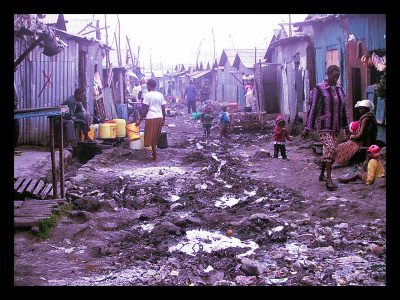
In South Asia, around twenty percent of the population is between the ages of 15 and 24. The region suffers from a lack of employment opportunities and with a projection of more than a million youth entering the labor force every month over the next twenty years, this is a problem that will only intensify. The idea behind this project is that the solution to massive unemployment should come from the youth themselves.

The World Bank and Microsoft are launching the project in Bangladesh, Maldives, Nepal, and Sri Lanka calling for proposals on how to use the information and communications technology to address the problems of lack of skills development and unemployment. One grant of US$10,000 to $20,000 will be given to each of these countries to the winners for use in carrying out their projects.

– Rafael Panlilio

Source: World Bank

April 11, 2013
https://borgenproject.org/wp-content/uploads/borgen-project-logo.svg 0 0 Borgen Project https://borgenproject.org/wp-content/uploads/borgen-project-logo.svg Borgen Project2013-04-11 09:54:272020-06-07 21:55:09Youth Solutions
Global Poverty

IMF Study Shows Possible Consequences of Economic Recession

IMF Study Shows Possible Consequences of Economic RecessionThe International Monetary Fund (IMF) released the results of a new study, showing that another global economic recession could throw nearly 900 million people back into poverty.

Although global poverty within the last decade has improved, over 1.2 billion people worldwide still live on $1.25 a day, and the IMF warns that the global economy that initially brought millions out of poverty is still extremely unsteady and at risk of failing.

The report cites global unemployment numbers, which are at a 20-year high, that shows unemployment around the world is now at 40 percent. The report goes on to state that an economic event, such as the recession of 2007-2009, could have significant negative effects on the world’s poorest people. Experts are alarmed with the recent economic woes in Cyprus that caused “eurozone chaos,” and also cite that the U.S. and Europe are close to another economic downturn.

Doubts in the U.S. economy have been exacerbated by the recent sequester, in which spending cuts could lead to hundreds of thousands of job furloughs and losses.

– Christina Kindlon

Source: Huffington Post

April 11, 2013
https://borgenproject.org/wp-content/uploads/borgen-project-logo.svg 0 0 Borgen Project https://borgenproject.org/wp-content/uploads/borgen-project-logo.svg Borgen Project2013-04-11 09:22:062020-06-07 21:56:34IMF Study Shows Possible Consequences of Economic Recession
Education, Global Poverty

Celebs Participate in 2013 Clinton Global Initiative University

Celebs Participate in 2013 Clinton Global Initiative UniversityThe Clinton Global Initiative University, now in its sixth year, is being hosted this week in St. Louis at Washington University. Along with former President Bill Clinton, TV host Steven Colbert and Twitter founder Jack Dorsey will attend the event that aims to include today’s youth in the world’s most pressing global challenges through college campuses. Various other celebrities, including Jada Pinkett-Smith and Chelsea Clinton are also attending the event.
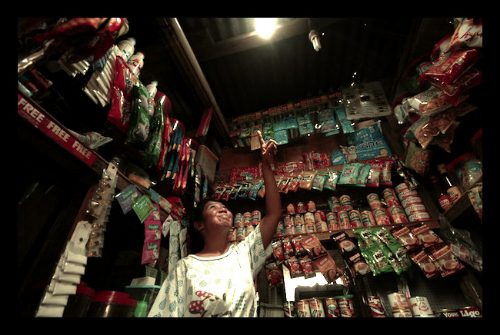
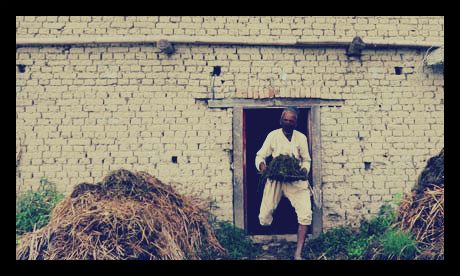

The event focuses on five main areas of interest relating to global issues, including poverty alleviation, public health, peace and human rights, education, and environment and climate change. The event is expecting around 1,200 participants to attend this year. Washington University is the host college this year because of its dedication “to training the next generation of civic leaders.”

Although the general public is not permitted into the event, some sessions can be viewed online via streaming video here.

– Christina Kindlon

Source: KMOV

April 11, 2013
https://borgenproject.org/wp-content/uploads/borgen-project-logo.svg 0 0 Borgen Project https://borgenproject.org/wp-content/uploads/borgen-project-logo.svg Borgen Project2013-04-11 09:22:042020-06-07 21:56:49Celebs Participate in 2013 Clinton Global Initiative University
Global Poverty

Let there be Light: Solar Bottle Bulbs Illuminate Filipino Cities

Let there be Light: Solar Bottle Bulbs Illuminate Filipino Cities

When a group of imaginative students at Massachusetts Institute of Technology (MIT) first designed an experiment to make light emanate from plastic water bottles, they never imagined that their minimalistic idea would literally and metaphorically light up the lives of over 15,000 people.

The idea seems deceivingly simple: take an empty one liter plastic bottle, fill it with purified water and a few drops of bleach for cleanliness, and cement it halfway through a small metal roof sheet. The plastic refracts sunlight and suddenly illuminates every corner of a dark room.

But while its physics is straightforward, its impacts have been far greater than any of the original designers could have imagined. Many slum homes in developing nations lack proper lighting because of how closely they are constructed in relation to one another, and the families often cannot afford the luxury of electricity. Over three million families live immersed in darkness in metropolitan Manila, a Filipino city where the bottle of captured light has made the greatest difference.

Filipino student Illac Diaz, the creator of the My Shelter Foundation, has made it his personal mission to brighten one million homes in the Philippines by utilizing this elementary yet ingenious invention. He calls his project Isang Litrong Liwanag – A Liter of Light. Today, with the help of various organizations and individual volunteers, Diaz and his solar bottle bulbs have lit up over 15,000 homes in over 20 Philippine cities.

Although it is not a perfect technology because it does not produce light during the nighttime hours, it is surprisingly effective in the sense that it uses inexpensive and locally available materials to illuminate homes that had never experienced the luxury of light before. The MIT students’ science along with Diaz’s motivation have extended this project’s impact beyond providing light.

The success of A Liter of Light is a great model of a sustainable solution for a variety of socio-economic problems worldwide. It is an idea of Appropriate Technologies, a concept that provides a simple, replicable technology that fulfills the needs of developing nations by utilizing the limited resources they have access to.

And the Philippines aren’t the only country. From the jungles of Uganda to riverbanks of Bangladesh, these solar bottle bulbs are continuing to make their mark on countries all over the world. And for those families that now have these makeshift light bulbs in their homes, something that spreads a stray ray into the darkest interior can be much more than a bright idea.

To find out more, visit aliteroflight.org.

– Angie Lou

Source: Let’s Talk Magazine

April 10, 2013
https://borgenproject.org/wp-content/uploads/borgen-project-logo.svg 0 0 Borgen Project https://borgenproject.org/wp-content/uploads/borgen-project-logo.svg Borgen Project2013-04-10 10:27:292024-05-24 23:42:58Let there be Light: Solar Bottle Bulbs Illuminate Filipino Cities
Global Poverty

Nepal Innovates Traditional Compost with Urine

Nepal_Urine_Fertilizer
Instead of using the traditional nitrogen-rich fertilizer typically used to encourage crop growth, researchers in Nepal are experimenting with an unlikely candidate for fertilizer: human urine.

Urea, which is typically used as fertilizer, was found by researchers in Nepal’s capital to be inferior to human urine in fertilizing crops. As part of their research, compost was mixed with different types of fertilizer sources, including urine mixed with compost, and the combinations were tested on pepper plants. The plants in which a mix of urine and compost was used grew the tallest plants that bore the most peppers.

Scientia Horticulturae, who released the study, attributed the positive affect of the unique mixture to “reduced nitrogen loss and enhanced availability of organic carbon in the soil.” The researchers conclude that human urine could be a possible alternative to traditional fertilizers in enhancing sustainable agriculture.

The study goes on to point out that although the use of urine may enhance crop growth, the use of it alone is not sufficient to have a positive effect on plants – it must be used in addition to compost. Currently in Nepal, farmers are applying urine directly to soil, which is not efficient.

Urine alone does not contain organic matter to become a viable source of nutrients for crops, but does provide “faster-releasing nutrients that complement slow-release nutrients from compost, which has a higher content of organic matter and beneficial microbes.”

Researchers acknowledge that although the combination of urine and  compost is sustainable, efficient, and cost-effective, marketing this to farmers may be difficult due to “cultural factors” and reluctance of farmers to handle human urine. Experts also cite that government subsidies to mineral fertilizers will stand in the way of widespread use of urine in agriculture.

– Christina Kindlon

Source: Guardian

April 10, 2013
https://borgenproject.org/wp-content/uploads/borgen-project-logo.svg 0 0 Borgen Project https://borgenproject.org/wp-content/uploads/borgen-project-logo.svg Borgen Project2013-04-10 09:13:432020-05-12 06:57:24Nepal Innovates Traditional Compost with Urine
Global Poverty

Volunteers Pitch Funding Needs


Coming to a theater near you… or perhaps just your computer screen. Talented Borgen Project volunteers were at the office pitching the cause on Monday.

April 9, 2013
https://borgenproject.org/wp-content/uploads/borgen-project-logo.svg 0 0 Borgen Project https://borgenproject.org/wp-content/uploads/borgen-project-logo.svg Borgen Project2013-04-09 16:35:442014-12-03 15:51:30Volunteers Pitch Funding Needs
Global Poverty

Coldplay and Oxfam Fight Land Grabs With “In My Place”

Coldplay and Oxfam Fight Land Grabs With “In My Place”An acoustic version of the Coldplay song “In My Place” has been donated to Oxfam to create a new unique campaign video that will be used to bring awareness to the problem of land grabs all over the world.

Land grabs occur when people have pushed off a tract of land without consultation or compensation because corporations, governments, and banks buy up the land to generate large profits. People are in effect moved off the places they call home. Since 2001, at least 80 million hectares of land deals have occurred forcing many families to find somewhere else to stay. The project is part of the GROW campaign which is working to create a more just and more sustainable world.

Working on the music video is award-winning director Mat Whitecross. Whitecross, using video clips and photos donated by fans and friends of Oxfam, will create a video that very uniquely sends the message of what these land grabs do to poor families all over the world.

“The concept is really simple,” says Whitecross. “I want you to take a room in your house and move it somewhere else, somewhere unexpected.”

Land grabs exacerbate the problem of poverty and hunger by denying people the homes they live in and the land they use to grow their food. With the video, Oxfam hopes to send a message that action must be taken to prevent land grabs and put people before profit.

– Rafael Panlilio
Source: Oxfam

April 9, 2013
https://borgenproject.org/wp-content/uploads/borgen-project-logo.svg 0 0 Borgen Project https://borgenproject.org/wp-content/uploads/borgen-project-logo.svg Borgen Project2013-04-09 12:00:292024-05-24 23:47:17Coldplay and Oxfam Fight Land Grabs With “In My Place”
Page 2162 of 2176«‹21602161216221632164›»

Get Smarter

  • Global Poverty 101
  • Global Poverty… The Good News
  • Global Poverty & U.S. Jobs
  • Global Poverty and National Security
  • Innovative Solutions to Poverty
  • Global Poverty & Aid FAQ’s
Search Search

Take Action

  • Call Congress
  • Email Congress
  • Donate
  • 30 Ways to Help
  • Volunteer Ops
  • Internships
  • Courses & Certificates
  • The Podcast
Borgen Project

“The Borgen Project is an incredible nonprofit organization that is addressing poverty and hunger and working towards ending them.”

-The Huffington Post

Inside The Borgen Project

  • Contact
  • About
  • Financials
  • President
  • Board of Directors
  • Board of Advisors

International Links

  • UK Email Parliament
  • UK Donate
  • Canada Email Parliament

Get Smarter

  • Global Poverty 101
  • Global Poverty… The Good News
  • Global Poverty & U.S. Jobs
  • Global Poverty and National Security
  • Innovative Solutions to Poverty
  • Global Poverty & Aid FAQ’s

Ways to Help

  • Call Congress
  • Email Congress
  • Donate
  • 30 Ways to Help
  • Volunteer Ops
  • Internships
  • Courses & Certificates
  • The Podcast
Scroll to top Scroll to top Scroll to top