• Link to X
  • Link to Facebook
  • Link to Instagram
  • Link to TikTok
  • Link to Youtube
  • About
    • About Us
      • President
      • Board of Directors
      • Board of Advisors
      • Financials
      • Our Methodology
      • Success Tracker
      • Contact
  • Act Now
    • 30 Ways to Help
      • Email Congress
      • Call Congress
      • Volunteer
      • Courses & Certificates
      • Be a Donor
    • Internships
      • In-Office Internships
      • Remote Internships
    • Legislation
      • Politics 101
  • The Blog
  • The Podcast
  • Magazine
  • Donate
  • Click to open the search input field Click to open the search input field Search
  • Menu Menu

Archive for category: Global Poverty

Key articles and information on global poverty.

Global Poverty

Business Process Outsourcing & Global Poverty

Business Process Outsourcing & Global Poverty

Business Process Outsourcing (BPO) has long been regarded by Americans solely as a process that takes away internal jobs and substitutes them for jobs overseas. However, the process could be doing a lot more to combat global poverty as well as boost the US economy than can be seen on the surface.

While working for Global Catalyst Partners, a man named Michael Chertok was able to see the results of BPO firsthand. He was given the task of creating jobs for the poor in Phnom Penh, Cambodia, and throughout the years, has given the opportunity of experience and greater education to more than 500 youth from the area. Many have been able to obtain university degrees and go on to professional jobs, earning “over five times more than the average high school graduate in Cambodia”.

BPO has also had an effect in other places, like the Philippines, which posted a 6.6% GDP growth in 2012. The Philippines look to remain one of the fastest-growing countries, facilitated in the most part by investments and economic aid from other countries. This economic development not only benefits the countries themselves but also those that invested in them.

Providing aid in order to lift regions out of poverty feeds back into the cycle by providing new consumer markets for investors to take advantage of. So, the more aid invested in other developing countries and impoverished areas, the greater the return in terms of new markets and a dramatic decrease in global poverty.

– Sarah Rybak

Sources: Huffington Post
Photo: Donny Brook

May 18, 2013
https://borgenproject.org/wp-content/uploads/borgen-project-logo.svg 0 0 Borgen Project https://borgenproject.org/wp-content/uploads/borgen-project-logo.svg Borgen Project2013-05-18 04:00:382020-06-21 22:12:29Business Process Outsourcing & Global Poverty
Global Poverty

USAID Launches Infrastructure Fund for Africa

USAID Launches Infrastructure Fund for Africa

The Administrator of the U.S. Agency for International Development (USAID), Rajiv Shah, the President of the African Development Bank (AfDB), Donald Kaberuka, and the Swedish Minister for International Development Cooperation, Gunilla Carlsson, recently announced a new fund called the Agriculture Fast Track. The Agriculture Fast Track is a $25 million fund that will spur greater private investment in agricultural infrastructure projects in sub-Saharan Africa. The Agriculture Fast Track fund is the first of its kind.

The announcement was made at the Grow Africa Forum in South Africa. Grow Africa is a partnership of the African Union, the New Partnership for Africa’s Development, and the World Economic Forum. It works with eight African countries to engage governments, civil society, and the private sector to advance sustainable agricultural growth.

The Agriculture Fast Track will spur agriculture infrastructure development in countries that are members of the New Alliance for Food Security and Nutrition, strengthening the links from farmers to markets to tables. It will also finance upstream work of project design, including feasibility studies, market analyses, site surveys, business plans, financial modeling, and other activities necessary to ensure project quality and bank-ability by supporting each project with up to $1.5 million. These project preparation grants will ultimately facilitate access to more funding for agriculture infrastructure because banks and other investors require this documentation to issue commercial loans.

The New Alliance for Food Security and Nutrition was launched last year by President Obama at the G-8 summit and includes six member countries: Burkina Faso, Côte d’Ivoire, Ethiopia, Ghana, Mozambique, and Tanzania. The New Alliance matches market-oriented regulatory reforms in these six countries with $3.7 billion in commitments from the private sector in agriculture.

The fund will be managed by the African Development Bank with the USAID pledging $15 million and the Government of Sweden, pledging $10 million, respectively.

Shah said, “Since the New Alliance for Food Security and Nutrition was founded last year, we’ve seen member countries make serious reforms that have led to real progress. The launch of the Agriculture Fast Track allows African farmers to take advantage of these reforms through fast-tracked infrastructure projects that will better deliver their products to markets.”

Carlsson noted, “By targeting the project preparation stage of projects, the Agriculture Fast Track will advance infrastructure projects when funding is most acutely needed to pivot from planning to construction. This targeted approach allows us to catalyze significantly more private sector investments and ensure the highest standards in terms of social and environmental sustainability.”

–  Essee Oruma

Source: USAID
Photo:NEPAD

May 18, 2013
https://borgenproject.org/wp-content/uploads/borgen-project-logo.svg 0 0 Borgen Project https://borgenproject.org/wp-content/uploads/borgen-project-logo.svg Borgen Project2013-05-18 04:00:072024-05-24 23:42:43USAID Launches Infrastructure Fund for Africa
Advocacy, Global Poverty

How Bono Got Interested in Global Poverty

How Bono Got Interested in Global Poverty

Nowadays, Bono’s face is synonymous with activism. The lead singer of U2 is known as much for his humanitarian work as for his music, if not more. Known for his charisma and tirelessness, Bono has been championing causes such as poverty reduction and AIDS relief for decades. He is the celebrity face of activism and has had incredible impact in garnering momentum for the movement of international aid.

Bono got his start in activism after he performed at Bob Geldorf’s groundbreaking fundraiser, Live Aid, in the late eighties. The performance spurred a month-long trip to Ethiopia with his wife, Ali Hewson, where they worked on a famine relief project. The two said they were stunned by the conditions, and Bono walked away determined to change what he’d seen. He repeatedly tells the story of the end of his visit, when a man asked the singer to take his son with him. As Bono explains, “He knew in Ireland that his son would live and in Ethiopia, his son would die…At that moment, I became the worst thing of all; I became a rock star with a cause.”

After that, his humanitarian work began in earnest and has only increased in intensity and scale. The early 90s saw tours around Central America and campaigns with major organizations to rally support for development work. As U2’s fame grew, so did Bono’s influence. He is a key player in a number of powerful advocacy organizations including DATA (Debt, Aid, Trade, Africa), the ONE campaign and the Make Poverty History movement, as well as launching an ethical fashion campaign and promoting the RED campaign. He’s famous for using his celebrity star power to draw attention to emergency causes throughout the world and has become a regular at political events. He’s been credited with the implementation of the US’s massive and incredible AIDS program in Africa and been awarded an honorary knighthood for his efforts.

– Farahnaz Mohammed

Sources: TED – Bono’s Call to Action for Africa
Photo: Andpop

May 17, 2013
https://borgenproject.org/wp-content/uploads/borgen-project-logo.svg 0 0 Borgen Project https://borgenproject.org/wp-content/uploads/borgen-project-logo.svg Borgen Project2013-05-17 13:53:072020-06-21 22:13:31How Bono Got Interested in Global Poverty
Global Poverty

What Are Social Safety Nets?

What Are Social Safety Nets?
Now that extreme global poverty has an expiration date, we can begin to think more closely about the methods that are helping us achieve this momentous goal. While some of them may seem obvious, such as providing better education and increased numbers of job opportunities, others are not so obvious. One of these methods is the idea of social safety nets.

Social safety nets are programs that help the poorest and most vulnerable people stay out of extreme poverty. These are the people who teeter on the edge of poverty and could fall back into their old lifestyle quickly if not helped. The programs help cushion them from unexpected crises, such as if a family member gets sick or their crops are destroyed in a natural disaster.

These social safety nets come in many forms and from many places. They can be in the form of cash, food, healthcare, or schooling, and they can come from the state, donors, or the private sector. The programs can also be altered to fit the particular needs of the country, and are not limited to countries with certain income levels. Also, increased technology is helping spread the rate at which people receive help from the programs, as well as allowing the aid to go to the people who need it most, therefore increasing its efficiency.

Social safety nets are one of the most important factors that can help not only eradicate extreme poverty but also make sure it’s gone for good.

– Katie Brockman

Source: The Guardian
Photo: NCRW

May 17, 2013
https://borgenproject.org/wp-content/uploads/borgen-project-logo.svg 0 0 Borgen Project https://borgenproject.org/wp-content/uploads/borgen-project-logo.svg Borgen Project2013-05-17 08:33:242020-06-21 22:13:51What Are Social Safety Nets?
Global Poverty

Living Below the Line: Attempting to Understand

Living Below the Line: Attempting to Understand
In an effort to help people understand what it means to live below the line of poverty, the Global Poverty Project organizes an annual campaign to raise funds and awareness for the 1.4 million people living in poverty around the globe. While the campaign strives to gain funding, it is also dedicated to helping people understand what a life of poverty means. Participants live for five days on the equivalent of about $1.50 USD. Since the beginning of this year, 20,000 individuals have taken the challenge alongside the GPP and a dozen partnered nonprofit organizations across three continents. This year the campaign took place from April 29 to May 3 in Canada, The United Kingdom, Australia, New Zealand, and The United States. However, the GPP is taking donations till May 31 and the challenge is open to anyone that wants to do it year-round.

In the United Kingdom, living below the line means living on £1 for five days. One couple, Jenna and Stuart Wills, fine dining enthusiasts, share their experience on living below the line. In a country where one pound, approximately $1.50 USD, doesn’t even buy a bus ticket, a sandwich, or elderberry cordial, the couple knew it was going to be rough.

At the beginning of the week, the couple decided to buy the cheapest staple foods they could find, rice and noodles but realized that they had spent more than half of their five days budget. Consequently, it was difficult to spread the remainder of the budget over the rest of the week. The organic, fair-trade and costly foods that the Wills’ usually dined on were set aside and bargain buys that weren’t quite as delectable were their only alternative. The couple learned to plan grocery-shopping trips to stores and markets close to closing time in order to buy foods that were to expire soon and slashed in price. As the days wore on, lack of luxury food items as simple as coffee took a toll on the couple in high tempers and mood swings.

While the challenge was difficult at times, the couple admits that what they endured for five days is nothing compared to true poverty. They recognize that they have never once wondered when they would eat next, they bragged about their bargain finds on Facebook, and went about their daily lives. Whenever they felt a bit hungry, they had the option to put another piece of bread in the toaster. The couple raised £435 for their chosen charity, Oxfam, and have taken the challenge as an opportunity to appreciate what they have and spread the word about extreme poverty around the world.

– Kira Maixner

Source Birmingham Mail, Live Below the Line US
Photo MSN Food UK

May 17, 2013
https://borgenproject.org/wp-content/uploads/borgen-project-logo.svg 0 0 Borgen Project https://borgenproject.org/wp-content/uploads/borgen-project-logo.svg Borgen Project2013-05-17 05:00:422024-06-05 01:53:29Living Below the Line: Attempting to Understand
Global Poverty

South African Airports Better Than the US

South African Airports Better Than the US
Skytrax- a UK based company that specializes in airline and airport research- recently ranked the top airports in the world. South African airports have topped the list in Africa, and have outdone many other countries, the United States included. The Skytrax survey covered 12 million people and surveyed them about their opinions of 39 different aspects of airport travel from staff to hotels, to shopping. The survey covered roughly 400 airports, and of those 400 airports, only three made the top 100 list, and all three were from South Africa.

Cape Town international airport was ranked as the best airport in Africa and came in 22nd place overall. The Cape Town Airport was also ranked highly for having excellent staff and is ranked as the top airport for airports with 5-10 million passengers yearly.

Also in South Africa is Durban King Shaka International Airport. Durban King Shaka was ranked as the second-best African airport and came in at 26th globally. It is the highest-ranked airport for fewer than five million passengers annually, has the second-best staff in Africa, and is the best regional airport in Africa. Both airports also increased their rankings from the previous year by five and nine points respectively.

The third-place African airport is Johannesburg or Tambo International Airport ranking on 28th globally, improving three places from the previous year. For airports with 10-20 million passengers, it is ranked 9th globally and it has the best airport hotel.

Impressively, all three South African airports beat Dubai International Airport and Sydney airport, as well as every American airport for this year’s ranking. These rankings indicate significant improvements to air travel in the developing world. South Africa’s commitment to its airports indicates an improving level of commerce and economic stability. While South Africa was the only country to break into the top 100 list, it is a sign of improving regional and continental improvements in airline infrastructure and travel.

– Caitlin Zusy
Source How We Made It in Africa
Photo Drive South Africa

May 17, 2013
https://borgenproject.org/wp-content/uploads/borgen-project-logo.svg 0 0 Borgen Project https://borgenproject.org/wp-content/uploads/borgen-project-logo.svg Borgen Project2013-05-17 05:00:042020-06-21 22:16:38South African Airports Better Than the US
Development, Global Poverty

How Long Will It Take to Lift One Billion People Out of Poverty?

india_poverty_child_rural_global_initiative_world_bank_g8_UN
In a 2013 paper published in the World Bank Research Observer, Martin Ravallion hypothesizes two possibilities in answer to the question, “How Long Will It Take to Lift One Billion People Out of Poverty?” In a pessimistic scenario, only factoring the developing world outside of China, he estimates that it would take 50 more years to achieve the task of lifting a billion relying on less than $1.25 per day. In a more optimistic scenario, he estimates that poverty reduction for a billion people could be achieved by 2025-30. At present, there are about 1.2 billion people globally subsisting on $1.25 per day.

Ravallion reasons that the optimistic scenario is possible if we continue with “staying-on-the-path” as seen in the 20 years between 1990 and 2010 in which the developing world halved its poverty rate. At this pace, it could be halved again in ten more years. This is not only because of China and India’s growth. Since 2000, gross domestic product (GDP) in the developing world has grown by 6% a year. The highest rates of GDP growth over the past decade have been in East Asia (8%), South Asia (7%), and Sub-Saharan Africa (5%) — “the three regions which account for the bulk of absolute poverty” globally. Ravallion’s findings defy the theory that developing countries are stuck in a poverty trap.

Ravallion points out that there are multiple solutions for lifting a billion people out of poverty such as fostering rapid economic growth, avoiding major financial and agro-climatic crises, and assuring that poor people are able to participate fully in that growth through access to schooling, health care, employment, and financial resources. The most sustainable solution for poverty reduction will vary from country to country and hence strategies to combat poverty should be derived at the country level.

But of course, why wait until 2025? If each country were given a boost in resources from foreign aid, each could expedite their poverty reduction efforts. Currently, the U.S. only contributes less than one percent of its federal budget to foreign aid.

– Maria Caluag

Source: World Bank
Photo:Tumblr

May 16, 2013
https://borgenproject.org/wp-content/uploads/borgen-project-logo.svg 0 0 Borgen Project https://borgenproject.org/wp-content/uploads/borgen-project-logo.svg Borgen Project2013-05-16 06:00:362020-05-29 21:48:43How Long Will It Take to Lift One Billion People Out of Poverty?
Development, Global Poverty

10 Things You Need to Know About Poverty

India_children_global_poverty_world_hunger_food_aid_international_affairs_department_of_state_foreign_economy_opt

Habitat for Humanity publishes a list of 25 things everyone should know about poverty in America and around the world. Below are 10 items from their list.

1. There are different definitions of poverty.
To define poverty, it is necessary to define what constitutes basic needs. Basic needs may be defined as narrowly as those things necessary for survival, or as broadly as the prevailing standard of living in the community. Thus, poverty in one area or part of the world may have quite a different meaning than in another area or part of the world. In the United States, poverty thresholds are determined by taking the cost of a minimum adequate diet for families of different sizes and multiplying that cost by three to allow for other expenses.

2. There is more to being poor than not having money.
“Poverty is not just about money: lack of access to essential resources goes beyond financial hardship to affect people’s health, education, security and opportunities for political participation. …While economic growth is essential to lifting people out of poverty, this alone is not enough.”—United Nations Development Programme Annual Report 2008

3. People still die from being poor.
More than 26,000 children under age 5 die each day, mostly from preventable causes. More than one-third of all child deaths occur within the first 28 days of life.—UNICEF, “State of the World’s Children,” 2008

4. Poverty directly affects many, many people every single day.
Some 1.2 billion people around the world live on less than a dollar a day, while almost 850 million people—almost three times the entire population of the United States—go hungry every night.—United Nations Development Programme Annual Report 2008

5. Women often face more challenges than men in overcoming poverty.
Women who become single heads of households, particularly in Africa, are significantly more vulnerable,because in many countries in the region they can access land only through husbands or fathers. Where women’s land ownership is relationship-based, they risk losing access to land after widowhood, divorce, desertion or male migration, which can lead to destitution.—United Nations’ Centre for Human Settlements, “State of the World’s Cities 2008/2009”

6. Yet women are an important part of the solution.
“Women have proven to be the best poverty fighters. Experience and studies have shown that they use the profits from their businesses to send their children to school, improve their families’ living conditions and nutrition, and expand their businesses.”—The Grameen Foundation

7. Poor people pay back loans.
The repayment rate for microfinance loans, a development strategy in which very poor people are loaned small amounts of money to incrementally improve their lives, is between 95 and 98 percent. In fact, it is higher than the repayment rate of student loans and credit card debts in the United States.—The Grameen Foundation

8. Defeating poverty creates dignity.
Marrie Gessesse, a mother of eight in the Amhara region of Ethiopia, used microfinance loans to buy goats and cultivate fruits and vegetables for income. Eventually, she was able to send her children to school. “No one used to consider me before,” she says. “When they saw that I was becoming autonomous, people started to respect me. Now they have elected me member of the administrative council and the women’s association.”—International Fund for Agricultural Development

9. Poverty is a moral issue.
Almost 9 million children are internally displaced because of armed conflict. Roughly 1.8 million children are trapped in the commercial sex trade, and the annual revenue generated from human trafficking is $9.5 billion.—UNICEF, 2007

10. Poverty is not inevitable.
In 1960, roughly 20 million newborns did not live to see their fifth birthday; by 2006, the most recent year for which firm estimates are available, the annual number of child deaths globally fell below 10 million, to 9.7 million, for the first time since records began.—UNICEF, “State of the World’s Children,” 2008.

– Délice Williams

Source: Habitat
Photo: Bargate

May 16, 2013
https://borgenproject.org/wp-content/uploads/borgen-project-logo.svg 0 0 Borgen Project https://borgenproject.org/wp-content/uploads/borgen-project-logo.svg Borgen Project2013-05-16 04:00:502020-05-29 21:48:0110 Things You Need to Know About Poverty
Global Poverty

Prince Harry Visits the US

Prince Harry Visits the US
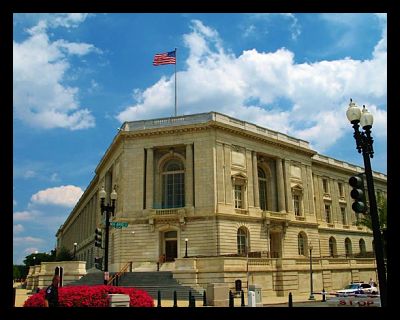
Much to the excitement of American women, Prince Harry was in the US from May 9th through the 15th of 2013. While Prince Harry was here he visited Capital Hill. He spent time at an anti-landmine photography exhibition that was put on by HALO Trust. Prince Harry is a patron of HALO Trust at the Russell Senate Office Building. He toured the exhibit with US Senator John McCain. The exhibit was overtaken by female congressional staffers who were eager to catch a glimpse of Prince Harry. Many women snapped a picture of him, on their cell phones, eager to share them with their friends.

Prince Harry’s visit to the United States is aimed at undertaking engagements on behalf of charities the prince is closely associated with. Additionally, the trip’s central theme is to support injured service personnel from the UK and US forces. Prince Harry’s agenda also includes The Warrior Games in Colorado Springs, which benefit veterans from the US and Britain, areas of New Jersey that suffered from Hurricane Sandy, Arlington National Cemetery in Virginia, and Greenwich, Connecticut for a Polo match. In Connecticut he will participate in the Sentebale Polo Cup, which is a match that was started by his charity of the same name, to raise money for Lesotho and other African regions struggling with poverty.

– Caitlin Zusy

May 15, 2013
https://borgenproject.org/wp-content/uploads/borgen-project-logo.svg 0 0 Borgen Project https://borgenproject.org/wp-content/uploads/borgen-project-logo.svg Borgen Project2013-05-15 08:27:332020-06-19 04:02:51Prince Harry Visits the US
Global Poverty

History of the UNHCR

History of the UNHCR
Over the 63-year history of the UNHCR, the staff, budget, legal framework, NGO network, geographic scope and expertise of the UN High Commissioner for Refugees has expanded. Despite the initially ambitious goal of solving all refugee problems in three years, the extended mandate of the UNHCR speaks to the consistent problem of refugees, internally displaced persons, asylum seekers, and stateless peoples.

WWII left around 400,000 people homeless refugees strewn across Europe. In 1950, the ambitious new global institution, the UN, created the UN High Commissioner for Refugees (UNHCR) under a three-year mandate to complete its work and then disband. With only 34 staff members and a $300,000 first-year budget, the UN quickly realized the magnitude of the problem far outweighed the resources of the body. A year after its inception, a legal foundation for assisting refugees was set up to establish a legal framework under which refugees can claim international rights. In recognition of the innovative humanitarianism the UNHCR performed, the new organization won the 1954 Nobel Peace Prize.

When the Soviets put down the Hungarian revolution in 1956, an outpouring of refugees into neighboring countries was a humanitarian emergency. The decolonization of Africa in the 1960s and pursuant demarcation of sovereign state boundaries “produced the first of that continent’s numerous refugee crises needing UNHCR intervention.” Through the 1970s and 1980s, the UNHCR advocated and assisted refugees in Asia and Latin America. In 1981 the UNHCR again won the Nobel Peace Prize for “assistance to refugees, with the citation noting the political obstacles facing the organization.”

When the Berlin Wall fell and proxy wars ended, governments previously ‘shored up’ by foreign assistance were weakened. This allowed the “proliferation of identity-based conflicts” causing new refugee problems. The 1990s brought the refugee emergencies full circle back to Africa and Europe with the wars in the Balkans. Throughout the 21st century, the UNHCR has been assisting refugees in the extremely sensitive crises of the Democratic Republic of the Congo and Somalia.

The UNHCR also expanded to assist internally displaced persons and stateless peoples—a politically divisive issue. Stateless peoples are frequently overlooked and denied basic human rights because they do not have citizenship. Fortunately, in some regions, regional agreements have strengthened the 1951 mandate.

As population movement becomes more complex so does the refugee situation. Approximately 150 million people live outside their country of birth. 10% of these people are refugees. This amounts to about 1 out of 400 people worldwide. Most often, refugees are created from violent conflict and recent research and practitioners’ experiences show humanitarian aid can no longer be considered independent of a conflict. Often, conflicting factions see the humanitarian body as supporting one side or the other making the aid workers and aid vulnerable to attack and manipulation.

Fortunately, the UNHCR has reflected the growing problem by growing size, scope, and depth of action. In 2012, the UNHCR had a budget of $3.59 billion and a staff of 7,685 based in the Geneva headquarters, 126 countries within which 135 main offices operate and 279 remote field offices function. Of the 43 million people uprooted worldwide, the UNHCR supports 33.9 million ‘people of concern.’ The two largest groups are internally displaced persons (14.7 million people) and refugees (10.5 million persons). The remaining group’s returnees (3.1 million), stateless people (3.5 million), asylum seekers (837,000) and ‘other’ (1.3 million).

– Katherine Zobre
Sources: UNHCR History , The State of the World’s Refugees 2000
Photo: UNHCR


May 15, 2013
https://borgenproject.org/wp-content/uploads/borgen-project-logo.svg 0 0 Borgen Project https://borgenproject.org/wp-content/uploads/borgen-project-logo.svg Borgen Project2013-05-15 04:28:122024-06-10 03:19:43History of the UNHCR
Page 2138 of 2161«‹21362137213821392140›»

Get Smarter

  • Global Poverty 101
  • Global Poverty… The Good News
  • Global Poverty & U.S. Jobs
  • Global Poverty and National Security
  • Innovative Solutions to Poverty
  • Global Poverty & Aid FAQ’s
Search Search

Take Action

  • Call Congress
  • Email Congress
  • Donate
  • 30 Ways to Help
  • Volunteer Ops
  • Internships
  • Courses & Certificates
  • The Podcast
Borgen Project

“The Borgen Project is an incredible nonprofit organization that is addressing poverty and hunger and working towards ending them.”

-The Huffington Post

Inside The Borgen Project

  • Contact
  • About
  • Financials
  • President
  • Board of Directors
  • Board of Advisors

International Links

  • UK Email Parliament
  • UK Donate
  • Canada Email Parliament

Get Smarter

  • Global Poverty 101
  • Global Poverty… The Good News
  • Global Poverty & U.S. Jobs
  • Global Poverty and National Security
  • Innovative Solutions to Poverty
  • Global Poverty & Aid FAQ’s

Ways to Help

  • Call Congress
  • Email Congress
  • Donate
  • 30 Ways to Help
  • Volunteer Ops
  • Internships
  • Courses & Certificates
  • The Podcast
Scroll to top Scroll to top Scroll to top