• Link to X
  • Link to Facebook
  • Link to Instagram
  • Link to TikTok
  • Link to Youtube
  • About
    • About Us
      • President
      • Board of Directors
      • Board of Advisors
      • Financials
      • Our Methodology
      • Success Tracker
      • Contact
  • Act Now
    • 30 Ways to Help
      • Email Congress
      • Call Congress
      • Volunteer
      • Courses & Certificates
      • Be a Donor
    • Internships
      • In-Office Internships
      • Remote Internships
    • Legislation
      • Politics 101
  • The Blog
  • The Podcast
  • Magazine
  • Donate
  • Click to open the search input field Click to open the search input field Search
  • Menu Menu

Archive for category: Global Poverty

Key articles and information on global poverty.

Education, Global Poverty, Health, Women and Female Empowerment

Poverty and Underage Marriage in Iraq

underage marriage
A pressing issue in Iraq without much resistance or counteraction is underage marriage. Out of the total number of marriages in 2013, 11% involved an underage girl, according to the Iraqi Ministry of Planning. Additionally, 25% of girls are married before the age of 18 and 6% are married before the age of 15. Also known as uneven marriages in Iraq, they are controversial because there are multiple motives behind them. While some girls are forced completely against their will, others enter an uneven marriage to lift themselves or their family out of poverty. For instance, there was a recent story of a 16-year-old girl married off to a man over the age of 60 at the request of her father, Abu Ali. His reasoning for this was to benefit his family, which lives in poverty. He had been supporting his five daughters on an income amounting to only $300 per month. Since the family had been suffering and struggling to make ends meet, Ali married off his daughter to help the situation. Ali said of the matter, “Poverty was an important reason that led me to agree to this marriage.” Besides the breach this has on women’s rights, it also contributes to negative health effects for young girls. Often these girls are expected to carry and raise children, but most are simply too young; pregnancy also poses high health threats. There is an increased possibility of miscarriage, internal bleeding and even maternal mortality. These adverse health risks are either ignored or unknown due to disregard for reproductive health for women. Damaging health effects are not the only consequence of underage marriage. Girls who have been married underage often drop out of school early. Girls lacking education have few options and opportunities and are forced to depend on marriage to sustain them. Since girls would be entering the workforce drastically less and would be unable to contribute to the economy, this also stifles human development. This epidemic exist in Iraq and many parts of the Arab region as well as sub-Saharan Africa. A study in June 2013 found that one in seven girls is married in the Arab region before she turns 18. Besides Iraq, underage marriage is most prevalent in Yemen, Somalia, Sudan and South Sudan, calculatedly the poorest countries in the area. In these countries, more than one third of girls are married before they turn 18, which is more than in Iraq. Not only is underage marriage detrimental to the lives involved, it also has consequences for societies on a larger scale. Even though some girls enter these marriages to alleviate poverty, in the long term it does more harm than good as underage marriage promulgates and reinforces a cycle of poverty. This is especially true since it causes girls to stop their schooling, leaving them unable to earn money of their own. Since this problem hinders society and human progress, it is a concern that should be reprioritized. – Danielle Warren Sources: Al-Monitor, Population Reference Bureau

February 28, 2014
https://borgenproject.org/wp-content/uploads/borgen-project-logo.svg 0 0 Borgen Project https://borgenproject.org/wp-content/uploads/borgen-project-logo.svg Borgen Project2014-02-28 11:53:442024-05-26 23:15:46Poverty and Underage Marriage in Iraq
Food Aid, Global Poverty

Malnutrition in Haiti: Philanthropic groups

world map
Since the catastrophic earthquake four years ago, the number of people suffering from malnutrition in Haiti has risen dramatically. Even before the earthquake hit, people were struggling to eat a nutritious balance of food, with complications from malnutrition contributing to 60% of deaths in children and a relatively high mortality rate in adults.

Although children are the primary worry, the concern regarding malnourishment extends to those sick with HIV and tuberculosis, pregnant women and young adults. Poor sanitation also contributes to poor health by spreading disease, which can critically damage the immune system or cause severe dehydration. Other effects of malnutrition include hindered mental and physical growth, emotional changes (depression or anxiety) and difficulty learning or concentrating.

There are ways to help ebb malnutrition in Haiti.  Here are a couple of philanthropic causes that are focused on heightening nutrition in Haiti.

The Nourimanba Production Facility

Located in a modest two-story building in Haiti’s Central Plateau, the Nourimanba Production Facility is more than it appears on the outside. The facility is quite sophisticated, using top-of-the-line stainless steel devices to process peanuts and mix the peanut based paste with vitamins in order to create a nutritious and essential medicine. Andrew Marx, Director of Communications at Partners in Health (PIH) stated that this facility enables 350 tons of Nourimanba to reach 50,000 children a year, with each child taking the medicine daily for up to eight weeks.  The company supports local peanut farmers and opens up an incredibly convenient and dependable market for the community to yield both sales and even jobs.

Hunger Relief International (HRI)

HRI works with local farmers to provide three meals per day consisting of beans, rice, cornmeal and pasta, to 1,450 orphans in 28 different orphanages. HRI also helps children and women plant gardens at homes and schools, helps tackle malnutrition in Haiti, promotes healthy eating and forms new sources of income for the communities. The easy access to nutritional food will relieve the families of unnecessary spending, which will allow their money to be spent on education or school supplies, for example.

World Food Programme (WFP)

WFP is a leading agency in the fight to provide young children and mothers with the proper nutrients necessary during crucial developmental stages. The WFP is working with the Ministry of Agriculture to build a link between local smallholder farmers and the school meal system to produce a greater market for farmers and cut down on food insecurity. An estimated 3,000 metric tons of rice will be bought from Haitian farmers during the current school year in order to provide the National School Meals Programme with a supply large enough to sustain the 685,000 children in school. Milk is also bought from local smallholder farmers and distributed to 84 different schools.

With continued support from these various causes, Haiti is making strides to rebuild its health and economy. Farmers and the most vulnerable members of the community are also being given the necessary resources needed to help strengthen them and curb malnutrition in Haiti.

– Becka Felcon

Sources: Partners in Health, Partners in Health, Hunger Relief International, World Food Programme

February 28, 2014
https://borgenproject.org/wp-content/uploads/borgen-project-logo.svg 0 0 Borgen Project https://borgenproject.org/wp-content/uploads/borgen-project-logo.svg Borgen Project2014-02-28 11:50:122024-05-26 23:16:22Malnutrition in Haiti: Philanthropic groups
Global Poverty

Robert Mugabe’s 90th Birthday

robert mugabe
President Robert Mugabe of Zimbabwe released 90 balloons into the air to celebrate his 90th birthday, surrounded by more than 45,000 people including school children, supporters and family. While Mugabe and his supporters were celebrating, the rest of Zimbabwe continued to suffer from economic collapse. Although Mugabe started out much like Nelson Mandela, as a prisoner-turned-freedom fighter, his selfish desire for power led him to become responsible for Africa’s poorest country. After seven terms and 34 years as president, Mugabe celebrates his 90th birthday.

Exercise

President Mugabe wakes up as early as 4 a.m. to exercise. He prefers not to use equipment, but rather just his body weight – something he learned to make use of after spending 11 years in prison for fighting for Zimbabwe’s liberation. He told BBC News, “In prison we had no equipment, we just had ourselves and that’s what I still do today.”

Resurrection

On his birthday, February 21, Mugabe was in Singapore for eye surgery. Despite rumors, Mugabe’s health appears to be in good condition. When he turned 88, he said, “I have died many times – that’s where I have beaten Christ. Christ died once and resurrected once.”

Cricket

Mugabe lives next to the Harare Sports Club, allowing him to watch national cricket matches. Mugabe believes cricket is a civil sport that has the power to create gentlemen.

Hating to Lose

Known to be a bad loser, Mugabe does not like to be interrupted when watching soccer. His wife, Grace, knows to give him space when watching the game because when his favorite team scores, Mugabe will kick and celebrate.

Music Taste

Mugabe prefered British pop star Cliff Richard to Bob Marley when choosing a musician to perform at an independence celebration in 1980. The Zimbabwean president was not keen on Rastafarianism because of the culture of smoking marijuana, drinking alcohol and letting their hair grow into dreadlocks, which Mugabe perceived as messy.

Appearance

Dressing as a gentleman, in brightly colored shirts and sports caps, Mugabe presents himself with an English style. Before a new stylist joined Mugabe’s team in 2000, his trademark was tailored suits with a matching tie and handkerchief.

Inspiration from Ghana

In 1957, Kwame Nkrumah led the Gold Coast to independence and it was the first country in sub-Saharan Africa to defeat colonial rule. Mugabe worked in Ghana as a teacher and was inspired by the liberation there.

Education

Mugabe has seven degrees, including two that he received while in prison. He graduated from South Africa’s University of Fort Hare with a bachelor of arts in 1951. He earned degrees in administration, education, science and law by distance learning.

Had a Child at 73

Mugabe and his wife have three children together – the youngest of whom was born in 1997, one year after the couple was married. Mugabe was 73 when his son, Chatunga, was born.

In August, Mugabe won elections for another five-year term. He has been president of Zimbabwe since 1980 and vying to replace him are vice President Joice Mujuru and Justice Minister Emmerson Mnangagwa.

While Mugabe spent the equivalent of one million dollars, the rest of Zimbabwe suffers in extreme poverty. Thousands are without food and water while Mugabe was cutting a 200-pound cake to celebrate his birthday – one of five 200-pounds cakes.

-Haley Sklut

Sources: BBC, BBC Africa, ABC News, University World News
Photo: Global Post

February 28, 2014
https://borgenproject.org/wp-content/uploads/borgen-project-logo.svg 0 0 Borgen Project https://borgenproject.org/wp-content/uploads/borgen-project-logo.svg Borgen Project2014-02-28 10:09:222024-05-26 23:15:22Robert Mugabe’s 90th Birthday
Foreign Policy, Global Poverty, Government

Death Penalty Holds Firm in Outlier Nations

death penalty
A decreasing number of nations around the world utilize capital punishment, but according to Amnesty International, countries that use the death penalty do so at an “alarming rate.” Between 2010 and 2011, known executions increased from 527 to 676, a 28% rise.

In 2012, the number increased again to 680. There are many executions in nations such as Iran, China and Syria that go unreported. Amnesty International has not published Chinese reported figures on executions since 2009 because the organization declares that the government’s official numbers are exceptionally inaccurate. The organization estimates that annual executions in China are likely to be in the thousands.

Iran faces similar criticism. Amnesty states that it has received “credible reports” of a high volume of clandestine and unconfirmed executions in the country. Adding in these reports would effectively double Iran’s death penalty numbers.

In 2011, only 20 out of 198 countries, or roughly 10%, performed executions, and in 2012 the number of countries that had abolished the death penalty was five times higher than those that had not.

Iran, Saudi Arabia, Iraq and the United States have the highest total number of executions from 2007 to 2012. The Middle East has the highest number of executions of any region (557 executions in six nations.) With the notable exception of the U.S., most countries that still use the death penalty are in the developing world.

The U.S. is the only G7 country where capital punishment is legal.

Methods of executing prisoners vary globally but include lethal injection, beheading, hanging and shooting. In some nations such as Iran, North Korea, Saudi Arabia and Somalia, public executions still occur.

Crimes that are punishable by death also vary but can include drug offenses, rape, sorcery, adultery, “crimes against the state” and murder. Amnesty International also articulates concern over an increase in military courts sentencing people to death in Bahrain, Egypt, Lebanon, the U.S. and other nations.

Japan, India and Pakistan, contrary to global trends, all reinstated the death penalty after long periods of not executing prisoners. In these nations, changes generally occur because different political parties come into power, which leaves sentenced prisoners’ fate to the politics of the moment.

More than half of the world’s nations voted in December 2012 for a United Nations resolution, creating a worldwide moratorium on the death penalty. And the international pressure on countries like the U.S. has intensified.

Due to stated ethical obligations, the European Union banned the export of drugs such as sodium thiopental to the U.S. because they were being used for lethal injections.

Richard Dieter of the Death Penalty Information Center states that the E.U. embargo has stalled, but not ended, executions in the U.S. He asserts, “It has made the states seem somewhat desperate and not in control, putting the death penalty in a negative light, with an uncertain future.”

Amnesty International, Human Rights Watch (HRW) and many other human rights groups oppose the death penalty in all circumstances. HRW states that capital punishment violates people’s innate dignity, is “unique in its cruelty and finality and is “inevitably and universally plagued with arbitrariness, prejudice, and error.”

When asked if he thought the world was closer to abolishing the death penalty, Brian Evans, acting director of Amnesty International’s Death Penalty Abolition Campaign, seemed to remain hopeful, if hesitant.

“They’ll come around when they take a longer look at their death penalties,” Evans states, “but it’ll be a while.”

– Kaylie Cordingley

Sources: National Geographic, The Atlantic, The Huffington Post, The Huffington Post, Amnesty International, Amnesty International, The Guardian, Death Penalty Information Center
Photo: Amnesty International

February 28, 2014
https://borgenproject.org/wp-content/uploads/borgen-project-logo.svg 0 0 Borgen Project https://borgenproject.org/wp-content/uploads/borgen-project-logo.svg Borgen Project2014-02-28 09:44:512024-05-26 23:15:26Death Penalty Holds Firm in Outlier Nations
Developing Countries, Development, Education, Global Poverty

Shortage in Public School Openings Hinders Education in Argentina

Argentina_school_children
According to the Buenos Aires Minister of Education Esteban Bullrich, 7,000 to 9,000 children aged one and a half months to three years will not be able to attend nursery school in 2014. This number has risen since last year, when 6,700 young children were unable to attend school and receive an education in Argentina.

Parents will either have to pay for a private school or search for other daycares that they are able to afford. Bullrich acknowledge that the Ministry was not able to accomplish and satisfy the expectations of the public.

The shortage of space in public schools and the “failures in the bureaucratic forms of information processing” caused 4,000 students to have to be moved to different schools farther away from their homes, Bullrich claims. This is an issue, particularly because there are no school buses in Argentina, so students have to walk or take some form of public transportation to school each morning.

Those families were initially told that there were vacancies for their students in schools, only to be made aware later that their students had to be removed from the lists.

Bullrich did however highlight that the recently developed online registration process was functioning properly “despite these mistakes.” He stated that although many students were unable to gain spots within the public schools, roughly 100,000 children were able to register and be placed. Statistically speaking, Bullrich says that the system was a success in regards to those who could be placed compared to those who could not.

Bullrich claims that since 2007 more spots have opened up in kindergartens, allowing 20 percent more students to gain an education in Argentina at a young age. There were approximately 45,956 vacancies in 2007 and currently there are 55,607 kindergarten vacancies in Buenos Aires.

The National Education Law and the City Constitution are butting heads regarding a student’s right to begin school. The National Education law states that school attendance is mandatory at the age of four, but the City Constitute claims that at 45 days old a child has the right to begin education.

The City Education Ministry recognizes that, “No government has achieved this so far.”

– Rebecca Felcon

Sources: The Argentina Independent, Country Reports, Buenos Aires Herald
Photo: Carlo Shiller

February 27, 2014
https://borgenproject.org/wp-content/uploads/borgen-project-logo.svg 0 0 Borgen Project https://borgenproject.org/wp-content/uploads/borgen-project-logo.svg Borgen Project2014-02-27 04:00:372024-05-26 23:16:26Shortage in Public School Openings Hinders Education in Argentina
Children, Food & Hunger, Global Poverty

Japanese Model Kurara Chibana as WFP Ambassador

WFP_Kurara_Chibana
Japanese model Kurara Chibana was recently appointed as the first Japanese National Ambassador to the United Nations World Food Programme (WFP). The 31-year-old model and Japanese celebrity uses her status to bring attention to those communities with scarce food resources and the issues faced in those communities.

As a former Miss Universe contestant, Chibana was the first runner-up for the 2006 competition cycle. The Okinawa native has since focused her energy on fighting world hunger alongside the WFP.

Chibana has held the position of WFP Celebrity Partner since 2007. Chibana has traveled to several developing countries.  To date, those countries include the Philippines, Zambia, Tanzania, Ethiopia and Sri Lanka.

The WFP is the largest humanitarian agency in the world fighting against hunger, and the Japanese government itself has consistently donated to the WFP.

In Tanzania, Chibana visited the Longido district of Arusha. There, Chibana spent time with the children of the Engikaret Primary School, a recipient school of WFP Tanzania. WFP Tanzania provides two meals to over 1,167 schools in regions vulnerable to droughts; meals that feed an estimated half million schoolchildren.

For her part, Chibana shared a meal with the children of Engikaret Primary School and visited the community of one of the school’s pupils. In 2011, donations amounted to $290 million, both from the public and private sector. The funds went to over 30 different countries in the form of foreign aid.

Furthermore, as an ambassador for the WFP, Chibana hopes to learn more about disaster preparedness and emergency protocols following natural disasters.

Oftentimes, celebrity power can draw hundreds of donors to a particular fundraiser that goes toward relief aid. Other times, celebrities such as Chibana use their international presence as a means to draw attention to otherwise globally voiceless communities.

– Miles Abadilla

Sources: Japan Times, Japan Update, Ryukyu Shimpo, Trust.org, World Food Programme 1, World Food Programme 2
Photo: WFP

February 27, 2014
https://borgenproject.org/wp-content/uploads/borgen-project-logo.svg 0 0 Borgen Project https://borgenproject.org/wp-content/uploads/borgen-project-logo.svg Borgen Project2014-02-27 04:00:182024-06-04 03:01:15Japanese Model Kurara Chibana as WFP Ambassador
Global Poverty

10 Nursery Rhymes from Around the World

nursery_rhymes_children
No matter the continent, nursery rhymes are the soundtrack to childhood. Their purposes vary, from soothing a child to sleep, to singing loudly on the playground to learning the ABCs. They are important tools to teach kids about nature, family and social practices. At any age, rhymes are fun to recite and provide a sense of innocence and playfulness that is too often robbed by economic and social hardships. More importantly, they show that children are children, no matter where they are born. Here are a few popular verses from cultures across the globe:

United States:
A-tisket, a-tasket
A green and yellow basket
I sent a letter to my love
And on the way I dropped it
I dropped it, I dropped it
Yes, on the way I dropped it
A little boy picked it up
And put it in his pocket

Kenya:
A tree planted on the riverbank
Look at its leaves
Playing with the wind
Even us, let’s play with the wind

Lesotho:
An elephant
Had a very long nose!
He went to take a mouse
He went to take a lizard
He tied them to a tree

Bolivia:
I have a doll dressed in blue,
Little white shoes and her lace shawl
I took her for a stroll, she got sick
I have her in bed in a lot of pain
Then I called the doctor and he prescribed me
A little prescription that cured her

Haiti:
Uncle Bouki, Uncle Bouki,
Are you sleeping? Are you sleeping?
Get up to play the drum, get up to play the drum
Ding, ding, dong! Ding, ding, dong!

Romania:
The stone bridge broke down,
The water came and took it down!
We’ll build another one,
Another one that will last and is even more beautiful!
We’ll build another one,
Another one that will last and is even more beautiful!

Greece:
Our kind grandmother
Has chickens in her yard
Chickens and chicks
Geese and Goslings
Our kind grandmother
Has a sewing machine
And sews and patches
Our grandfather’s pants

Sri Lanka:
In this orange tree, there are many ripe oranges
And branches hanging down.
Two oranges are enough for my sister and me.
We are not naughty children
Who pick all the oranges.

Turkey:
Sound of the birds all over the lowland
Everybody feels admiration for it
The honeybees settle on the flowers
The sweet lambs are looking for some grass
The leaves on the green trees
All these fragrant and fresh soils

French Polynesia:
Sleep baby
Mommy is at the reef
Daddy is in the valley
Looking for bananas
To make cooked bananas for baby

These nursery rhymes expose the beautiful similarities and variances of childhood in different cultures and show how each country approaches educational development through music.

– Stefanie Doucette

Sources: New York Times, Mama Lisa’s World
Photo: Fun Links Daily

February 27, 2014
https://borgenproject.org/wp-content/uploads/borgen-project-logo.svg 0 0 Borgen Project https://borgenproject.org/wp-content/uploads/borgen-project-logo.svg Borgen Project2014-02-27 04:00:132024-05-26 23:14:5210 Nursery Rhymes from Around the World
Advocacy, Developing Countries, Development, Disease, Food & Hunger, Food Aid, Food Security, Global Health, Global Poverty, Health, Human Rights, Hunger, Inequality, Sanitation, Water

5 Facts About Hunger in Rwanda

hunger_rwanda
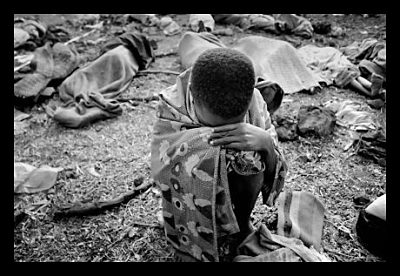
The Republic of Rwanda is a small sovereign state in the Eastern part of Central Africa. Rwanda ranked at 166 of 187 countries on the UNDP Human Development Index in 2011. Rwanda also has the highest population density in the region with 416 people per square kilometer.

Low income, limited natural resources, and food and water insecurity pose a problem for citizens in Rwanda every day. In the years following the Rwandan Genocide in 1994, international rebuilding efforts have been on the ground trying to make sustainable changes to alleviate some of the hunger and water issues.

Here are five facts that explain the state of hunger in Rwanda and how it may change in the coming years:

  1. The 1994 Rwandan Genocide marked the end of the ceasefire signed the year before that stopped the fighting of the Rwandan Civil War. The war began between two ethnic groups the Hutu and Tutsi. The Genocide began when the plane carrying the Hutu supported president Juvenal Habyarimana was shot down and he, along with several other members of the government, were killed. The genocide lasted 100 days and an estimated 800,000 to 1,000,000 people were killed. The fallout from the Rwandan Genocide is the cause for much of the instability in the region that lasts today.
  2. Secondary school attendance in Rwanda is one of the lowest in the world and the literacy rate is 55%.
  3. Approximately 65% of the population has access to safe, clean drinking water
  4. 45% of children under 5 years of age are malnourished.
  5. Over 67,000 refugees from neighboring countries currently reside in Rwanda.

Even though there is a lot of strain on the country today, organizations have been working with the government to address one of Rwanda’s major problems: food insecurity. Agriculture was the country’s main sector before the genocide, and since then, major efforts have been made to make it profitable one more.

Updating the agricultural practices is what the World Food Programme credits with directly reducing the number of food insecure people.

The country hopes that with the reliance on agricultural programs it will improve its GDP to US$900 by the year 2020, up US$380 from its current GDP. Rwanda was also the first country to sign the Comprehensive Africa Agriculture Development Programme (CAADP), meaning that addressing malnutrition and food insecurity is one of the government’s main priorities.

Even though Rwanda still has a long way to go, the government has been taking steps in the right direction that could provide a template for other countries in the region to follow.

– Colleen Eckvahl

Sources: World Food Programme, World Vision
Photo: Rising Continent

February 26, 2014
https://borgenproject.org/wp-content/uploads/borgen-project-logo.svg 0 0 Borgen Project https://borgenproject.org/wp-content/uploads/borgen-project-logo.svg Borgen Project2014-02-26 22:20:472024-05-24 23:56:425 Facts About Hunger in Rwanda
Advocacy, Developing Countries, Development, Global Poverty, Human Rights, Inequality, Nonprofit Organizations and NGOs, Violence Against Women, Women, Women & Children

Conditions for Garment Workers in Bangladesh

garment_workers_bangladesh
When people buy from brands like Nike and shop at stores like H&M and Gap, they do not pay much attention to how the products arrived at the stores. In many cases, these clothing products are produced in sweatshops in developing countries like Bangladesh, Cambodia, and Indonesia. Almost half of the population in Bangladesh lives off of less than a dollar a day.

Garment workers in Bangladesh toil day after day under extremely harsh conditions for low wages, sometimes handling dangerous chemicals with their bare hands and inhaling toxic fumes due to poor ventilation in many factories.

In April of 2013, an eight story building in Bangladesh called Rana Plaza collapsed leaving over 100 dead and over 2,000 injured.

The poor conditions of the factory itself and the lack of safety precautions taken to ensure its workers’ well-being were neglected and therefore led to the collapse. In addition to this incident, there has been a history of factory mishaps over the past couple of years in Bangladesh. In November of 2012, the Tazreen garment factory in Bangladesh caught fire and killed 112 of its workers.

At this time, the factory was producing goods for Walmart.

Besides the incidents themselves, it is also important to focus on the working conditions and the violations of human rights that happen daily in factories like these. According to the Institute for Global Labor and Human Rights, workers in the Tazreen factory work 72-81 hours per week. Their salary depends on their sewing skill; senior sewing operators earn at minimum 23 cents per hour and junior sewing operators earn 21 to 22 cents an hour.

As a majority of the workers are women, abuse is common and some are even denied maternity leave — blatant violations of human rights that have been occurring for years. Even after one tragedy, further precautions are not taken to ensure the safety of the workers.

An article from the Daily Mail accounts a Canadian journalist who worked undercover in Bangladesh and witnessed the atrocities of one of the smaller garment factories. She reported that when she first arrived at the sweatshop, a nine-year-old girl named Meem was in charge of training her.

The article also noted that there were “no fire extinguishers, only one exit – the front door – and little more than a hole in the ground, down a rat-infested hall, for the toilet.” These accounts present the harsh reality for many garment workers in Bangladesh.

Violations of human rights are happening elsewhere too—most recently in Cambodia. Workers there have started protesting in the city Phnom Penh for higher wages.

Sometimes people take things for granted because they are easily accessible. Organizations like the Clean Clothes Campaign have been established to spread awareness of this issue and to help those who have been detained for protesting for higher wages and better conditions. By not purchasing products from companies who outsource their work unfairly to other countries, a better future can be created for garment workers whose human rights have been violated.

– Kenneth W. Kliesner

Sources: BBC News, The New York Times 1, The New York Times 2, The Epoch Times
Photo: Demotix

February 26, 2014
https://borgenproject.org/wp-content/uploads/borgen-project-logo.svg 0 0 Borgen Project https://borgenproject.org/wp-content/uploads/borgen-project-logo.svg Borgen Project2014-02-26 22:19:382024-06-04 01:17:34Conditions for Garment Workers in Bangladesh
Development, Global Poverty

U.S. and Russia Clash Over Ukraine

u.s._russia
In a Cold War-style competition between the U.S. and Russia, Ukraine’s ousting of President Viktor Yanukovych insinuates that the West, for now, holds the upper hand. Yet saying so could fuel the Russian fire to turn back the current state of affairs.

The conflict began when Yanukovych refused to sign a free-trade agreement between Ukraine and the E.U., instead leaning on inevitable trade ties with its Russian counterpart to the East. Many Ukrainians did not see the appeal. On February 21, in response to violent protests and backlash, Yanukovych gave up responsibility for his country.

Purporting to support a peaceful transition in Ukraine, President Barack Obama and senior officials discussed the situation with Russian President Vladimir Putin and his aides. The main effort emphasized a multibillion-dollar aid package for Ukraine with the International Monetary Fund. Various governments in the European Union support this endeavor, or at least intend to contribute economically to peace in Ukraine.

Ultimately, the goal is to keep Russia from sending troops into the country. Interference by Russia in order to restore a pro-Russian government in Ukraine would be detrimental to all parties involved. United States national security advisor Susan Rice emphasized on an episode of Meet the Press that Russian interference “would be a grave mistake.” Likewise, British Foreign Secretary William Hague stressed the importance of persuading “Russia that this need not be a zero sum game.”

The U.S. and Russia, according to Rice, share hopes for a unified, independent Ukraine that is capable of exercising freedom amongst its people. Obama and Putin jointly aim to see the agreement of February 21 carried out in peaceful terms. Constitutional reforms, near-term elections and a government to bring together the unified desires of the Ukrainian people shall be implemented in due process. These efforts shall reflect “the will of the Ukrainian people and the interests of the United States and Europe,” said Rice.

While Rice did not mention Russian interests, one might hope that continued violence is not among them. Perhaps diplomacy can win this war.

– Jaclyn Stutz 

Sources: Businessweek, Foreign Policy, New York Times, Wall Street Journal
Photo: BASIC

February 26, 2014
https://borgenproject.org/wp-content/uploads/borgen-project-logo.svg 0 0 Borgen Project https://borgenproject.org/wp-content/uploads/borgen-project-logo.svg Borgen Project2014-02-26 22:18:542024-05-26 23:15:41U.S. and Russia Clash Over Ukraine
Page 2037 of 2162«‹20352036203720382039›»

Get Smarter

  • Global Poverty 101
  • Global Poverty… The Good News
  • Global Poverty & U.S. Jobs
  • Global Poverty and National Security
  • Innovative Solutions to Poverty
  • Global Poverty & Aid FAQ’s
Search Search

Take Action

  • Call Congress
  • Email Congress
  • Donate
  • 30 Ways to Help
  • Volunteer Ops
  • Internships
  • Courses & Certificates
  • The Podcast
Borgen Project

“The Borgen Project is an incredible nonprofit organization that is addressing poverty and hunger and working towards ending them.”

-The Huffington Post

Inside The Borgen Project

  • Contact
  • About
  • Financials
  • President
  • Board of Directors
  • Board of Advisors

International Links

  • UK Email Parliament
  • UK Donate
  • Canada Email Parliament

Get Smarter

  • Global Poverty 101
  • Global Poverty… The Good News
  • Global Poverty & U.S. Jobs
  • Global Poverty and National Security
  • Innovative Solutions to Poverty
  • Global Poverty & Aid FAQ’s

Ways to Help

  • Call Congress
  • Email Congress
  • Donate
  • 30 Ways to Help
  • Volunteer Ops
  • Internships
  • Courses & Certificates
  • The Podcast
Scroll to top Scroll to top Scroll to top