• Link to X
  • Link to Facebook
  • Link to Instagram
  • Link to TikTok
  • Link to Youtube
  • About
    • About Us
      • President
      • Board of Directors
      • Board of Advisors
      • Financials
      • Our Methodology
      • Success Tracker
      • Contact
  • Act Now
    • 30 Ways to Help
      • Email Congress
      • Call Congress
      • Volunteer
      • Courses & Certificates
      • Be a Donor
    • Internships
      • In-Office Internships
      • Remote Internships
    • Legislation
      • Politics 101
  • The Blog
  • The Podcast
  • Magazine
  • Donate
  • Click to open the search input field Click to open the search input field Search
  • Menu Menu

Archive for category: Global Poverty

Key articles and information on global poverty.

Global Poverty

Poverty in Cairo

poverty in cairo
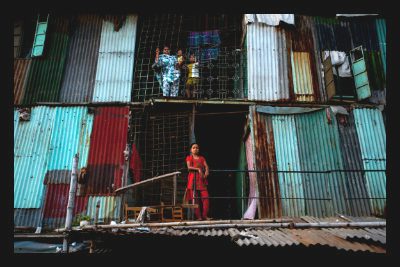
Cairo is a city of history and architecture, but the city is also struggling with extreme poverty.

Over 40 percent of Egyptians are living below the poverty line, according to the World Bank, and as war and conflict spread through the area, that number is expected to increase. Poverty in Cairo has forced many families to put off marriage and children, or to put their young children straight to work. Many are stuck in Cairo because they simply can’t afford to live anywhere else or climb the economic ladder.

The unstable government has also contributed to the increase in poverty, but many Egyptians hope to see an established government body in the near future that offers democracy to the public.

According to the Department of Developmental Studies, or DDS, the poverty in Cairo is severely underestimated. In an essay by Sarah Sabry of the DDS, she writes that the “poverty lines are set too low in relation to the costs of the most basic of needs in the city and because census data…under-count the people living in Cairo.”

Like many countries suffering from increasing poverty, the children of the region seem to be hit the hardest. Most children do not have a well-balanced diet, which leads to growth and educational problems in the future. Many children do not attend school or educational programs either because their parents cannot afford it or the children are sent to work during the day.

Greater Cairo has eight informal settlements, and all eight have a large population living below the established poverty line. Education is poor, malnutrition rates are high and health conditions are often unsanitary. Poverty-stricken areas, known as slums, are becoming overcrowded, which causes diseases to easily spread, particularly among young or weak children.

Egypt relies heavily on tourism, which brought in approximately $13 billion in 2010. However, an impoverished Cairo is seeing less tourism and, in turn, less profit.

The future is unpredictable for the Land of the Pharaohs.

– Alaina Grote

Sources: Alarabitya, IRIN News, Sagepub
Photo: Flickr

February 23, 2015
https://borgenproject.org/wp-content/uploads/borgen-project-logo.svg 0 0 Borgen Project https://borgenproject.org/wp-content/uploads/borgen-project-logo.svg Borgen Project2015-02-23 04:00:212024-06-05 01:58:24Poverty in Cairo
Global Poverty

10 Interesting Facts About MLK

facts about MLK
As the single most influential individual associated with the Civil Rights Movement, Martin Luther King Jr. lived life under a spotlight. His legacy continues to be praised to this day for his courage, passion for justice and his devotion to civil equality. An advocate for nonviolence, Martin Luther King Jr. brought masses together in his time to fight against oppression with words and peaceful demonstration rather than brutality, violence and war.

His birthday, now a national holiday, celebrates and teaches many of the major highlights in his life, and resulted in a nation well-versed in his incredible life, justice goals and untimely, his martyred death.

For a man so inspiring, every day words that he spoke became inspirations to the public. Speeches and statements he gave lit a flame in the hearts of people who craved social justice and equality. In honor of Black History Month, here are 10 interesting facts about MLK, one of the most profound and inspiring American heroes:

    1. Originally, Martin was not his first name—it was actually Michael. His father, Martin Luther King Sr.’s, name was also originally Michael but after a trip to Germany, he changed both Michaels to Martin in homage to the historic German, Martin Luther.
    2. He and his wife, Coretta Scott, had four children named Yolanda Denise, Martin, Dexter and Bernice Albertine.
    3. He graduated with a Ph.D. in Systematic Theology in 1955.
    4. He was arrested on Jan. 26, 1956, for driving 30 mph in a 25 mph zone.
    5. Just four days later on Jan. 30, his house was bombed.
    6. In 1957, it is estimated that MLK traveled more than 780,000 miles and made 208 speeches.
    7. MLK had a lifelong admiration for Gandhi and visited India in 1959—crediting Gandhi’s passive resistance techniques for his civil rights successes.
    8. The first national celebration of MLK’s birthday was not until 1986.
    9. It is estimated that more than 700 streets in the U.S. are named after Dr. Martin Luther King Jr.
    10. At 35, King was the youngest man to have won the Nobel Peace Prize. All of his monetary winnings from the award were put toward furthering the issue of civil rights and towards civil rights movements.

– Eastin Shipman

Sources: Nobel Prize, The Seattle Times
Photo: Biography

February 21, 2015
https://borgenproject.org/wp-content/uploads/borgen-project-logo.svg 0 0 Borgen Project https://borgenproject.org/wp-content/uploads/borgen-project-logo.svg Borgen Project2015-02-21 12:00:202020-07-15 22:39:5010 Interesting Facts About MLK
Global Poverty

Why Poverty Persists in Johannesburg

poverty_in_johannesburg

Since the eradication of apartheid in 1994, many South African residents have gradually seen improvements in their quality of life. Nevertheless, poverty still plagues the lives of many South Africans, and residents of the capital city of Johannesburg are no exception.

An estimated 20 percent of Johannesburg residents live in abject poverty, the Johannesburg government website reports. These residents often live in informal settlements that lack electricity, proper roads or any other form of direct municipal services. Another 40 percent live in “inadequate housing,” with insufficient municipal services.

More specifically, the Johannesburg City Council reports that 16 percent of households in Johannesburg lack municipal sanitation, 15 percent do not receive municipal electricity and unemployment stands at 30 percent.

Poverty in Johannesburg still generally falls along distinct racial lines, with black residents making up 72 percent of Johannesburg’s “poor,” according to the government website.

The government attributes much of the city’s poverty to apartheid’s enduring legacy. During apartheid, Johannesburg was divided into a series of local districts segregated by race, with the white districts being substantially wealthier and more self-sufficient than the black districts. Today, racial districting has ended, and the Johannesburg municipal government has been tasked with overseeing seven times the population it had under apartheid.

Illegal immigration also places major stresses on the city, the Johannesburg government reports. In sufficient numbers, migrants from other African countries can strain city and provincial services, which are “allocated on the basis of legal population.”

In response to these issues, the Johannesburg City Council has identified a series of reforms to be implemented, including progressive tax cuts for low-income property owners, low-income senior citizens and low-consumption water users; greater funding to community health services, such as reproductive health care; immunization programs; investment in housing infrastructure; and an overhaul of the city’s transportation system.

As a nation overall, South Africa ranks poorly in several global indicators of national health and prosperity. According to the World Bank, nearly one in ten South Africans live on less than $1.25 a day, one in four are unemployed and one in five are infected with HIV.

– Katrina Beedy
Sources: City of Johannesburg, World Bank 1, World Bank 2, World Bank 3
Photo: Flickr

February 19, 2015
https://borgenproject.org/wp-content/uploads/borgen-project-logo.svg 0 0 Borgen Project https://borgenproject.org/wp-content/uploads/borgen-project-logo.svg Borgen Project2015-02-19 11:00:282024-05-25 00:13:36Why Poverty Persists in Johannesburg
Foreign Aid, Global Poverty, Poverty Reduction

Top Books About Global Poverty

books about poverty
Despite tremendous progress over the past few decades in eradicating global poverty, nearly a fifth of the world still lives on less than $1.25 a day. In recent years, a number of economists, academics, and political analysts have published books providing insight into the causes, effects, and solutions to global poverty. Here are some top books about global poverty that particularly stand out:

The Bottom Billion: Why the Poorest Countries are Failing and What Can Be Done About It (2007)

By Paul Collier

“Economist and Africa expert Collier analyzes why a group of 50 nations, home to the poorest one billion people, are failing. Considering issues such as civil war, dependence on extractive industries, and bad governance, he argues that the strongest industrialized countries must enact a plan to help with international policies and standards.” – Amy Lockwood, Stanford Social Innovation Review

Creating a World Without Poverty (2007)

By Muhammad Yunus

“As founder of Grameen Bank, Yunus pioneered microcredit, the innovative banking program that provides poor people mainly women with small loans they use to launch businesses and lift their families out of poverty. Now, in Creating a World Without Poverty, Yunus goes beyond microcredit to pioneer the idea of social business – a completely new way to use the creative vibrancy of business to tackle social problems from poverty and pollution to inadequate health care and lack of education.” – Yunus Centre

The Beautiful Tree: A Personal Journey into How the World’s Poorest People Are Educating Themselves (2009)

By James Tooley

The Beautiful Tree “tells the remarkable story of author James Tooley’s travels travels from Africa to Asia, and of the children, parents, teachers, and others who showed him how the poor are building their own schools and learning to save themselves.” –The Cato Institute

The End of Poverty: Economic Possibilities for Our Time (2006)

By Jeffrey Sachs

“Sachs outlines a detailed plan to help the poorest of the poor reach the first rung on the ladder of economic development. By increasing aid significantly to provide the basic infrastructure and human capital for markets to work effectively, Sachs argues such investment is not only economically sound but a moral imperative.” – Amy Lockwood, Stanford Social Innovation Review

The White Man’s Burden: Why the West’s Efforts to Aid the Rest Have Done So Much Ill and So Little Good (2006)

By William Easterly

“Easterly, a celebrated economist, presents one side in what has become an ongoing debate with fellow star-economist Jeffrey Sachs about the role of international aid in global poverty. Easterly argues that existing aid strategies have not and will not reduce poverty, because they don’t seriously take into account feedback from those who need the aid and because they perpetuate western colonial tendencies.” – Amy Lockwood, Stanford Social Innovation Review

The Wealth and Poverty of Nations (1998)

By David Landes

“The Wealth and Poverty of Nations is David S. Landes’s acclaimed, best-selling exploration of one of the most contentious and hotly debated questions of our time: Why do some nations achieve economic success while others remain mired in poverty? The answer, as Landes definitively illustrates, is a complex interplay of cultural mores and historical circumstance.” – W.W. Norton & Company, Inc

Fortune at the Bottom of the Pyramid: Eradicating Poverty Through Profits (2006)

By C.K Pralahad

“Explaining that the world’s five billion poor make up the the fastest growing market in the world, Prahalad shows how this segment has vast untapped buying power, and represents an enormous potential for companies who learn how to serve this market by providing the poor with that they need.” – Amazon

Out of Poverty: What Works When Traditional Approaches Fail (2009)

By Paul Polak

“Polak, a psychiatrist, has applied a behavioral and anthropological approach to alleviating poverty, developed by studying people in their natural surroundings. He argues that there are three mythic solutions to poverty eradication: donations, national economic growth, and big businesses. Instead, he advocates helping the poor earn money through their own efforts of developing low-cost tools that are effective and profitable.” – Amy Lockwood, Stanford Social Innovation Review

Dead Aid: Why Aid is Not Working and How There Is a Better Way for Africa (2009)

By Dambisa Moyo

“Moyo, a Zambia-born economist, asserts that aid is not only ineffective—it’s harmful. Her argument packs a strong punch because she was born and raised in Africa. Moyo believes aid money promotes the corruption of governments and the dependence of citizens, and advocates that an investment approach will do more to help reduce poverty than aid ever could.” – Amy Lockwood, Stanford Social Innovation Review

– Katrina Beedy

Sources: Stanford Social Innovation Review, Flavor Wire, Muhammad Yunus, WW Norton, Amazon
Photo: Cheryl Ann Skolnicki

February 18, 2015
https://borgenproject.org/wp-content/uploads/borgen-project-logo.svg 0 0 Borgen Project https://borgenproject.org/wp-content/uploads/borgen-project-logo.svg Borgen Project2015-02-18 11:00:452024-06-05 01:58:24Top Books About Global Poverty
Global Poverty, Poverty Reduction

Operation Lifeline Sudan

sudan
Crisis and conflict are nothing new for Sudan. After the Second Sudanese Civil War that ended in 2005, the country has struggled to stand back up. Violence, rebels, political tension, and war have ravaged the country for years.

Operation Lifeline Sudan began 25 years ago in 1989, hoping to provide relief to those caught in the middle of the Sudanese civil war. Operation Lifeline Sudan, or OLS, was the first operation in which the U.N. conferred with an unrecognized non-state armed group. According to the Secure Livelihoods Research Consortium, OLS was the largest-ever coordinated humanitarian effort. The report goes on to say that “negotiating with parties to the conflict enabled OLS to become the first relief effort in an active ‘non-international conflict,’ which expanded the realm of possibility surrounding emergency relief and humanitarian response.”

Dr. Lam Akol Ajawin, a South Sudanese politician, notes that OLS created a Sudan that thrived in peace, but that Sudan has been deteriorated by recent political aggression and rebellious acts of violence.

“OLS saved lives … That was its declared mandate. However, it is evident that the initiative created an atmosphere conducive to peace as it was demonstrated by the accelerated peace efforts,” Ajawin said.

OLS has taught the world many lessons through its success during the Sudanese civil war (1989-2005). As Sudan is caught in turmoil again, it may be time to follow in OLS’s footsteps.

In the past 10 months, thousands of Sudanese people have been killed in conflict and many more have been injured. Approximately 1.4 million have been displaced or fled their homes, taking refuge in neighboring countries such as Ethiopia and Kenya. With overcrowding and supplies running short, the poverty rate is slowly increasing for Sudan.

Here are the key lessons that OLS taught that may once again save Sudan:

    1. Coordinate with numerous parties and keep everyone engaged
    2. Negotiate with conflict parties to avoid misunderstandings
    3. Make the most of local networks
    4. Stay flexible
    5. Address underlying causes and exploit peace building opportunities

Before the current conflict, Sudan seemed to be shifting toward development. While the conflict may have stalled this production, there is still infinite hope for Sudan and all Sudanese people to live a life of peace.

– Alaina Grote

Sources: Conciliation Resources, IRIN, Secure Livelihood Consortium, New York Times
Photo: Static Flickr

February 17, 2015
https://borgenproject.org/wp-content/uploads/borgen-project-logo.svg 0 0 Borgen Project https://borgenproject.org/wp-content/uploads/borgen-project-logo.svg Borgen Project2015-02-17 11:00:112024-12-13 17:51:20Operation Lifeline Sudan
Global Poverty

Croatia’s Debt Relief Offers Fresh Start

fresh start
For the past six years Croatia has been struggling to pull itself out of a severe economic downturn, one of the worst in the EU. The country’s unemployment rate stands at close to 20 percent, the average salary is just $852 a month and the country’s credit rating is below investment grade. Economic growth for 2015 is expected to be less than one percent.

In an effort to combat the crisis, the government has instituted a new program, known as “Fresh Start,” cancelling the debts of the country’s poor. The program is available to all Croatians who live below the poverty line of $138 a month and do not owe more than $5,100 in debt. In total it is estimated that 60,000 Croats can expect debt relief, and 20,000 have already applied.

The government hopes and argues that by cancelling the debt of its poorest citizens it will alleviate poverty and boost the country’s economy. Without the burden of debt repayments draining peoples’ finances, supporters of the program argue that it will enable the poor to spend more on basic necessities and that this increase in spending will help to pull the country out of the recession.

But the program is not without critics. Some argue that it will make little difference in the long run and that beneficiaries will simply end up back in debt with very high premiums, assuming they can secure new loans at all. Other critics argue that the program is a short term solution that fails to tackle long term problems contributing to the recession and fails to create jobs or provide other means to lift people out of poverty.

Then there are other critics who argue that the program does not go far enough as it fails to help those who owe more than $5,100 or earn more than $138 a month. Many applicants have been turned away for owing too much money. Many others who earn too much to qualify still live in poverty and struggle with financial hardships caused by the burden of repaying debt to creditors.

Many critics also see this as an effort by the government to win votes in the upcoming elections set for later this year. But whatever the motivations behind Fresh Start, the real question is whether it will work. The government was successful at convincing the country’s top private and public sector creditors to agree to the program, which is expected to wipe out one to seven percent of Croatians’ debts. This in turn is expected to free close to 20 percent of Croatian debtors.

There is an ongoing debate about both the effectiveness and morality of debt relief. There are numerous organizations lobbying for debt relief to the poor both at home and abroad and numerous other groups opposed to it. But in Croatia, the idea is now being put to the test.

– Matt Lesso

Sources: Mic Network, The Financial Times, Washington Post, New York Times, RTE Dublin
Photo: Panteres

February 17, 2015
https://borgenproject.org/wp-content/uploads/borgen-project-logo.svg 0 0 Borgen Project https://borgenproject.org/wp-content/uploads/borgen-project-logo.svg Borgen Project2015-02-17 04:00:452024-12-13 17:51:20Croatia’s Debt Relief Offers Fresh Start
Global Poverty, Inequality

Poverty in Afghanistan: 5 Facts You Might Not Know

Poverty in Afghanistan
When we talk about Afghanistan or hear about it in the news, it can be very easy to forget that the insurgents are people and that a huge portion of them are suffering through extreme poverty. For the average Afghan, life can be very difficult and stricken with economic struggle, food insecurity, and a lack of resources to improve their lives. Discussed below are facts that may come as a surprise about those living in poverty in Afghanistan.


Top 5 Facts about Poverty in Afghanistan


  1. Only 28.1% of the entire population over the age of 15 is literate, meaning that 71.9% of adults are incapable of even basic reading and writing skills. On average, those who are capable of going to school only complete about 8 years, with females generally completing 4 years less than their male counterparts.
  2. A 2008 estimate of the percentage of children aged 5-14 suggests that at least 25% were involved in child labor. UNICEF made an estimate in 2011 that the number had risen to at least 30%. In either case, around ¼ or more of all young kids in the country were being forced to work, therefore missing out on childhood and, most importantly, a proper education.
  3.  36% of the population, or about 9 million people, lives in absolute, extreme poverty and another 37% lives just above the determined poverty line even though around $35 billion was put into the country from 2002-2009. In fact, the number one killer in Afghanistan is not armed conflict, it is poverty.
  4. Half of the population still lives without access to improved water sources, this accounts for both men and women living in rural and urban areas.
  5. For every 100,000 births, 460 mothers die and for every 1,000 births, 119 infants die. This leaves Afghanistan with the second highest maternal mortality rate in the world and the third highest infant mortality rate. Many of these deaths would be preventable with trained doctors and expedient, affordable care. But, with less than 1 doctor per every 1000 people, 0.21 of a doctor to be precise, proper care is difficult to come by.

Aid programs are doing what they can to help to citizens of Afghanistan rise about the poverty line, but the country has been torn apart by decades of fighting and inequality. The process will be a long and arduous one, but every person should be able to take care of themselves and provide even just the basic tools for survival for their families.

– Chelsea Evans

Sources: CIA World Factbook, Center for Strategic and International Studies

February 16, 2015
https://borgenproject.org/wp-content/uploads/borgen-project-logo.svg 0 0 Borgen Project https://borgenproject.org/wp-content/uploads/borgen-project-logo.svg Borgen Project2015-02-16 17:31:272024-05-25 00:20:34Poverty in Afghanistan: 5 Facts You Might Not Know
Food Aid, Global Poverty

The Cost to End World Hunger

World hunger and its devastating effects can be eradicated with a fraction of the United States Federal Budget. Discussed below is a breakdown of leading facts and figures about the current state of world hunger, including the cost to end world hunger.

Cost to End World Hunger

The cost to end world hunger…

— $30 billion per year is needed to end world hunger
— $737 billion per year is the amount Congress spends on Defense

cost to end world hunger

How much does it cost to end world hunger?

– Leen Abdallah

World hunger can be eradicated.

A price has been set and estimated by the United Nations to solve this crisis – $30 billion a year. It may seem like a large sum of money, but when compared to the U.S. defense budget – $737 billion in 2012 – $30 billion seems more attainable. The $30 billion expense is manageable, especially when the U.S. would be joined by other investors in global poverty, but the U.S. has the capacity to be the leader on this issue.

An article published in the Los Angeles Times in 2008 states that providing a substantial amount of money directed specifically towards agricultural development could result in high-yields and trigger a second Green Revolution.

Helping the world’s poor is not merely the right and moral thing to do; it also benefits the private sector. Businesses have already thought of a solution: public-private partnerships. The business community works with the U.S. government to sustain agricultural development in poor countries so as to better tackle the problems that businesses face abroad in these underdeveloped and developing nations. These provided funds would not only increase food production but they would ensure that food prices are much more affordable.

Aside from benefits to the private sector and the economy, tackling the global hunger crises presents a better image for the U.S. as a “humanitarian superpower.” Furthermore, the U.S.’ involvement in humanitarian projects would present more American corporations as “respectful partners” within the global community.

The United States Agency for International Development (USAID) has allied with corporate sponsors to support global development. For example, USAID works “with the Schaffer Global Group on a factory in Mali, with Heinz to help Egyptian tomato farmers and with Coca-Cola on clean water projects in a dozen countries.”

Much has been and continues to be done; yet, the U.S. possesses the capacity to do more. There are 870 million people who are under-nourished and the U.S. has the potential to end their hunger.

Source: LA Times, Know Your World:Hunger Facts, USGovSpending


February 15, 2015
https://borgenproject.org/wp-content/uploads/borgen-project-logo.svg 0 0 Borgen Project https://borgenproject.org/wp-content/uploads/borgen-project-logo.svg Borgen Project2015-02-15 13:26:372020-07-15 22:59:57The Cost to End World Hunger
Global Poverty

Poverty in Russia a Growing Concern

poverty in russia
In 2008, there were approximately 18.5 million people in Russia living below the poverty line.

Moreover, since the economic crisis poverty rose by 1.1 percent leaving about 13 percent of the population living below the poverty line. The income inequality gap is currently the most pervasive issue with economic growth not lifting all socioeconomic classes.

President Vladimir Putin has realized that the Russian government is not doing enough to support the impoverished people living in his country. One problem is that social services are not strong enough to support the growing amount of people living in poverty in Russia.

Concurrently, more billionaires live in Moscow than in either New York City or London. The global crisis in 2008 crippled the Russian economy and shrunk it by 9.5 percent.

“The official poverty rate has gone up by precisely six million people. All of the gains in fighting poverty during the period 2000-2008 have been utterly wiped out,” writer Dmitri Butrin said.

There are immense disparities between the rural poor and the urban elites living in Moscow and St. Petersburg. Yet the Kremlin remains politically unaffected by the increase in economic instability due to the tightly controlled Russian media. The problem is mainly in the integrated global economy.

Rising oil prices in 2010 brought reprieved the Russian economy and boosted economic fortitude. However, oil prices fell steadily for several months which is causing the ruble to collapse; the Russian poor are in a much worse position than before.

Russia also has serious budget problems contributing to the economic slump. One-third of the budget is committed to defense and the military industrial complex. Mr. Putin’s commitment to putting up a strong front to the West over the Ukraine is taking priority to the current economic problems facing the poor.

“For Putin the priority is the army, the secret service and the bureaucracy. And also financing pensioners, the main supporters of the regime,” Boris Nemtsov, an opposition leader and former deputy prime minister.

Mr. Putin is not swaying from his plan of investing 20 trillion rubles into rearmament. Former economic advisor, Alexei Kudrin stated “I have the impression that at all levels of power, including the first person (Putin), there isn’t an objective assessment of the challenges before Russia.”

Vladimir Putin is not assessing his priorities with the poor populations of Russia in mind. In this case, geopolitical concerns are taking precidance and this is hurting the people in the lower socioeconomic classes.

– Maxine Gordon

Sources: The Guardian, Yahoo News
Photo: Motor City Times

February 14, 2015
https://borgenproject.org/wp-content/uploads/borgen-project-logo.svg 0 0 Borgen Project https://borgenproject.org/wp-content/uploads/borgen-project-logo.svg Borgen Project2015-02-14 04:00:132020-07-15 23:02:24Poverty in Russia a Growing Concern
Global Poverty

Growing Poverty in Hong Kong

poverty in hong kong
According to a study conducted by Professor Maggie Lau of the City University of Hong Kong in the Department of Public Policy research shows that poverty in Hong Kong is vast.

Dr. Lau’s study aims to focus on various socio-economic groups in order to understand how poverty affects these different groups. The groups include lone parents, couples with children, those without children, single adults and the elderly. The research conducted on these different demographics serves to specify which groups in particular are facing the highest levels of poverty.

Recently, Hong Kong fell in the rankings for being a “livable city” due to the high cost of living and large population. With a widening inequality gap, the wealthier are accruing more while the poor are falling more deeply into poverty. Aid in the form of government services is relatively nonexistent.

“Some of the poor are moving from temporary poverty to chronic poverty and intergenerational poverty,” according to Liu Yuanchun, director of the National Academy of Development and Strategy at Renmin University of China.

Chronic poverty is linked to structural poverty meaning that they do not benefit from economic growth. This type of poverty is described as “chronic” because the affected populations are entrenched in poverty for the majority of their lives.

“This means that understanding the manifestations, attributes and social dynamics of chronic poverty to develop additional national and international interventions is crucial.” The underlying cultural and social context of poverty in Hong Kong must be understood in order to develop policies that are effective.

Poverty is becoming institutionalized in the city center where social services and government intervention is lacking. About one out of seven million of the inhabitants of Hong Kong are living in poverty.

The dynamic and rich culture that Hong Kong attracts money and professionals from all over the world. However, it’s falling in terms of its livability standards— there are other city centers that offer many of the same features flike Singapore and Tokyo.

The prices of property were raised to astronomical levels in 2003 when the price of housing went up over 300 percent. Although small government in business is a popular staple of life in Hong Kong, government intervention needs to be more urgent or people will begin moving to other places to do business.

– Maxine Gordon

Sources: Poverty and Social Exclusion in Hong Kong, China Daily 1, China Daily 2, Market Watch, Chronic Poverty Research Center
Photo: Daily Mail UK

February 13, 2015
https://borgenproject.org/wp-content/uploads/borgen-project-logo.svg 0 0 Borgen Project https://borgenproject.org/wp-content/uploads/borgen-project-logo.svg Borgen Project2015-02-13 04:00:062020-07-15 23:04:40Growing Poverty in Hong Kong
Page 1956 of 2162«‹19541955195619571958›»

Get Smarter

  • Global Poverty 101
  • Global Poverty… The Good News
  • Global Poverty & U.S. Jobs
  • Global Poverty and National Security
  • Innovative Solutions to Poverty
  • Global Poverty & Aid FAQ’s
Search Search

Take Action

  • Call Congress
  • Email Congress
  • Donate
  • 30 Ways to Help
  • Volunteer Ops
  • Internships
  • Courses & Certificates
  • The Podcast
Borgen Project

“The Borgen Project is an incredible nonprofit organization that is addressing poverty and hunger and working towards ending them.”

-The Huffington Post

Inside The Borgen Project

  • Contact
  • About
  • Financials
  • President
  • Board of Directors
  • Board of Advisors

International Links

  • UK Email Parliament
  • UK Donate
  • Canada Email Parliament

Get Smarter

  • Global Poverty 101
  • Global Poverty… The Good News
  • Global Poverty & U.S. Jobs
  • Global Poverty and National Security
  • Innovative Solutions to Poverty
  • Global Poverty & Aid FAQ’s

Ways to Help

  • Call Congress
  • Email Congress
  • Donate
  • 30 Ways to Help
  • Volunteer Ops
  • Internships
  • Courses & Certificates
  • The Podcast
Scroll to top Scroll to top Scroll to top