• Link to X
  • Link to Facebook
  • Link to Instagram
  • Link to TikTok
  • Link to Youtube
  • About
    • About Us
      • President
      • Board of Directors
      • Board of Advisors
      • Financials
      • Our Methodology
      • Success Tracker
      • Contact
  • Act Now
    • 30 Ways to Help
      • Email Congress
      • Call Congress
      • Volunteer
      • Courses & Certificates
      • Be a Donor
    • Internships
      • In-Office Internships
      • Remote Internships
    • Legislation
      • Politics 101
  • The Blog
  • The Podcast
  • Magazine
  • Donate
  • Click to open the search input field Click to open the search input field Search
  • Menu Menu

Archive for category: Global Poverty

Key articles and information on global poverty.

Global Poverty

Poverty in Bangladesh

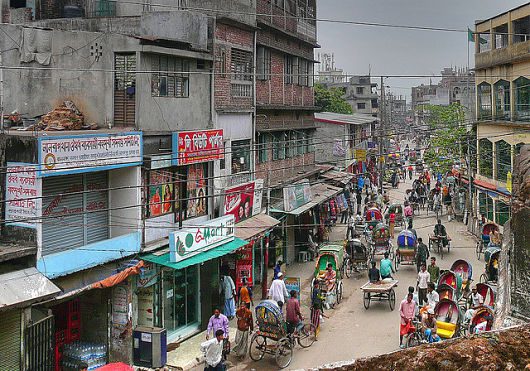
poverty_in_bangladeshThe World Bank has pledged to deliver two billion dollars in aid to help Bangladesh fight poverty. The aid will focus on improving education, public health and responses to natural disasters. The last part is particularly important as Bangladesh’s climate, dense population and low-lying coastal location make it particularly prone to natural disasters. This in turn hampers its efforts to fight poverty.

Bangladesh is a striking success story in the fight against global poverty. The World Bank has called it a role model for the rest of the world. Between 2000 and 2010, Bangladesh lifted 16 million people out of poverty, a 26 percent reduction. It has also done a remarkable job at lowering its birth rate and slowing its rate of population growth, though its population is still growing and overpopulation and overcrowding remain serious problems.

The aid finances three new development projects. One of the new projects being financed will build 552 new public shelters to house storm victims. Another aims to raise primary school enrollment to 98 percent and raise graduation rates to 80 percent. The third provides income assistance to several million poor families and aims at improving child nutrition. Bangladesh still has one of the ten highest rates of child malnutrition in the world.

The government of Bangladesh aims for it to become a middle-income country by the end of the decade. The World Bank has played an important role in providing aid to help make this goal a reality. Since independence it has provided $19 billion to Bangladesh and is currently spending $7.5 billion to finance 32 development projects. The World Bank says that Bangladesh is “key” to the fight against global poverty because of its large population.

Despite all the progress and praise, there is still a long way to go. Bangladesh still has an estimated 47 million people living in poverty and raising their living standards remains a daunting task.

Bangladesh has a lot of work to do in terms of raising living standards and developing its economy before it can be called a middle-income country, but its government and aid donors are ready to rise to the challenge.

– Matt Lesso

Sources: World Bank 1,  BBC 1,  BBC 2,  Finchannel,  Reuters,  World Bank 2
Photo: Water Aid

March 12, 2015
https://borgenproject.org/wp-content/uploads/borgen-project-logo.svg 0 0 Borgen Project https://borgenproject.org/wp-content/uploads/borgen-project-logo.svg Borgen Project2015-03-12 04:00:042020-07-10 08:53:08Poverty in Bangladesh
Global Poverty

Helping the Marginalized Reduces Conflict

marginalizedJudy Woodruff of the PBS News Hour sat down with United Nations Secretary General, Ban Ki-moon of South Korea. The Secretary General spoke with Woodruff about violent extremism and conflict around the globe, and explained how helping the marginalized could potentially reduce conflict and global poverty.

Violent extremism is perhaps the greatest present threat to world stability because terrorism has no borders; it is a global crisis. There is no definitive solution to violent extremism, which has recently caused thousands to move from their homes and even cost them their lives.

Conflict and global poverty are connected, and the more people are marginalized, the farther conflict will spread. People become marginalized when they are pushed to the edge of society instead of finding a place within it. An EQ Review article states that “some [people] can become skeptical, embittered or violent, and they often model and raise children to think and act similarly.” Violence and conflict become a way of life and a solution to unstable societies and difficult upbringings. The desperation for a “better” life pushes people to drastic measures, increasing marginalization, poverty and violent extremism.

According to an EQ Review article, “political and social turmoil in [many regions] has resulted in the abduction and recruitment of young soldiers, extensive socio-economic and cultural upheaval, and extreme poverty.” The Borgen Project notes “that investments, non-military tools of development, and diplomacy…strengthen our allies and fights the spread of poverty, disease, terrorism and weapons of mass destruction.” Halting the spread of conflict is vital in a new era of technology and transnational terrorism.

But there is hope. By educating the youth of impoverished nations, security and opportunities are both created. Ban Ki-moon states in the interview that the United Nations is doing everything it can to find a solution that will affect global politics as well as global poverty.

– Alaina Grote

Sources: PBS,  USAID,  The Borgen Project
Photo: Yemen Fox

March 11, 2015
https://borgenproject.org/wp-content/uploads/borgen-project-logo.svg 0 0 Borgen Project https://borgenproject.org/wp-content/uploads/borgen-project-logo.svg Borgen Project2015-03-11 16:00:082024-05-27 09:23:24Helping the Marginalized Reduces Conflict
Global Poverty

Zimbabwe’s New Currency May Call for More Change

new_currency
In 2008, inflation in Zimbabwe soared to nearly 80 percent, prompting the African country to opt out of the Zimbabwean currency and switch to the U.S. dollar. However, many Zimbabweans are finding themselves literally waiting for change—pocket change, that is.

There is little to no access to American coins, forcing shopkeepers and others sellers to give pens, sweets or chewing gum as change for American dollars. Zimbabwe now faces the opposite problem it had before: instead of money being worth too little, it is now worth too much.

To the average Zimbabwean, an American dollar is a lot of money. However, coins are more expensive to ship than dollars, and therefore it has proved a difficult task to get American coins to Zimbabwe. Last month, the national bank began issuing “bond coins,” denominated in American cents, to be used only in Zimbabwe.

Besides Zimbabwe, four other countries have adopted the use of the U.S. dollar, but also hang on to a national currency, even if it is not in circulation. Countries that use the dollar get around the “coin problem” by minting local coins. But that requires confidence in the local government, something that is in even shorter supply in Zimbabwe than coins. Zimbabweans say they want “no legal tender issued by their government.”

There have been many improvements provided by the currency change. Zimbabwe’s economy has been rocky; between 1990 and 2003, the poverty rate rose from 25 percent to 63 percent due to the political and economic crisis. By wiping out inflation, the U.S. dollar saved Zimbabwe from a potential economic collapse that would have plummeted the country even deeper into poverty. After inflation stopped and normal commerce resumed, importers experienced reduced transaction costs.

The economy may be growing, but it rests on a rocky foundation. The government has remained under the same leaders since the 1980s, and Zimbabweans receive very little from it. Even as education expands, employers receive improper training, funds and wages. Mining used to carry Zimbabwe, but now the government has adopted an indigenization policy, and deposits of gems and minerals are nearly exhausted. Commodity prices are falling and fewer investors are getting involved in Zimbabwe’s unstable economy.

If Zimbabwe sees no improvement in the economy, poverty will continue to rise throughout the country. Zimbabwean officials claim that the economic growth of the country fell in 2014 from six percent to three percent. However, as the country learns more about the U.S. monetary system, expands education and revises the government, Zimbabwe is on the track toward a brighter future, with enough change to go around.

– Alaina Grote

Sources: Economist,  NY Times,  Rural Poverty Portal
Photo: Go To Think Tank

March 11, 2015
https://borgenproject.org/wp-content/uploads/borgen-project-logo.svg 0 0 Borgen Project https://borgenproject.org/wp-content/uploads/borgen-project-logo.svg Borgen Project2015-03-11 12:00:372020-07-10 08:53:33Zimbabwe’s New Currency May Call for More Change
Global Poverty

​Poverty in São Paulo, Brazil

poverty_in_sao_pauloSão Paulo is a city left in the remnants of an economic development model that is contributing to a lot of the poverty in the city. The housing available for the impoverished citizens is run down and now over-populated. The conditions of the slums and favelas of São Paolo have worsened over time; however, conditions are beginning to show improvement.

São Paulo is one of Brazil’s most populated cities. It represents around six percent of Brazil’s total population with over 10 million residents. Unfortunately, Brazil has had a bad past when trying to house all of these residents equally and fairly. In general, the principal housing option for the poor is to build-it-yourself or the purchase of a house in an informal settlement.

Favelas are one of the places that the poor have to rely on when they have no other housing option. From 1973 to 2007, the amount of houses in the favelas grew from 14,504 to 377,236.

The dimensions of São Paulo’s housing problem demand attention and resources from both the federal and state government, but in recent years, the São Paulo government has become more attuned to long-term slum and favela upgrading. With the government playing an active role with aid from a global alliance, Cities Alliance, the city has been able to focus on improving the conditions of the slums and favelas.

In 2006, the São Paulo Municipal Housing Secretariat created management information system that is now able to track that status of favelas and other sites that need improvement. In 2008, Cities Alliance hosted high-ranking officials from other major cities to discuss the challenge of slum upgrading.

The legal steps involved in establishing a clear land title are hazy. There are also issues with squatters, people who occupy buildings without having lawful permission to do so. Landowners are worried that if they build, their buildings will become filled with squatters who will provide no compensation.

There is a change happening for the good in São Paulo. There is general agreement in São Paulo that the communities within these slums must band together and help turn things around. It is not just the government that can help. With community leaders that act as mediators that advocate for the community stepping up, São Paulo will continue to improve its housing conditions.

– Erik Nelson

Sources: World Bank,  Cities Alliance
Photo: Favel Issues

March 11, 2015
https://borgenproject.org/wp-content/uploads/borgen-project-logo.svg 0 0 Borgen Project https://borgenproject.org/wp-content/uploads/borgen-project-logo.svg Borgen Project2015-03-11 08:00:442024-05-27 09:23:24​Poverty in São Paulo, Brazil
Global Poverty

Five Factors Contributing to Hunger in Samoa

hunger_in_samoaLocated in the South Pacific Ocean, Samoa is not a particularly well-known country. Split between two islands called Savai’i and ­Upolu, it spans a grand total of 1,097 square miles. Made famous by Robert Louis Stevenson, who spent his last years in a house on the latter island, its people have been the subjects of many genetic, linguistic and anthropological studies. Apart from studies though, the developed world seems to have left Samoa behind. Below are five factors contributing to hunger in Samoa.

1. Food Dependence

The people of Samoa depend upon foods that they receive from other countries. Additionally, access to these foods is unequal, so the Samoans who do have access to the imported foods tend to eat all of it. For lack of complete meals, a large percentage of the population becomes obese.

2. Nutritional Imbalance

In Samoa, the top five food group shares in its total food supply, as of 2011, are as follows:
Cereals – 18.5 percent
Roots – 10.2 percent
Meat – 16.3 percent
Vegetable oils and animal fats – 9 percent
Sugars and honey – 8.6 percent
What’s missing? Vegetables and fruits. The people of Samoa become obese in large part because healthy foods are not made available to them in large enough amounts to provide an adequate diet to the overwhelming majority.

3. Inadequate Reporting

In April 2013, Samoa Observer released an article titled, “Samoa praised for ‘cutting hunger’ in half”. However, upon closer research, an astute Samoan writer named Mata’afa Keni Lesa discovered that the story was inaccurate. The article claimed to have met the first of the Millennium Development Goals, but Lesa pointed out that the other two had gone unmet. These goals are:

Target 1.a: Halve, between 1990 and 2015, the proportion of people whose income is below the basic needs poverty line

Target 1.B: Achieve full and productive employment and decent work for all, including women and young people.

The 2012 Pacific Regional MDGs Tracking Report states, “…the increase in the level and depth of hardship was significant for the rural areas, especially Savai’I, which accounts for a quarter of the poor in Samoa.” With such a high percentage of Samoans below the poverty line, how can they possibly have enough income or resources to get their dietary needs met?

4. Demographics

As of 2014, 80.73 percent of the Samoan population lives in rural regions, meaning that about 81 percent of Samoans do not have easy access to trade routes,  This percentage has only increased from 1999, when it was 78.16 percent.

5. Geographical Breakdown

Only a small percentage of their land, less than 5 percent, is arable. On top of this, their access to machines like agricultural tractors is improbable, averaging 2.14 tractors per 1000 hectares of arable land. In 2012, unsafe fertilizers were banned from farming techniques.

– Leah Zazofsky

Sources: Faostat,  Samoa Observer,  Food Anthro

Photo: Google Images

March 11, 2015
https://borgenproject.org/wp-content/uploads/borgen-project-logo.svg 0 0 Borgen Project https://borgenproject.org/wp-content/uploads/borgen-project-logo.svg Borgen Project2015-03-11 04:00:342024-05-27 09:23:25Five Factors Contributing to Hunger in Samoa
Education, Global Poverty

Education in the Solomon Islands

Solomon EducationWhat if you did not have to go to school? For some school-aged children in America, this might be a dream, but for the children of the Solomon Islands, it is a nightmare—and a reality. Due to their high poverty rate, the Solomon Islands do not make education a requirement. Only 2.2 percent of the government’s budget goes toward education, dropping drastically from its 9.7 percent in 1998. Only 60 percent of children even have access to any kind of primary education.

Of those 60 percent, only 72 percent of students complete their primary education. As for secondary school, the current numbers show 32 percent of boys attend, while 27 percent of girls do. Since there are so little resources, students have to take an exam to continue on to secondary school. Depending on their score, they can either be placed into secondary school or not score high enough to earn one of the few positions available.

These statistics all contribute to the 75 percent adult illiteracy rate. While education is not compulsory in the Solomon Islands, it is free for at least primary school. So, why are these numbers showing up?

The Solomon Islands had a civil war from 1998-2003, and once the country began to gain its footing again, a devastating tsunami hit in 2007. These events have only add to the hardships the people of the Solomon Islands face. Since adults have no educational background, the main source of income is through agriculture and farming. This can only get a family by for so long, and many children work alongside their families in lieu of going to school.

If a child does attend school, he or she has to deal with a shortage of teachers and classroom materials. Not only are half of all teachers unqualified, but they also struggle to receive payment for their services. In addition, less than half of the schools have access to adequate drinking water. Hopefully, the government will prioritize education in the coming years and break the cycle of poverty in the Solomon Islands.

– Melissa Binns

Sources: Classbase,  Education in Crisis,  ICDE

Photo: Flickr

March 10, 2015
https://borgenproject.org/wp-content/uploads/borgen-project-logo.svg 0 0 Borgen Project https://borgenproject.org/wp-content/uploads/borgen-project-logo.svg Borgen Project2015-03-10 04:00:582024-05-27 09:23:25Education in the Solomon Islands
Global Poverty, Malnourishment

Malnutrition in Liberia, an Epidemic

malnutrition_in_liberiaEven though the civil war in Liberia ended in 2003, the effects of that war still affect their infrastructure today. One of the most concerning side effects is malnutrition, as a study from 2012 recorded that 35.8 percent of Liberia’s citizens fell under the category of malnourished. A large number of those citizens are just children. The U.N.’s World Food Program reported in 2010 that 41.8 percent of children under the age of five years old were considered stunted due to malnourishment.

“Stunted” can mean a variety of health problems: hindered growth, a weak immune system, a smaller IQ, blindness, brain damage and eventually death. Not only does Liberia lack the proper means and knowledge to nourish their bodies, they also struggle with gaining access to clean, safe drinking water. When faced with unclean water and other unhygienic practices, children can easily develop diarrhea which makes nourishment an even harder goal to reach.

Another contributing factor to malnutrition in Liberia is teenage pregnancy. They have one of the highest teenage birth rates in the entire world. Thirty-eight percent of girls are pregnant or mothers by age 18. This high birth rate can be attributed to the poverty Liberia faces, which in turn affects their education and resources.  Fifteen percent of these mothers are malnourished themselves, impacting a child before he or she is even born.

Organizations are attempting to fix this issue by teaching Liberians about contraception, hygiene, agriculture and the importance of breastfeeding. There is a trend where young mothers in Liberia do not wish to breastfeed for cosmetic reasons. Other charities are providing milk, folic acid and other medical treatment to Liberian’s malnourished, particularly the babies. Once a baby starts to become stunted due to malnourishment, it is difficult to reverse the process.

Those providing aid to Liberians hope to stop this epidemic. While there are many other issues resulting from the poverty in Liberia, malnutrition is dramatically altering and even ending lives. With some small changes to their nourishment practices, a large percentage of lives can be saved.

– Melissa Binns

Sources: Action Against Hunger, AllAfrica, Child Fund International, UNICEF
Photo: Press TV

March 9, 2015
https://borgenproject.org/wp-content/uploads/borgen-project-logo.svg 0 0 Borgen Project https://borgenproject.org/wp-content/uploads/borgen-project-logo.svg Borgen Project2015-03-09 04:00:402024-06-05 01:58:25Malnutrition in Liberia, an Epidemic
Global Poverty

USA for UNHCR

UNHCRThe U.S. Association for UNHCR, also known as the U.N. Refugee Agency, is based out of Washington, D.C. This organization was during World World II to help the victims displaced by this conflict. The UNHCR faced its first major emergency in 1956 after the Soviet demolition of the Hungarian Revolution. The decolonization of Africa in 1960 produced a dire humanitarian and refugee crisis, and the organization provided relief to victims of displacement in Asia and Latin America for the following two decades, followed by another refugee crisis from the conflict in the Balkans.

The organization won a Nobel Peace Prize in 1954 for its groundbreaking work in Europe, followed by an award in 1981 for being the world’s best worldwide assistance to refugees. The organization has grown from a staff of 34 to over 8,600 national and international members that work in approximately 126 countries.

This organization is dedicated to saving, protecting and rebuilding the lives of the victims of conflict. USA FOR UNHCR responds to the most urgent crises in the world, and is currently specializing in Syria, South Sudan, Central African Republic and Iraq.

Current humanitarian emergencies have produced astounding levels of suffering and displacement; 51.2 million men, women, and children are currently displaced in the world, the average time refugees are separated from their lives is 17 years, and 32,000 people flee their homes every day. USA for UNHCR addresses the basic needs and rights for refugees, most importantly shelter, water and food, and protection from harm. Emergency relief efforts include sending relief supplies within 72 hours, addressing the survival needs of victims with resources such as shelter, clothing, soap, heat lamps, blankets, sleeping mats, kitchen sets, solar lamps and mosquito nets.

In regards to health and nutrition, USA for UNHCR describes their efforts as, “Working closely with partner organizations through supporting their vital work to supply clean water and nutritious food, set up sanitation programs and ensure refugees have access to emergency and basic health care services. For example, USA for UNHCR works with partners to carry out large-scale vaccination campaigns to protect refugees from diseases like polio and measles.”

There is support and relief for refugees whenever and wherever they can for every step of the journey, for UNHCR is the first in and last out in an emergency situation. According to USA for UNHCR, 91 percent of their staff are based in the field providing direct support to people in need. In 2013, 469 emergency experts were dispatched to the field. The ten largest operations have taken place in Afghanistan, Colombia, Democratic Republic of the Congo, Mali, Pakistan, Syria, Jordan, Lebanon, Turkey and Iraq.  Currently, there are 434 USA for UNHCR offices worldwide.

There are several ways one is able to join the cause for USA for UNHCR. One is able to become a monthly donor, fundraise for refugees, and raise awareness.

– Neti Gupta

Sources: Guide Star, UNHCR 1, UNHCR 2, UN Refugees

Photo: Flickr

March 8, 2015
https://borgenproject.org/wp-content/uploads/borgen-project-logo.svg 0 0 Borgen Project https://borgenproject.org/wp-content/uploads/borgen-project-logo.svg Borgen Project2015-03-08 08:00:292024-12-13 17:51:21USA for UNHCR
Global Poverty

Poverty in Manila a Growing Problem

Poverty_in_ManilaThe United Nations ranks any income less than one U.S. dollar and 25 cents as impoverished. For many people in Manila, their income is less than the equivalent of 76 cents in the U.S. per day. Not only do 27.6 million Filipinos live below the poverty line, 12.2 million live below the subsistence level—meaning they are barely making it by on the minimum standard of living.

Infrastructure in Manila has improved since Benigno Aquino became president in 2010; however, inequalities in the city still exist. The 586 slums are put at additional risk when natural disasters strike. On Nov. 14, 2013,  the effects of a typhoon killed 6,000 people and left many homeless.

The Philippines also has one of the highest birth rates in Southeast Asia. The average population for a Manila slum is 75,000-80,000 people per square mile. It is theorized that Filipinos do not believe in or are not educated about contraception. Families generally have 10-12 children, making adequate resources hard to come by.

Most Manila citizens get their food from agriculture—also the city’s main source of income—but some of the poorest find food in the garbage. There is even a word for the food scrapped up from the trash: “pagpag.” Under these conditions, Manila is widespread with disease and illness.

While the government is aware of the problems and has claimed they will work on it, citizens still feel that they are not doing enough. Most aid comes from outside sources and organizations from other countries. There are many factors contributing to the poverty in Manila. Without major intervention, conditions will only continue to get worse for the people of Manila.

– Melissa Binns

Sources: CNN,  Mission Ministries Philippines,  News Statesman
Photo: Zimbio

March 7, 2015
https://borgenproject.org/wp-content/uploads/borgen-project-logo.svg 0 0 Borgen Project https://borgenproject.org/wp-content/uploads/borgen-project-logo.svg Borgen Project2015-03-07 04:00:152024-06-05 01:58:25Poverty in Manila a Growing Problem
Education, Global Poverty

How India’s Emerging Economy Will Impact Its Poverty

Indian PovertyThere are quite a few economies around the globe that aren’t doing very well, but one country’s economy is beginning to emerge as a potential powerhouse: India.

India is well acquainted with poverty and has been for many years now, with a large portion of the country’s population living in slums and other unsanitary conditions. Approximately 33 percent of the population lives in poverty, with only 62 percent of adults being literate, and only 49 percent of girls attending secondary school largely due to economic reasons.

The recent change in India’s economy could alter this. India’s stock market has reached new highs in recent months with a stable rupee.

Politics have had a large effect on India’s recent success, with the election of new Prime Minister Narendra Modi. Modi’s Bharatiya Janata Party, or BFP, experienced its first win in 30 years. The result is a more optimistic India that hopes to heal a broken bureaucracy.

Nicholas Smithie, Chief Investment Strategist at Emerging Global Advisors, says Modi is more likely to tackle major obstacles, such as a poor infrastructure, than previous prime ministers. Modi and the BJP work on a pro-growth platform, focusing on government approvals and advances in labor and education.

India might only be getting lucky. Certain aspects of the global economy — slowdown in China, money printing in Japan, Russia’s recession, stagnation in the European zones and falling oil prices — aren’t hitting India quite as hard. The deflation around the world is proving helpful to India, which has suffered high inflation. India has a rare opportunity to capitalize on new political officials and economic reform. International corporations are growing eager to invest in India, now assured that India’s policies will foster economic expansion.

As India’s economy emerges with a strong, stable foundation, the future of poverty reduction looks a little brighter. As the economy improves, families are better able to afford food, clean water and sanitary conditions. Educational opportunities are allowed to expand as the economy grows, creating a more secure future for Indian children, particularly girls. The path to recovery and to reducing poverty in India is long, but with a stronger economy and a hopeful leader, India seems to be on the right track.

– Alaina Grote

Sources: The Economist, UNICEF, U.S. News

Photo: Flickr

March 4, 2015
https://borgenproject.org/wp-content/uploads/borgen-project-logo.svg 0 0 Borgen Project https://borgenproject.org/wp-content/uploads/borgen-project-logo.svg Borgen Project2015-03-04 04:00:222024-05-26 23:10:12How India’s Emerging Economy Will Impact Its Poverty
Page 1954 of 2162«‹19521953195419551956›»

Get Smarter

  • Global Poverty 101
  • Global Poverty… The Good News
  • Global Poverty & U.S. Jobs
  • Global Poverty and National Security
  • Innovative Solutions to Poverty
  • Global Poverty & Aid FAQ’s
Search Search

Take Action

  • Call Congress
  • Email Congress
  • Donate
  • 30 Ways to Help
  • Volunteer Ops
  • Internships
  • Courses & Certificates
  • The Podcast
Borgen Project

“The Borgen Project is an incredible nonprofit organization that is addressing poverty and hunger and working towards ending them.”

-The Huffington Post

Inside The Borgen Project

  • Contact
  • About
  • Financials
  • President
  • Board of Directors
  • Board of Advisors

International Links

  • UK Email Parliament
  • UK Donate
  • Canada Email Parliament

Get Smarter

  • Global Poverty 101
  • Global Poverty… The Good News
  • Global Poverty & U.S. Jobs
  • Global Poverty and National Security
  • Innovative Solutions to Poverty
  • Global Poverty & Aid FAQ’s

Ways to Help

  • Call Congress
  • Email Congress
  • Donate
  • 30 Ways to Help
  • Volunteer Ops
  • Internships
  • Courses & Certificates
  • The Podcast
Scroll to top Scroll to top Scroll to top