• Link to X
  • Link to Facebook
  • Link to Instagram
  • Link to TikTok
  • Link to Youtube
  • About
    • About Us
      • President
      • Board of Directors
      • Board of Advisors
      • Financials
      • Our Methodology
      • Success Tracker
      • Contact
  • Act Now
    • 30 Ways to Help
      • Email Congress
      • Call Congress
      • Volunteer
      • Courses & Certificates
      • Be a Donor
    • Internships
      • In-Office Internships
      • Remote Internships
    • Legislation
      • Politics 101
  • The Blog
  • The Podcast
  • Magazine
  • Donate
  • Click to open the search input field Click to open the search input field Search
  • Menu Menu

Archive for category: Global Poverty

Key articles and information on global poverty.

Education, Global Poverty

Shifting Focus to Support Education in Haiti

Education in Haiti

Education in Haiti is a critical issue. Haiti is an impoverished country that struggles to educate its youth due to factors including past disasters, social disparity and present economic hardship. A couple facts put this into perspective:

  1. Haiti is the third poorest country in the world, with the majority of the population living on less than $3 a day.
  2. In 2010, 230,000 Haitian lives were taken by a devastating earthquake in Port-au-Prince.
  3. More than 400,000 Haitian children are forced to live without the care of their parents.

These factors have destroyed the lives of many Haitians. As a result, education in Haiti is not an economic priority for the Haitian government and only 10 percent of the federal budget is spent on primary and secondary schools. Haiti ranks 177th out of 186 in the world for national spending on education.

Only 76 percent of children in Haiti enroll in primary school; one of the lowest enrollment rates in the world. However, despite the low percentage of educational success, Haitians highly value literacy and proudly wear their school uniforms when they are enrolled in school. However, compared to most other countries, it takes a higher percentage of one’s income to be able go to school, making it difficult for many to attend.

The most prevalent challenges Haitian education faces include funding and teacher training. In the United States, USAID helps fund Haitian education systems. USAID supports 550 schools and strives toward improving early grade reading and writing while helping demonstrate modern instruction to teachers and staff members.

In 2014, the Haitian Minister of Economy and Finance and the World Bank Special Envoy signed a grant of $24 million to help 230,000 children attend school and receive a quality education. This is done through tuition waivers and other means of support under the Education for All project.

The grant helps focus the Haitian government’s priorities on education. It does this by aiming to increase the quality of teaching and continuously focusing on increasing enrollment.

The goals of the Education for All project include

  • Financing more than 420,000 school fee waivers
  • Improving teaching and reading instruction material
  • Constructing of 160 classrooms in community-based school

With the help of the United States and other developed countries, education in Haiti is slowly improving as enrollment rates continue to rise. Hopefully, this trend will continue and thousands of Haitians will be able to wear their school uniforms with pride.

– Casey Marx

Photo: Flickr

August 15, 2016
https://borgenproject.org/wp-content/uploads/borgen-project-logo.svg 0 0 Borgen Project https://borgenproject.org/wp-content/uploads/borgen-project-logo.svg Borgen Project2016-08-15 01:30:452020-06-13 13:37:57Shifting Focus to Support Education in Haiti
Global Poverty, Poverty Reduction

An Assessment of Poverty in Colombia

Poverty in ColombiaIn recent years, Colombia has successfully taken measures to reduce the issues that contribute to poverty, particularly in the worse urban areas. However, land displacement due to violent conflict still causes a significant portion of the population to be affected by extreme poverty in Colombia.

Approximately 29 percent of the population of Colombia live in extreme poverty. The constant violence and illegal occupation in Colombia is partly at fault for the number of those who continue to struggle. Families who have been displaced struggle to provide their daily needs, particularly the indigenous and Afro-Latino communities.

Small farmworkers in particular are victims of displacement, as the recent reduction in poverty in Colombia is partly due to many of the small farmers abandoning their careers to find new work in urban areas with less conflict. Here, they are able to generate sustainable income and provide for their families.

However, as is the case in many impoverished urban areas, there is little security of employment or reliable access to education and health services. While the lack of human security allows the issues contributing to poverty to fester, Colombia has been lately successful at poverty reduction by focusing on reducing crime and conflict in the two largest cities, Bogota and Medellin. By targeting these areas, surrounding cities have also improved.

In the past decade, the number of citizens living in extreme poverty in Colombia has been cut in half. Doing so through times in conflict shows the overall ability of Colombians to reduce poverty, the results of which would be vastly greater if violent conflicts could be reduced as well.

Gerardo Corrochano says when speaking to the World Bank, “The current face of Colombia is completely different and its future, promising.” With continued international aid and investment in infrastructure, Corrochano believes that Colombia can eradicate poverty and sustain peace for the people. Colombia is now considered to have a more middle class than an impoverished population, which displays the progress that the nation has already made.

– Amanda Panella
Photo: Flickr

August 15, 2016
https://borgenproject.org/wp-content/uploads/borgen-project-logo.svg 0 0 Borgen Project https://borgenproject.org/wp-content/uploads/borgen-project-logo.svg Borgen Project2016-08-15 01:30:262024-12-13 17:54:45An Assessment of Poverty in Colombia
Advocacy, Children, Global Poverty

5 Things to Know About #RaiseYourHand Campaign

#raiseyourhandA partnership between the jewelry and luxury goods brand Bulgari and the nonprofit Save the Children has led to a new philanthropic campaign entitled #RaiseYourHand. Together, these groups are working to aid children around the world who are affected by marginalization, natural disasters, war, disability and poverty. Here are the five things to know about #RaiseYourHand campaign:

  1. Bulgari has released a bracelet specifically created for Save the Children’s #RaiseYourHand campaign. The beautiful, sterling silver and black ceramic piece is available at some major retailers as well as on the Bulgari website and in Bulgari stores. $100 of each bracelet purchase goes straight to Save the Children making it a beautiful way to showcase your passion for the cause.
  2. #RaiseYourHand is more than just a catchy hashtag. In fact, Fabrizio Ferri, the campaign’s Creative Director, explained the meaning behind the campaign title, saying, “We raise our hand to signal our presence, our interest, our attention, our participation. To signal that we do not hide, that we have no fear, that we believe we have an answer. Raising our hand while wearing the ring or the bracelet symbolizes our support for Bulgari’s effort to raise funds for Save the Children.” The Instagram hashtag is a stream of celebrities and do-gooders from the fashion industry holding a hand up in support of children in need.
  3. The supporters of #RaiseYourHand include actresses Meg Ryan and Naomi Watts, models like Tali Lennox, Lily Aldrige, Helena Christensen and many others. Plenty of well-known faces have already taken initiative and gotten involved in a campaign that has done and will continue doing good for vulnerable populations in the world.
  4. This is not the first time Bulgari and Save the Children have worked together. In fact, they have been working together since 2009. This partnership has been extremely beneficial in raising funds for Save the Children programs, it has also led to more global visibility for the Save the Children organization.
  5. Already the partnership between Bulgari and Save the Children has been wildly successful. The sales of the custom-designed Bulgari pieces have helped raise $50 million for Save the Children. Said donations have impacted one million people spanning 33 countries on five different continents.

This partnership has already proven itself capable of doing massive amounts of good in the world. The CEO of Bulgari, Jean-Christophe Babin, spoke up about the work Bulgari and Save the Children do together, saying, “Bettering the world is a quality inborn in Bulgari’s company culture. We are proud to partner with Save the Children to do our part in making a better tomorrow.”

– Jordan Little
Photo: Forbes

August 15, 2016
https://borgenproject.org/wp-content/uploads/borgen-project-logo.svg 0 0 Borgen Project https://borgenproject.org/wp-content/uploads/borgen-project-logo.svg Borgen Project2016-08-15 01:30:172024-12-13 17:55:365 Things to Know About #RaiseYourHand Campaign
Global Poverty, Health

The Fatal 4: Top Diseases in Madagascar

Top Diseases in MadagascarMadagascar is the fourth-largest island in the world and has a population of nearly 24 million people. Madagascar also has a majority rural population of 16 million. Due to remoteness, many people become isolated during flooding seasons and can lose all contact with health facilities, thus the top diseases in Madagascar are more deadly than they may ordinarily be.

Here is an in-depth look at four of the most deadly diseases in Madagascar.

Bacterial Diarrhea

Diarrhea often hits tourists while visiting new places around the globe. Yet, most travelers do not fear for their lives when they are afflicted. Unfortunately, diarrhea is a much more serious issue for those who live without clean water or proper sanitation. In fact, according to the World Health Organization (WHO), diarrhea is the second leading killer of children under the age of five globally.

For those in Madagascar, lack of clean water and proper sanitation is a major cause of diarrhea, but there are cultural factors at work as well. Often, the Malagasy have been taught to believe that using an outhouse can cause miscarriages and that fecal matter does not belong in the ground where ancestors are buried. These beliefs only further instances of diarrhea-related death.

In order to dispel these myths, locals are being educated about the advantages of proper hygiene. This can even be done in the form of puppet shows for illiterate communities in Madagascar.

Lower Respiratory Infections

There are multiple causes of lower respiratory infections, but the WHO estimates that indoor and outdoor pollution is responsible for 18,700 deaths in Madagascar annually.

Indoor pollution is especially dangerous in Madagascar because many households still rely on solid fuel such as coal and wood for cooking and heating. In addition to the use of solid fuel, many houses in Madagascar are small and have poor ventilation which leads to higher exposure to pollutants.

The solution to this problem is to move away from solid fuels and increase education about the dangers of poor ventilation and inhaling pollutants.

Perinatal Conditions

Perinatal conditions are a killer in developing countries worldwide. These conditions occur just before or after birth and can affect both mothers and children. Low birth weight, prematurity, neonatal diseases, birth trauma and birth asphyxia are all perinatal causes of death and contribute to one of the top diseases in Madagascar.

Death from perinatal conditions tends to be easily avoidable, but many in developing countries lack the knowledge and resources necessary for prevention. In fact, according to UNICEF, 90% of the population of Madagascar lives on less than two dollars a day. This type of poverty often leads to malnutrition and most of the conditions mentioned above.

Potential solutions may include increased education of perinatal care, food aid and increasing the amount of neonatal care and supplies available.

Non-communicable Disease

In other words: cancer. Cancer is the most prevalent of the top diseases in Madagascar, and the most deadly. Of the types of cancer affecting Malagasies, cervical cancer is predominant.

Unfortunately, options for cancer treatment in Madagascar are limited. Very few hospitals have cancer wards and many farmers and unemployed citizens cannot afford the costly treatment for cancer.

One measure to fight cervical cancer in Madagascar has been taken. In 2008, the University of Washington School of Medicine put forth an education and screening program. This program was an effort to increase early detection so that there was a greater possibility of getting help.

As is the case with the top diseases in Madagascar, developing countries tend to be more susceptible because they may lack resources to fight them. Often, providing simple education or inexpensive medications can make a huge difference for those who have very little.

– Weston Northrop
Photo: Flickr

August 15, 2016
https://borgenproject.org/wp-content/uploads/borgen-project-logo.svg 0 0 Borgen Project https://borgenproject.org/wp-content/uploads/borgen-project-logo.svg Borgen Project2016-08-15 01:30:152024-12-13 17:54:52The Fatal 4: Top Diseases in Madagascar
Global Poverty

Lower Mekong Initiative Launches New Infrastructure Plan

Lower Mekong InitiativeThe Lower Mekong Initiative (LMI), established in July 2009, expanded its original focus to include a Sustainable Infrastructure Partnership in response to this year’s historic drought that devastated the Mekong region. With support from the U.S., the new partnership aims to promote economic development, environmental conservation, and climate resilience.

Through LMI, Cambodia, Laos, Myanmar, Thailand, Vietnam and the U.S. collaborated to create sub-regional cooperation that fosters economic growth and aims to narrow the development gap between the Lower Mekong countries.

At this year’s annual meeting, LMI designed the Sustainable Infrastructure Partnership, a training platform with two main goals: to help LMI countries identify training deficiencies in infrastructure planning and to develop a strategy to enhance the planning process and improve efficiency. This new partnership comes as a result of a crippling drought in the Lower Mekong. The region produces 13 percent of the world’s rice, centering its economic stability on agriculture. However, the current Mekong River levels are at their lowest point of the past century, putting millions of farmers that depend on this water source at risk.

The Sustainable Infrastructure Partnership aims to lessen the region’s vulnerability to climate change and strengthen its infrastructure. This new element adds to the existing six pillars of LMI: agriculture and food security, connectivity, education, energy security, environment and water, as well as health. The success of LMI can be attributed to the targeted approaches of each pillar’s program.

The Lower Mekong Initiative fosters agriculture and food security by expanding trade and investment in the region. Encouraging community engagement in the industry is also key. Similarly, the connectivity pillar draws upon U.S. strengths to promote physical, institutional, and people-to-people connectivity across the region.

The education pillar encourages the sharing of best practices between countries; supporting programs that encourage English language proficiency and teacher training. LMI health pillar combats transnational challenges, such as infectious diseases, as well as supporting the enforcement of International Health Regulations.

Both the Energy Security and Environment and Water Programs work to develop a regional strategy to create sustainable environmental management and access to energy.

The U.S. has played a central role in the success of LMI, having founded a U.S.-Singapore Third Country Program that has trained regional officials on cybercrime and water management. The U.S. has also helped Cambodia launch a women’s business center, with plans to launch another in Vietnam this year.

Through the Lower Mekong Initiative, the region has seen growth in several sectors. The adoption of the Sustainable Infrastructure Partnership will further benefit Lower Mekong countries, continuing to narrow the development gap across the region.

– Anna O’Toole

Photo: Pixabay

August 15, 2016
https://borgenproject.org/wp-content/uploads/borgen-project-logo.svg 0 0 Borgen Project https://borgenproject.org/wp-content/uploads/borgen-project-logo.svg Borgen Project2016-08-15 01:30:022024-12-13 17:55:38Lower Mekong Initiative Launches New Infrastructure Plan
Development, Global Poverty

Purchase for Progress Changed Farming in Ghana

Farming in Ghana

More than half of Ghana’s population works in agriculture, according to the Food and Agriculture Organization. Low-income families farming in Ghana are facing new challenges, such as climate change and the increase of conflicts, natural disasters and pandemics. The World Food Programme launched Purchase for Progress in 2008 to provide support for smallholder farmers to handle these shifts. The program connects smallholder farmers to markets and creates consistent demands. Below are five ways the program changed farming in Ghana:

Weighing System

Purchase for Progress introduced a weighing system to solve the problem of farmers’ lost revenue due to the “bush weight” system.

“Size 5” bags of grains weighing 150–170 kilograms were sold for the price of a 100-kilogram bag, leaving the farmers with less money than their valued crop. The World Food Programme’s Purchase for Progress program introduced weighing scales, which allowed the farmers to see the disparity between their product and its price when using the bush weight system.

Transition to Fair Bagging

The exposed, unfair system influenced the government to transition to a new method of fair bagging.

Since the upkeep of weighing scales can be expensive, the officials in the Ejura-Sekyedumasi municipality introduced another solution to ensure farmers received fair prices for their product. They have implemented the mandatory use of the “Size 4” bag, which holds 110 kilograms, instead of 150–170 kilograms.

Trained Farmers to Offer Quality Goods

Farmers learned to make sure their products do not have inferior grains and inorganic items. This improvement gives buyers the best quality crops and ensures that they will return.

Increased Transparency Within Trade Markets

The new standardized market system of trade allows for clarity and accountability between both farmers and buyers.

To establish awareness and acceptance of the new system across the market, the community radio joined Farm Radio International to give farmers a place to share their position.

Empowers Farmers

The new systems empower smallholder farmers and transformed farming from mere survival into a business. Farmers’ income has increased, sometimes up to 40% — the amount that was previously lost with “Size 5” bags.

The new system gives farmers the opportunity to estimate the amount of money they will make each season, helping them to predict their future income.

– Erica Rawles

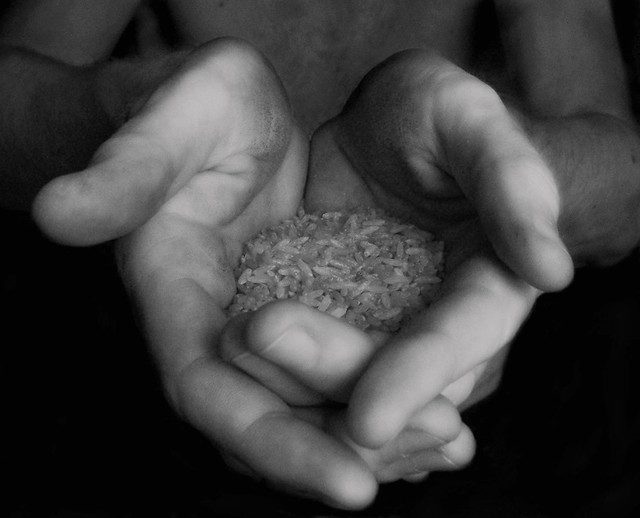
Photo: Grain

August 15, 2016
https://borgenproject.org/wp-content/uploads/borgen-project-logo.svg 0 0 Borgen Project https://borgenproject.org/wp-content/uploads/borgen-project-logo.svg Borgen Project2016-08-15 01:30:002024-12-13 17:54:47Purchase for Progress Changed Farming in Ghana
Education, Global Poverty, Technology

Improving Literacy Rates in Developing Countries with Phone Data

Phone Data

Literacy is one of the most significant contributing factors to eradicating poverty. Telenor, a Norwegian research group, believes it has found a way to measure literacy rates in developing countries using mobile phone data.

Currently, an estimated 750 million people around the world are unable to read and write. Two-thirds of these people are women, according to MIT Technology Review. UNESCO studied the effects of illiteracy in South American communities and found that illiteracy correlates to higher unemployment rates, poor health, exploitation and human rights abuse.

In order to address the growing concern of widespread illiteracy in developing countries, Telenor, led by Pål Sundsøy, developed a machine-learning algorithm to figure out which communities have the highest rates of illiteracy.

Using mobile phone data, Telenor’s algorithm evaluates a variety of factors to predict literacy rates in developing countries including the location of calls, number of incoming versus outgoing text messages and the diversity of social contacts.

When evaluating the probability of illiteracy, geographic location is one of the most deciding factors. Sundsøy believes that the algorithm is able to identify slum areas where economic development is low and illiteracy is high by analyzing where calls are placed.

Additionally, a higher quantity of outgoing messages and a lower number of incoming messages may also hint at illiteracy. Telenor’s model takes this information into consideration since people do not typically send texts to contacts who they know can’t read.

The diversity of an individual’s social network is also a helpful indicator of literacy since those who are illiterate are more likely to concentrate their efforts on communicating with a few people. The relationship between the diversity of social contacts and illiteracy is also supported by a strong three-way correlation between economic well-being, illiteracy and diversity of social contacts.

By identifying which communities are at risk for low literacy rates, Telenor’s mobile phone data algorithm can make literacy programs more effective in developing countries.

The National Literacy Programme in Namibia (NLPN) states that their main challenge to boosting literacy rates is limited funding for the program. Implementing Telenor’s algorithm would make a significant impact on programs like NLPN that have finite resources by helping organizations to identify and allocate resources to communities that have a higher concentration of illiterate people.

While regional and gender disparities continue to persist in current illiteracy data, the development of powerful resources like Telenor’s algorithm will help raise literacy rates in developing countries and make it easier for literacy programs to target those who at a greater disadvantage.

– Daniela N. Sarabia

Photo: Pixabay

August 14, 2016
https://borgenproject.org/wp-content/uploads/borgen-project-logo.svg 0 0 Borgen Project https://borgenproject.org/wp-content/uploads/borgen-project-logo.svg Borgen Project2016-08-14 01:30:432024-06-12 07:49:29Improving Literacy Rates in Developing Countries with Phone Data
Development, Global Poverty, Poverty Reduction

European Union Champions In Poverty Reduction Goals

Poverty Reduction GoalsThe European Union, or EU, is the world’s largest development aid donor with over half of all developmental aid coming from the organization’s funding. Thanks in part to the EU’s efforts to achieve global poverty reduction goals, the number of people living in poverty has fallen by 600 million since the year 1990.

However, poverty analysts feel that significant progress can still be made towards reducing the death rate of mothers during childbirth and expanding access to clean drinking water. Because of this, the EU has pledged to help support 79 impoverished nations by raising an additional €1 billion in aid.

One of the projects supported by this funding provides over 5,000 households in rural Timor-Leste access to safe drinking water. Much of the project has already been completed, and local communities in the area are thriving like never before.

Before the program was launched, only 57 percent of the population in this rural community had access to safe drinking water. Now over 26 community water systems have been implemented in the area with 5,950 people being granted clean water access. The EU program has also expanded toilet access from 35 to 65 percent in the Aileu District.

Ludivina, a 9-year-old girl from the Aileu District in rural Timor-Leste told the European Commission that because of the program, she was able to enjoy life as a child should.

“After I collected the water, I would go to school and feel tired in the classroom. But when I first heard that I didn’t have to collect water because of the water system with the pump, I was so happy! Now I have time to play with my friends, go to school and sing!” Ludivina said.

This program is just one many the EU hopes to continue with the additional funding. In the past three years, the EU has spent €56.2 billion on developmental aid.

Simon Maxwell, the chair of the European Think Tanks Group, speaks highly of the EU to The Guardian. However, he says that the EU still has room for reform on all aspects of its development and humanitarian policies.

Much of these reform ideas can and will be found in universities, research centers, think tanks, NGOs and the private sector. Therefore, engagement in the EU can not benefit only the organization, but the countries that participate in it as well.

“The more we invest in the EU, the more successful we are likely to be in our efforts to achieve the global goals. We have to believe in the power of collective action and in the possibilities the EU can offer,” says Maxwell.

There is still much work to be done according to EU supporters. But with participation and support, the EU can be an example to other countries of a framework for successfully achieving with human rights, peacebuilding and poverty reduction goals.

– Katie Grovatt

Photo: Pixabay

August 14, 2016
https://borgenproject.org/wp-content/uploads/borgen-project-logo.svg 0 0 Borgen Project https://borgenproject.org/wp-content/uploads/borgen-project-logo.svg Borgen Project2016-08-14 01:30:232024-12-13 17:54:41European Union Champions In Poverty Reduction Goals
Activism, Development, Food & Hunger, Global Poverty

10 World Hunger Facts from the UN World Food Programme

World hunger facts

Sixteen years ago, the world decided it was time to formally prioritize ending world hunger. The United Nations (U.N.) Millennium Development Goal One (MDG1) was to eradicate extreme poverty and hunger. MDG1, Target 1.C, was to “halve, between 1990 and 2015, the proportion of people who suffer from hunger.”

The U.N.’s target was largely met: the proportion of undernourished people in the world’s developing regions has fallen by almost half since 1990. But, there are still 795 million people hungry in the world and more than 90 million children under age five are underweight and malnourished. World hunger facts offer us insight into why this is still a problem in the world today.

According to the U.N. World Food Programme (WFP), there are two faces to world hunger and 10 crucial facts to understand. The two sides to world hunger are crises and chronic malnutrition. Emergencies such as wars and natural disasters “account for less than eight percent of hunger’s victims.”

Chronic hunger can continue with no end in sight with people living on less than the recommended 2,100 kilocalories daily intake of food. This chronic hunger accounts for mental disadvantages in adults, stunted growth in children and weakened immune systems.

10 World Hunger Facts from the U.N. World Food Programme

  1. Approximately one in nine or 795 million people worldwide do not receive enough food to lead a healthy, active life.
  2. Most of the world’s hungry live in developing countries: 12.9% of the inhabitants of these areas do not have enough food.
  3. Asia is the continent with the largest number of hungry people, making up two-thirds of the total number of malnourished peoples.
  4. Sub-Saharan Africa has one in four people undernourished; it is the region with the highest percentage of its population going hungry.
  5. Malnutrition causes 45% of the deaths of children under five. This accounts for 3.1 million deaths of children each year.
  6. In developing countries, one in six children is underweight.
  7. Stunting affects one in four of the world’s children and one in three children in developing countries.
  8. The number of malnourished could be reduced by 150 million if female farmers had the same access to resources as their male counterparts do.
  9. In the developing world, 66 million primary children attend classes hungry, 23 million of those in Africa.
  10.  WFP believes that the 66 million school-aged children could be fed with $3.2 billion per year.

Just as there are more than 10 world hunger facts, so too are there many organizations working to combat world hunger. One group that is helping to end world hunger is The World Bank. The group has been working with other international groups by “investing in agriculture, creating jobs, expanding social safety nets, expanding nutrition programs that target children under two years of age, universalizing education, promoting gender equality and protecting vulnerable countries during crises.”

– Rhonda Marrone

Photo: Flickr

August 14, 2016
https://borgenproject.org/wp-content/uploads/borgen-project-logo.svg 0 0 Borgen Project https://borgenproject.org/wp-content/uploads/borgen-project-logo.svg Borgen Project2016-08-14 01:30:212024-12-13 17:54:4910 World Hunger Facts from the UN World Food Programme
Global Poverty, Refugees and Displaced Persons

10 Facts Regarding Colombian Refugees

Colombian Refugees

For over 50 years, guerilla soldiers, paramilitaries, drug cartels and the government’s armed forces have been fighting in Colombia creating waves of refugees. Though each group has different motivations, most are fighting to gain power and influence.

This internal fighting in Colombia has led to the displacement of many individuals across the country. Here are 10 facts about Colombian refugees.

  1. Colombia has the second-highest number of internally displaced persons in the world. Colombia has a staggering population of over 6 million internally displaced persons. The Syrian Arab Republic is the only other country with a higher population with 7.6 million internally displaced persons.
  2. Children are at high risk for displacement and militant group recruitment. Unfortunately, the same laws that let Colombian refugees leave the country’s borders allow militant groups to do the same. Several of these groups are able to follow refugees out of the country and often take children as recruits for their cause.
  3. Indigenous populations and Afro-Colombians are also at-risk. Though they only make up a small proportion of the total Colombian population (3.4 percent), an estimated eight percent of Colombia’s internally displaced persons are of the indigenous population. Afro-Colombians and indigenous Colombians tend to live in the rural areas of Colombia where there is little assistance.
  4. About 250,000 Colombian refugees live in Ecuador. Though many Colombians traveled to Ecuador, only 15,000 have been recognized as refugees by the country. This means only 15,000 Colombians receive government assistance and legal residence permits. Colombian refugees are often discriminated against and struggle to compete for jobs in Ecuador.
  5. Colombian refugees often travel to Panama and Venezuela seeking asylum. In Panama, Colombian refugees are often forced to live in the jungle without basic provisions that would usually accompany refugees in such living environments, according to Refugee Counsel USA. In Venezuela, Colombian refugees tend to have trouble accessing the job market due to a poor refugee status determination system. They also have very limited access to schools and health systems.
  6. Refugee women tend to have trouble finding jobs once displaced. Due to an inability to access the job market, many Colombian refugee women are forced to work on the streets and in brothels. For many, this is the only way they can get money to support their children.
  7. Some refugees are receiving legal support. The United Nations High Commissioner for Refugees (UNHCR) and the Norweigan Refugee Council (NRC) have provided legal clinics that have helped 14,300 internally displaced persons.
  8. Long-term solutions are being established. The UNHCR has changed its focus from providing immediate service to creating long-term solutions for Colombian refugees. By doing so, the organization hopes to create lasting change for those who need it most.
  9. Their communities are being recognized. Recently, a long-standing refugee community was finally recognized by the city of Cúcuta, Colombia. In its recognition, the community gained access to many of the cities services.
  10. Action is being taken by some. The UNHCR recently established the Gender-Based Violence Information Management System (GBVIMS). In doing so, the organization is helping fight sexual and gender-based violence toward refugees in the countries it operates, including Columbia.

Though many of these facts about Colombian refugees may be discouraging, the refugees have not been forgotten. Organizations are working to help them in their length endeavor, unfortunately, when a crisis is so large, it takes a lot of time and resources in order to effect change.

– Weston Northrop

Photo: Flickr

August 14, 2016
https://borgenproject.org/wp-content/uploads/borgen-project-logo.svg 0 0 Borgen Project https://borgenproject.org/wp-content/uploads/borgen-project-logo.svg Borgen Project2016-08-14 01:30:162020-06-16 11:52:1610 Facts Regarding Colombian Refugees
Page 1769 of 2163«‹17671768176917701771›»

Get Smarter

  • Global Poverty 101
  • Global Poverty… The Good News
  • Global Poverty & U.S. Jobs
  • Global Poverty and National Security
  • Innovative Solutions to Poverty
  • Global Poverty & Aid FAQ’s
Search Search

Take Action

  • Call Congress
  • Email Congress
  • Donate
  • 30 Ways to Help
  • Volunteer Ops
  • Internships
  • Courses & Certificates
  • The Podcast
Borgen Project

“The Borgen Project is an incredible nonprofit organization that is addressing poverty and hunger and working towards ending them.”

-The Huffington Post

Inside The Borgen Project

  • Contact
  • About
  • Financials
  • President
  • Board of Directors
  • Board of Advisors

International Links

  • UK Email Parliament
  • UK Donate
  • Canada Email Parliament

Get Smarter

  • Global Poverty 101
  • Global Poverty… The Good News
  • Global Poverty & U.S. Jobs
  • Global Poverty and National Security
  • Innovative Solutions to Poverty
  • Global Poverty & Aid FAQ’s

Ways to Help

  • Call Congress
  • Email Congress
  • Donate
  • 30 Ways to Help
  • Volunteer Ops
  • Internships
  • Courses & Certificates
  • The Podcast
Scroll to top Scroll to top Scroll to top