• Link to X
  • Link to Facebook
  • Link to Instagram
  • Link to TikTok
  • Link to Youtube
  • About
    • About Us
      • President
      • Board of Directors
      • Board of Advisors
      • Financials
      • Our Methodology
      • Success Tracker
      • Contact
  • Act Now
    • 30 Ways to Help
      • Email Congress
      • Call Congress
      • Volunteer
      • Courses & Certificates
      • Be a Donor
    • Internships
      • In-Office Internships
      • Remote Internships
    • Legislation
      • Politics 101
  • The Blog
  • The Podcast
  • Magazine
  • Donate
  • Click to open the search input field Click to open the search input field Search
  • Menu Menu

Archive for category: Food & Hunger

Information and stories on food.

Food & Hunger, Global Poverty

The African Green Revolution Forum Addresses African Food Systems

African Green Revolution Forum
The African Green Revolution Forum (AGRF) meeting commenced on September 5, 2022, with
nearly 6,500 policymakers, activists, researchers, business leaders and agriculture experts from all over the world in attendance, both in-person and virtual. The forum theme was Grow, Nourish and Reward – Bold Actions for Resilient Food Systems, reflecting a dedication to addressing Africa’s growing food insecurity and a need for food system improvements. 

Africa’s Fragile Food System

Due to the economic impact of the coronavirus, 147 million African people are experiencing severe food insecurity, a jump of 20 million from the previously recorded statistics at the start of 2022. In addition, food prices have also increased by 40% due to the coronavirus, making it increasingly difficult for those living in poverty to maintain healthy diets.

According to leaders at the AGRF summit, African food systems are highly susceptible to global changes, such as the war in Ukraine and climate-related environmental changes, as they heavily rely on imported goods to sustain their people. For that reason, the AGRF focused on ways to improve existing agricultural systems and determined what actions to take to help African agriculture evolve and resist the effects of the changes.

AGRF Leaders Define the Issue

Deputy Secretary-General Amna J. Mohammed shared at the AGRF that “Ending hunger requires us to consider food as a system and recognize the range of intersecting challenges that are undermining progress across the spectrum of the Sustainable Development Goals.” 

Within the summit declaration, leaders at the AGRF determined a list of essential topics to confront. The topics include aiding food systems led by countries, solidifying food system visions, pushing for healthier diets and sharing working models and any new information learned with the public.

There was some discourse during the meeting when determining the best solution. Some leaders wanted to take an investment route, while others preferred to take on the issue starting from the bottom of the chain with small farmers. Overall, the AGRF decided to mobilize to collect $200 billion in investments to improve African food systems.

Making the Switch From External Imports to Internal Production

Experts at the AGRF declared that decreasing reliance on imported goods is vital if Africa wants to create a sustainable and independent food system. The experts determined that implementing the African Continental Free Trade Area may aid in breaking barriers that prevent the trade of food from areas with surplus to those with shortages and establish profitable markets for farmers.

AGRF leaders agreed to invest in internal food transportation and retention as a means to decrease import reliance. Ministers pledges to coordinate improvements in the current tariff systems.

Taking Action

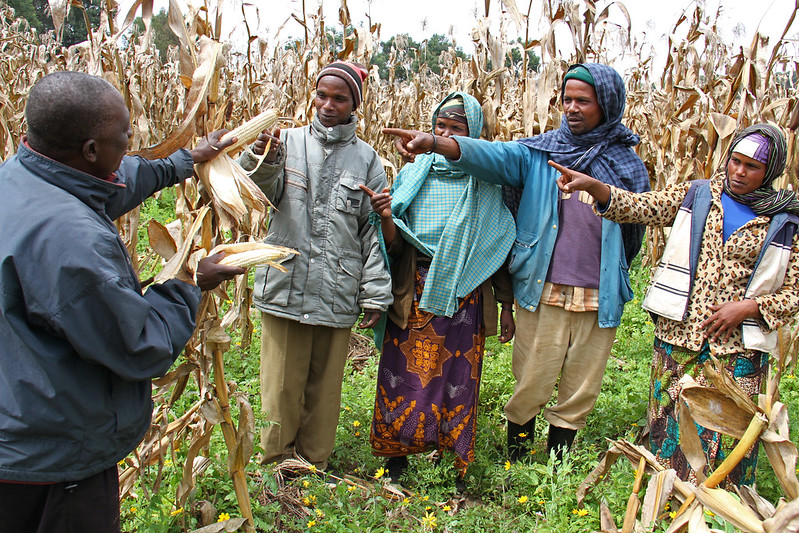
Increasing the number of locally produced, nutritious foods cultivated by local farmers is a priority in Africa. Rwanda’s Pan-Africa Bean Research Alliance (PABRA) has worked to enhance African food systems and combat malnutrition.

According to PABRA, beans contribute 32% of daily calories and 65% of protein intake in Rwandan homes. The country’s government has prioritized these nutrient-rich bean crops through the Government Crop Intensification Programme. Beans are high in iron and zinc while also being inexpensive, which makes them a cost-effective crop to incorporate into the African food system.

Another organization, the Zimbabwe Pfumvudza Programme, aims to achieve food security by providing local farmers with maize, sunflower, small grain and soya bean seeds with basal and top fertilizer. Following the Conservation Agriculture Principles, local farmers receive training on adequately caring for the crops and government monitoring.

This program is in the early stages of production as they are working on financing and training staff on new agricultural technologies. However, the expected outcome is 75KG of produce per household, adding up to 1 million MT total.

Some criticism of this kind of intervention has been reported by activists at the Alliance for Food Sovereignty in Africa, arguing that providing resources to farmers will create a dependency. Activists also say that having farmers plant monocultures will take away a farmer’s crop variety, impacting already present food deficits.

Looking Ahead

To stay on track to end chronic hunger in Africa by 2030 and meet the Zero Hunger target in 2015, African Green Revolution Forum attendees acknowledged a need to reshape African food systems and agriculture into a more substantial business model to support malnourished households and small farmers.

With the number of households facing poverty, income inequality and rising food costs, nutrient-rich diets and a steady food supply are unattainable for many African people. Leaders at the AGRF shared that Rwanda’s efforts as a host country and an example of potential improvements that have the potential to benefit food systems in other countries inspired the movement.

– Mikada Green
Photo: Flickr

October 22, 2022
https://borgenproject.org/wp-content/uploads/borgen-project-logo.svg 0 0 Naida Jahic https://borgenproject.org/wp-content/uploads/borgen-project-logo.svg Naida Jahic2022-10-22 07:30:202024-05-30 22:30:19The African Green Revolution Forum Addresses African Food Systems
Food & Hunger, Global Poverty

How H-E-B is Reducing Mexican Hunger

Mexican hunger
Texans have grown up with H-E-B being a household name. The grocery store is famous for its fresh produce, low prices and wide variety. Most Texas residents, however, are ignorant of the good work the establishment does abroad. Mexico, the state’s neighbor to the south, is a developing country with quite a bit of malnourishment and poverty within its borders. H-E-B recognized this reality and implemented generous relief measures, making H-E-B v.s. Mexican hunger is an interesting and unforeseen rivalry.

Crisis in Mexico

As of 2020, 6.1% of Mexico’s population was undernourished, a figure that is part of an alarming trend of increased hunger. Such movements are a consequence of a variety of factors, whether that be the 2012 statistic of 10% of Mexicans who are 50 years or older having no education or the data from that same year that showed 17% of men and 14% of women had no health insurance. Undesirable employment due to illiteracy and empty bank accounts due to high medical bills leaves individuals with limited food options and gives generous organizations like H-E-B a lot to combat.

Hence why the H-E-B v.s. Mexican hunger fight is multifaceted, with funds going towards food banks and festive feasts alike. The assistance allocation process includes a wide network of partnerships and the mere scope of the endeavor showcases just how invested the corporation is in helping the helpless. Take for instance the H-E-B Food Bank Assistance Program, this subset of the company’s anti-hunger campaign, founded in 1982, supports 13 different food pantries across Mexico.

Relief Efforts

A quarter of all donations come from the H-E-B Reclamation Center, reducing the number of shipping fees the banks have to pay and greatly improving their administrative abilities. That is alongside the figure of 50% of contributions originating from H-E-B’s Retail Donation Program, a policy that entails stores donating their unsold commodities to various food banks, according to H-E-B’s website. This means that it delivers the aid quite efficiently.

After all, in 2020 more than 600 truckloads of food were delivered to banks, 80,000 meals were donated to hospitals, and there was a 35% increase in the total amount of pounds of aid being distributed with respect to the previous year.

H-E-B took this efficiency one step further by providing the storage materials for these organizations, a rare move among food bank contributors, and by partnering with notable anti-poverty groups such as the Global Food Banking Network. In working with these NGOs, H-E-B has donated more than 1 billion pounds of food since its Food Bank Assistance program’s genesis, according to its website. Every year the corporation holds what it calls the Feast of Sharing at several different locations both within the states and in Mexico.

Even when the pandemic was raging, the company found a philanthropic alternative to this tradition, donating more than 340,000 meals to various meal centers and poverty-fighting organizations. Such adaptivity truly highlights how H-E-B v.s. Mexican hunger is fierce competition.

Sourcing

When H-E-B expanded into Mexico in 1997, the corporation created new relationships between Mexican companies and the store, giving the agricultural industries down south a welcomed boost. For goods that do not come from the Mexican fields, Texas farmers are then there to stock up the locations across the border, which means more business for them in the long run.

Considering that as of 2019, 3.3% of Mexico’s GDP was agriculture-based, this sector of the economy has huge implications for the well-being of the Mexican people and is definitely a key market of investment within the H-E-B v.s. Mexican hunger battle. As of 2017, 36%of producers in Texas had connections to farms, meaning that increased farming activity has greatly influenced the lone star territory.

Larger Scale Implications

Given the mutually beneficial aspects of H-E-B’s international initiatives, other public and private aid measures on the global stage seem more enticing. Many naysayers to U.S. corporate and federal assistance claim that the nation has so many problems of its own, it should not look abroad for dilemmas to fix. These two concerns are not mutually exclusive, however, operations like mere grocery stores can foster meaningful economic growth in markets far and near.

Though regardless of the American concerns, the H-E-B v.s. Mexican hunger fight, seen through the food bank donations and the festive meals, was an endeavor that the organization did in an orderly, thoughtful and efficient manner and the organization is providing more and more assistance. Regardless of which way you slice its ambitions, it is influential nonetheless.

– Jacob Lawhern
Photo: Wikimedia Commons

October 11, 2022
https://borgenproject.org/wp-content/uploads/borgen-project-logo.svg 0 0 Jennifer Philipp https://borgenproject.org/wp-content/uploads/borgen-project-logo.svg Jennifer Philipp2022-10-11 07:30:202022-10-07 14:21:18How H-E-B is Reducing Mexican Hunger
Developing Countries, Development, Food Security, Global Poverty, Health

New technologies in South Sudan

new technologies in South SudanTechnology increasingly offers more and more solutions to help reduce poverty across the globe. Considering South Sudan’s unpredictable climate and scarce resources, new technologies in South Sudan can provide a gateway of opportunities and security to the locals. This can be through new farming methods and equipment, schooling, banking and monetary management.

The Problems in South Sudan

South Sudan’s current climate is posing many challenges to its poverty-stricken population. The World Bank describes poverty as ‘ubiquitous’ across South Sudan, with it estimating that two-thirds of the population requires humanitarian assistance.

Estimates stated that floods are affecting up to 1 million people every year because the floods have forced many to evacuate their homes. This has had an impact on education with floods affecting 100 schools. As a result, more than 60,000 students have reduced access to education.

In the short term, people in South Sudan have had limited access to nutrition and health care. This has contributed to the fact that 60% of the population is facing malnutrition.

It is not just flooding that impacts South Sudan. Excessive drought, temperature changes and unpredictable rainfall have all damaged day-to-day life in South Sudan. Droughts have resulted in food insecurities leading to a loss of livestock and crops.

This is severely impacting the economy in South Sudan considering that 95% of the population work in sectors that rely on the climate. This includes agriculture, fishing and forestry resources.

In the 2020-2021 period the South Sudanese economy reduced by 5.4% due to lower exports of oil and agricultural output. This is having a large impact on the living conditions of individuals in South Sudan.

The Conflict in South Sudan

As a result of the unpredictable climate in South Sudan, many have had to migrate. In fact, up to 4 million people as of 2022 remain displaced due to climate-induced dangers – 1.6 million internally and 2.3 million in neighboring countries.

Migration has led to enhanced homelessness across South Sudan. This has reduced living standards and increased disease. A lack of infrastructure has led to more exposure to malnutrition, mosquitos and climate-induced diseases such as malaria and cholera.

Serious conflicts over resources in South Sudan between groups, especially in areas of extreme drought, has led to livestock raiding and exacerbated the displacement of people into concentrated areas making resource scarcity even more serious.

Furthermore, the large weaponry market that has spread throughout the territory to the failure of the South Sudanese government, fuelling the problem and resulting in wider political instability in South Sudan. Resource conflicts have increasingly become a method to gain political support and power.

UNHCR’s Efforts

To solve the issues of conflict and lack of institutional and infrastructural support in South Sudan, the resource and climate problems require mitigation and resolution. Technology could be a solution, but South Sudan has limited new technologies presently.

First, and foremost, technology can make farming more efficient and sustainable. For example, the United Nations High Commissioner for Refugees (UNHCR) is trying to develop sustainable and resilient infrastructure such as dikes and drainage systems to try and appease the problems in South Sudan. Moreover, UNHCR has provided flood-tolerant seeds and training for locals. To help with droughts, it has introduced new irrigation systems and set up tree nurseries to regrow forests. In Maban, five tree nurseries underwent establishment in four refugee camps. These activities are introducing new skills and opportunities for the locals, that are more resistant and malleable to the changing climatic conditions. Other technologies include high-efficiency cooking stoves, reusing agricultural waste and using solar energy to extract water from boreholes.

How the US is Helping

Next, greater investment into education and human capital development is vital for presenting more opportunities for the locals to be able to use new tech. The U.S. has provided more than $117 million to South Sudan on top of humanitarian aid. This is helping the government to invest more money into their infrastructure, allowing more to access education.

The U.N. has also been providing increased support across Africa. It is important that this continues as, alone, South Sudan does not have the fiscal capacity to create a stable socioeconomic climate.

A further key area for South Sudan is taking full advantage of technology to provide education to rural areas that otherwise do not have access. This seems to have had little traction so far but could prove to be a very advantageous development.

Lastly, introducing these new technologies and skills in South Sudan will help to address the migration problem, reducing the levels of migration and allowing the population to become more dispersed again. This will hopefully help to reduce conflict in South Sudan as well.

Looking Ahead

Behind this shift to new technologies in South Sudan in the long run, support through charity and initiatives will help to smooth the transition. For example, to help with conflicts UNHCR has started several peace initiatives in Eastern Equatoria to reduce further conflict between herders and farmers, and to incentivize the use of new technology in pastoralists’ original locations, rather than internally migrating.

As a result, it becomes clear that South Sudan can reduce conflict across the country if it introduces more sustainable technology to help with the unpredictable climate. This requires the support of other countries and the cooperation of the South Sudanese government if this is to successfully reduce poverty.

– Reuben Cochrane
Photo: Flickr

October 5, 2022
https://borgenproject.org/wp-content/uploads/borgen-project-logo.svg 0 0 Naida Jahic https://borgenproject.org/wp-content/uploads/borgen-project-logo.svg Naida Jahic2022-10-05 07:30:182022-10-04 14:32:42New technologies in South Sudan
Food Insecurity, Food Security, Global Poverty

US Pledges $55 Million Following Earthquake in Afghanistan

Earthquake in AfghanistanU.S. Secretary of State, Anthony Blinken, announced that the U.S. would provide $55 million in aid after a fatal 5.9 magnitude earthquake in Afghanistan on June 21, 2022. The disaster destroyed more than 10,000 houses and killed more than 1,000 people, making it the deadliest earthquake to hit Afghanistan in two decades. The earthquake poses a challenge for the Taliban, who have since asked the international community for aid.

Distribution of Funds

The United States Agency for International Development (USAID) announced on June 28, 2022, that it will allocate $55 million in aid for emergency relief resources such as shelter, food, water, clothing and hygiene products in Afghanistan. A portion of the aid will go toward sanitation measures to limit the spread of waterborne diseases. Funds will go directly to partner civil societies and nonprofit organizations operating in the region as the U.S. does not have official diplomatic or humanitarian ties with the ruling Taliban.

Additional Aid Efforts in Afghanistan

The devastating earthquake exacerbates the economic and humanitarian crises that have pummeled Afghanistan since the Taliban first rose to power in August of 2021. Afghani citizens already face food insecurity, with national hunger rising from 14 million in July 2021 to 23 million in March 2022.

With more than half of the population facing food insecurity, international assistance narrowly managed to avoid full-scale famine in the country in the winter of 2022. Poverty rates in the country are estimated to stand at almost 97% as of 2022 due to prolonged drought and instability caused by recent political upheaval and the lingering effects of the COVID-19 pandemic.

On June 25, 2022, the United Nations initiated an emergency appeal for $110 million in aid to help the provinces most affected by the disaster. The U.N. will disseminate the funds in the next three months in order to help 360,000 Afghanistan citizens. This emergency appeal is integral to the U.N.’s Humanitarian Response for Afghanistan, which calls for a total of $4.4 billion in emergency aid.

Barriers to Aid

Unfortunately, the Taliban’s strict control over the country complicates all international humanitarian efforts. In late March 2022, the Taliban’s Prime Minister Mullah Hassan Akhund announced to all foreign aid agencies in Afghanistan that all humanitarian projects must be done in close coordination with Kabul’s authorities. This announcement came a week after the governor of the province of Ghor, Ghulam Naser Khaze, attempted to exert total control over several local NGOs.

Governor Khaze insisted that the NGOs turn over their funds and only adopt projects chosen by the local government. Prime Minister Mullah’s directives and Governor Khaze’s actions in Ghor represent a policy framework known as the “Monitoring and Control Plan of NGOs.” Kabul’s Taliban government formulated this plan in the fall of 2021 to consolidate all NGO activities under the Taliban’s authority.

Sanctions and other measures aim to prevent the Taliban from fully implementing its NGO-control framework. As a result, international financial systems are especially diligent, making it difficult for humanitarian groups to access the funds efficiently. The Taliban continues to actively insert itself between nonprofit organizations and the aid they seek to provide via various formal and informal decrees, further frustrating the fund distribution process.

How to Help

As a result of international sanctions on the Taliban, online fundraising sites cannot be transferred to Afghanistan banks. The best way to help those affected by the earthquake is to donate directly to NGOs in the region. Below is a list of NGOs helping those struggling in Afghanistan.

  • The World Food Programme: The earthquake exacerbated the food crisis that has gripped Afghanistan for months. The World Food Programme mitigates the issue of food insecurity in Afghanistan by delivering food to those in need within just a few hours.
  • The Red Cross and Red Crescent: The Red Cross and Red Crescent have been working in Afghanistan since the U.S. evacuated the country in the summer of 2021. These programs are already organized to deliver food, other critical supplies and mental and health services to those affected by the earthquake.
  • Islamic Relief: Islamic Relief is a Muslim aid network founded in the U.K. in 1984. The organization operates various humanitarian relief programs in more than 45 countries. It already has a fund to help supply food aid, cash and emergency shelter to those facing the impacts of the earthquake.
  • International Medical Corps: The International Medical Corps stood as one of the first organizations to respond to the disaster. It immediately began coordinating with domestic emergency responders and providing trauma care to affected communities.

The international community is rushing to help those affected by the crisis. Still, everyone can help in their own small way. Be sure to remain an active and informed global citizen by vocalizing the importance of foreign aid funds to local government representatives. Through the efforts of nations, NGOs and ordinary citizens, Afghanistan can look to a brighter tomorrow.

– Mollie Lund
Photo: Flickr

September 19, 2022
https://borgenproject.org/wp-content/uploads/borgen-project-logo.svg 0 0 Kim Thelwell https://borgenproject.org/wp-content/uploads/borgen-project-logo.svg Kim Thelwell2022-09-19 07:30:202022-09-19 03:34:17US Pledges $55 Million Following Earthquake in Afghanistan
Food & Hunger, Food Security, Global Poverty

Food Crisis in Sri Lanka

Food Crisis in Sri Lanka
Record inflation and soaring fuel costs are igniting a food crisis in Sri Lanka. Skyrocketing prices leave more than 6 million Sri Lankans food insecure. Because people are not certain when their next meal will be, they reduce their food intake and that results in their poor nutrition. The health of Sri Lankan pregnant women and children is particularly at risk due to a lack of quality nutrition.

Sri Lanka Food Crisis Specifics

According to the World Food Programme (WFP), about three out of 10 households (nearly 6.26 million Sri Lankans) are uncertain of where their next food will come from. More than 60% of households are resorting to rationing their food and do not obtain sufficient nutrition. As one Sri Lankan woman  said, “These days, we don’t have a proper meal but eat only rice and gravy.” In June 2022, WFP Deputy Regional Director for Asia and Pacific Anthea Webb explained, “Pregnant mothers need to eat nutritious meals every day, but the poorest find it harder and harder to afford the basics.”

At an astonishing rate of 57.4% inflation, increasing food prices have resulted in two out of five households living without enough food to support their families. In the “farming estates sector” which includes tea plantations and other similar “estates,” more than half of households live with food insecurity. These households are worse off than urban populations and other rural dwellers. Rural and urban households are depleting their savings or using credit to buy essentials. “Poor families in cities and those who work on estates have seen their incomes plummet while market prices have soared,” a WFP spokesperson commented.

Stories of Family Struggles

Perhaps one can better understand Sri Lanka’s food crisis by hearing about family struggles. Chandrika Manel, a mother of four children, expresses how crucial the situation is when she says, “even buying bread is a struggle. There are times I [give them] milk and rice, but we don’t cook any vegetables. They’re too expensive.” Sahna, a pregnant 34-year-old who has three children and is due in September, is nervous about the future, uttering, “My children are miserable. They’re suffering in every possible way. I can’t even afford a packet of biscuits or milk for my babies.” Acute malnutrition could increase dramatically from 13% to 20%. Further, the current 35,000 malnourished children could double according to Dr. Renuka Jayatissa, President of the Sri Lanka Medical Nutrition Association.

UN Warns of Humanitarian Crisis

The United Nations Children’s Fund (UNICEF) is appealing for significant funds to hold off a humanitarian crisis. UNICEF found that depleting gas and medical supplies forced 70% of Sri Lankan families to reduce their food intake in 2022. “We’re trying to avoid a humanitarian crisis. We’re not yet at children dying, which is good, but we need to get the support very urgently to avoid that,” said Christian Skoog, UNICEF’s representative in Sri Lanka.

On the positive side, UNICEF has noted a sense of solidarity and community among Sri Lankans.  For example, Pastor Moses Akash began a community kitchen a month ago after meeting a single mother who survived off of jackfruit for three days. Akash meets people who have not had a meal in four months and believes the number of people waiting in line for food will increase from 50 to 250 a day because of the up-to-80% increase in food prices in June.

WFP Taking the Lead to Combat Sri Lanka’s Food Crisis

To address Sri Lanka’s food crisis, humanitarian organizations are taking the lead. The WFP kick-started an emergency relief fund of $60 million for food and nutrition to help 3 million who are in vulnerable sectors like women and children. Each month the WFP gives $40 meal vouchers to pregnant women in impoverished areas. The WFP also collaborates with local governments that provide prenatal care. Thus far, the organization has provided 88% of the 2,375 vouchers to assist 3 million people with food, sustenance and school lunches. Going against this support, 61% of Sri Lankan households are using the approach of lowering the quantity of food consumption and obtaining more food with less nutrition. Unfortunately, the food relief agency expects an estimate of 200,000 families will use that approach as the crisis continues.

The US announces $20 million in Additional Assistance for Sri Lanka’s Food Security

On July 5, 2022, at the G7 Summit in Germany, United States President Joe Biden announced that the U.S. committed to an additional $20 million in aid to Sri Lanka to feed more than 800,000 children and 27,000 pregnant women in the next 15 months. The relief grant encourages strong school nutrition for students and includes meal tickets for pregnant women. The plan also supports 30,000 croppers to improve cultivation in impoverished communities that are living in debt. U.S Ambassador to Sri Lanka Julie Chung underlined that the United States is devoted to food security, public health and promoting economic stability for the people of Sri Lanka. She commented, “This aid will feed Sri Lankan children, combat food insecurity and demonstrates our enduring commitment to the health & well-being of the Sri Lankan people.”

Despite the catapulting of inflation which can threaten the health of children and expecting mothers, humanitarian organizations including the World Food Programme and the United Nations are leading the way in avoiding a humanitarian crisis. The U.S. response to the food crisis in Sri Lanka also improves the odds of avoiding a dire humanitarian crisis.

– Jacara Watkins
Photo: Flickr

August 1, 2022
https://borgenproject.org/wp-content/uploads/borgen-project-logo.svg 0 0 Kim Thelwell https://borgenproject.org/wp-content/uploads/borgen-project-logo.svg Kim Thelwell2022-08-01 01:30:242022-07-28 05:46:59Food Crisis in Sri Lanka
Food Security, Global Poverty

Cash Transfer Programs Provide Food Security

Cash Transfer Programs
For the last 30 years non-government organizations (NGOs) like the Transfer Project and Concern Worldwide have been working with the governments of African nations and conducting trials and experiments with African villages to gauge how simple cash transfer programs will benefit their communities. The idea is to give households a small increase in their spending power through cash transfers. Then, after several months, see if these transfers had a lasting economic benefit on the affected households and villages.

Kenya’s Cash Transfer for Orphans and Vulnerable Children (CT-OVC)

Kenya’s Ministry of Home Affairs began a cash transfer program in 2004 with additional aid and funding from UNICEF. This program provides a cash transfer equivalent to $21 for households in Kenya that have a chronically ill caregiver for a child under 17 years of age. Since its implementation, this cash transfer program has aided more than 250,000 households and nearly 1 million people. It provides necessary resources for vulnerable children, such as food security and health care.

Niger’s Temporary Cash Transfer Program

Niger experienced a food and water crisis after a catastrophic drought threatened the agricultural industry in 2009 and 2010. The government of Niger implemented a temporary social program with the help of the NGO Concern Worldwide. This program aimed to provide cash transfers to families in order to prevent malnutrition and resource exhaustion. This program lasted for five months and provided more than 10,000 affected families with $45 each month in order to guarantee food security during the shortage crisis.

Niger’s Childhood Development Cash Transfer Program

After the successful trial of the cash transfer program during the drought and food crisis in 2010, Niger’s government decided to implement Project Filets Sociaux. This is a national cash transfer program dedicated to providing families with the extra help needed for childhood development. Since 2011, this program provided more than 87,000 households with nearly $16 a month for 24 months.

However, this program provided more than just cash transfers to hundreds of thousands of individuals. This program also included a behavioral change component which supplied education for thousands of households on early childhood development practices. Such education practices included breastfeeding, diarrhea rehydration, sleeping under mosquito netting and family planning. Later modules also included school readiness, brain development and discipline. This program experiment turned out to be so successful that many villages that were not receiving cash transfers still benefited from the behavioral modules and learning programs. These educational materials increased the number of affected households to as many as 200,000 with more than 1.5 million people aided.

Cash Benefits

Cash transfer programs have become one of the most popular ways for a government to address poverty within its country. Based on the success of previous cash transfer programs, Niger’s government knew that a cash transfer system would help alleviate poverty. In 2012, Niger began giving its most impoverished citizens about $16 a month for two years. This doubled the spending power of most of these citizens. Despite the fears that these individuals would instead spend this money on luxury items such as alcohol, the opposite was true. The recipients used their extra money productively.

A similar program in Kenya provided around $1,000 to more than 10,000 households in more than 650 random villages. Incredibly, economic activity also increased in nearby villages that had not received the cash transfer, further supporting the idea that cash transfer programs can reduce poverty in African nations.

A Promising Way Forward

A 2021 World Bank report identified nearly 200 similar cash transfer programs across 75 different countries, all providing food security and increasing the quality of life for nearly 92 million people. With such a promising track record, cash transfer programs have firmly established their usefulness in the fight to alleviate global poverty.

– Declan Harkness
Photo: Flickr

July 14, 2022
https://borgenproject.org/wp-content/uploads/borgen-project-logo.svg 0 0 Kim Thelwell https://borgenproject.org/wp-content/uploads/borgen-project-logo.svg Kim Thelwell2022-07-14 07:30:482024-05-30 22:29:48Cash Transfer Programs Provide Food Security
Food Security, War

UNDP’s Efforts to Rebuild the Homs Yeast Factory

Homs Yeast FactoryThe war in Syria has resulted in the destruction of important infrastructure including factories that produced yeast essential for making bread. The yeast would then be delivered to bakeries who use it to bake bread to sell to the people. However, because of the war, the only operating yeast factory is the one at Homs but it is producing less yeast than before due to reduced resources. Nevertheless, on June 1, 2022, the United Nations Development Programme (UNDP) announced that it will use its resources to rebuild the Homs factory so it can produce as much yeast as before the war. UNDP’s heroic efforts to rebuild the Homs yeast factory are an illustration of a modern-day success story.

This story is more inspiring when looking at the mechanical details of the Homs yeast factory before and after UNDP’s intervention. Before UNDP’s intervention, the yeast factory in Homs produced “only six to 10 tonnes of yeast” every day. This is 5% to 9% of the amount before the war started. But with the intervention, the UNDP is aiming to have the Homs factory produce “24 tonnes of yeast daily” to give to the bakeries in Syria so they can bake and sell bread to Syrians. This is an ambitious goal to achieve especially since the quality of life in Syria has deteriorated sharply in the 12 years since the war started.

Current Poverty Rate and Food Insecurity in Syria

The war in Syria has devastated the lives of ordinary Syrians with the poverty rate increasing and food insecurity worsening. This makes UNDP’s heroic efforts to rebuild the Homs yeast factory more uplifting. The number of Syrians living in poverty has reached nearly 90% of the population in the whole country as of June 1, 2022, according to a press release published on ReliefWeb.

Furthermore, as of June 1, 2022, the percentage of the population struggling with food insecurity is at a “historic highs with an estimated 60%.” Therefore, the UNDP is facing many obstacles in tackling food insecurity in Syria by rebuilding the Homs factory, which requires sophisticated solutions. Nevertheless, the UNDP has the necessary strategies to successfully reconstruct the Homs factory so it can feed more Syrians just like before the war started.

How the UNDP is Rebuilding the Homs Yeast Factory

UNDP’s heroic efforts to rebuild the Homs yeast factory are possible because of the meticulous plan the UNDP formulated within the Syria Humanitarian Response Plan. Technical assessments conducted by the UNDP on June 1, 2022, show that nearly $1 million is needed in order to reconstruct the Homs yeast factory.

UNDP is planning to allocate 80% of the $1 million to “the technical rehabilitation of yeast processing,” according to U.N. News. Twenty percent of that $1 million UNDP plans to spend on “packaging equipment, factory safety and hygiene standards.” The UNDP plan’s intended goal is to be able to feed 3 million more Syrians who cannot afford bread currently.

Nationwide Efforts to Distribute Bread to Syrians

Reducing poverty and food insecurity in Syria is not strictly dependent on UNDP’s heroic efforts to rebuild the Homs yeast factory. The interim government in Syria announced on May 19, 2022, that it “prohibited the export or transport of any of the strategic crops,” such as wheat. The reason is that prohibiting exports of wheat and other strategic crops would “achieve food security in the liberated areas.”

Furthermore, on June 13, 2022, the interim government in Syria has also been “working on a plan to purchase large quantities of grains,” from Syrian local farmers. That way, the interim government can “boost stocks needed to produce bread,” Al-Monitor reported. The efforts of the interim government, if successful, are complementary to UNDP’s work on rebuilding the Homs yeast factory which produces materials necessary for making bread.

Looking Ahead

UNDP’s energetic efforts to rebuild the Homs yeast factory highlight an international determination to help Syrians. It is commonly heard that the world is forgetting about Syria because of the longevity of the war. However, the UNDP’s hard work, planning and investment in rebuilding the factory shows that the world has not only not forgotten about Syrians, but is coming up with clever solutions to save them. International relations analysts usually ask whether the U.N. has lost its credibility because of its inability to end the Syrian war. The UNDP story proves that the U.N. is still credible and capable of saving lives despite the odds.

– Abdullah Dowaihy
Photo: Flickr

July 9, 2022
https://borgenproject.org/wp-content/uploads/borgen-project-logo.svg 0 0 Jennifer Philipp https://borgenproject.org/wp-content/uploads/borgen-project-logo.svg Jennifer Philipp2022-07-09 01:30:442022-07-04 13:33:34UNDP’s Efforts to Rebuild the Homs Yeast Factory
Food & Hunger, Food Insecurity, Global Poverty

Ending Food Insecurity in Australia

Food insecurity in Australia
Australian adults are the wealthiest in the world, yet food insecurity remains a prevalent issue in the country. One-quarter of adults experience food insecurity in Australia, while one in six people experience disruptions in their eating patterns and reduced food intake. According to Food Bank Australia, ” “These individuals and families are often forced to eat smaller meals and to make the food last longer or skip meals entirely.” Large bills or unexpected costs of living are among the top reasons why people cannot afford food. As a consequence of inadequate nutrition, many Australian adults are unable to achieve an active and healthy lifestyle. To combat the growing problem of food insecurity in Australia, interest groups like the Australian Food Sovereignty Alliance (AFSA), the Commonwealth Scientific and Industrial Research (CSIR), and the Regrarians use lobbying to push for change.

Australian Food Sovereignty Alliance

Meeting different party demands is up to the farmers and civil society organizations like the AFSA. With 700 members, the AFSA represents workers, communities and smallholders to protect their right to nourish and culturally appropriate food grown in their homesteads. Distributing food to the poor requires socially-just management before anyone can receive aid.

Commonwealth Scientific and Industrial Research

Commonwealth Scientific and Industrial Research (CSIR) uses scientific infrastructure to fight to end food insecurity. Starting as an advisory board in 1916, its focuses range from changing weather to human welfare. CSIR assists the nation with converting food waste and researching sustainable foods.

One focus is chronic diseases which cost Australian society and government $58 billion in 2008. To reduce their occurrence, CSIR scientists create whole grains with human health benefits. Breakfast cereals, rice mixes, food wraps and bread incorporate the new whole grain. The projected outcome would save the country $17 million a year.

Regrarians

Regrarians, which is a term referring to a neologism of ‘regenerative agrarian’, work to make soil regeneration a precedent for farmers. A study from Ecdysis Foundation found that farms with regenerative practices were 78% more profitable than conventional plots. The Regrarians supply information for farmers to regenerate, restore and rekindle landscapes. The organization aims to notify consumers about the regenerative economy through education programs, media and goods.

Adults who cannot eat regularly rely on the food systems in Australia. Multidisciplinary science and industry export leaders surface when alms count against monetary sales. More than 15,000 people receive information from the Regrarians to create regenerative landscapes, involved societies and industry cures. Getting the country to improve food security requires intelligent leaders in CSIR and experienced farmers in the AFSA.

– Bryant Morisseau
Photo: Flickr

July 1, 2022
https://borgenproject.org/wp-content/uploads/borgen-project-logo.svg 0 0 Jennifer Philipp https://borgenproject.org/wp-content/uploads/borgen-project-logo.svg Jennifer Philipp2022-07-01 07:30:582022-06-27 09:34:04Ending Food Insecurity in Australia
Food Security, Global Poverty

The WFP’s Humanitarian Partnership with Uber

WFP’s Humanitarian Partnership with Uber
On June 8, 2022, Uber donated a customized version of its “Uber Direct” software app to the U.N.’s World Food Programme (WFP) to help distribute food in Ukraine. Some urban areas in Ukraine are hard to reach with conventional large delivery trucks because the areas are densely populated. Therefore, the WFP’s humanitarian partnership with Uber allows the WFP to use a customized version of the Uber Direct app so the WFP can easily reach food insecure Ukrainians in urban areas. In addition, with the Uber Direct app, the WFP will be able to “coordinate a fleet of vehicles and track deliveries in real time.”

Innovative Approaches to Delivering Aid

The WFP’s partnership with Uber highlights the potential of modern technology to solve modern-day global humanitarian issues. The conflict between Ukraine and Russia makes it difficult for international humanitarian organizations to deliver food and other essential items due to ongoing military operations.

Russia is blockading Ukraine’s Black Sea ports, which are important for the transportation of food to developing countries struggling with food insecurity. However, innovative approaches to delivering aid, such as the customized version of the Uber Direct software app, give humanitarian organizations opportunities to efficiently tackle food insecurity in war-torn countries. Thus, WFP’s partnership with Uber in Ukraine illustrates how technology can stand as an important tool in the reduction of global poverty.

The Food Insecurity Situation in Ukraine

As of May 21, 2022, one in three Ukrainian households faced food insecurity due to the war, according to the WFP. Furthermore, these Ukrainians have lost their jobs, which means they have no income to support themselves and many have had to abandon their homes.

Russian forces are destroying farms and croplands in Ukraine. Additionally, the Guardian reported on June 13, 2022, that “Ukraine’s national seed bank has been partly destroyed amid fighting in Kharkiv in the north-east, where almost 2,000 crop samples rest in underground vaults.” The situation further exacerbates food insecurity in Ukraine. Therefore, the WFP’s humanitarian partnership with Uber is necessary in order to easily deliver emergency food to Ukrainians at risk of food insecurity.

How Uber Can Assist in Tackling Food Insecurity in Ukraine

The WFP “is already using the [Uber Direct] app in Dnipro,” but because food insecurity is widespread in Ukraine, the WFP intends to also send deliveries of food aid to Lviv, Vinnytsia, Kyiv and Chernivtsi. The customized Uber Direct app allows the WFP  to “schedule, dispatch, track and manage deliveries by a network of cars and small vans to final distribution points within a 100km radius of WFP warehouses across the country.” Additionally, the WFP’s humanitarian partnership with Uber also includes a $250,000 donation from Uber to the WFP USA “to support the emergency response in Ukraine.”

Private Sector Support

Although the WFP’s humanitarian partnership with Uber is innovative and transformative, Uber is not the only private company providing support to the WFP to help Ukrainians. The John Deere Foundation, the charitable arm of John Deere, announced on May 18, 2022, a donation of $1 million to the WFP U.S.A so it can “combat global food insecurity” and tackle rising hunger in Ukraine. The John Deere Foundation also said that 50% of the donation will go to the WFP’s Innovation Accelerator, which “sources, supports and scales high-impact innovations to achieve zero hunger.” The support from Uber and the John Deere Foundation to the WFP illustrates the commitment of the private sector to humanitarian work, which is instrumental to ending global poverty.

Looking Ahead

International organizations have been documenting the steady decline in global poverty over the past decades before the COVID-19 pandemic hit. However, some may wonder how global poverty can be declining, given the wars and conflicts ongoing in many countries around the world. To find the answer is to look at how humanitarian organizations are leveraging their relationships with the private sector to discover creative ways to solve poverty and hunger. The WFP’s use of the customized Uber Direct app in Ukraine to deliver food to densely populated areas is a shining and, perhaps, enduring example.

– Abdullah Dowaihy
Photo: Flickr

June 28, 2022
https://borgenproject.org/wp-content/uploads/borgen-project-logo.svg 0 0 Kim Thelwell https://borgenproject.org/wp-content/uploads/borgen-project-logo.svg Kim Thelwell2022-06-28 01:30:002022-06-28 07:24:07The WFP’s Humanitarian Partnership with Uber
Food Aid, Global Poverty

WFP’s Cash and Food Assistance Programs

WFP’s Cash and Food Assistance Programs
The World Food Programme (WFP) implements cash and food assistance programs that give individuals at risk of falling into poverty money and food to support themselves. The WFP’s cash and food assistance programs’ main goals are to reduce poverty, alleviate food insecurity and boost economic development.

Assisting the DRC

A successful example is the WFP’s cash assistance program in the Democratic Republic of the Congo (DRC) where 26 million people are at risk of facing acute hunger as of May 2022. An article published on May 17, 2022, states that the WFP considers the DRC its “biggest emergency” because conflict and the pandemic compound the nation’s circumstances of poverty.

Benefiting about 100,000 of the most impoverished people in the N’sele municipality, the WFP’s social protection and cash assistance program has occurred in partnership with UNICEF. The cash assistance equates to about $40 a month for beneficiaries to sustain their livelihoods and afford food, which became expensive as a result of the Ukraine-Russia war.

Community members attest that the cash assistance program in the DRC has helped improve the lives of many people. The WFP’s recent success with the cash assistance program in the DRC stands as proof that continuous international financial support for the WFP is necessary to help the developing world tackle poverty.

In recent years, the WFP has been experiencing “funding shortfalls” due to the pandemic’s impact on member states’ abilities to donate. This negatively affected WFP’s ability to reduce poverty further in developing or war-torn countries around the world. Thus, increased financial contribution to the WFP can lead to economic recovery in developing countries.

How Funding Shortfalls are Impacting WFP’s Goals

Although the reduced funding negatively impacted WFP’s cash and food assistance programs, it hurt refugees and vulnerable communities more. For example, in 2021, the WFP had to consider cutting down on food rations for refugees in Cameroon as a result of insufficient funding, potentially impacting 70,000 Nigerians and 100,000 Central African Republic refugees.

In Jordan, the WFP could no longer provide food aid to about 263,000 Syrian refugees by the close of August 2021. In Tanzania, the WFP’s refugee support program had to implement “ration cuts of up to 32[%] of the minimum calorie requirement since December 2020” due to funding inadequacies.

This highlights the necessity of continued funding of the WFP to help developing countries reduce poverty and boost their economies.

WFP Tackles Poverty Despite Funding Issues

Despite its recent financial setbacks, the WFP is still the world leader in tackling food insecurity and poverty. Ukraine stood as the breadbasket of the world until the Russian invasion in February 2022, prompting a humanitarian crisis in Ukraine.

However, the WFP’s cash and food assistance programs managed to mitigate the impacts of the humanitarian crisis in Ukraine. For example, in May 2022, the WFP managed to give 1 million Ukrainians cash to support themselves amid the crisis and “injected nearly US$74 million into the Ukrainian economy.” Furthermore, the WFP is delivering essential foods, such as rice and pasta, to approximately 420,000 people a month.

Countries Financially Supporting the WFP

There are still countries around the world that acknowledge the crucial role of the WFP’s cash and food assistance programs in reducing poverty. On May 19, 2022, the United States Congress passed H.R. 7691, which authorizes the government to spend $5 million on humanitarian assistance in Ukraine. This funding authorization will help the WFP “provide life-saving assistance to millions of people around the world.”

On May 30, 2022, the European Union donated €5 million to the WFP so it can deliver food to 1.6 million food-insecure individuals in Burkina Faso.

Looking Ahead

The World Food Programme still stands as the leading global humanitarian organization that saves millions of lives daily, which is why it won the 2020 Nobel Peace Prize. However, the WFP still needs continuous international support through increased financial contributions from the international community.

Global citizens and anti-poverty advocates must continue to push their governments and representatives to donate more to the WFP to address the impacts of funding shortfalls on the world’s most disadvantaged people.

– Abdullah Dowaihy
Photo: Flickr

June 14, 2022
https://borgenproject.org/wp-content/uploads/borgen-project-logo.svg 0 0 Kim Thelwell https://borgenproject.org/wp-content/uploads/borgen-project-logo.svg Kim Thelwell2022-06-14 07:30:382022-06-10 13:51:22WFP’s Cash and Food Assistance Programs
Page 9 of 78«‹7891011›»

Get Smarter

  • Global Poverty 101
  • Global Poverty… The Good News
  • Global Poverty & U.S. Jobs
  • Global Poverty and National Security
  • Innovative Solutions to Poverty
  • Global Poverty & Aid FAQ’s
Search Search

Take Action

  • Call Congress
  • Email Congress
  • Donate
  • 30 Ways to Help
  • Volunteer Ops
  • Internships
  • Courses & Certificates
  • The Podcast
Borgen Project

“The Borgen Project is an incredible nonprofit organization that is addressing poverty and hunger and working towards ending them.”

-The Huffington Post

Inside The Borgen Project

  • Contact
  • About
  • Financials
  • President
  • Board of Directors
  • Board of Advisors

International Links

  • UK Email Parliament
  • UK Donate
  • Canada Email Parliament

Get Smarter

  • Global Poverty 101
  • Global Poverty… The Good News
  • Global Poverty & U.S. Jobs
  • Global Poverty and National Security
  • Innovative Solutions to Poverty
  • Global Poverty & Aid FAQ’s

Ways to Help

  • Call Congress
  • Email Congress
  • Donate
  • 30 Ways to Help
  • Volunteer Ops
  • Internships
  • Courses & Certificates
  • The Podcast
Scroll to top Scroll to top Scroll to top