• Link to X
  • Link to Facebook
  • Link to Instagram
  • Link to TikTok
  • Link to Youtube
  • About
    • About Us
      • President
      • Board of Directors
      • Board of Advisors
      • Financials
      • Our Methodology
      • Success Tracker
      • Contact
  • Act Now
    • 30 Ways to Help
      • Email Congress
      • Call Congress
      • Volunteer
      • Courses & Certificates
      • Be a Donor
    • Internships
      • In-Office Internships
      • Remote Internships
    • Legislation
      • Politics 101
  • The Blog
  • The Podcast
  • Magazine
  • Donate
  • Click to open the search input field Click to open the search input field Search
  • Menu Menu

Archive for category: Electricity and Power

Electricity and Power, Global Poverty

Bright Future: Renewable Energy in North Macedonia

Renewable Energy in North MacedoniaNorth Macedonia, a small landlocked country surrounded by Serbia, Greece and Albania, has often flown under the radar. It is a country that has struggled with poverty for years, with about 21.6% of people living in poverty. Energy poverty is a common struggle that Macedonian households face, with more than 33.1% of the population unable to keep their homes warm due to high energy expenses, low building energy efficiency and outdated heating systems. 

For many people struggling, energy bills can be a significant problem, as they risk getting disconnected from the grid due to non-payment, while others struggle with the polluted air from burning harmful substances for cheap heating. To reduce these bills, Macedonian households have started using other strategies such as minimizing the use of appliances, and while buying more efficient appliances is an option, this is often too expensive for low-income households.

As the country moves toward using more renewable energy, this is starting to improve, but there is still a long way to go. Switching to cleaner energy sources like solar and hydro power has helped make electricity more affordable and reliable, along with creating new job opportunities and helping with day-to-day life, particularly with farmers.

Renewable Energy in North Macedonia

Recently, North Macedonia has experienced a rise in their production of renewable energy by a significant 20.8%, compared to the previous year and the State Statistical Office reported that the renewable energy output for April had reached an impressive 119,821 MWh. The leading source of this green energy transition is hydropower, which accounts for nearly 82% of the total renewable energy generated. Wind power is also becoming significant as it generated 11,636 MWh in April 2025, which was a 5.4% increase from the year before. The Bogdanci farm is the first wind farm in Macedonia and is producing about 100 GWh, which is enough to fulfil the needs of 15,000 households. The construction of this wind farm has opened up a new chapter in energy strategy.

The country has also installed its first solar power plant within an irrigation system, with a 500 kW facility on the Streževo dam, which is the first of its kind in the Western Balkans. The project, supported by Spain through a EU Recovery and Resilience Facility grant, aims to boost sustainability in agriculture. These activities funded are divided into three phases of which the first one identifies locations for floating solar power plants. The second one develops a feasible project design and the third one oversees the preparation of project proposals. As a result, the agricultural sector becomes more independent and more sustainable.

Projects like solar-powered irrigation are cutting costs for farmers, helping them earn more and making it easier for people to stay in rural areas instead of moving to cities. Use of renewable energy in North Macedonia, particularly solar power, is paving the way for a sustainable future as it generated 8,062 MWh in April 2025, which was a 21.7% increase compared to the previous year.

Looking Ahead

Still, the transition has not been easy. Upfront costs for things like solar panels are still too high for many households. Up to 30% of people still struggle to heat their homes in the winter. And in some rural areas, the electricity grid is not strong enough to support solar and wind power. That is why better planning and more inclusive policies are needed to make sure no one is left out. 

Renewable energy in North Macedonia is already transforming the country, with locals stepping up to help steer their country on a sustainable path for the future, such as seen through the Bogdanci wind farm and their efforts to generate electricity. There are efforts from the government and collaboration internationally to allow for a brighter future for the country of North Macedonia. Progress is happening and while there is still a lot of work ahead, every small step forward matters.

– Amaira Katyal

Amaira is based in London, UK and focuses on Technology and Solutions, and Global Health for The Borgen Project.

Photo: Flickr

September 15, 2025
https://borgenproject.org/wp-content/uploads/borgen-project-logo.svg 0 0 Jennifer Philipp https://borgenproject.org/wp-content/uploads/borgen-project-logo.svg Jennifer Philipp2025-09-15 01:30:382025-09-14 23:26:23Bright Future: Renewable Energy in North Macedonia
Electricity and Power, environment, Global Poverty

Financing Africa’s Green Transition: Global Climate Investment

Africa’s Green TransitionAfrica is at a critical juncture in its expansion, straddling the line between delivering rapid economic development and addressing adverse climatic conditions. The continent faces some of the highest levels of climate vulnerability, including persistent droughts and desertification, extreme flooding and coastal erosion.

However, Africa has enormous potential to lead in a global green transition, particularly given its abundant renewable energy resources, youth population and expanding clean technology market. Financing Africa’s green transition is imperative for environmental, economic and geopolitical reasons. 

Financing Africa’s Green Transition

Despite its potential, Africa has about 5% of global climate finance. Yet, the continent is home to 17% of the world’s population and is one of the most climate-vulnerable regions. Wealthy countries have pledged $100 billion annually in climate finance to developing countries through the Paris Agreement, but these commitments have consistently fallen short.

This means that for millions of people, a funding gap slows renewable energy deployment, prevents critical infrastructure projects and raises the cost of adaptation. Without urgent and scaled support financing, Africa risks being locked into a fossil-fuel-dependent future just as the world transitions to cleaner energy.

The economic rationale for Africa’s green transition is compelling. Expanding renewable infrastructure, solar, wind and hydro, would drive millions of jobs, increase energy access for more than 600 million people without electricity and stimulate industrial growth using clean energy.

Countries are already leading the way: Kenya, with more than 80% of its electricity from renewables; Morocco, home to one of the world’s largest concentrated solar plants; and South Africa, which is turning to wind and solar to diversify its coal-heavy grid. Together, these examples show the potential to meet domestic energy needs sustainably and position Africa as an exporter of renewable energy and hydrogen.

Why Global Climate Investment Can’t Wait

Financing Africa’s green transition is critical to achieving global climate objectives from an environmental perspective. The continent produces a small share of global emissions, approximately 4%, but its future emissions path will depend on the energy systems it deploys today.

Financing its transition to renewable technologies now has the potential to prevent a new increase in emissions, conserve biodiversity and preserve critical ecosystems, such as the Congo Basin rainforest, which is a global carbon sink.

From a geopolitical viewpoint, a green transition with sufficient finance would increase Africa’s global standing. Renewable sources would lessen overall dependence on imported fossil fuels. Energy security could be improved, too. African countries could also become influencers in the global clean technology sector.

However, for this to happen, strong international cooperation is essential. African governments, development banks, private investors and technology suppliers need to work together to mobilize the billions of dollars required for renewable energy. These funds are critical not only for infrastructure investment but also for climate adaptation and the growth of green industries.

Looking Ahead

The way forward requires innovative financing mechanisms. These include blended finance to de-risk private investments, sovereign green bonds and regional investment platforms to pool resources for cross-border projects. Development finance institutions can assist by guaranteeing loans, offering concessional rates and providing technical assistance in project design and implementation.

Africa’s green transition is already underway, but at a pace that is too slow to meet the Sustainable Development Goals or the Paris climate targets. With international support, the continent can unlock its renewable energy potential, drive economic growth and lead in clean energy innovation. The message is clear: the world cannot afford to leave Africa behind in the fight against the ongoing climate crisis.

– Sophia Scelza

Sophia is based in Lindenhurst, NY, USA and focuses on Good News and Global Health for The Borgen Project.

Photo: Wikimedia Commons

September 13, 2025
https://borgenproject.org/wp-content/uploads/borgen-project-logo.svg 0 0 Hemant Gupta https://borgenproject.org/wp-content/uploads/borgen-project-logo.svg Hemant Gupta2025-09-13 01:30:562025-09-12 10:47:01Financing Africa’s Green Transition: Global Climate Investment
Development, Electricity and Power, Global Poverty

Renewable Energy in Armenia

Renewable Energy in ArmeniaRenewable energy in Armenia is transforming the nation’s energy landscape. The government is ramping up solar, hydro and wind power investments to reduce reliance on imported fossil fuels. After long dependence on natural gas and oil from neighboring Russia and Iran, Armenia is shifting toward clean energy. This is marked by large-scale solar developments that signal a rapid change in the nation’s energy output.

Armenia’s Energy Dependency and National Goals

For decades, Armenia’s energy supply relied heavily on imports, with natural gas accounting for more than 80% of the country’s fuel mix. This dependency left the nation vulnerable to fluctuating prices and geopolitical instability.

In response, the government has adopted ambitious renewable energy targets to generate 66% of electricity from clean sources by 2036. By 2030, solar energy alone is expected to make up 15% of total production, reducing reliance on fossil fuels and strengthening energy security.

Masrik-1: Armenia’s Landmark Solar Project

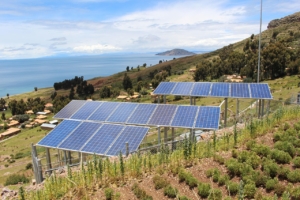
One of the most significant milestones in Armenia’s clean energy shift is the Masrik-1 solar power plant, the country’s largest renewable energy project. Located in the Gegharkunik region, the 55-megawatt facility produces around 128,000 megawatt-hours of electricity annually to power 21,600 homes.

Developed with support from the World Bank and the European Investment Bank, Masrik-1 also cuts carbon emissions by an estimated 40,000 metric tons yearly. As the first large-scale solar plant in Armenia, Masrik-1 demonstrates the country’s commitment to diversifying its energy mix and achieving long-term energy independence.

Diversifying Armenia’s Renewable Energy Mix

Beyond solar power, Armenia is working to develop a broader portfolio of renewable resources. Hydropower currently provides around 30% of the country’s electricity, making it the largest contributor to renewable energy.

A key component of this is the Vorotan Cascade, located in the country’s Syunik region, which currently contributes 13-15% toward Armenia’s total power generation. This development was purchased by a U.S company, ContourGlobal, in 2015 for $180 million. It later attracted another $70 million in investment to modernize the project further.

Wind energy remains limited, contributing less than 1% of total generation. However, Armenia’s theoretical wind potential is estimated at 450 megawatts, with projects such as Qarahach-1, a 20 megawatt development, already in planning. Indeed, the Lusakert Biogas Plant near Yerevan generates approximately seven gigawatt-hours annually, helping reduce emissions from livestock waste.

International Investment Driving Change

Armenia’s renewable energy expansion has been made possible by significant global partnerships. The European Investment Bank and the European Union (EU) have committed more than $35 million to energy efficiency initiatives, including modernizing public buildings in Yerevan. The European Bank for Reconstruction and Development and the Green Climate Fund have provided a $15 million loan to support green small and medium-sized enterprises.

Additionally, the World Bank is funding upgrades to Armenia’s power transmission grid, enabling integration of up to 1.1 gigawatts of renewable capacity by 2032. Private-sector investment is also growing, with firms like Amber Capital Armenia developing new solar plants in partnership with international lenders. Together, these efforts accelerate the country’s transition toward a cleaner, more resilient energy system.

A Sustainable Future for Armenia

Renewable energy in Armenia represents more than a technological shift; it reshapes the country’s economic and environmental future. With large-scale solar projects, expanding hydropower capacity and growing international investment, Armenia is moving closer to energy independence while reducing its carbon footprint.

Continued collaboration between government, industry and global partners will be vital to achieving the nation’s ambitious renewable energy goals and ensuring a sustainable path forward.

– George Horberry

George is based in York, Yorkshire, UK and focuses on Good News and Politics for The Borgen Project.

Photo: Flickr
September 12, 2025
https://borgenproject.org/wp-content/uploads/borgen-project-logo.svg 0 0 Hemant Gupta https://borgenproject.org/wp-content/uploads/borgen-project-logo.svg Hemant Gupta2025-09-12 01:30:202025-09-11 11:12:37Renewable Energy in Armenia
Electricity and Power, Global Poverty, Water Crisis

The Grand Ethiopian Renaissance Dam: Powering a Nation

The Grand Ethiopian Renaissance Dam: Powering a Nation Out of PovertyThe Grand Ethiopian Renaissance Dam (GERD) was named to reflect Ethiopia’s ambitions for national renewal and economic growth. As Africa’s largest hydroelectric power plant, the expectation is to expand electricity access in a country where more than 60 million people lack power and millions more live in poverty. While the GERD often receives praise for its potential to alleviate poverty within Ethiopia, its potential to promote development across the entire Nile Basin does not get as much emphasis.

Building the Grand Ethiopian Renaissance Dam

In 2011, Ethiopia announced its plans to construct GERD on the Blue Nile. The $4.8 billion dam, funded primarily by the Ethiopian people through government-issued bonds, quickly became much more than just a standard infrastructure project. With a planned power capacity of 5,150 megawatts, GERD promised to lift countless Ethiopians out of darkness and poverty – and into a better future. 

Ethiopia is among the world’s poorest countries, with 67.14% of its population classified as multidimensionally poor. It also has one of the largest electricity access deficits. As of 2022, only 55% of Ethiopians had electricity, leaving millions in energy poverty on top of economic hardship. This reality is not only a symptom of widespread poverty but a perpetuator of it.

Without power, two-thirds of Ethiopian children struggle to study after dark. Women and girls spend hours gathering firewood and cooking over open stoves, losing time to pursue education or work. And patients are deprived of lifesaving equipment and treatment. For exactly these reasons, GERD, with its ability to double Ethiopia’s energy output, is a beacon of possibility. It offers a concrete path to power, education and development to a nation long denied all three.

Conflict on the Nile

Miles downstream, however, many fear that the dam guarantees the exact opposite. Egypt, a country that relies on the Nile for approximately 90% of its water needs, sees the prospect of reduced flow as a threat to its very survival. While Ethiopia frames the dam as an existential necessity, Egypt insists it is an existential threat. 

These dichotomous perspectives lie at the heart of the Nile dispute, a centuries-old debate over who has the right to own and control the river. Unfortunately, the Nile has often been a source of division instead of unity. Ethiopia, Egypt and the other riparian countries have struggled to find a compromise when it comes to water allocation. Yet the needs of the different parties may not be as incompatible as they appear. 

Collaboration Over Conflict

In a study published in Nature, water resources expert Mohammed Basheer of the University of Toronto and his team argue that collaboration could leave the Nile Basin as a whole better off. If managed efficiently, GERD can help Egypt meet its water needs during times of scarcity while generating hydroelectric power for Ethiopia when river flows are strong. 

The study’s modeling shows that the GERD can serve to meet the individual needs of different countries, rather than making those needs mutually exclusive. Just as it can generate hydropower to spur economic growth and development in Ethiopia, the dam can also reduce irrigation deficits in Egypt, boosting agriculture and production in other water-dependent industries. 

Fostering Unity Through Music

Basheer and his team make a clear case for cooperation, but they are not alone. Though their medium is very different, The Nile Project – a musical and educational initiative – reaches the same conclusion: harmony is key to a prosperous future. 

Founded to inspire collaboration, The Nile Project brings together musicians from various riparian countries. The artists blend their languages and cultures, creating a unique sound and reminding audiences both regionally and abroad of the value in working together. By promoting the Nile as a point of connection rather than division, the organization helps build the cultural foundation needed for shared economic benefit. 

Building a Shared Future

Resolving conflict and reaching a compromise is often challenging, but by choosing cooperation, Nile Basin countries could see positive results. Expert opinions suggest that GERD is unquestionably crucial to Ethiopia’s development and with the right approach, it could be a key tool in the fight against poverty across the entire region. 

– Caroline Clark

Caroline is based in Needham, MA, USA and focuses on Global Health and Politics for The Borgen Project.

Photo: Flickr

September 10, 2025
https://borgenproject.org/wp-content/uploads/borgen-project-logo.svg 0 0 Precious Sheidu https://borgenproject.org/wp-content/uploads/borgen-project-logo.svg Precious Sheidu2025-09-10 01:30:252025-09-10 01:12:58The Grand Ethiopian Renaissance Dam: Powering a Nation
Development, Electricity and Power, Global Poverty

Unlocking the Future of Renewable Energy in Cuba

Renewable Energy in CubaThe island nation of Cuba, located in the Caribbean, is at a critical juncture in its energy development. Cuba has considerable renewable energy resources, including sunlight, wind and biomass. However, its energy grid relies heavily on imported fossil fuels, especially from Venezuela, making it vulnerable to price volatility, geopolitical changes and concerns over energy security.

Renewable energy in Cuba has the potential to be about more than just technology; it can offer economic independence, a climate-resilient future and sustainable development opportunities in a country where energy development has long been constrained by existing energy infrastructure and a lack of foreign investment options.

Renewable Energy in Cuba

Currently, renewable energy sources contribute to less than 5% of Cuba’s total electricity generation. This is incredibly low compared to the government’s target of 24% renewable energy generation by 2030. Cuba’s energy infrastructure remains outdated, inefficient and frequently experiences breakdowns. The result is regular blackouts and, in rural areas particularly, energy poverty complicating any efforts for economic activity and the modernization of living standards.

Notably, Cuba has significant untapped solar capacity, receiving an average of 5.4 kWh/m2 per day and significant capability in wind, biomass and small hydro. The potential for real transformation is incredible. However, the challenge is fostering the conditions to attract investment, skills, capabilities and partnerships to harness that potential.

For investors, Cuba’s renewable energy sector is a largely untapped multibillion-dollar market that could encourage local job development, reduce carbon emissions and modernize the energy grid. If successful, Cuba could gain some degree of economic sovereignty through a low-carbon energy project.

However, foreign investors face numerous complications and sometimes, impenetrable obstacles, including red tape, legal uncertainty and financing. Furthermore, U.S. sanctions present an additional layer of difficulty in exploring partnership possibilities, which, in many cases, innovative financing and creative partnerships can help to advance projects.

Public-Private Partnerships Gaining Traction

In light of these challenges, there are hopeful signs on the horizon. Public-private partnerships (PPPs) are starting to emerge. These partnerships allow foreign firms to contribute equity and technology as partners with the Cuban state-owned enterprise. New financing options, including green bonds and blended finance models, may provide a pathway to mitigate the risks of investing in Cuba’s renewable energy market.

Cross-border projects, particularly with European countries and Latin American neighbors, demonstrated a potential for scaling renewable projects. For example, Spanish and Chinese firms have engaged in various levels of partnership with Cuba, committing to constructing solar parks and wind farms. These cross-border collaborations have revived the feasibility of industrial-scale renewable energy projects across the Cuban landscape.

What Cuba Needs for a Successful Energy Transition

Interviews with Cuban engineers and energy policy specialists suggest that Cuba’s transformation to renewable energy will depend on three factors. The first is regulatory reform, which could streamline the approval of renewable energy projects by dealing with the current layers of licensing and approval that can be cumbersome.

The second relates to financing mechanisms, which may require the government to establish ways to de-risk investments for foreign entities interested in participating in the energy transformation. Third is capacity building, which includes developing a local skilled workforce.

There are lessons that Cuba can learn from other emerging economies, such as Costa Rica’s remarkable transition to renewables to achieve 99% of its electricity from renewables and Uruguay’s successful public-private partnerships.

Socioeconomic Benefits of a Greener Grid

Cuba’s renewable energy implications extend beyond electricity. From a microeconomic perspective, a greener grid could mean lower household costs. This could have a ripple effect in reducing risk from air pollution-related health outcomes, creating thousands of new jobs in installation, maintenance and manufacturing.

From a macroeconomic perspective, decentralized power using solar and biomass could facilitate reliable access to power in rural regions. It could unlock local economic development through agricultural growth, small and micro-enterprises development and improve educational delivery.

In urban agglomerations like Havana and Santiago de Cuba, renewable-powered public transit, such as electric vehicles or other clean energy systems, offers a promising shift in urban mobility. Paired with new energy-efficient infrastructure designed to meet local environmental conditions, these developments could significantly transform both the economy and the environment in these regions.

Yet, any sustained progress will rely on long-term commitments and funding. Most of Cuba’s renewable energy projects are funded through one-off grants, pilot programs or developmental loans and lack funding to assist with continued operational costs. Cuba could struggle to reach its renewable energy commitments and aims without stable policy frameworks and continued periodic financial assistance from rich states and multilateral institutions.

Conclusion

Cuba’s renewable energy sector may be nascent, but the possibilities are considerable. Through the appropriate policy alterations, financial instruments and international arrangements, Cuba may become a model of clean energy development in the Caribbean. The opportunities remain largely unrealized, coolly waiting for much political, economic and technological convergence, potentially to reshape Cuba’s energy future.

– Sophia Scelza

Sophia is based in Lindenhurst, NY, USA and focuses on Business and Global Health for The Borgen Project.

Photo: Pxhere

September 8, 2025
https://borgenproject.org/wp-content/uploads/borgen-project-logo.svg 0 0 Hemant Gupta https://borgenproject.org/wp-content/uploads/borgen-project-logo.svg Hemant Gupta2025-09-08 03:00:522025-09-08 02:06:09Unlocking the Future of Renewable Energy in Cuba
Development, Electricity and Power, Global Poverty

Increasing Access to Electricity in Ethiopia

Access to Electricity in EthiopiaThe continent of Africa has one of the lowest electricity access rates in the world, making life more difficult for millions of people. Africa is home to 19% of the world’s population, yet many—mostly in sub-Saharan Africa—are living without electricity. Those who do have access often rely on power sources that are unreliable and unsustainable. Electricity demand has continued to grow over time, especially in Ethiopia, but the World Bank has been making moves to change that.

The ELEAP Program

The Ethiopia Electrification Program (ELEAP) is under the leadership of the World Bank Group. Its main goal is to reach complete electrification in Ethiopia by the end of 2025 and to support the rollout of new electrification systems. The plan is to expand electricity through solar mini-grids, with some grid (65%) and some off-grid (35%) energy systems.

So far, the results have been positive. As of 2025, the program has made strong progress. From March 1, 2018, to June 4, 2024, 6.3 million people gained access to on-grid electricity sources. Solar energy is the most viable option for renewable energy and the most reliable source, as it has already been a major part of Ethiopia’s electrical landscape. The implementation of solar energy fits easily with the systems already in place, which allows them to work together effectively. Because of these systems, more than 19,000 public facilities have gained access to electricity, including health clinics and schools. Forecasts suggest that by 2026, 10 million more people in Ethiopia will have access to electricity.

The Burden of Limited Electricity Access

Ethiopia is one of the most populous countries in sub-Saharan Africa, with more than 100 million people. The country is experiencing rapid population growth, which has contributed to challenges such as food insecurity, environmental strain and low electricity access. Even though Ethiopia has substantial renewable energy resources, most of the population still relies on traditional biomass energy such as firewood and coal.

Even when households have access to power, financial constraints often prevent them from using it. Most electricity needs are for cooking, but the existing systems are not large-scale enough to provide the energy required for all Ethiopians to prepare their meals. As electricity reaches more areas, household chores have become easier since many families can now use electric stoves instead of fire-burning stoves, saving time and benefiting the environment. Solar-powered water pumps have also been introduced to provide clean water to rural communities. 

Before the introduction of new energy systems, women and children had to go outside and search for wood to use as fuel and poor households had to devote all their income to energy. With expanded access, energy is now reaching both large infrastructure projects and poor urban communities.

Looking Ahead

Access to electricity in Ethiopia has risen to 55.4% and continues to grow rapidly. ELEAP has made significant progress in electrifying the country within just a few years. The outlook for Ethiopia and ELEAP remains positive, with sustainable energy sources supporting growth and improving the lives of many.

– Bowie Aldrich

Bowie is based in North Syracuse, NY, USA and focuses on Good News and Global Health for The Borgen Project.

Photo: Flickr

September 7, 2025
https://borgenproject.org/wp-content/uploads/borgen-project-logo.svg 0 0 Precious Sheidu https://borgenproject.org/wp-content/uploads/borgen-project-logo.svg Precious Sheidu2025-09-07 03:00:202025-09-07 01:15:21Increasing Access to Electricity in Ethiopia
Electricity and Power, Global Poverty, Technology

Solar Microgrids in Uganda Powering Progress

Renewable Energy in UgandaUganda, a landlocked country in East Africa, is one of the most impoverished nations in the world. More than 40% of its citizens live below the national poverty line, most living in rural areas and acting as subsistence farmers. Many obstacles hinder poverty reduction efforts in the region, including low electricity access.

Poor and unequal access to electricity prevents rural residents from having core services like refrigeration, the ability to study in the evening or even powered medical tools. This lack perpetuates poverty through low productivity, poor health and limited education.

The introduction of solar microgrids in Uganda provides efficient and more affordable methods of increasing access to electricity. Here is some information on how solar microgrids operate in Uganda.

Background

In rural Uganda, studies estimate that 26 million people live without electricity as the grids are often limited to towns. This is partly because grid expansion is expensive due to long distances and low density. Hence, off-grid solar microgrids have become a cheaper option that is much quicker to install.

Solar microgrids are localized energy systems incorporating features like solar panels, batteries or small distribution lines. In Uganda, they have been used to great success. For example, in The Lamwo District, 25 solar mini-grids provide electricity to more than 15,000 residents and 100 businesses. In Kiwumu, a 40 kW system provides electricity to 360 homes, 60 companies and a maize mill. On Bunjako Island, eight grids serve more than 3,300 people.

Microgrids as a Tool To Reduce Poverty

Investing in Uganda’s solar microgrids has been crucial in bolstering poverty reduction efforts. It has increased the income for rural Ugandans as it provides a boost for buildings like shops, mills, salons and charging kiosks. In Kiwumu, businesses saw an increase of 68% in their revenue. This also helps women’s businesses as they grow with powered sewing machines and food processors.

In the health care sector, solar microgrids have also made an impact. There is now proper refrigeration for vaccines in the regions with these microgrids. Hospitals can now better provide nighttime emergency care. Likewise, diagnostic equipment is now powered more reliably.

Solar microgrids in Uganda have also improved the education effort in rural areas. Evening study is now possible with the lighting produced by electricity. Students and learners in the region can also now use computers and printers more consistently. This has also bolstered efforts to provide digital literacy training.

Conclusion

Some barriers to expanding solar microgrids in the region remain, such as complex regulations and licensing delays. However, more support must be given as expanded microgrid access for rural Uganda reduces energy poverty. It also means the growth of small businesses, better health care and stronger education outcomes: all crucial features in the fight against poverty.

– Seun Adekunle

Seun is based in Scotch Plains, NJ, USA and focuses on Technology and Solutions for The Borgen Project.

Photo: Flickr
September 5, 2025
https://borgenproject.org/wp-content/uploads/borgen-project-logo.svg 0 0 Hemant Gupta https://borgenproject.org/wp-content/uploads/borgen-project-logo.svg Hemant Gupta2025-09-05 07:30:552025-09-04 11:45:49Solar Microgrids in Uganda Powering Progress
Development, Electricity and Power, Global Poverty

Energy Storage and Flow Batteries in Africa

Flow Batteries in AfricaNations across the African continent are developing renewable energy projects at an impressive pace. With some of the world’s best solar exposure, the continent is harnessing the sun’s potential through large-scale solar farms. This paves the way for cleaner air, sustainable industrialization and new economic opportunities.

However, a fundamental challenge has long constrained this progress. Solar panels only generate electricity when the sun is shining. This limitation means power can be unreliable for a hospital, school or business. Such an inconsistency has traditionally tethered grids to expensive, polluting fossil fuels and hindered the ultimate goal of true energy independence.

To capture the full benefits of the sun, the continent has to invest in a crucial parallel technology: energy storage. Fortunately, in 2025, this is not a secret and several African countries have now pledged gigawatts of storage in the near term.

A Surge in Battery Deployment

According to the African Solar Industry Association, operational energy storage in Africa skyrocketed from 31 megawatt-hours in 2017 to an estimated 1,600 megawatt-hours in 2024. This growth is driven by falling battery costs and a clear understanding that storage is the key to unlocking the full value of renewables.

In 2024, South Africa brought one of the world’s largest solar-and-battery projects online. The Kenhardt hybrid complex in the Northern Cape combines 540 megawatts of solar with a 225-megawatt, 1,140-megawatt-hour battery system, delivering reliable clean energy to the grid and strengthening power supply for industries, including mining.

Energy Sovereignty as a Path to Development

The foundation of energy sovereignty is the ability to generate, store and deploy energy locally. More than just energy independence, sovereignty is the right and ability of a nation to define its energy policies, control its resources and ensure that its energy systems are designed to meet the specific needs of its people. Today, battery storage empowers nations to build resilient, decentralized systems that are owned and operated by Africans, for Africans. This shift is a direct pathway to systemic poverty reduction.

Consistent electricity creates tangible benefits across society. It allows children to study after dark, improving educational outcomes. It enables health clinics to refrigerate vaccines and power essential medical equipment, saving lives. It empowers small businesses to operate machinery, access digital markets and create local jobs.

Furthermore, countries can capture even more economic value by developing domestic supply chains for these technologies. An example is South Africa’s initiative to manufacture batteries locally using its vast vanadium reserves. This creates high-skill jobs in manufacturing and engineering instead of simply exporting raw materials, fostering sustainable and equitable development.

Using Flow Batteries in Africa

Technological breakthroughs are making the future of energy storage in Africa even more attainable. While lithium-ion batteries have led the charge, next-generation technologies suited for African climates are emerging. Vanadium redox flow batteries, for example, are gaining significant traction in Africa. Unlike solid-state batteries, these batteries use two tanks of a vanadium electrolyte solution to store and release charge. This design means they do not degrade over thousands of cycles. Additionally, they have an operational lifespan of more than 20 years and pose virtually no fire risk, making them exceptionally safe and durable.

Such characteristics make flow batteries ideal for many African renewable energy sites, often with hot and remote conditions. Alongside these systems, innovations in chemistries like sodium-ion promise to drive down costs even further by eliminating the need for expensive and environmentally complex minerals like cobalt and lithium. These are not advancements of the far future, either, only validated on paper. They are currently in production phases.

With this future coming fast, Africa is proving through strategic energy storage development that they are ready to generate and hold onto the benefits of a green future.

– Levi Ravnsborg

Levi is based in Summerland, BC, Canada and focuses on Technology and Solutions for The Borgen Project.

Photo: Wikimedia Commons

September 2, 2025
https://borgenproject.org/wp-content/uploads/borgen-project-logo.svg 0 0 Hemant Gupta https://borgenproject.org/wp-content/uploads/borgen-project-logo.svg Hemant Gupta2025-09-02 03:00:042025-09-01 11:37:23Energy Storage and Flow Batteries in Africa
Electricity and Power, Global Poverty, Health

How Solar Energy is Transforming Rural Africa

Solar Energy is Transforming Rural AfricaSolar power is delivering more than just electricity across rural Africa, it provides education, health care access and economic opportunity in communities long left in the dark. In many remote parts of sub-Saharan Africa, sunset often means the end of the day. Without reliable access to electricity, millions of families are forced to live and work in darkness. However, solar energy is transforming Africa by changing that reality. Affordable, off-grid solar solutions are lighting up homes, schools and clinics, offering clean energy where traditional power grids have not reached. These solutions are not just providing light, they are transforming lives.

How SolarAid Is Making a Difference

Founded in 2006, the U.K.-based nonprofit SolarAid is a leading organization working to bring solar lighting to underserved areas. Through its social enterprise, SunnyMoney, it has distributed more than 2.2 million solar lights across Malawi and Zambia. These lights are safe, affordable alternatives to kerosene lamps and candles, which are not only expensive but also harmful to health.

By 2024, SolarAid’s efforts had positively impacted more than 10 million people, helping children study at night and families save money on fuel. In total, its work has helped communities avoid more than $400 million in energy-related expenses.

“When the sun goes down solar light extends the day” said SolarAid CEO John Keane in a 2023 interview with The Guardian. “That means more study time for children, more productivity and less dependence on harmful kerosene.”

Improving Rural Health Care

Solar energy is transforming rural Africa by aiding health care in off-grid communities. Since 2014, Let There Be Light International (LTBLI) has brought solar lighting systems to clinics and homes in rural Uganda. As of 2023, the organization had provided more than 6,000 solar systems to underserved areas.

These solar-powered clinics can now safely carry out nighttime deliveries, store vaccines and provide emergency care. In one example from Kayunga District, maternal deaths decreased by 45% between 2018 and 2022 thanks to better lighting and solar refrigeration for medicine.

Fueling Local Economies

In Tanzania, solar company Mobisol has installed more than 150,000 solar home systems in rural areas. These systems provide power for lighting, mobile phone charging and small appliances, helping people start income-generating activities such as phone charging stations and barbershops. Mobisol’s work has improved the lives of 750,000 people while reducing carbon emissions by an estimated 150,000 tons.

In countries like Kenya, Nigeria and Ethiopia, d.light is helping families access solar energy through a pay-as-you-go model. Founded in 2007, the company lets users pay in small, mobile-money installments. By 2023, it had reached more than 150 million people globally, including 35 million in Africa.

“Our goal is to transform the lives of a billion people with sustainable products by 2030” said d.light co-founder Sam Goldman in a 2022 interview with Reuters.

Empowering Women and Young People

Solar power is also creating job opportunities, especially for women and youth. In Senegal, the Barefoot College Africa program has been training rural women, many of them grandmothers, as solar engineers since 2012. Known as “Solar Mamas” these women install and maintain solar systems in their villages. So far, more than 1,500 women across 93 villages have received training, bringing electricity to more than 200,000 people.

Meanwhile, in Nigeria, youth-led solar startups like Arnergy and Havenhill Synergy are training and employing technicians to install and maintain solar equipment. These growing companies are contributing to both energy access and youth employment in underserved regions.

Looking Ahead

Solar energy is transforming rural Africa by not only providing electricity but also delivering opportunities. From improving health care to supporting education and fueling local businesses, solar power is proving to be a practical, affordable and life-changing solution for communities living off the grid. With millions already benefiting from these programs and more projects underway, solar power continues to shine a path toward lasting development across the continent.

– Tonia Uzor

Tonia is based in Lagos, Nigeria and focuses on Good News for The Borgen Project.

Photo: Unsplash

August 20, 2025
https://borgenproject.org/wp-content/uploads/borgen-project-logo.svg 0 0 Jennifer Philipp https://borgenproject.org/wp-content/uploads/borgen-project-logo.svg Jennifer Philipp2025-08-20 03:00:282025-08-19 13:31:06How Solar Energy is Transforming Rural Africa
Electricity and Power, Global Poverty, Women's Empowerment

Fighting Gendered Poverty Through Clean Energy

Gendered PovertyAround the world, women are disproportionately affected by poverty. Sustainable programs hope to address this inequality, fighting gendered poverty through clean energy careers for women.

Women in Energy Networks – Africa

Since it was founded in 2024, WEN-Africa has fought to boost female representation in the African energy sector. It promotes gender equality and clean energy (like geothermal energy).

In the year since its establishment, the organization has:

  • Held training conferences targeted at women to better their skills and, as a result, their chances at employment opportunities.
  • Created mentorship programs for African women working in energy through an expansive network, partnering with major companies.
  • Fought for gender-progressive legislation related to the energy sector across Africa.

LaGeo’s Opportunities for Women

Geothermal energy is a vital resource in El Salvador, a volcanic “hot spot” that generates one-quarter of its electricity from this source. El Salvador’s LaGeo, an electricity generation company, operates two geothermal plants extracting energy from volcanoes. The company launched projects to employ local women in farming communities surrounding its geothermal plants.

These initiatives helped boost the economy in regions especially vulnerable to extreme poverty. Waste from geothermal plants, like condensates and steam, is utilized in these projects to water plants and dry fruits. This also fights the climate crisis by reducing the use of fossil fuels for the same purposes.

Fighting gendered poverty through clean energy, LaGeo provides women with opportunities to earn additional income by hiring them as park rangers to conserve local forests and plant cacao. Beyond income, these roles equip women with valuable job skills, from learning English to environmental stewardship.

Stories of Women Empowered

Women like Yenni Guadalupe Castillo Argueta directly benefit from LaGeo’s efforts. In just one year, she ascended the ranks of the Communications branch at LaGeo. Her career success inspired her to pursue higher education beyond her high school diploma, especially with the education reimbursement of up to 90% provided by the company.

Similarly, Rosa Escobar has been employed at LaGeo for 20 years. She is currently the Engineering Manager and part of the 45% of female management. Her designs lead sustainability efforts. Additionally, the company promises explicitly equal pay in deep contrast to the gender wage gap that exists in so many other workplaces.

On March 28, 2025, the World Bank sponsored a $150 million project to build a third geothermal plant. LaGeo plans to use the project to advance both its sustainability goals and efforts to empower women, furthering the fight against gendered poverty.

The Bottom Line

From Africa to Latin America, people are fighting gendered poverty through clean energy, training and providing opportunities to women in the energy sector. Simultaneously taking strides toward gender equality and reducing environmental pollution, the world can finally believe in a better tomorrow.

– Klara Jones

Klara is based in Los Angeles, CA, USA and focuses on Good News and Technology for The Borgen Project.

Photo: Rawpixel

August 20, 2025
https://borgenproject.org/wp-content/uploads/borgen-project-logo.svg 0 0 Hemant Gupta https://borgenproject.org/wp-content/uploads/borgen-project-logo.svg Hemant Gupta2025-08-20 03:00:212025-08-19 13:11:01Fighting Gendered Poverty Through Clean Energy
Page 5 of 15«‹34567›»

Get Smarter

  • Global Poverty 101
  • Global Poverty… The Good News
  • Global Poverty & U.S. Jobs
  • Global Poverty and National Security
  • Innovative Solutions to Poverty
  • Global Poverty & Aid FAQ’s
Search Search

Take Action

  • Call Congress
  • Email Congress
  • Donate
  • 30 Ways to Help
  • Volunteer Ops
  • Internships
  • Courses & Certificates
  • The Podcast
Borgen Project

“The Borgen Project is an incredible nonprofit organization that is addressing poverty and hunger and working towards ending them.”

-The Huffington Post

Inside The Borgen Project

  • Contact
  • About
  • Financials
  • President
  • Board of Directors
  • Board of Advisors

International Links

  • UK Email Parliament
  • UK Donate
  • Canada Email Parliament

Get Smarter

  • Global Poverty 101
  • Global Poverty… The Good News
  • Global Poverty & U.S. Jobs
  • Global Poverty and National Security
  • Innovative Solutions to Poverty
  • Global Poverty & Aid FAQ’s

Ways to Help

  • Call Congress
  • Email Congress
  • Donate
  • 30 Ways to Help
  • Volunteer Ops
  • Internships
  • Courses & Certificates
  • The Podcast
Scroll to top Scroll to top Scroll to top