Information and stories on education.
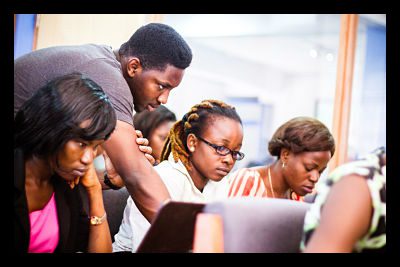
For many, working from home is the ultimate luxury, especially when living in a big city where bumper-to-bumper traffic stretches for miles.
This is always the case for New York City, which recently ranked fifth in Forbes’ “10 U.S. Cities With The Worst Gridlock.” But there is one company that’s paying the work-from-home luxury all the way to Nigeria.
Andela is the global talent accelerator that allows people in Africa to work locally and reach globally. They find the brightest people to provide training and mentorship needed to thrive as full-time, remote developers for companies across the world. Though the company also has offices in the U.S., what distinguishes it from others is its global outreach mission to provide people in Africa an opening to the digital economy and give companies access to untapped talent.
For example, Nigerians are getting paid to learn programming skills before putting them to work on projects that serve businesses back in the States. Chibuzor Obiora is one of those people who at first thought it was too good to be true when he discovered the opportunity on Twitter.
“I was always interested in learning [to code] because of the problem-solving aspect of it,” he told Wired Magazine, “and here was a firm that promised to pay you to learn.”
Even with the increase in competition to gain technical skills such as programming, companies around the world are still struggling to find software developers to meet the demand. Thus, Andela aims to bring out the pool of talent found in other countries that are not known to be tech-hubs like Silicon Valley. This not only includes Nigeria but other countries in Africa.
“We know that brilliance is relatively evenly distributed across the human population,” says Andela co-founder Jeremy Johnson. “In terms of pure aptitude, there are genius level people across the world. But what there’s not is equal opportunity.”
So how exactly do they choose “genius level people” across the world?
Using rigorous, online aptitude tests, Andela gauges reasoning and logic skills followed by a two-week-long screening process that interviews the top 10 percent to access their “soft skills,” such as interpersonal communication.
Those who pass this phase go on to a several-month training program, but not many make it this far due to highly selective nature of the program. Less than one percent of applicants are selected to become Andela developers, which is 10 times more selective than Harvard University, for example.
What comes next for those accepted is access to educational resources that are hard to come by in Nigeria. For example, one student, Tolulope Komolafe, had learned how to “code” from what the teacher wrote on a chalkboard and realized during her first two weeks of training at Andela that her university computer science courses did not involve actual programming.
Students are eligible to work as web developers for Andela’s clients once they finish at least 1,000 hours of training. However, that’s not to say that the learning stops there. According to Johnson, most students will spend about two-thirds of their time working for clients and the rest on education. Work averages around 60 hours a week for both students and staff.
“It’s very similar to the way that guilds worked in the middle ages,” Johnson tells Wired. “You get paid a small amount as an apprentice, then you work as a journeyman with lots of other craftspeople, and eventually become a master.”
Today, U.S. tech companies continue their struggle to find programming talent that meets the demands of selective hiring practices and qualifications. As result, companies like Andela are left with a window to provide a new wave of services that can work globally.
– Chelsee Yee
 The city of Peshawar, Pakistan mourns deeply in the wake of the Pakistani Taliban’s deadliest attack to date. An estimated 132 children and nine staff members were killed in a devastating massacre targeting a school in the northwest region, where gunmen and suicide bombers inflicted damage so horrific that even the Afghani Taliban have condemned their actions. Most of the victims were children of military families enrolled at Peshawar’s Army Public School.
On Wednesday, the Pakistani Army pointedly allowed numerous television crews to enter the school grounds, where they were able to observe the crime scene for themselves and broadcast those observations back to their respective audiences. Images captured by international news teams revealed the devastating extent of the brutality, showing classroom floors coated with blood, walls covered in hundreds of bullet holes, and rooms blown apart by suicide bombers.
The international community has collectively vocalized utter contempt over the massacre, and Pakistan was immediately consumed by a state of national outrage. Prime Minister Nawaz Sharif responded by declaring three full days of mourning and announcing an abrupt end to the moratorium on the death penalty for terrorist actions.
This decision by Sharif is quite significant given the country’s past responses to terrorist groups. Despite the fact that terrorism in Pakistan has taken more than 50,000 lives since 2001, there has long existed a puzzling lack of a national consensus to fight terrorism. In the immediate aftermath of Tuesday’s massacre, politicians refrained from publicly declaring whether they thought the Taliban had been behind the attack, even though the Tehreek-e-Taiban Pakistan, or TTP, had quickly claimed responsibility. The militants describe the Peshawar disaster as an act of revenge for an army attack that they claim killed approximately 1,000 of their own people.
The Taliban has a lengthy history of attacking schools. As an extremist group that first emerged in northern Pakistan in the early 1990s, the Taliban wields its own version of Islamic law as a major justification for and motivation behind its actions. The Pakistani Taliban adamantly opposes Western education for children, especially for girls. Education activists in Pakistan claim that this opposition is the Taliban’s way of trying to exert control over the population by keeping young people in the intellectual dark. An educated girl or boy represents a threat in the eyes of the Taliban, and the terrorist group actively works to eliminate these perceived threats through violence and oppression.
The Peshawar school massacre represents a departure from the Taliban’s usual school attacks. Militants in the past typically attacked schools while they were empty at night, specifically hoping to have the institutions shut down rather than directly harm students. The Taliban has also tried to threaten Pakistan’s education system by intimidating teachers and pressuring parents to quit sending their kids to class.
Some are beginning to question whether the Peshawar attack will force Pakistan to decidedly confront the terrorist group in a way it has generally refrained from doing in the past. Pakistan has long held an ambiguous view of Taliban militants, a phenomenon known as “good Taliban” and “bad Taliban” that for the past decade has baffled the Pakistani public and sent terribly mixed messages to the West. In the wake of the attack, Prime Minister Nawaz Sharif announced “there will be no differentiation between ‘good’ and ‘bad’ Taliban,” while acting foreign minister Sartaj Aziz has described the tragedy as “our 9/11” and a “game changer.”
– Shenel Ozisik
Sources: BBC 1, The Guardian 1, The Guardian 2, BBC 2
Photo: Flickr

Yemen, a small Middle Eastern nation southwest of Saudi Arabia, has embarked on an ambitious goal in the past decade and a half to drastically reform its education system. As part of the 2000 UN Millennium Development Goal project launched nearly 15 years ago, Yemen set a goal of reaching 100 percent primary school enrollment by 2015.
As 2014 draws to a close, it appears that Yemen will not be meeting its Millennium Development education goal by next year. However, statistics indicate significant progress has been made in recent years, though more attention is needed to bring education in Yemen up to par with other developed nations. According to the World Bank, Yemen’s net primary school enrollment rate stood at 86 percent in 2013, the last year data was made available. These numbers are up from 66 percent in 2001.
Educational improvements may in part be attributed to the implementation of several ambitious educational reform projects. One such project, the Secondary Education Development and Girls Access Project (SEDGAP), was launched in 2007 with the goal of addressing three main areas of the Yemeni education system: “improving equity and reducing gender gaps, enhancing the quality of service delivery, and project management and monitoring.”
To help reduce educational gender gaps, SEDGAP imposed a minimum 15 percent female representation requirement in new teaching posts. As of 2008, only 7.5 percent of secondary school teachers in rural areas were female. Anecdotal evidence has suggested that hiring female teachers attracts greater female enrollment rates. According to the International Development Association (IDA), this may be due in part to the fact that Yemeni parents tend to object to male instructors teaching their daughters, particularly in higher grades.
Other material and social factors such as lack of transportation, poor school facilities and early marriage have also been significant contributors to the educational gender gap. These material factors appear to disproportionately affect girls living in rural areas.
SEDGAP has introduced a variety of other reforms to improve service delivery and monitoring. Some of these reforms include new guidelines aimed to balance out uneven student-teacher ratios across rural and urban schools, more consistent oversight of teacher absenteeism and salaries, textbook revisions for grades 1-12, and new oversight regulations for Yemen’s three public educational ministries.
SEDGAP implementation will be completed in late January 2015. A February 2014 impartial review of the project concluded moderate satisfaction in meeting progress development objectives.
World Bank data indicates gross enrollment rates for basic, secondary and tertiary education have increased overall for Yemeni boys and girls. Nevertheless, more time is needed to meet Millennium Development education goals, particularly for secondary education targets among females. According to the United Nation Development Programme, only 7.6 percent of Yemeni females age 25 and over have at least some secondary education.
– Katrina Beedy
Sources: World Bank 1, World Bank 2, World Bank 3, World Bank 4, World Bank 5
Photo: National Yemen

In the moment of need she had to decide whether she will rise to the occasion or fall under the pressure. After the very sudden death of her 26-year-old daughter who left behind five grandchildren – Viola Vaughn was left searching for the pathway to peace. A native of Detroit, Michigan, she spent had much of her life working in Africa. Sensing a need for a return to Africa, her husband and the five grandchildren headed to Kaolack a small town in Senegal.
With a hopeful heart they moved, little did Vaughn know another sudden tragedy, the death of her husband would occur shortly after the move. Lost in her grief Vaughn devoted all of her time to home-schooling her grandchildren ages four to 12.
Word of Vaughn’s success with her grandchildren began spreading and more and more children wanted to have Vaughn as their teacher. Mothers approached her with stories of their children not doing well in school, within two weeks her classroom went from five to 20 students eager to learn from their teacher. Vaughn became more aware of the increasingly low statistical rates of girls getting an education because of the high demands that are put on them on the home front. Most young girls would only fail because they would not be able to make it to classes and exams leading to high dropping out rates and failed classes. In 2001, Vaughn decided to make it official and turned her grandchildren’s bedrooms into classrooms.
She conducted a system of teaching them how to teach and support one another. Within a mere two years the group grew from five to 20 to now 80 girls who are thriving in school. She received a grant and has hired teachers, she had set a limit to 100 but the enrollment rate is exceedingly increasing. The girls are especially ambitious, wanting to take it to 10,000 students.
In order to raise money to reach their goal of 10,000 students, the girls learned to bake. Vaughn taught them and they are now selling their goodies for profit towards the school. With the rapid fundraising of money the girls were able to buy books, supplies and to support more students. The most amazing part is that they are becoming fully self-sufficient, learning skills beyond math and science.
The girls now have a catering, baking and sewing businesses. More than 1,500 girls are now enrolled in Vaughn’s program in six different locations and the waiting list of 1,000 continues to increase. Growing up some of her students were told they would never make it to high school are now earning their college degrees. She hopes that her girls will help revolutionize the region, and she slowly has done just that. The original school started in Senegal, in the city of Kaolack and has since spread to Kaffrine, Kaymor, Koungheul, Maleme-Hoddar, Ndoffane and Kedougou, all small to mid-size towns in Senegal.
10,000 Girls is empowering, uplifting, motivating and encouraging girls all across the globe that they do have the right to an education and they were born with a purpose.
– Charisma Thapa
Sources: Daily Good, 10,000 Girls
Photo: Inter Press Service News

On March 3, 2012, South Korea founded its first American university with a goal to bring degree programs to international universities in hopes of fostering global leaders.
Now, two years later, the school has exceeded expectations, attracting students from 20 countries around the world, including China, Iran, Kenya, Ghana and Uzbekistan.
The State University of New York (SUNY) Korea is one of the campuses of Stony Brook University to open at the Incheon Global Campus (IGC), followed by George Mason University Korea, University of Utah Asia Campus and Ghent University Global Campus. Universities at the IGC are “extended campuses” of universities that are part of a global hub that fosters an atmosphere of industry-university-research cooperation and East-West intellectual and cultural exchange.
At SUNY Korea, students are offered degree programs comparable to prestigious schools in the U.S. where they can enjoy the American education while still being engaged in dynamic Korean culture. In spring 2013, the school saw its first undergraduate class of 38. This fall, the undergraduate enrollment is 133 students.
Still new in development, there’s not much to base statistics off on in order to tell what the graduation rate might be for undergraduates, masters and Ph.D. students. In fact, no undergraduate students have received their diplomas yet; however, this is expected to change in 2016. As the top educational hub in North East Asia, the IGC hosts universities and research institutions in hopes of fostering a diverse population of students from around the globe to become leaders in their fields.
Though SUNY Korea follows that same mission, students can only get degrees in computer science, mechanical engineering and technology systems management. Graduate students, however, can move forward by advancing their fields toward robotics or computational fluid dynamics.
This is not the only difference students are presented with when it comes to a unique university structure. Rather than taking a mix of major requirements and DECs each semester, students may only take major-related courses during their freshman, junior and senior years. However, as sophomores, students are required to spend the year at the Stony Brook campus where they can take a combination of both DECs and major courses.
SUNY Korea is expected to see the Fashion Institute of Technology that will serve as their art program. There’s also a possibility of opening a business program for students down the road, but that is yet to be confirmed.
Since its launch two years ago, SUNY Korea has been able to reach students across the world to foster a technology-driven global hub that brings a whole new level to global education and interconnectedness. As of October 2014, the school has a total population of 230 students, over 30 percent of them international. By 2021, they hope to increase that number to 2,000 students.
With more expansion, SUNY Korea will fulfill their mission in becoming a pioneer of a new global education paradigm without borders.
– Chelsee Yee
Sources: SB Statesman, Korea Herald, SUNY Korea, Scholarship SUNY
Photo: Asia Pacific Regional IGF
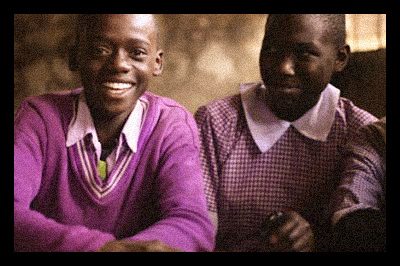 Eneza is the Kiswahili word for “to reach” or “to spread.” The new education platform by the same name acts as a virtual tutor and teacher’s assistant for thousands of students living in rural Kenya.
Eneza’s mission is to reach 50 million children across rural Africa to help them gain access to information, allowing them to reach their full potential through the most common form of technology in Africa: the cell phone.
In its pilot program, students are provided with cell phones in school in order to be exposed to content that is aligned with its local context, ranging from textbook materials to unlimited quizzes and tutorials.
In addition, schools and parents are also given access to data and tips for helping these children, allowing Eneza to serve as a simple platform that still provides the same quality educational materials found in high-tech institutions.
The mobile software has found its way into 5,000 public schools and plans to expand to Ghana and Tanzania in the near future.
This year, Eneza Education was declared a winner of the 2014 ICT Innovation Awards at the Connected Kenya Summit, an event that celebrates Kenyans who have developed ICT solutions that drive economic and social growth.
Economic development and social growth are exactly what Eneza spurs with its SMS-based system that sends practice exams to students who can subscribe for the equivalent of 10 cents per week, narrowing the gap between those who can afford education and those who can’t.
Since its launch two years ago, this tiny Nairobi-based social enterprise has given children living in rural areas who can’t afford extra fees and courses the opportunity to reach high and broaden their knowledge base.
According to its co-founder Kago Kagichiri, the app has already processed more than 34,000 exams in September and holds a record of 2.5 million users. It has also proven to increase results within the country’s educational system.
“We’ve seen—from our impact study in 2012—that students increased five percent in their scores,” Kagichiri said. “We tested it out in 2013, last year, with teachers being the driving ends of the platform and working with students. That improvement went up to 11 percent.”
Eneza Education joins one of the many mobile innovations in Kenya that continue to boost the country’s economy and revolutionize the meaning of mobile education.
– Chelsee Yee
Sources: Eneza, Take Part, AFK Insider, All Africa
Photo: Flickr
 According to UNESCO, “Illiteracy and poverty constitute a mutually reinforcing vicious cycle that is difficult to break.” Illiteracy reinforces poverty by precluding access to information. When people do not have the ability to read labels or technical manuals, they cannot develop the skills necessary to climb the socioeconomic ladder.
For a developing nation, a low literacy rate can be a major impediment to economic progress. The lack of a skilled work force prevents the development of a thriving economy. A 2012 study by the World Literacy Foundation estimated the economic cost of illiteracy in developing countries at over five billion dollars.
As the world continues to wage war on poverty, global education initiatives are winning key battles on the youth literacy front. In 2000, the U.N. established universal primary education as a Millennium Development Goal. While this ambitious goal has not yet been achieved, primary education enrollment in developing countries rose from 82 percent to 90 percent between 1999 and 2010. The gender gap in youth literacy continues to narrow, and the world youth literacy rate has improved markedly since 1990.
While there is still a long way to go in improving youth literacy in developing countries, these five countries are making huge strides.
- Nepal: The youth literacy rate in Nepal — a scant 49.6 percent in 1990 — reached 83 percent in 2010 and is projected to reach 88 percent by 2015. Educational opportunities in Nepal have expanded considerably over the last two decades, and Nepal’s net enrollment rate, or NER, in primary education rose from 91.9 percent in the 2008-2009 school year to 95.1 percent in 2011. The NER at the lower secondary level is rising even faster, climbing from 57.3 percent in 2008 to 70 percent in 2013. As of 2012, Nepal ranked as the 11th largest source of international students in the U.S.
- Bangladesh: The youth literacy rate in Bangladesh has climbed at a similar rate to that in Nepal. Recognizing education as an important means of reducing poverty, the Government of Bangladesh passed the Primary Education Compulsory Act in 1990, making primary education free and compulsory for all children up to Grade Five. Since then, the youth literacy rate has risen from 44.7 percent to 77 percent.
- Senegal: The youth literacy surge in Senegal is a fairly recent phenomenon. Senegal saw little improvement in its youth literacy rate from 1990 to 2000. However, since its 2001 constitutional referendum, Senegal has recorded significant achievements in access to education. Primary school enrollment rates increased from 69.8 percent in 2000 to 92.5 percent in 2009. Increased primary school enrollment has facilitated literacy improvement. The youth literacy rate in Senegal rose from 49.1 percent in 2000 to 69 percent in 2010, and is projected to reach 73.4 by 2015.
- Ethiopia: Ethiopia, Africa’s fastest-growing non-energy-driven economy, has made significant strides in youth literacy since the devastating famine of 1984. Ethiopia’s youth literacy rate rose from a mere 33.6 percent in 1990 to 49.9 percent in 2000, and it is projected to reach 69.3 percent by 2015. USAID has played a key role not only in improving the managing and planning of Ethiopia’s primary education system but also in improving access to education in remote areas. USAID, in conjunction with the Ethiopian Ministry of Education, also developed Reading for Ethiopia’s Achievement Developed. READ focuses on training teachers and improving reading comprehension and writing proficiency.
- Mozambique: In terms of primary education, Mozambique has made enormous progress since the 1992 resolution of its long and costly civil war. Educational opportunities have expanded rapidly in Mozambique since the mid-1990s, and enrollment in primary school has risen from 69 percent in 2003 to 100 percent. Mozambique’s youth literacy was just 61.9 percent in 2000, but that number has risen steadily and is expected to reach 77.8 in 2015. While Mozambique’s progress has been remarkable, continued progress is threatened by the recent resurgence of the RENAMO insurgency.
– Parker Carroll
Sources: The Guardian, UNESCO 1, UNESCO 2, UNICEF 1, UNICEF 2, USAID
Photo: UNHCR
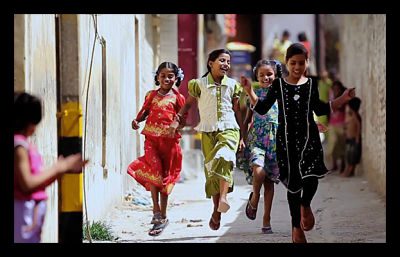
Breaking the cycle of poverty and creating the cycle of education, empowerment and uplifting out of poverty. “Girl Rising,” a feature-length documentary centers on these ideas, shining light on the importance of educating our girls around the world. Millions of girls across the globe are seen useful for one thing: reproduction. Girl Rising focuses on educating girls enabling them to use their voice that they were given to stand up for their rights, wait till they are stable to have their own family and educate their children, families and communities. By breaking those obstacles that girls face from the day that they are born.
Girl Rising focuses on removing those barriers that limit these girls such as young marriage, gender-based discrimination and violence, domestic slavery and sex trafficking. Removing these barriers will not only lead to stronger, healthier, safer and more vibrant girls, it will improve the outlook of the world as a whole.
Girl Rising, created in 2013, has since turned into a global movement and has been viewed by millions across the world in campuses, neighborhoods, communities and cities across the world in order to raise awareness and funds. You can bring Girl Rising to your classroom, campus, organization and community. There are so many opportunities to raise awareness. Join the community, host a screening, facilitate a fundraiser and invest in girls education. The options are limitless.
Girl Rising is also in partnership with USAID working on the Girl Rising’s Empowering Next Generations to Advance Girls Education (ENGAGE) project. Launched in 2014, the project focuses on teaching communities to value girls by understanding their worth and the benefits of educating and empowering them. Currently, the project works in India, the Democratic Republic of Congo and Nigeria, with hopes to grow and give all girls a chance to go and stay in school, and become healthy, functioning members of their communities and society as a whole.
The Girl Rising ENGAGE campaign works to create a better world for girls by:
- Increasing public awareness of and attention to the importance of a good education and the barriers girls often face to accessing it.
- Mobilizing men, women and youth to take concrete actions that create paths for girls to attain quality primary and secondary education.
- Engaging corporate and government leaders to build an enabling environment for girls, promoting policy change for, and financial investment in their education.
- Bringing the message to the source in the classroom.
Girl Rising has a teaching opportunity for educators to utilize the free Girl Rising Educator’s Edition and the Girl Rising curriculum. This can lead to engaging students in meaningful discussion and lessons that encourage them to think critically about the importance of educating girls.
The Girl Rising movement is on its way of establishing a name from its beginnings as a documentary to a force that is changing the educational climate for girls across the world. CNN International was so enraptured by the Girl Rising phenomena that the network continues to celebrate the world of girls in the series new “A Girl’s World.” The series chronicles the story of seven girls in seven different countries all writing unique stories of their own. Following their ambitions, dreams, adversaries, the seven girls may all be different but they can come together with their newfound voices. “Girl Rising” and “A Girl’s World” are reminders to value and honor your grandmothers, mothers, daughters, sisters and the girls of the world.
To become an advocate and learn more about Girl Rising follow here.
– Charisma Thapa
Sources: Girl Rising 1, Girl Rising 2, CNN
Photo: Scarlet Called Scout
