• Link to X
  • Link to Facebook
  • Link to Instagram
  • Link to TikTok
  • Link to Youtube
  • About
    • About Us
      • President
      • Board of Directors
      • Board of Advisors
      • Financials
      • Our Methodology
      • Success Tracker
      • Contact
  • Act Now
    • 30 Ways to Help
      • Email Congress
      • Call Congress
      • Volunteer
      • Courses & Certificates
      • Be a Donor
    • Internships
      • In-Office Internships
      • Remote Internships
    • Legislation
      • Politics 101
  • The Blog
  • The Podcast
  • Magazine
  • Donate
  • Click to open the search input field Click to open the search input field Search
  • Menu Menu

Archive for category: Economy

Information and stories about economy.

Economy, Entrepreneurship and Business, Global Poverty

China’s Taobao Villages are Fighting Poverty through E-Commerce

taobao villagesAlibaba coined the term Taobao Village to describe villages where at least 10% of households engage in e-commerce and have online sales of at least 10 million Yuan, or $1.5 million. These villages represent a bottom-up transformation in rural China, where residents have built thriving digital enterprises that have led to the development and reduced the number of the country’s population living in poverty. What began as an informal commerce strategy quickly grew into a national phenomenon, reshaping rural economies and changing the lives of villagers. As China continues to modernize, Taobao Villages highlight how digital innovation can reduce poverty, empower marginalized groups and generate long-term economic growth.

The Rise of Taobao Villages

The first Taobao Village can be traced back to Dongfeng village in Shaji, located in Jiangsu province. With a small population of about 50,000 people, it was the first rural village to take up e-commerce on a large scale. In 2010, while researching e-commerce and the villages, Alibaba’s team was surprised to see strong e-commerce activity in the town, which emerged organically through local grassroots initiative, according to Harvard University Asia Center.

It all started with one entrepreneur, a Shaji native, who opened the first online Taobao shop in 2006, first reselling mobile phone accessories and then expanding into the furniture business. Inspired by his success, other villages opened their own e-commerce stores, expanding the network as the Taobao Villages came to life.

Seeing how e-commerce slowly allowed locals to build their businesses, Alibaba created the Taobao platform, which provided opportunities for small and newer firms to sell products and services online. Taking no cuts from online transactions and demanding no fees from the opening of online stores, the platform diffused across the country, having a transformative effect in rural China.

Taobao Villages formed in three main stages:

  1. Grassroots development, as villagers led the establishment of local businesses;
  2. Government support through the expansion of local infrastructure and e-commerce training;
  3. Further government support through subsidies for service providers and firms.

Transforming Rural Economies

With reduced entry barriers, e-commerce is an accessible means of work and income for residents with minimal capital. This has led to more inclusive economic growth in rural areas of the country, especially Western and Central China, as financial conditions improved through the creation of more jobs and the general development of the economy.

The abundance of technology platforms and collaboration among villagers is changing the lives of millions of Chinese citizens. World Bank studies show that household incomes in Taobao Villages are close to three times the average rural household income, according to Alizila. Higher income leads to higher consumption, exacerbating the need for more service and goods providers, leading to a better job market and reduced income inequality.

The Result

Often perceived as a phenomenon of high-income countries, China’s e-commerce development has shown that high levels of development are not required for a successful transition from physical to digital commerce. With a worldwide commerce transaction value that exceeds that of France, Japan, Germany, the United States and the United Kingdom combined, China proves its commitment to development and the fight against poverty.

Taobao Villages became part of a grander national strategy to fight poverty, with the State Council Office on Poverty Alleviation releasing guidelines on the expansion of e-commerce in rural areas as an essential step in November 2016. In 2021, China achieved the United Nations’ 2030 poverty reduction goals in the Agenda for Sustainable Development. In the past forty years, it has lifted more than 800 million people out of extreme poverty.

Conclusion

While more research on the topic is necessary to clarify the relationship between the dominance of e-commerce in villages and welfare improvement, many cases show that people in Taobao Villages lead better lives. Lowering the required skill threshold, digital technologies can allow less-skilled and less-educated individuals to participate in e-commerce and achieve higher living standards.

For e-commerce to help alleviate poverty, the government should develop infrastructure and offer logistical support, creating a conducive environment for change. Subsidies and workshops are additional ways in which the government can contribute to the development of e-commerce platforms and combat poverty.

– Rafaela Paquet

Rafaela is based in Montreal, Canada and focuses on Business and Technology for The Borgen Project.

Photo: Flickr

August 5, 2025
https://borgenproject.org/wp-content/uploads/borgen-project-logo.svg 0 0 Naida Jahic https://borgenproject.org/wp-content/uploads/borgen-project-logo.svg Naida Jahic2025-08-05 07:30:352025-08-05 04:17:45China’s Taobao Villages are Fighting Poverty through E-Commerce
Economy, Employment, Global Poverty

Using Oil to Fight Poverty in Guyana

Oil in GuyanaGuyana gained independence less than 60 years ago, in 1966. Since then, it has faced a lot of economic challenges that have left it classified as a developing nation. For decades, limited resources held back the country’s growth and prosperity. However, in 2015, a major turning point came when ExxonMobil discovered offshore oil reserves, forever altering the economic future of Guyana.

By October 2022, two additional oil discoveries had been made, confirming that Guyana was sitting on one of the largest oil finds in the region. Today, Guyana is one of the world’s fastest-growing economies and this trend is expected to continue. According to the International Monetary Fund’s April 2024 World Economic Outlook, Guyana is predicted to be “one of just a few countries in the world to post double-digit economic growth in 2025.”

What Does All of This Oil Mean for Guyana

As of 2024, Guyana was producing more than 600,000 barrels of oil per day, a major output for a country of about 830,000 people. The scale of this production is not only boosting gross domestic product (GDP), it’s also fueling job creation and generating billions in government revenue. As one of the fastest-growing economies in the world, Guyana is using these funds to take care of long-overdue development efforts across the country.

From Oil to Employment

Since becoming one of the fastest-growing economies in the world, Guyana has seen an increase in available infrastructure funding. Such growth has allowed the government to launch development initiatives aimed at improving the country’s economy and reducing poverty in Guyana. According to 7NEWS, Vice President Bharrat Jagdeo announced in 2023 that several major projects are underway. These include the construction of 12 hospitals, seven hotels, numerous schools and various public facilities.

Many of these buildings are expected to open soon or within the next few years. These investments have so many benefits, helping to improve access to health care, education and tourism. Also, they are expected to generate thousands of new jobs and raise the overall quality of life for the Guyanese population. The expansion of infrastructure shows a huge step in ensuring that the country’s wealth benefits a broad spectrum of its citizens.

More Than Just Oil

By creating more career opportunities, poverty in Guyana is gradually begin eroded, allowing individuals access to opportunities and experiences they may have never been exposed to. In this sense, oil is more than just a natural resource; it’s a tool for transformation. It represents the possibility of long-term development, greater access to essential resources and the chance to uplift entire communities.

– Knia Parks

Knia is based in Pepper Pike, OH, USA and focuses on Good News for The Borgen Project.

Photo: Unsplash

August 5, 2025
https://borgenproject.org/wp-content/uploads/borgen-project-logo.svg 0 0 Lynsey 2 https://borgenproject.org/wp-content/uploads/borgen-project-logo.svg Lynsey 22025-08-05 01:30:062025-08-04 14:37:11Using Oil to Fight Poverty in Guyana
Economy, Entrepreneurship and Business, Global Poverty

KFC in South Africa: Fueling Economic Prosperity

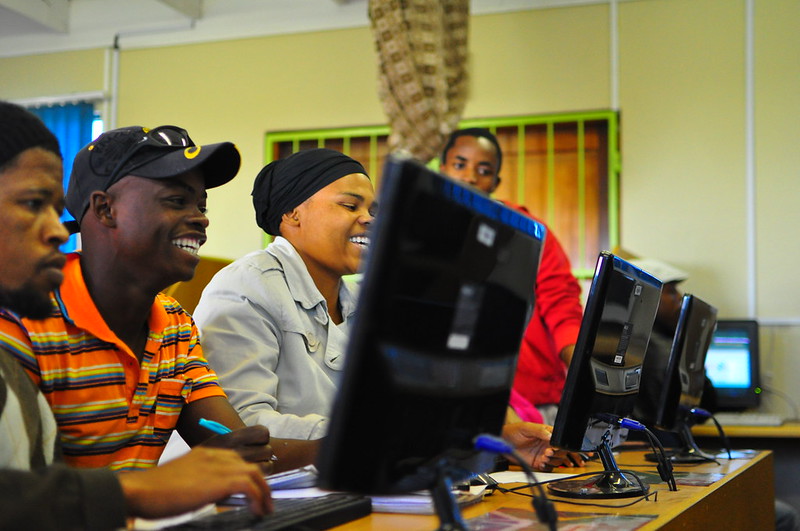
KFC in South Africa: Fueling Economic Prosperity in Underdeveloped Markets Since Kentucky Fried Chicken (KFC) arrived in South Africa in 1971, it has grown into one of the most popular fast-food chains in the country, fueling economic prosperity in the region just after the financial crisis of 2008. With more than 900 stores across the country, it has created employment opportunities. The brand has created thousands of jobs, both directly through restaurant staff and indirectly via local suppliers, logistics and advertising, helping put money not only in the people of South Africa’s pockets, but also boosting the economy. For many South Africans, KFC represents more than just a quick meal; it serves as a source of employment and a pathway to financial stability.

KFC’s Economic Footprint and Social Responsibility in South Africa

Through its Add Hope initiative, KFC has raised more than R1 billion to fight hunger in South Africa, providing at least 80,000 meals daily to vulnerable children. The program partners with more than 130 nongovernmental organizations (NGOs), supporting sustainable feeding schemes and empowering communities. A 2024 impact study by the Gordon Institute of Business Science found that Add Hope contributes to improved health outcomes, school attendance and long-term socioeconomic development. It’s a model that shows how corporate social investment can be both strategic and transformative.

A Blueprint for Fueling Economic Prosperity

According to the OECD’s 2024 Emerging Markets Report, foreign direct investment (FDI) in these regions is rebounding, with Africa and Latin America showing strong potential for sustainable development in the future, especially when companies localize their operations and invest in infrastructure, education and community partnerships. Standard Bank projects that East Africa’s infrastructure boom could push its business value from $37 billion in 2024 to $54 billion in the coming years. This kind of growth opens doors for new markets and companies willing to engage deeply with local economies.  

Cultural Integration

When KFC made the jump to South Africa, it had to adapt its menu to reflect South African tastes and cultural norms, a move that helped build trust and brand loyalty. Other companies like Coca-Cola, McDonald’s and IKEA have also thrived by tailoring their products and marketing to local preferences.

Looking Ahead

As KFC continues to serve more than just food in South Africa, its story reflects a broader narrative: global brands have the potential to contribute to development while doing business. By anchoring themselves in local needs—through employment, cultural respect and social investment—companies can potentially help foster economic resilience in underdeveloped markets.

KFC has established a presence in South Africa that goes beyond corporate growth; it offers a model for supporting economic development in regions often overlooked by global expansion. When brands take similar approaches with intentionality, success can also be measured by improved livelihoods, stronger communities and more inclusive economies.

– Dylan Fly

Dylan is based in Detroit, MI, USA and focuses on Business and New Markets for The Borgen Project.

Photo: Flickr
August 1, 2025
https://borgenproject.org/wp-content/uploads/borgen-project-logo.svg 0 0 Precious Sheidu https://borgenproject.org/wp-content/uploads/borgen-project-logo.svg Precious Sheidu2025-08-01 07:30:462025-08-01 04:33:44KFC in South Africa: Fueling Economic Prosperity
Economy, Global Poverty

Poverty Reduction in Gabon

Poverty reduction in gabonGabon is a country with valuable natural resources like oil, timber and manganese. Yet, despite this wealth, more than one-third of its people live in poverty. High youth unemployment makes the situation worse. The political transition in August 2023, although challenging, has led to a stronger national focus on development. The National Development Plan of the Transition (PNDT) is at the heart of these efforts, aiming to reduce poverty in Gabon.

PNDT

The PNDT is Gabon’s main plan for solving economic and social challenges during the two-year transition that began on August 30, 2023. It focuses on five main goals: “political and institutional reforms, development of strategic infrastructure, intensification of economic diversification, development of human capital and social inclusion, and environmental sustainability.” All these goals connect directly to reducing poverty in Gabon.

A major goal is to invest in key infrastructure, like roads, energy, and health care. The PNDT wants to move Gabon away from depending only on raw materials and instead grow industries that add more value, like timber processing. This approach could create more jobs and reduce the country’s reliance on unstable resource prices.

Key Initiatives for Poverty Reduction in Gabon

One major effort to reduce poverty is the Emergency Community Development Program (PUDC). Launched with help from the UNDP, it aims to provide clean water, electricity, and better infrastructure in rural and peri-urban areas. It also encourages small businesses, youth employment and local planning. Gabon has invested 120 billion CFA francs into this program, with 66.7 billion already used.

Gabon is also improving health care through the National Health Insurance and Social Coverage Fund (CNAMGS). Started in 2008, CNAMGS first helped the poorest groups, students, and seniors, and now covers over half the population.

The transitional government is working to diversify the economy by focusing on industries beyond oil, such as forestry, mining, agriculture and tourism. These areas are seen as having strong potential for creating jobs and supporting rural development.

Addressing Governance and Fiscal Sustainability

Poverty reduction in Gabon is closely tied to better governance. This means improving transparency, accountability, and the use of public money, especially oil revenues. Poor management in the past has led to high debt and slow economic growth.

The PNDT also focuses on improving financial management. One step is the Treasury Single Account (TSA), which should be fully running by June 2024 to make public finances more efficient. The 2024 budget aims to raise more revenue, cut tax breaks, and modernize customs and tax systems. The IMF has stated that Gabon’s economic success depends on moving toward more transparent and inclusive governance.

Challenges and Future Outlook

Gabon is making strong efforts to fight poverty and inequality, but the success of these changes depends on fixing long-standing problems in governance, finances, and business conditions. Urban areas, where 90% of the population lives, still face concentrated poverty. To solve this, Gabon needs balanced development that supports both cities and rural areas.

– Cameron Jones

Cameron is based in Hendersonville, TN, USA and focuses on Good News and Politics for The Borgen Project.

Photo: Flickr
August 1, 2025
https://borgenproject.org/wp-content/uploads/borgen-project-logo.svg 0 0 Naida Jahic https://borgenproject.org/wp-content/uploads/borgen-project-logo.svg Naida Jahic2025-08-01 07:30:282025-08-01 04:57:48Poverty Reduction in Gabon
Economy, Global Poverty, Innovations

Circular Economy in Latin America Fights Poverty

Circular Economy in Latin AmericaIn Latin America and the Caribbean (LAC), less than 5% of municipal waste is recycled, well below Europe’s 33–49% range, despite nearly 80% of the population living in cities. A 2025 World Economic Forum report attributes low recycling rates to poor waste infrastructure and the informal economy’s dominance. This linear system harms the environment and leaves millions of waste pickers trapped in poverty, limiting the region’s ability to scale a circular economy that Latin America urgently needs.

Waste Pickers at the Heart of Circular Innovation

In Bogotá and other major cities, informal recyclers, known as waste pickers, collect up to 90% of materials destined for recycling. Despite this, many lack basic safety gear and earn below minimum wage. A 2024 Reuters investigation reports that roughly 20 million waste pickers worldwide process 60% of recycled plastics, yet they remain overlooked in policy design.

Brazil: Fishing for Litter and PET Recycling

Brazil’s Fishing for Litter initiative offers fishermen a guaranteed monthly minimum wage to collect trash from Guanabara Bay while working. In two years, 80 fishermen collected nearly 400 tonnes of waste, earning fair wages and reducing pollution in mangrove ecosystems.

In Minas Gerais, Brazil, cooperatives of catadores (waste pickers) partner with Veja, a sustainable shoe manufacturer, to transform polyethylene terephthalate (PET) bottle waste into shoe materials. This collaboration ensures fair prices and traces plastic from collection to production, elevating informal workers’ incomes and environmental stewardship.

Colombia: Ecobricks and Rising Challenges

Grassroots ecobrick projects in coastal Colombian towns repurpose plastic waste into sturdy bricks for building benches, walls and classrooms. A recent ResearchGate report notes that these initiatives prevent plastic leaks into marine environments and raise awareness of sustainable practices. These programs, often school-led, empower local communities and generate small incomes.

However, on June 24, 2025, more than a dozen Colombian associations dumped 15 tonnes of plastic in Bogotá’s Bolívar Square to protest plummeting prices, down from $0.75 to $0.50 per kilo. With most earning less than $350 monthly, pickers urged the government to stabilize income through price guarantees and rights recognition.

Textile Recycling in Chile: A Second Life for Fabric

In Santiago, Ecocitex transforms textile waste into eco‑yarn products. Founded in 2020 by Rosario Hevia, the company has recycled more than 200 tons of textiles, mitigating thousands of tons of CO₂ emissions. It employs formerly incarcerated women through partnerships like Abriendo Puertas. The organization also supports more than 220 people annually and promotes social inclusion while offering sustainable income through its yarn and product sales.

Scaling Up Through Finance and Tech

An Inter‑American Development Bank analysis, “Unlocking Circular Economy Finance in Latin America and the Caribbean: The Catalyst for Positive Change,” shows how microfinance, digital logistics platforms and public‑private partnerships are opening new opportunities for recyclers and SME recyclers, particularly women‑led initiatives. The report recommends financial instruments and incentives that can scale small circular businesses across the region.

It also urges countries to modernize environmental laws and build stronger public-private partnerships to close the investment gap. The region can drive circular growth and create more resilient, equitable economies by supporting MSMEs with better access to finance, innovation and inclusive strategies.

From Waste to Wealth

Across Latin America, grassroots circular economy models, from ecobricks to cooperatives and textile upcycling, demonstrate that sustainable solutions can lift communities out of poverty. With millions dependent on informal recycling, policy reforms that integrate these workers are not just environmentally prudent but economically essential. Supporting these initiatives through finance, infrastructure and inclusive policies offers a proven path from waste to wealth.

– Meral Ciplak

Meral is based in Edmonton, Canada and focuses on Technology and Solutions for The Borgen Project.

Photo: Pixabay

August 1, 2025
https://borgenproject.org/wp-content/uploads/borgen-project-logo.svg 0 0 Lynsey 2 https://borgenproject.org/wp-content/uploads/borgen-project-logo.svg Lynsey 22025-08-01 03:00:352025-08-01 04:29:40Circular Economy in Latin America Fights Poverty
Economy, Global Poverty, Women's Empowerment

How Creative Labs Are Uplifting Women in Kyrgyzstan

Women in KyrgyzstanLocated in central Asia, Kyrgyzstan is a landlocked country nestled between two mountain ranges. Since its independence from the Soviet Union in 1991, the country has been focusing on developing, working recently with the United Nations Development Programme (UNDP). In 2022, the UNDP launched its first women-centered creative labs working to achieve Sustainable Development Goals (SDGs) 4 and 5: quality education and gender equality.

Women Empowerment

Women’s empowerment has become a foundational aspect of development and falls under SDG 5, gender equality. The basis is that the more education and knowledge that women have, the more they are able to contribute to the country’s economy as well as their social stability and overall community. However, in developing nations, it can be harder for women to have the necessary resources and their opportunities become limited.

The Creative Economy

Kyrgyzstan is classified as a developing country with strong growth potential but faces significant challenges due to its landlocked geography. The creative economy, particularly sectors that support and uplift artists, especially women, has emerged as an alternative pathway for economic development in the country.

By focusing on women in Kyrgyzstan and harnessing their talents, the country is strengthening its economy by enabling broader participation across various sectors. This approach has led to multiple societal benefits, including increased employment, improved quality of life and a more inclusive society.

The creative economy has also emerged as an innovative means of promoting culture and producing tangible exports, helping Kyrgyzstan grow economically while preserving its cultural heritage.

Women Creative Lab

In 2022, the UNDP launched the Women Creative Lab (WCL) initiative, women-focused workspaces established across Kyrgyzstan. The UNDP describes WCLs as more than just physical spaces; they are environments where women can learn new skills, access opportunities and improve their overall quality of life. By providing women in Kyrgyzstan with a space to create and grow, the initiative addresses gender inequality and enhances education.

The campaign started by targeting more than 25 thematic events and helping them create a safe working space, as well as giving them resources and a network so that they can grow further. The campaign was initiated by the UNDP’s Acceleration initiative with the support of the leading business acceleration in the Kyrgyz Republic, “Welcome KG.”

Expanding the WCL

Since the launch of the first WCL in Osh in 2022, two additional labs have opened in Abad and Batken in 2023, with plans to support more than 200 women across Kyrgyzstan. Since their founding, the WCLs have already empowered hundreds of women, demonstrating how the creative economy can serve as both a development tool and a means of uplifting women.

At these labs, women can take classes, engage in creative and skill-building activities and access a wide range of resources. Beyond creativity, the WCLs provide education on sexual and reproductive health, gender equality, legal rights and financial literacy. These centers have become safe, empowering environments where women in Kyrgyzstan can grow, learn and build the confidence and skills needed to support themselves.

Looking Forward

Kyrgyzstan hopes to grow its creative economy by establishing more creative labs and expanding its reach so that it can help more women. After being operational for three years now, the laboratory has been able to expand to more locations and as they continue to grow, more women are becoming employed and the county’s GDP has increased.

The organization is finding that the laboratories also attract more grassroots NGOs to the area to drive development and establish better initiatives. Through these creative labs in Kyrgyzstan, women are given more opportunities that not only benefit themselves but also the country as a whole.

– Olivia Peters

Olivia is based in Newport, RI, USA and focuses on Good News and Technology for The Borgen Project.

Photo: Flickr

August 1, 2025
https://borgenproject.org/wp-content/uploads/borgen-project-logo.svg 0 0 Lynsey 2 https://borgenproject.org/wp-content/uploads/borgen-project-logo.svg Lynsey 22025-08-01 01:30:122025-07-31 11:40:49How Creative Labs Are Uplifting Women in Kyrgyzstan
Agriculture, Economy, Global Poverty

Seaweed in Indonesia: How a Plant Can Reduce Poverty

How Poverty Is Being Reduced by Seaweed in IndonesiaSeaweed is becoming a growing industry globally and Indonesia has become the second-largest seaweed producer in the world. Located between the Indian and Pacific oceans, Indonesia comprises more than 17,000 islands, making its vast coastlines a prime location for growing seaweed. Indonesia sits within the world’s largest archipelago, making seaweed production a year-round industry. The country has centered its economy around this sector, which has helped boost its GDP.

How Seaweed Reduces Poverty in Indonesia

Global demand for seaweed is rising as the product gains recognition for its low cultivation cost and short production time and Indonesia’s exports are expected to continue climbing. With more than 267,000 families depending on seaweed farming for income, the industry has become vital to the region. The industry is generating employment, allowing the economy to grow at a time when other job opportunities along the coastlines have become scarce. It also provides an alternative food source for people in the region, aligning with the United Nations (U.N.) Sustainable Development Goals (SDGs). 

Indonesia’s Economy

Indonesia’s economy has experienced ups and downs throughout its history, but it has recently been undergoing a period of growth. The country has employed macroeconomic policies, focusing on creating better jobs within the middle class that will lead to improved standards of living. 

One of the markets responsible for Indonesia’s economic growth is seaweed. Indonesia’s seaweed production capacity is second only to China’s. It has become an industry that is integral to the many coastal communities in the country, where these families depend on seaweed farming to live. As a result, seaweed farming in Indonesia has helped reduce poverty and bolster economic growth. 

Seaweed from Indonesia is gaining global popularity, creating a higher demand for the product. The country’s trade exports have steadily increased, contributing to economic growth. This growth is largely due to the rising value of the seaweed trade and Indonesia’s consistently lower price per ton compared to competitors, giving the country an opportunity to increase its economic gains and invest further in infrastructure.

Current Challenges

The seaweed industry is currently facing three challenges that limit its capabilities to expand even further. The first is its limited processing capabilities domestically, which local farmers can potentially resolve by investing in processing infrastructure. Currently, Indonesia can produce seaweed cheaper than any other country, but it does not have the same processing capabilities as its competitors.

Its second challenge is an inefficient supply chain, which stems from the issue of scale. Due to the relatively recent boom in the seaweed industry, seaweed farmers in Indonesia are not used to producing on this large a scale. They are currently addressing this issue by standardizing the process in an effort to create more uniformity across the industry. The third challenge it is facing is weakened compliance with international standards, which reduces consumer confidence in the product. Indonesia is addressing this by developing national standards that all seaweed farmers must follow. While the country is facing challenges, they are actively developing policy and infrastructure designed to combat these challenges and continually grow the industry as well as its economy. 

Looking Forward

As Indonesia continues to develop its infrastructure and policies, it can further expand its economic growth. Seaweed has become an integral part of life, as thousands of families rely on the product for income. Due to the industry’s growth, many citizens in coastal regions have been able to improve their livelihoods.

– Olivia Peters

Olivia is based in Newport, RI, USA and focuses on Business and New Markets for The Borgen Project.

Photo: Flickr

July 24, 2025
https://borgenproject.org/wp-content/uploads/borgen-project-logo.svg 0 0 Precious Sheidu https://borgenproject.org/wp-content/uploads/borgen-project-logo.svg Precious Sheidu2025-07-24 01:30:342025-07-24 02:14:48Seaweed in Indonesia: How a Plant Can Reduce Poverty
Economy, Education, Global Poverty

Oman’s Poverty Eradication: A Global Model for Ending Poverty

Oman’s Poverty EradicationIn May 2025, Oman became one of the first countries in the world to completely end extreme poverty. According to the National Centre for Statistics and Information, no one in the country is living on less than $1.25 a day which is the global line for extreme poverty. Other countries now see Oman’s poverty eradication efforts as a model to follow.

Oman guided its fight to end poverty through a national plan called Vision 2040. It focuses on improving education, creating more jobs outside of oil and helping people in every part of the country. Another plan, called the 10th Five-Year Development Plan, helped turn these goals into real projects. As of 2025, Oman has completed 95% of the programs in the plan and invested more than $28 billion to help improve people’s lives.

Expanding Social Protection

A big part of Oman’s poverty eradication came from a new social protection law. This law, which started in 2024, created a national program to give financial help to more than 1.5 million people. Families now get support for children, seniors, people with disabilities and workers who lose their jobs. The program is paid for by the government and makes sure no one is left behind. Oman also worked closely with international groups like the United Nations International Children’s Emergency Fund (UNICEF). Together, they launched a Child Protection Guide to keep children safe and supported across the country.

Investing in Education, Health and Housing

Oman has made big improvements in education and health. The country now ranks among the top 20 in the world for how much it spends on each student and nearly 98% of adults can read and write. Health care is free for all citizens and new hospitals and digital systems are making care even better. Housing is another important part of reducing poverty. Oman has given money to thousands of low-income families to help them build or fix homes. The country is also building Sultan Haitham City, a new city with 20,000 homes, schools, parks and clean energy. It will house 100,000 people once finished.

Looking Ahead

Even with all this spending, Oman has managed to keep its finances under control. It used oil money wisely, paid off debts and still had enough left to support the country’s programs. In fact, its credit rating was upgraded in 2024, suggesting higher levels of trust from global investors. Oman tracks its progress using the United Nations’ Sustainable Development Goals. These goals help countries measure how well they’re doing on issues like poverty, education and health care. Oman has met or is close to meeting many of them.

– Cameron Jones

Cameron is based in Hendersonville, TN, USA and focuses on Good News and Politics for The Borgen Project.

Photo: Flickr

July 20, 2025
https://borgenproject.org/wp-content/uploads/borgen-project-logo.svg 0 0 Precious Sheidu https://borgenproject.org/wp-content/uploads/borgen-project-logo.svg Precious Sheidu2025-07-20 07:30:092025-07-19 11:14:52Oman’s Poverty Eradication: A Global Model for Ending Poverty
Economy, Global Poverty

Everything to Know About Poverty in Italy

Poverty in italy
Poverty in Italy remains a challenge the country faces. Italy has an older population and not great job opportunities, and has seen an increase in poverty in recent years. The COVID-19 pandemic has worsened the trend in recent years. However, the issue of poverty in Italy has been an ongoing problem for a long time, with a slight population decline and a stagnant economy. Here is everything to know about poverty in Italy.

Poverty Rate

According to Reuters, the poverty rate has risen to  9.8% or 5.1 million people in 2023. One contributing factor can be the COVID-19 pandemic, Reuters notes, which caused a health crisis and a slowdown in economic recovery. The hardest hit regions in Italy in regards to increased poverty are in the south at “12.1,” lower in the center and the north. The COVID-19 pandemic caused a deeper health disparity, disproportionately hurting the poor. The poor were hit the hardest economically than those who were not. Among the older population group, the poor lack the resources they need than those who are not poor.

Poverty in Italy affects 5.1 million Italians living below the poverty line. Euro News reported that 2.18 million families also live below the poverty line as of 2023. Meanwhile, in southern Italy alone, 56% of the population lives in poverty.

A significant number of families in Italy are in poverty, representing almost half of the total people living in poverty. Most Italians living in poverty are predominantly in southern Italy. 

Aging Population

Another issue with poverty in Italy is the recent rise in poverty, Italy is due to the aging population. Italy’s median age is 48.4 years old. The older the population of a country, means more retirees and a decline in the workforce. This could lead to a strain on the economy and force government action to help its citizens in need.

All of the economic indicators in Italy show that the economy will likely experience slower growth in the coming years due to a continued increase in the elderly population, which will continue the slower economic trend. When Italy’s population begins to contract, it will create new challenges to Italy’s economy. 

The Economy

The economy in Italy is slowly growing, with its annual GDP at 0.7% in 2024. The unemployment rate is steadily high at 6.8%. The GDP per capita is $39,003.30, which indicates a low GDP output per person. The average person in Italy’s per capita GDP is considered poor because many citizens don’t make enough and therefore cannot afford to spend as much, only spend on essential needs to get by.

Italy’s increase in poverty reflects the recent events that have unfolded, which have naturally created worsening economic conditions. The COVID-19 pandemic worsened the impact on Italy’s economy due to the shutdown, which the economy has not yet fully recovered from. 

Southern Italy, in particular, is the poorest area in Italy because it lacks job opportunities compared to the center and the north. The economy in the south relies on agriculture, which tends to have lower income and little economic activity. 

Solutions

The Italian government approved the first income initiative called the Inclusion Income in 2017. Since its implementation in 2017, the program has been reformed twice. The government implemented the newer program in 2024, and the new initiative is called the Inclusion Allowance to help people in need.

Almost 40% of its citizens are covered under the program, and almost half of Italy’s population benefits. The program provided supplemental income to the disadvantaged population in the country, particularly families. The citizens who work but are poor are also qualified for the program. Many of the people in need who will benefit from the program are from the south. The government of Italy has partnered with the World Bank to implement the initiative because of its goal to fight against poverty. The effect the program has is to lift people out of poverty, and approximately “8,000 communities” in Italy use the inclusion allowance for those in need. The initiative would help boost economic upward mobility.

Looking Ahead

In the case of poverty in Italy, the poverty rate could likely increase under the current conditions the country faces from its aging population and a stagnation of economic conditions. Even though the COVID-19 pandemic is not the primary cause of the ongoing poverty struggle that Italy faces, it has not helped the situation either. There is no easy fix to the problem, but there are solutions that will take time to see results. The Italian government has taken action. Their initiative for implementing a national income program is helping to improve people lives in need to get out of poverty. 

– Michael Glaser

Michael is based in Brookfield, WI, USA and focuses on Good News and Global Health for The Borgen Project.

Photo: Flickr
July 19, 2025
https://borgenproject.org/wp-content/uploads/borgen-project-logo.svg 0 0 Jennifer Philipp https://borgenproject.org/wp-content/uploads/borgen-project-logo.svg Jennifer Philipp2025-07-19 03:00:402025-07-18 13:36:17Everything to Know About Poverty in Italy
Development, Economy, Global Poverty

Economic Conditions in Syria After International Sanction Relief

A Look at Economic Conditions in Syria After Sanction Relief Despite continued instability, reinvestment initiatives increased in Syria after international sanction relief. The Syrian civil war has entangled the country since 2011, causing significant loss of life, mass emigration and destruction of the nation’s security and development. Before the conflict, poverty in Syria was 33%. However, it has almost tripled to 90% in 2025. Furthermore, extreme poverty is six times higher than before the conflict, going from 11% to 60%.

On May 21, 2025, the European Union (EU) announced its decision to lift its economic sanctions on Syria. On May 23, 2025, the U.S. Office of Foreign Assets Control (OFAC) issued the Syria General License (GL) 25, authorising transactions previously prohibited by the Syrian Sanctions Regulations. 

Alongside this, the U.S. State Department issued a 180-day waiver of the Caesar Act, effectively lifting sanctions until a bipartisan bill is passed through Congress repealing the act completely. The sanctions existed as a result of human rights violations from the Syrian Assad regime, which was removed from power six months prior. Since the U.S. and EU lifted sanctions on Syria, the country has experienced increased reinvestment in infrastructure and businesses.

Background: Syria’s Long Conflict and Economic Toll

The Syrian Civil War began in 2011, when Arab Spring protests erupted across the nation against the Assad regime. By September that year, it had developed into a militarised conflict. The Civil War consisted of multiple campaigns, including both violence between the government and opposition forces, in addition to coalition efforts against Islamic state forces. Moreover, Turkish operations against Syrian Kurds introduced further conflict. On 8 Dec. 2024, Hay’at Tahrir al-Sham (HTS) forces, supported by the Turkish-backed Syrian National Army, deposed Bashar al-Assad during a major offensive in Damascus.

The Assad family had been in power for 54 years, with Bashar al-Assad succeeding after his father’s death in 2000. Human rights violations, mass atrocities and war crimes characterised the family’s authoritarian rule. Despite his ousting, war continues to flog the country. In a report from the United Nations Development Programme (UNDP), an estimated that $800 billion in GDP has been lost over 14 years of conflict.

Finance Sector Shows Signs of Recovery

In spite of current conflicts in the country, Syria continues to show small signs of economic rejuvenation. After a six-month closure, the Damascus Securities Exchange reopened on June 2, 2025, as the transitional government attempted to bolster the economy in Syria after international sanction relief. On June 17, 2025, Syria announced that the country had completed its first electronic transfer in 14 years with a European bank. The SWIFT system is a global network for electronic transfers between banks, showing that in the wake of recent sanction reliefs, Syria is taking steps back into the international market and community.

The governor of Syria’s Central Bank, Abdulkader Husrieh, said in a statement: “This step represents gradual progress toward reintegrating the Syrian financial system into global financial channels.” 

New Energy Deal Aims to Revive Power Infrastructure

Syria’s 14-year civil war utterly ravaged its power grid, leaving people in daily bouts of blackouts, which can last upwards of 20 hours. Furthermore, the fighting has damaged 70% of power plants and transmission lines, causing a fall in energy production by 80%. On May 29, 2025, the Syrian transitional government signed a $7 billion energy deal with a consortium of Qatari, Turkish and U.S. companies to reinvest and revive Syria’s war-decimated power sector. The consortium, led by Qatar’s UCC Concession Investments, aims to generate 5,000 megawatts of energy as well as create more than 50,000 direct and 250,000 indirect jobs.

Using U.S. and European technology, developments include four gas-powered plants in central and eastern Syria and a 1,000-megawatt solar farm in the south. The U.S. Special Envoy for Syria, Tom Barrack, said: “This agreement represents a landmark step in Syria’s path to reconstruction and energy security. “This consortium will promote  stability, infrastructure development and economic recovery and deliver tangible results for the Syrian people.”

Oil Exports Resume After Years of Sanctions

Syria’s crude oil is typically ‘heavy’ and has a high sulphur content, requiring alternative refinery methods. This made the Syrian economy more dependent on crude oil and gas exports to foreign markets, typically EU markets, accounting for 25% of government income. According to the European Commission, European countries imported more than $3 billion worth of oil from Syria in 2011. Overall, Syria produced 383,000 barrels of oil and 316 million cubic feet of natural gas every day.

Sanctions placed on Syria by the EU, as well as other countries, limited the number of markets available to export to and process Syrian oil. This resulted in a shrinkage of government revenue and worsening of impoverished conditions. On June 18, 2025, Syria resumed exports of refined petroleum products from its main refinery located in Banias after months of closure.

The restarting of oil exports follows the deposition of Bashar al-Assad, as well as interruptions of crude oil supplies from Iran. The state-owned Syria Trading Oil Company (Sytrol) announced that an initial cargo of 30,000 metric tonnes of petroleum products departed from the Banias refinery for foreign markets. It marks an important development in restoring the petroleum industry in Syria after international sanction reliefs.

World Bank Project to Rebuild Regional Power Links

On June 24, 2025, the World Bank approved the Syria Electricity Emergency Project (SEEP), which will restore Syria’s regional connectivity to Jordan and Türkiye through the revival of high-voltage transmission lines, including two vital high-voltage interconnector transmission lines. Likewise, it will repair damaged high-voltage transformer substations near demand centres in the most impacted areas and provide technical assistance and investment plans to inform policy and regulatory reforms for long-term sustainability.

In a statement about SEEP, H.E. Yisr Barnieh, the Minister of Finance at the World Bank, said. “Electricity is a foundational investment for economic progress, service delivery and livelihoods. “This is the first World Bank project in Syria in almost four decades. We hope it will lay the ground for a comprehensive and structured support program to help Syria on its path to recovery and long-term development.”

Looking Ahead

Overall, recent events in Syria suggest that the country is heading down the right path in certain regards. While the country continues to contend with instability from both its transitional government and forces who are still in combat, it has shown resolve and strides of change in Syria after international sanction relief.

Abdallah Al Dardari, the UNDP Assistant Administrator and Director of the UNDP Regional Bureau for Arab States, said: “Syria’s future hinges on a robust development recovery approach. This demands a comprehensive strategy addressing governance reform, economic stabilisation, sector revitalisation, infrastructure rebuilding and strengthened social services. By implementing these interconnected reforms, we can help Syria regain control over its future, reduce reliance on external aid and pave the way for a resilient and prosperous future for all in Syria.”

– Samuel Devine

Samuel is based in Cardiff, Wales and focuses on Business and Politics for The Borgen Project.

Photo: Flickr
July 17, 2025
https://borgenproject.org/wp-content/uploads/borgen-project-logo.svg 0 0 Precious Sheidu https://borgenproject.org/wp-content/uploads/borgen-project-logo.svg Precious Sheidu2025-07-17 07:30:202025-07-17 01:25:40Economic Conditions in Syria After International Sanction Relief
Page 9 of 66«‹7891011›»

Get Smarter

  • Global Poverty 101
  • Global Poverty… The Good News
  • Global Poverty & U.S. Jobs
  • Global Poverty and National Security
  • Innovative Solutions to Poverty
  • Global Poverty & Aid FAQ’s
Search Search

Take Action

  • Call Congress
  • Email Congress
  • Donate
  • 30 Ways to Help
  • Volunteer Ops
  • Internships
  • Courses & Certificates
  • The Podcast
Borgen Project

“The Borgen Project is an incredible nonprofit organization that is addressing poverty and hunger and working towards ending them.”

-The Huffington Post

Inside The Borgen Project

  • Contact
  • About
  • Financials
  • President
  • Board of Directors
  • Board of Advisors

International Links

  • UK Email Parliament
  • UK Donate
  • Canada Email Parliament

Get Smarter

  • Global Poverty 101
  • Global Poverty… The Good News
  • Global Poverty & U.S. Jobs
  • Global Poverty and National Security
  • Innovative Solutions to Poverty
  • Global Poverty & Aid FAQ’s

Ways to Help

  • Call Congress
  • Email Congress
  • Donate
  • 30 Ways to Help
  • Volunteer Ops
  • Internships
  • Courses & Certificates
  • The Podcast
Scroll to top Scroll to top Scroll to top