• Link to X
  • Link to Facebook
  • Link to Instagram
  • Link to TikTok
  • Link to Youtube
  • About
    • About Us
      • President
      • Board of Directors
      • Board of Advisors
      • Financials
      • Our Methodology
      • Success Tracker
      • Contact
  • Act Now
    • 30 Ways to Help
      • Email Congress
      • Call Congress
      • Volunteer
      • Courses & Certificates
      • Be a Donor
    • Internships
      • In-Office Internships
      • Remote Internships
    • Legislation
      • Politics 101
  • The Blog
  • The Podcast
  • Magazine
  • Donate
  • Click to open the search input field Click to open the search input field Search
  • Menu Menu

Archive for category: Development

Information and stories on development news.

Developing Countries, Development, Economy, Global Poverty

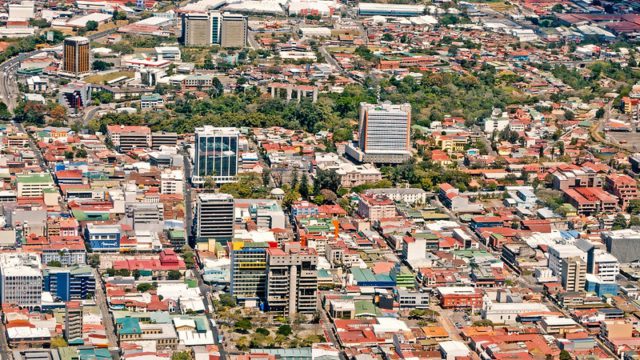
Costa Rica’s New Infrastructure Projects

How Costa Rica’s New Infrastructure Will Help Reduce PovertyOn May 4, 2021, President Carlos Alvarado addressed Costa Rica with the State of the Republic, a yearly analysis of the country’s accounts, progress and goals for the future. In his speech, he discussed the various infrastructure projects set to begin in Costa Rica. The projects will create opportunities for employment and reduce poverty across the country. President Alvarado’s plan for Costa Rica’s new infrastructure projects responds to the current economic crisis in the country. Due to the COVID-19 pandemic, poverty in Costa Rica has hit an all-time high since 1992, with 26.2% of families in the country experiencing household poverty.

New Infrastructure to Reduce Poverty in Costa Rica

Costa Rica’s economy is sustained by tourism, a sector that hit a sharp decline as a result of the COVID-19 pandemic. In 2020, Costa Rica’s “economy shrank by 4.5%” while unemployment rose by 6%. The various infrastructure projects which President Alvarado discussed aim to decrease poverty in the country and help bring Costa Rica out of its economic slump.

  1. Road Infrastructure. In his address, President Alvarado emphasized the need for improving roads and bridges across Costa Rica. He remarked that the Government intends on accessing a loan in order to treat all roads in the country with an asphalt seal and improve bridges across Costa Rica. The transformation of Costa Rica’s road infrastructure is a considerable undertaking that would provide thousands of people with jobs. Improving roads will lead to decreased congestion and facilitate transportation throughout the country. This directly benefits Costa Ricans and increases their access to jobs, which would greatly decrease the country’s record-high levels of poverty.
  2. Educational Infrastructure. Another key subject that Alvarado touched upon is the need for equal education opportunities for Costa Ricans. Investing in education infrastructure will help achieve this goal. Education for all Costa Ricans is important because education breaks cycles of poverty. Educating impoverished people on nutrition, health and safety can help them improve their living conditions. Additionally, educating children will provide them with the knowledge and skills to secure future employment and lift their families out of poverty.
  3. Land for Indigenous Groups. President Alvarado has a special recovery plan for indigenous territories. In the State of the Republic, he pledged monetary funding to address the inequities indigenous Costa Ricans experience due to existing legislation. The indigenous groups in Costa Rica have historically been subjected to slavery, displacement and exclusion and are disproportionately affected by poverty. Ensuring indigenous land rights are protected and prioritizing aid for indigenous people’s development would help reduce poverty across Costa Rica.
  4. Public Transportation. President Alvarado discussed an initiative to transition to electric mobility. The President “requested the support of Congress to approve a project to modernize public bus transport.” Additionally, the Costa Rican President introduced the Greater Metropolitan Area Electric Passenger Train, which is expected to generate almost 2,670 jobs, ignite economic growth and attract investors to the country. Another railway project that the President presented to Costa Rica is the Limon Electric Freight Train (TELCA). The construction of public transportation projects will provide Costa Ricans throughout the country with jobs and facilitate transportation between communities in order to spur economic growth.

Costa Rica’s commitments directly benefit citizens and the economy. Costa Rica’s new infrastructure projects show the country’s commitment to developing Costa Rica and reducing poverty.

– Eliza Kirk
Photo: Flickr

June 23, 2021
https://borgenproject.org/wp-content/uploads/borgen-project-logo.svg 0 0 Lynsey Alexander https://borgenproject.org/wp-content/uploads/borgen-project-logo.svg Lynsey Alexander2021-06-23 01:31:042021-06-21 11:07:02Costa Rica’s New Infrastructure Projects
Developing Countries, Development, Global Poverty

New Deal for Africa to End Dual Crises

New Deal for Africa There is a growing international appeal for “A New Deal for Africa and by Africa” in the wake of slow pandemic recovery and a growing debt crisis. French President Emmanuel Macron hosted a Paris-based summit on May 18, 2021, calling for a new way forward for Africa. Joined by African and European leaders, the summit aimed to address the worsening debt crisis across the African continent.
A Call for International Camaraderie

Highlighting recovery from the COVID-19 pandemic as a key issue, Macron urged leaders to foster a sense of international camaraderie. Macron argued that for there to be a steady return to normal, there must be a collective effort to repair the global economy. Additionally, he advocated that countries adopt a new perspective recognizing the interconnectivity of regional economies. In short, Macron stressed that the health and stability of Africa will determine the health and stability of the world.

As the pace of recovery becomes glaringly disproportionate between nations of varying economic status, Macron stressed that it would not only be unethical to leave Africa behind, it would also be to the detriment of the greater international community. Macron explicitly called for a waiving of patents on COVID-19 vaccines to speed up Africa’s recovery.

Africa’s Debt Crisis

The International Monetary Fund (IMF) warned that Africa’s debt crisis, now nearing $300 billion, will increasingly burden the continent. This crisis will continually arrest economic development in Africa and African nations will fall further behind other nations.

The pandemic has greatly exacerbated this issue. Slow vaccine distribution and lack of pandemic relief packages have led many African nations to fall further behind in development. If the situation continues, experts warn that up to 39 million Africans could fall into poverty before the year ends. Macron highlighted how an increase in poverty rates among Africans will ultimately threaten both international market growth opportunities and international security.

In 2021, the IMF recognized the sub-Saharan region of Africa to be the slowest growing on the planet in terms of GDP. The IMF voiced concern that the pandemic has undone years of economic construction and development for the region. The organization, comprised of 190 countries, fears that the pandemic’s effects will harm poverty reduction efforts for years to come.

A New Deal for Africa

After defining the severity of Africa’s debt crisis, the summit moved on toward establishing solutions. World leaders at the summit agreed a two-pronged approach toward economic recovery was necessary.

Firstly, the summit agreed that the slow vaccine rollout must be addressed. To do this, patents forbidding African manufacturers from concocting their own supplies of effective vaccines must be lifted. The patents had forced African nations to purchase their doses from the patent holders, such as Pfizer, only deepening the debt crisis. Macron states that he hoped to have 40% of all Africans vaccinated by the end of 2021. Secondly, members of the summit agreed to allocate more than $30 billion worth of relief from the IMF to nations in Africa.

In some areas of Africa, vaccine supply is so low that the World Health Organization recommended prioritizing the first dose only in order to partially vaccinate as many people as possible. As of early May 2021, six nations in Africa still had not received any doses and eight other African nations had already exhausted their supply.

Macron advocated for $100 billion to be allocated to the “New Deal for Africa” and wants wealthier nations to donate their IMF relief to Africa. Some members of the summit pushed for even more. For instance, the prime minister of Italy, Mario Draghi, stressed the need for a total restructuring of the debt system in Africa. The summit paved the way for further discussions to help support Africa.

– Jack Thayer
Photo: Flickr

June 6, 2021
https://borgenproject.org/wp-content/uploads/borgen-project-logo.svg 0 0 Kim Thelwell https://borgenproject.org/wp-content/uploads/borgen-project-logo.svg Kim Thelwell2021-06-06 01:31:212021-06-03 00:56:03New Deal for Africa to End Dual Crises
Development, Global Poverty

Costa Rica’s Success as a Nation

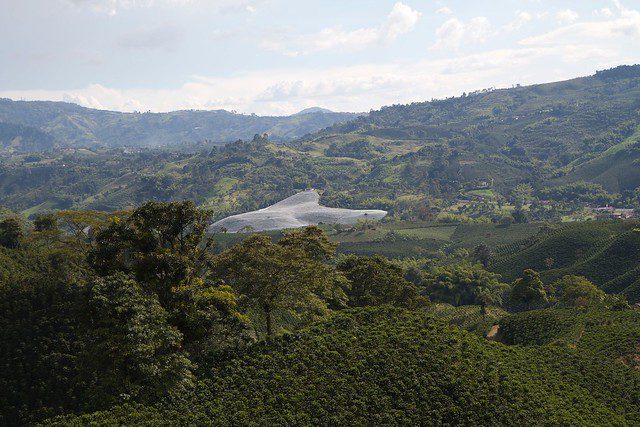
Costa Rica’s SuccessWhile numerous well-publicized problems plague many Latin American countries, especially in Central America, Costa Rica’s success as a nation stems from several factors. For decades, Costa Rica has had a more open political system and provided a better quality of life than its neighbors. Costa Rica is considered one of the happiest and most sustainable countries in the world. As news stories of Central America are often negative, Costa Rica provides a success story that inspires hope.
Political Stability and Representation

Since 1949, Costa Rica has maintained a stable and democratic government. Therefore, Costa Rica has avoided the political and gang violence that other Central American countries struggle with. Costa Rica has a strong constitution that enshrines many democratic rights, ensuring that rights are not eroded and that Costa Rican people are represented. Many people credit democratic values for Costa Rica’s success.

Costa Rica’s government has gained a reputation in Latin America for its socially progressive policies. Moreover, these politics led to much greater female representation in government than in many comparable countries. The nation has had a female president and has a very high proportion of women in its legislature. Women now comprise 45.6% of the legislature, which is the ninth-highest in the world.

The Economy, Education and Healthcare

Costa Rica has one of the most developed economies in Latin America. The economy is generally stable and had not experienced a significant downturn in decades until the COVID-19 pandemic hit. The poverty rate halved in the past two decades and the country maintains a strong export economy. The country grows at an economic rate of 2.5%  annually. Costa Rica’s success in the economic realm is also because the government does not have an army, freeing up funds to spend on social programs and development.

Costa Rica is considered an upper-middle-income country with the lowest poverty rate in Central America. About 20% of the country earns less than $155 a month, pushing them into the poverty category. In terms of the international poverty line, less than 2% of Costa Ricans are considered impoverished —  an impressive accomplishment.

Costa Rica has a high-quality education system and its citizens have a high reputation for being well-educated. Education in the country is sufficiently accessible. Furthermore, according to the World Economic Forum, Costa Rica invested 8% of its GDP into education in 2019. Costa Rica has the second-highest life expectancy in North America, just behind Canada. Furthermore, the country’s robust healthcare system is considered to be one of the best in Latin America.

Happiness and Sustainability

Costa Rica was ranked the most sustainable and happy country on Earth by the Happy Planet Index. The country’s commitment to green energy and environmental sustainability can provide an example for the rest of the world. Costa Rica generates more than 99% of its energy from renewable sources, primarily relying on hydropower. It has also reversed deforestation and designated one-third of its land as protected natural reserves. This environmental protection preserves the country’s beauty and supports the tourism industry, a vital part of the economy.

– Clay Hallee
Photo: Flickr

June 4, 2021
https://borgenproject.org/wp-content/uploads/borgen-project-logo.svg 0 0 Kim Thelwell https://borgenproject.org/wp-content/uploads/borgen-project-logo.svg Kim Thelwell2021-06-04 01:31:222021-06-02 02:15:33Costa Rica’s Success as a Nation
Development, Global Poverty

Land Restitution In Colombia

Land grabbing has been a problem in Colombia for several decades, particularly for those living in rural areas. A mixture of political and business corruption, rebel groups, paramilitary organizations and drug smuggling has led to the displacement of many Colombians from the properties they own or inhabit. At their peak, land grabbers of varying organizations illegally held almost 15% of the land in Colombia. As a result, between 6 and 7 million people have had no choice but to leave their homes in search of alternative dwellings. As of 2011, that has all begun to change with land restitution efforts.

Law 1448

In 2011, Colombia introduced Law 1448, also known as the Victims and Land Restitution Law. The objective of the law is straightforward: return illegally held land to its rightful owners. As a direct result of the law, the government established a Land Restitution Unit. This unit aids Colombian citizens in the court system to help them understand how they can file for land restitution. The law also provides some leeway for those who might no longer have the physical documents that prove they own the land, which is frequently the case.

Resolution 181

Two years later in 2013, Colombia also passed Resolution 181. This law is designed to prevent land grabbing in the future. It helps new landowners properly obtain titles and registration documents to ensure that their land cannot be illegally taken or abused. It is another law that works at the judicial level to give proper guidance to those who might not be well versed in property law and related regulations. Both of these laws are designed to work in conjunction with one another to look after those living in impoverished and/or rural communities. They ensure that if and when land grabbing issues do arise, the courts will be able to review official documentation that clearly proves who owns what.

Technology Helping These Efforts

In addition to these laws, the National University of Colombia has designed a system that is significantly safer for storing land-related documents. Land titles and registrations now go directly into a blockchain designed exclusively for property owners. Blockchain technology is highly regarded as being the safest way to save information since everything is decentralized. That means that no single entity controls the data. In a blockchain, every user can see any new or old activity and monitor if something looks suspicious.

Hacking a blockchain is extremely difficult and no one in history has ever managed to do so. Hacking a blockchain is so difficult because any time a new block is created, there is information that links it back to every existent block. So if a hacker wants to change the code of a block in order to sign over a land title to himself rather than the intended owner, every single block in the chain needs to be manipulated to agree with that change. It also needs to be done before anyone notices that a change has occurred. There could be tens of thousands, if not hundreds of thousands of blocks in the blockchain for Colombian property ownership.

Next Steps

Colombia is moving in the right direction. Law 1448, Resolution 181 and blockchain implementation have been vital to land restitution efforts. Since 2011, rightful owners have reclaimed over 740 thousand acres of previously stolen land. While that number might sound large, more than 5 million acres of land still remain in limbo. To make land restitution efforts as effective as possible, Law 1448 and Resolution 181 must be enforced far beyond 2021. The proper framework is in place, but the Colombian government has to remain active in helping its citizens reclaim what is rightfully theirs.

– Jake Hill
Photo: Flickr

May 16, 2021
https://borgenproject.org/wp-content/uploads/borgen-project-logo.svg 0 0 Kim Thelwell https://borgenproject.org/wp-content/uploads/borgen-project-logo.svg Kim Thelwell2021-05-16 07:30:062021-05-12 15:22:53Land Restitution In Colombia
Developing Countries, Development, Global Poverty

4 Things to Know About Nigerian Infrastructure

Nigerian InfrastructureNigeria is located in West Africa and shares a border with Niger to the north and the Atlantic Ocean to the south. The hundreds of different languages spoken in the country characterize its diverse population. The country benefits from a relatively large population and economy but it still has a high poverty rate. Reducing the poverty rate will require better Nigerian infrastructure that will expand the economy to reach the countries rural population.
4 Facts About Nigerian Infrastructure

  1. A public-private partnership is the core strategy. The government has acknowledged the importance of private sector help to reduce the infrastructure deficit which has been a thorn in the side of an economy that shows immense potential. The Nigerian vice president, Yemi Osinbajo, clearly outlined what the government believes the role of the private sector should be as it pertains to improving Nigerian infrastructure. He pointed out that the private sector, which accounts for 92% of the country’s GDP compared to the public sector accounting for a mere 8% of the GDP, shows the limits of public expenditures and budgetary allocations. Osinbajo says it could require $3 trillion over 30 years in infrastructure investment to resolve the infrastructure deficit. Osinbajo included that the country would see a lot of benefit from large investments from the private sector whether it be from local or foreign resources.
  2. The president is promoting private investment in infrastructure. President Muhammadu Buhari of Nigeria recently approved the creation of a new development firm called Infra-Co, which will be backed by an infrastructure fund worth $2.63 billion. The hope is to improve the transportation and power networks that have held back the 40% of Nigerians living below the poverty line — a staggering number for a country that boasts the biggest economy and population in Africa. It has been reported that KPMG will serve as the transactional advisor to the fund which further legitimizes the government’s plan to boost Nigerian infrastructure through partnership with the private sector.
  3. Nigeria is investing heavily in railway construction. The construction of the Lagos-Ibadan rail created history in West Africa as being the first double-track standard gauge rail in the region. The Lagos-Calabar railway is another large project costing $11 billion and running 1,400 kilometers long, which connects the western and eastern parts of the country.
  4. Other key infrastructure projects. Other infrastructure projects in Nigeria include the World Trade Centre, the Lekki Free Trade Zone and the Abuja Gateway Airport. The World Trade Centre and Lekki Free Trade Zone will create more business opportunities for foreign and local investors and increase tourism and entertainment. It will also boost commercial and residential real estate development. The Abuja Gateway Airport will be an architecturally appealing addition to the Abuja Airport. Its design will include features that symbolize the countries diverse culture. The use of solar power, green roofs and locally made laterite clay will help contribute to an environmentally friendly and modern design. All three of these projects seem to be an attempt to bring about more economic opportunities by making Nigeria’s richest cities more welcoming and luxurious for foreign investors.

The increased business opportunities created by the heavy investments in Nigerian infrastructure will significantly help the economy. The railways will allow more Nigerians across the country to work better jobs in wealthier cities such as Lekki city. But, the infrastructure spending still needs to expand to the country’s rural parts so that every Nigerian can be involved in the rapidly growing economy. Nevertheless, Nigeria is making developmental strides and its rapid economic progress should be viewed as a success.

– Stephen Blake Illes
Photo: Flickr

May 14, 2021
https://borgenproject.org/wp-content/uploads/borgen-project-logo.svg 0 0 Lynsey Alexander https://borgenproject.org/wp-content/uploads/borgen-project-logo.svg Lynsey Alexander2021-05-14 01:30:012021-05-12 00:59:044 Things to Know About Nigerian Infrastructure
Developing Countries, Development, Education, Global Poverty, Health

Inequalities Among Migrant Workers in Lebanon

Migrant workers in Lebanon
For decades, the Lebanese economy has relied heavily on migrant workers to supplement the workforce. The economy provided necessary domestic services and filled up low-level positions in retail, salons and hospitality. The kafala system, a program that encourages employers to hire migrant workers in Lebanon, fueled a sense of dependence on migrant workers in various industries. This institution creates great racial and economic inequality. The employers abuse the migrant workers and offer them substandard pay and inhumane working conditions. This immense disparity worsened during the COVID-19 pandemic. The employers placed workers in unsafe situations, forcing them to endure terrible conditions with the imminent threat of job termination.

Refugees and the Kafala System

Currently, refugees and migrant workers make up a quarter of Lebanon’s population. This renders them an extremely valuable sector of society. Tensions between local-born Lebanese citizens and refugees developed during past years. Lebanese individuals and armed forces committed several acts of violence against refugees out of spite and anger. In addition, nearly 90% of Syrian refugees become unemployed and unable to meet housing costs in 2020. Employers fired domestic migrant workers at an alarming rate since the pandemic.

The Anti-Racism Movement found that Lebanese employers terminated their migrant workers, likely due to racial bias. Nevertheless, gaining Lebanese citizenship as a migrant worker is nearly impossible. Due to an antiquated nationality policy set up during the French mandate, only children born to a Lebanese father may obtain full legal status as a Lebanese national. Thus, no feasible pathway exists to permanent residence and legal protection for migrant workers in Lebanon. They end up at the mercy of their employers to keep them in the country.

Medical Inequality Among Migrant Workers

For many migrant workers, medical inequality has become especially prominent during the COVID-19 pandemic. Due to the cruel implements of the kafala system, migrant workers rely on their employers to provide them with legal residency status. Without Lebanese nationality, these workers do not have entitlement to these benefits that other people within Lebanon possess. Lack of health coverage discourages these migrant workers from seeking out medical help and accessing the treatments they need to ensure their personal wellbeing. As unemployment has continued to rise, thousands of migrant workers are left with no healthcare or legal status. They must return to their home countries, despite the potential endangerment that awaits them.

In an international relations briefing by Natasha Hall, the author notes that “ensuring that people are not prioritized for medical treatment by nationality, as medicine disappears from shelves and intensive care units fill up, is another serious concern.” Migrant workers in Lebanon end up not being able to access treatments due to a lack of insurance and inadequate financial means. This is similar to the United States and other countries that experience inequality. Lebanon faces economic complications, such as inflation rates rising and banks refusing to withdraw money for their customers. It has become nearly impossible for people to obtain the medications they need. Lebanon sustains its medication supply due to imported drugs. Due to the trade challenges facing the nation, Lebanese citizens cannot obtain medicine for their health conditions.

Hope for an End to Migrant Worker Inequality

The kafala system is extremely ruthless. It puts migrant workers at a socio-economic position far below the average Lebanese citizen. This caused a public outcry, sparking change and encouraging reform to the system. According to the Human Rights Watch, “Amendments to the system [in 2020] provide guarantees for workers including 48-hour work weeks, a rest day, overtime payment, as well as sick and annual leaves. Workers can now terminate their contracts without their employer’s consent.” Increased regulations have provided an added layer of protection to the rights of migrant workers in Lebanon.

– Luna Khalil
Photo: Flickr

May 10, 2021
https://borgenproject.org/wp-content/uploads/borgen-project-logo.svg 0 0 Kim Thelwell https://borgenproject.org/wp-content/uploads/borgen-project-logo.svg Kim Thelwell2021-05-10 07:30:142021-05-07 06:40:48Inequalities Among Migrant Workers in Lebanon
Development, Global Poverty, Health

Girl Designs Solar-Powered Iron to Fight Poverty

solar-powered iron
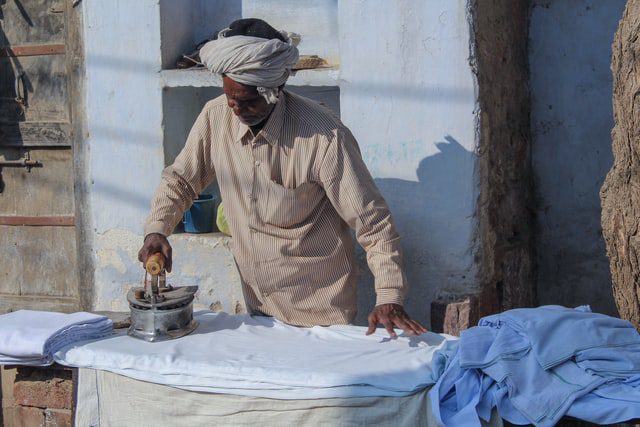
India possesses the second-highest worldwide population with 1.2 billion people. Poverty in rural areas leaves local Indians unable to find job security. They instead must resort to street vending. Approximately 10 million street vendors exist in India, with many representing the laundry and textile industries. In particular, impoverished Indian families tend to choose the path of ironing clothes, a lucrative business considering the needs of everyday workers. However, there is one downside of the traditional method of ironing clothes in India: charcoal powers the irons. Luckily, a 14-year-old girl named Vinisha Umashankar recognized this energy source’s impact on the environment and innovated a solar-powered iron to create a renewable alternative to coal in India.

The Importance of Street Vending in India

Two kinds of retail industries exist: organized and unorganized retail. The latter represents the main retail industry in India. Unorganized retailers lead a solid 97% of businesses in the country, including local stores, family-run shops and street vendors. The sector of unorganized retail is the second-largest source of employment in India following agriculture. This demonstrates how much these workers crucially rely on their jobs for financial security. Those who have education but are jobless, or who suffer from poverty, benefit from the consumer familiarity and low-cost structure of the unorganized retail sector. Additionally, Indian small-store retailing generates self-employment relatively easily and does not require much investment in labor, land or capital.

India’s Pollution Problem with Charcoal

Early Indian society used a coal-fuelled iron box to smooth out clothing. Street vendors who iron clothes rely heavily on coal to power their equipment. There are some 10 million ironing carts in India and each cart uses more than 11 pounds of charcoal daily.  Given the hot and dry summers in India, cotton clothing requires washing and ironing on a daily basis. The high demand for ironing is escalating the use of coal and intensifying the smog issue in India.

The monsoon season from June to September poses an additional threat to the quality of the environment. Due to heavy rains, the coal becomes damp, causing an increase in the total weight bought by vendors. The moisture of the water, however, also reduces the warmth the charcoal produces when burned. Also, in the winter, as the price of coal naturally rises, suppliers purposefully add additional water to extend their product. Therefore, intense rain means increased spending on coal for the irons, further intensifying the cycle of Indian poverty.

Coal supplies approximately 72% of India’s electrical needs. The reliance on coal energy presents challenges regarding rising smog levels and respiratory conditions in cities. Coal power plants emit toxic gases and particulate matter that can penetrate human lungs. A reaction between sunlight and the nitrogen oxides that coal-powered plants release causes smog. The more people burn coal, the more smog that will emerge. However, coal is still a cheaper alternative to other, cleaner, forms of energy in India. Most people do not have the means to finance renewable energy.

Vinisha Umashankar’s Solar-Powered Iron

Vinisha Umashankar, an Indian teen with great concerns for the Indian air, developed an alternative to coal-powered irons. She suggested that they use solar-powered irons to harness the energy in the sun. This innovation promises to improve the poverty associated with the ironing industry as well as the environmental issues it causes. India receives enough sunlight to produce solar power 3,000 times more than its total current energy consumption. Her innovation to eliminate the use of charcoal in the ironing industry received the Children’s Climate Prize, comprising 100,000 Swedish krona ($11600) to further aid the project.

Umashankar also developed a solar-powered street cart. Similar to the solar-powered iron, Umashankar designed the model with functionality and cost-efficiency in mind. Individuals can use the cart effectively after only 15 minutes of tutorials. The solar-powered batteries charge in under five hours and last for six hours.

Overall, the goal of the solar-powered iron and cart is to improve the economic and health outcomes of the street vendors working in the ironing industries. In the long run, with further innovation, Umashankar intends to develop a cart prototype with solar panels and batteries that could last up to eight years. This ambitious plan favors sustainability for two parties: vendors and the environment.

Looking Ahead

With innovations like Umashankar’s solar-powered iron, India shows promise for improved environmental conditions and reduced poverty rates. Although expensive, new technologies are constantly emerging and individuals as young as 14 years old are working to prioritize cost-efficiency and sustainability. Given the fact that street vending is a widespread market in India, a solar-powered iron has the potential to transform the harmful coal-sourced iron industry into one that is profitable and environmentally conscious.

– Sarah Frances
Photo: Unsplash

April 28, 2021
https://borgenproject.org/wp-content/uploads/borgen-project-logo.svg 0 0 Jennifer Philipp https://borgenproject.org/wp-content/uploads/borgen-project-logo.svg Jennifer Philipp2021-04-28 01:31:102024-05-30 07:56:35Girl Designs Solar-Powered Iron to Fight Poverty
Development, Global Poverty, Sustainable Development Goals

Examining the Updates on SDG 8 in China

Updates on SDG Goal #8 in China
The global economy is an ever-changing and ever-expanding system. Whether through the opening of new markets, job creation or GDP fluctuations, one can measure the success of an economy in numerous ways. However, attempts at sustainability goals receive more specific judgment. The Sustainable Development Goals (SDGs) measure the success of an economy not only in regard to its growth but also that growth’s sustainability. Many countries with SDGs are those that have a pivotal impact on the world economy overall. This correlates with positive updates on SDG 8 in China, which commits the nation to the achievement of full employment for all citizens by 2030.

Laying the Economic Foundation

The Chinese economy has undergone many changes over the centuries. In the first 1,500 years, China followed the policy of Isolationism strictly. In the next few centuries, China gradually opened to the European countries. Many countries such as Germany, Russia and England vied for control over many of China’s crucial exports and markets. By the 20th century, China faced more pervasive and detrimental economic factors. It suffered from the toll of its countless Opium Wars as well as the resulting strain of having to compete with other countries vying for its resources. But by the mid-21st century, the post-WWII economic boom rejuvenated and then expanded China into the economic force that it is today.

Positive Correlations for SDG 8 in China

There are positives to China’s economic growth. World reliance on Chinese goods does not have a parallel, with China occupying a large percentage of the world’s imports. Furthermore, the particular rise in GDP in Beijing, which now accounts for 5% of China’s GDP, indicates the importance of Beijing as an ever-growing and pertinent city in China and the world’s economy.

Beijing itself has also sought to expand the visibility of industrialization in China. For example, Beijing devised a plan to push 15 million people into workplace training, as well as the expansion of 11 million more jobs by the end of 2021. China’s rise in GDP is so colossal that it actually managed to grow by 2.3% during the COVID-19 pandemic while many other prominent economies have dropped by 2.3%. This suggests positive updates on SDG 8 in China for development and job creation. Furthermore, estimates of China’s GDP, if its growth continues, could overtake the U.S. economy by 2028. If the value of Chinese currency continues to increase, it could accelerate this rise by 2026.

The Challenges

The results of these estimates are promising, but they are still only estimates. Moreover, there are prominent issues when it comes to the area of decent work. China’s advancing industrialization puts profound stress and lack of availability on its rural citizens. Those left behind in China account for about 30.46 million and are confined to the rural areas in China.

One of China’s main problems is the uncertainty of it all. Furthermore, a Communist government controls China. As a result, the political system suffers from high amounts of censorship and misinformation. Eric Hu accounted in the New York Times that “China is both the world’s newest superpower and its largest authoritarian state.”

Hu’s and similar statements acknowledge the economic power of China. However, the nature of China’s political system does question the validity of its informative claims, including those of an economic nature. China resists forfeiting government control or enlisting the aid of NGOs. In fact, many successful NGOs have to operate without government permission in order to assist people facing poverty. Yet, there is some improvement in this area, with available NGOs like Jiangxi bringing 500,000 yuan to struggling Chinese villages as well as financial plans for its disbursement.

Meeting Opportunities

China’s middle class may be on the rise, as well as its GDP and hopeful updates on SDG 8 in China. However, in order for true advancement to occur, there needs to be a greater emphasis upon financial aid and transparency towards its citizens who are in poverty and even extreme poverty. If this occurs, coupled with China’s impressive GDP growth, the country could attain many economic benefits.

– Jacob Hurwitz
Photo: Flickr

April 27, 2021
https://borgenproject.org/wp-content/uploads/borgen-project-logo.svg 0 0 Kim Thelwell https://borgenproject.org/wp-content/uploads/borgen-project-logo.svg Kim Thelwell2021-04-27 01:30:202024-05-30 22:22:59Examining the Updates on SDG 8 in China
Child Marriage, Children, Developing Countries, Development, Education, Global Poverty

Theresa Kachindamoto’s Activism for Malawi Children

Theresa Kachindamoto’s Activism
Malawi operates under a democratic chiefdom system, which has been in existence for hundreds of years. Theresa Kachindamoto is the youngest of 12 siblings and the mother of five children. She works as a tribal Malawian chief in the district of Dedza. This district consists of nearly 900,000 people and 551 headmen. Theresa Kachindamoto’s activism for Malawi children stems from the cultural practice of child marriages.

Kachindamoto has been working to annul child marriages and ensure that the female victims of it can receive an education. In Malawi, one in two girls will marry before 18, preventing them from completing their education. Kachindamoto uses her voice to explain the practicality of arranged marriages with healthy boundaries. She also advocates for safe environments for the betterment of all parties involved. Here is some information about Theresa Kachindamoto’s activism for Malawi children.

Empowerment of Children

Some call Theresa Kachindamoto the terminator of child marriages. In fact, she has annulled over 1,000 marriages and immediately aided in getting individuals back to school afterward. Kachindamoto has said she will be chief until she dies, giving the children of Malawi a solid and long-term advocate. She is accomplishing change through the creation of a reliable support network to alter traditions.

U.N. Women has been a big supporter of Theresa Kachindamoto’s activism for Malawi children and how she brings attention to the issue of child marriages.

Many young women end up having to enter child marriages since their families are in poverty and cannot provide for their basic needs. Benedeta Matinson talked about marriage and finishing school in a U.N. Women video before she received employment. She conveyed information about experiencing marriage and pregnancy at the age of 15. Benedeta stated that marriage not a suitable solution for the lack of basic necessities.

The Problem

Malawi is the sixth most impoverished country in the world. Girls who marry before the age of 18 make up 18% of the country. Kachindamoto has expressed that motherhood and wifehood often take precedence over girls’ education. Thus, the chief is working towards altering traditions. Theresa Kachindamoto’s activism for Malawi children empowers young women. It grants the girls understanding of their value and what they deserve. This includes quality education before marriage arrangements.

Child marriages lead the way to more significant problems. An example of a problem is sexual initiation camps. These are places where young women learn how to sexually please men and understand their “duties” as wives. The tradition translates as “kukasa fumbi,” which basically means sexual cleansing. Girls either graduate the program by having relations with their instructor or go home virgins. Meanwhile, if they return home as virgins, their parents force them to lose their virginities to local men. This cultural practice makes girls more susceptible to unwanted pregnancies and the spread of HIV. In fact, statistically, every one in 10 Malawians becomes ill with HIV/AIDS.

With the teen pregnancy rate rising during the COVID-19 pandemic, 57.2% of girls ages 15 to 19 are mothers. In addition, 63.5% of girls are mothers-to-be.

The Importance of Education

As part of Theresa Kachindamoto’s activism for Malawi children, she created and signed an agreement for her district to end child marriage along with sexual initiation camps. This was the result of conversing with 50 sub-chiefs who gave Kachindamoto significant pushback. In response, she firmly said, “these girls will go back to school” and the other tribal members slowly worked towards sticking to the new law. In her reign, Kachindamoto raised the age of consent for marriage from 15 years old to 18 years old.

The Mpapa mothers’ group is an organization that seeks out victims of child marriages. Members go door to door in search of those who have dropped out of school due to early marriage, and they attempt to return the girls to school. Mpapa Primary School is a school that the girls then attend, where drop-out rates were at 6% in 2020 and attendance was at 87%. Nationally, only 51% of girls finish primary school.

The Joint Programme on Girls Education (JPGE) trains the Mpapa mothers’ group. The United Nations sexual and reproductive health agency supports the group as well. The group encourages to complete education by mentoring teens on pregnancy issues, marriage and their rights as women.

A 15-year-old girl and Mpapa Primary School attendee, Aisha Kayima, benefited from mentoring sessions two times a month. The mothers’ group has taught Kayima to be better informed about her choices so that she can have a quality future.

Looking Ahead

Putting a stop to child marriages can change the economic status of young girls while ensuring entire communities’ safety by inhibiting the spread of HIV/AIDS. Theresa Kachindamoto’s activism for Malawi children also helps reconnect girls with their warranted educational paths. In Kachindamoto’s words, “If you educate your girl, you will have everything in the future.”

– Libby Keefe
Photo: Flickr

April 26, 2021
https://borgenproject.org/wp-content/uploads/borgen-project-logo.svg 0 0 Kim Thelwell https://borgenproject.org/wp-content/uploads/borgen-project-logo.svg Kim Thelwell2021-04-26 07:53:582024-12-13 18:02:27Theresa Kachindamoto’s Activism for Malawi Children
Development, Economy, Global Poverty, Government

What Exactly Is Happening in the Northern Triangle? 

The Northern Triangle
Latin America is in a vicious circle of crime, poverty and corruption. High crime rates thwart economic opportunities and crime rates push people into poverty, all cumulating into corrupt leaders who use the pain for their power and self-interest. Nevertheless, nowhere is crime more prevalent than in the Northern Triangle.

The Northern Triangle is region in Central America that includes Guatemala, Honduras and El Salvador. It has experienced the worst problems such as poor economic growth, rampant gang violence and political corruption. This three-prong nightmare has fueled an estimated 265,000 people toward the Southern U.S. Border and will continue to grow into the foreseeable future. While some do attempt to find safety in Europe and elsewhere in South America, others take the risk and traverse their way to the U.S-Mexico border, where they risk entering the country illegally. Others surrender to U.S. border patrol and seek asylum. However, it is unlikely that they will receive asylum. On average, only 13% of individuals receive asylum and experience integration into the United States.

Gang Corruption

In 2017, a survey asked the people in El Salvador, “who runs the country?” About 42% of respondents said “Delincuencia/Maras.” For non-Spanish speakers, this translates to gangs, like MS-13.

These answers have visible ramifications that strike at the core of the government. Governments in the Northern Triangle are weak, and the people know this; the gangs know this. People understand the country’s power lies in gangs’ hands, not in the government’s.

For example, in 2012, the Salvadorian government agreed to sign a truce with the criminal organizations to address skyrocketing homicide rates. The profoundly unpopular legislation did lower the homicide rate but the people still had to continue to pay gangs. Tactics like homicide and racketeering are not the only ways these organizations flex their might.

Throughout the Northern Triangle, gangs rely on drug and human trafficking, money laundering, kidnapping and theft to export their criminal enterprise well beyond the Northern Triangle. Issues in the Northern Triangle are not just an inter-state problem but also a problem for the entire Western Hemisphere.

Governance Problem

Northern Triangle nations have made some progress when it comes to corruption. But the total damage that such corruption caused is still in the billions: $13 billion to be precise.

In 2006, Guatemala successfully combated corruption when it appealed to the U.N., which established the International Commission Against Impunity in Guatemala (CICIG). This independent body investigates the infiltration of criminal groups within state institutions. Such an organization resulted in the conviction of hundreds of officials and reduced the homicide rate.

In El Salvador, in 2019, the country created its own independent body called Commission against Corruption and Impunity in El Salvador (CITIES), which could yield the same results as CICIG. Over in Honduras, the hopes of establishing such independent oversight do not seem to be gaining the same traction. After the resignation of President Lobo Sosa in 2013, an investigation into the Honduran Institute of Social Security revealed a scandal that cost the people over $200 million. It also implicated President Orlando Hernández, who admitted to unknowingly using some of the money to fund his presidential campaign.

Unlike Guatemala and El Salvador, the Honduras legislature rejected a proposal to create its own CICI. Instead, it created Support the Fight against Corruption and Impunity in Honduras (MACCIH). Although intended to fight corruption, it does not have the same autonomy as CICIG and CITIES. MACCIH is not autonomous and cannot investigate Honduran Public Ministry. Instead, it relies heavily on its relationship with the Attorney General and Congress, which could shield the people committing corruption. This inability to pass support for CICIH instead of settling for MACCIH might be signaling that the $200 million white-collar crime is the beginning of a giant iceberg.

A Path Forward

In Washington DC, support exists for CICIH and CITIES. Congresswoman Norma Torres and others released a statement in 2019 supporting these institutions. Reinstating the CICIG and implementing the same structure in CICIH and CITIES would stop corruption. This would allow the state to use its monopoly on violence to fight crime and allow positive economic growth. In April 2021, the State Department announced $740,740 in available funding for “competition for organizations interested in submitting applications for projects that empower civil society to combat corruption and protect human rights.”

– Diego Romero
Photo: Flickr

April 23, 2021
https://borgenproject.org/wp-content/uploads/borgen-project-logo.svg 0 0 Lynsey Alexander https://borgenproject.org/wp-content/uploads/borgen-project-logo.svg Lynsey Alexander2021-04-23 07:59:412021-04-25 07:59:54What Exactly Is Happening in the Northern Triangle? 
Page 52 of 163«‹5051525354›»

Get Smarter

  • Global Poverty 101
  • Global Poverty… The Good News
  • Global Poverty & U.S. Jobs
  • Global Poverty and National Security
  • Innovative Solutions to Poverty
  • Global Poverty & Aid FAQ’s
Search Search

Take Action

  • Call Congress
  • Email Congress
  • Donate
  • 30 Ways to Help
  • Volunteer Ops
  • Internships
  • Courses & Certificates
  • The Podcast
Borgen Project

“The Borgen Project is an incredible nonprofit organization that is addressing poverty and hunger and working towards ending them.”

-The Huffington Post

Inside The Borgen Project

  • Contact
  • About
  • Financials
  • President
  • Board of Directors
  • Board of Advisors

International Links

  • UK Email Parliament
  • UK Donate
  • Canada Email Parliament

Get Smarter

  • Global Poverty 101
  • Global Poverty… The Good News
  • Global Poverty & U.S. Jobs
  • Global Poverty and National Security
  • Innovative Solutions to Poverty
  • Global Poverty & Aid FAQ’s

Ways to Help

  • Call Congress
  • Email Congress
  • Donate
  • 30 Ways to Help
  • Volunteer Ops
  • Internships
  • Courses & Certificates
  • The Podcast
Scroll to top Scroll to top Scroll to top