• Link to X
  • Link to Facebook
  • Link to Instagram
  • Link to TikTok
  • Link to Youtube
  • About
    • About Us
      • President
      • Board of Directors
      • Board of Advisors
      • Financials
      • Our Methodology
      • Success Tracker
      • Contact
  • Act Now
    • 30 Ways to Help
      • Email Congress
      • Call Congress
      • Volunteer
      • Courses & Certificates
      • Be a Donor
    • Internships
      • In-Office Internships
      • Remote Internships
    • Legislation
      • Politics 101
  • The Blog
  • The Podcast
  • Magazine
  • Donate
  • Click to open the search input field Click to open the search input field Search
  • Menu Menu

Archive for category: Child Poverty

Child Poverty, COVID-19, Global Poverty

The Impact of COVID-19 on Poverty in Uganda

Impact of COVID-19 on Poverty in Uganda
Countries across the world face the devastating impacts of the COVID-19 pandemic, noting a regression in many key areas of development, such as health, education, food security and the economy. While some countries are successfully rebounding, others, particularly lower-income countries, are still struggling to contain COVID-19 within their borders and regain economic footing. The impact of COVID-19 on poverty in Uganda is particularly significant as the pandemic has led to a suffering economy, and consequently, higher unemployment and hunger rates.

The Economic Impact of COVID-19 in Uganda

According to the World Bank, Uganda’s gross domestic product (GDP) fell by 1.1% in 2020. Furthermore, the Ugandan Finance Ministry reports that during the first six months of 2021, the poverty rate in Uganda stood at 28%, increasing from the pre-pandemic poverty level of 18%. The Finance Ministry also notes that about 75% of Ugandans “lost at least some income” due to the onset of COVID-19. Furthermore, the unemployment rate rose “to 2.44% in 2020 from 1.80% in 2019.” The unemployment rate was set to increase further to 2.5% by the close of 2021.

Uganda’s GDP stood at 3.3% during 2021, however, experts predict that the GDP could rise to 4.6% in 2022 and 6.4% in 2023 as “domestic demand” increases and the COVID-19 vaccine rollout intensifies. In order to keep the economy of Uganda growing and recovering for years to come, the World Bank recommends stimulus packages to “sustainably increase productivity and build resilience to enhance livelihoods, the economy and general well-being.”

The Impact of COVID-19 on Child Labor in Uganda

In May 2021, Human Rights Watch released a report on the impact of COVID-19 on “child labor in Ghana, Nepal and Uganda” called “I Must Work to Eat.” Due to pandemic-induced increases in poverty as well as country-wide school shutdowns, HRW notes a spike in child labor in many countries. School closures affect not only the education of children but also cut off access to free school meals, which are sometimes the only source of food for impoverished children.

Just 28 children out of “81 children interviewed” have reported receiving household government assistance during COVID-19, specifically, food assistance. With no other means of securing their families’ basic needs, these children were thrust into child labor to earn an income to ensure the survival of their families. The children report facing exploitative and dangerous working conditions for long hours and little or no pay.

Aid from the Danish Government

During the pandemic, vaccine inequities became apparent with disproportionate impacts on developing nations. Recognizing that widespread vaccination is essential to the recovery of a nation, in December 2021, the Danish government sent Uganda 742,000 doses of the COVID-19 vaccine. This donation will contribute to vaccinating all Ugandans 18 and older, equating to 22 million people or 50% of the population. Widespread vaccination will not only take the strain off Uganda’s health care system but will also allow the education sector and the economy to fully reopen.

With ongoing support from the international community, citizens can successfully recover from the impact of COVID-19 on poverty in Uganda. Diplomatic efforts from countries such as Denmark bring hope to impoverished Ugandans for a brighter tomorrow.

– Sierrah Martin
Photo: Flickr

February 2, 2022
https://borgenproject.org/wp-content/uploads/borgen-project-logo.svg 0 0 Jennifer Philipp https://borgenproject.org/wp-content/uploads/borgen-project-logo.svg Jennifer Philipp2022-02-02 07:30:402022-01-21 12:15:18The Impact of COVID-19 on Poverty in Uganda
Child Poverty, Food & Hunger, Food Security, Global Poverty

Tackling Child Malnutrition in Chad

Child Malnutrition in Chad
Chad, a country located in Central Africa, faces one of the highest levels of child malnutrition worldwide. A meta-analysis of child malnutrition in sub-Saharan Africa from 2006 to 2016 found that 39.9% of children in Chad suffered from stunting and 28.8% were underweight. Extreme weather events and conflict in the country exacerbate food insecurity, making it more difficult for many families to provide adequate, nutritious diets for their children. To help improve children’s health and reduce food insecurity, four recent initiatives are tackling child malnutrition in Chad.

Scaling Up Nutrition

Scaling Up Nutrition (SUN) is an organization that collaborates with low- and middle-income countries’ governments to organize malnutrition prevention efforts. In 2017, SUN developed partnerships with five civil society organizations in Chad focused on improving nutrition. SUN has also established six local Civil Society Alliance offices across different provinces of the country. With SUN’s support, these organizations adopted nutrition as an integral part of their development plans. SUN has also trained and mobilized 35 radio presenters and journalists for nutrition communication, who continue to help raise awareness on malnutrition across the country.

Collaboration with UNICEF and the UK

Through its Department for International Development, the U.K. committed £4 million to a collaboration with UNICEF to reduce acute malnutrition in Chad in 2018 and 2019. Using this grant, UNICEF provided therapeutic milk, Ready-to-Use Therapeutic Food and essential drugs to 58,670 children across 20 provinces nationwide.

UNICEF also used the DFID grant to develop more sanitary and hygienic health centers, improving 30 facilities across the country. This development benefited an estimated 40,000 mothers and caregivers of children suffering from acute malnutrition.

Zafaye West Health Center

A nutrition project that UNICEF and the U.K.’s Foreign, Commonwealth and Development Office sponsored supports the Zafaye West Health Center. The project selected N’Djamena, where the health center is located, as a priority province in Chad for nutrition aid because a 2019 survey detected a high prevalence of acute malnutrition in the area.

Community volunteers from the center travel door-to-door to reach out to mothers, encouraging them to visit the health center to check up on their children’s health and engage in educational campaigns. The campaigns educate mothers on the importance of balanced diets for their children and teach them nutrient-dense, affordable recipes to prepare. The nutrition project has saved 43,000 children, located within the six target provinces it serves, from acute malnutrition as of June 2021.

The World Food Programme (WFP)

The World Food Programme is an organization that provides food assistance across more than 80 countries worldwide. WFP helps provide nutritious meals to 120,000 school children in the Sahel, the region of Africa where Chad is located. The organization also feeds 15,000 children in the Lake Chad region through an emergency school meal program.

In addition, WFP helps prevent child malnutrition in Chad among 6-month-olds to 2-year-olds by providing cash-based nutrition support to their families. This support provides families with more stable access to nutrient-dense foods.

Although many children in Chad currently face malnutrition, these four initiatives are making progress in eradicating this issue. With this support, child malnutrition in Chad may decline in the years to come.

– Aimée Eicher
Photo: Flickr

January 26, 2022
https://borgenproject.org/wp-content/uploads/borgen-project-logo.svg 0 0 Jennifer Philipp https://borgenproject.org/wp-content/uploads/borgen-project-logo.svg Jennifer Philipp2022-01-26 01:30:262024-05-30 22:25:39Tackling Child Malnutrition in Chad
Child Poverty, Global Poverty

The Action Foundation in Kenya

The Action Foundation
Close to 1 million people with some form of disability live in Kenya. People with disabilities are at a greater risk of living in poverty. Women and adolescent girls with disabilities are even more at risk of poverty as well as gender-based violence. Maria Omare founded The Action Foundation (TAF) in Kenya, a grassroots nonprofit organization, because she noticed a need for disability awareness, education that caters to children with disabilities in low-income areas and support for the caregivers of children and adolescents with disabilities. TAF is paving the way for inclusivity and resiliency. TAF is minimizing disparities among children and adolescents with disabilities and their caregivers through three programs.

The TUNZA Program

TAF’s TUNZA program offers support to caregivers of children and adolescents with disabilities. It also provides necessary skills and resources to caregivers. In Kibera, where the center is located, many families live in extreme poverty. They do not have the resources or finances to care for a child with a disability.

Earlier in 2021, TAF in Kenya launched an inclusive early childhood care education map and referral directory. This tool helps caregivers find and utilize therapy services at little to no cost. This can play a vital role in helping children with disabilities have a better quality of life.

The TUNZA program also brings awareness and education about disabilities because many Kenyans believe that children born with disabilities are cursed, bewitched or a bad omen. A survey found that 45% of mothers who have a child with a disability are “pressured to give up and/or kill their child.” Other mothers experience coercion to leave their children at an institution. The statistics are even more staggering in rural areas in Kenya.

The IBUKA Program

Many people are taking notice of TAF’s advocacy efforts and are helping to amplify the organization’s voice, such as Michelle Obama and Google. Obama publicly highlighted TAF’s work in teaching girls with disabilities STEM-oriented education, such as robotics and coding, as a partnership with the Girls Opportunity Alliance.

Women and girls with disabilities in Kenya are more likely to face poverty, discrimination and denial of basic needs. Ibuka in Swahili means “emerge” or “rise,” and that is the aspiration of the IBUKA program.

One of the ways the program combats negative stereotypes of women and girls with disabilities and offers them hope is through mentorship and education. It teaches the women and girls the skills necessary, such as STEM (science, technology, engineering and math) and vocational training, so that they can play an active role in the workforce. Women with disabilities are less likely to face poverty, discrimination, exploitation and violence when they are able to work or run their own businesses.

The SOMESHA Program

Children with disabilities in Kenya are unlikely to attend school due to a lack of accessibility. Also, fewer “than one in four children with a disability had access to any services.” Many families cannot afford special services for their children as the average monthly income per person is $39 and women in Kibera make 42% less than men.

The SOMESHA program aims to offer accessibility and inclusive education for children with disabilities. The program fits learning to the unique needs of each child. The SOMESHA program created a mobile-based application that improves literacy and promotes inclusivity. It is an interactive application for both caregivers and children. The application was especially helpful during the COVID-19 pandemic when Kenyans could not socialize in large groups.

The heartbeat of The Action Foundation in Kenya is in the people. Omare, the center’s staff and volunteers, the caregivers and the children make the organization thrive. The people of Kenya have historically looked down on people with disabilities as inferior, bewitched and helpless. However, Omare and her team are changing the narrative. They are offering hope and resources to families with children who have disabilities.

– Amy Helmendach
Photo: Unsplash

December 5, 2021
https://borgenproject.org/wp-content/uploads/borgen-project-logo.svg 0 0 Jennifer Philipp https://borgenproject.org/wp-content/uploads/borgen-project-logo.svg Jennifer Philipp2021-12-05 01:30:102024-05-30 22:25:32The Action Foundation in Kenya
Child Poverty, Education, Global Poverty, Hunger

Marcus Rashford’s Campaign Fights Against Child Poverty

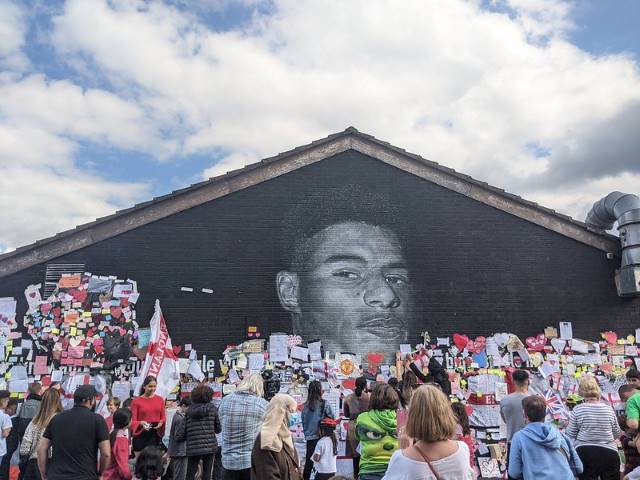
Marcus Rashford's CampaignMany know Marcus Rashford for his role on the soccer field as a player for the famous Manchester United team. However, Rashford is also an activist in the fight against child poverty in the United Kingdom. With 22% of adults and 30% of children in Britain living in poverty, this is an important issue, especially with the onset of the COVID-19 pandemic. Coming from a background of poverty himself, Marcus Rashford’s campaign gives a voice to the impoverished youth.
Marcus Rashford’s Campaign Combats Child Hunger

One of Rashford’s most significant passions is combating child hunger. In June 2020, during the outbreak of the COVID-19 pandemic, the soccer star launched a campaign asking the government to continue using food vouchers for students during summer vacations. For many impoverished children, school lunches are a necessary resource to receive proper daily nutrition. Rashford’s campaign provided vouchers to underprivileged families, allowing children and families to access school lunches and groceries during the summer. Additionally, he raised £20 million with FareShare, a U.K. organization that has provided 131.9 million meals to charities and vulnerable people.

The public has shown strong support for Rashford’s campaign. During his initial campaign, the government rejected his ideas. However, the people rallied in his support, causing the government to backtrack, providing 1.3 million students with meal vouchers for a six-week summer break period. His October 2020 petition calling for the government to extend free school meals to other vacations and expand eligibility garnered more than 500,000 signatures. Although this request was not successful, local businesses followed with their support, even businesses that the pandemic hit hard. Additionally, Rashford used his Twitter account, with more than 3.5 million followers, as a directory of food banks, providing valuable information for those the government denied food.

Educational Resources

Along with his work against child hunger, Rashford also works to provide underprivileged children with educational resources. Rashford has said he only properly started reading books for leisure at age 17 because his family never had the budget for it. After learning that more than 380,000 children in the U.K. never owned books of their own, Rashford sought to change that. In the fall of 2020, he launched a book club with Macmillian’s Children’s Books to provide books to children. Through Marcus Rashford’s campaign, thousands of children now have access to a new hobby that they previously viewed as a privilege.

In May 2021, the Sunday Times Giving List notably recognized Rashford as the youngest person to top its list of British philanthropists. This accolade was due to Rashford’s generous donations to various food, poverty and community charities. The soccer player has raised more than £20 million in donations, putting his “Giving Index” rating at 125%; his wealth is £16 million. Due to the additional waves of COVID-19, there is a high demand for donations.

Rashford has proven himself to be a valuable contributor both on and off the field. Through his hard work and dedication, millions of children across the U.K. have had access to food and books. With his substantial passion, Rashford shows no signs of slowing down in his philanthropic efforts.

– Carly Johnson
Photo: Flickr

December 2, 2021
https://borgenproject.org/wp-content/uploads/borgen-project-logo.svg 0 0 Jennifer Philipp https://borgenproject.org/wp-content/uploads/borgen-project-logo.svg Jennifer Philipp2021-12-02 01:30:072022-03-24 06:36:25Marcus Rashford’s Campaign Fights Against Child Poverty
Child Poverty, Education, Food Insecurity, Global Poverty

Children in Morocco are Breaking Cyclical Poverty

samis-project-how-children-in-morocco-are-breaking-cyclical-poverty
Children in Morocco have turned tragedy into new beginnings. Sami’s Project, named after a young Moroccan student who died of cancer, has mobilized thousands of students across Morocco to plant fruit trees in rural communities. Since 2011, Moroccan children have planted 35,000 trees across the country through Sami’s Project while gaining agricultural management skills. Centered in the rural province Essaouira, the project aims to supply students with the resources and curriculum necessary to plant and manage fruit trees and botanical gardens. In 2018 alone, 19,000 children mobilized to plant trees across 23 provinces in Morocco. The goal of the project is not simply to reforest Morocco. The group also works toward a larger impact on national poverty reduction.

Decreasing Food Insecurity in Rural Communities

By planting fruit trees, the project directly improves food security in rural provinces. Over the last two decades, Morocco has drastically reduced the prevalence of multidimensional poverty from 58.9% in 1998 to 3.6% in 2021. Within that last 3.6%, 80% of those still living in poverty live in rural communities. By planting fruit trees in rural communities, the organization directly increases food supplies to populations that poverty most impacts.

Planting fruit trees in these communities has economic and ecological benefits, outside of food production. By improving native biodiversity through fruit tree planting, the project works to decrease soil erosion in arid regions. This has the potential to increase the amount of arable land in rural agricultural communities. In Morocco, 80% of agricultural land is currently at threat of desertification. Planting trees and increasing green spaces improve the resiliency of land and slow the process of desertification. According to Sustainable Food Trust, more than half of the active workforce in Morocco works in agriculture. Therefore, Sami’s Project works toward protecting both job security and food production.

Future Building Through Youth Outreach

Auxilary to providing fruit trees, Sami’s Project also provides teachers in rural Morocco with a curriculum that teaches sustainable nursery management. The project gives teachers the ability to equip their students with organic certification training, product management skills and hands-on business development skills.

Through the project, children build and manage fruit tree nurseries and botanical gardens. By developing these skills through a sustainable and organic curriculum, the children build a base for becoming more competitive agriculturalists. The project then sells the food it produces to the local communities, simultaneously increasing local food security and bringing in revenue for the schools, according to High Atlas Foundation.

Improving Education Infrastructure

Finally, the organization uses the funds to improve school infrastructure. Sami’s Project funds clean drinking water systems and improves sanitation infrastructure. Through the project, clean water systems and bathrooms have undergone construction in 12 schools in rural Morocco, as High Atlas Foundation reports. The goal is to increase access to education for children in Morocco and ensure students have access to basic necessities while at school.

By equipping teachers and students with fruit trees, Sami’s project has increased food security for rural communities. It has also improved education infrastructure and given children in Morocco the skills to grow into agriculturalists.

– Aiden Smith
Photo: Flickr

December 1, 2021
https://borgenproject.org/wp-content/uploads/borgen-project-logo.svg 0 0 Jennifer Philipp https://borgenproject.org/wp-content/uploads/borgen-project-logo.svg Jennifer Philipp2021-12-01 07:30:412024-06-04 01:08:51Children in Morocco are Breaking Cyclical Poverty
Child Labor, Child Poverty, Child Soldiers, Children, Global Poverty

Reducing Numbers of Child Soldiers in Syria

Child Soldiers in Syria
In June 2021, the United Nations released its yearly 2020 report on children in armed conflict, confirming the ongoing recruitment of children by various Syrian militant groups. These groups include the Syrian National Army, the Syrian Democratic Forces, Hay’at Tahrir al-Sham and other Syrian armed opposition groups. By June 2021, militant groups recruited almost 840 children to work as child soldiers in Syria, among other roles, meaning child soldier numbers will likely increase by the end of the year.

Child Soldiers in Syria

With conflict raging since 2011, these groups turn to child populations to manage their shortage of combatants. By exploiting children in impoverished communities, groups use adults and other child victims to coerce and manipulate children into joining the armed forces. The child soldiers in Syria become spies, combatants and checkpoint guards, among other roles, enduring sexual exploitation and harsh military punishments. By using children as combatants, these groups continue to violate international laws with few repercussions.

Syrian Democratic Forces

The Syrian Democratic Forces (SDF) has a long history as a critical perpetrator of recruiting child soldiers in Syria. In 2019, the SDF signed a United Nations Action Plan intending to prevent the use of child soldiers, making it appear as though the SDF was attempting to adhere to international law. Under this plan, anyone younger than the age of 18 would be unable to join the SDF.

However, the Syrian Justice and Accountability Center reported that the SDF continues to recruit young boys and girls, some as young as age 11. Additionally, a U.N. report in April 2021 explains that the SDF and its branches are responsible for about 35% of confirmed child recruitments in Northern Syria.

Due to the United Nations Action Plan and international pressure, the SDF is increasingly reuniting recruited children with their families, but only after those specific families put constant pressure on the SDF. Since the creation of the SDF’s Child Protection Office, families have complained about the issue of child soldier recruitment 150 times. However, as of March 2021, the SDF has only demobilized 50 children. In December 2020, the SDF held a press conference, reuniting 16-year-old S. Jam Harran and 15-year-old G. Muhyiddin with their families.

Law No. 21 – Child Rights Law

On Aug. 15, 2021, Syrian President Bashar al-Assad presented Law No. 21 to regulate child rights and welfare throughout the country. The law prohibits the practice of trafficking children, including the use of child soldiers in Syria. The government will take action in response to reports of such practices but does not mention specifics in this regard. While this legislation seems like a significant step in the right direction, many groups, such as the Syrian Accountability and Justice Center, are skeptical about the law’s true ability to end the militant groups’ use of child soldiers. This is due to the existence of a vast number of groups that recruit children, including the Syrian government.

Addressing the Issue of Child Soldiers

Despite the skeptics, the new Syrian legislation on child rights and welfare is a promising step for children throughout the country. Enforcing these new laws nationally will take time, but various groups are working to alleviate the current child soldier situation until then.

UNICEF is responsible for aiding more than 8,700 children following their release from armed forces globally through counseling, education, medical services and safe living arrangements. These rehabilitation and poverty-fighting efforts allow for proper healing from trauma, allowing these children to become functioning members of society. Additionally, UNICEF specifically aids Syrian children, thus impacting communities directly by assisting in medical care, education and improving living situations.

In reducing the number of child soldiers in Syria, the investment by wealthy nations through humanitarian aid may be the most powerful tool as those countries could positively influence local dynamics by helping to lift populations out of extreme poverty. Armed groups have a more difficult time recruiting educated children from stable environments. Nonprofits like Save the Children work to aid impoverished child populations. Save the Children establishes programs and services for families to develop economic stability, preventing child exploitation by increasing the standard of living.

Because children are one of the most at-risk populations, militant groups often use them to sustain extreme military operations through indoctrination and community approval. With emerging Syrian legislation and organizations tackling the issue of child soldiers in Syria, the future of Syrian child welfare could be moving in a positive direction. These efforts combined with international advocacy and education on the issue of child use by armed forces could significantly change the lives of children in Syria.

– Hannah Eliason
Photo: Unsplash

November 29, 2021
https://borgenproject.org/wp-content/uploads/borgen-project-logo.svg 0 0 Jennifer Philipp https://borgenproject.org/wp-content/uploads/borgen-project-logo.svg Jennifer Philipp2021-11-29 07:30:382024-05-30 22:25:30Reducing Numbers of Child Soldiers in Syria
Child Poverty, Global Poverty, Human Rights, Human Trafficking

Reducing Human Trafficking in Mali

Human Trafficking in Mali
Mali is a country where human trafficking is widespread, according to the U.S. State Department. This suggests that the government of the western African country is failing to achieve the bare minimum for abolishing the practice. Instead, Mali has increased some of its prevention efforts — at least since 2017. Mali is not overlooking trafficking, according to many observers. In fact, the government is attempting to stop human trafficking in Mali.

The Situation in Mali

Despite its ranking, the Malian government is making strides to remedy its human trafficking conundrum. These initiatives include educating judges, prosecutors and law enforcement officers on human trafficking, as well as issuing a directive prohibiting minors from entering military installations.

Further actions aimed at combating human trafficking include government collaboration with international groups such as the Fodé and Yeguine Network for Action, and the Ministry of Women, Children and Families. In addition, the government has concentrated efforts amending an old anti-trafficking law as recently as 2019.

Mali’s justice minister has issued an order requiring judicial officials to give priority to cases brought under the original statute. Due to the absence of an integrated process to gather anti-trafficking statistics, law enforcement material previously was fragmentary and thereby challenging to access. The 2019 amendment sought to establish a unified strategy for data collection.

Mali is one of the poorest countries in the world, with more than 42% of its total population living below the poverty line, according to the World Bank. The coronavirus pandemic didn’t help, as a recession dropped Mali’s gross domestic product by nearly 2%. Additionally, nearly seven in 10 adults in Mali cannot read or write, indicating a scarcity of education.

The Correlation Between Malian Poverty and Human Trafficking

Mali has been beset by instability and violence since a 2012 military coup d’état and the capture of the northern territory. The country remains in a state of desperation due to its economic and social crises. The financial insecurity has made it simple — as many observers viewed — to fall victim to human trafficking practices.

Mali falls short of meeting the minimal benchmarks for the abolition of human trafficking. As a result, human traffickers can continue to exploit both internal and international victims. Many of these migrants are fleeing crisis zones in Mali, Nigeria and Senegal.

Mali is a supplier, route and destination country for international trafficking, according to the State Department. Lured to Mali with assurances of high-paying jobs, organizations, which include violent fundamentalists like Al-Qaeda “affiliates” abduct many of them. Job seekers also labor to “pay off” fictitious debts that the organizations that invited them to the country in the first place tell them they owe.

Why Mali?

Despite its poverty, Mali is rich in gold and oil. Yet, to benefit from those resources, Mali needs miners. This attracts refugees, women and children, who traffickers could ultimately coerce. Juvenile prostitution and child sex trafficking are common at mining sites. In fact, more than 12% of sex workers at these locations are as young as 15 and as old as 19, according to the U.N. Refugee Agency.

A disproportionate number of males work in certain mines, exposing them to the most heinous types of child labor, including physical, sexual and psychological abuse. “Children are being forced to fight by armed groups, trafficked, raped, sold, forced into sexual or domestic servitude or married off,” Gillian Triggs, the Refugee Agency’s assistant high commissioner for protection, told Reuters in December 2020.

Assistance to Mali

There are many human trafficking solutions, yet they are difficult to implement. Global attention and vigorous effort to alleviate Mali’s exploited and trafficked workers dilemma remain in initial phases. While the U.N., the State Department and a number of non-governmental organizations said they are aware of trafficking issues in Mali, the magnitude and precise volume of trafficking and coerced laborers continue to remain unclear.

To help with these issues, the Roman Catholic Church-affiliated Caritas Mali has assembled an international team to build an initiative alongside the International Catholic Migration Commission,  providing underprivileged individuals and children with alternative income and skill development opportunities.

Mali’s education system is deficient, and this new initiative may make fewer people desire to work in deplorable conditions. Many believe that human trafficking thrives on the instability that poverty creates. Thus, eliminating poverty could then, in turn, mitigate trafficking problems.

Many groups are attempting to assist those in poverty in Mali including Action Against Hunger. To date, it has helped more than 400,000 people gain access to nutrition and health programs, food security programs and sanitation programs. Another organization providing aid is the U.S. Agency for International Development’s Office of Food for Peace, which collaborates with the U.N. World Food Program to deliver financial assistance and meals to families that dislocation, violence, environmental catastrophes and other crises have impacted.

Save the Children is another organization helping nearly 1.5 million Malian children in 2020 by giving food and protection. The organization says it effectively raised 232,000 children out of poverty.

The work of Save the Children, Action Against Hunger and the U.S. Agency for International Development’s Office of Food for Peace are helping reduce the symptoms of poverty such as food insecurity and poor sanitation. These efforts should subsequently reduce people’s vulnerability and eliminate human trafficking in Mali.

– Tiffany Lewallyn
Photo: Flickr

November 29, 2021
https://borgenproject.org/wp-content/uploads/borgen-project-logo.svg 0 0 Jennifer Philipp https://borgenproject.org/wp-content/uploads/borgen-project-logo.svg Jennifer Philipp2021-11-29 07:30:292024-05-30 22:25:30Reducing Human Trafficking in Mali
Child Poverty, Child Poverty, Child Soldiers, Children, Global Poverty, War, War and Violence

Sam Smith Supports War Child

War Child
Two filmmakers founded War Child in 1993 after observing the violence that children endured during periods of war. The organization describes itself as “the only specialist charity for children affected by conflict.” With the slogan, “A world where no child’s life is torn apart by war,” War Child works to address the realities children face during war and provide them with prompt support, safety and coping mechanisms. The organization shows children from Iraq, Yemen, Afghanistan, the Democratic Republic of Congo and the Central African Republic that there is more to life than the destructive nature of war.

War Child’s Work

Since the traumatic impacts of conflict and violence on children, War Child takes an approach to help children through four key areas: protection, education, livelihoods and advocacy. Armed groups tear children from their families through false promises of education or money while abducting others. This can leave these children with severe and lifelong psychological problems. The organization’s support includes “setting up children’s helplines,” strengthening child justice systems, “rehabilitating and reintegrating former child soldiers” as well as reuniting children with parents.

More than 75 million children ages 3 to 18 are not in school in 35 countries experiencing war. War Child aims to address this problem in multiple ways, including providing children with early childhood education programs and initiating Education in Emergencies initiatives. The organization also provides teachers with training to best support learners in conflict-ridden environments. By incorporating play into learning programs, the organization attempts to remedy trauma. These initiatives give children a sense of normalcy during a period of time in their lives where chaos surrounds them.

The organization also recognizes the need to provide children with humanitarian aid to address their basic human needs. The organization provides cash assistance to communities for people to use according to “their own priorities and preferences.” To strengthen economic resilience, the organization assists people in securing employment or establishing businesses “by providing them with technical, business and life skills, establishing group-based saving schemes and providing small grants making the best out of existing market opportunities. ”

In many crisis-prone countries, agriculture plays an important role. As such, War Child created Peace Gardens. Peace Gardens allow children to develop agricultural skills while increasing food security as crop produce can provide nutritious school meals for children.

Sam Smith’s Role in War Child

Sam Smith’s global impact extends far beyond his role as a singer-songwriter. Smith became War Child’s Global Ambassador in 2017 after conversing with a child in Jordan who, as Smith put it, “said something that will stay with me forever.”

Smith subsequently took to his social media pages, urging his fans to support War Child. For his 26th birthday, in 2018, Smith asked that his friends, family and fans make donations to War Child instead of buying him birthday gifts. After releasing his hit single “Too Good at Goodbyes,” in 2020, he launched a four-city mini-concert tour, with all profits from the ticket sales going toward supporting War Child.

War ravages land and people, however, children face disproportionate impacts of war. Through the efforts of War Child, children living in conflict-riddled lands can look toward a brighter tomorrow.

– Nia Hinson
Photo: PxHere

November 18, 2021
https://borgenproject.org/wp-content/uploads/borgen-project-logo.svg 0 0 Jennifer Philipp https://borgenproject.org/wp-content/uploads/borgen-project-logo.svg Jennifer Philipp2021-11-18 01:28:152024-06-04 01:03:21Sam Smith Supports War Child
Child Poverty, Global Poverty, Human Trafficking

Human Trafficking in Albania: Escaping a Dark Past 

Human trafficking in Albania
Albania experienced greater prosperity than it ever had during its years as a Soviet satellite state, with its national income and standard of living skyrocketing as the country industrialized and urbanized. When the communist government lost power following the dissolution of the Soviet Union in 1991, political instability, government-backed pyramid schemes and civil war caused an economic disaster. As a result, many of Albania’s desperate poor, particularly women and children, became vulnerable to human traffickers, who significantly expanded their operations.

The Situation in Contemporary Albania

The Albanian government and the National Coalition of Anti-Trafficking Shelters identified 81 potential trafficking victims, with an additional five victims officially recognized in 2020. Of the 85 total victims, 58 were children and 62 were female. These figures are lower than in 2019, when there were 96 potential victims and seven confirmed victims, 80 of whom were female and 67 were minors. However, the number of victims is likely higher, and prosecutors did not convict any traffickers in 2020, whereas they did in 2019.

To compare, the state identified 134 total victims from 2005 through 2006, following the introduction of its first action plan for “trafficking in persons. Among the victims were 123 women, 77 children and 112 Albanians. In 2005, there were 49 convictions, and in 2006, there were 56. The country’s ability to identify victims has certainly improved, yet the complexity of trafficking cases has increased over the years, making convictions more difficult.

A Tier 2 source country, traffickers smuggle more people out of Albania than they bring in. The primary destinations of trafficked individuals are countries neighboring Albania such as Greece and Italy, as well as Western European countries like the United Kingdom, which had about 600 Albanian potential victims in 2015. In all, the number of Albanian victims abroad could be in the thousands. The Albanian government must fully comply with the minimum standards of the Trafficking Victims Protection Act of 2000 to become a Tier 1 country, the highest and best tier. Albania has held a Tier 2 position for many years because it continues to make significant efforts to meet the Act’s standards.

The Link Between Trafficking and Poverty

Human traffickers are most likely to prey on the poor and those living in rural areas because the poor are frequently desperate for work and people living in rural areas are more isolated than city dwellers. Women, children and migrants are also traffickers’ most common prey since they tend to be easier to entice and hold captive while engaging in sexual acts with the former two is in higher demand than with adult men. Though they are not prime targets, traffickers hold men captive as well, typically forcing them to perform farm or factory work in nearby Balkan countries.

In 2016, 33.90% of the population lived on less than $5.50 per day, compared to more than 55% in 2002. Similarly, the proportion of the population living in rural areas has decreased since the expansion of trafficking in Albania, from around 60% in the 1990s and early 2000s to 37.89% in 2021. Thus, the target demographic of human traffickers is shrinking.

Examining the Targets of Traffickers

Traffickers force children to sell small items on the street and beg for money, especially during tourist season, when traffickers know tourists are more vulnerable to these practices. Their captors make these children hand over most or all of the money they earn. Traffickers also solicit minors for the purpose of sex. The traffickers tend to force children of ethnic minorities and migrant groups such as the Romani into seasonal work. Stigmas against the Romani make them vulnerable to traffickers, less identifiable as victims and less likely to receive support.

Traffickers entice poor women to work as prostitutes by posting false job ads and posing as wealthy boyfriends. These women keep little to none of the money they earn, leaving them only with the trauma of their experiences. Captive women work in nail salons, factories and as domestic servants when not performing sex work. The attitudes of men toward women are also a component in women being targets.

Transiting migrants heading to Western Europe from Central Asia, the Middle East and Africa, are additional targets of human traffickers in Albania. The language barrier, the fact they are in an unfamiliar country and their desire to reach a wealthy nation make migrants susceptible to traffickers looking to exploit them.

The Albanian Government’s Response

The government is doing little to resolve law enforcement’s limited ability to screen and identify potential victims from migrant groups, children and sex workers. The Border and Migration Police have few interpreters, yet people speaking dozens of languages other than Albanian cross the border regularly. This language barrier exacerbates the difficulty of identifying and helping trafficking victims.

The lack of specialized experience prosecuting trafficking cases results in prosecutors convicting few criminals for human trafficking-related crimes. Instead, they often either convict the accused of a lesser crime, or the accused goes free. Furthermore, government employees are allegedly complicit in various human trafficking crimes. If true, corruption is contributing to human trafficking in Albania. The government claimed it would conduct an investigation but is not yet prosecuting anyone.

Government Investments to Reduce Trafficking

The government invested 29.3 million leks, the equivalent of $291,980, to the government-run specialized shelter for human trafficking victims. This is a massive increase to the 20.9 million leks or $208,270, it spent in 2019. While the government decided to reduce the funds it allocates to the salaries of support staff at NGO shelters, it spent more on food support. Delays in funding periodically undermined the efforts of shelters, however.

Additionally, the government moved 4.6 million leks ($45,840) to a fund of seized criminal assets designed for victims of human trafficking in Albania. The offices of the National Employment Services offered job priority to 60 of these victims. The government has also provided vocational training to 20 officially recognized victims and offered temporary residence permits to foreign victims.

Ending Human Trafficking in Albania

After the fall of the communist government, traffickers exploited the turmoil to expand their illegal trade, enriching themselves at the expense of their victims. However, the plague of human trafficking has undergone mitigation due to increased combined efforts of the Albanian government and NGOs. To eradicate human trafficking in Albania, the government must establish more robust social programs for the poor, expand job opportunities and improve access to support services; especially for people in rural areas. The government also needs to improve its screening of targeted groups, better train police in identification and prosecutors in dealing with trafficking cases, put greater emphasis on reintegration and fund NGO-run shelters consistently.

– Nate Ritchie
Photo: Flickr

November 3, 2021
https://borgenproject.org/wp-content/uploads/borgen-project-logo.svg 0 0 Jennifer Philipp https://borgenproject.org/wp-content/uploads/borgen-project-logo.svg Jennifer Philipp2021-11-03 07:30:402021-11-03 12:25:41Human Trafficking in Albania: Escaping a Dark Past 
Child Poverty, COVID-19, Education, Global Poverty

Child Poverty in the Gambia

Child Poverty in The Gambia
Child poverty in the Gambia is a rampant issue throughout the country. While the smallest country in West Africa, the Gambia’s rising poverty and food insecurity cause significant concern for children’s future safety and health. Despite the attempts to encourage positive change, 48% of the 2.1 million people living in the Gambia live in poverty, and 10.3% of the children suffer from acute malnutrition, with a more significant number being food insecure.

COVID-19 and Poverty

Globally, COVID-19 has struck economies and the healthcare systems of every nation, regardless of size or wealth. Though COVID-19 indiscriminately targeted the world’s populations, the healthcare system’s integrity and economic power were essential in protecting and supporting a nation’s citizens. In August 2020, households with insufficient food intake rose to 22% from 20% in July 2020, with the World Food Programme (WFP) attributing those changes to the pandemic. COVID-19 has more than doubled the quarterly increase of acute malnutrition at 5.6%, impacting approximately 58,177 children.

On top of increasing food insecurity, COVID-19 causes an increase in child poverty in the Gambia as employment decreases and the nation’s food supply decreases. The combining factors in the past two years add to the previous instability in the Gambia that included high rates of poverty and malnutrition.

Child Labor and Abuse

In the Gambia, child labor is a common occurrence, and even child prostitution remains a significant issue within the country. According to the U.S. Department of Labor and the United Nations, minors’ commercial exploitation and trafficking in the Gambia contributes to the illegal sex tourism business. This form of labor is illegal while enforcement and allegations fail to eliminate the reoccurring allegations. Without a robust justice system and significant improvement in entrepreneurship in the Gambia, illegal and horrifying child abuse will likely continue with minimal justice for the victims.

Besides the concerning presence of child prostitution, children ages 5 to 14 are working at a rate of 22.6%, and children attending school while working are at 21.7%. Typical fields of child labor are farming, mining, scavenging or street begging. While the child labor forms are nowhere near the complete list of potential labor fields, the necessity and use of children in the positions reflect the high rates of child poverty in the Gambia.

Education and Poverty

As with any nation, there is a direct association between poverty and education, especially with commonplace child labor. Although there have been slight improvements in education, such as 78% enrollment in primary schools, retention remains a significant issue for Gambian children. Of the 65.5% of students that complete primary school education, only 45.8% enter a lower secondary school and only 29.2% reach an upper secondary school education. The primary concern is approximately 20% of school-age children never enter the education system, reflecting a significant piece of the population unable to reach full economic potential.

Education is an essential aspect of youth in many emerging economies, as it allows individuals to enter specific and unique aspects of the global market. Without education, it can be challenging to improve socioeconomic status or advance development within one’s country. The combined rates of child education and child labor reflect the loss in economic potential and the inability to decrease poverty in the Gambia internally. Child poverty in the Gambia will continue without increasing the assistance to build up the education system and enforce ratified child labor laws. The factors of food insecurity, child poverty and weak systems to combat social issues contribute to the estimation that Gambian children only reach 40% of their full potential.

Looking Ahead

In an attempt to reduce child poverty in the Gambia, NGOs are providing supplies and monetary support to ensure safety, health and education. Child Aid Gambia is one organization that is supporting children, with multiple programs, including Bakoteh Rubbish Dump or Feeding Programmes. The Bakoteh Rubbish Dump spans over one kilometer in each direction and sits in the district of the busy township Serekunda. This dump is one of the largest and most toxic in the Gambia and Child Aid Gambia found children between 4 years old and older scavenging for metal and scraps to sell in the location. The Bakoteh Rubbish Dump Program works to reintegrate the children scavenging the dump back into local schools to ensure their education.

With the high rates of food scarcity, the Feeding Programmes assist the poorest communities by providing high-quality food for families and those suffering from malnutrition, especially with shorter rainy seasons in recent years causing massive drought. The care packages act as lifelines for communities experiencing drought or economic losses stagnating development. Without organizations such as Child Aid Gambia, there would be higher food insecurity and poverty levels throughout the nation. To end child poverty in the Gambia, NGOs and government organizations need to increase support for systemic change for education and ground-level support for food-insecure and impoverished children.

– Mikey Redding
Photo: Flickr

October 30, 2021
https://borgenproject.org/wp-content/uploads/borgen-project-logo.svg 0 0 Lynsey Alexander https://borgenproject.org/wp-content/uploads/borgen-project-logo.svg Lynsey Alexander2021-10-30 07:30:242021-10-27 16:34:07Child Poverty in the Gambia
Page 14 of 17«‹1213141516›»

Get Smarter

  • Global Poverty 101
  • Global Poverty… The Good News
  • Global Poverty & U.S. Jobs
  • Global Poverty and National Security
  • Innovative Solutions to Poverty
  • Global Poverty & Aid FAQ’s
Search Search

Take Action

  • Call Congress
  • Email Congress
  • Donate
  • 30 Ways to Help
  • Volunteer Ops
  • Internships
  • Courses & Certificates
  • The Podcast
Borgen Project

“The Borgen Project is an incredible nonprofit organization that is addressing poverty and hunger and working towards ending them.”

-The Huffington Post

Inside The Borgen Project

  • Contact
  • About
  • Financials
  • President
  • Board of Directors
  • Board of Advisors

International Links

  • UK Email Parliament
  • UK Donate
  • Canada Email Parliament

Get Smarter

  • Global Poverty 101
  • Global Poverty… The Good News
  • Global Poverty & U.S. Jobs
  • Global Poverty and National Security
  • Innovative Solutions to Poverty
  • Global Poverty & Aid FAQ’s

Ways to Help

  • Call Congress
  • Email Congress
  • Donate
  • 30 Ways to Help
  • Volunteer Ops
  • Internships
  • Courses & Certificates
  • The Podcast
Scroll to top Scroll to top Scroll to top