• Link to X
  • Link to Facebook
  • Link to Instagram
  • Link to TikTok
  • Link to Youtube
  • About
    • About Us
      • President
      • Board of Directors
      • Board of Advisors
      • Financials
      • Our Methodology
      • Success Tracker
      • Contact
  • Act Now
    • 30 Ways to Help
      • Email Congress
      • Call Congress
      • Volunteer
      • Courses & Certificates
      • Be a Donor
    • Internships
      • In-Office Internships
      • Remote Internships
    • Legislation
      • Politics 101
  • The Blog
  • The Podcast
  • Magazine
  • Donate
  • Click to open the search input field Click to open the search input field Search
  • Menu Menu

Archive for category: Charity

Activism, Aid Effectiveness & Reform, Charity, Food & Hunger, Food Aid, Food Security, Global Poverty, Health

Food Aid in Puntland, Somalia

puntland_cyclone
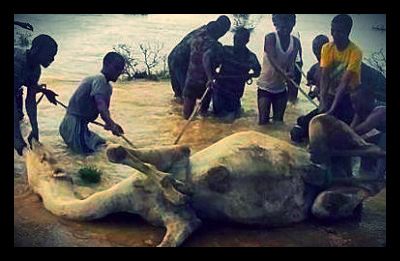
On November 10, a deadly cyclone raged through the region of Puntland, located in Somalia’s northeastern coast. Though the cyclone has reportedly killed up to 300 people, the death toll has not yet been verified. Many of these victims were children and elderly, both of which are more vulnerable to hypothermia and exposure. Moreover, the United Nations says as many as 30,000 people are in need of food aid.

Whole villages have been washed away by the storm, thus forcing local aid workers to struggle to reach the stranded victims due to the damaged infrastructure. Furthermore, large portions of roads have been damaged, driving aid workers to deliver food aid on foot. Many people are also missing, especially in coastal towns where fisherman and their boats have been lost at sea.

Pastoralists have been hit the hardest since their livestock and poorly built homes and barns have been washed away. The region does not normally experience rain so the area’s infrastructure has not been built to withstand this sort of storm. In fact, some of the worst hit villages have lost 90 percent of their livestock to icy rain and flooding.

Moreover, areas infamous for pirates such as the port of Ely are some of the worst affected. This is worrisome as the 2004 Tsunami was considered one of the major triggers of the pirate attacks off the coast of Somalia where 736 people and 32 ships were held hostage.

The World Food Programme (WFP) recently arrived in Puntland and transported 340 metric tons of food including cereal and vegetable seeds to the worst affected areas of Bossaso, Banderbayla, Dongoroyo and Eyl. In total 27, 000 people have been given a month’s worth of food rations. In addition Puntland’s government sent 32 trucks of emergency supplies throughout the needed areas.

Once emergency aid has been distributed and the region is no longer in a state of disaster the WFP will begin recovery work to rebuild the infrastructure of the area. The Food-for-Assets initiative is a recovery program run by the WFP that assists communities in rebuilding their infrastructure in a way that would better withstand a future natural disaster. Moreover, community workers are paid in food rations for assisting with the development.

Further south in Middle Shabelle, flooding has devastated the town of Jowhar and surrounding areas, pushing over 10,000 people to flee their homes. Their water supplies have, furthermore, been contaminated increasing the risk of waterborne diseases, while all standing crops and livestock in the area have been destroyed or lost. The International Committee of the Red Cross has provided 25,800 people with emergency essentials such as kitchen sets, clothes and sleeping mats.  They have also been able to stop flooding and repair riverbanks in five locations and distributed emergency food aid and water.

– Lisa Toole

Sources: AllAfrica: Food Aid, AllAfrica: Twin Natural Disasters, Yahoo, World Food Programme, Aljazeera


January 1, 2014
https://borgenproject.org/wp-content/uploads/borgen-project-logo.svg 0 0 Borgen Project https://borgenproject.org/wp-content/uploads/borgen-project-logo.svg Borgen Project2014-01-01 17:22:102024-05-25 00:37:18Food Aid in Puntland, Somalia
Charity, Poverty Reduction

3 Footballers Who Care About Global Poverty

giving
Here are three footballers who care about global poverty:

1. Lionel Messi: Argentine Footballer Lionel Messi became UNICEF Goodwill Ambassador in 2011. Messi concentrates on areas dealing mostly with children’s rights. In Nov. of 2013, Messi held a campaign with UNICEF to celebrate his son turning 1. “Last November I received the best gift ever: the birth of my son Thiago. For his first birthday, help me to help all boys and girls have equal opportunities to live, grow, and develop”. The campaign helped raise awareness for children who are in need of life’s basic needs: food, water shelter, and love. Also, in 2007, Messi started the Leo Messi Foundation to help children gain access to health and education.  This foundation assists children in Spain gain access to treatment, transportation and hospital costs.

2. Cristiano Ronaldo: Portuguese Footballer Cristiano Ronaldo donated a golden boot he had won to the Real Madrid Foundation. The Boot estimated at $2 million was auctioned off and the proceeds of the boot went to the construction of a school for children in Gaza. The Real Madrid Foundation has funded over 167 schools in 66 countries.   In 2013, Ronaldo became Global Artist ambassador for Save the Children. His primary focus is on child hunger and obesity. “When I learned that 1 in 7 kids around the world go to bed hungry each night, I jumped at the chance to get involved”(Ronaldo).
 
3. David Beckham: English Footballer David Beckham became Goodwill Ambassador for UNICEF in 2005. The British soccer star works regularly with the organization. Beckham has visited a shelter in Manila for children who were abandoned by their parents. Some children lived on the streets and were beggars before coming to the shelter. “UNICEF is doing great work for the children in Manila” (Beckham).  Beckham is also a proud founding member of the charity Malaria No More UK in London. The charities goal is to get the death rate of malaria down to zero which is in line with the Millennium Development Goals. The foundation focuses on much of Africa where nearly 90 percent of all Malaria cases occur.
– Amy Robinson

Sources: Save the Children, UNICEF 1, 2, 2, Wikipedia 1, 2, 3, Digital Journal


December 31, 2013
https://borgenproject.org/wp-content/uploads/borgen-project-logo.svg 0 0 Borgen Project https://borgenproject.org/wp-content/uploads/borgen-project-logo.svg Borgen Project2013-12-31 09:08:012024-12-13 17:49:503 Footballers Who Care About Global Poverty
Charity

5 Most Charitable Companies

Overpopulation
Sometimes, it can be curious to put certain large corporations in perspective, analyzing what they give to the world versus what they earn. The large sums of money below constitute only miniscule percentages of companies’ total earnings – what if efforts were combined and doubled among these firms? Presented here is a brief account of last year’s (2012) top five most charitable companies in the U.S., and how much each respectively donated:

1. Wells Fargo & Company – Bank giant Wells Fargo tops the list, having donated a hefty total of $315,845,766 USD for various charitable purposes. This constitutes the estimated share of 2011 pre-tax profits donated to 1.3%.

2. Walmart – The American convenience store that has it all, Walmart donated $311,607,280 USD in cash in the past year, and gave away $755,868,381 USD worth of products from the store itself. The share of 2011 pre-tax profits donated is 4.5%.

3. Chevron Corporation – A chain of gas stations across the country, Chevron Corp, too, has had a hand in philanthropy. In the past year, the company has donated $262,430,000 USD (0.6% of 2011 pre-tax profits).

4. Goldman Sachs Group – The luxurious department store gave $241,278,912 USD in cash in 2012, making it a 3.9% of their profits in 2011.

5. Exxon Mobil Corporation – Another favorite gas go-to destination for Americans, Exxon has donated $213,374,183 USD in cash and $2,433,200 USD in products – 0.3% of their total earnings the year before.

– Natalia Isaeva 

Sources: Forbes, Huffington Post

December 30, 2013
https://borgenproject.org/wp-content/uploads/borgen-project-logo.svg 0 0 Borgen Project https://borgenproject.org/wp-content/uploads/borgen-project-logo.svg Borgen Project2013-12-30 07:57:342014-02-04 13:52:535 Most Charitable Companies
Charity

The Giving Pledge

“In this season of giving, we are inspired by the millions of people across the globe who give what they can in meaningful and significant ways,” said Melinda Gates. “The Giving Pledge is rooted in this spirit and hopes to inspire people to tackle problems that are inherently difficult and diverse in an effort to address the pressing social issues they care about most.”

Started in 2010, The Giving Pledge asks the wealthiest people in the world to pledge most of their money to philanthropic and charitable organizations. Started by Bill and Melinda Gates, along with Warren Buffett, arguably the wealthiest people in the world, these billionaires are determined to make a difference.  In order to be part of the Giving Pledge, people must fulfill two requirements. You must be worth at least one billion dollars, and you must be willing to give at least half of that one billion away to charity.

Fortunately, Gates and Buffet have definitely put their money where their mouth is. Bill and Melinda Gates have pledged well over the 50% requirement, pledging a whopping 95% of their wealth to charity. Warren Buffett has certainly reigned supreme, pledging 99% of his wealth to philanthropy and charitable organizations, stating  that,“…incremental wealth, adding to the wealth they have now, has no real utility to them – but that wealth has incredible utility to other people. It can educate children, it can vaccinate children, it can do all kinds of things.”

This way of thinking is what the Gates and Buffet hope that most, if not all, wealthy citizens of the world believe. Fortunately, as of today, over 120 billionaires have agreed to take the pledge. The pledging billionaires are not only citizens of the United States of America, but also come from Australia, Germany, India, Malaysia, South Africa, Ukraine, and the United Kingdom.

Many of these pledging billionaires give well over the 50% requirement and give to organizations such as, education, health, medical research, social services, and environmental issues.  Bill Gates believes that change for the sick and weary can happen, and states that, “The Giving Pledge brings people together to exchange ideas about how to be as effective as possible and smarter in our giving.”

– Amy Robinson

Sources: Forbes, The Giving Pledge, CBS
Photo: CNN Money

December 28, 2013
https://borgenproject.org/wp-content/uploads/borgen-project-logo.svg 0 0 Borgen Project https://borgenproject.org/wp-content/uploads/borgen-project-logo.svg Borgen Project2013-12-28 04:00:412024-05-26 23:00:16The Giving Pledge
Charity, Global Poverty

5 “Nerdy” Charities

Whether someone is a fan of computers or an avid gamer, they stand for it with pride and enjoy being a part of your respective community. Perhaps they wish to do a good deed for the world, but are not sure where to start; below they will find a list of the five charities that best resonate with the interests of many people:

1. EurekaFund

Revolving around various proposals for creating clean, innovative, environmentally-friendly technology, EurekaFund is a database of current research proposals that require further funding. The site provides options of directly donating to a particular project or–in the case that they are a scientist–the possibility of submitting their work and opening a fund of its own.

2. SciFlies

A site to for browsing and inspiration, SciFlies includes modern solutions by conscientious scientists, whose individual profiles are also accessible here. Consumers will read their stories and surely discover something worthy of their time: many of the designs presented here induce a lot of promise and hope for the near future. All fundable projects are accessibly categorized by subtopics, often including photographs and links to outside sources for more in-depth information.

3. Creative Commons

With a mission of universalizing innovation, creativity, and information, and in partnership with Research & Development, Creative Commons is an excellent place for those desiring to see a world of knowledge. Think everyone should have an equal chance at higher education? Check out Creative Commons. In the information and technology age of today, there are few things we cannot accomplish already–to help further spread knowledge across the population is to revolutionize our future.

4. Child’s Play Charity

Here is one for us worldly gamers. Child’s Play is a game industry charity that has been around for a decade. Through donations from its followers, it supplies over seventy hospitals and its young residents across the globe with toys and games. All goals are set up as “achievements” in this charity, and the impact it has in its focus area has brought a lot of positive feedback to gamers.

5. Wikipedia

Good, old, trustworthy Wikipedia–everyone with access to a computer and internet knows Wikipedia, everyone uses Wikipedia, and most cannot help loving Wikipedia. The non-profit online encyclopedia with endless resources always welcomes donations; help sponsor what is shaping up to be our primary source of information if you enjoy having nearly anything you need to know in just one search away.

– Natalia Isaeva

Sources: Eureka Fund, SciFlies, Child’s Play, Creative Commons, Hub Pages
Photo: Agiel Geoscience

December 27, 2013
https://borgenproject.org/wp-content/uploads/borgen-project-logo.svg 0 0 Borgen Project https://borgenproject.org/wp-content/uploads/borgen-project-logo.svg Borgen Project2013-12-27 04:00:102024-05-26 23:00:515 “Nerdy” Charities
Advocacy, Charity

Jack Johnson: Beach Bum or Dedicated Advocate?

jack_johnson_ohana_foundation
Sun-soaked beaches, surfboards, flip-flops, palm trees: these are all images that come to mind when listening to a Jack Johnson song.  The Hawaiian-born and bred musician has cultivated a wonderful laidback musical personality that reflects our fantasies about Hawaii and “taking it easy.” However, when it comes to charity, Johnson could not be more active.

Alongside his wife Kim, Jack has founded two charitable organizations: Kokua Hawaii Foundation and the Johnson Ohana Charitable Foundation.  The former organization works to promote environmental education and responsibility in local schools and communities in Hawaii.  Building upon the grassroots success of their first charity, Kim and Jack founded the Johnson Ohana Charitable Foundation in 2008 to promote environmental, art, and music education on a much larger scale.  The organization has raised $25 million to date for their causes and for smaller charities the organization partners with.  An example of this is a $50,000 donation given to the Tsunami Relief Fund in 2011.

While on tour, Johnson donates 100% of tour profits to his Charitable Foundation.  Johnson is also a major proponent of the “1% For the Planet” brand, which aims to get corporations and brands to donate at least one percent of its sales to nonprofits.  His 2005 album “In Between Dreams” became the first music album to feature the one percent ideal, and his subsequent albums have followed suit.

Johnson is completely invested in teaching and promoting environmental sustainability.  “Jack Johnson’s 2008 tour and CD, “Sleep Through the Static,” set a new precedent in the music industry by taking an eco-friendly approach to all aspects of producing and touring,” according to the Johnson Ohana Charitable Foundation’s website.

Getting young people involved in sustainable farming and local organizing is crucial to Johnson, and a way to build even greater change.  In a recent interview with Samaritan Mag, Johnson said, “We feel like if we can connect kids to their food when they’re young, they can tackle bigger problems as they get older.”

The next time you kick back to a Jack Johnson CD, maybe a sustainable vegetable garden will dance across your imagination as much as a day at the beach.

– Taylor Diamond

Sources: Johnson Ohana Charitable Foundation, Samaritan Mag

December 23, 2013
https://borgenproject.org/wp-content/uploads/borgen-project-logo.svg 0 0 Borgen Project https://borgenproject.org/wp-content/uploads/borgen-project-logo.svg Borgen Project2013-12-23 04:00:012024-05-25 00:38:52Jack Johnson: Beach Bum or Dedicated Advocate?
Activism, Advocacy, Charity, Global Poverty

How Can Businesses Alleviate Poverty?

toms_one_for_one
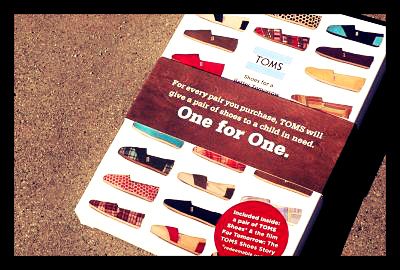
You may have never heard of Corporate Social Responsibility or Corporate Shared Value, but you have more than likely come across the products TOMS shoes, Newman’s Own or a slew of other companies who contribute goods to the impoverished with every purchase you make.

Many of these companies have taken advantage of new business models that consider a “triple bottom line,” instead of the traditional single bottom line-profit. A triple bottom line does not abandon the importance of profit margins, but incorporates the importance of social and environmental concerns in their business practices. For too long, international and even local corporations have continued the practice of making money at the expense of the most vulnerable populations, and often simultaneously consume or contaminate the basic resources these populations need to survive.

Wouldn’t it be remarkable if every purchase we made helped alleviate poverty? The following is a brief guide to help you not only understand how businesses can contribute to the greater social welfare of the impoverished, but to help you choose which businesses you invest in. After all, our money is one of our most powerful resources for implementing change.

1. Contribute to Sustainable Infrastructure

Is the business promising to donate 5% of all proceeds to a charitable organization that helps provide education to children in need, or are they claiming to donate one jacket for each one you purchase? There are many business models that fall under the category of “socially responsible,” but very few businesses implement sustainable ones.

Sustainable strategies have the added advantage of not only providing one-time support, but providing the tools necessary for people to empower themselves and break the cycle of poverty altogether. Businesses who invest in programs or initiatives designed to build sustainable infrastructures, which the poor can utilize to better their financial and social circumstances, inevitably end up having a much greater impact.

Such practices as “buy one, give one” models do not necessarily accomplish this. In fact, many companies who utilize “buy one, give one” models need poor people without their product in order to sell their product.

2. Pay Attention to Supply Chains

Earning a living wage in working conditions that respect human rights is essential to alleviating rates of global poverty. However, in today’s globalized economy, it’s hard to know where exactly the product you buy is being made and in what kind of conditions it was produced.

Though the company may be based out of the U.S., the raw supplies may be imported and the product manufactured in South East Asia via numerous factories with no association to one another. Despite the barriers, there are mechanisms available for consumers and businesses to identify supply chains behind the products they purchase to ensure the fair and respectable treatment of the workers who produce it.

Those businesses who have taken the extra effort to guarantee ethical supply chains usually will indicate so on their website. There are also organizations such as the United Students Against Sweatshops (USAS) who can help you locate such businesses, as well as online shopping sites such as fashiongchange.org that claim to only allow businesses to operate through their website if they meet certain socially responsible prerequisites.

3. Work with Local NGOs

Businesses who work with local NGOs (local, as in where their product is manufactured) have a higher probability of not only adhering to sustainable practices, but also actually addressing the most pressing problems of that region. If a business donates high-strength eye glasses to a population that suffers from an unusually high percentage of cataracts, the business would most likely categorize this effort as socially responsible.

However, what they might not know is that the high presence of cataracts is largely due to malnutrition. Cooperation with local nonprofits increases the amount of knowledge businesses have about the population they are trying to help, and increases the likelihood that their efforts do not bypass the actual causes of the problem they attempt to alleviate.

During the holiday season there is often a sharp increase in charitable donations. However, using the above guidelines, you can also ensure the gifts you purchase make an equal, if not greater impact on those who need it the most.

– Jamison Crowell

Sources: New York Times, Huffington Post
Photo: Global Envision

December 21, 2013
https://borgenproject.org/wp-content/uploads/borgen-project-logo.svg 0 0 Borgen Project https://borgenproject.org/wp-content/uploads/borgen-project-logo.svg Borgen Project2013-12-21 04:00:362024-12-13 17:49:46How Can Businesses Alleviate Poverty?
Charity

Korea Boosts Contribution to Global Fund

korea_airline_tax_global_fund
The Korean Ministry of Health will contribute $6 million to the Global Fund for 2014-2016. An added $10 million will be paid by the Korean Ministry of Foreign Affairs in annual installments of $2 million from 2013-2017 from a levy on all passengers leaving Korea on international flights. The Global Fund to Fight AIDS, Tuberculosis and Malaria welcome this announcement from Korea, which is now doubling its contribution over the next three years.

Introduced in 2007, this 1,000 won (US $0.95) levy, known as the Global Poverty Eradication Tax, was primarily used to contribute financial resources in order to fight poverty and disease in impoverished nations. For the 2011-2013 period, the Republic of Korea pledged $6 million. It is now nearly tripling that past commitment.

“The Republic of Korea is a trend-setter in the use of innovative funding methods to help fight the three diseases,” said Mark Dybul, Executive Director of the Global Fund. “In doubling its contribution, Korea is also leading the way for other G20 countries to follow.”

This contribution is a huge step ahead for the Republic of Korea, perhaps leading it on a path to achieving great power status. So far, it has contributed $19 million since it began providing financial support to the Global Fund in 2004. Perhaps this increase comes from the help that the Republic of Korea itself has received from the Global Fund. Since 2010, Global Fund grants in the Republic of Korea have funded the diagnosis and treatment of 120,000 cases of TB and the distribution of 710,000 mosquito nets.

“I hope that the decision of the Government of the Republic of Korea will help strengthen cooperation between my country and the Global Fund in financing for development in new and innovative ways in our fight against AIDS, tuberculosis and malaria.” said SHIN Dong-ik, Deputy Minister for Multilateral and Global Affairs at the Ministry of Foreign Affairs of the Republic of Korea.

– Sonia Aviv

Sources:  Vaccine News, The Global Fund, Business Wire
Photo: CTV News

December 20, 2013
https://borgenproject.org/wp-content/uploads/borgen-project-logo.svg 0 0 Borgen Project https://borgenproject.org/wp-content/uploads/borgen-project-logo.svg Borgen Project2013-12-20 04:00:572024-06-11 02:12:04Korea Boosts Contribution to Global Fund
Activism, Advocacy, Charity, Foreign Aid, Global Poverty

One Direction’s Busy November

one_direction_harry_styles
As it happens, One Direction is not just another single-minded boy band dolling out love songs and capturing the hearts of teenage girls around the world. In fact, unlike most boy bands one may think of, One Direction is putting their worldwide status to good use by regularly participating in fundraising for a slew of causes. Indeed, their multiple efforts just last month is a cause for praise.

In early November, Liam Payne and Harry Styles joined the Y Combinator startup company, Prizeo, in a fundraising campaign that raised $784,345 to benefit cancer research.  Prizeo “relies on a raffle model where contributors get a single entry for every dollar donated, the grand prize being an in-person experience with the sponsoring celebrity.”  The One Direction grand prize was an evening out in London with Payne and Styles, while smaller perks included custom t-shirts, social media profile pictures, bracelets, photos and a One Direction sweatshirt signed by the group members.

The band also joined a Celebrity Telethon in support of Typhoon Haiyan survivors, where they officially launched the telethon via their Twitter account.  The event took place in London at the iconic BT Tower, where callers were able to talk to a famous voice and have their donations taken by one of numerous celebrity participants.  One Direction’s Liam Payne expressed his sympathy for the survivors, stating, “The pictures I have seen of little children in-between the ruins made my heart break.  All of us in the band are shocked by how many people need help, so we’re asking the public to continue to be as generous as they possibly can.”  The UK Disasters Emergency Committee raised £90,000 directly from the telethon, which helped raise their total Philippines Typhoon Appeal donations to over £44 million.

One Direction further hosted a portion of the BBC’s Children in Need charity event, where they performed their hit song “Best Song Ever” and also designed and personalized a special Pudsey Bear, which was auctioned off to raise money for the charity.  This year’s event raised over £31,124,896.

Just last week, group member Harry Styles garnered support for UNICEF by auctioning his unwashed shirt on the designer discount website hardlyeverwornit.com.  A Texas businessman made the highest bid, offering £3,002 for the shirt.

– Rifk Ebeid

Sources: Mirror, Forbes, Look to the Stars, Disasters Emergency Committee: Celebrity Telethon, Press Party, Disasters Emergency Committee: Stars Join Telethon, Twitter

December 19, 2013
https://borgenproject.org/wp-content/uploads/borgen-project-logo.svg 0 0 Borgen Project https://borgenproject.org/wp-content/uploads/borgen-project-logo.svg Borgen Project2013-12-19 04:00:532024-05-25 00:35:59One Direction’s Busy November
Advocacy, Charity, Global Poverty

Top 10 U.S. Charitable Foundations

Charitable_Foundations
Charitable foundations give numerous amounts of money every year to help people in need. Thousands of them exist in the world. Here are the top ten that give the most.

1. Bill and Melinda Gates Foundation

We have all heard of the co-founder of Microsoft, Bill Gates. His foundation, The Bill and Melinda Gates Foundation, gives over $3 billion for global development and health programs, as well as U.S. programs.

2. Lilly Cares Foundation

The Lilly Cares Foundation gives over $600 million to help needy U.S. patients receive medical prescriptions.

3. GlaxoSmithKline Patient Access Programs Foundation

Over $600 million through the Glaxo Smith and Kline Foundation is used for health and education programs.

4. Abbot Patient Assistance

The Abbot Patient Assistance Foundation provides nearly $600 million toward helping uninsured individual’s access prescription medicines.

5. Pfizer Patient Assistance Foundation, INC.

The Pfizer Foundation gives over $575 million to assist low income individuals and families with prescription costs.

6. Genentech Access To Care Foundation

Genentech gives over $575 million to helping patients access to low cost or free Genentech medicines and care.

7. Sanofi Foundation for North America

The Sanofi Foundation gives nearly $500 million to reduce healthcare inequalities and provide free prescription drugs to families.

8. Johnson and Johnson Patient Assistance Foundation, Inc.

The Johnson Foundation gives nearly $500 million to allow low income families gain access to medical assistance.

9. Walton Family Foundation, Inc.

The Walton Foundation gives over $480 million for education reform, water conservation, and quality of life initiatives.

10. Ford Foundation

This foundation was created by Ford company founder Henry Ford and Edsel Ford. It gives nearly $480 million to help fight poverty.

Everyone can help in the fight against global poverty. Donating to your favorite charity is one way; contacting your local congressmen will also help. Let them know that you want more global poverty bills introduced and aid to be set aside for impoverished nations.

– Amy Robinson

Sources: Foundation Center, Fund for NGOs
Photo: Deviant Art

December 15, 2013
https://borgenproject.org/wp-content/uploads/borgen-project-logo.svg 0 0 Borgen Project https://borgenproject.org/wp-content/uploads/borgen-project-logo.svg Borgen Project2013-12-15 04:00:422017-03-20 13:10:49Top 10 U.S. Charitable Foundations
Page 40 of 42«‹3839404142›»

Get Smarter

  • Global Poverty 101
  • Global Poverty… The Good News
  • Global Poverty & U.S. Jobs
  • Global Poverty and National Security
  • Innovative Solutions to Poverty
  • Global Poverty & Aid FAQ’s
Search Search

Take Action

  • Call Congress
  • Email Congress
  • Donate
  • 30 Ways to Help
  • Volunteer Ops
  • Internships
  • Courses & Certificates
  • The Podcast
Borgen Project

“The Borgen Project is an incredible nonprofit organization that is addressing poverty and hunger and working towards ending them.”

-The Huffington Post

Inside The Borgen Project

  • Contact
  • About
  • Financials
  • President
  • Board of Directors
  • Board of Advisors

International Links

  • UK Email Parliament
  • UK Donate
  • Canada Email Parliament

Get Smarter

  • Global Poverty 101
  • Global Poverty… The Good News
  • Global Poverty & U.S. Jobs
  • Global Poverty and National Security
  • Innovative Solutions to Poverty
  • Global Poverty & Aid FAQ’s

Ways to Help

  • Call Congress
  • Email Congress
  • Donate
  • 30 Ways to Help
  • Volunteer Ops
  • Internships
  • Courses & Certificates
  • The Podcast
Scroll to top Scroll to top Scroll to top