• Link to X
  • Link to Facebook
  • Link to Instagram
  • Link to TikTok
  • Link to Youtube
  • About
    • About Us
      • President
      • Board of Directors
      • Board of Advisors
      • Financials
      • Our Methodology
      • Success Tracker
      • Contact
  • Act Now
    • 30 Ways to Help
      • Email Congress
      • Call Congress
      • Volunteer
      • Courses & Certificates
      • Be a Donor
    • Internships
      • In-Office Internships
      • Remote Internships
    • Legislation
      • Politics 101
  • The Blog
  • The Podcast
  • Magazine
  • Donate
  • Click to open the search input field Click to open the search input field Search
  • Menu Menu

Archive for category: Charity

Activism, Advocacy, Charity, Global Poverty, Human Rights, Nonprofit Organizations and NGOs

What is an NPO?

NPO
A nonprofit organization is an organization that, pursuant to Section 501(c) of the United States Internal Revenue Code, does not retain its surplus revenue as profit. Instead, any surplus money is used to sustain the organization in its execution of a specific goal or set of goals, as designated by its bylaws and charter. In contrast to for-profit organizations, NPOs are largely project-driven ventures as opposed to product-driven ventures.

Before applying to be a 501(c) organization, a board of trustees must be assembled. The board will be committed to governing the execution of the organization’s goals. Once assembled, the board is responsible for drafting a clear and precise set of bylaws outlining the organization’s goals and the ways in which those goals will be pursued.

The bylaws must be recorded and, along with some necessary accounting paperwork (which varies according to different concessions granted by Section 501(c)), submitted to the IRS and the department of the secretary of state where the organization plans to operate in.

Once this paperwork is filed with the state, it may take up to a year for an organization to get approved as a 501(c). Most NPOs use this interim to prepare for launch immediately upon receipt of approval. Much of this time is spent identifying and communicating with potential donors, writing grants and taking other measures to secure funds for when the organization is approved.

Following state approval, a 501(c) organization must adhere to the bylaws it established in order to maintain its tax-exempt status. Its operation is limited by the bylaws it imposed on itself, and its tax-exempt status is contingent upon adherence to those bylaws. If an organization is not working effectively to accomplish its outlined mission, its tax-exemption will be revoked.

Under 501(c) of the Internal Revenue Code, an NPO may receive one of 29 different designations according to its mission. These designations determine what kind of tax exemptions the NPO will receive, as well as the kind of economic activity it is permitted to engage in. These designations are determined by an organization’s goals, the parties it engages with economically, and the recipients of any aid the organization is providing.

Most NPOs involved in the fight against poverty are designated as 501(c)(3)s. By law, a 501(c)(3) falls under one of the following categories: religious, scientific, charitable, educational, literary, public safety, the fostering of international or national amateur sports or the prevention of cruelty to children and animals. Organizations that actively fight against poverty can fall under any number of these categories. As well as tax-exemption, 501(c)(3)s receive reduced postage rates, and are permitted to generate receipts to provide donors with tax write-offs. They are, however, prohibited from participating in any political campaigns.

For an  NPO engaged in the campaign against poverty, transparency is of utmost importance. Strict adherence to bylaws and charter are necessary. If the secretary of state perceives that an organization is straying from its mission, its tax-exempt status will be lost. This renders the organization far less effective in the abolition of poverty. Not only does this cost an organization financially, it costs the world’s poor.

– Matt Berg

Sources: 501c3, Cornell Law, IRS, IRS
Photo: GuideStar,

October 21, 2013
https://borgenproject.org/wp-content/uploads/borgen-project-logo.svg 0 0 Borgen Project https://borgenproject.org/wp-content/uploads/borgen-project-logo.svg Borgen Project2013-10-21 10:45:302024-05-25 00:29:44What is an NPO?
Activism, Charity, Global Poverty

Hugh Jackman: the Humanitarian

hugh_jackman_global_poverty_project
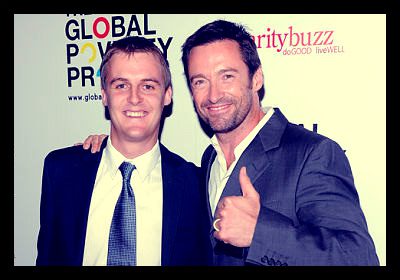
Hugh Jackman is perhaps best known for his role as Wolverine in Marvel’s X-Men series. Outside of acting, though, the Australian actor is also well-known for his efforts as a great humanitarian. His involvement with the Global Poverty Project and various other charity programs, ranging from AIDS prevention to Children’s Hospitals, show that is he is someone who uses his status to bring awareness to the various problems in our society and help those in need.

Global Poverty Project is an organization that combats extreme poverty through various campaigns of awareness and government action.  One of their campaigns is 1.4 Billion Reasons—one for each person living in extreme poverty all over the world (extreme poverty is defined as living on less than $1.25/day). The campaign is one of awareness: the presentation introduces the viewers to the persistence of poverty, and the many possible solutions to it.

Hugh Jackman is associated with another campaign of the Global Poverty Project: Live Below the Line. For five days, the participants of this campaign live below the poverty line, spending only $1.25 a day on food. This takes a great deal of commitment and helps to develop sympathy for those for whom this is an everyday reality.

In addition to supporting such campaigns, Hugh Jackman also recently did some fundraising for charity. He charged all the guests to attend his birthday party, and after performing a musical number, dancing, and telling stories the whole night, sent all the proceeds to the Motion Picture and Television Fund, which gives services such as healthcare to those who work in and have retired from the entertainment industry.

Clearly, Hugh Jackman understands the importance of helping those both near and far—those with whom he works, and those who he will probably never meet in his life. He brings awareness to serious issues and is a great role model to people everywhere. He feels the need to help those all over the world, and that shows he’s a true humanitarian.

– Aalekhya Malladi

Sources: Newsday, Look to the Stars
Photo: Zimbio

October 20, 2013
https://borgenproject.org/wp-content/uploads/borgen-project-logo.svg 0 0 Borgen Project https://borgenproject.org/wp-content/uploads/borgen-project-logo.svg Borgen Project2013-10-20 17:18:182024-06-05 01:53:40Hugh Jackman: the Humanitarian
Charity, Education, Global Poverty, Nonprofit Organizations and NGOs

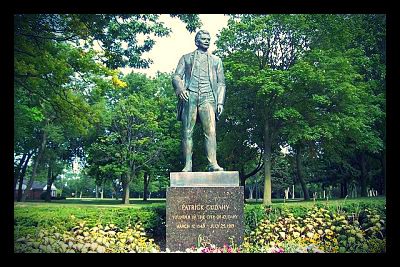
Patrick and Anna M. Cudahy Fund: What You Should Know

Patrick_Anna_Cudahy_Fund
The Patrick and Anna M. Cudahy Fund is a foundation that grants money to nonprofit organizations involved in social and youth services, education, art and culture.

The premise of the fund dates back to the early 1920s, when Articles of Association were drawn to break ground on the Alice Dickson Cudahy Clinic. This clinic was created to provide free services to dependent family members of employees at the Cudahy Brothers Company. Some of these free services included medical attention, and education on matters such as child welfare, domestic science and social hygiene. The clinic was able to open on August 1, 1923, thanks to a $19,270.77 donation made by Michael F. Cudahy.

On August 22, 1935, the name of the organization was changed to the Michael F. Cudahy Fund. Upon this change, the association broadened its spectrum of philanthropy efforts to include the severely poverty-stricken and ill. On September 29, 1943, the name of the organization was once again changed, this time to the Patrick and Anna M. Cudahy Fund, in honor of Michael’s parents.

Today, the Fund primarily assists youth organizations located in Wisconsin and Chicago, though some money is granted to charities involving public interest and environmental conflicts. The Fund also accepts international requests affiliated with U.S. nonprofits.

– Meagan Hurley

Sources: Business Journal, Cudahy Fund

October 17, 2013
https://borgenproject.org/wp-content/uploads/borgen-project-logo.svg 0 0 Borgen Project https://borgenproject.org/wp-content/uploads/borgen-project-logo.svg Borgen Project2013-10-17 13:53:402017-03-20 13:09:27Patrick and Anna M. Cudahy Fund: What You Should Know
Activism, Advocacy, Charity, Global Poverty

5 Benefits to Giving Back to the Community

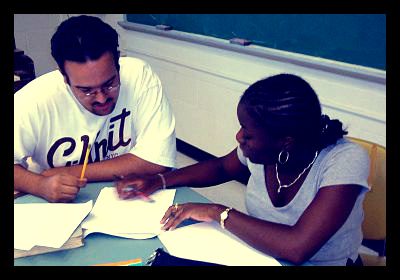
tutoring
There are a variety of ways in which giving back to the community, both local and global, are beneficial:

1. Giving back can foster growth in a company or for an entrepreneur by providing an opportunity to listen and learn from the community (what it wants, and what it needs, and what it means to give). The act of giving back doesn’t have to proceed without thought of what the company needs or even what the company desires to give. Developing a standard policy about the causes you’re willing to donate to and support will allow the charities and organizations that approach you to be in support of your commitment.

The conversation can grow beyond guilt and into one of support. When it comes to listening to the community your business or organization might serve (be it a specific location or a certain demographic) you become more informed by the goals and needs of the community you’re attempting to serve and can tailor future projects towards these goals and needs.

2. An obvious benefit of giving back is that it helps the community, whether the help is on a global scale (foreign aid donations, clothing/food/etc. donations in the wake of natural disasters, or volunteer work) or a local one (donating food to a food bank, volunteering to help students after school, or aiding in cleaning up local waterways), the community improves.

Especially when aid involves helping others make progress beyond the limits of economic, educational, or social blockades. While the changes may be more difficult to grasp on a global level, at the local level the progress made is also visible. Which leads to…

3. Giving back, especially on an individual level (such as tutoring, mentoring a child or volunteering in a soup kitchen), is good for your health. Depending on the work one is doing: physical health can be improved by increased activity, regulated sleep schedules, and better sleep in general, stress relief, and can help reduce the risk of certain health problems, like heart attacks and strokes.

There are studies that show volunteer work can make people happier by boosting not only physical health but also by promoting social interactions and of course the good vibes that come from contributing to the community. This potentially happier and healthier mindset promotes a desire to give back more.

4. Maybe you’re looking for a career change or a career boost, a volunteer opportunity would be a great and beneficial way to begin. Whether you’re writing grants in your spare time or building houses, volunteering is work.

It takes and builds skills and understanding and provides the professional or someone just starting out with a network of people just as invested as they are in the progress of whatever project is in the works. In similar fashion, volunteer work provides a foothold into and gives one a stake in the community

5. Having a stake in the community means coming in contact with community members who may often be overlooked, ignored, or outright scorned depending on their situations. This works both on a local and global scale.

It’s easier to see why more needs to be done on a legislative level if one can see that even with aid programs there are still limits to what someone working full-time or someone on disability or someone without running water, electricity, the list goes on, is capable of doing when the law ignores, fails to protect, or actively works against them.

Meeting other members of your community may also be as simple as visiting a retirement community with your dog or helping out in the community garden. Whatever you end up doing you’re getting a better understanding of the community of which you are a part and its needs.

– The Borgen Project

Sources: Huffington Post, Southern Alpha 
Photo: NCHS

October 17, 2013
https://borgenproject.org/wp-content/uploads/borgen-project-logo.svg 0 0 Borgen Project https://borgenproject.org/wp-content/uploads/borgen-project-logo.svg Borgen Project2013-10-17 13:29:202020-07-02 20:57:195 Benefits to Giving Back to the Community
Activism, Advocacy, Charity, Global Poverty, Nonprofit Organizations and NGOs

Can One Person Change the World?

BuildOn_EducationVenture into a forest, and the trees are a hard thing to miss. Trees come in all shapes and sizes, but even the giant sequoia tree had a small beginning. All trees are grown from minuscule seeds. How does something so expansive and enormous come from such an insignificant beginning? Just like any other great wonder, all things start from small beginnings. Trees had to grow, buildings had to be constructed, and people are grown from swaddling babes. Everybody and everything had a small beginning; it’s the decisions made and actions done that determine what grows from it.

Jim Ziolkowski is the founder, president, and CEO of buildOn, a non-profit organization established to build schools in developing countries while also running after-school programs for America’s toughest inner-city environments. The seeds for buildOn were planted on an after-college excursion into the Himalayan Mountains. Ziolkowski came across a village in Nepal that was celebrating the opening of a new school. During his trip, Ziolkowski gained first-hand experience of poverty-stricken areas and the conditions that lay therein. But in this village, Ziolkowski saw something that forever changed him. He saw a community that was hanging its hopes on the power of education.

Ziolkowski returned to the United States, and began his job in corporate finance at GE. However, the memories of his cross-country hiking could not be forgotten. 15 months into his job, Ziolkowski walked out forever, pursuing a life that would enlighten the lives of others throughout the world by founding buildOn.

In 1992, Ziolkowski traveled to Misolami, a village located in Malawi. Ziolkowski planned to build his organization’s first school here, but he soon succumbed to malaria. Ziolkowski barely escaped with his life, and had another life-changing moment in the process; barely anybody in the area diagnosed with malaria escapes with their life. Ziolkowski only survived because he was not entrenched in extreme poverty, unlike most of the people in the area. Ziolkowski saw education as a way to escape extreme poverty, and his fire to change the world’s education for the less fortunate was strengthened.

Ziolkowski returned to the U.S knowing he also had to impact the lives of the urban youth in a positive way. Ziolkowski was unable to connect with these kids on a deeper level because he had been raised in a stable small town in Michigan. To solve this problem, Ziolkowski moved into a rough neighborhood in Harlem, so he could experience the difference in person. He lived there for three years, and he learned the urban youth did not want to participate in the dangerous style of life, they wanted to change it. Ziolkowski wanted to assist this mindset to the best of his ability.

Twenty years later, the results from Ziolkowski’s experiences have helped launch buildOn into a successful program. On Ziolkowski’s return to Misolami in 2012, the village had constructed four other schools thanks to support from buildOn. Instead of 150 kids attending school, now well over 1,000 were enrolled. Ziolkowski’s success can be seen on the forefront of this village, and in neighborhoods throughout urban America. The tree (buildOn) started out as a small idea, but Ziolkowski’s drive and determination turned it from a seed into a giant sequoia.

Ziolkowski’s success has been printed in his book, Walk in Their Shoes, available on Amazon.

– Zachary Wright

Sources: Amazon, buildON, NC State University
Photo: WorldOz

October 17, 2013
https://borgenproject.org/wp-content/uploads/borgen-project-logo.svg 0 0 Borgen Project https://borgenproject.org/wp-content/uploads/borgen-project-logo.svg Borgen Project2013-10-17 04:00:292024-05-25 00:24:54Can One Person Change the World?
Charity, Global Poverty

5 Great Male Writers Recognize the Importance of Giving Back

Chinua_Achebe_Giving_Back
These 5 great male writers express in their writing the importance of giving back:


I slept and dreamt that life was joy. I awoke and saw that life was service. I acted and behold, service was joy.

– Rabindranath Tagore, a Nobel Prize winning Indian writer, whose novels and poetry are still admired by the whole world today. Famous works include Gitanjali, The Home and the World, and some select poetry.


No one is useless in this world who lightens the burdens of another.

– Charles Dickens, a 19th century English writer who was well known and renowned for his giving voice to the poor through his writing. Famous works include A Tale of Two Cities, Great Expectations, and A Christmas Carol.


To know even one life has breathed easier because you have lived. This is to have succeeded.

– Ralph Waldo Emerson, a 19th century American transcendentalist writer, who wrote mostly philosophical essays. Famous works include “Self Reliance,” “Nature,” and other select essays.


Charity itself fulfills the law/ And who can sever love from charity?

– William Shakespeare, the great bard, perhaps the most well-known playwright in history, toyed with themes of politics, society, and family. Famous works include Romeo and Juliet, Hamlet, Much Ado about Nothing, and a collection of sonnets.


While we do our good works let us not forget that the real solution lies in a world in which charity will have become unnecessary.

– Chinua Achebe, a 21st century Nigerian author who writes from a post-colonial perspective, tying his stories back to the colonial era. Famous works include Things Fall Apart, Arrow of God, Anthills of the Savannah, and a particularly controversial criticism of Joseph Conrad’s Heart of Darkness.

– Aalekhya Malladi

5 Great Female Writers on Giving Back

Sources: Goodreads, Moveme Quotes
Photo: Paste Magazine

October 16, 2013
https://borgenproject.org/wp-content/uploads/borgen-project-logo.svg 0 0 Borgen Project https://borgenproject.org/wp-content/uploads/borgen-project-logo.svg Borgen Project2013-10-16 03:11:562013-10-16 09:51:075 Great Male Writers Recognize the Importance of Giving Back
Activism, Advocacy, Charity, Global Poverty

Birmingham Partnership Walk Raises Money to Fight Global Poverty

birmingham_partnership_walk
On September 22, 2013, over 2,200 people participated in the Birmingham Partnership Walk in order to raise awareness and money for those around the world living in poverty as well as the organizations that are pledged to help them.

The partnership walk was held at the city’s Railroad Park, and hosted a 5K run, a 1K youth run, a 100-yard dash, and a 3K family walk. Attendees could partake in these events while various groups, such as local marching bands and choirs, entertained the participants. Last year, 1,950 people participated in the partnership walk, raising $300,000. This year’s walk matched that goal.

The annual paternship walk is an event conducted by Aga Khan Foundation USA (AKF USA), which conducts similar Partnership Walks in 10 other cities around the United States. Aga Khan Foundation USA is a nonprofit humanitarian organization that focuses on agriculture, education, healthcare and other forms of development in Africa and Central Asia. All of the money raised at the walks organized by AKF USA goes to fund projects that directly battle global poverty.

Volunteer organizer Salima Mulji remarked that people should consider themselves part of a single global community, and, as such, it is the responsibility of everyone to help those in need. As a native resident of Southeast Asia, Mulji knows the advantages of growing up in the United States. Volunteering with AKF during the partnership walk is her way of giving back.

– Rahul Shah

Sources: ALL Alabama, Partnerships in Action, Alabama 13
Photo: Aga Khan Foundation USA

October 12, 2013
https://borgenproject.org/wp-content/uploads/borgen-project-logo.svg 0 0 Borgen Project https://borgenproject.org/wp-content/uploads/borgen-project-logo.svg Borgen Project2013-10-12 04:00:352020-06-25 08:15:02Birmingham Partnership Walk Raises Money to Fight Global Poverty
Activism, Advocacy, Charity

5 Cool Things Leonardo DiCaprio Has Done for Humanity

Leonardo DiCaprio Humanitarian SOS Childrens Villages
Leonardo DiCaprio is a 38-year-old American actor and film producer. He has received three nominations for Academy Awards, as well as nine Golden Globe Awards. DiCaprio has not only received praise regarding his acting career, but also for his efforts in philanthropy.

First and foremost, Leonardo DiCaprio has a strong passion for environmental activism. His longing to protect the environment is one that heavily influences his everyday life. He owns electric and hybrid cars and has even installed solar panels on his home. His personal life is filled with environmentally friendly alternatives to products that would normally cause harm to the earth. His passion also extends into his career – many humanitarian causes can be seen in the movies he’s been in like Blood Diamond and The 11th Hour, for example.

With that being said, here are five things DiCaprio has done for humanity:

  • The Leonardo DiCaprio Foundation – DiCaprio has founded the Leonardo DiCaprio Foundation. This foundation works to “protect Earth’s last wild places” while also “fostering a harmonious relationship between humanity and the natural world.” Established in 1998, LDF has worked on several significant environmental and humanitarian issues through grant making, campaigning, and media projects.
  • Wildlife preservation – World Wildlife Fund led a tiger habitat conservation effort in Nepal along with DiCaprio’s foundation that turned out to be quite successful. Prior to the event, DiCaprio held an auction which raised $39 million for this effort. This money fueled the effort even more so and allowed WWF to increase the number of tigers in Nepal by 63 percent. Other wildlife conservation efforts focus on endangered shark species and the preservation of rainforest habitats.
  • Ocean Health – Partnering with international funders, the collaborative Oceans 5 marked another great effort in humanitarianism and environmental improvement. Oceans 5 tackles the two highest ecological priorities: stopping overfishing and establishing marine reserves. Thanks to a generous grant, the organization was able to more easily combat these issues.
  • Providing Access to Clean Water – The Leonardo DiCaprio Foundation’s grant to Concern Worldwide provided 430,000 people in Tanzania, Mozambique, Sierra Leone, and Darfur with access to clean water.
  • SOS Children’s Villages – Aside from working with the foundation, DiCaprio also takes interest in humanitarian work in film. In fact, while filming the movie Blood Diamond, DiCaprio worked with 24 orphaned children from SOS Children’s Villages. This independent organization provides family-based care for children with deceased or missing parents. They also support those deemed “vulnerable” through family strengthening programs, which focus on ensuring access to education, healthcare, and psycho-social support. In addition, SOS Children’s Villages offers emergency relief programs.

– Samantha Davis

Sources: Leonardo DiCaprio, Look To The Stars, CCF
Photo: SOS Children’s Villages

October 7, 2013
https://borgenproject.org/wp-content/uploads/borgen-project-logo.svg 0 0 Borgen Project https://borgenproject.org/wp-content/uploads/borgen-project-logo.svg Borgen Project2013-10-07 18:09:532024-06-05 01:53:395 Cool Things Leonardo DiCaprio Has Done for Humanity
Charity, Education, Global Poverty

Justin Bieber for Global Education

justin_bieber_pencils_of_promise
Since its founding in 2008, Pencils of Promise has been working towards improving access to education around the globe. The non-profit has set out to identify places most in need of educational facilities and then proceeding to build schools in those locations.

However, the organization’s role does not end there. To ensure the sustainability of their projects, Pencils of Promise also offers scholarships, education programs, and hires and trains individuals from local communities to staff their schools. With a focus on long-term success, schools and curricula are also routinely monitored and assessed for efficacy.

Canadian pop sensation, Justin Bieber, has been an avid supporter of Pencils of Promise for many years. In 2011, the smooth-voiced crooner competed in a Magnum Ice Cream contest against Nelly Furtado, Usher, and Jordin Sparks for $20,000 toward their charities of choice.

Bieber ended up easily defeating his opponents and winning the competition, and split the award money evenly between Pencils of Promise and Make-A-Wish Foundation.

The following year, the teen star went on to join Pencils of Promise’s founder, Adam Braun, in filming a promotional video encouraging adolescents to create personal fundraising pages on behalf of the organization. The incentive (aside from the gift of giving, of course)? Bieber would pay a visit to the three schools that demonstrated the most impact through fundraising for the Schools4All campaign.

With each $25 contribution, contestants would be compensated with one lottery entry. The more entries and donations one collected, the better the chance that he or she would get to meet Bieber.

According to the singer, “”I wanted to give every one of my fans a chance to help others and bring me to their school for just $25. The Schools4All campaign is a way for us young people to make a change, and I’ll get to thank an entire school in person.”

To further magnify the project’s significance, Bieber also partnered with Barnes & Noble and Nook to match the amount of money generated by fundraising participants and to donate 1,000 Nook readers to students enrolled in Pencils of Promise schools.

Thanks, in no small part to Bieber, Pencils of Promise’s reach continues to grow as it gains prominence. To date, the organization has built 146 schools in countries such as Ghana, Laos, Nicaragua, and Guatemala.

From his deep involvement with Pencils of Promise and his commitment to furthering its goals, Bieber sets a prime example of how to use one’s star power to alleviate the ill effects of global poverty.

– Melrose Huang

Sources: Huffington Post, PR Newswire
Photo: PopCrush

October 4, 2013
https://borgenproject.org/wp-content/uploads/borgen-project-logo.svg 0 0 Borgen Project https://borgenproject.org/wp-content/uploads/borgen-project-logo.svg Borgen Project2013-10-04 20:26:002017-02-21 12:50:34Justin Bieber for Global Education
Activism, Charity, Global Poverty, Nonprofit Organizations and NGOs

Sandy River Foundation Aids Nonprofit Efforts

Sandy_River_Foundation
The Sandy River Foundation, founded in 2008, works to bring physical and spiritual wholesomeness to all nations. It achieves this by providing nonprofit organizations with funding in order to focus on their initiatives rather than on fundraising to keep the organization going.

Nonprofits that wish to receive this funding must meet the guidelines of the Sandy River Foundation and complete an application process, but only after being invited by the foundation itself. Some of the organizations that have accepted funding include Heifer International, the Long Island Community Foundation, Oxfam America, and Acción International.

The mission of Heifer International is to end both hunger and poverty by providing families with a cow. This provides a source of food to families from the milk the animal provides. The families can also sell the excess products to gain a reliable source of income, and after saving this income, can start a small business or even join an agricultural cooperative with other families nearby.

By providing small businesses with microfinancing, Acción International hopes to strengthen businesses with both financial and managerial support. Once those microfinance institutions have grown and become financially independent of donors, the economy of the surrounding area will increase and the jobs of those working at the company will be secured. Acción International has provided its support to countries across the globe including India, China, Nigeria, Tanzania, and Colombia.

The Sandy River Foundation donates

to nonprofits in order to create a positive impact across the globe.

– Alessandra Wike

Sources: Accion, Heifer International, Sandy River Foundation

October 2, 2013
https://borgenproject.org/wp-content/uploads/borgen-project-logo.svg 0 0 Borgen Project https://borgenproject.org/wp-content/uploads/borgen-project-logo.svg Borgen Project2013-10-02 21:24:582016-02-06 08:44:40Sandy River Foundation Aids Nonprofit Efforts
Page 41 of 42«‹39404142›

Get Smarter

  • Global Poverty 101
  • Global Poverty… The Good News
  • Global Poverty & U.S. Jobs
  • Global Poverty and National Security
  • Innovative Solutions to Poverty
  • Global Poverty & Aid FAQ’s
Search Search

Take Action

  • Call Congress
  • Email Congress
  • Donate
  • 30 Ways to Help
  • Volunteer Ops
  • Internships
  • Courses & Certificates
  • The Podcast
Borgen Project

“The Borgen Project is an incredible nonprofit organization that is addressing poverty and hunger and working towards ending them.”

-The Huffington Post

Inside The Borgen Project

  • Contact
  • About
  • Financials
  • President
  • Board of Directors
  • Board of Advisors

International Links

  • UK Email Parliament
  • UK Donate
  • Canada Email Parliament

Get Smarter

  • Global Poverty 101
  • Global Poverty… The Good News
  • Global Poverty & U.S. Jobs
  • Global Poverty and National Security
  • Innovative Solutions to Poverty
  • Global Poverty & Aid FAQ’s

Ways to Help

  • Call Congress
  • Email Congress
  • Donate
  • 30 Ways to Help
  • Volunteer Ops
  • Internships
  • Courses & Certificates
  • The Podcast
Scroll to top Scroll to top Scroll to top