• Link to X
  • Link to Facebook
  • Link to Instagram
  • Link to TikTok
  • Link to Youtube
  • About
    • About Us
      • President
      • Board of Directors
      • Board of Advisors
      • Financials
      • Our Methodology
      • Success Tracker
      • Contact
  • Act Now
    • 30 Ways to Help
      • Email Congress
      • Call Congress
      • Volunteer
      • Courses & Certificates
      • Be a Donor
    • Internships
      • In-Office Internships
      • Remote Internships
    • Legislation
      • Politics 101
  • The Blog
  • The Podcast
  • Magazine
  • Donate
  • Click to open the search input field Click to open the search input field Search
  • Menu Menu

Archive for category: Charity

Activism, Charity, Global Poverty, Water

How Lab-Grown Diamonds Are Reducing Poverty

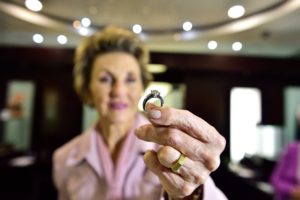
Lab-grown diamondsThe inhumane conditions of diamond mines have become a widely scrutinized issue in recent years. Critics have labeled these diamonds as “blood diamonds” or “conflict diamonds”. These evocative epithets illustrate the historically exploitative labor practices prevalent among the diamond industry. Due to the growing consumer awareness of unethical mining practices, the criteria for purchasing diamonds have experienced a crucial shift. Since the turn of the century, consumers have largely stopped settling for anything less than ethically produced diamonds. Recently, lab-grown diamonds have emerged as a certifiably ethical alternative to traditionally mined diamonds.
The Rise of the Lab-Grown Diamond

Lab-grown diamonds are synthesized in laboratories with industrial processes that mimic how diamonds form inside the Earth or in outer space. In recent years, scientists have greatly improved the techniques needed to synthetically manufacture diamonds. As recently as the early 2000s, the only lab-grown diamonds available were either very small or tinted with impurities. In the last five years, however, the diamond industry has perfected the synthetic fabrication of diamonds. These technological advancements allow for the production of large, clear stones that bear no significant difference from natural diamonds.

This technological advancement has taken off quickly. In 2016, around a dozen lab diamond growers and sellers formed a trade group called the International Grown Diamond Association (IGDA). The IGDA now has around 50 members. Lab-grown diamonds now account for around 2-3% of the $14 billion diamond market. Some analysts predict that lab-grown diamonds will occupy up to 10% of the market by 2030.

Growing Acceptance of Lab-Grown Diamonds

Large corporations and organizations have made adjustments to welcome the lab-grown diamond into the diamond industry. The Federal Trade Commission has expanded the definition of a diamond to include lab-grown gems. In addition, the FTC has dropped “synthetic” as a recommended descriptor for lab-grown diamonds. The success of lab-grown diamonds has even pushed De Beers Group, the global diamond monopoly which once vowed never to sell man-made diamonds, to create a lab-grown diamond line known as Lightbox Jewelry.

Consumers have also demonstrated their interest in the lab-grown diamond. Primarily, lab-grown diamonds are often cheaper than mined diamonds. This allows consumers to purchase a larger diamond ring than they otherwise would be able to afford. In a 2018 consumer research survey conducted by MVI Marketing, around 66% of millennials said they would consider a lab-grown diamond and 23% said they would definitely buy a lab-grown diamond ring.

Merging Lab-Grown Diamonds and Activism

Several smaller companies that offer lab-grown diamonds have formed as well. These companies utilize their diamonds’ ethical sourcing and sustainability as a major selling point. Additionally, these companies are engaging in many forms of activism. Many of these companies divert a percentage of their profits to poverty reduction and humanitarian efforts around the world.

Collectively, the efforts of these companies will bring more awareness to issues in the diamond industry as well as aid the communities that were directly exploited by unethical mining practices. As technological and industrial capabilities increase, it is hoped that the diamond industry will take advantage and slowly transition away from its dependence on hazardous mines and labor practices.

Lab-Grown Diamond Companies Funding Humanitarian Projects:

  • MiaDonna: In 2007, Anna-Mieke Anderson founded MiaDonna. She felt compelled to offer a sustainable alternative to mined diamonds after researching the history of conflict diamonds. In the last three years, this company has dedicated more than 20% of its earnings towards its charity foundation, The Greener Diamond. The Greener Diamond gives back to those harmed by the diamond trade and educates consumers about their role in buying conflict diamonds. In addition, this foundation also funds various initiatives in Liberia, Togo and Sierra Leone that address food insecurity and education.
  • BrilliantEarth: Brilliant Earth sells both carefully sourced and lab-grown diamonds. Each year, they pledge 5% of profits towards giving back to mining communities. Presently, BrilliantEarth is funding the Brilliant Mobile School in the Democratic Republic of the Congo. This school serves primary aged students in a mining community. The school aims to educate young children and ultimately expand their economic opportunities beyond working in the nearby diamond mine.
  • Do Amore: Do Amore was founded by Krish Himmatramka after struggling to find an ethical and sustainable engagement ring for his girlfriend. His company sells both carefully sourced and lab-grown diamonds. Additionally, Do Amore tries to use recycled materials in both their jewelry and packaging. Their main philanthropic focus is fighting the water crisis. So far, Do Amore has built 39 wells in five nations and helped 9,885 people.

– Antoinette Fang
Photo: Flickr

August 14, 2020
https://borgenproject.org/wp-content/uploads/borgen-project-logo.svg 0 0 Kim Thelwell https://borgenproject.org/wp-content/uploads/borgen-project-logo.svg Kim Thelwell2020-08-14 15:42:132024-05-29 23:23:14How Lab-Grown Diamonds Are Reducing Poverty
Charity, Global Poverty

How Buengo Reduces Poverty

Buengo Reduces Poverty
There are a few sounds die-hard baseball fans know well: the tune of “Take Me Out to the Ball Game,” the chorus of crunching sunflower seeds, the crack of a boiled peanut shell and spilling hot, salty water on the stadium floor. Unfortunately, people did not hear these familiar sounds and many others during the spring of 2020 as the global pandemic stretched to all four corners of the world. Concerts, festivals and graduation ceremonies experienced silence, but one thing rang true: spring cleaning. True to course, rusted pots and pans clattered inharmoniously as they found their new home in a garbage bag, tattered sweaters and last seasons boots ricocheted off closet floors and scooters rattled on the way out of the garage. An abundance of black and white trash bags with toys, household items and clothes lined the streets in the early spring days, landfill-bound. However, thanks to new-age technology, there is an alternate path for spring cleaners to take that can help eradicate global poverty: Buengo. Here is some information about how Buengo reduces poverty.

How Buengo Reduces Poverty and Benefits Charities

Buengo is a marketplace application that encourages users to take their second-hand clothes, gadgets and home goods to Buengo rather than the landfill. This application, which debuted on the App Store and Google Play in March 2018, not only reduces environmental waste but also helps the world’s poor. Items that people sell on Buengo go directly from the seller to the buyer’s hands. The money, however, takes a different route. When the seller markets an item, they choose a campaign or charity for the profit to go towards. All of these “good causes” are in the U.K., but they have a global influence.

One organization that benefits from how Buengo reduces poverty is Poverty Child, which helps children in Payatas, the Philippines reach their fullest potential through educational programs, therapeutic endeavors, promotion of general well-being and security provision. Another nonprofit that reaps from Buengo is The Origin Charity. This organization works with indigenous people in Ethiopia to educate, equip and train the next generation of leaders. The Origin Charity also teaches marketable skills to vulnerable women, who are often the sole providers of their families. Any U.K. based charity or nonprofit can register their organization. However, Buengo is working to expand its industry to other countries so that everyone can follow the company’s motto and “sell it for good.”

The Good of Buengo

How much “good” do nonprofits and charities receive? The answer is 95% of all sales. Buengo says that “This covers the cost of what goes on behind the scenes: development of Buengo, continual support for all Buengo users, operational costs and overheads. We’re essentially offering the same service as a charity shop, but online. In physical locations, the amount taken from sales can be as much as 20%, so when you support a cause through Buengo, more of your money actually goes to the charity.”

As one wades through the pool of shirts that they no longer wear and trips over pants one size too small, there is another option instead of throwing unused items away. Instead of tossing unworn clothing in a trash bin, downloading Buengo and giving it to a global cause could be a good option.

– Chatham Kennedy
Photo: Flickr

July 28, 2020
https://borgenproject.org/wp-content/uploads/borgen-project-logo.svg 0 0 Kim Thelwell https://borgenproject.org/wp-content/uploads/borgen-project-logo.svg Kim Thelwell2020-07-28 07:45:482024-06-06 00:38:17How Buengo Reduces Poverty
Charity, Global Poverty

Priyanka Chopra Jonas and Crocs Donate Thousands of Shoes to Healthcare Workers

Many American celebrities are donating their money and time to American charities during this pandemic, but actress Priyanka Chopra Jonas and her husband, singer-songwriter Nick Jonas, are taking it one step further. They have recently joined forces with the shoe brand Crocs and are donating 10,000 shoes to both healthcare workers in California and healthcare workers in India.

Previous Charity Work

In a tweet from March 31, Nick Jonas listed 10 organizations to which he and his wife have donated, one of which being UNICEF. Priyanka Chopra Jonas has worked as a goodwill ambassador for UNICEF since 2016, acting as a voice for refugees, especially children. As an ambassador, she has visited many impoverished parts of the world and has witnessed lack of access to basic needs, one of which being clothing. Chopra Jonas and Crocs share a history of philanthropy as they donated 50,000 pairs of Crocs to poor children in Belize in 2019, with the help of UNICEF.

Why It Matters

With the rise of a global pandemic, Chopra Jonas and Crocs have teamed up again, this time for healthcare workers. Around 45% of Indian adults do not own cars and with an overwhelmed public transportation system that is now on lockdown, many Indians must walk to work–especially those with lower incomes. Nick Jonas, Chopra Jonas and Crocs are donating 10,000 Crocs to healthcare workers in India. The value of this donation is about $450,000 worth of shoes.

On its website, Crocs reports that overall, it has donated over 860,000 pairs of shoes to healthcare workers around the globe since March 25, 2020. The right pair of shoes can be helpful in many ways. Firstly, having protective footwear can prevent exposure to deadly toxins and parasites on the ground. Additionally, shoes that fit can allow people to walk, exercise and play without the risk of blistering. This is both a comfort issue and a health issue as blisters can lead to infection. People in poor communities often do not have the necessary antibiotics to stop infections. Shoes also have a lot of cultural importance. Footwear is used in many religious ceremonies around the globe, including India, and wearing shoes is considered a sign of cleanliness and pride.

How to Help

An organization called Soles4Souls works to help people bring themselves out of poverty by providing them with footwear, either to wear themselves or to sell. On the website is information about nearby drop-off locations and how to get free shipping with Zappos to donate shoes through the mail. Even just one pair of shoes can help a child get to school and can help an adult get to work.

Poverty often seems like an overwhelming and impossible problem, especially during a global pandemic. Fortunately, even a seemingly insignificant action – like donating shoes instead of throwing them away – can change a person’s outlook on life by helping them protect their feet and helping them get to and from work every day. UNICEF, the Jonas couple and Crocs are doing their parts to help lift people out of poverty, one pair of shoes at a time.

–Levi Reyes

Photo: Flickr

July 23, 2020
https://borgenproject.org/wp-content/uploads/borgen-project-logo.svg 0 0 Jennifer Philipp https://borgenproject.org/wp-content/uploads/borgen-project-logo.svg Jennifer Philipp2020-07-23 13:49:022024-06-04 05:25:35Priyanka Chopra Jonas and Crocs Donate Thousands of Shoes to Healthcare Workers
Charity, Global Poverty, Philanthropy

The Definition of Philanthropy

Definition of Philanthropy
Many people already have a general idea of what it means for an organization or an individual to be philanthropic. As a culture and society, philanthropic and charitable organizations exist in people’s daily lives. Nearly every country has a well-developed network of philanthropic organizations and government branches that work both inside and out of that country’s specific borders.

The term philanthropy has its origins in an ancient Greek myth Prometheus Bound. The philanthropic protagonist, Prometheus, defies Zeus’ orders and gifts humans the ability to use fire, giving them hope and the skills to grow as a civilization. Depending on the source material that one uses, the definition of philanthropy can vary slightly. For example, Oxford University identifies the definition of philanthropy as “the desire to promote the welfare of others, expressed especially by the generous donation of money to good causes.” Meanwhile, dictionary.com states that it is “altruistic concern for human welfare and advancement, usually manifested by donations of money, property, or work to needy persons, by the endowment of institutions of learning and hospitals, and by generosity to other socially useful purposes.”

Peter Kropotkin and Auguste Comte

One could surmise that the definition of philanthropy is the synthesis of hundreds of years of community-based advocacy ideals and theories. There are two philosophical schools of thought, mutual aid by Peter Kropotkin and altruism by Auguste Comte, that seemingly join together unknowingly in order to create what the world knows today as philanthropy. Kropotkin is a world-renowned political philosopher, geologist and sociologist. In his book and essay collection, “Mutual Aid: A Factor of Evolution,” Kropotkin developed an evolutionary theory of social cooperation as opposed to the popular evolutionary theory of Darwin.

“The mutual-aid tendency in man has so remote an origin, and is so deeply interwoven with all the past evolution of the human race, that it has been maintained by mankind up to the present time, notwithstanding all vicissitudes of history,” wrote Peter Kropotkin at the start of his seventh chapter of “Mutual Aid: A Factor of Evolution.”

People perhaps best know Auguste Comte for being the first scientific philosopher with his work being in the fields of mathematics, chemistry and physics. People also know Comte for the philosophical school of thought known as positivism and for coining the terms sociology and altruism. In ethical terms, altruism is a school of thought that teaches “the happiness of others should be the principal goal of one’s actions.”

Philanthropic Versus Charitable

The main distinction between a philanthropic and a charitable organization is the same distinction between macro and micro. A philanthropic organization functions on the macro level, targeting the root causes of social and global injustices. A charitable organization functions on the micro-level, offering financial aid for a single symptom of systemic social and global injustices. Philanthropic organizations often take part in on the ground advocacy work on behalf of the communities. This advocacy work most often reaches out to state and local representatives in order to help international aid funding.

In broader terms, philanthropy is a long-term, systemic approach to eliminate the root causes of various social and global injustices. The “plan of attack” that many philanthropic groups use employs tactics ranging from financial donations to on-the-ground advocacy work lobbying for legislation to better the lives of disadvantaged populations around the world. While the average person on the street might not know the dictionary’s philanthropy definition, people see the actions and motivations of philanthropic groups just as often as they see the causes that those same groups fight for.

– Craig Bahnsen
Photo: Flickr

July 21, 2020
https://borgenproject.org/wp-content/uploads/borgen-project-logo.svg 0 0 Jennifer Philipp https://borgenproject.org/wp-content/uploads/borgen-project-logo.svg Jennifer Philipp2020-07-21 10:35:072020-07-21 10:35:07The Definition of Philanthropy
Activism, Advocacy, Charity, Global Health, Global Poverty

Elton John’s Impact Through Five Organizations

Recognized as one of the top-selling artists in history, Sir Elton John has continued to have an enormous impact on the music industry and pop culture. However, his influence goes beyond music. Over the years, John has used his platform to raise awareness for several charitable organizations. Here is a glimpse of Elton John’s impact through his efforts with five organizations.

Elton John’s Involvement

  1. Elton John AIDS Foundation – Elton John founded the Elton John AIDS Foundation (EJAF) in the U.S. in 1992 and a separate entity in the U.K. in 1993. This organization aims to fund programs that alleviate the financial, emotional and physical pain caused by HIV/AIDS. EJAF fights to raise awareness, educate, treat and prevent HIV/AIDS. In 2018, it enabled 235,000 adolescents to receive HIV testing and connected more than 68,000 patients to treatment programs. Since 2010, the organization has reached and over 11.5 million people and has raised $125 million to support similar programs around the globe.
  2. Riders for Health – In 2008, Elton John donated 120 motorcycles to healthcare workers in Lesotho. The bikes enable doctors and nurses to reach patients in remote areas of Lesotho, where many suffer from HIV/AIDS and tuberculosis. Lesotho has the second highest number of individuals infected by HIV, and the second highest number of cases in tuberculosis.  Additionally, almost 73 percent of patients infected with tuberculosis are simultaneously infected with HIV. John made the donation in partnership with the Lesotho Ministry of Health and Riders for Health. Founded in 1996, Riders for Health is an international nonprofit dedicated to increasing accessibility and efficiency of healthcare in Africa. The organization manages motorcycles, ambulances and other vehicles that provide healthcare to seven countries in Africa.
  3. Breast Cancer Research Foundation – Through his performances and donations, Elton John has supported the Breast Cancer Research Foundation (BCRF) for over 15 years. BCRF provides essential funding to cancer research worldwide and is the highest-rated breast cancer organization in the U.S. At the NYC Hot Pink Party in 2016, BCRF honored John with a research grant in his name due to his dedication to the organization. He capped off the night with a performance. This event alone raised over $6.8 million for breast cancer research.
  4. Starkey Hearing Foundation – In 2012, Elton John and spouse David Furnish joined the Starkey Hearing Foundation on a trip to Manila to help fit more than 400 children and adults with hearing aids. The Starkey Hearing Foundation is committed to raising awareness, education and protection of hearing care. The organization provides more than 100,000 hearing aids annually and has reached over 100 countries. Additionally, John has previously preformed at the So the World May Hear Awards Gala to raise funds and awareness for hearing accessibility.
  5. The Elton John Sports Fund – Elton John’s impact is also present through the Elton John Sports Fund. Rocket Sports started the Elton John Sports Fund in 2014 in partnership with SportsAid. This partnership supports young athletes by providing money to travel, to get necessary equipment and to decrease the overall financial strains of a given sport. The recipients of the Elton John Sports Fund are promising athletes who come from a variety of socioeconomic backgrounds and sports interests.

Throughout his career, Elton John has championed numerous causes, earning him awards such as the Peter J. Gomes Humanitarian of the Year Award in 2017 and the BAMBI Award in 2004. John has performed at countless benefit concerts, raising awareness for organizations that range from rainforest conservation to supporting first responders during the COVID-19 pandemic. Elton John has made a lasting impact on the world, using his star-studded platform for good.

– Megan McKeough

Photo: Flickr

April 29, 2020
https://borgenproject.org/wp-content/uploads/borgen-project-logo.svg 0 0 Jennifer Philipp https://borgenproject.org/wp-content/uploads/borgen-project-logo.svg Jennifer Philipp2020-04-29 04:00:312024-05-29 23:15:46Elton John’s Impact Through Five Organizations
Charity, Global Poverty, Humanitarian Aid

Effective Altruism to Fight Poverty

Effective Altruism 
From an idea and philosophy, Effective Altruism has evolved and transformed into a very broad and cohesive social movement over the years. Though heavily featured in the nonprofit sector, Effective Altruism focuses on scientific projects, policy-making and organizations with the ethos of finding effective ways to do ‘the most good’ and ‘do good better,’ both individually and collectively. Effective Altruism prioritizes a variety of different causes, impartiality and cost-effectiveness, along with assessing potential funding impacts and counterfactual reasoning.

Effective Altruism Singapore

The Borgen Project had an opportunity to get in touch with the Effective Altruism chapter in Singapore, an up and coming organization with a focus on ‘effective giving.’ As an organization, the chapter is able to sustain and appeal to people because of Singapore’s friendly and burgeoning nonprofit environment as well as its relatively wealthier population, and more stable incomes and economy.

With a heavy focus on research and careful analysis, the Effective Altruism Chapter in Singapore, in particular, is able to work on the best cases and understand specific communities in need. Like many of its companion chapters around the world, it also focuses on more neglected issues in global poverty reduction initiatives such as global health and development and factory-farmed animals as well as other problems and existential risks like natural disasters and climate change. Stunting, in particular, is a grave and predominant focus for Effective Altruism Singapore, with a heavy concentration on child and maternal health care malnutrition owing to the fact that nearly 25.8 percent of children in southeast Asia are stunted. Effective Altruism’s evidence-based research patterns and analysis shows that around 30 percent of children in communities across Indonesia and the Philippines experience adverse impacts of stunting.

The GiveWell Framework

Moreover, the chapter employs the more empirical and analytical GiveWell framework in its work to evaluate potentially high-impact giving opportunities in SouthEast Asia. GiveWell, one of the pioneering organizations behind the Effective Altruism movement, focuses on scouting reliable charities that can improve lives the most per dollar so that there is effective and impactful usage of philanthropic funds. The objective is chiefly to deduce how useful it is to give an amount equivalent to a dollar and evaluate how it could potentially impact a specific target community.

In accordance with Effective Altruism’s GiveWell framework, giving opportunities are largely dependent on an in-depth analysis involving thousands of hours of research which it then uses to find top-rated charities backed by evidence, thorough analysis and vetting to ensure transparency and accountability. GiveWell also tries to understand the root causes of issues such as stunting and malnutrition. Organizations such as the Malaria Foundation and Malaria Consortium remain some of GiveWell’s most important recommendations in the health care aspect of its many global poverty alleviation priorities.

The GiveWell Framework’s Role at Effective Altruism Singapore

Consequently, many of Effective Altruism Singapore’s pilot projects and initiatives employ the GiveWell framework as it is helpful while analyzing and understanding some of the high-impact giving opportunities in Southeast Asia, especially in key priority realms like the provision of WASH (Water, Hygiene and Sanitation) services as well as childhood malnutrition. In the year 2018, the chapter focused on looking for organizations and charities that delivered more evidence-based interventions that targeted preventable and cost-effective health issues and impacted some of the poorest populations and communities in Southeast Asia.

To conclude, the workings and functioning of Effective Altruism Singapore help paint a broad picture of the Effective Altruism philosophy and movement as a whole due to its rather abstract nature. It remains groundbreaking and innovative because it offers a more objective as well as a critical approach to addressing and combatting poverty in the long run especially because it aims to use more research and evidence focused methods.

As a whole, it remains an essential and significant reflection into the applications of the ideology and the potential impacts it can have on the way one perceives global poverty-related issues across various communities around the world.

– Shivani Ekkanath
Photo: Wikipedia Commons

March 23, 2020
https://borgenproject.org/wp-content/uploads/borgen-project-logo.svg 0 0 Lynsey Alexander https://borgenproject.org/wp-content/uploads/borgen-project-logo.svg Lynsey Alexander2020-03-23 01:30:302024-05-29 23:15:34Effective Altruism to Fight Poverty
Charity, Global Poverty

Top 4 Songs That Raised Money to Fight Poverty

Top 4 Songs That Raised Money to Fight Poverty
The year 1985 marked the final year of a major famine in Ethiopia that would inspire an onslaught of humanitarian efforts. Some of the primary advocates for this action were producers and artists who would spark the trend of fundraising through music. Many critics have picked apart songs-for-profit for problematic lyrics and annoying melodies. However, the releases have proven to be incredibly effective for raising awareness and aid. When some of the world’s top entertainers come together to send out a message, there is no doubt that it will be heard. Songwriters wrote or re-wrote many songs to help fight poverty. Here are the top four songs that raised money to fight poverty.

Top 4 Songs that Raised Money to Fight Poverty

  1. “Do They Know It’s Christmas.” This song is a benefit pop single that U.K. group Band Aid released in 1984. The band created the song in response to the rising famine in Ethiopia; the lyrics lament the stark contrast in living conditions between developed Western societies and impoverished nations during the holiday season. Several well-known British pop artists, including Phil Collins and Duran Duran, contributed to the single alongside Band Aid. The song was a major hit, raising $1.7 million within the first five minutes of its release; it has since garnered a total of $14 million in fundraising. Since then, Band Aid has rewritten and re-released the song on two occasions. The first re-release took place in 2004 to raise funds and awareness for humanitarian issues in Sudan. The second re-released in 2014 to endorse relief for the Ebola crisis. Additionally, each release of this song was incredibly popular worldwide and contributed immensely to the fight against global poverty because they simultaneously raised awareness and directed financial aid.
  2. “We Are The World.” USA For Africa released “We Are The World” in 1985. The charity-driven musical group, amassed by Quincy Jones, featured some of America’s most famous pop stars such as Lionel Ritchie and Michael Jackson. The song itself calls on listeners to come together to give to those less fortunate. It also works towards developing a better and brighter future for the world. USA For Africa spent about 12 hours recording the single in one night. Many of the musicians involved had just participated in the American Music Awards that same evening, but Jones advised them to check their egos at the door. In addition, Jones encouraged them to record the song in casual attire. The song raised more than $63 million to aid impoverished populations in Africa. Moreover, it was America’s fastest-selling pop single at the time of its release.
  3. “Stars.” This song by Hear N’ Aid brought a new genre of music to the rising trend of hit charity singles upon its release in 1985. A group of 40 heavy metal musicians, including Rob Halford and Ted Nugent, gathered to attempt their rendition of a philanthropic ballad for a good cause. The metal song carries similar themes to those in “We Are The World,” emphasizing togetherness and the importance of acknowledging less privileged nations. While not as financially successful as its predecessor, “Stars” did harbor nearly $1 million in global famine relief. For what it lacked in monetary profit, it compensated with the sheer number of renowned rock n’ roll artists that participated in its creation, staking a major milestone in music history.
  4. “Tears Are Not Enough.” This was a charity single also released in 1985 by a supergroup of more than 50 of Canada’s top entertainers. Originally, David Foster crafted the tune for the soundtrack of St. Elmo’s Fire. However, the film’s director rejected the song, so Foster revamped the lyrics for charity. The song would serve as Canada’s contribution to USA For Africa’s “We Are The World” album. Additionally, it featured artists such as Joni Mitchell and Anne Murray. The lyrics of this song invite listeners to come together to fight global poverty and it has become a humanitarian hit. Furthermore, it achieves triple-platinum status and raises $3.2 million for famine relief in Ethiopia.

Considering the amount of aid that each of these songs has garnered, charity fundraising through music has the potential to make great waves in philanthropy. The key to making change happen is raising awareness for the issue at hand. When world-famous voices speak out for a good cause, listeners across the planet will inevitably feel moved to take action. Since the release of these four songs that raised money to fight poverty, the world has undoubtedly opened its eyes and ears to better acknowledge. It helps develop impoverished civilizations such as Ethiopia.

– Harley Goebel
Photo: Flickr

March 6, 2020
https://borgenproject.org/wp-content/uploads/borgen-project-logo.svg 0 0 Lynsey Alexander https://borgenproject.org/wp-content/uploads/borgen-project-logo.svg Lynsey Alexander2020-03-06 01:30:402020-03-03 06:39:16Top 4 Songs That Raised Money to Fight Poverty
Charity, Global Poverty, Nonprofit Organizations and NGOs

5 NFL Stars Tackling Global Poverty

Tackling Global Poverty
Through charity and missionary work, five NFL stars are tackling global poverty. Celebrities making substantial contributions to global poverty reduction is a sure-fire inspirational lift. These individuals also provide a refreshing glimpse into how NFL stars give back where it counts.

5 NFL Stars Tackling Global Poverty

  1. Tom Brady has appeared in the previous three Super Bowls and has walked away with six rings out of his nine historic appearances. In addition to these accolades and a Wikipedia page the size of a full-length novel, Tom Brady is accomplishing substantial impact off the football field. Tom Brady has participated in charity work with five different charities: Best Buddies International, Boys & Girls Club, Eastern Congo Initiative, Entertainment Industry Foundation and KaBOOM!. The Best Buddies International nonprofit organization, that Brady founded, dedicates itself to intellectually and developmentally disabled people. Brady works with Best Buddies International and has aided in fundraising of $20 million in the last six years.
  2. Chris Long, former Philadelphia Eagles defensive lineman and two time Super Bowl champion, has teamed with Doug Pitt, the Tanzania Goodwill Ambassador, to create the Waterboys initiative. The two football players have enlisted other players to raise resources and funds for the Waterboys, a clean water project in Tanzania. Long has personally raised over $543,000 for clean water sanitation. The initiative locates remote villages in need of clean water and hires crews to install solar-powered well, which provides clean water. Currently, the Waterboys have funded 83 wells that have impacted 345,000 people.
  3. Kelvin Beachum, an offensive tackle for the New York Jets, has a commitment to ending world hunger through charitable efforts. Beachum has worked with Bread for the World, World Vision and Feeding America. He has even donated his time by traveling to Honduras to aid World Vision. This nonprofit organization has helped over 3.5 million children in nearly 100 countries since 1950.
  4. Nnamdi Asomugha, a former cornerback for the Oakland Raiders, has set new heights by tackling global poverty through charity work. As the founder of the Asomugha Foundation, he established this organization to empower orphans and widows in Nigeria to pursue higher education. The core of the foundation is to bring about the opportunity of higher education to transform impoverished communities. The Asomugha Foundation also provides food, shelter and medicine to victims of poverty and abuse in Nigeria.
  5. Nate Sudfeld is another Super Bowl attending quarterback who knows what it takes to score big off the field. Sudfeld has been making contributions to the nonprofit Assist International. This nonprofit has 500 projects through 65 countries where Sudfeld has traveled to Romania, Africa and several additional countries to aid poverty reduction efforts. Such contributions have impacted people who lead poverty-stricken lives by improving the quality of life.

Five NFL stars are tackling global poverty while creating a powerful impression on the U.S. population. These players continue to make history on and off the field through charity where even the smallest contributions change human lives by reducing global poverty.

– Andre Davis 
Photo: Pixabay

February 26, 2020
https://borgenproject.org/wp-content/uploads/borgen-project-logo.svg 0 0 Lynsey Alexander https://borgenproject.org/wp-content/uploads/borgen-project-logo.svg Lynsey Alexander2020-02-26 10:00:272024-12-13 18:02:035 NFL Stars Tackling Global Poverty
Charity, Global Poverty

Top 5 Bizarre Charity Fundraisers Against Poverty

Bizarre Charity FundraisersThere is no denying that fundraising is incredibly effective when it comes to raising awareness and support for a particular issue. Fundraising has contributed billions of dollars to causes such as cancer research, education and global poverty. Typically, these donors are celebrities and wealthy philanthropists. However, it is the general public that has endorsed some of the most successful charity fundraisers. Local communities are especially likely to participate in charity fundraisers when they are creative and engaging. Here are the top five bizarre charity fundraisers to tackle global poverty.

Bold Hope and Paintballs

In 2013, five willing victims took on the pain of being shot with 21,000 paintballs to raise awareness for global child poverty. Non-profit organization Bold Hope published a video featuring the five volunteers being shot with 21,000 paintballs to represent the 21,000 children that die each day due to poverty. Since being posted, the video has amassed more than 800,000 views. Bold Hope is responsible for food aid, vocational training, educational initiatives and medical care in poverty-stricken areas. Areas the organization has supported include Haiti and the Bahamas. There is no doubt that the paintball stunt drew attention and support to bolster these developments.

OneXOne and Charlize Theron

In 2009, actress Charlize Theron auctioned off a kiss to a fan when a charity auction for a South Africa travel package she was conducting did not meet her fundraising expectations. An anonymous buyer won the travel package and the 20-second kiss for $140,000. Theron donated this money to OneXOne, a Canadian organization that focuses on tending to the world’s impoverished children. They provide children in need with necessities such as water, food, recreation and education.

Akanksha Foundation and the Uniform Project

Also in 2009, Sheena Matheiken wore the same dress for an entire year to raise money for the Akanksha Foundation, a non-profit foundation that provides education to impoverished children living in India. Matheiken not only had to wear the dress but also make it look unique every day. By the end of the year, she raised more than $100,000 for the Akanksha Foundation. The stunt was the beginning of the Uniform Project, a web-based organization that challenges the public to participate in challenges like Matheiken’s “Little Black Dress” movement to raise money for various non-profits that address the issue of global poverty.

WaterAid and Feces

Finally, the organization WaterAid used a remote-controlled piece of human feces to raise awareness for impoverished populations living without toilets. The organization posted a video to YouTube in 2010 that featured the plastic toy raising eyebrows throughout the streets of London. WaterAid’s mission is to provide clean water and sanitation to people in need. This advocacy allows for the development of healthier communities, which can help alleviate poverty. The remote-control poo stunt garnered more than 400,000 views on YouTube. This proves that even the most bizarre charity fundraisers can efficiently tackle global poverty.

These are just a few examples of the most bizarre charity fundraisers to tackle global poverty. By thinking outside of the box, the people behind these stunts successfully drew attention and ample financial support to the cause. It goes to show that fundraising can be particularly effective when it is engaging, creative and fun.

– Harley Goebel
Photo: Flickr

February 21, 2020
https://borgenproject.org/wp-content/uploads/borgen-project-logo.svg 0 0 Lynsey Alexander https://borgenproject.org/wp-content/uploads/borgen-project-logo.svg Lynsey Alexander2020-02-21 07:30:492024-12-13 18:02:01Top 5 Bizarre Charity Fundraisers Against Poverty
Charity, Global Poverty, Women, Women's Rights

Ways to Support Women in Poverty

Support Women in PovertyHelping those in need begins with the basics. The same is true when it comes to helping women in poverty. There are simple, actionable ways to change the lives of these marginalized groups. Becoming mindful consumers, giving to reputable charities and raising an impactful voice are ways to support women in poverty.

Mindful Consumption

One should be mindful of where their purchases come from when they purchase food, drink or clothing. Becoming a conscious consumer can directly support women in poverty. It is a simple lifestyle choice that results in purposeful outcomes.

Many jobs and markets exploit women by giving women unfair prices for the goods they produce or work in unsafe environments. Fairtrade is one of the leading establishments coming together to ensure women around the world are not taken advantage of. This cooperative set forth stringent standards on what qualifies as responsibly sourced goods. Items that qualify carry the “Fairtrade Mark,” which allows consumers to know they are spending money where it counts the most.

The sourcing of general products may originate from human trafficking rings. In these rings, forced labor produces goods. When consumers purchase items that have unethical roots, they inadvertently fund those crimes to continue. More than 70 percent of individuals that endure trafficking are females and they must work under horrifying conditions without pay. Consumers can download and use applications like Free2Work, which informs the public of the behind-the-scenes of where their money goes.

Charity

Financially supporting nonprofits with missions to uplift women out of poverty is crucial. Various reputable nonprofits focus on a wide range of obstacles that women face. A core issue is making sure these women have the available resources necessary to receive an education. Funding for schools in impoverished rural areas is one battle. However, females encounter other challenges that cause them to miss or stop attending school altogether.

Girls around the world who lack access to menstrual education and products miss at least one week of schooling every month during her period. This holds girls back and can lead to them dropping out of school altogether. The organization AFRIpads recognizes this crisis and has made it its mission to address it. AFRIpads supplies reusable menstruation pads to regions where girls do not have access to sanitary products. With this simple and effective solution, many girls can attend class no matter the time of the month. Small donations to a cause like AFRIpad’s will help the continued support of women in poverty.

Another reason girls drop out of school is due to unplanned pregnancies. Nonprofits like Global Health Partnerships (GHP) prioritize providing birth control to women and empowering family planning. When The Borgen Project had a chance to speak with the Vice President of GHP, Dr. Ruth O’Keefe, she spoke about the impact that providing Depo shots to villages in Kenya makes. “I’ve never seen a calendar in anyone’s house, but they all know exactly when it’s time to get their next shot,” she said. It is evident that GHP has empowered women to utilize family planning. Meaningful causes to support women in poverty like GHP’s become sustainable through donations.

Voice

When it comes to fighting for the underdog, every voice matters. Writing to members of Congress lets leaders know how significant funding for vital poverty acts is. Breaking the cycle of poverty starts at the education level. Providing this betterment opportunity for women allows people to help them so they can help themselves. Reaching out to local and national media channels is another useful action. Sending messages to news sources is a great way to have one’s voice heard. The increase in coverage of women in poverty will raise greater awareness and support for this humanitarian matter, and in turn, bring more legislators attention to it as well.

Raising a voice to support women in poverty costs little time and effort. Meanwhile, it can change the lives of so many women. Straightforward actions support women in poverty. Voicing opinions on this issue helps legislators focus on this matter. Financially supporting those who make a difference every day in marginalized communities is crucial.

– Ariana Kiessling
Photo: Flickr

February 10, 2020
https://borgenproject.org/wp-content/uploads/borgen-project-logo.svg 0 0 Lynsey Alexander https://borgenproject.org/wp-content/uploads/borgen-project-logo.svg Lynsey Alexander2020-02-10 11:46:152020-03-02 13:35:54Ways to Support Women in Poverty
Page 23 of 42«‹2122232425›»

Get Smarter

  • Global Poverty 101
  • Global Poverty… The Good News
  • Global Poverty & U.S. Jobs
  • Global Poverty and National Security
  • Innovative Solutions to Poverty
  • Global Poverty & Aid FAQ’s
Search Search

Take Action

  • Call Congress
  • Email Congress
  • Donate
  • 30 Ways to Help
  • Volunteer Ops
  • Internships
  • Courses & Certificates
  • The Podcast
Borgen Project

“The Borgen Project is an incredible nonprofit organization that is addressing poverty and hunger and working towards ending them.”

-The Huffington Post

Inside The Borgen Project

  • Contact
  • About
  • Financials
  • President
  • Board of Directors
  • Board of Advisors

International Links

  • UK Email Parliament
  • UK Donate
  • Canada Email Parliament

Get Smarter

  • Global Poverty 101
  • Global Poverty… The Good News
  • Global Poverty & U.S. Jobs
  • Global Poverty and National Security
  • Innovative Solutions to Poverty
  • Global Poverty & Aid FAQ’s

Ways to Help

  • Call Congress
  • Email Congress
  • Donate
  • 30 Ways to Help
  • Volunteer Ops
  • Internships
  • Courses & Certificates
  • The Podcast
Scroll to top Scroll to top Scroll to top