Ongoing Poverty in Democratic Republic of the Congo
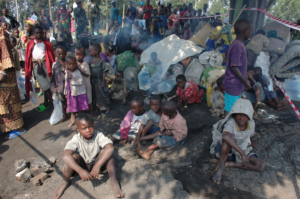
The Democratic Republic of the Congo (DRC) is a nation in Central Africa with a population of nearly 80 million people, the vast majority of whom live below the global poverty line. While statistics are hard to come by due to the nature of the DRC, there are estimates that 73% of the country’s population lives in extreme poverty. The DRC consistently ranks as one of the world’s poorest, least stable and most underdeveloped countries.
How Has This Happened?
The DRC’s current poverty and instability are rooted in its decades-long history of violence, mismanagement and corruption. This dates back to the colonial era when millions died due to the abuses that the Belgian colonial administration committed. Immediately after declaring independence from Belgium, the so-called Congo Crisis caused more woes for the nation. Even the DRC’s independence would not stop interference from Europe.
Mobutu Sese Seko took power after the Congo Crisis. He made the country into a one-party dictatorship with widespread corruption, funneling money out of the DRC and into his own inner circle. Poverty in the DRC grew significantly worse as Seko and his inner circle grew wealthier. His cult of personality and Cold War foreign aid, both of which dried up in the 1990s, kept his regime afloat. This “drying up” resulted in two devastating wars, both of which increased poverty in the DRC.
The Longevity of Poverty in the DRC
The country began reconstruction in the mid-2000s in an effort to tackle the growing poverty following the Congo Wars. Despite poverty reductions in some areas of the country – particularly urban ones – recovery efforts did not reduce the overall poverty levels in the country between 2005 and 2012. Roughly two-thirds of the population of the DRC remained in poverty.
Today, the DRC is one of the world’s poorest nations, with stunted economic growth and poor development. According to the World Bank, poverty in the DRC is so severe that roughly half of children grow up malnourished, with most lacking access to education. The longevity of this poverty has resulted in a scarcity of drinking water and limited access to proper sanitation. These conditions are even more prevalent in rural areas. The present COVID-19 epidemic has only made the situation in the DRC more hazardous, especially for those in poverty.
NGO Work in the DRC
While poverty in the DRC may seem insurmountable, there are hundreds of nonprofit agencies working to help in the region. The Cooperative for Assistance and Relief Everywhere, or CARE, is a nonprofit NGO (non-governmental organization), dedicated to reducing poverty worldwide. It works alongside the Congolese government to provide aid.
With 12.8 million Congolese in need of urgent assistance, NGO work is more important than ever. In a country like the DRC, where poverty is so extreme, the humanitarian actions of CARE have made an important difference. This NGO has provided food security to thousands of people and assisted thousands of women to gain access to economic and health resources.
CARE is one of the hundreds of NGOs operating in the DRC that rely on donations to make a difference. Poverty in the DRC is too massive for any singular NGO to tackle. The combined efforts of multiple groups are necessary. When poverty is so widespread, a widespread response is essential.
– Matthew Bado
Photo: Flickr
