Susan Rice’s approach to foreign aid has formed by her listening to her colleagues’ advice. Her approach is to negotiate and implement policies to help textile workers, small farmers and other people in need.
Susan Rice’s Background
According to her latest 2019 book, “Tough Love: My Story of the Things Worth Fighting For,” Susan Rice grew up in Washington, D.C. Her first job in 1979 at age 14 was as a Democratic page in the U.S. House of Representatives. She graduated high school and took home many awards from the National Cathedral School NCS in D.C. After this, she was a fellow at the Brookings Institute and an undergraduate at Stanford University.
She studied at Oxford in the U.K., where she earned her M.Phil. (masters) degree in international relations. Afterward, she went on to earn her Ph.D. During that time, her thesis “The Commonwealth Initiative in Zimbabwe, 1979–1980: Implications for International Peacekeeping” won the 1991 Chatham House–British International Studies Association Award for the most distinguished doctoral dissertation in international relations in The U.K. She went on to be the youngest black woman to serve in a presidential administration.
Susan Rice’s approach to foreign aid has involved her putting her colleague’s advice into practice. When she first started as assistant secretary of state for African affairs, her colleague Ambassador Prudence’s advice was to pay attention to policy outcomes, not the bureaucracy.
African Growth Opportunity Act and Other Programs
During her years in the Clinton Administration, Susan Rice worked hard toward the African Growth Opportunity Act (AGOA), which passed Congress in 2000. In 2015, Congress updated and extended the program through 2025. The AGOA requires countries to remove obstacles to U.S. trade, implement poverty reduction procedures, fight corruption and bolster human rights.
Poverty is reducing among women through the creation of jobs and through new businesses that women own. The African Women’s Entrepreneurship Program (AWEP), which supports women who own businesses in sub-Saharan Africa, came to be because of the AGOA.
The Department of State also created an International Visitor Leadership Program (IVLP). This program sponsors a small group of African women business owners to come to the U.S. for a three-week intensive networking event to meet with leaders in bipartisan policy, industry and nonprofits. The support these women entrepreneurs receive helps create jobs and influence society. It lifts their communities out of poverty one job at a time.
Work as the US Ambassador to the United Nations
Susan Rice’s approach to foreign aid widened when the Obama Administration made her the U.S. Ambassador to the United Nations. The Trans-Pacific Trade Partnership (TPP), which began with the George W. Bush Administration, continued in the Obama Administration.
It had the intent of lowering or eliminating tariffs on imports and exports of participating countries, thus making it more affordable for them to produce, import and export. The affordability attracts businessmen and women and lifts people out of poverty by creating jobs in both the import and export country. This symbiotic relationship helps lift people out of poverty by the creation of these jobs. In 2014, according to Susan Rice’s speech, one-third of TPP participants were from the Association of Southeast Asian Nations (ASEAN). Indonesia, Malaysia, Philippines, Singapore and Thailand, Brunei Darussalam, Vietnam, Lao PDR, Myanmar and Cambodia all benefit from TPP.
How TTP and AGOA Impact People
Susan Rice’s approach to foreign aid is to negotiate and implement policies like TTP and the AGOA. According to The World Bank, TTP will increase the wages of poor under-skilled textile workers in Vietnam by over 14% by 2030. African countries could also benefit from TTP and especially African women.
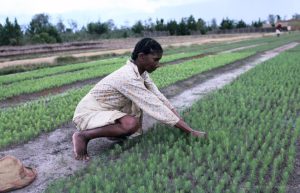
According to The World Bank, women make up most of the small farmers in Africa. These women carry goods across borders where they sometimes meet with opposition in documents, regulatory requirements and tariffs.
As Brookings reported, Africa is benefiting from the AGOA. In 2014, African countries exported nearly $1 billion worth of textiles to the U.S. creating jobs for poor under-skilled workers, especially women.
– Kathleen Shepherd-Segura
Photo: Flickr

Healthcare Inequity and the COVID-19 Crisis in Palestine
Palestinians, specifically those living in Gaza, have lived their entire lives relatively isolated from much of the outside world. A wall that was erected along Gaza’s borders prevents Palestinians from leaving the territory and subjects them to Israeli discretion. Help from NGOs and humanitarian aid can reduce the COVID-19 crisis in Palestine.
Pre-Pandemic Healthcare in Palestine
One consequence of the Israeli occupation is the scarcity of healthcare providers and resources in Palestine. In order to access Israeli health facilities, Palestinians must obtain travel permits, but these permits are frequently denied. There are 300,000 Palestinians living without access to adequate healthcare in the West Bank. The few healthcare facilities that do exist in the occupied territories face equipment and medicine shortages. The effort to increase the number of health facilities in Gaza has been hindered by Israeli refusing to grant construction permits and restrictions on medical imports and exports.
Impacts of COVID-19 on Palestinian Healthcare
The COVID-19 crisis in Palestine devastated its already inadequate Palestinian healthcare system. Gaza and the West Bank have a total of 375 ICU beds and 295 ventilators between them, for a population of over three million. The lack of available resources has severely hindered pandemic response in the territories, with health officials halting COVID testing in June due to a shortage of test kits in Gaza.
The sole laboratory in Palestine capable of processing COVID tests was forced to close as it lacked sufficient equipment. Household resources such as hand sanitizer, antibacterial wipes and even soap are scarce in Gaza and the West Bank. This is due to the lack of financial means. In addition, Palestinians don’t have the luxury to use social distancing to prevent the spread of the pandemic as the territories are severely overcrowded.
The ongoing Palestinian-Israeli conflict has exacerbated the severity of the COVID-19 crisis in Palestine. In July 2020, Israeli forces destroyed a quarantine facility in the West Bank, thus further decreasing the amount of pandemic-response resources available to Palestinians. Moreover, hospital space that could be used by COVID patients is largely occupied by the high volume of people seeking treatment for injuries acquired from conflict with Israelis.
Israel has also imposed restrictions on medical supplies, subsequently reducing treatment capacity in Gaza. In April 2020, Israeli authorities destroyed a Palestinian COVID testing center. It has been reported that water, sanitation and hygiene facilities are also casualties of Israeli attacks.
Aiding Pandemic Response in Palestine
The World Health Organization published an updated COVID-19 Response Plan for Palestine in April 2020. This plan involves increasing testing capacity, providing additional hospital beds and educating the Palestinian public about virus prevention. It also aims to increase the amount of personal protective equipment available to health professionals.
Palestinian healthcare providers rely heavily on humanitarian aid and NGOs such as Anera. Anera works towards increasing healthcare access in Palestine by distributing medication, wheelchairs and funding to healthcare providers in Gaza and the West Bank. In addition, Doctors without Borders or, Medecins Sans Frontieres, provides medical care such as trauma support, mental health services, surgeries and treatment for burn patients in the occupied territories.
The COVID-19 pandemic and other preceding disease-outbreaks have often been referred to as “great equalizers,” as they are able to affect all people. Yet, as noted by Dr. Stephen Mein, low-income populations and racial and ethnic minority groups are more likely to contract these diseases. Socioeconomic disparities and political situations such as the Palestinian-Israeli conflict prevent pandemics from becoming equalizers. This is because disadvantaged groups are disproportionately being impacted.
In the case of Palestine, tensions between Palestinians and Israelis have had devastating effects on the pandemic-response. The isolation of Gaza and the West Bank should have prevented the COVID-19 situation in Palestine from escalating so rapidly. Yet, the lack of funding and medical resources as well as political tensions and overcrowding in the territories, have resulted in many potentially preventable fatalities.
Although the COVID-19 crisis in Palestine remains a critical issue, the number of daily COVID cases has been continuously declining. Support from organizations such as Anera has alleviated pressure from the Palestinian leadership.
– Maariyah Kharal
Photo: Flickr
4 Small Businesses Keeping Myanmar’s Economy Alive Amid COVID-19
Meet U Min Htin
U Min Htin is an education service provider in Myanmar. Before the pandemic, the education market flourished. Now demand is slowing as citizens focus on surviving the pandemic rather than honing professional skills. Like most institutions worldwide, U Min had to transition services online. Although the business is not doing as well, as usual, he counts his blessings. The service is still available, and he has not gone bankrupt. The need for education services will rise again. As Myanmar’s economy recovers, the demand for educated professionals will naturally increase.
Meet Javier Phua and Melissa Koh
They are the owners of Easy Speciality Coffee. Their business suffered considerably at the start of the pandemic. Most of their customers are from outside Myanmar, and border restrictions forced them to return and remain home. However, Easy Specialty Coffee is recovering strong. Incredible menu changes as well as food delivery services have helped their business stay alive. They have begun providing relief to those struggling from COVID-19 through their new Coffee for Food initiative. All proceeds from selling coffee beans go to this initiative. They also offer free coffee to frontline medical workers.
Meet Daw Moe Moe Kyaw
She is a sugar trader in Myanmar. The pandemic has significantly slowed operation and increased costs. New restrictions prohibiting Myanmar truck drivers from entering China now forces her to switch drivers at the border. Now it takes double the time and capital to move her products. Also, communication with her Chinese partners is continuously interfered with as China hardens regulations on chat services. Also, foreign bank transactions take five times as long to get approved, affecting cash flow. Despite these drawbacks, Daw’s sales are still increasing. Sugar is one of those commodities that will likely maintain its high demand.
Meet Myint
Myint makes and sells multipurpose cloth bags in nearby villages and markets. The local government restrictions on social gatherings are slowing sales. However, she has been able to stay afloat thanks to a grant she received from the United Nations Women’s Rahkine Program. Rather than close her business, Myint is transitioning her business online. She is also seeking other ways that will allow her to sell in compliance with COVID-19 guidelines.
A New Economic Pillar
E-commerce is a potential saving grace for Myanmar’s economy. Myanmar has seen a significant increase in online sales since COVID-19. The government’s new economic relief plan now prioritizes the protection and support of e-commerce. Online businesses are now considered a pillar of Myanmar’s economy. Although e-commerce looks hopeful, supply chain disruptions, expense increases and demand declines are still real problems that will not go away.
In Conclusion
The Myanmar Times reports that almost a third of businesses have closed temporarily due to COVID-19. Naturally, small businesses are limited in cash flow and have slim profit margins. The effects of this pandemic stress the strain even more. However, these businesses and many others provide hope for a fully recovered Myanmar economy. With their ability to adopt new business models, change operating procedures and provide relief to their neighbors, all businesses worldwide should take notes.
– LaCherish Thompson
Photo: Unsplash
Complications for Yemen’s Humanitarian Crisis
Houthis Terrorist Designation
On January 10, 2021, U.S. Secretary of State Mike Pompeo announced that Yemen’s Houthis group would be designated as a foreign terrorist organization by the State Department. The designation went into effect on January 19, 2021, only a day before the new presidential administration would see Pompeo exit his position. This decision has drawn international concerns and criticisms as it is feared that the label would pose major challenges to U.S.-Yemen relations.
As foreign aid must go through the Houthis in order to be allocated to the people of Yemen, this act would further complicate the distribution of essential aid from the U.S. and exacerbate the humanitarian crisis in Yemen. Meanwhile, it has equally evoked a necessity to put the spotlight back on Yemen’s dire state of relentless and unforgiving civil war.
Conflict and Corruption in Yemen
Since North and South Yemen unified in 1990 to form the present state of Yemen, the country has struggled with internal unity due to the inherent religious and cultural divide among citizens. However, these differences became increasingly visible in 2014, when Yemen experienced a period of unrest throughout its population after Yemen’s president, Abdrabbuh Mansur Hadi, lifted fuel subsidies, threatening an aggravated state of poverty and food insecurity throughout the nation.
Frustrated with the pervasive corruption within the administration, widespread protests would encourage the Houthi rebels to consolidate power and take over Yemen’s Government the same year. In an effort to regain control over the region, Saudi Arabia utilized military intervention to overthrow the Houthis with the aid of foreign powers such as France, the United States and the United Kingdom. However, this conflict only set the stage for the calamity to come.
Since the Houthi takeover and the Saudi-led intervention, the humanitarian crisis in Yemen has seen more than 200,000 fatalities recorded as a result of direct and indirect effects of the country’s civil war.
Signs of Promise
While the designation of the Houthis as a terrorist organization throws a wrench into the already complex relationship dynamic between the United States and Yemen, there are three signs of promise:
Despite this setback, the designation has nevertheless raised an opportunity to bring our attention back to Yemen’s tumultuous state. Revitalized efforts of diplomacy may inspire more substantial action in order to address Yemen’s growing humanitarian crisis.
– Alessandra Parker
Photo: Flickr
A Surprising Upside to COVID-19
Although the COVID-19 pandemic yielded many medical devastations, many young doctors fast-tracked into residencies to answer the demand for caregivers and essential workers, showing the surprising upside to COVID-19. This succeeded in easing the burden on the medical community. While COVID-19 cases are significant, young doctors are providing aid in places such as the United Kingdom, Czech Republic and Italy.
The UK
Across the United Kingdom, the March 2020 events immediately implored the Medical Schools Council (MSC) to expedite qualifications for final year medical students solely based on their clinical examinations. This fast-tracked those in their last year of medical school by unburdening them from having to work with patients in a hospital setting – something that became nearly impossible during the first stages of the pandemic due to a lack of information about the spread of the disease. A BMC Medical Education study found that almost 40% of students had their Objective Structured Clinical Examinations (OSCEs) canceled, allowing some students to graduate early and join the workforce.
Over the past 12 months, the United Kingdom endured over 4 million cases and over 100,000 deaths from COVID-19. The Mirror reported on January 20, 2021, that over 50,000 NHS staff members have been sick with COVID-19 and around 800 have died from the virus. The government is trying to respond quickly, not only allowing medical students to wave clinical examinations in some cases but also reconsider whether or not to fast-track the registrations of refugee doctors with foreign degrees. Anna Jones of RefuAid said to the Guardian, “We have 230 doctors who are fully qualified in their own countries. Most have many years of experience as doctors.”
The latter program offers a pathway out of poverty for refugees and immigrants in their new countries. The former has given young people the opportunity to help the global cause in a profound way. Meanwhile, the medical field gave more people of diverse backgrounds more opportunities, which is another surprising upside to COVID-19.
The Czech Republic
In Eastern Europe, medical schools had similar ideas. Many university students took it upon themselves to volunteer at overworked hospitals to help fatigued systems on the verge of collapse. Students received important medical responsibilities in clinics and administrative roles. Aleksi Šedo, dean of the First Faculty of Medicine at Charles University in Prague, stated, “It’s an honor for our faculty that its students have spontaneously created an initiative to help our health care and, more broadly, the entire society.”
Perhaps another surprising upside to the COVID-19 pandemic is the opportunity for young people to stand out and receive recognition. Although, the Czech Republic obtained praise for how it responded to the pandemic, the second wave in October 2020 hit it hard, resulting in over 15,000 new cases per day. Additionally, just under 3,000 people died in the country from March to September. Moreover, more recent months have yielded a sharp increase, with the death toll now tracking upwards of 20,000.
Only 3.4% of the Czech population is at risk of poverty but there is a strong link between education and poverty in the country. This corroborates the trend of fast-tracking doctors (or in this case, the doctors taking control of fast-tracking themselves through volunteering) as a method of rising out of poverty. The Czech Republic is welcoming young doctors with first-hand pandemic experience into its qualified and registered ranks.
Italy
One of the surprising upsides of COVID-19 comes from Italy and its ‘Cure Italy’ campaign, which emerged during the first days of the pandemic. The whole world was horrified by Italy’s plight as Italy accounted for 10,000 of the first 30,000 reported COVID-19 deaths. The country expedited the process by “cutting the hospital exam and increasing the number of doctors being recruited.” This gave many young doctors their first professional job experience and saved them the standard practice of many Italian medical school graduates: work abroad.
For Italians like Chiara Bonini, Samin Sedghi Zadeh and Stefania Pini, the pandemic gave them a much appreciated if not worrisome opportunity to help in the northern regions when their neighbors needed it. Bonini was in the process of studying for her final exams when the government began to change the process and invited many up north. She jumped at the chance. Zadeh left a job as a general practitioner to help in the face of a crisis. He hopes this will be a call to action regarding the bolstering of health networks. Meanwhile, Pini transferred back to Italy in order to ease the burden after working in Switzerland’s hospitals. She thinks this might be an opportunity to return to work in her home country. One surprising upside to COVID-19 for Italian doctors has been young medical professionals the opportunity to return to Italy.
One Year Milestone
Now that the COVID-19 pandemic has reached its one-year milestone, one can process its effects on health and poverty a little more clearly. The study of medicine has long been one way for those in poverty to change their socioeconomic status and a surprising upside to COVID-19 has been its effects on young and foreign doctors in the United Kingdom, the Czech Republic and Italy. From inviting those in their final year of school to be fully qualified without traditional clinical tests, passing doctors with qualifications from other countries into the health system and bringing doctors back home to fight the disease ravaging their communities, the novel coronavirus has provided glimmers of hope for those in the medical community: it has presented opportunities for essential workers.
– Spencer Daniels
Photo: Flickr
Improving Mental Health in Yemen
Mental health in Yemen requires attention due to the country’s ongoing troubles. For six years now, Yemen has been facing the worst humanitarian crisis in the world—more than 80% of the population are in need of humanitarian assistance, including more than 12 million children who have no hand in the fight for power and status. To make the matter worse, the outburst of COVID-19 drove the country into “an emergency within an emergency.”
Only half of Yemen’s health facilities are capable of functioning in the worst of circumstances, and amidst the shortage of masks, gloves, clean water and sanitation, the number of cases rose up to 2,221 as of February 25, 2021, with 624 losing their lives due to the lack of supplies to treat the virus. The country is facing a huge crisis, and the crisis is affecting the mental health of its citizens as much as their physical bodies. Amidst the lack of functioning facilities and death surrounding them from every direction, the increased pressure on the Yemenis worsened their mental health further. Here is some information about mental health in Yemen.
Mental Health in Yemen
Due to the crippling stress on the backs of the Yemeni people, an estimate of one in five people in Yemen suffer from a mental health disorder, according to a study that the Family Counselling and Development Foundation conducted in 2017; this includes depression, anxiety and post-traumatic stress disorder (PTSD). Moreover, due to the lack of education and facilities, the number of psychiatrists is small with almost 0.2 psychiatrists per 100,000 people as of 2016. This amounts to 40 psychiatrists for the entire population. Additionally, to add to the misery and the deteriorating mental health in Yemen, some of the few existing mental health services closed due to the pandemic.
UNFPA and Psychological Support Centers
However, amidst all the odds, and all the difficulties that Yemen is facing in trying to stay afloat, UNFPA has not ceased to offer its mental health services to the survivors of gender-based violence and improve the mental health in Yemen. The United Nations Population Fund (UNFPA) is the United Nations sector that works
to protect youth’s potential and ensures that every childbirth is safe.
In the beginning, social workers carried out the work, however, in 2018, the UNFPA offered its help and assistance through psychological support centers as well. These centers were capable of providing “specialized and clinical mental health care, including through telephone assistance.” Currently, even during the coronavirus outbreak, six UNFPA- supported psychological centers are operating and helping those in need—the European Union Civil Protection and Humanitarian Aid provides support to two of these centers that provide crucial assistance to the Yemenis when they need it most.
Due to the increased demands for mental support, UNFPA increased the number of counselors available for people’s convenience. The counselors became available to deliver telecounseling services via 18 toll-free telecounseling hotlines in order to assist survivors of gender-based violence and educate the population on COVID-19 prevention. The results were so impressive: nearly 18,000 people received specialized psychological support through the toll-free hotline from 2018. Moreover, more than 25,000 survivors of violence received psychological support in the form of in-person counseling. UNFPA aims to help assist 5.5 million people via essential and life-saving services by 2019.
The Internationational Organization of Migration (IOM)
Moreover, the International Organization of Migration (IOM) provides a safe place for children to escape from the blood and hunger in the country they must reside in—a place to feel a sense of normalcy and to live in the beauty of their childhood, even for a few hours. The children participate in a variety of activities to help them learn and play, such as storytelling, artwork and more.
Beginning in March 2016, IOM offered community-based psychosocial support to nearly 400,000 children. More than half of these children watched their homes getting destroyed and had to live in informal sites.
Yemen has been facing a depilating economic and social crisis until now, and this has been affecting mental health in Yemen every day. However, with the help of various organizations, the citizens of Yemen will receive sufficient treatment and care to help rebuild their country gradually.
– Reem Agha
Photo: Flickr
Child Labor in The Dominican Republic
The Borgen Project spoke to Rafael Olivares, someone who had witnessed how child rights can overpower child labor in The Dominican Republic. He was born in The Dominican Republic and traveled back and forth between The Dominican Republic and the United States throughout his early life. Rafael Olivares lived in The Dominican Republic for six years from the ages of 11 to 16-years-old. He endured impressionable experiences while living in the country, witnessing intense child labor. He lived in Santiago, fully known as Santiago De Los Caballeros, for five years. This city is located in the northern region of the country. He has also lived in Puerto Plata, fully known as San Felipe de Puerto Plata, for one year. It is a port and city also located in the northern
region of the country.
As a high school student, while living in The Dominican Republic, Rafael Olivares noticed that “young children were working street corners and would sell water bottles and would clean windshields of different cars to get some spare change.” He believes the government in The Dominican Republic should support education efforts to a greater extent, especially considering The Dominican Republic’s low rating in education in Latin America. Rafael Olivares noted that during his time as a student, he never heard of anyone discussing mental health or offering it to youth. Rafael’s family left an impact on him. This was due to his family migrating to the United States in the 1980s in search of better work opportunities to provide for the family.
The Rights of Dominican Children
All children have their rights. However, unfortunately, their rights frequently depend on the kind of economic background they come from. Children from affluent families often have more rights than children with lower-status families because of their entitlement. Meanwhile, children from less wealthy families may have a harder time navigating life. Over 40% of the Dominican population lives below the poverty line. Children from single-mother households or with a family of immigrants become susceptible to child labor as a means of providing for their families.
There is a serious problem with child labor in The Dominican Republic since one out of 10 children has to work. Without strict policies and protections in place, children may become trafficking victims, having to work in exploitative scenarios. The rise of tourism in the country has deepened the issue. Most families support their children leaving school to work full-time so that they can better handle the finances.
Child Labor Facts
The Dominican Republic wants to improve its child labor laws. It has made improvements by hiring more labor inspectors in 2019, creating an increase of 57%.
Child labor in The Dominican Republic proves to be dangerous because of the hazardous working conditions in agriculture and human trafficking. The ages of the children range from 10 to 14-years-old. About 28% of child laborers in The Dominican Republic work in the agricultural field, which involves sugarcane production and processing, and the production of coffee, cocoa, rice, tomatoes, bananas, beans, corn, garlic, onions and potatoes. The children fish as well.
About 98% of the children attend school without having to work, whereas 2% of Dominican children attend both school and work. The Dominican government implemented the extended school day program. This included nearly 80% of schoolchildren in 2019. All children attend school until the age of 18 through the free, public education system, including children who are undocumented.
The DREAM Project
The DREAM project is a nonprofit located in both The Dominican Republic and the United States. Michel Zaleski gained inspiration for the program in 1995 when he witnessed classrooms in the Dominican Republic with no hydro, running water or libraries, and limited teachers. Finally, in 2002, the DREAM project came into existence. Michel Zaleski sent over college students from the United States to help facilitate teaching at two public schools in Puerto Plata. Michel secured funding to build facilities for the DREAM project. These facilities included classrooms, libraries and bathrooms. The DREAM project takes pride in opportunity and sustainability, two of their many core values. Junot Diaz, an award-winning author, and singer Leslie Grace support the organization’s efforts. Both serve as honorary chairpersons.
The DREAM Project: Programs
The DREAM project offers a variety of programs to improve literacy among children, along with the Montessori Academy and programs to promote youth leadership. It has also implemented the Bachata Academy, community programs and global connection groups. The DREAM project website states that “96 percent of third-graders in the Dominican Republic read below grade level.” The DREAM project aims to promote quality education to students of all ages and improve reading scores while aiding youth in advancing into higher education. Its reading and library program intends for young children to actively read and write creatively as this could help them build relationships among others in the community. Overall, the DREAM project’s literacy programs help prevent child labor from occurring by giving youth a safe space to engage in fulfilling life-changing experiences.
Ministry of Labor
The Dominican Republic’s Ministry of Labor sends children that it finds in unsafe working conditions to the National Council for Children and Adolescents. Other organizations in The Dominican Republic helping to end child labor include the Office of the Attorney General and the National Police’s Trafficking in Persons Unit. Hopefully, the government will create stricter laws for a fair and just environment for children.
– Amanda Ortiz
Photo: Flickr
Celebrity Solutions to Period Poverty
Period Poverty
The umbrella term of period poverty is used to describe “the inadequate access to menstrual hygiene tools and educations, including but not limited to sanitary products, washing facilities and waste management.” Oftentimes, women and young girls in countries that prominently experience this form of poverty are ostracized from activities such as socializing or eating particular foods. Furthermore, the cultural shame that menstruators carry with them hinders them from going to school and work. Generally, this results in girls being uneducated, further exacerbating the cycle of poverty. As the issue of period poverty increases, celebrity solutions to period poverty help raise awareness and look toward ways to reduce period poverty.
Celebrities Fighting Period Poverty
These celebrity solutions to period poverty help create awareness and address a global issue that prevents girls and women around the world from reaching their full potential.
– Meghana Nagendra
Photo: Flickr
Susan Rice’s Approach to Foreign Aid
Susan Rice’s approach to foreign aid has formed by her listening to her colleagues’ advice. Her approach is to negotiate and implement policies to help textile workers, small farmers and other people in need.
Susan Rice’s Background
According to her latest 2019 book, “Tough Love: My Story of the Things Worth Fighting For,” Susan Rice grew up in Washington, D.C. Her first job in 1979 at age 14 was as a Democratic page in the U.S. House of Representatives. She graduated high school and took home many awards from the National Cathedral School NCS in D.C. After this, she was a fellow at the Brookings Institute and an undergraduate at Stanford University.
She studied at Oxford in the U.K., where she earned her M.Phil. (masters) degree in international relations. Afterward, she went on to earn her Ph.D. During that time, her thesis “The Commonwealth Initiative in Zimbabwe, 1979–1980: Implications for International Peacekeeping” won the 1991 Chatham House–British International Studies Association Award for the most distinguished doctoral dissertation in international relations in The U.K. She went on to be the youngest black woman to serve in a presidential administration.
Susan Rice’s approach to foreign aid has involved her putting her colleague’s advice into practice. When she first started as assistant secretary of state for African affairs, her colleague Ambassador Prudence’s advice was to pay attention to policy outcomes, not the bureaucracy.
African Growth Opportunity Act and Other Programs
During her years in the Clinton Administration, Susan Rice worked hard toward the African Growth Opportunity Act (AGOA), which passed Congress in 2000. In 2015, Congress updated and extended the program through 2025. The AGOA requires countries to remove obstacles to U.S. trade, implement poverty reduction procedures, fight corruption and bolster human rights.
Poverty is reducing among women through the creation of jobs and through new businesses that women own. The African Women’s Entrepreneurship Program (AWEP), which supports women who own businesses in sub-Saharan Africa, came to be because of the AGOA.
The Department of State also created an International Visitor Leadership Program (IVLP). This program sponsors a small group of African women business owners to come to the U.S. for a three-week intensive networking event to meet with leaders in bipartisan policy, industry and nonprofits. The support these women entrepreneurs receive helps create jobs and influence society. It lifts their communities out of poverty one job at a time.
Work as the US Ambassador to the United Nations
Susan Rice’s approach to foreign aid widened when the Obama Administration made her the U.S. Ambassador to the United Nations. The Trans-Pacific Trade Partnership (TPP), which began with the George W. Bush Administration, continued in the Obama Administration.
It had the intent of lowering or eliminating tariffs on imports and exports of participating countries, thus making it more affordable for them to produce, import and export. The affordability attracts businessmen and women and lifts people out of poverty by creating jobs in both the import and export country. This symbiotic relationship helps lift people out of poverty by the creation of these jobs. In 2014, according to Susan Rice’s speech, one-third of TPP participants were from the Association of Southeast Asian Nations (ASEAN). Indonesia, Malaysia, Philippines, Singapore and Thailand, Brunei Darussalam, Vietnam, Lao PDR, Myanmar and Cambodia all benefit from TPP.
How TTP and AGOA Impact People
Susan Rice’s approach to foreign aid is to negotiate and implement policies like TTP and the AGOA. According to The World Bank, TTP will increase the wages of poor under-skilled textile workers in Vietnam by over 14% by 2030. African countries could also benefit from TTP and especially African women.
According to The World Bank, women make up most of the small farmers in Africa. These women carry goods across borders where they sometimes meet with opposition in documents, regulatory requirements and tariffs.
As Brookings reported, Africa is benefiting from the AGOA. In 2014, African countries exported nearly $1 billion worth of textiles to the U.S. creating jobs for poor under-skilled workers, especially women.
– Kathleen Shepherd-Segura
Photo: Flickr
The INTERSOS Response to COVID-19 in Italy
Homelessness During the Pandemic
There are around 8,000 homeless people in Rome and about 3,000 of them do not have a means of shelter. According to the coordinator for homeless outreach at the Catholic charity, Sant’Egidio, shelters have reduced occupancy due to COVID-19 restrictions. This has been particularly challenging during the winter months when temperatures can drop below zero degrees. From November 2020 to January 2021, 12 people died from the cold on Rome’s streets.
Normally, the subway stations in Rome close at night, but, 40,000 people signed a petition created by the community group, Nonna Roma, to leave the metro open. This would give people a safe place to sleep at night. Charities and organizations such as Nonna Roma and Sant’Egidio are working to provide food and shelter to the increasing number of people who lost their jobs due to the pandemic. These organizations fear that the number of vulnerable people will rise as the expiration dates of protective tenant policies, such as a ban on evictions, looms.
The INTERSOS Response
In March 2020, INTERSOS recognized the lack of healthcare and basic necessities for the homeless in Rome. The organization quickly oriented its work to provide COVID-19 specific resources. This includes education about the virus, information about COVID-19 precautions and general healthcare assistance. It continued to do so since the second wave of infections in October 2020. The INTERSOS response to COVID-19 addresses accessibility, with mobile healthcare teams visiting vulnerable populations directly at informal housing settlements throughout Rome. These mobile teams provide as much assistance as possible, on-site. If the teams do not have the resources themselves, the teams direct people to relevant social or healthcare programs in the city.
INTERSOS Mobile Team
A UNICEF report from April 2020 explains a typical day for the INTERSOS mobile healthcare team. The day UNICEF reports on, the team visits an informal settlement of 500 residents on the outskirts of Rome. The living conditions are cramped as the structure was not intended for the purpose of housing families. These conditions put people at high risk of contracting COVID-19. The INTERSOS team conducts health screenings for COVID-19 symptoms, gives lessons on hygiene and speaks with individuals and families about specific concerns.
In a typical week, INTERSOS visits three settlements in Rome and checks in on people living in Rome’s train stations. INTERSOS is vital in providing healthcare and basic necessities to those who need it most. With the assistance and dedication of INTERSOS, Italy’s most vulnerable are getting the care and resources they need to overcome the COVID-19 pandemic.
– Caitlin Harjes
Photo: Flickr
Tech Platforms Increasing Accessibility in India
The Digital Revolution Increases Accessibility
In a country where 80% of the impoverished live in rural areas, widespread internet availability is vital. More than just a source of entertainment, the internet increases accessibility of products and services that otherwise might not be affordable or available. Recognizing the potential for digital technologies to cut across geographic and economic barriers, numerous private and public organizations have developed platforms designed to increase accessibility in India. Whether connecting buyers to faraway sellers or simply helping individuals locate public toilets, these innovative tech platforms champion access and promote inclusion in India.
Google Toilet Locator
In 2012, more Indian households had a cellphone than a toilet. A lack of access to toilets leads to rampant open defecation with consequences ranging from water pollution to the spread of infectious diseases such as cholera. In a country where technology has grown faster than public services, the government turned to tech for assistance in its campaign to eradicate open defecation and improve waste management. In December 2016, India’s Ministry of Urban Development (MoUD) partnered with Google to introduce a Google Maps toilet finder tool as part of the Swachh Bharat (Clean India) Mission. As the government works to construct millions of toilets around the country, the Google Toilet Locator helps Indians to more easily find them. The app even allows users to leave ratings and reviews for public restrooms.
Tractors-as-a-Service
In September 2018, Aeris Communications partnered with Hello Tractor to launch “Tractors-as-a-Service” in India, The service provides on-demand tractor rentals to Indian farmers. In India, agriculture is an essential source of export earnings, employment and food. Tractors play a crucial role in increasing agricultural productivity but less than 30% of farmers utilize such expensive, high-capacity equipment. Hello Tractor’s software, which can be accessed through mobile and web applications, offers a “pay-as-you-use” model based on time in the field and area covered. The app enables small farmers to reap the benefits of commercial model tractors at lower costs while increasing the profits of tractor owners by allowing them to rent out their machines during idle times.
IndiaMART
IndiaMART is India’s largest online business-to-business marketplace, connecting buyers with suppliers of products and services ranging from pharmaceuticals to industrial machinery to wholesale foods. IndiaMART offers more than 67 million products and services to more than 100 million buyers. Importantly, the platform gives small and medium-sized enterprises in India a place to promote their business. There are about 60 million small and medium-sized businesses in India but only around 10 million of them have any web presence, according to the most recent data. IndiaMART allows these companies to expand their market reach and sell through the platform for a subscription fee.
A thriving e-commerce economy allows for goods and services to reach a consumer base that is less affluent and lives outside of traditional urban markets, thereby increasing market accessibility and enhancing the welfare of rural and lower-income populations.
Unified Payments Interface
In the financial sector, the National Payments Corporation of India developed the Unified Payments Interface (UPI), an instant real-time payment system regulated by the Reserve Bank of India. The platform allows users to access multiple bank accounts from even the most remote locations, routing funds and making payments under one seamless application. Digital finance platforms such as UPI are crucial in promoting financial inclusion and empowering individuals with tools such as loans and savings accounts.
Both private and public digital platforms have been deployed to increase accessibility in India and reach those who may otherwise be excluded from resources, services and opportunities.
– Margot Seidel
Photo: Flickr