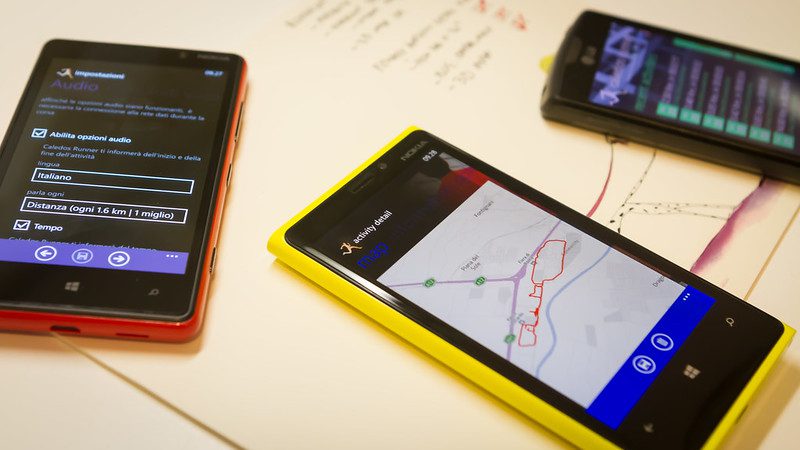
Madagascar is one of the world’s fifth-largest islands located off the east coast of Africa. Its population consists of more than 22 million people. Many of these people live in rural, impoverished areas. Additionally, many families cannot afford basic needs such as food, shelter or transportation. However, some people have found a way to find work through telecommunication. Here are some examples of how smartphones in Madagascar are bridging the wealth gap.
Madagascar’s Economy
Cell phones are efficient, fast and reliable in times of crisis. Currently, 96% of Americans own a cell phone. Now, villages in Madagascar are benefitting from telephone access as well. Since 2008, the International Finance Corporation (IFC) has been doing business with Zain, a telecommunications company. IFC and Zain launched Village Phone, a campaign that helps bring change to local communities. This campaign creates jobs and promotes entrepreneurship by allowing small companies to sell mobile air time. Moreover, it helps people gain experience in areas like finance, information technology and business.
This knowledge is crucial to sustaining Madagascar’s economic future. The nation’s economy is largely based on agriculture, fishing and tourism. The economy now provides around 74% of the GDP, with 26.2% coming from the agriculture sector alone. The influx of technology will help strengthen Madagascar’s employment by enabling residents to improve in their respective fields.
Literacy Rate
Smartphones in Madagascar are also improving the literacy rate. In 2005, Madagascar’s literacy rate was at 58.4%. Meanwhile, in 2018, it climbed to 74.8%, an immense growth that rarely occurs in reality.
The relationship between growing literacy rates and texting is strong. Texting is a process that involves typing out letters, numbers and composing sentences. Thus, texting helps children gain more exposure to the written word. Greater exposure to the written word has a link to better reading skills.
Improved Education
Smartphones in Madagascar are accelerating the rate at which people receive information. Furthermore, smartphones help promote and improve access to education. Children who learn to read at an early age often become more capable of understanding syntax, grammar and literature. However, COVID-19 has caused many setbacks for students. Many schools closed in March 2020 due to the pandemic. A young mother expressed concern by saying, “It does not make me happy that my children are no longer going to school. Years don’t wait for them. They have already lost a lot.”
Thankfully, alternative options for learning are now available. Radio, television and smartphones are the main pipelines that support distance learning. Most recently, CISCO, a telephone company, and the Ministry of National Education and Technical and Vocational Education (MENETP) have launched a support platform to help with limited internet access to ensure learning continues.
Smartphones in Madagascar have proven to be especially useful for informing people of the COVID-19 infection rate and teaching children to wash their hands properly. Furthermore, this technology is providing hope in creating a more sustainable future for people.
– Nancy Taguiam
Photo: Flickr

Organizations Combating Food Waste in the UK
The Facts on Food Waste
Since World War I, the U.K. has struggled with food waste. The country implemented rationing methods in both World Wars to combat excess waste in times of crisis. These methods have undergone adaptation to address modern food waste issues.
Several campaigns target the impact of domestic food waste in the U.K. There has been a great success, with household waste falling 6% in a three-year span. Still, an estimated 4.5 million tons of food goes to waste. Meal planning and using food within the home reduce domestic food waste. Small and simple actions on the individual level lead to large change across the nation.
The exact amounts of waste in the food industry are not clear, however, estimates are concerning. Food services waste roughly one million tons, “equivalent to throwing away one in six meals served.” Surplus food is responsible for much of this waste. Food producers produce food in quantities too large to match consumption. Additionally, while some of the food remains edible, it may be undesirable due to its appearance. In 2018, 20-40% of supermarket produce underwent disposal for failing to meet cosmetic standards.
Food waste comes with a price tag for individual households and the food services sector. Industries lose £2 billion due to excess food. Meanwhile households, manufacturing, retail and food services waste an estimated £19 billion worth of food annually. Solving the matter of food waste is not only of humanitarian interest but of economic value too.
The Role of WRAP
WRAP came about in 2000. It has successfully brokered agreements with several industries to reduce waste, including food retail. With the United Kingdom’s population expected to grow in coming years, there will be an increased need for food, resulting in possible excess waste. WRAP’s 2025 Food Vision tackles seven aspects of food waste:
Each focus point works in tandem. Improving efforts in one sector will benefit the others. Therefore, food waste reduction initiatives must address each aspect to ensure optimal success.
WRAP works with businesses and provides a roadmap and toolkit to guide parties interested in reducing food waste. The organization encourages businesses to set a target goal for reduction, to measure appropriately and to effectively act. The initiative aims to ensure the U.K. meets its Sustainable Development Goals (SDGs).
WRAP began the Love Food Hate Waste campaign in 2007. The campaign raises awareness and teaches simple steps to reduce waste on an individual level. The Love Food Hate Waste campaign also offers recipes to ensure that each food item goes to use.
FareShare: Combating Food Waste
The longest-running food redistribution charity in the United Kingdom, FareShare, has been giving back to communities since 1994 by ensuring that no food goes to waste. The organization solves two problems with one solution: reduce waste and solve hunger by putting surplus food to good use. Powered by volunteers and fueled by charities, FareShare has provided millions of meals to vulnerable populations.
The process is simple: retailers supply FareShare with their surplus food and FareShare redistributes the goods to local charities. FareShare supports almost a million people every week. The U.K. economy also benefits by saving £51 million each year.
FareShare does not tackle its grand mission alone. The Borgen Project spoke with James Persad of FareShare who says, “There are still tons of food going to waste, enough for millions of meals. Our mission is not possible without our partners.” Businesses both big and small have committed to the cause. Nestlé is one of FareShare’s longest ongoing partnerships. From 2005 to 2016, they redistributed “roughly six million meals worth of food” to those in need.
Efforts have led to creative innovations. One such success is FareShare Go, a service that allows local supermarkets to donate surplus food to charities through text messages. The initiative received recognition from the World Food Innovation Awards in 2018.
Addressing Dual Issues
Food redistribution efforts are successfully combating food waste. Hunger and food waste are two dire problems society faces, but thankfully, solutions have emerged that address both. These food rescue solutions combat hunger by ensuring that no food goes to waste.
– Kelli Hughes
Photo: Flickr
Smartphones in Madagascar are Bridging the Gap
Madagascar is one of the world’s fifth-largest islands located off the east coast of Africa. Its population consists of more than 22 million people. Many of these people live in rural, impoverished areas. Additionally, many families cannot afford basic needs such as food, shelter or transportation. However, some people have found a way to find work through telecommunication. Here are some examples of how smartphones in Madagascar are bridging the wealth gap.
Madagascar’s Economy
Cell phones are efficient, fast and reliable in times of crisis. Currently, 96% of Americans own a cell phone. Now, villages in Madagascar are benefitting from telephone access as well. Since 2008, the International Finance Corporation (IFC) has been doing business with Zain, a telecommunications company. IFC and Zain launched Village Phone, a campaign that helps bring change to local communities. This campaign creates jobs and promotes entrepreneurship by allowing small companies to sell mobile air time. Moreover, it helps people gain experience in areas like finance, information technology and business.
This knowledge is crucial to sustaining Madagascar’s economic future. The nation’s economy is largely based on agriculture, fishing and tourism. The economy now provides around 74% of the GDP, with 26.2% coming from the agriculture sector alone. The influx of technology will help strengthen Madagascar’s employment by enabling residents to improve in their respective fields.
Literacy Rate
Smartphones in Madagascar are also improving the literacy rate. In 2005, Madagascar’s literacy rate was at 58.4%. Meanwhile, in 2018, it climbed to 74.8%, an immense growth that rarely occurs in reality.
The relationship between growing literacy rates and texting is strong. Texting is a process that involves typing out letters, numbers and composing sentences. Thus, texting helps children gain more exposure to the written word. Greater exposure to the written word has a link to better reading skills.
Improved Education
Smartphones in Madagascar are accelerating the rate at which people receive information. Furthermore, smartphones help promote and improve access to education. Children who learn to read at an early age often become more capable of understanding syntax, grammar and literature. However, COVID-19 has caused many setbacks for students. Many schools closed in March 2020 due to the pandemic. A young mother expressed concern by saying, “It does not make me happy that my children are no longer going to school. Years don’t wait for them. They have already lost a lot.”
Thankfully, alternative options for learning are now available. Radio, television and smartphones are the main pipelines that support distance learning. Most recently, CISCO, a telephone company, and the Ministry of National Education and Technical and Vocational Education (MENETP) have launched a support platform to help with limited internet access to ensure learning continues.
Smartphones in Madagascar have proven to be especially useful for informing people of the COVID-19 infection rate and teaching children to wash their hands properly. Furthermore, this technology is providing hope in creating a more sustainable future for people.
– Nancy Taguiam
Photo: Flickr
The High Cost of Arable Land Loss in Africa
The Extent of Arable Land Loss
According to a report published in 2015 by the Montpellier Panel, a group of agricultural and economic trade experts, “about 65% of Africa’s arable land is too damaged to sustain viable food production.” This statistic, shocking as it may be, has ramifications that extend beyond its effect on the land.
When soil becomes degraded, food production decreases dramatically, causing severe economic side effects in agriculturally dominated communities. Ecological imbalances such as these decimate the livelihoods of people all around the continent. Ultimately this results in increased poverty rates. According to the Montpellier Panel report, “In sub-Saharan Africa (SSA) an estimated 180 million people are affected, while the economic loss due to land degradation is estimated at $68 billion per year.” In short, this issue is not limited to one country or another. It extends beyond national and even continental borders.
The Causes of Arable Land Loss
The roots of this complex issue are spread across the continent and draw from a wide variety of international issues. However, the causes that can be immediately addressed lie in the heart of Africa. The Food and Agriculture Organization (FAO) writes that the “available evidence leaves no doubt that soil degradation caused by erosion, desertification, deforestation and poor agricultural practices is undermining the very resources on which African farmers and their families depend for their very survival.”
These natural causes, while addressable, require the effort and consent of the leaders of Africa’s nations. Much of the burden that Africa faces currently falls on the shoulders of the most impoverished farmers with the least resources. The solution begins when governors grant their farmers the resources to practice water and soil conservation among other sustainability practices.
Though the situation seems dire, there are many opportunities available to change-makers in Africa’s agricultural sector. The international community, in conjunction with Africa’s national governments, has the opportunity to foster major structural changes to combat the ecological threat of arable land loss.
Solutions to Boost Agriculture in Africa
Food security and environmentalism have the potential to go hand-in-hand. With that said, overexploitation as a result of desperation will only lead farmers and their land into further degradation. Nonetheless, there are potential opportunities to consider in order to combat arable land loss and boost agriculture in Africa.
– Matthew Hayden
Photo: Pixabay
Malawian Farmers: Improving Gender Equality in Food Practices
Poverty and Agriculture
Although Malawi has been on a steady upward trend toward increased childhood education and greater access to healthcare, half of the overall population suffers from poverty due to negative factors such as droughts, floods and lack of sustainable farming methods. A majority of Malawian farmers can produce only enough food to survive and cannot grow the extra crops needed for future food supplies or trading opportunities. Thus, rural communities often live from harvest to harvest without a stable supply of fresh food and produce.
The Role of Women in Malawian Agriculture
Within the small rural communities of Malawi, societal norms divide the household responsibilities along gender lines, with the men of the household taking charge in plowing the fields, tending to crops and performing other farming duties. In addition to taking on agricultural tasks, women within the community complete household chores and watch over the children. Although the amount of female participation in Malawian farming practices is commendable compared to other small countries with similar economic conditions and demographics, the farming system is strenuous on women, who must perform double duties to ensure that the household runs smoothly.
With the economic fragility of Malawi, patriarchal structures have proven detrimental to the well-being and security of the community. It is difficult for Malawian female farmworkers to reach their full production potential and devote their full energy to sustainable farming practices and education. Families cannot produce enough food to sustain themselves and others in the village due to unequal task divisions.
Supporting Women in Malawi
A team of researchers recently undertook an experimental project to subvert the rigor of gender roles in Malawi and take some of the economic pressure off of Malawian women, often affected the most by poverty. One practice that researchers implemented to dismantle gender roles is to change the public perception of cooking and food practices in Malawi. Due to the reliance on starchy grains and roots that must be cooked in the Malawian diet, processing and cooking foods take up most Malawian women’s time. Seeing this phenomenon, researchers developed cooking tutorials to educate men on how to cook and also converted cooking into a fun activity by proposing it as a kind of competition in which different villages could contest who had the best male chefs.
Dismantling Gender Norms
As Raj Patel recounts in his lecture on transparency in the food system, although the social experiment that researchers conducted in Malawi initially seemed like a trivial novelty, its impact carried through into the daily lives of Malawian farmers. This small change in daily habits encouraged the men to shoulder more domestic tasks and act beyond the scope of traditional gender norms. In the short four-year period that researchers observed, Malawian malnutrition decreased and the women surveyed reported feeling more fulfilled and supported in their homes. Although there is still far to go in destabilizing the patriarchal structures present in Malawian society, small steps in the food system are the key to achieving bigger milestones such as reducing poverty and promoting gender equality.
– Luna Khalil
Photo: Flickr
5 Countries Leading in Poverty Rate Reduction
The World Bank published an analysis in 2019 of the 15 countries with the greatest poverty rate reduction from 1999-2015. Of those 15 countries, Tanzania, Tajikistan, Chad, the Democratic Republic of the Congo (DRC) and The Kyrgyz Republic were the most successful in reducing poverty. While some of these five countries are continuing to reduce their poverty levels, others have recently faced hardships, stagnating their ability to eradicate poverty.
5 Leaders in Poverty Reduction
Looking Forward
While some countries have regressed in poverty rate reduction, others continue to decrease poverty rates. However, good news exists even for countries with increased poverty rates. Nonprofits work to provide relief, aid and policy changes that help those in poverty.
– Sophie Shippe
Photo: Flickr
The Impact of Mesut Özil’s Charity Work
Özil Recognizes His Privileged Position
Mesut Özil was born in Germany as the fourth child of Turkish immigrants. Özil’s family struggled financially throughout his entire childhood and his mother had to take on several different cleaning jobs to make ends meet. As a result, Özil recognized his incredibly privileged position as a successful soccer player. He is extremely compassionate toward impoverished communities. Thus, Özil has been giving back to those who desperately need aid.
Supporting Impoverished Communities
Özil’s salary at Arsenal London was an estimated $25 million a year in 2013. Thus, the 12.5% cut would have decreased his salary by about $3.2 million a year. Additionally, the club and its billionaire owner Stan Kroenke would gain his loss. Furthermore, Özil and other players were doubtful that their pay cuts would actually aid staff members. Özil stated that he was even willing to give up more of his salary if the club could prove it was necessary. In the end, he decided to increase his charity work instead.
Mesut Özil’s Charity Work
Özil’s refusal to accept the pay cut placed him in the center of media attention in 2020. However, many have known him for his incredibly generous nature for a long time. For example, Özil donated his prize money of $329,000 after winning the World Cup in 2014. He donated to the BigShoe project and financed vital surgeries for 23 children in Brazil. Additionally, Özil and his wife donated to 16 refugee camps in Turkey and Syria after their wedding. Their contribution provided food to about 100,000 people. Furthermore, the couple funded important surgeries for about 1,000 children around the world.
The Way Özil Spent the Money he Refused to Give Up
Özil donated money to support people in need all across the globe after rejecting Arsenal’s pay cut. Homeless shelters and schools in North London received nutritious food in the midst of the COVID-19 pandemic. Furthermore, he increased his financial contributions to the BigShoe project to provide children with much-needed surgeries. He also donated $111,542 to the Turkish Red Crescent in May 2020. The money went toward feeding families in Turkey and Syria during Ramadan. Mesut Özil’s charity work also introduced a new range of footwear and donated all of the money that the footwear earned. It granted children in Italy access to digital education materials during the COVID-19 pandemic.
Fans and the media continue to criticize Özil’s refusal of the pay cut. Many consider the money he donated to impoverished communities to be more important than giving it back to Arsenal. However, Özil’s charity work has had an undeniable positive impact on many people’s lives.
– Bianca Adelman
Photo: Flickr
Supporting Women in Barbados Combats Trafficking
Caribbean Institute for Women in Leadership
The Caribbean Institute for Women in Leadership (CIWiL), together with several partners, works to create a more favorable environment for female leadership. The CIWiL is a multi-partisan organization without political affiliations that strengthens female leaders’ decision-making in Barbados. Its work is primarily achieved through building initiatives. Currently, webinars are accessible through the CIWiL website. The webinars are about leadership, politics and socio-economic subjects. The website has other political and economic resources such as initiatives for Young Women in Leadership (YWiL) in the Caribbean. One of these initiatives took place in October 2020 in Antigua and Barbuda. This program worked on building personal development skills for women ages 18 to 25 who are actively passionate about public leadership.
Efforts to Support Entrepreneurship
In July 2011, the CIWiL began its activity in Barbados to support events and initiatives that empower female entrepreneurs. In February of the same year, the Barbados government’s Bureau of Gender Affairs held a workshop to celebrate the Day of Women of the Americas for Leaders. The workshop hosted women in the Caribbean who are actively aspiring political or public leaders, helping them learn and build on their leadership skills. The Bureau is confident that supporting entrepreneurship will aid women in Barbados and be an efficient way to combat human trafficking. Developing the country’s economy helps decrease poverty in the country. Providing outlets for businesses to grow also creates significant opportunities for women to explore healthier income avenues.
HIV/AIDS Prevention
The Caribbean is leading at number two for the highest HIV/AIDs prevalence rate in the world. USAID launched a five-year initiative in 2015 to support the Caribbean’s efforts to combat the virus. The Bureau of Gender Affairs declares women’s health a pertinent issue, that if addressed, will support women trafficked in Barbados. From July to September 2011, the Bureau conducted a series of workshops addressing HIV/AIDS. The workshops discussed women’s susceptibility to HIV/AIDS and how to create more awareness and understanding of the topic. The event successfully implemented supportive measures for women in Barbados, including educational tools.
Barbados-United States Partnership
The U.S. Embassy Bridgetown Public Affairs Section (PAS) is trying to implement a new fixed grant system for Barbados. There are about 24 grants awarded for up to $24,000 each. These grants hope to strengthen the Barbados relationship with the U.S. Department of State. The more economically beneficial relationships Barbados has, the greater the opportunity to decrease poverty. Providing women trafficked in Barbados with more options for quality work is imperative to stop the lure of trafficking.
Commitment to Anti-Human Trafficking
Barbados will continue to be successful with its measures to support women and stop human trafficking. The Bureau of Gender Affairs is putting stress on expanding women’s economic status through productive initiatives that provide more opportunities for women in Barbados vulnerable to human trafficking. These anti-human trafficking efforts are the start of increased female empowerment in Barbados and the rest of the Caribbean.
– Libby Keefe
Photo: Flickr
Bloody Good Period: Period Poverty in the UK
Period poverty in the U.K. affects millions and the pandemic has exacerbated it. In 2017, research studies discovered that one in 10 girls in Britain could not afford period products. It also revealed that one in seven struggles to afford period products. Periods embarrass almost 50% of girls in the U.K. between the ages of 14 and 21. Meanwhile, one in seven have revealed that they do not know what happens when they have their period. Additionally, only one in five girls feels comfortable talking about their periods. In response to this, the nonprofit organization Bloody Good Period provides support for asylum seekers and refugees in the U.K.
What is Period Poverty?
Period poverty is a lack of access to period products and information on period products and menstruation. According to the charity Freedom4Girls, this issue affects more than 300 million around the world.
How Does Period Poverty Impact Asylum Seekers and Refugees?
Women who seek asylum in the U.K. receive 37.75 pounds ($52.90) a week to live on. This amount of money is not enough for women to live on or pay for monthly period products. Failed asylum seekers who cannot receive asylum support must rely on charities for their basic needs.
According to the Women for Refugee Women brief, 75% of the 78 women interviewed struggled to access period pads and tampons. These women had to overuse period products, improvise period wear or beg for money to pay for products. It is common for asylum-seeking women to have to choose to live without food or other basic needs to pay for period products. Period poverty makes it even more difficult for asylum-seekers to rebuild their lives.
What is Bloody Good Period?
Gabby Edlin started Bloody Good Period after helping refugee families at a London drop-in center. After learning that period products were not regularly passed out, Edlin questioned the logic. She started the organization with a simple Facebook message.
The organization takes a head-on approach to the issue, encouraging a simplistic approach that consults women on their period wants and needs. Bloody Good Period also works to start a conversation on periods to create a space where women do not feel ashamed of their period while reducing misinformation and increasing awareness. The organization is also partnering with The Body Shop, which funds education workshops on periods and menopause for refugees and asylum seekers.
Bloody Good Period’s Methods
Bloody Good Period’s partnership with The Body Shop has resulted in the donation of 10,000 packs to local charities and organizations for the homeless, women refugees, asylum seekers and refugees in the past year. The two organizations have been vital during the uncertainty of the COVID-19 pandemic.
Since the start of the pandemic in March 2021, Bloody Good Period has provided supplies to food banks, created community support groups and granted support to people facing domestic violence. It has also worked to aid asylum seekers, refugees and homeless shelters. The charity provided 53,000 products since the pandemic and 700 packs of menstrual products in March and April 2020. While Bloody Good Period has supplied a high number of products, the demand has been even higher during the pandemic.
Bloody Good Period’s work is necessary to fight period poverty in the U.K. Continuous support is always necessary, especially during the pandemic, because “periods don’t stop in a pandemic,” said Bloody Good Period’s founder Gabby Edlin.
– Nyelah Mitchell
Photo: Unsplash
Africa’s Mining Industry is Bursting With Opportunity
When people think of natural resources, Africa may not often the first place that comes to mind. A lot of the continent is still developing while civil war and poverty riddle many of its countries. However, Africa is home to an abundance of natural resources such as metals and minerals. More than 100 mining companies currently operate out of South Africa alone. Additionally, Africa is responsible for about 20% of the world’s gold production and is also a large producer of other metals such as cobalt, copper and lithium. It is essential for countries to possess a raw material to trade in order for the continent to make the leap from developing to developed. Africa’s mining industry could be the crucial ingredient necessary for the continent to make that leap.
The Barriers
The lack of domestic companies and education are two major hangups preventing Africa from utilizing all of its metal and mineral reserves. Although Africa is home to valuable raw materials, many foreign companies have moved in to mine them. Additionally, it has not reinvested enough into local communities. The solution is to restructure how the foreign companies operate and slowly allow domestic companies to move in.
Foreign companies bring the knowledge and machinery necessary to tap into the mines’ full potential. However, African workers do not receive the opportunities they deserve. Foreign companies pumped in almost $20 billion to fund mining operations throughout Africa between 2015 and 2018.
One possible solution is for foreign mining companies to provide training programs and management positions to locals. With proper guidance, African natives can receive training to handle mining operations themselves. Thus, this would eliminate the need for a foreign workforce and would open up the floodgates for advancement within countries like Zimbabwe and Botswana where metals and minerals are plentiful.
A Major Opportunity
The electric vehicle (EV) market is perhaps the biggest opportunity for Africa’s mining industry. Africa is home to large reserves of cobalt, lithium and nickel. All of these are crucial materials for EV batteries. Forbes estimates that almost 40% of all car sales will be electric by 2040. In addition, several automakers have made the commitment to go totally electric by 2050.
It is undeniable that the world is making a major shift from gas power to electricity, and the demand for these metals has skyrocketed. If more domestic companies arise, Africa will have a major influence on trade on the world stage. This would give the continent immense bargaining power. Moreover, it would make Africa far more appealing to trade in the next few decades.
The Good News
Although Africa’s mining industry needs improvement, several reserves remain untapped. This means that there is still plenty of time to improve practices and open up even more jobs for locals. Almost all mining companies in Africa could be domestic with more government involvement and regulation.
A thriving local mining industry will open up opportunities and incentives for natives. Furthermore, local industries will feel more compelled to reinvest in their home countries than companies from overseas. The opportunity exists, African countries just need to capitalize on it.
– Jake Hill
Photo: Flickr
Higher Education Opportunities for Refugees
Inclusive Education
One of the U.N. Sustainable Development Goals (SDGs) is inclusive educational access for all. This includes more access to higher education for refugees. The UNHCR’s Refugee Education 2030 strategy aims to achieve educational parity on all levels and raise the enrolment of refugees in higher education to 15%. A hybrid model of online and in-person instruction is becoming more popular. Increased interest and investment in online learning and degree certification could potentially provide new opportunities in higher education for refugees.
Providing Opportunities
Launched in March 2019, a hybrid learning initiative in Turkey has proven successful, serving more than 28,000 Syrian refugee students. The UNDP Turkey’s Syria Crisis Response and Resilience Programme started the initiative in order to offer easily accessible Turkish language lessons to Syrian refugees for them to better integrate into Turkish society. The initiative is funded by the European Union and implemented in cooperation with the Turkish Ministry of Education. The online language program is flexible, personalized and offers in-person meetings with an instructor. This is in addition to an array of online courses. Since the content is online, students can continue with their courses even if their living situation changes. Furthermore, a continuous reliable internet connection is not necessarily needed.
The University at Albany offers online medical courses in Arabic to Syrian refugees. The program launched in 2016 with 320 students enrolled. The courses give refugees who already have some form of higher education the chance to continue taking courses in their respective fields. The program also includes English language classes. It is part of a catalog of many other similar initiatives on the website MOOCs4inclusion. Massive Open Online Courses (MOOCs) are free digital education classes. MOOCS are accessible anywhere there is an internet connection.
Barriers to Learning
Western universities develop and teach the majority of online courses and degree programs used in refugee camps. However, the majority of refugees do not end up in a Western country, they stay in the refugee camp or return home. In order for online education to be truly successful, courses must take the particular circumstances of refugees into account. Researchers at the University of Geneva, Paul O’Keeffe and Abdeljalil Akkari, started a basic medical training course in Kenya’s Kakuma refugee camp. The goal of the online course was to focus on relevant health issues in the area of Kakuma. The refugees helped inform the course content. Culturally relevant courses and an understanding of life in a refugee camp are important to implement successful online education geared toward refugees. Another barrier often encountered is that reliable internet is usually a necessity for online learning, yet a rare resource in most refugee camps.
Solutions
Education for Humanity, a program of Arizona State University (ASU), uses technological innovations to break down some of the common barriers of online higher education opportunities for refugees. The program includes education on how to be a successful digital learner and the option of “earned admissions” for refugees without the required documents or qualifications for enrollment. In order to break down the internet barrier, Education for Humanity uses technology that does not require reliable access to the internet.
SolarSPELL is a solar-powered digital library that acts as an offline WiFi hotspot. Students access the course content by connecting their phone, tablet or laptop to the SolarSPELL’s offline WiFi signal. A whole 95% of the content is available offline and is available for download so students can still study without being connected to SolarSPELL. In 2019, Education for Humanity used SolarSPELL to offer an agribusiness course in the Nakivale refugee camp in Uganda.
Easier access to education for refugees is an important goal. Recent innovations such as SolarSPELL aim to break down barriers so that refugees can access higher education opportunities to ensure a promising future.
– Caitlin Harjes
Photo: Flickr