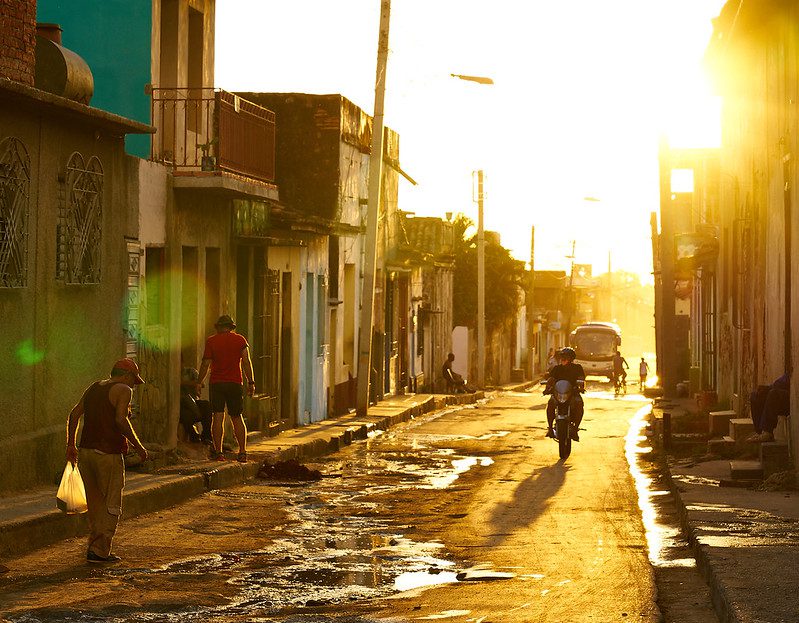
 Cuba and its capital city, Havana, must battle a rising threat: hurricane season. While many may think of Cuba as a vacation destination, Cuba is home to an aging population dependent on agricultural exports with a general lack of everyday necessities. Moreover, a significant number of Cuban citizens live in poverty. Increasing numbers of natural disasters only exacerbate this issue. Hurricanes impact poverty in Cuba and reduce the country’s ability to respond. Just recently, on July 5, hurricane Elsa hit Cuba with winds of over 60 mph. While overall damages were minimal, Elsa is merely one example of the growing annual threat.
Poverty in Cuba
Poverty in Cuba looks distinctively different from poverty across the world. For instance, Cuba has a planned economy, dependent on its agricultural and tourism sectors, with many social programs like universal access to healthcare, education and entertainment. However, while unemployment rates are low and poverty data is largely unknown, the Center of Humans and Democracy estimates that 66% of Cuban households receive less than $100 per month. Half of those families subsist on less than $1.33 a day.
Because of widespread poverty and an outdated healthcare system, COVID-19 posed a significant risk to the Cuban population and economy. Throughout 2020, Cuba experienced multiple food shortages, including staples such as chicken, eggs and rice. As a result of the pandemic, economists expected GDP to fall by 6% in Cuba.
How Do Hurricanes Aggravate Poverty in Cuba?
The simple answer to how hurricanes impact poverty in Cuba is that hurricanes are costly. Repairing infrastructure and housing damages requires an impressive governmental response. For example, in 2005, Hurricane Dennis caused Cuba an estimated $1.4 billion in damage, destroying 120,000 homes and killing 16 Cuban citizens. Cities like Havana were without power for several days. Additionally, more than 20% of the country was without water for an extended period. The U.S. and EU offered disaster relief aid to Cuba, but the Cuban government rejected both offers.
However, it’s more complicated than the mere cost. Oftentimes, powerful hurricanes hurt Cuba’s agricultural sector by destroying crops that are critical to Cuba’s economy. This makes it even harder to respond to the initial damages. Hurricane Dennis resulted in significant damage to Cuban agriculture, specifically to the citrus, fruit and vegetable industries. The storm destroyed 30,000 acres of bananas and 127,000 tons of vegetables. Economic losses like these ones inhibit Cuba’s overall disaster response and economic rebound.
Hurricane Irma and its Impact on Poverty in Cuba
Similar to Hurrican Dennis, in 2017, Hurricane Irma destroyed more than 4,000 homes on Cuba’s coast, severely damaging the country’s electoral grid and disrupting its agricultural industry. Hurricane Irma destroyed 7,400 acres of banana, rice and sugar crops across Cuba. The damage resulted in a food shortage, an exacerbation of poverty and a decline in the agricultural sector that plagued Cuba throughout the following months.
Not only do hurricanes cost billions of dollars in repairs and damages, but they consistently damage crops, constrict the country’s agricultural economy and hinder the country’s ability to fund an appropriate response. Hurricanes impact poverty in Cuba by constricting the country’s economic resources, response and food supply.
Additionally, scientists predict natural disasters and tropical storms are likely to increase as a result of climate change. In the coming years, Cuba will likely experience more storms, more agricultural disruptions and a higher need for a stronger response.
Hurricane Preparedness and Recovery
While Cuba is already a world leader in hurricane preparedness and recovery, increased storms will require a re-evaluated response. As another hurricane season reaches Cuba’s shore this summer, the country and its government must consider what more can be done to react to these potential threats.
After Hurricane Irma, Floridians, many with family in Cuba, mobilized to form nonprofits like the CubaOne foundation to help the country and its citizens recover from the natural disaster. CubaOne raised $50,000 for relief and sent more than 40 volunteers to help rebuild some of the areas most affected by the storm. While hurricanes aggravate poverty in Cuba, network responses and relief like these will aid Cuba in overcoming the effects of natural disasters.
– Zoe Tzanis
Photo: Flickr

A Closer Look at Belgium’s Foreign Aid
Today, Belgium’s foreign aid program is one of the most generous in the world. In 2020, Belgium allocated 0.47% of its gross national income to official development assistance (ODA), putting it squarely within the ranks of the world’s most generous givers. But, what is just as impressive as the extent of Belgium’s foreign aid is the effective system Belgium has for allocating aid. Belgium does its best to make sure that every euro has the maximum impact.
Avoiding Past Mistakes
Belgium’s foreign aid program was not always a model system. During the Cold War, led by geopolitical interests, Belgium gave vast amounts of money to the corrupt ruler of Zaire (now the Democratic Republic of the Congo), Mobutu Sese Seko. Mobutu used the aid to serve his personal interests and little aid went toward helping Congolese people. Today, the Belgian government is far more careful in ensuring that its foreign aid goes directly to its target.
The Belgian government lists independence and neutrality as two of its main foreign aid objectives. Independence refers to the idea that “bodies involved in humanitarian aid are not bound by any other political decisions and actions taken by the donors in the field.” This concept aims to prevent politicizing interference. Neutrality indicates “that no party involved in armed or unarmed conflict may receive preferential treatment in the context of humanitarian aid.” Both of these concepts help ensure that aid always goes where it is most needed rather than being a political tool.
The Distribution of Aid
Today, Belgium still directs large amounts of aid to the DRC. The DRC “receives a quarter of bilateral aid” from Belgium. This is in part because of Belgium’s dark colonial history in the country and also because of the intimate regional knowledge Belgian developers now have. As a result of all its investment, Belgium has become a leader in the fight to reduce poverty in the DRC, where a lack of infrastructure and constant conflict plunged 73% of the population into extreme poverty in 2018.
Focusing the lion’s share of its money on a single country has enabled Belgium to use its limited resources to maximum effect, alleviating food insecurity for many Congolese people and funding education, among many other projects. Another way Belgium ensures effective foreign aid is by maximizing the reach of its monetary contributions. Much of Belgium’s bilateral aid goes to international funds that can allocate money on a much smaller level. The most important of these groups are civil society organizations (CSOs).
CSOs are small volunteer organizations that address the specific needs of particular communities, much like NGOs. By diverting a significant portion of money to CSOs, Belgium is able to operate on both a small and a large scale, targeting both governments and smaller communities. The advantage of Belgium’s multilevel approach to foreign aid is obvious: taking multiple avenues toward aid ensures that no person or group ends up behind.
A Model for Other Countries
The Belgian foreign aid system is not without flaws. Impressive as its numbers may be, Belgium’s foreign aid has so far failed to reach its goal of 0.7% of GNI. In 2003, Belgium’s foreign aid reached 0.6% GNI but declined in subsequent years. Despite not yet reaching its foreign aid target, the Belgian foreign aid strategy has led to great success and serves as a model for other wealthy countries to emulate.
– Thomas Brodey
Photo: Flickr
Happiness and Mental Health in Denmark
Every year on March 20, the United Nations Sustainable Solutions Network publishes the World Happiness Report. The report assesses the state of happiness in 156 countries, acquiring data through quantitative surveys and research. The report considers GDP per capita, life expectancy, social support, trust and corruption, perceived freedom to make life decisions and generosity. Based on these metrics, Denmark has consistently ranked in the top 10 happiest countries in the world for the last nine years. Naturally, this has prompted the world to take a closer look at what contributes to such positive mental health in Denmark.
Robust Social Security and Social Welfare
It is no secret that the Danish income tax rate is one of the highest in the world. The income tax rate for the average Dane earning $43,000 is 45% and increases to 52% for those earning $67,000 or more. However, a Gallup survey conducted in 2014 found that almost 90% of Danes are happy to pay their taxes. This is because the high tax rate translates into improved societal welfare. For instance, Denmark provides free healthcare to all and education is also free, even at the tertiary level.
The Importance of a Work-life Balance
The Danes recognize that time affluence is a vital prerequisite for happiness. As such, Danes generally only work an average of 37 hours spread across five days. This arrangement provides them with ample leisure time to pursue hobbies or spend time with friends and family. Moreover, many treat mental health in Denmark with the same seriousness as physiological health in the workplace. Employees take “stress leave” to avoid burnout and people impacted by job losses receive generous unemployment benefits from the government.
The Philosophy of Hygge
The most common translation of hygge (pronounced hoo-ga) is a sense of coziness or comfort. It is the ethos of the Danish lifestyle and emphasizes taking pleasure in simple things. During the bleak winters, the Danes take up hygge practices such as playing a board game with friends or reading a book with a cup of hot chocolate. According to A.K. Pradeep, author of “The Buying Brain,” hygge encourages activities that minimize stress and create comfort to boost serotonin production. Consequently, the incorporation of hygge into everyday life reduces stress levels and helps with depression. This greatly improves the quality of mental health in Denmark.
Tackling Mental Health Issues in Denmark
By no means should one construe these aspects of life in Denmark as an absence of mental health issues. In fact, estimates suggest that 38% of Danish women and 32% of Danish men will receive professional help for mental health issues at some moment in their lifetime. While the causes for suicide and mental health illnesses in Denmark are nuanced, with regard to the mental health of young people, the high demands and pressures of today’s world contribute to anxiety and depression.
Furthermore, the suicide rate in Denmark has now plateaued at 11.4 per 100,000 since 2007. This translates to an average of 600 suicides per year, with experts in suicidal behavior acknowledging the government’s ability to do more to address the issue.
However, Denmark is not the only Nordic country celebrated for the happiness of its citizens yet struggling to make further inroads into suicide prevention. For example, in Finland, an estimated 750 Finns commit suicide every year. This is despite extensive national suicide strategies that have managed to bring down the suicide rate by more than 50% in the last 30 years.
Creating Change
Fortunately, organizations have met these staggering statistics with a determination to improve the mental health situation in Denmark. One such organization is ONE OF US. Founded in 2011, ONE OF US aims to eliminate the stigma surrounding mental health in Denmark, addressing social exclusion and encouraging individuals to seek treatment. The organization accomplishes this through its nationwide campaigns.
These efforts consist of activities and workshops to educate the public on mental health issues. Workshops also aim to teach individuals how to support people struggling with mental illness. For instance, with the youth as one of its focus areas, the organization makes presentations at educational institutions with a youth ambassador. The ambassador shares his/her experience with mental health issues and gives guidance on how to overcome these hurdles.
Although happiness is a factor that fluctuates, Denmark does its best to prioritize the integral aspects that contribute to overall happiness. The happiness rate in Denmark is a significant source of pride for former Danish Prime Minister Anders Fogh Rasmussen who believes in a model of “governance for happiness,” especially during trying times. Mental health in Denmark plays an important role in overall happiness and the country aims to continue prioritizing it.
– Vyas Nageswaran
Photo: Flickr
The State of Mental Health in Bangladesh
Out of the entire Bangladeshi population, 4% of people suffer from depression. This statistic trails just around 2% behind the world’s most depressed country, Ukraine, with 6.3% of its population suffering from depression. The government, with the assistance of organizations, is taking positive action to address mental health in Bangladesh.
Mental Health in Bangladesh
In Bangladesh, there are only 270 psychiatrists and roughly 500 psychologists serving a population of more than 166 million. This equates to 216,000 people per specialist. Most mental health professionals are located in urban areas so people in rural areas have limited access to mental health services. Furthermore, the country’s one government-run mental hospital has only 500 beds. Mental health also has limited funding. Only 0.44% of the government health budget is allocated to the mental health sector.
Mental Health Stressors
Foreign and domestic stressors can contribute to the decline of mental health. For example, recurring natural disasters, the current refugee crisis and overpopulation all affect the mental states of the Bangladeshi population. The country faces recurring floods, tornados and cyclones. A 1996 infamous tornado left 66.6% of its victims psychologically traumatized and in need of emergency psychological assistance. This statistic illustrates the severe psychological effects of natural disasters and the need for more mental health resources.
Since 2007, Bangladesh has taken in nearly 1 million refugees from Myanmar following a military crackdown on Rohingya citizens. This upsurge in population weakened the country’s already limited capacity to respond to both regional disasters and mental health crises. Many of these refugees experienced acute stress and post-traumatic stress disorder, requiring immediate health assistance. This spur in overpopulation certainly strains resources, exacerbating mental health even further.
Mental Health Stigma in Bangladesh
An estimated 10,000 Bangladeshi people die by suicide annually. However, households and the greater public are reluctant to speak out about mental health problems in fear of societal judgment. Mental health stigma is common throughout Bangladesh and there are many superstitions surrounding mental health conditions. Some believe that evil spirits cause mental health issues.
Others often ostracize people suffering from mental health conditions, leading others to hide their mental struggles and suffer in silence without help. Some people turn to traditional healers for cures. These traditional practices sometimes amount to human rights abuses and may have fatal repercussions. Traditional healers are more prevalent in the countryside where a trained mental health specialist is hard to come by. In rural areas, “village doctors with no formal training provide 65% of healthcare.”
The Good News
Bangladesh passed a new Mental Health Act in 2018, replacing a 105-year-old piece of legislation. The act aims to protect the property rights of those suffering from mental illness and includes provisions for mental health services. However, the act does not address the issue of low mental health funding, which plays an important role in increasing mental health resources. While the act faces some criticism, increased attention on mental health through legislative action is an accomplishment nonetheless.
Bangladesh finalized its National Mental Health Strategic Plan in 2020 and started implementation. In support of this plan, the WHO Special Initiative for Mental Health provides assistance to the Ministry of Health in Bangladesh to ensure the effective implementation of the strategy.
Bangladesh is taking concrete action to address mental health in the country. With commitment and support, mental health in Bangladesh can improve.
– Caroline Bersch
Photo: Flickr
How Hurricanes Impact Poverty in Cuba
Poverty in Cuba
Poverty in Cuba looks distinctively different from poverty across the world. For instance, Cuba has a planned economy, dependent on its agricultural and tourism sectors, with many social programs like universal access to healthcare, education and entertainment. However, while unemployment rates are low and poverty data is largely unknown, the Center of Humans and Democracy estimates that 66% of Cuban households receive less than $100 per month. Half of those families subsist on less than $1.33 a day.
Because of widespread poverty and an outdated healthcare system, COVID-19 posed a significant risk to the Cuban population and economy. Throughout 2020, Cuba experienced multiple food shortages, including staples such as chicken, eggs and rice. As a result of the pandemic, economists expected GDP to fall by 6% in Cuba.
How Do Hurricanes Aggravate Poverty in Cuba?
The simple answer to how hurricanes impact poverty in Cuba is that hurricanes are costly. Repairing infrastructure and housing damages requires an impressive governmental response. For example, in 2005, Hurricane Dennis caused Cuba an estimated $1.4 billion in damage, destroying 120,000 homes and killing 16 Cuban citizens. Cities like Havana were without power for several days. Additionally, more than 20% of the country was without water for an extended period. The U.S. and EU offered disaster relief aid to Cuba, but the Cuban government rejected both offers.
However, it’s more complicated than the mere cost. Oftentimes, powerful hurricanes hurt Cuba’s agricultural sector by destroying crops that are critical to Cuba’s economy. This makes it even harder to respond to the initial damages. Hurricane Dennis resulted in significant damage to Cuban agriculture, specifically to the citrus, fruit and vegetable industries. The storm destroyed 30,000 acres of bananas and 127,000 tons of vegetables. Economic losses like these ones inhibit Cuba’s overall disaster response and economic rebound.
Hurricane Irma and its Impact on Poverty in Cuba
Similar to Hurrican Dennis, in 2017, Hurricane Irma destroyed more than 4,000 homes on Cuba’s coast, severely damaging the country’s electoral grid and disrupting its agricultural industry. Hurricane Irma destroyed 7,400 acres of banana, rice and sugar crops across Cuba. The damage resulted in a food shortage, an exacerbation of poverty and a decline in the agricultural sector that plagued Cuba throughout the following months.
Not only do hurricanes cost billions of dollars in repairs and damages, but they consistently damage crops, constrict the country’s agricultural economy and hinder the country’s ability to fund an appropriate response. Hurricanes impact poverty in Cuba by constricting the country’s economic resources, response and food supply.
Additionally, scientists predict natural disasters and tropical storms are likely to increase as a result of climate change. In the coming years, Cuba will likely experience more storms, more agricultural disruptions and a higher need for a stronger response.
Hurricane Preparedness and Recovery
While Cuba is already a world leader in hurricane preparedness and recovery, increased storms will require a re-evaluated response. As another hurricane season reaches Cuba’s shore this summer, the country and its government must consider what more can be done to react to these potential threats.
After Hurricane Irma, Floridians, many with family in Cuba, mobilized to form nonprofits like the CubaOne foundation to help the country and its citizens recover from the natural disaster. CubaOne raised $50,000 for relief and sent more than 40 volunteers to help rebuild some of the areas most affected by the storm. While hurricanes aggravate poverty in Cuba, network responses and relief like these will aid Cuba in overcoming the effects of natural disasters.
– Zoe Tzanis
Photo: Flickr
The Impact of COVID-19 on Poverty in Lebanon
Lebanon is facing an economic crisis of unparalleled proportions. COVID-19 has severely impacted economic activity in Lebanon as it has in other countries throughout the world. However, the Lebanese economy was in freefall even prior to the pandemic. Since the economic collapse began in 2019, Lebanon has seen triple-digit inflation, heightened unemployment and a skyrocketing poverty rate. Stringent lockdowns in January 2021 kept the spread of COVID-19 under control. However, the impact of COVID-19 on poverty in Lebanon is severe, exacerbating Lebanon’s pre-existing crises and hindering economic recovery.
The Economic Crisis in Lebanon
Lebanon was once a popular destination for tourists who wanted to experience the Middle East’s beauty and rich culture. However, economic collapse and the COVID-19 pandemic have decimated one of the largest sectors of Lebanon’s economy: tourism. Economic instability has exacerbated precarious living conditions for millions of impoverished Lebanese people.
Public debt defaults and a banking liquidity crisis forced many businesses to close even before the pandemic hit. Lebanon’s economy has steadily contracted since 2019. The impact of COVID-19 increased Lebanon’s unemployment rate from 6.04% in 2019 to 6.6% in 2020, the highest rate seen in a decade. The failure of Lebanon’s economic and financial systems has resulted in millions unable to afford basic necessities.
Lebanon and Syria
The ongoing Syrian Civil War that began in 2011 has had significant ramifications in Lebanon. It has also contributed to the collapse of the Lebanese economy. Lebanon has had a long and fluctuant history with its much larger neighbor, Syria. Substantial business relationships exist between Lebanon and Syria’s political and economic elites. Lebanon’s economic disasters remain intrinsically tied to the decade of destruction in Syria. This has created a crisis of its own in Lebanon.
Lebanon houses more Syrian refugees than any other country. With Palestinian refugees included, refugees make up roughly a quarter of Lebanon’s population. These refugees live in camps and shantytowns that offer little protection from the elements and are void of public services. The COVID-19 pandemic has increased the number of Syrian refugees in Lebanon living in extreme poverty from 55% to 90%.
Civilian Poverty and COVID-19
Refugees are not the only ones struggling in Lebanon. With a poverty rate of more than 55%, material deprivation and the suffering it causes are widespread among the 6.8 million Lebanese natives and refugees alike. Many social support services were cut in response to the debt crisis, which left many with little assistance in the face of catastrophe.
Furthermore, August 2020’s Beirut port explosion killed at least 200 people, destroyed thousands of buildings and caused billions of dollars in property damage. Lebanon initially dodged a severe COVID-19 outbreak. However, medical services and ICU beds became heavily strained when cases peaked in January 2021. Thousands of Lebanese people have taken to the streets in past years to protest what they see as a corrupt and inept political class that has consistently failed the citizens of Lebanon.
COVID-19 Aid
In January 2021, The World Bank approved a $264 million project to reduce poverty in Lebanon. The Emergency Crisis and COVID-19 Response Social Safety Net Project (ESSN) will “provide emergency cash transfers and access to social services” to about 786,000 impoverished Lebanese people “reeling under the pressure of Lebanon’s economic and COVID-19 crises.” The project will also focus on developing social security nets in Lebanon to ensure an improved response to future economic shocks.
Exactly 147,000 households living in extreme poverty will receive financial support for one year. Additionally, “87,000 children between the ages of 13-18 will receive a top-up cash transfer to cover the direct costs of schooling.” A core objective of the ESSN is to create a sustainable social safety net that can readily support impoverished Lebanese people even after the World Bank’s aid ends. It is vital for aid to focus on those most vulnerable as the ESSN project highlights.
The Road to Recovery
The impact of COVID-19 on poverty in Lebanon has been harsh. While wealthy nations’ economies suffered from lockdowns and closures, the economic effects of the pandemic were even more acute in impoverished nations struggling to recover from pre-existing catastrophes. COVID-19 has made poverty more widespread, narrowing pathways out of poverty.
While the worsening situation in Lebanon has attracted international attention and support, the structural issues that led to extreme poverty have only been alleviated, not solved. With continued commitment and support from the global community, Lebanon can successfully rebuild and recover.
– Will Pease
Photo: Flickr
Period Poverty in Afghanistan
Lack of Menstrual Education and School Absenteeism
Period poverty negatively impacts female education due to menstrual-related absenteeism. The Child Deprivation Analysis of 2020 indicates that “30% of girl students in Afghanistan are absent during menstruation because schools do not have adequate water, sanitation and hygiene facilities.” Explaining the severity of girls’ school absenteeism, UNICEF says that “This, in turn, translates to significant economic losses later in life for themselves — and their nation that is deprived of their talents and productivity.” For this reason, addressing period poverty in Afghanistan essentially means “safeguarding the dignity, education and overall life opportunities of girls and women.”
With support from the Finnish government, the Ministries of Education and Rural Rehabilitation and Development and UNICEF provided menstrual education training to more than 500 female Afghan teachers. UNICEF also distributed more than 100,000 menstrual hygiene management (MHM) educational booklets to teachers and girls. In 2021, UNICEF aims to train more than “550 male and female teachers in 130 schools across Afghanistan.”
Menstrual Stigma and Health Consequences
The cultural stigma surrounding menstruation worsens period poverty in Afghanistan. The conservative culture of Afghanistan is a prevailing reason for the taboo surrounding menstruation. Whilst menstruating, women and girls are regarded as unclean and as a result, they are prohibited from engaging in certain daily activities, eating certain foods and participating in religious practices. The stigma surrounding menstruation continues to exclude and discriminate against women and girls. As a result, women and girls feel persistent shame and their daily lives are disrupted due to a natural biological function.
Period poverty also poses negative health consequences. Without access to menstrual-related information and sanitary products to properly manage menstruation, girls and women are at more risk of infection as they resort to using “potentially harmful domestic alternatives such as wood shavings, dried leaves, hay, old socks filled with sand” and more.
There are additional risks when there is limited access to clean water. The lack of clean water has the potential to lead to urinary tract infections and yeast infections, which is why some organizations are providing developing countries with menstrual hygiene management facilities to encourage better menstrual hygiene practices.
Organizations Fighting to End Period Poverty
Multiple organizations aim to alleviate the negative impacts of period poverty. For instance, Safepad hopes to empower Afghan women and schoolgirls through work opportunities and access to reusable menstrual products. Located in Kabul, Safepad provides professional training and employs Afghan women to sew, make and pack Safepad products. Safepad not only empowers Afghan women through adequate access to menstrual products but women also benefit from a reliable source of income.
UNICEF works to keep Afghan girls in school by focusing on water, sanitation and hygiene (WASH) facilities. This includes ensuring access to water, constructing gender-segregated bathrooms, including “washrooms in girls’ toilets” and adding menstrual education to the school curriculum.
The Menstrual Equity for All Act
In a March 6, 2021, press release, U.S. Rep. Grace Meng urged President “Biden to take action to end period poverty.” The Menstrual Equity for All Act, reintroduced by Rep. Meng in March 2019, aims to ensure U.S. foreign assistance incorporates principles of menstrual equity. Although the Menstrual Equity for All Act did not progress any further, it conveys an important message that “Menstrual equity is the issue of ensuring equitable access to menstrual products. One’s ability to access and afford these products is a basic need and a health care right; it is a human right.”
Looking Ahead
Poverty and humanitarian crises can limit women’s and girls’ access to culturally appropriate, high-quality menstrual supplies and safe, private washing facilities. Period poverty in Afghanistan widens the gender gap, which is a result of extreme poverty and stigma. This can harm those who menstruate due to a lack of education, adequate facilities and clean water.
Access to menstrual education and products to properly manage menstruation empowers Afghan girls and women. In turn, girls and women are able to rise out of poverty as they continue their daily lives without disruption and pursue education and employment.
– Grace Watson
Photo: Flickr
The Impact of COVID-19 on Poverty in Greece
Over the past two decades, Greece has suffered significant economic and social upheaval. After an economic depression and an ongoing refugee crisis, the country now faces a new threat: the impact of COVID-19 on poverty in Greece. The country’s crisis-prompted grassroots culture provides support during another economic setback.
The Economic Crisis in Greece
Following the global financial crisis in 2008, Greece found itself in extreme debt to lenders, specifically Germany and the European Union, forcing Greece to adhere to strict austerity measures such as cutting pensions and increasing taxes. During this period of austerity, Greece’s economy shrank, unemployment rose and poverty soared. In 2017, one-third of the Greek population lived below the poverty line and the unemployment rate was 22%.
Impact of COVID-19 on Poverty in Greece
Before the COVID-19 pandemic, Greece’s economy experienced a period of significant recovery and GDP was on the rise. However, Greece fell into another recession due to the economic fallout in 2020 prompted by COVID-19. As schools closed, businesses shut down and economic activity came to a halt, unemployment and poverty rose substantially.
In 2019, before the COVID-19 pandemic, the European Commission estimated that 30% of people in Greece were “at risk of poverty or social exclusion.” While 2020 data has not yet been analyzed, it is clear that the pandemic sent shock waves through Greece’s slowly recovering economy.
According to an MDPI survey conducted across Greek cities just after the country’s lockdown period in May 2020, 73.3% of respondents said that lockdowns and restrictions significantly impacted them financially. Furthermore, about 9% of respondents experienced job losses and 18.6% received suspensions from work due to the implications of COVID-19.
Migrant workers feel the impact of COVID-19 on poverty in Greece acutely. While most migrant workers are from Albania, others hail from countries like Bangladesh. With government restrictions and limitations on exports, the need for export labor has decreased and earning a daily wage has become increasingly difficult for these workers. In 2020, the unemployment rate stood at 16.85%. Greece currently holds the highest unemployment rate in the E.U.
Grassroots Efforts During COVID-19
While COVID-19 has worsened conditions for the country’s most vulnerable, Greece’s experience with past crises has paved the way for a strong grassroots response. Organizations like the ANKAA Project and O Allos Anthropos are fighting to mitigate the impact of COVID-19 on poverty in Greece. Both founded in the wake of previous crises, the organizations have redirected efforts to help with the COVID-19 crisis in Greece.
The ANKAA Project is a nonprofit organization that began in 2017 to address unemployment in Greece. The organization provides language lessons and vocational skills training to refugees, migrants and unemployed Greek citizens. By equipping people with the necessary skills for employment, the ANKAA Project addresses poverty in Greece. In the wake of the COVID-19 pandemic, the organization transformed its Athens facilities into mask-making workshops. Since the pandemic began, the organization has provided thousands of masks to hospitals and refugee camps in need.
O Allos Anthropos
O Allos Anthropos is “a community soup kitchen in the Kerameikos neighborhood of Athens, Greece.” The organization began in 2011 to help those suffering from homelessness and hunger after the 2010 Greek debt crisis. Before the pandemic hit, the government and local organizations assisted struggling households with meals and food packages.
In mid-March 2020, COVID-19 restrictions meant this assistance came to a halt. O Allos Anthropos was the only organization still providing food assistance. The organization had to rapidly expand its efforts, mobilizing to increase meals from 200 to 2,000 per day. Other humanitarian groups stepped in to assist so that thousands of food packages could be provided across Athens.
While Greece has faced several social and economic disasters over the past decade, the country’s crisis-prompted grassroots culture helps to relieve the impact of COVID-19 on poverty in Greece today.
– Zoe Tzanis
Photo: Unsplash
The Impact of COVID-19 on Poverty in South Sudan
South Sudan’s Oil Industry
South Sudan is one of the most oil-reliant countries in the world. More than 90% of its revenue and more than 70% of its GDP stems from its abundant oil fields. Since gaining its independence, South Sudan produces nearly three-quarters of former Sudan’s entire oil output, equating to almost 500,000 barrels per day. However, the volatile oil industry is experiencing a lower demand and a decline in prices due to the pandemic. Regarding the global oil demand, “containment measures and economic disruptions related to the COVID-19 outbreak have led to a slowdown in production and mobility worldwide, producing a significant drop in global demand for oil.”
COVID-19’s Effects on Agriculture and Food Security
The agricultural sector accounts for 15% of GDP in South Sudan and employs roughly 80% of South Sudan’s population. With more than 80% of the population residing in rural areas, agriculture, livestock farming and fishing make up the livelihoods of many households.
A devastating combination of flooding, drought, locust swarms and the pandemic created high levels of food insecurity in South Sudan. More than 6 million people are facing crisis-level food insecurity and roughly 1.4 million children under 5 may suffer from acute malnourishment in 2021.
The IMF Assists
In response to the worsening humanitarian crisis, the world continues to reaffirm its commitment to eliminating poverty in South Sudan. The International Monetary Fund (IMF) approved a disbursement of $174.2 million in March 2021 for emergency assistance to South Sudan in the wake of COVID-19. The assistance aims to provide economic relief due to the collective impact of plummeting oil prices, floods and the pandemic in general. According to the IMF, the funding will “finance South Sudan’s urgent balance of payments needs and provide critical fiscal space to maintain poverty-reducing and growth-enhancing spending.”
World Bank Projects in South Sudan
On June 8, 2021, the World Bank announced two new projects equating to $116 million to curb poverty in South Sudan by committing to “strengthen the capacity of farmers, improve agricultural production and restore livelihoods and food security.” The first project, the South Sudan Resilient Agricultural Livelihoods Project (RALP), amounts to $62.5 million and commits to training farmers to better manage their businesses, utilize new agricultural technology and implement climate-smart practices to improve agricultural output. The project will also assist farmers with “tools, machinery and seeds required to improve productivity.”
The second grant of $53.7 million supports the Emergency Locust Response Project (ELRP). The grant will fund South Sudan’s response to desert locusts. The project will provide income opportunities to vulnerable people to assist them in producing more food and improve their economic situation. The project also encourages “the restoration of pasture and farming systems” in the region.
The Road Ahead
The World Bank expects levels of poverty in South Sudan to remain high for the time being due to food insecurity and the lack of access to essential goods and services. The impact of COVID-19 on poverty in South Sudan is harsh. Data as of April 2021 indicates that 82% of the population lives below the poverty line. However, the recent aid to South Sudan gives the country’s oil industry and agricultural production an opportunity to recover to pre-pandemic levels. The government’s priorities lie in addressing the lingering conflict and stabilizing its economy amid an economic, humanitarian and public health crisis. With continued aid and support, South Sudan can successfully recover and achieve stability.
– Gene Kang
Photo: Flickr
Combating Kidney Disease in Southeast Asia
End-stage renal disease, the last stage in chronic kidney disease, is one the deadliest illnesses in the modern world. This rise in end-stage renal disease can result in a considerable loss of economic growth and cause a massive loss of life. Growing countries and communities experience a harsher result from end-stage renal disease. Southeastern Asian countries face challenges that are damaging to poverty-stricken countries. Many vulnerable individuals face the challenging task of securing medical assistance for combating chronic kidney disease because of healthcare systems lacking financial support, including renal support. The 21st century has brought to light a new, dangerous illness. The process of combatting kidney disease in Southeast Asia must occur through global initiatives and support.
The Silent Chronic Illness
The term “silent illness” is a long-term sickness that results in death. Chronic kidney disease, known as CKD, is one of the deadliest diseases globally, killing millions each year. With more than 10% of the population suffering from the disease, its lethality has grown sharply. It increased from the 28th deadliest cause of death to the 19th. This sharp rise in death rate is comparable to only AIDS, and HIV has a sharper increase in death rate. This statistic showcases the challenges in combating kidney disease.
A recent study from the scholarly journal, Nephron Clinical Practice, displayed the significant financial and medical expenses that could come from the sharp rise in kidney disease illnesses and deaths. These issues will hit developing countries the hardest. More than 23 developing countries could lose more than $85 million in economic development. Southeast Asian countries suffer the worst. Renal Replacement Therapy costs 10 times as much as the per capita income. Furthermore, very few medical coverages support renal medical treatment. Only 10% of individuals suffering from chronic kidney disease have access to renal medical resources, a worrying statistic for the future of developing countries that work hand in hand with other developed countries to continue to flourish against kidney disease in Southeast Asia.
Kidney Disease in Southeast Asia
Kidney disease preventative centers and policies are not very accessible in Southeast Asia. Many governments have just become aware of the extensive and damaging results that kidney disease carries. Southeast Asian countries lack the essential resources to help with a deficiency of dialysis treatment.
This disease is, however, especially deadly in impoverished communities worldwide. Experts from The International Society of Nephrology, the world’s leader in chronic kidney disease research, found in a recent study that more than 10 million people die every year from chronic kidney disease. The BNC Nephrology systematic review also saw a sharp decline in human resources in kidney services and disproportionate effort within the healthcare system of these respective Southeast Asian countries.
Combative Practices
Political and social policies have always provided support to those who need it. However, recent years have been more optimistic towards a more renal secured Southeast Asia. One country that has doubled down on this matter has been Thailand. In the past decade, Thailand has created three new national kidney foundations. The kidney foundations work through direct financial and medical support to those most in need and politicians to secure a poverty-ending medical support policy for those at risk and suffer from chronic kidney disease.
Some are working on the introduction of a renal replacement therapy policy within Southeast Asia today, with help from the International Society of Nephrology. The society is holding various forums to work with the Southeast Asian governments for more inclusive policies.
Malaysia and the Philippines both have two national kidney foundations to educate and secure funds needs for renal therapy and medical support. Consequently, the increase of chronic kidney patients has increased the demand for dialysis nurses and doctors.
Malaysia, Thailand and Singapore are receiving public-private partnerships in supporting renal therapy and medical support. The acknowledgment of policies that allow further funding from private organizations and liberal implementations of new policies would also trigger community involvement, drafting a new healthcare system with the inclusion of kidney care to combating the rise of kidney disease in Southeast Asia.
Conclusion
Chronic kidney disease has been dismantling families and hitting poverty-stricken communities the hardest. Southeast Asian communities have followed a pattern in renal disease medical needs. Millions of people with and without preexisting conditions are at risk. But, Southeast Asia can become a much more healthy and prosperous place for those who suffer from chronic renal disease. Combating kidney disease in Southeast Asia will continue to be an uphill battle. However, the next generation of policy for a healthier healthcare program will usher in a new era of kidney care for those most at risk in Southeast Asia.
– Mario Perales
Photo: Flickr
The Effects of HIV/AIDS in Israel
With the marvels of medical technology, medical professionals can now cure most infections and diseases with a combination of treatments and pharmaceutical drugs. However, it is challenging for them to treat some viruses still. Amongst the stubborn viruses that still elude the medical communities’ ability is the HIV/AIDS virus, a diagnosis that for too many means the end of living a normal life. The effects of HIV/AIDS in Israel have been profound and COVID-19 may worsen the situation.
The Effects of HIV/AIDS in Israel
Following the first case of AIDS in the 1980s, the world bore witness to an epidemic that swept the globe in an unprecedented manner. From 1981 to 2010, Israel reported nearly 10,000 cases, with around 7,000 of them still ongoing in the country. People living with HIV/AIDS in Israel fall into some of the most vulnerable groups in society. This includes injecting drug users and immigrants. Israeli immigrants, often from countries like Sudan, China and Eritrea, often face obstacles receiving treatment for AIDS. While testing is free, the pathway to HIV/AIDs drugs remains expensive and out of reach for many. This creates a socioeconomic divide on who has access to treatment and who does not. According to a report by the Israeli Task Force, many immigrants are unaware of their access to free testing.
COVID-19 Compounding Consequences
Since the beginning, nation-states have strived to mitigate the effects of the HIV/AIDS virus on their populations. Communities most at risk often face marginalization and are disproportionately at risk of poverty. The COVID-19 pandemic has halted services to help these groups. This has caused many to fall into poverty. The Health Ministry of Israel worries that poverty and food and housing insecurity will rise due to the COVID-19 pandemic.
In addition, the Health Ministry of Israel is collaborating with other government sectors to create and strengthen initiatives to fight HIV/AIDS. For example, needle exchange programs, homeless shelters and meals all function as efforts to combat the effects of HIV/AIDS in Israel. Health officials in these programs are now essential as the government prepares for a rise in cases.
The Good News
As a result, Israel is taking steps in the right direction to fight HIV/AIDS. Within society, a conservative outlook on sex and the religious practice of circumcision keep the numbers relatively low. In addition regional cooperation inside of Israel with IGOs like the UN and WHO have made workshops and collaboration with Israeli NGOs and the Jerusalem AIDS Project. Israeli researchers are some of the world’s foremost pioneers and drivers of HIV/AIDS vaccine research and in 2019 introduced a ‘mosaic’ vaccine that identifies and responds to more variant strains of the HIV virus. Though HIV/AIDS is still a prevalent issue, Israel is making great strides in combating the virus.
– Alex Pinamang
Photo: Flickr