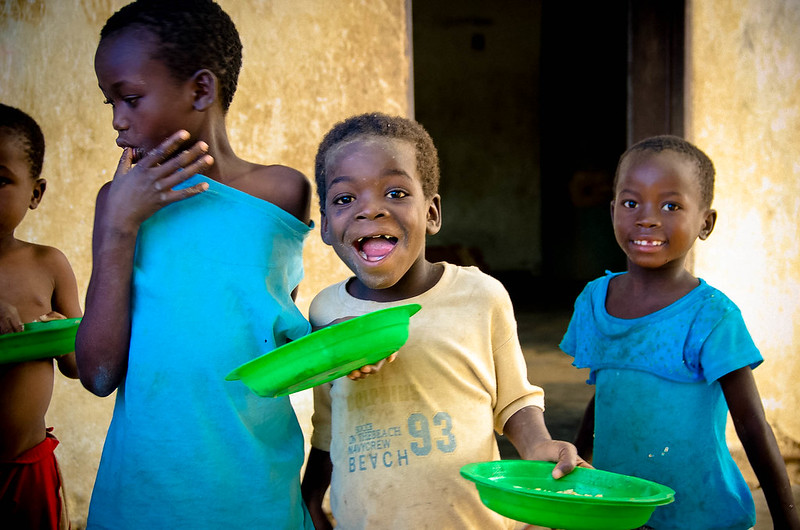
Food insecurity, as Health Affairs defines it, is “a condition in which households lack access to adequate food because of limited money or other resources.” Hunger, put more simply, is a feeling of “weakness caused by lack of food, coupled with the desire to eat.” Of the approximately 6.5 million people in South Africa, a staggering 11% suffer from hunger. Here is everything you need to know about hunger in South Africa.
Root Causes
Major causes of hunger and food insecurity in South Africa relate to several factors including conflict and instability, the changing climate, poverty and an increasing population. These sources are significant in understanding everything you need to know about hunger in South Africa.
According to World Hunger, the prominence of violence leads to limited employment opportunities, a downfall in imported and exported goods and the destruction of fertile land that would be otherwise used for crop growth. Food war, as another example, has the definition of “the deliberate use of hunger as a weapon or hunger suffered as a consequence of armed conflict.” This prevents citizens from having access to the food they need to thrive when they live in an unstable or conflict-ridden area.
Lack of Good Food
Impoverished areas prevent their inhabitants from living a nourished, healthy lifestyle when they are unable to access sufficient food. The cyclical nature of such poverty impacts generations to come. Children are often born undernourished, therefore inhibiting potential productivity at school and work.
Poverty generally impacts rural South African areas more than urban areas, and this is due to arid lands making it difficult to grow usable crops and a lack of goods that the South African government imported. The need to find a way to deliver food to those in remote, rural areas remains prevalent.
The climate crisis has had and continues to have a significant impact on hunger. Deforestation destroys fertile land, floods destroy homes and towns. Widespread drought kills crops and leaves families starving and forced to drink unclean water. Diseases run rampant across the country. For example, global warming has caused a significant increase in malaria cases, as well as other major diseases such as cholera and the avian flu.
From 2019 to 2020, the population of South Africa changed from roughly 58 million people to 59 million people. This large increase in population size, in turn, decreases the income per capita and can cause families to struggle to feed their children. With more children being born per family, the income needed to support these children increases as well. However, the salary of the breadwinners in the family remains the same. This can cause families to become impoverished.
The COVID-19 Pandemic and Hunger in South Africa
The COVID-19 pandemic has exacerbated hunger in South Africa. According to Ipsos, most South Africans have seen an overwhelmingly negative effect on their income during the pandemic. Large numbers of them are suffering from long-term hunger and many have lost their jobs.
Hunger ratios in South Africa are on an upward trajectory after the start of COVID-19. Over 23% of South African households experienced hunger last summer, and 70% of households were reliant on government grants. Additionally, unemployment rates are at a record high of 32.8%, up 2% since the start of the pandemic.
Solutions and Next Steps
COVID-19 remains a threat throughout the world and impacts impoverished areas in particular. NGOs fear that a drop in essential funding and support may inhibit their ability to help those most in need. NGO Pulse provides a comprehensive list of organizations focusing on the impact of COVID-19. This is on South African families for businesses or individuals to support in order for them to continue to work. Several of these NGOs are stepping up during the pandemic to address the increase of widespread hunger in South Africa.
Founded in 1945, the ACFS Community Education and Feeding Scheme has centers scattered across South Africa which feed children who are undernourished. These centers also offer programs such as computer skills to family members and provide support for the economically unstable. Its mission is to ensure South African children receive food and proper care through the help of fellow South Africans.
By July 2020, ACFS had provided food to 24,000 households in South Africa. This is an increase of roughly 10,000 since the start of the pandemic. The pandemic proved to be a unique challenge. However, ACFS launched three new teenage girl programs and opened a second toy library.
Feed South Africa
Feed SA aims to feed both the stomachs and the minds of impoverished South Africans, and the NGO has put together an action plan specifically for those who experienced the most impact from COVID-19 in South Africa. This plan calls upon the national and international community for donations. This funds programs such as Back a Pupil, which became launched during the height of the pandemic. This program distributes educational packs full of school supplies such as worksheets and writing utensils. The organization provides not only monthly food deliveries but also other goods families may need, such as First Aid kits.
Progress is happening. Both national and international NGOs fight to end and educate the public on hunger in South Africa. Food insecurity remains prevalent in many areas and demands continued attention.
– Grace Manning
Photo: Flickr

Hunger in South Africa and Solutions
Food insecurity, as Health Affairs defines it, is “a condition in which households lack access to adequate food because of limited money or other resources.” Hunger, put more simply, is a feeling of “weakness caused by lack of food, coupled with the desire to eat.” Of the approximately 6.5 million people in South Africa, a staggering 11% suffer from hunger. Here is everything you need to know about hunger in South Africa.
Root Causes
Major causes of hunger and food insecurity in South Africa relate to several factors including conflict and instability, the changing climate, poverty and an increasing population. These sources are significant in understanding everything you need to know about hunger in South Africa.
According to World Hunger, the prominence of violence leads to limited employment opportunities, a downfall in imported and exported goods and the destruction of fertile land that would be otherwise used for crop growth. Food war, as another example, has the definition of “the deliberate use of hunger as a weapon or hunger suffered as a consequence of armed conflict.” This prevents citizens from having access to the food they need to thrive when they live in an unstable or conflict-ridden area.
Lack of Good Food
Impoverished areas prevent their inhabitants from living a nourished, healthy lifestyle when they are unable to access sufficient food. The cyclical nature of such poverty impacts generations to come. Children are often born undernourished, therefore inhibiting potential productivity at school and work.
Poverty generally impacts rural South African areas more than urban areas, and this is due to arid lands making it difficult to grow usable crops and a lack of goods that the South African government imported. The need to find a way to deliver food to those in remote, rural areas remains prevalent.
The climate crisis has had and continues to have a significant impact on hunger. Deforestation destroys fertile land, floods destroy homes and towns. Widespread drought kills crops and leaves families starving and forced to drink unclean water. Diseases run rampant across the country. For example, global warming has caused a significant increase in malaria cases, as well as other major diseases such as cholera and the avian flu.
From 2019 to 2020, the population of South Africa changed from roughly 58 million people to 59 million people. This large increase in population size, in turn, decreases the income per capita and can cause families to struggle to feed their children. With more children being born per family, the income needed to support these children increases as well. However, the salary of the breadwinners in the family remains the same. This can cause families to become impoverished.
The COVID-19 Pandemic and Hunger in South Africa
The COVID-19 pandemic has exacerbated hunger in South Africa. According to Ipsos, most South Africans have seen an overwhelmingly negative effect on their income during the pandemic. Large numbers of them are suffering from long-term hunger and many have lost their jobs.
Hunger ratios in South Africa are on an upward trajectory after the start of COVID-19. Over 23% of South African households experienced hunger last summer, and 70% of households were reliant on government grants. Additionally, unemployment rates are at a record high of 32.8%, up 2% since the start of the pandemic.
Solutions and Next Steps
COVID-19 remains a threat throughout the world and impacts impoverished areas in particular. NGOs fear that a drop in essential funding and support may inhibit their ability to help those most in need. NGO Pulse provides a comprehensive list of organizations focusing on the impact of COVID-19. This is on South African families for businesses or individuals to support in order for them to continue to work. Several of these NGOs are stepping up during the pandemic to address the increase of widespread hunger in South Africa.
Founded in 1945, the ACFS Community Education and Feeding Scheme has centers scattered across South Africa which feed children who are undernourished. These centers also offer programs such as computer skills to family members and provide support for the economically unstable. Its mission is to ensure South African children receive food and proper care through the help of fellow South Africans.
By July 2020, ACFS had provided food to 24,000 households in South Africa. This is an increase of roughly 10,000 since the start of the pandemic. The pandemic proved to be a unique challenge. However, ACFS launched three new teenage girl programs and opened a second toy library.
Feed South Africa
Feed SA aims to feed both the stomachs and the minds of impoverished South Africans, and the NGO has put together an action plan specifically for those who experienced the most impact from COVID-19 in South Africa. This plan calls upon the national and international community for donations. This funds programs such as Back a Pupil, which became launched during the height of the pandemic. This program distributes educational packs full of school supplies such as worksheets and writing utensils. The organization provides not only monthly food deliveries but also other goods families may need, such as First Aid kits.
Progress is happening. Both national and international NGOs fight to end and educate the public on hunger in South Africa. Food insecurity remains prevalent in many areas and demands continued attention.
– Grace Manning
Photo: Flickr
Efforts to Alleviate Elderly Poverty in Greece
Efforts to Alleviate Elderly Poverty in Greece
In The Guardian, Jon Henley reported in 2015 that 45% of retired Greek senior citizens lived in poverty. Unemployment rates were high among the older and younger populations. Therefore, many elderly citizens had to contribute to their family finances, which negatively impacted their own finances. According to The National Herald, 75% of retired Greeks struggled to pay for food and afford medical expenses in 2017.
Desmos, a nonprofit organization, helped provide financial aid, including food, to those experiencing elderly poverty in Greece. As of 2018, Desmos was able to assist 2,000 older people and provide charities with other essentials to help more people. That same year, Trading Economics announced that the elderly poverty rates in Greece were at 11.6%. This is its lowest rate in the past decade.
Programs Assisting Those in Need
Other organizations and the government have stepped in to help alleviate elderly poverty in Greece. In her article for the Huffington Post, Danae Leivada introduced Life Line, a nonprofit offering food services to those experiencing elderly poverty in Greece. Life Line began assisting elderly citizens in 2011 and has been able to serve up to 900 people a month. Life Line includes a service operating 24 hours a day to those who are in urgent need of food.
Leivada introduced another NGO called 50+, which relies on funding from the EU and has been operating since 2005. This organization advocates for the rights of senior citizens. It also provided resources to help them become more active in society. In addition, 50+ also advocates for a domestic policy to address and prevent elderly poverty.
Pension Issues
According to the European Neighborhood Instrument Cross-Border Cooperation Med Program (ENI CBC MED), the government offers financial aid to senior citizens that do not receive pension benefits or insurance and have a financial need. The financial aid also includes assistance with rent to those who cannot afford housing. Also, the Department of Social Insurance and Control offers financial assistance to those with underlying health conditions.
The ENI CBC MED indicated that retired citizens who are 67 and older and previously worked in the agriculture industry can receive a pension from the Agricultural Insurance Organization (OGA). OGA has provided pensions since 1961 but has changed eligibility requirements on numerous occasions. The current requirements are that senior citizens must show that they have a financial need and do not have insurance.
The ENI CBC MED mentioned that the state does not provide financial assistance to elderly care centers. However, the state has two public programs that provide services to senior citizens. One of these programs offers facilities that operate as an elderly daycare, looking after the older population and assisting them with their needs.
Taking Back Their Pensions
According to Pension Funds Online, the retirement benefits Greeks receive depend on whether they worked for the government, private companies or freelanced. The benefits senior citizens can currently obtain are a contribution rate and an additional pension. The Associated Press reported that the government initially intended to continue reducing the number of retirement benefits beginning in 2019 to focus on paying off its debt but decided not to do so.
ABC News stated that in July 2020, many retired Greeks took the matter to a higher court. The court evaluated whether the 2015 government reduction of retirement benefits was legal. The court ultimately determined that the pension benefit cuts were unconstitutional because the government did not use the appropriate legislative process necessary to implement such measures.
The court even determined that the government needed to reimburse citizens for the reduced pension benefits, but did not indicate whether all retired Greeks or just the appealers of the case would receive the money back. The government shared that it would evaluate the court’s decision before deciding how it would reimburse benefits.
The Effect of COVID-19
According to the ENI CBC MED, Greece went on lockdown for the first months of the COVID-19 pandemic. As a result, various organizations created online systems to help look after the elderly. These organizations also allowed senior citizens to call when in need of food and medicine.
According to Reuters, the International Monetary Fund (IMF) stated that Greece’s strong response to COVID-19 helped put the country in better financial standing in 2021. The IMF also projects that Greece may experience further economic growth in 2021.
The Greek government has implemented public programs and measures to help alleviate elderly poverty in Greece. Greece’s recent economic recovery and the court’s decision to uphold rights to pension benefits serve as indicators that things could continue to improve, both for senior citizens and Greece as a whole.
– Cristina Velaz
Photo: Flickr
Greece’s Refugee COVID-19 Vaccination Campaign
Greece’s Refugee COVID-19 Vaccination Rollout
Human rights groups have repeatedly criticized the center-right government of Prime Minister Kyriakos Mitsotakis for failing to make refugees a priority during the country’s vaccine rollout. Mitsotakis’s administration pledged to make refugees eligible for vaccines, but until this recent announcement, the national vaccination campaign had largely sidestepped Greece’s large migrant population.
The Euro-Mediterranean Human Rights Monitor and others have called the country’s “Greeks-first” policy discriminatory and misguided. Organizations argue that inhabitants of refugee camps are far more vulnerable to COVID-19 than the general population due to overcrowding, limited space and lack of access to proper sanitation facilities. Another point of argument is that stopping the spread of COVID-19 within these vulnerable populations can limit transmission in the rest of society, ultimately benefiting the whole country.
Refugees in Greece
The tension between refugee advocates and the Greek government began long before the COVID-19 pandemic. Greece is one of the most popular routes for migration into Europe from Asia, Africa and the Middle East. After crossing from Turkey, migrants often end up in Greece waiting for their asylum claims to process.
Resentment between Greek citizens and migrants has been steadily rising over the years and the Mitsotakis government has adopted an increasingly tough stance on illegal migration that has come under fire from human rights organizations.
Multiple groups have accused the government of illegally returning asylum seekers to Turkey or leaving them adrift at sea rather than processing them through official asylum channels. One particularly startling accusation claimed that “13 men, women and children currently residing in a refugee camp on the island of Lesbos were beaten, robbed and forced onto a life raft” by uniformed officials who claimed the group required COVID-19 testing. The Greek government has denied these allegations but humanitarian groups still stand strong in protecting the human rights of migrants and refugees.
Vaccination Challenges for Refugees
Mistrust could hamper Greece’s refugee vaccination campaign. According to officials, only about 15% of asylum seekers in Greece have expressed interest in receiving a vaccine, although the number may increase as the campaign gets underway. Across the globe, many refugees fear that registering with a government vaccination platform could lead to arrest, detention or even deportation. Others fall prey to misinformation or encounter language and digital access barriers.
However, the main reason for limited global refugee vaccinations so far is the dramatic difference in vaccine supply between wealthy and low-income nations. Wealthier countries account for 85% of the world’s administered vaccines yet “85% of the 26 million refugees in the world are hosted in developing countries.” A recent contributing factor to limited vaccine access relates to COVAX, the vaccine initiative providing COVID-19 vaccines to low-income nations. Due to supply issues, expectations determined that COVAX would distribute 190 million fewer doses than originally anticipated by the end of June 2021.
Reasons for Hope
Although the road to refugee vaccination in Greece has been bumpy, the newly announced campaign is still a positive first step toward providing the country’s vulnerable migrant population with access to COVID-19 vaccines. There are also signs from around the globe that refugees will soon be able to receive vaccines in far greater numbers.
As of May 2021, 54 countries have started vaccinating refugees and 150 countries have said either publicly or privately that they will include refugees in their vaccine campaigns. Jordan’s campaign, in particular, has had a strong start. The country was the first in the world to include refugees in its COVID-19 vaccination drive. By the end of May 2021, 30% of Jordan’s refugees had received at least one vaccine dose.
International health officials are optimistic that the vaccine inequality between upper and lower-income nations will soon decrease. In June 2021, the United States announced that it would be donating 500 million doses of Pfizer vaccines to “92 low- and lower-middle-income countries and the African Union” through COVAX. Recent positive efficacy results from the Novavax vaccine should boost global supply even further. Overall, hope is on the horizon as the world comes together in a collaborative effort toward combating the COVID-19 pandemic.
– Jackson Fitzsimmons
Photo: Flickr
The Impact of HIV/AIDS in Eswatini
The Problem
There are many factors that contribute to high rates of HIV/AIDS in Eswatini, such as multiple sexual partners, low condom usage, sexual violence and commercial sex. Due to these factors, HIV/AIDS has reached a staggering 27% rate among adults. While this rate is already high, women and girls are at an even higher risk of HIV/AIDS in Eswatini due to income inequality.
In Eswatini, social barriers cause many women to engage in transactional sex to earn money. This practice increases the risk of HIV and further fuels the HIV epidemic. In fact, while young women in Gambia, South Africa, the Congo and Gabon are three times more likely to have HIV than young men, young women in Eswatini are five times more likely to have HIV than young men.
5 Facts About HIV/AIDS in Eswatini
Taking Strategic Action
Eswatini has made significant efforts to address the HIV/AIDs epidemic. Eswatini has implemented the National Multisectoral HIV and AIDS Strategic Framework (NSF) 2018-2023 with multiple objectives:
Aside from prevention and treatment aspects, the strategy also includes social protection and assistance, covering “orphaned and vulnerable children,” gender-based violence issues and HIV stigma.
The Good News
Eswatini’s efforts to combat its HIV/AIDS epidemic have been extremely successful in helping alleviate its HIV burden. In December 2020, Eswatini became “the first country in Africa to achieve the United Nations HIV targets.”
The 95-95-95 goal directs that, by 2030, 95% of people would be aware of their HIV status, 95% of affected people would be on treatment and 95% of those on treatment would be virally suppressed. In fact, Eswatini reached this goal 10 years before the expected year of 2030. This success is a clear indication that Eswatini has made significant strides in controlling HIV/AIDS.
As the burdens of HIV have damaged the fabric of Eswatini society with serious physical, mental, social and economic implications for its citizens, the country is moving toward a better and brighter future. Eswatini’s success serves as an inspiration for other countries battling the HIV/AIDS epidemic.
– Calvin Franke
Photo: Flickr
Female Genital Mutilation in Senegal
Female genital mutilation in Senegal is still happening. Female genital mutilation (FGM) is an internationally acknowledged human rights violation. The World Health Organization (WHO) defines it as any procedure involving the partial or total removal or other injury to the female genital organs without proper medical cause.
Estimates have determined that internationally, there are 200 million women alive today who have undergone the procedure. FGM, while incredibly detrimental to long-term health, has been devastatingly popular for so long because of its cultural significance. Female genital mutilation in Senegal, in addition to Africa, the Middle East and Asia, has the purpose of controlling sexual behavior. This is to prepare young girls for marriage and keep girls ‘clean’ and ‘feminine.’
The Costs of Female Genital Mutilation
The practice leads to incredibly painful lifelong complications like horrific problems with childbirth, urination, menstruation and safe sex. Moreover, WHO estimated that the international monetary costs of treating health complications from FGM were $1.4 billion in 2018. Unfortunately, this figure could almost double by 2037.
Despite this prediction, Senegal has presented a fascinating case that defies international trends. Grassroots organizations and leadership from women in Senegal have demonstrated the resilience and power of localized movements and communities in effectively denouncing this practice. Because of this, the rates of female genital mutilation in Senegal have decreased in contrast to its persistent presence globally.
Senegal’s Progress in the Fight Against Female Mutilation
The action that some have taken against female genital mutilation in Senegal is especially promising given its past prominence in the national culture. In 2017, the Senegal Demographic and Health Survey found that almost 25% of 15 to 49-year-old women had undergone the procedure, as well as 14% of girls ages 0-14.
Since 2017, Senegal has made impressive strides to lower these numbers. The nation is now on track to become the first African country to fully make genital cutting a thing of the past.
Tostan is an NGO that has been working within communities in Senegal to put a stop to human rights violations like female genital mutilation and cutting. Tostan works with villages to increase literacy rates and bolster education initiatives including topics like proper healthcare, feminine hygiene, child welfare and human rights. Along with this advocacy work, Tostan encourages mothers, typically those who have undergone FGM, to speak out against the practice. Encouraged to not cut their daughters, these mothers now condemn it at community gatherings. Tostan’s work has helped 5,300 villages put a complete stop to the execution of this practice.
Tostan’s methods became replicated throughout Senegal and have led to surges of mothers speaking out for the cause. Following Tostan’s work, artists, rappers and other members of communities creatively engage in initiatives to spread awareness and promote discussion about the ramifications of FGM.
Looking Ahead
The progress in the fight against female genital mutilation in Senegal stands to teach international leaders and governments a lot. While regulation and legislation are important to stop this human rights violation, Senegal is showing how attitude and cultural shifts are the keys to real change.
Female genital mutilation in Senegal became illegal in 1999. However, this strong symbolic gesture only stopped medical professionals from administering the procedures. Determined parents were still able to cut their daughters, just without properly sanitized tools or medical care.
It is all the more important to educate communities of the very real and life-long ramifications of female genital mutilation, as well as empower women’s voices and grassroots movements to truly end this practice. Since many in Senegal still consider FGM to be a part of their cultural identity, the voices of women within communities, rather than external influence and legislation, are incredibly important to create change.
– Jaya Patten
Photo: Flickr
COVID-19 Vaccinations in San Marino
The Impact of COVID-19
In terms of the poverty rate in San Marino, minimal data exists. But, like the rest of the world, San Marino’s economy has also experienced adverse impacts from the COVID-19 pandemic. During the pandemic, tourism rates decreased due to stay-at-home orders and travel restrictions. Before the pandemic, the small country averaged around two million tourists in 2019, a clear indication of the significant economic role of the tourism sector. With regard to COVID-19 rates, San Marino has confirmed 5,092 cases and 90 deaths. The campaign for COVID-19 vaccinations in San Marino has been successful due to small population numbers and a steady supply of vaccines.
COVID-19 Vaccinations in San Marino
All of San Marino’s people have either been partially or completely vaccinated against COVID-19. The country administered mostly Sputnik V vaccines after signing a deal with Russia. Starting May 17, 2021, San Marino is offering a COVID-19 vaccine holiday package to boost tourism with an incentive. The holiday package allows non-residents access to vaccines in San Marino by booking accommodation for a certain duration at one of 19 hotels.
“The initiative is open only to those coming from countries that Italy has opened up to for tourism.” Two separately administered Sputnik V doses are available at a cost of €50. To receive the second dose of the vaccine, tourists must return to the country and stay in a hotel for at least three days. This way, San Marino makes up for its loss of tourism revenue while helping to eradicate the virus with vaccines.
The Road to Recovery
More than 66% of the population has been fully vaccinated through the campaign for COVID-19 vaccinations in San Marino. With no patients hospitalized for COVID-19, the country is effectively controlling its COVID-19 infections. With an adequate vaccine supply to cover its population, San Marino has found an innovative way to put the vaccine surplus to good use while boosting the tourism industry. The COVID-19 vaccination holiday package in San Marino is a unique solution to ignite economic recovery in the country. The offer has caught the attention of tourists who trust in the efficacy of the Sputnik V vaccine. Through innovative solutions, San Marino is finding creative ways to recover from the COVID-19 pandemic
– Matt Orth
Photo: Flickr
How Human Trafficking in Saudi Arabia Moved to the Online Black Market
The Transaction of Human Trafficking
The digital world has changed the transaction process of many dealings. Unfortunately, this is also the case for human trafficking. Following the investigation of an undercover BBC News Arabic team, it is understood that modern slavery has moved to the online black market. Now, a buyer can purchase a domestic worker by downloading an app, such as Haraja or 4sale, and picking from a catalog of domestic laborers, ranging from maids to construction workers. Each person has a short description attached with comments on their character and work ethic. The apps also allow users to filter findings based on race. In one instance, a listing reads, “African worker, clean and smiley.”
Laborers are often bought for $2,000 to $3,000. When someone buys a laborer in the Middle East, a legal framework called the Kafala system places the worker under the control of their employer, who is responsible for their visa and legal status. The laborer cannot quit or leave the country without the permission of their buyer, and workers have no rights under the host country’s labor laws. The Kafala system is a program meant to monitor migrant workers in Gulf nations like Saudi Arabia and Kuwait. However, because employers can abuse and exploit their workers, the system inevitably creates a lucrative human trafficking market.
An employer can also sell their laborer for a profit. Whoever will pay the most will acquire the worker. Moreover, popular apps now power this negative cycle of buying and selling workers. Although this form of extortion is illegal in Saudi Arabia, the magnitude of immigrant workers and the corruption in law enforcement make it difficult to stop.
Who are the Laborers?
The laborers who end up in Saudi Arabia often come from surrounding developing nations like Ghana and Guinea. Unfortunately, Saudi Arabia is not the only nation facing this kind of online human trafficking. For example, people buy and sell laborers through apps in Kuwait in the same manner.
In 2019, the undercover BBC News Arabic team went to Kuwait to discover how easy it was to buy another person online through these human trafficking apps. The journalists posed as a married couple interested in buying a maid. They searched the websites and apps in hopes of talking to one of the laborers. Eventually, a seller offered them a 16-year-old maid. Having an underage worker is both illegal in Saudi Arabia and Kuwait and is also in violation of international human rights laws. The journalists took their information to the police. Within a few days, they found the girl a new home with an adopted family in Guinea. Unfortunately, many laborers cannot escape the cycle of human trafficking because of the Kafala system and continue to experience extreme abuse and dehumanization.
Government Efforts
The nation of Saudi Arabia has been labeled a Tier 2 on the U.S. Department of State watch list for human trafficking in 2020. According to the U.S. government, “The Government of Saudi Arabia does not fully meet the minimum standards for eliminating trafficking but is making significant efforts to do so.”
In 2020, Saudi Arabia moved from a Tier 3 to a Tier 2. This is because of the implementation of the National Referral Mechanism (NRM). The plan is to help victims of extortion by establishing prevention measures and protective resources. This program hopes to stop or reduce the amount of slavery and human trafficking in Saudi Arabia.
The NRM works alongside the United Nations Office on Drugs and Crime (UNODC) and the International Organization of Migration (IOM) to end human trafficking. The NRM has many facets to reach this goal. It provides help phone lines, data collection and training to spot and stop human trafficking. The program uses the combined efforts of education and policy to reduce and eventually end human trafficking in Saudi Arabia. Although the issue is still prevalent, efforts to stop human trafficking in Saudi Arabia are moving in the right direction.
– Rachel Wolf
Photo: Flickr
Vax India Now: Fighting Against the COVID-19 Crisis in India
The COVID-19 Crisis in India
In September 2020, India braced itself for the pandemic. Cases peaked at 93,000 per day, less than one-third of the daily tallies India reported in April. However, it is believed that India succeeded in achieving herd immunity due to the young population. The median age in India is 27, and only 6.4% of the population is over the age of 65. Due to this, India achieved peace for a while until the second wave hit.
After the first wave, many citizens in India stopped taking safety precautions. Children returned to school, adults returned to their jobs and large weddings and political campaigns became normal again. Because of this lack of precautions, the second wave greatly affected India. Hospitals were overwhelmed with a lack of supplies, space and staff. Moreover, due to the lack of vaccines that the government ordered, only about 4.3% of India was vaccinated. The second wave brought a new variant.
This new variant is called B.1.617, also known as “the double mutant.” The variant targets everyone, including the younger population. This has caused more traffic in hospitals and a larger gap between the number of patients and staff members. Facing panic in the country, Indian American actor Anuradha Palakurthi decided to bring people together to fight against the COVID-19 crisis in India through the power of music and donations.
Singers Supporting India through Vax India Now
Vax India Now hosted a virtual event on July 7, 2021. The purpose of the event was to raise awareness of the ongoing COVID-19 vaccination shortage in India. The live streaming event featured singers from both the U.S. and India. Celebrities like Gloria Estefan, Alan Walker, Josh Groban, Anil Kapoor, Hasan Minhaj and more signed on to attend Vax India Now and made an appearance at the event. The event shed a spotlight on the COVID-19 crisis in India and informed viewers on how they can help save lives.
The Actress Who Started it All
Anuradha Palakurthi, who started a foundation based in New England that supports the promotion of Indian culture, is the organizer of this virtual event. Palakurthi and her husband, Prasanth Palakurthi, proposed doing something truly significant on a worldwide scale to help India. Ultimately, this resulted in the creation of Vax India Now.
From there, the Palakurthis contacted the Giving Back Fund, a national nonprofit organization that encourages and funds nonprofit organizations, corporations and others who want to help the world. Marc Pollick, the founder of the Giving Back Fund, jumped at the opportunity to help fund the event. Vax India Now and the Giving Back Fund are working together to make the event possible and to tell the world about the COVID-19 crisis in India.
The website for Vax India Now offers a place to donate to support the cause. For those interested in alleviating the COVID-19 crisis in India, the websites of organizations like Care India, Project HOPE and UNICEF USA offer multiple ways to get involved in the cause. Hopefully, with the efforts of India’s government, international humanitarian organizations, and Vax India Now, more of India’s population will be vaccinated soon.
– Aahana Goswami
Photo: Flickr
Tiger Reserve in India Replenishes the Vaigai River
What Happened to the Vaigai River?
The Vaigai River is dry for almost 300 days a year due to poor maintenance over the last 30 years. Sewage drainage and insufficient silt removal have changed both the quality and quantity of the water. Moreover, drought and inadequate rainfall have also been contributors to the depletion of the river. In fact, this year was the first time that the Vaigai Dam had enough water to release in 12 years. Additionally, the insufficient rainfall can be partially attributed to the rapid deforestation India has faced.
Further, the sewage in the water has made the river a breeding ground for mosquitoes. Moreover, India carries 2% of global malaria deaths and 85.2% of Southeast Asia’s malaria burden. The country has made significant strides in malaria case reduction. However, this issue puts residents along the river at risk for infection.
Why the River Is Important
Residents in three districts receive their daily drinking water from the Vaigai Dam. This is significant as less than 50% of the Indian population has access to clean drinking water. Also, at least two-thirds of all Indian districts face water insecurity issues due to groundwater depletion and drought.
In 1959, the Madurai District built the Vaigai Dam to provide drinking water and combat water insecurity for farmers, who rely on the river to irrigate crops such as rice, cotton, peas, black gram and sorghum.
How the Tiger Reserve Can Help
On February 8, 2021, a government order declared two major wildlife sanctuaries would be combined to create a fifth tiger reserve along the Vaigai River. This new reserve will be called the Srivilliputhur Megamalai Tiger Reserve.
Once the reserve is operational, poaching, encroachments and grazing will be outlawed. This will preserve the surrounding land and the river. Experts except the tiger reserve will be in the forests of Meghamalai. This location is ideal as it will protect the land from deforestation and increase rainfall and water flow by acting as a watershed.
The Forest Conservation Act of 1980 will be used to enforce the regulations now that the land surrounding the river is considered protected land. This means poor silt removal practices, sewage drainage and poor maintenance by any government official can result in a fine or jail time. This gives Indian citizens the ability to hold their government accountable for the mismanagement of the river.
A forest official told The Hindu News that “with this new tiger reserve, Vaigai river and its catchment areas will be fully protected. The river, battling for its life, will be saved. This will help in the long-term sustenance of people in several southern districts.”
Looking Forward
This new tiger reserve in India is one of the first protective orders for the land surrounding the Vaigai river. Farmers, conservationists and citizens alike look forward to seeing the Vaigai river return to its former glory, alleviating water insecurity and aiding crop cultivation.
– Camdyn Knox
Photo: Pixabay
The Benefits of Surf Tourism in El Salvador
Many know El Salvador for its beautiful beaches and surfable waves. However, gang violence also makes the country the deadliest non-war zone in the world. Bryan Perez grew up in Punta Roca, El Salvador, where he began surfing at a young age. The sport helped him escape gang life, and he became a four-time World Cup champion. Perez’s success story increased surf tourism in El Salvador and gave Salvadorans hope of a better life.
Gang Culture in El Salvador
In 2019, approximately 23% of El Salvador’s population lived in poverty, and an estimated 8% had a connection to gangs. Salvadoran gangs have traditions and sadistic rites of passage, and they often socialize children into them at a young age. A person who refuses to support a gang risks torture or murder.
Surf Tourism
The beaches of El Salvador were what drew nearly 38% of the 350,000 Americans who visited the country in 2015. El Salvador nonprofits such as La Red Foundation use surf tourism to help impoverished communities.
Salvador Castellanos established La Red Foundation to show that surfing can be an alternative to gang life. He has recruited more than 1,500 volunteers to run surf camps, provide food and install infrastructure in poverty-stricken communities. Overall, La Red Foundation has used surf tourism to provide resources for more than 3,000 people. In exchange for volunteers’ efforts, La Red Foundation gives them amazing surf opportunities on El Salvador’s best beaches.
Salvador Castellanos’s son, Marcelo Castellanos, established El Salvador’s first professional surfing academy, Puro Surf. Puro Surf provides top-notch surfing training in a safe environment, and it helped a young Bryan Perez escape gang life.
Star Surfer Bryan Perez
As a child, Bryan Perez supported his family by watching tourists’ cars while they surfed, and he used his earnings to negotiate truces with local gangs. After receiving a broken surfboard from a tourist at age nine, Perez discovered his love for surfing. By the time he was a teenager, Perez had become highly dedicated to the sport.
Perez temporarily lost his passion for surfing after his little sister died from gang violence in 2014. Reflecting on that year, Perez said, “I was so depressed it was hard to get surfing again. I didn’t have the energy to compete and get focused.” Nevertheless, Marcelo Castellanos took Perez in and helped him rediscover his motivation. Perez trained intensively at Puro Surf Academy, where Castellanos helped him gain sponsors and surf in international competitions. Once Perez began surfing internationally, he became one of El Salvador’s most famous athletes. Because of his likable personality and strong media presence, the country closely followed his performances.
Hope for the Future
Perez failed to qualify for the Olympics at the 2021 World Surfing Games in El Salvador. However, his escape from gang life demonstrated how the capitalization of surfing can change lives. Perez became an inspirational figure and role model for Salvadorans living in poverty.
Perez’s international fame also put El Salvador on the map as a top surfing spot. The country’s leader, President Nayib Bukele, is working to decrease gang violence by capitalizing on surf tourism in El Salvador. He promoted the 2021 World Surfing Games because according to the Salvadoran government, surf tourism will create an estimated 50,000 jobs and has already created 200 businesses. With additional job opportunities, citizens can escape gang life.
Surf tourism in El Salvador increases the quality of life by boosting the economy and giving hope to a poverty-stricken nation. Despite the continued struggle against gang culture, both nonprofits and the government are advocating for a better future in El Salvador.
– Abby Adu
Photo: Flickr