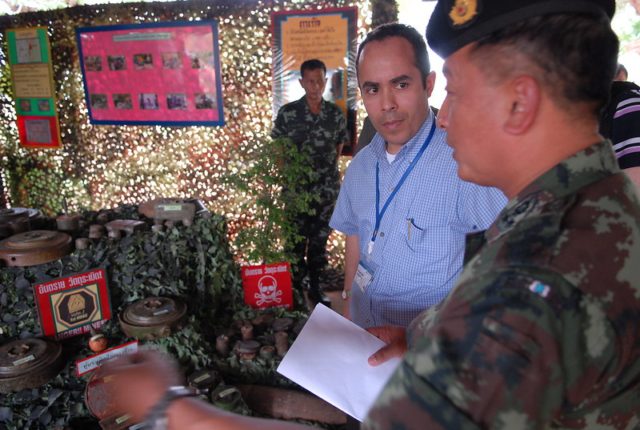
 The Colombian people and economy have suffered greatly from landmines placed around the nation in the 1990s by guerrillas, paramilitary organizations and drug traffickers. One estimate finds that mines are responsible for “12,000 injuries and deaths” since 1990. Their looming presence continues to hinder access to education, healthcare facilities and essential services. Governments and NGOs are having a difficult time with demining in Colombia due to the irregular and unpredictable placement of the mines. This complication makes funding for demining in the 63% of Colombian municipalities currently plagued by mines an international priority.
How Landmines Impact Civilians
Armed groups have targeted largely rural areas in mine placement. While mines were intended to harm military personnel, civilians in the rural communities have predominantly faced the tragic consequences. The lingering threat of hidden mines hinders daily life and safety in many municipalities. Due to landmines, communities suffer sudden deaths and mutilations even as Colombia progresses to a time of peace.
The percentage of civilian landmine victims went up from 45% in 2019 to almost 70% in 2020 despite widespread extraction efforts. It is also important to note that civilian deaths and mutilations disproportionately affect indigenous populations of the rural areas.
Global Demining Efforts
The United States is currently responsible for most of the funding for global humanitarian demining. Since 1993, the U.S. has allotted $4 billion to “conventional weapons destruction efforts” internationally. In 2020, the United States set aside $228.5 million for humanitarian demining efforts across 40 nations, including Colombia. Similar funding has successfully removed 1.4 million landmines across 376 square miles of land since 2016.
The funding from the U.S. is essential for the success of demining efforts in Colombia and the U.S. plays an important part in rallying other nations to contribute. As of May 2021, Colombia is the second-most densely landmine-filled nation after war-torn Afghanistan. Given the dire need for extracting landmines in Colombia, the funding provided by the U.S. is necessary to achieve economic stability, community development and improved security.
The United States is not alone in funding demining efforts. Norway is also a strong leader in supporting demining in Colombia, investing $20 million from 2016 to 2020. The United States and Norway also successfully garnered further support from Argentina, Chile, Uruguay, the European Union, Canada, Japan, Mexico, Slovenia, South Korea, Spain, Sweden, Switzerland and the U.K. The nations have all been collaborating since 2016 with the goal of ensuring Colombia is completely mine-free by the end of 2021.
Benefits of Demining
Some of the most prominent successes of this international cooperation appear in the municipalities of Nariño and La Unión, which are now completely clear of landmines. The two areas are home to more than 31,000 Colombians across 200 square miles, making the complete removal of landmines a significant victory for these communities.
In 2019, HALO (Hazardous Area Life-Support Organization) began a study to uncover the impacts of demining on local communities in Nariño and La Unión. Its study finds clear correlations between humanitarian demining in Colombia and socio-economic development that directly benefits the most financially vulnerable families.
Average housing values increased by more than 500% alongside a 38% increase in average household incomes. The study also found that 88% of newly cleared land was used productively for community development, agriculture and transportation. The communities consequently saw a return of 772 formerly displaced families as well as a substantial increase in household spending.
Beyond the quantifiable benefits to impoverished families, demining improves access to healthcare facilities, schools and other social services as previously dangerous land is clear for transportation.
Looking Ahead
Essentially, the U.S.-funded demining efforts prove to have strong economic benefits for many Colombian families, which include formerly displaced and homeless people who were most economically vulnerable. Demining successes in Colombia stand to show the significance of proper funding for humanitarian demining in order to protect impoverished populations and aid communities formerly devastated by conflict. Removing landmines has clear links to restoring security to communities trying to move past conflict and violence as well as improving economic stability.
While the recent successes from U.S. funding are promising, more funds are still needed to demine the rest of Colombia. Most importantly, the recent victories show the importance of increased funding for these efforts. Some areas, including Choco and Antioquia, have not seen the good fortune that Nariño and La Unión have and are still very much plagued by landmines. Further commitment, funding and assistance are a beacon of hope to impoverished or displaced Colombian families living in mine-strewn municipalities. U.S. funds and initiatives in Nariño and La Unión show the possibility of a mine-free future for the entirety of Colombia.
– Jaya Patten
Photo: Flickr

The Benefits of Investing in Intestinal Worm Research
Intestinal Worms
Also known as “soil-transmitted helminths,” intestinal worms affect those that come in contact with soil and water contaminated by human defecation and urine. Intestinal worms, such as hookworm, roundworm and whipworm, initially inhabit the intestines of infected individuals. The eggs pass to the ground through human waste. The populations of an estimated 103 countries are affected by intestinal worms. Women of reproductive age and young children are the most susceptible to intestinal worms.
The symptoms for those infected with intestinal worms vary from mild to severe, with some individuals showing close to no symptoms at all. Individuals that display more severe symptoms may develop further conditions such as anemia, malnutrition and stunted growth. Studies currently show that the effects of intestinal worms can be long-term. With the possibilities of “impairment of physical and mental growth” as well as “delayed educational advancement,” cases of intestinal worms can negatively impact a country’s economy by affecting human capital.
Successful Intestinal Worm Research Study
Young children carry a high risk of infection. The health problems that arise as a result of intestinal worms affect more than just a child’s physical life. International Child Support in partnership with the Busia District Ministry of Health conducted a study from 1997-2001 in the Busia district of Kenya.
The study finds that “One-quarter of Kenyan student absenteeism is attributed to abdominal pains that are likely due to intestinal helminth infections.” Furthermore, older children often take time off school to care for younger siblings with intestinal worms.
As part of the study, schools with more than 50% of students infected with intestinal worms received deworming drugs on a six-month schedule. Alongside the medicine, the schools received “public health lectures” and training on prevention methods such as washing hands, “wearing shoes and not swimming in the lake.”
Promising Results
Results showed that treating the intestinal worms decreased primary school absences by nearly 25%. Overall, deworming efforts proved to be a cost-effective way to raise school participation rates. Researchers monitoring the children over a span of 20 years found that the treated children received “13% higher hourly wages” compared to children who did not receive treatment.
Overall, deworming treatment ensured the children remain in school to receive an education, impacting their overall life outcomes with improved economic opportunities to enable them to rise out of poverty. The results of the study have informed humanitarian health-focused efforts, indicating the importance of intestinal worm research. Recognizing the “return on investment,” nations such as India, Nigeria and Pakistan treat hundreds of millions of children affected by intestinal worms every year.
Looking Ahead
Intestinal worms are among the most common neglected tropical diseases, prompting an increased need for further research into the most effective treatments. Results from the study in Kenya show that deworming efforts carry more benefits than harm. Investing in intestinal worm research and treatment can increase the health of those in poverty, allowing children to remain in school, eventually acquiring the tools and knowledge to lift themselves out of poverty.
– Grace Ingles
Photo: Flickr
The ICC and UNICEF Partner for COVID-19 Relief
COVID-19’s Effects on Children in South Asia
UNICEF’s efforts in South Asia are a high priority due to the pandemic. The organization estimates that the pandemic likely contributed to the added deaths of 228,000 children younger than the age of 5 in the region’s six largest countries. Disease-related mortality rates rose too. UNICEF estimates almost 6,000 additional adolescent deaths from diseases such as “malaria, tuberculosis, HIV/AIDS and typhoid” as a result of disrupted treatment services prompted by the pandemic.
Furthermore, “the number of young children being treated for severe acute malnutrition (SAM)” decreased by more than 80% in Bangladesh and Nepal. UNICEF’s report details an expected increase in adolescent health issues. These issues range from stunting to anemia due to a rise in food insecurity and undernutrition in South Asia. The COVID-19 pandemic brought about a significant decline in the availability of essential services. These statistics illustrate the impact of COVID-19 on healthcare services in South Asia, among other impacts.
In addition, the effects of the pandemic extend beyond physical health for children in nations such as India. Yasmin Ali Haque, a UNICEF representative in India states, “Children are facing mental health issues and are at greater risk of violence as lockdowns shut them off from their vital support networks.” Haque also notes the increase in illegal adoptions in the country, prompting concerns of potential child trafficking and abuse.
UNICEF’s Call for Aid
As a result of these consequences, UNICEF called for aid in support of measures to improve the COVID-19 response in South Asia. These actions include increasing medical supplies, sanitation and infection control measures in the region. The organization has already worked to provide critical medical equipment such as ventilators, oxygen concentrators and testing kits to countries such as India and Sri Lanka. While UNICEF continues to request support from both private and corporate interests, the organization’s partnership with the ICC may prove to be increasingly important.
The International Cricket Council and UNICEF
The ICC recently launched a fundraising campaign in support of UNICEF. The campaign, running from June 18 to June 22, 2021, occurred in the English city of Southampton during the World Test Championship Final between New Zealand and India. The Council, through the Cricket for Good campaign, intends to use the massive sports audience to promote UNICEF goals.
The ICC commits to raising funds during cricket games and broadcasts while also utilizing the group’s digital platforms for fundraising efforts. All funds raised through the campaign will go directly toward UNICEF’s COVID-19 relief efforts in South Asia.
“We appeal to cricket fans around the world to come together to show their support for the work of UNICEF at such a difficult time and donate to such a worthwhile cause,” Acting International Cricket Council CEO Geoff Allardice said in the announcement for the partnership.
These recent efforts mark the latest commitments in a string of coordinated efforts between the ICC and UNICEF. Past campaigns focused on areas such as empowering young women and girls through cricket. During the ICC Men’s Cricket World Cup, UNICEF’s fundraising efforts garnered $180,000 to finance a girls’ cricket initiative in Afghanistan.
Looking Ahead
As the pandemic continues, support from organizations such a UNICEF and private organizations like the ICC will be critical. Increasing fears are emerging over the potential effects additional waves of the virus would have on children. The Indian Academy of Pediatrics (IAP) recently emphasized that COVID-19 holds a lower direct health risk for children, releasing a statement detailing that “almost 90% of infections in children are mild/asymptomatic.”
The IAP also explained that there is no evidence indicating that children will suffer severe cases of COVID-19 in a subsequent wave of the virus. Nevertheless, the IAP stresses the importance of increasing medical capacities for children in the country in order to avoid deaths from preventable or treatable diseases.
UNICEF echoes the need to support childhood healthcare as the pandemic continues. Fundraising support from influential groups like the ICC could go a long way. These partnerships are vital in helping relief organizations provide the resources and assistance necessary to alleviate some of the problems affecting South Asia during the COVID-19 pandemic.
– Brett Grega
Photo: Wikimedia Commons
Space Technology Combats Poverty
Tracking and Predicting Poverty
Space technology is an emerging method for pinpointing and combating poverty. Data from satellites and algorithms can help countries accurately determine the most impoverished communities in need of resources in order to best assist the communities.
For example, nighttime images from satellites can reveal the areas that can afford electricity and the areas that cannot. Nighttime electricity use can have greater implications for economic activity and performance, which governments can study to better understand the distribution of wealth.
Once governments understand the geography of poverty in their countries, governments can distribute resources effectively. Satellites can also capture images of crops to help farmers estimate their harvest sizes. At large, countries can use crop data to understand local economies, assist farmers with crop insurance and warn them about potential crop failure.
Monitoring Natural Disasters
Space technology also combats poverty by monitoring natural disasters around the world. Satellites track a wide range of natural disasters, including wildfires, earthquakes, tsunamis, storms and floods. Satellites can also locate human-prompted events such as industrial accidents and oil spills.
By tracking global environmental disasters, space agencies allow the international community to pinpoint at-risk areas and distribute aid accordingly. Countries can use satellite data to better prepare for environmental disasters and identify the regions that will experience the most damage, and therefore, require the most aid. Additionally, when satellites predict an impoverished community will experience a natural disaster, the community can more effectively prepare for it in order to mitigate damage and destruction.
Protecting the Environment
Satellites can also be used to measure pollution and protect wildlife. By measuring water, air and soil pollution, satellites can distinguish between natural resources that are safe to consume and natural resources that are best used for agricultural purposes. Satellites can also locate areas contaminated by oil spills and mining activities.
With this knowledge, governments can work more efficiently to contain and address pollution. Additionally, satellites protect wildlife by tracking changes in ecosystems. The use of satellites helps the global community understand and preserve biodiversity by monitoring various habitats and species.
Countries can use information from satellites to make more constructive efforts at maintaining wildlife, natural resources, and ultimately, agricultural success. Space technology combats poverty by protecting the environment and improving agriculture in impoverished areas.
Managing Resources
Space technology can also locate and manage natural resources in impoverished areas. According to the United Nations Office for Outer Space Affairs, space-based innovations are promising solutions to environmental and natural resource-related conflicts in developing countries. Remotely collected data from satellites can inform areas of study such as agriculture, geology, surveying, inventory and land use.
Experts in these fields can use knowledge from satellite data to help impoverished communities maximize land use and natural resources. As a tool for collecting expansive global data, space technology combats poverty by helping developing countries gather and monitor data to make the most informed decisions.
With the help of satellites, governments can locate vulnerable areas and direct aid to the people most in need. Space technology ensures decision-making targets those who will benefit the most.
– Cleo Hudson
Photo: Unsplash
Famine Looms After Drought in Southern Madagascar
The Impacts of Drought in Madagascar
Years of cyclones, soil depletion, locust plagues and a severe drought in Southern Madagascar have killed most crops, including “maize, manioc and beans,” leaving farmers without seeds for plants. The drought has also killed off local livestock.
Some Madagascans have cut down trees to make charcoal, although, this act contributes to aggravated drought conditions. The affected regions of Anosy, Androy and Atsimo-Andrefana are dependent on agriculture, livestock and fishing, which makes them particularly vulnerable to drought and storms.
The COVID-19 pandemic has exacerbated the situation because it has prevented migrant workers from migrating in search of more work, escaping the drought in Southern Madagascar at the same time. The pandemic has also caused rising food prices since it began.
Famine Without Conflict
Madagascar is dealing with intensifying dust storms blanketing the region in thick dust and devastating crops. The World Bank predicts that droughts in this already drought-prone region will worsen in the coming years. The situation in Southern Madagascar is unusual because human conflict is not playing a role in the starvation of Madagascans, says David Beasley, World Food Programme chief. According to the Integrated Food Security Phase Classification, Madagascar is the only nation classified as facing a “famine humanitarian catastrophe” that is not involved in conflict.
FAO Recommendations
The United Nations Food and Agriculture Organization (FAO) says it needs $40.4 million to begin agricultural recovery from the drought in Southern Madagascar. A report by the FAO highlights the need for agriculture to move away from plants that need a lot of water, like maize, to plants that need less water, like sorghum. The FAO’s recommendations for recovery include:
The US Assists Madagascar
In June 2021, the United States government invested almost $40 million in the recovery of Southern Madagascar through USAID. The funding will support the efforts of the World Food Programme (WFP), UNICEF and Catholic Relief Services (CRS). Support to the WFP will, from August to October 2021, “provide immediate food assistance for 465,000 people.” Supplementary nutrition to address acute malnutrition will be given to “19,800 pregnant women and new mothers as well as 63,400 children.” This funding will also support CRS in rebuilding wells, among many other efforts.
Looking to the Future
The United Nations declares that as weather patterns change, nations will face more humanitarian crises similar to the conditions Madagascar is facing now. Societies cannot depend on humanitarian aid to solve the problems of these crises, but must proactively prepare for the ways life on Earth must change in the future. The United Nations makes five specific recommendations:
With the help of the international community, there is hope for Southern Madagascar to rebuild and recover. By implementing the guidelines of the FAO and the United Nations, Madagascar and other countries around the world can better prepare for future challenges.
– Hilary Brown
Photo: Flickr
The Ongoing Poverty and Civil Strife in Belarus
Belarus, meaning “White Ruthenia” or “White Russia” alternatively, has housed many different cultures and peoples across its history. With a population of just under 9.5 million people, however, the nation certainly has the population, as well as the various important resources necessary to develop the society, population and accompanying hard and soft infrastructure of the country in the post-Soviet Era. Its capital city, Minsk, is both the largest city in the nation, as well as one of the most historically rich cities in Eastern Europe. Unfortunately, civil strife in Belarus is a significant problem and relates to President Alexander Lukashenko as well as poverty.
About Belarus
Belarus has an economy that refines great quantities of Russian oil and produces petroleum, yet has rich natural resources like peat, clay, dolomite, sand, chalk, salt and potassium deposits as well; during Soviet times, it was an economically advanced region within the greater USSR and had one of the highest standards of living within that collective. These resources should have given the small nation a leg up moving forward, serving as a potential model of success post-Soviet dissolution for its neighbors.
Upon the collapse of the Soviet Union in the early 1990s however, this did not come to pass. Additionally, while the country has ostensibly contained outright poverty in the time since, the reality remains that the nation continues to endure as one of the poorest countries in Europe. Accordingly, civil strife, in the form of demonstrations and civil disobedience, continues to grow as Belarus, as a whole, feels the discomfort and burden of over 25 years of authoritarian restrainment.
There is, unsurprisingly, a stagnancy of progress in the countryside, and unrest within the cities, as the economic and social potentials for each remain difficult to attain. Belarusian President Alexander Lukashenko is the one thread that links all of these issues together.
Civil Strife in Belarus Under President Alexander Lukashenko
Since Alexander Lukashenko came to power in 1994, the parliament has experienced diminishment as a relevant national structure of power on numerous occasions, most notably in 1996. However, the Lukashenko administration has continued this type of behavior in successive decades too, culminating with the most recent Presidential election of August 2020 and the fallout from the alleged government-sponsored voter fraud. This invigorated national protests within the nation and would lead to the subsequent international incident featuring the now-infamous Ryanair flight and its most famous passenger, Belarusian anti-Lukashenko activist, Roman Protasevich. Yet, while the E.U. has sanctioned Lukashenko and his government upwards of four times in just the last 20 years alone for violating human rights in one way or another, positive domestic change remains difficult to find. On the occasions that protests have occurred, like in the aftermath of the aforementioned election, the authorities quickly took care of it, Soviet-style.
Poverty in Belarus
It is quite true that, compared to the poverty statistics of Belarus 20 years ago, the Lukashenko government has allegedly, and, if statistically accurate, drastically diminished the suffering of people through an enlarged public sector that includes many of the industrial innovations of the nation. The reduction of the national poverty from 41.9% of the population in 2000 to just 5% by 2019 is absolutely a massive jump to be sure. Yet, it remains true that Belarus is more of a translucent than a transparent nation, and that beyond any facade that its President or administration would like to portray, there are both deep nuances, as well as suffering that is feeding the push back against Premier Lukashenko.
To this point, the region around the city of Minsk, as well as the regions or oblasts of Grodno and Gomel have poverty rates much higher than the city of Minsk itself or Brest and its surrounding area. However, the Mahiliou or Mogilev region to the southeast of Minsk remains the poorest of them all however with a recorded 31% of people living in poverty. Within some of these regions, estimates have determined that poverty persists at a rate of one for every five citizens. All of this indicates that while swaths of the population are now above the poverty line due, in major part, to work in the public sector and other industrial innovations of the country, there are still masses whose cities, fields and country towns remain economically depressed, politically unheard and practically disconnected.
Solutions to Help Belarus Move Forward
With the aforementioned political, economic and social repression of the past 25 years, former Foreign and Defense Minister of Lithuania Linas Linkevicius raised a reasonable point when he stated that “….Lukashenko is ready to sacrifice everything, even the remnants of his country’s independence and sovereignty, to preserve his position. Partly also because, like all dictators, he has serious concerns about his own security after leaving….” To make the aforementioned quote as clear for the international community as possible, Lukashenko recently stated that he would rather die than agree to a new, internationally observed presidential election.
Yet, between the United States Agency for International Development, as well the United Nations, and of course Human Rights Watch and other NGOs like Ponimanie and Humanium are continuing to chip away at the hardships within Belarus. While NGOs like the first require little introduction, the latter two, since 2000 and 2008 respectively, have been doing this by working to reduce and eliminate poverty and crime in these places, by educating and protecting the children. This should assure all of the people the necessary resources for thriving, not simply surviving, as well as help enhance industry and the rate of societal innovation. While the European Union, the United States and the greater international community continue to look at ways of punishing Belarus’s government for its breach of human rights regarding the Ryanair incident, while sparing the people themselves, Alexander Lukashenko remains a major roadblock to any and all positive innovations.
Looking Ahead
While some argue that it is the state-owned structure of Belarus that inhibits the financial development of its citizens, one can clearly see that other nations with high percentages of state-owned infrastructure do not necessarily suffer this particular hardship; what Belarus actually needs is the ambition to legislate opportunities for the people, for the development of the people’s national and domestic infrastructure, as well as the creation and maintenance of functional economic structures, from localized, egalitarian domestic trade unions all the way up to fully participating within the European Union economic structure. Only when national conditions and expectations meet those of the Belarusian people and the greater international community can one say that the country will have made real progress eliminating poverty and civil strife in Belarus. However, until then, the work continues.
– Trent Nelson
Photo: Wikipedia Commons
City Planning and Poverty Reduction in Bogotá
Bogotá’s Challenges in the 1990s
Bogotá faced many challenges as a city in the 1990s. With a lack of city planning, informal settlements dominated the landscape. Nearly 200,000 illegal water connections existed and only 60% of the population had access to the main sewer system. Fearing crime and the bustle of moving cars, many could not enjoy the streets on which they lived, with impoverished neighborhoods lacking accessible public spaces.
With these challenges, Peñalosa knew there was only so much he could do. He realized that in his one term as mayor, he would not be able to lift every citizen of Bogotá out of poverty. Thus, he decided to look at the implications of poverty. To him, development constituted a “better way of living, not being richer.” The lack of access to water, food, housing, transportation and green space, which the wealthy class enjoyed in plenty, constituted poverty, not just a low monthly income. By addressing those issues directly, Peñalosa could combine city planning and poverty reduction without aiming to increase wages.
Formalizing Informality
One of the biggest problems urban populations face in the 21st century is informality. As of 2019, according to the United Nations, nearly one billion people live in informal housing or slums. Informal housing commonly leads to community marginalization and decreased access to food and water distribution networks. Fortunately, city planning and poverty reduction strategies can rectify these situations, and, Peñalosa did just that.
During his tenure as mayor, Peñalosa formalized 322 neighborhoods and provided nearly 700 sewers for informal settlements, drastically improving the livelihoods of those living in these neighborhoods. Utilizing many city planning strategies, he also provided better transportation access so that those living in these neighborhoods could access the amenities of the wider city. His strategy of focusing on formalizing and connecting informal settlements rather than increasing wages allows for a greater return on investment as the wider access to the city will naturally boost the quality of life.
Sustainability and Public Spaces
Peñalosa entered his tenure as mayor with the goal of developing Bogotá around people and not cars. In a city where just about 30% of people drove cars, designing a city entirely around this vehicle would be illogical. He especially wanted public spaces suitable for the most vulnerable, the elderly and children, aiming to reduce poverty by increasing standards of living.
Peñalosa focused on three types of public spaces for reducing poverty. He first focused on a common city planning and poverty reduction strategy: transportation. In his tenure he built roughly 220 miles of protected bike lanes, opening up the streets to more than just cars. He also formalized the public transportation network to allow more equitable access.
His second strategy for city planning and poverty reduction covered educational space, building libraries and public schools to accommodate 200,000 new students. The educational infrastructure serves as one of the most important tools in fighting poverty and boosting literacy.
Third, he focused on leisure spaces, ordering the construction and restoration of public parks. Access to these three spaces combined — transportation, educational facilities and leisure spaces — can greatly reduce the impacts of poverty. Furthermore, the public status of these amenities meant that access would not depend on an individual’s wage.
Implications for Fighting Poverty
Mayors around the world can use Peñalosa’s tenure as a blueprint for their own cities. The strategies for city planning and poverty reduction that Peñalosa used were innovative at the time, but further research has shown their efficacy worldwide. Formalizing informal areas and expanding green space has become a norm for urbanists across the globe. While not without its flaws, Peñalosa’s strategy to combine city planning and poverty reduction helped fight poverty by focusing on raising living standards rather than pure income measurements.
– Justin Morgan
Photo: Wikimedia
Spreading Awareness About Fistulas in Zambia
The Cost of Fistula Surgery
The fistulas come with a myriad of infections and chronic pain and can even cause nerve damage to the legs. While fistulas in Zambia are completely preventable and treatable, there are significant barriers to care for mothers. The surgical costs range from $100-400, an expense that is often far higher than what the majority of patients can afford.
4 Factors That Increase the Risk of Fistulas
In wealthier countries that properly address these four issues, fistulas are virtually unheard of, showing that poor health outcomes and poverty are inextricably linked.
Stigmatization of Fistulas in Zambia
While the medical ramifications of fistulas are devastating, these consequences come in conjunction with complete social ostracization and shame. Husbands often view the typically stillborn births that come with fistulas as a failure of the mother. It is very common for husbands to shame and abandon their wives, labeling the woman’s medical issues as personal failures.
Doctors often do not adequately inform women with fistulas that they have a legitimate medical issue. The abandonment from their husbands is soon joined by the same treatment from family and friends. The isolation and stigma increase the risk of depression among women suffering from fistulas. Lack of proper awareness and education means fistulas have become a source of shame. Hence, many women suffer in silence for decades, even until death.
Spreading Awareness Through Radio
In 2017, the Fistula Foundation, a nonprofit dedicated to providing impoverished young women with proper and free medical attention for fistulas, launched a radio program to educate communities about fistulas in Zambia. The program reached extensively into many provinces of Zambia and mobilized many women to seek proper medical care to repair their fistulas at the six Zambian fistula care centers the organization established to perform the reconstruction surgery for free.
In 2019 alone, the Fistula Foundation performed 319 fistula repair surgeries, all free of charge. In total, the Foundation has aided in the provision of 774 surgeries. The Fistula Foundation also partnered with the famous Zambian singer Wezi to air a song about the dangers of fistulas. The spread of this song, through both radio and CDs, has created a surge in Zambian women seeking treatment. As a direct result of Wezi’s song, 56 women have sought treatment.
Grassroots Activism
In conjunction with the awareness campaigns and Wezi’s song, the Fistula Foundation has encouraged grassroots movements like the Safe Motherhood Action Group (SMAG) to work with community volunteers to spread awareness to help prevent fistulas and end stigma. SMAG leads discussions within communities about the dangers of child marriage with regard to the increased rates of fistulas in young mothers, the necessity of keeping girls in school and the importance of delivering children in medical facilities. SMAG has implemented more than 3,000 community outreach programs, reaching more than 90,000 people with crucial information about fistulas and interconnected social issues.
The Fistula Foundation heavily relies on community leaders to spread the word, designating them the “entry points” to communities and change. The organization’s work highlights the importance of creative community engagement and education initiatives in promoting proper care and destigmatization of fistulas in Zambia.
– Jaya Patten
Photo: Flickr
5 Facts About Access to Clean Water in South Africa
5 Facts About Access to Clean Water in South Africa
The Road Ahead
According to the U.N. Educational, Scientific and Cultural Organization (UNESCO) Director Audrey Azoulay, “the fate of humans and water is inextricably linked.” Our reliance on clean water for survival is coupled with the need to actively maintain water supplies for drinking and sanitation purposes. Therefore, water must be conserved and protected to ensure another Day Zero water crisis does not occur in the future.
– Chloe Young
Photo: Flickr
The Successes of Demining in Colombia
How Landmines Impact Civilians
Armed groups have targeted largely rural areas in mine placement. While mines were intended to harm military personnel, civilians in the rural communities have predominantly faced the tragic consequences. The lingering threat of hidden mines hinders daily life and safety in many municipalities. Due to landmines, communities suffer sudden deaths and mutilations even as Colombia progresses to a time of peace.
The percentage of civilian landmine victims went up from 45% in 2019 to almost 70% in 2020 despite widespread extraction efforts. It is also important to note that civilian deaths and mutilations disproportionately affect indigenous populations of the rural areas.
Global Demining Efforts
The United States is currently responsible for most of the funding for global humanitarian demining. Since 1993, the U.S. has allotted $4 billion to “conventional weapons destruction efforts” internationally. In 2020, the United States set aside $228.5 million for humanitarian demining efforts across 40 nations, including Colombia. Similar funding has successfully removed 1.4 million landmines across 376 square miles of land since 2016.
The funding from the U.S. is essential for the success of demining efforts in Colombia and the U.S. plays an important part in rallying other nations to contribute. As of May 2021, Colombia is the second-most densely landmine-filled nation after war-torn Afghanistan. Given the dire need for extracting landmines in Colombia, the funding provided by the U.S. is necessary to achieve economic stability, community development and improved security.
The United States is not alone in funding demining efforts. Norway is also a strong leader in supporting demining in Colombia, investing $20 million from 2016 to 2020. The United States and Norway also successfully garnered further support from Argentina, Chile, Uruguay, the European Union, Canada, Japan, Mexico, Slovenia, South Korea, Spain, Sweden, Switzerland and the U.K. The nations have all been collaborating since 2016 with the goal of ensuring Colombia is completely mine-free by the end of 2021.
Benefits of Demining
Some of the most prominent successes of this international cooperation appear in the municipalities of Nariño and La Unión, which are now completely clear of landmines. The two areas are home to more than 31,000 Colombians across 200 square miles, making the complete removal of landmines a significant victory for these communities.
In 2019, HALO (Hazardous Area Life-Support Organization) began a study to uncover the impacts of demining on local communities in Nariño and La Unión. Its study finds clear correlations between humanitarian demining in Colombia and socio-economic development that directly benefits the most financially vulnerable families.
Average housing values increased by more than 500% alongside a 38% increase in average household incomes. The study also found that 88% of newly cleared land was used productively for community development, agriculture and transportation. The communities consequently saw a return of 772 formerly displaced families as well as a substantial increase in household spending.
Beyond the quantifiable benefits to impoverished families, demining improves access to healthcare facilities, schools and other social services as previously dangerous land is clear for transportation.
Looking Ahead
Essentially, the U.S.-funded demining efforts prove to have strong economic benefits for many Colombian families, which include formerly displaced and homeless people who were most economically vulnerable. Demining successes in Colombia stand to show the significance of proper funding for humanitarian demining in order to protect impoverished populations and aid communities formerly devastated by conflict. Removing landmines has clear links to restoring security to communities trying to move past conflict and violence as well as improving economic stability.
While the recent successes from U.S. funding are promising, more funds are still needed to demine the rest of Colombia. Most importantly, the recent victories show the importance of increased funding for these efforts. Some areas, including Choco and Antioquia, have not seen the good fortune that Nariño and La Unión have and are still very much plagued by landmines. Further commitment, funding and assistance are a beacon of hope to impoverished or displaced Colombian families living in mine-strewn municipalities. U.S. funds and initiatives in Nariño and La Unión show the possibility of a mine-free future for the entirety of Colombia.
– Jaya Patten
Photo: Flickr
How the Olympics Forward Fashion Eliminates Poverty
The 2020 Olympics officially started on July 23, 2021, in Tokyo, Japan. During the traditional opening ceremony, countries participated in a commencement parade dawning various outfits and garments that paid homage to their home countries and cultures. Following this event, the world’s audience became interested in these cultures and used the internet to learn more about them. The forward fashion at the Olympics was especially interesting to viewers of the games. As a result, international poverty-based nonprofits and tourism websites have seen heavy traffic, which will help the economies of dozens of nations.
The 2020 Olympics Opening Ceremony
The Olympic Games have continued to be the most anticipated sporting event across the globe. After the pandemic-induced delay of the 2020 games, the world can finally watch the events it has waited five years for. According to VOA News, more than 17 million people watched the opening ceremony.
Millions of viewers appreciated the outfits of the athletes. Competitors wore dazzling cultural garments to represent their ethnicities and home regions. For example, AP News highlighted the beautiful outfits adorned by representatives from Iran, Cameroon, the Virgin Islands and other nations. They called the affair “a mosaic of cultures and fashions and traditions.” Viewers reviewing and commenting on the parade flooded popular social media outlets like TikTok and Twitter, with hashtags like #OlympicsOutfits trending.
How the Fashion Boosted Poverty Related Research
After the opening ceremony concluded, Google searches for countries like Kenya and Ghana skyrocketed. According to Google Trends, these countries received a 20% boost in searches across the globe. In turn, websites promoting tourism and aid to these nations also experienced heavy web traffic. This was a significant and much-needed boost since the pandemic diminished these essential international discussions. Organizations like UNICEF and the World Bank also had more site visitors than average.
Multiple articles also highlighted the cultural importance of the athletes’ outfits. News about the clothing trended worldwide. While some media firms praised the fashion of the ceremony, others scrutinized the seemingly lackluster outfits from Italy and the U.S.
How Poverty Will Diminish as a Result
As more and more people continue to research the Olympics forward fashion, expectations have determined that poverty could decrease globally. Of course, a rise in tourism will help a country’s economy, but furthermore, the positive cultural representation will also relieve impoverished conditions in a myriad of regions.
According to the Community Action Programme on Social Exclusion, optimistic outlooks on a nation and culture can alter the probability that countries enter an impoverished state. Without a positive viewpoint of the region and its people, countries are less likely to have policy development in government. Further, these countries get less international appreciation, which leads to the migration of the rich and a sinking economy for the poor. However, with further representation in the Olympics and continued research from the international audience, appreciation of the teams’ cultures is likely to spread across the world. Whether or not the Olympics forward fashion will continue to be a hot topic, the impacts of cultural knowledge will last.
– Laken Kincaid
Photo: Unsplash