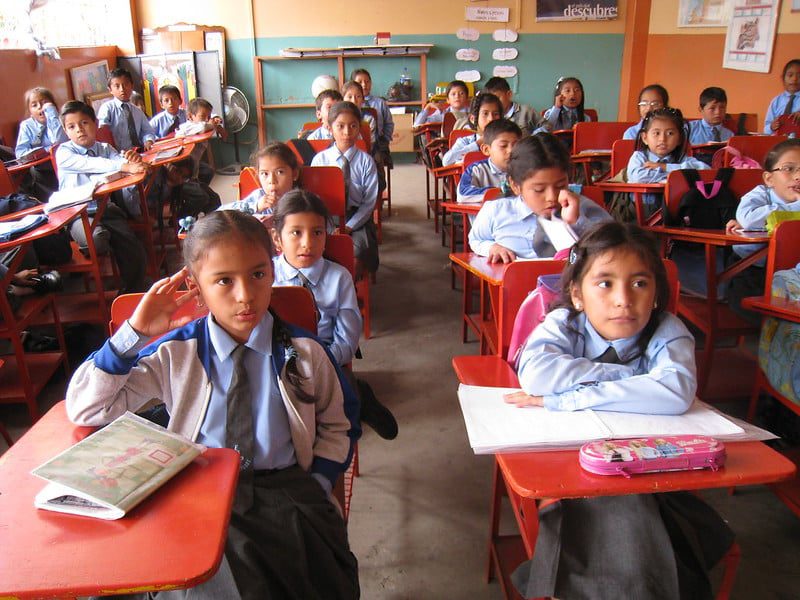
COVID-19 has ravaged the entire world, and each country has experienced the pandemic and suffered losses in its own way. However, the pandemic has a very unique impact on under-resourced countries than it does on developed countries. The New York Times reported that the death toll in Ecuador from the novel coronavirus is among the worst in the world, and the nation became an epicenter in Latin America for the deadly disease. By August 12, 2021, Ecuador recorded 493,767 cases and 31,870 deaths due to COVID-19. Many people suspect that the actual numbers of cases and deaths are much higher. Because Ecuador is a small country with a population of around 17 million people, these figures are extremely high. Here is some information about COVID-19 in Quito, Ecuador, a community that has faced significant challenges due to the pandemic, as well as the teacher who is making a difference.
Health care System in Quito
The health care system in Quito was extremely limited before the pandemic. The public health system in Ecuador lacked capabilities to facilitate contact tracing, appropriate screening and isolation measures and early detection measures. A lack of emergency response preparation and PPE equipment added to the inability of public hospitals to maintain safe conditions and keep up with the influx of patients. Additionally, Ecuador did not receive sufficient supplies of vaccines, and therefore, struggled to roll out vaccines to frontline workers and vulnerable populations in a timely manner. When the virus hit Quito, hospitals became quickly overwhelmed, forcing most people to seek care in tents outside them.
This was the case for Pilar Salazar, a middle-aged teacher from Comite del Pueblo, an impoverished neighborhood in Northern Quito, who shared her story in an interview with The Borgen Project. When her mother fell sick with the flu, Pilar took her to the hospital, where she received treatment in a tent in the cold outside, without space to distance from other patients. Her mother contracted COVID-19 at the hospital and subsequently gave it to Pilar, her primary caretaker.
Pilar then spent the next two months quarantined in her bedroom with pneumonia developed from COVID-19, unable to go to the hospital because of overcrowding. Her husband passed her oxygen tanks and food through her window while she recovered, unsure if she would survive. This story is not unique during the period of COVID-19 in Quito. Due to a lack of education and infrastructure, COVID-19 ravaged Quito and other Ecuadorian cities. Many of Pilar’s friends and her entire immediate family contracted the virus at some point in 2021, and she still feels damage in her lungs.
Economic Impact of COVID-19 in Ecuador
COVID-19 also deeply impacted Quito economically. The GDP in Ecuador was at risk of dropping 11% from the year 2019 to the year 2020. As one of the more underserved neighborhoods in Quito, Comite del Pueblo was particularly vulnerable to economic decline. When the after-school tutoring foundation that Pilar taught at closed down due to COVID-19, she had deep concern for the 40+ students she taught.
In March 2020, the Ecuadorian government implemented a national school closure. This mandate, still in effect today, affected around 4.5 million Ecuadorian school-aged children.
Pilar explained that without somewhere to go during school hours and after school, children are susceptible to abuse at home and drug trafficking in the area. When the foundation closed, some of her students lost their only place to catch up in school and receive direct homework help, while others lost their only meal of the day. This is the reality of the economic downturn and school shutdowns in an underdeveloped neighborhood during the COVID-19 pandemic in Quito.
Pilar’s Solution
In response to these immense challenges, Pilar has begun renovating a building in her neighborhood on her own to open a foundation for the children in her neighborhood. She is one example of many ways in which people have responded to COVID-19 in Quito with resilience. She said that she wants them to have a safe space to go, to study and succeed away from home and the traumas of daily life.
– Abigail Meyer
Photo: Flickr

Food Security and Fishmeal Factories in The Gambia
Aquaculture is a unique practice comprising the farming of aquatic animals and plants to produce food and assist endangered species. Aquaculture is currently the fastest-growing tool of global food production. It creates job opportunities for Asian women and releases fewer carbon emissions than beef and pork agriculture. Aquaculture is viewed as a sustainable solution to the overexploitation of fish species such as tuna, which are overfished for human consumption. However, in an effort to meet the rapidly growing demand for seafood around the world, the current system of aquaculture is actually decreasing The Gambia’s food security. Since feeding farmed fish leads to overexploitation of different, smaller fish species, the solution to fixing fishmeal factories in The Gambia is underway.
Fishmeal Factories in The Gambia
Fish farmed for human consumption, such as tuna, tilapia and salmon are fed a protein-rich powder supplement called fishmeal. About 25% of all wild fish caught globally end up as fishmeal. Bonga and sardinella fish, herbaceous species that Africans depend on for 50%-70% of their protein, are the primary constituents of fishmeal. Foreign-owned fishmeal factories in The Gambia capture large quantities of bonga and sardinella fish to cook and grind into the coarse golden powder known as fishmeal.
China is currently the world’s largest producer of farmed fish, supplying the U.S. with the majority of its seafood. More than 50 foreign-owned fishmeal factories currently exist along Africa’s coast in The Gambia, Mauritania, Senegal and Guinea Bissau. China owns the vast majority of these factories. One factory alone can produce an average of 600,000 kg of fishmeal per day, requiring 7,500 tons of fish per year.
The United States, Asia, China and Europe all import fishmeal from The Gambia. This high reliance on trade hurts the locals, who depend on this fish as a source of food and income. As a result, some have called the industry’s fish-in, fish-out ratio (FIFO) – the total weight of forage fish compared to the total produced mass of farmed fish – unsustainable.
Effect on Food Security and Livelihoods
Fishmeal factories in The Gambia are developing a monopoly on bonga and sardinella fish. Local fishermen are unable to compete with commercial fishing vessels and therefore return to shore with fewer and fewer catches. The women who buy fish to dry and sell are likewise receiving less supply. Younger fishermen have also refused to sell women their products as fishmeal factories can pay in advance and buy fish in bulk.
Fishmeal factories in The Gambia are taking away the food security of African fish traders. Moreover, herbaceous fish support incredible biodiversity. With over-fishing, extinction can destabilize the entire marine ecosystem. Populations of larger fish species, on which Gambians also depend for sustenance, may then begin to collapse as well. As aquaculture businesses in developed nations are destabilizing The Gambia’s food security, they simultaneously profit from overexploitation.
Impact on Tourism
The Gambia’s tourism industry accounts for the majority of its employment opportunities and foreign exchange profit. Water pollution, smoke emissions and the acrid stench of rotting meat which the fishmeal factories in The Gambia emit are already affecting the industry. Coastal areas in The Gambia tend to attract tourists with recreational activities and ecotourism. Overfishing can decrease the biodiversity of Africa’s marine environment, specifically regarding bird and plant life. Golden Lead, a Chinese fish-processing plant, has already caused the extinction of a Gambian wildlife reserve.
Yet, fishmeal factories in The Gambia continue to install waste pipes that pollute African waters. Aquaculture’s goal was to offer a more sustainable alternative to marine fishing in the hopes that this practice would meet the growing demand for fish while allowing overexploited fish populations to replenish themselves. However, these effects are currently happening at the expense of Africa’s marine ecosystem, food security and the locals’ livelihood.
A Developing Solution
Researchers have identified multiple alternatives to fishmeal factories in The Gambia. Their goal is to make aquaculture truly sustainable. Fish-free feeds such as seaweed, cassava waste, soldier-fly larvae, viruses and bacteria proteins and even human sewage could become the norm if their cost-effectiveness is increased.
Algae-based aquafeeds in particular are very promising alternatives. With a high feed conversion ratio and the feeding of algae to tilapia and salmon, this solution can have promising results. Multiple companies have made breakthroughs in algae-based aquafeeds in recent years and the cost comparison to fishmeal is improving. Aquaculture can become a sustainable method of seafood production if it adopts algae-based feeds.
– Serah-Marie Maharaj
Photo: Flickr
A Teacher’s Response to COVID-19 in Quito
COVID-19 has ravaged the entire world, and each country has experienced the pandemic and suffered losses in its own way. However, the pandemic has a very unique impact on under-resourced countries than it does on developed countries. The New York Times reported that the death toll in Ecuador from the novel coronavirus is among the worst in the world, and the nation became an epicenter in Latin America for the deadly disease. By August 12, 2021, Ecuador recorded 493,767 cases and 31,870 deaths due to COVID-19. Many people suspect that the actual numbers of cases and deaths are much higher. Because Ecuador is a small country with a population of around 17 million people, these figures are extremely high. Here is some information about COVID-19 in Quito, Ecuador, a community that has faced significant challenges due to the pandemic, as well as the teacher who is making a difference.
Health care System in Quito
The health care system in Quito was extremely limited before the pandemic. The public health system in Ecuador lacked capabilities to facilitate contact tracing, appropriate screening and isolation measures and early detection measures. A lack of emergency response preparation and PPE equipment added to the inability of public hospitals to maintain safe conditions and keep up with the influx of patients. Additionally, Ecuador did not receive sufficient supplies of vaccines, and therefore, struggled to roll out vaccines to frontline workers and vulnerable populations in a timely manner. When the virus hit Quito, hospitals became quickly overwhelmed, forcing most people to seek care in tents outside them.
This was the case for Pilar Salazar, a middle-aged teacher from Comite del Pueblo, an impoverished neighborhood in Northern Quito, who shared her story in an interview with The Borgen Project. When her mother fell sick with the flu, Pilar took her to the hospital, where she received treatment in a tent in the cold outside, without space to distance from other patients. Her mother contracted COVID-19 at the hospital and subsequently gave it to Pilar, her primary caretaker.
Pilar then spent the next two months quarantined in her bedroom with pneumonia developed from COVID-19, unable to go to the hospital because of overcrowding. Her husband passed her oxygen tanks and food through her window while she recovered, unsure if she would survive. This story is not unique during the period of COVID-19 in Quito. Due to a lack of education and infrastructure, COVID-19 ravaged Quito and other Ecuadorian cities. Many of Pilar’s friends and her entire immediate family contracted the virus at some point in 2021, and she still feels damage in her lungs.
Economic Impact of COVID-19 in Ecuador
COVID-19 also deeply impacted Quito economically. The GDP in Ecuador was at risk of dropping 11% from the year 2019 to the year 2020. As one of the more underserved neighborhoods in Quito, Comite del Pueblo was particularly vulnerable to economic decline. When the after-school tutoring foundation that Pilar taught at closed down due to COVID-19, she had deep concern for the 40+ students she taught.
In March 2020, the Ecuadorian government implemented a national school closure. This mandate, still in effect today, affected around 4.5 million Ecuadorian school-aged children.
Pilar explained that without somewhere to go during school hours and after school, children are susceptible to abuse at home and drug trafficking in the area. When the foundation closed, some of her students lost their only place to catch up in school and receive direct homework help, while others lost their only meal of the day. This is the reality of the economic downturn and school shutdowns in an underdeveloped neighborhood during the COVID-19 pandemic in Quito.
Pilar’s Solution
In response to these immense challenges, Pilar has begun renovating a building in her neighborhood on her own to open a foundation for the children in her neighborhood. She is one example of many ways in which people have responded to COVID-19 in Quito with resilience. She said that she wants them to have a safe space to go, to study and succeed away from home and the traumas of daily life.
– Abigail Meyer
Photo: Flickr
New Arrival of Vaccines in Syria
A Broken Healthcare System
As Syria nears the peak of its second infection curve, outside reporters and internal government agents look back at the path that brought Syria to its position of viral precarity. Syria entered the pandemic in a state of civil war that suffered the healthcare system as the most severe casualty. Since the inception of the Syrian civil war, there have been nearly 600 documented attacks on medical facilities. Of these, Physicians for Human Rights attributes over 90% to the state government. As a result of such unabashed violence, nearly 70% of healthcare workers fled the country. The shortage of workers placed yet another strain on an already damaged healthcare infrastructure. Such was the initial state of Syrian healthcare at the genesis of COVID-19.
A Worsening Crisis
Syria, the home to the largest population of Internationally Displaced Persons (IDPs) in the world, found itself massively unprepared for the ills of COVID-19. In the Northwest, nearly 4 million IDPs were equipped with a total of 212 ICU beds designated for pandemic patients. Such a dearth of medical supplies represented the norm across nearly all of Syria.
According to the WHO, COVID-19 transmission in IDP camps increased 200% since August 2021, with over 1,000 new daily cases. Dramatically ill-equipped to address the initial wave of COVID-19, this infrastructure proved similarly ill-equipped for the dissemination of vaccines.
Early estimates of the Syrian government’s capacity to vaccinate its population suggest that as of October 2021, only 2.6% have received both doses. At such a pace, the medical system would require a further 490 days simply to achieve a 10% vaccinated threshold. These predictions arrive in tandem with Syria’s highest infection rate to date, with a daily average of 347 reported on October 20.
New Vaccines, New Hope
Amidst all of this difficulty, NGOs and global organizations such as WHO and the U.N. have sought to aid nations struggling to vaccinate their citizens. One example is the shipment of over 358,000 vaccinations from WHO Turkey, a much-welcomed respite in Syria. In early September 2021, WHO reported the delivery of these vaccines to Northwest Syria by way of the Adana airport. These doses represent more than double the number of previously administered vaccines before their arrival. This arrival resulted from a collaboration between WHO Turkey, UNICEF and the Syrian Immunization Groups. Their massively helpful collaboration presents just one example of the necessity of international aid in vaccinating the global population, and subsequently, beating this pandemic.
– Jonah Stern
Photo: Flickr
New Chilean Constitution to Reduce Social Inequality
Chilean Constitutional Convention
The referendum saw overwhelming support for the new constitution with 78% of the country voting in favor. It also asked voters whom they wanted to write the constitution. Almost 80% voted to elect 100% of the delegates to draft the new Chilean constitution. This replaced the old system that appointed 50% of the delegates from Congress.
Overwhelmingly, the Chilean people elected independent and opposition candidates (48%) to write the new Chilean constitution. It is the first such convention in the world to stipulate parity between male and female members. It reserves 17 seats of the convention for members of indigenous groups, not even mentioned in the original Pinochet-era constitution.
Among these indigenous delegates is Elisa Loncon, a progressive academic. Delegates elected her as the leader of the constitutional convention. Her election signposts the strong possibility that the convention’s decisions, and thus the constitution, will be left-leaning. Born into poverty, Loncon has gained attention in academia with a Master’s degree and two PhDs.
Suggested Reforms of the New Constitution
Another woman elected to the convention is Carolina Vilches, a water rights activist. She believes that the privatization of water must end. The current constitution allows private companies to extract as much water from the land as they require. This creates desertification that makes agriculture difficult and forces many small farmers to emigrate to wetter land. Vilches’s presence in the constitutional convention suggests that private companies may lose their rights to do this.
Many commentators are also focusing on Chile’s unequal education system, which includes a large number of for-profit universities and their high costs for a bachelor’s degree. There are also severe and widespread teaching shortages. Expectations have determined that the constitutional convention will ban for-profit universities, which have been unpopular for years and only protected from the previous constitution banning them. Even so, a previous attempt to ban them in 2018 resulted in a narrow defeat with a six to four vote decision.
An Uncertain Future
The new Chilean constitution referendum will most certainly be contentious. According to a poll, half of the general population believes that there is a conflict between the rich and poor, but only a quarter of the economic elite hold the same views. If the private sector attempts to block certain reforms, many believe this will cause unrest similar to what occurred in 2019.
The convention’s outcome is uncertain as are the responses of the general population and the private sector. Regardless, the fact remains that Chile’s social inequality bears the strong possibility of radically reducing in the years to come with the new Chilean constitution.
– Augustus Bambridge-Sutton
Photo: Flickr
Colombia’s New Tax Plan Sparks Protests
On July 6, 2021, Colombia’s Independence Day, President Ivan Duque presented a new $4 billion tax plan. The plan aimed to help pay for social programs and pandemic-related expenses. Due to Colombia’s new tax plan, thousands marched through Colombia’s main cities in protest. Many are angry at their government since it did not solve any of the populations’ problems. Colombian citizens believe that the new Colombia tax plan is not doing enough to help their people.
Tax Reform
This new tax reform is much smaller than the previous $6.3 billion packages that the Colombian government presented in April 2021. The government withdrew the larger package due to mass demonstrations and lawmaker opposition. Even after many protests and marches, President Ivan Duque insisted that this plan is vital at a time of rising debt. The Colombian government must pass the plan to help social programs stay afloat.
As Duque opened Congress’s second legislative period of the year on Colombia’s Independence Day, Duque told legislators the “social investment law, which we will build between all of us, is the largest jump in human development in recent decades.”
The new reform places a higher tax burden on the company’s earnings. It discards the $6.3 billion package to impose a tax on basic items ranging from coffee to salt. The reason for protests for the new plan is that the plan seems to not be able to do enough for spending on education and job creation. In 2020, the economy contracted 7% and pushed an additional 3 million people into poverty, worsening conditions in Colombia.
The People of Colombia
Francisco Maltes is leading one of the groups of anti-government demonstrations while serving as the president of the Central Union of Workers. Malte’s union is part of a collection of unions that plans to present congress with 10 proposals on addressing Colombia’s social and economic crisis. Dissolving the nation’s riot police is part of their plans as well. This is creating a basic income program for workers that would make monthly payments of $260 to 10 million people. Maltes and his union tie directly into the recent string of protesting. Maltes has stated that protests will continue because President Duque has failed to solve Colombia’s list of problems.
During the Independence Day demonstrations, protestors also stated that they wanted justice for the death of many youths who police recently killed. Human Rights Watch is an international non-governmental organization that conducts research and advocacy for human rights. It is currently collecting data linking police to the deaths of 25 confirmed young protesters during the recent wave of demonstrations. The number of deaths still remains a mystery due to many local organizations stating that the death count could be higher.
Withdrawal of New Tax Reform
After many months, the Colombian government unveiled Colombia’s new tax plan, much to the Colombian people’s dismay. The purpose of the Colombia tax plan is to address the social and economic crisis. However, the verdict across Colombia’s population is clear. The verdict on the impact of the reform punishes the middle-working-class and ruins any hope of economic recovery. This will push many people into poverty. Unless an agreement comes to fruition in Congress in the coming months, Colombia could risk its post-pandemic social and economic recovery.
Colombia has a rare opportunity to create a better and more ambitious tax reform through the current circumstances. The leadership of President Duque must bring Colombia together and come to a consensus, to make a version of this proposed reform bill a reality.
– Aahana Goswami
Photo: Flickr
Everything to Know About Hunger in Angola
Drought
The severe drought in Angola has continued spreading for almost three years now, traumatically affecting hunger in Angola. Crop production has decreased by nearly 40%, forcing more families into poverty. The drought has, within only three months in Cunene, Angola, tripled levels of food insecurity. The growing scarcity of food and heightening hunger of Angolans is pushing them to seek refuge in proximate countries such as Namibia.
Longing for Land
Former Angolan communal farmers are longing to get land back from commercial cattle farmers. According to Amnesty International, the Angolan government gives the land to commercial cattle farmers. Commercial cattle farmers have taken 67% of the land in Gambos, Angola. The battle for land has exasperated the hunger levels of communal Angolan citizens who have been reliant on their land and livestock for survival. The combination of loss of land and drought equates to millions of Angolan citizens ending up in poverty.
Hope on the Horizon
Despite the surging levels of food insecurity in Angola, hope is rising on the horizon. In fact, the government of Japan donated $1 million toward United Nations agencies that serve to uplift Angolan citizens who have succumbed to poverty especially due to the drought and the negative effects of the COVID-19 pandemic on the economy of Angola. The donation from Japan, along with the funds raised to end hunger in Angola by the World Health Organization (WHO) and World Food Programme (WFP) projects to at last tackle the issue of malnutrition and hunger in Angola.
– Nora Zaim-Sassi
Photo: Flickr
Ethical Fashion Institute
Goal to Reduce Global Poverty
Beginning its work in 2009, EFI proudly creates long-term and sustainable jobs. Beyond this, they also contribute to six of the Sustainable Development Goals (SDGs) directly and two indirectly. The SDGs are 17 United Nations (UN) goals focused on providing a better and more sustainable future for the world. The UN created the goals in 2015 with a timeline of achieving each by 2030. EFI believes that to achieve the SDGs, sustainable and ethical fashion has to play a significant role.
The Ethical Fashion Initiative operates as part of the International Trade Centre’s Poor Communities and Trade Programme (PCTP). It continues the mission of PCTP to reduce global poverty through empowering entrepreneurs in impoverished communities. It also bridges the gap between development and fashion in these countries. Finally, it empowers community artisans to grow their skills and knowledge while making a consistent and reliable earning for themselves.
Supporting Communities and Building Infrastructure
Beyond just connecting these artisans to the fashion world, EFI works to support and sustain its artisan community. Beginning in 2015 with one hub in Kenya, the EFI now operates through hubs in various countries to create a business infrastructure. With quality control initiatives, management support, workshops on industry education and professionalism, EFI does more than just provide a space to sell crafts.
Connecting Local Artisans to Global Brands
The Ethical Fashion Initiative has connected local artisans to global brands like Biffi Boutiques, Carmina Campus, Chan Luu, Instituto-E, Isetan, Karen Walker, Marni, Mimco, Osklen, sass & bide, Stella McCartney, United Arrows, Vivienne Westwood and Yanvalou Designs. Not only are these brands supporting the artisan of the Ethical Fashion Initiative, they too are working towards the end of global poverty.
Monitoring Progress through RISE
Respect, Invest, Sustain and Empower are the words behind EFI’s acronym RISE. RISE is the initiative’s program dedicated to monitoring and tracking the sustainability, supply chain and production of these artisanal products. RISE is also responsible for connecting the product to the consumer. The program is able to do this through its three-tier system: assess, control and trace. From “product passports” to highlighting specific local artisan communities, RISE communicates the EFI mission globally. RISE also demonstrates how the consumer can play a role in ending global poverty through sustainable fashion.
Beyond the products it connects the world to, the Ethical Fashion Initiative also connects the world to the people of its community. From purses and backpacks to pillows and shoes, the Ethical Fashion Initiative is taking a stance on global poverty. It is fighting for a better tomorrow through ethical fashion. This connected global market is more than just high fashion, it is a resource for many people to create a better future for themselves and the world.
– Annaclaire Acosta
Photo: Flickr
Global Hepatitis Elimination by 2030
What is Hepatitis?
Hepatitis is inflammation of the liver often from infection or liver damage. While acute hepatitis often does not have symptoms, some symptoms can occur including:
Types of Hepatitis
There are five prominent types of hepatitis:
Other forms include alcoholic hepatitis, which occurs when a person drinks large amounts of alcohol. There is also autoimmune hepatitis, which is rare and occurs when “the immune system attacks and damages the liver.” A medication to reduce inflammation is available. Global hepatitis elimination needs to focus on all strains but especially B and C.
Methods of Reduction
By 2030, diagnostic tests, awareness campaigns, testing and vaccines could prevent 4.5 million deaths in low and middle-income countries. Currently, only 42% of children receive the birth dose of the hepatitis B vaccine. Nevertheless, global hepatitis elimination is very possible. A daily medication taken for 8-12 weeks cures most with hepatitis C and medications for hepatitis B are available. Both hepatitis A and B are preventable with safe and effective vaccines. Vaccinating more children would significantly reduce cases and be a major step towards global hepatitis elimination.
Additionally, since hepatitis A and E both spread mostly in areas with poor sanitation, improvements in sanitation could drastically reduce infections. Testing is another important step as many do not know they have it. In 2019, the World Health Organization (WHO) “estimated that only 10% of people with hepatitis B and 21% of people with hepatitis C worldwide knew they were infected. Of these, 22% and 62% had received treatment, respectively.”
Goals for 2030
The World Health Assembly called for the near or total elimination of viral hepatitis by 2030. This would entail:
The Global Immunization Strategic Framework has laid out how to achieve global hepatitis elimination. Goals include strengthening vaccination services, helping improve access to testing and improving the response to outbreaks. Safe vaccines for hepatitis A and B already exist, so improving access to them is important. However, the World Health Organization (WHO) has estimated that only 10% of people with hepatitis B and 21% with hepatitis C know they are sick. That means that improvements in both testing and education are vital first steps before improving vaccination rates. Therefore, global hepatitis elimination is possible with increased testing and vaccination rates.
– Alex Alfano
Photo: Flickr
Justice Defenders: Poverty And Prisons
All over the world, people end up in prison in an act defined as “justice.” Over 10 million people represent the worldwide prison population. According to the NIC, its rates are highest in countries such as Seychelles, the United States, St. Kitts and Nevis, Turkmenistan and the U.S. Virgin Islands. All of these countries have class-based systems that produce poverty and subsequently an overrepresentation of their poor populations in prison. Prisons are such a normalized part of most of the world’s justice systems that many do not even question whether the institution is just or not. The African nonprofit Justice Defenders is fighting the very institution that people know as the “Prison Industrial Complex.”
Poverty and Prisons
Prison systems all over the world disproportionately target poor people and incarcerate them in horrendous conditions. In the prisons of Africa, which many consider the worst in the world, The International Journal on Human Rights has reported that “prisoners often lack space to sleep or sit, hygiene is poor, and food and clothing are inadequate.” This human rights violation is an injustice in a system supposedly designed to implement justice.
Additionally, the journal highlighted how all people, but specifically women, incarcerated in African prisons are “overwhelmingly poor and uneducated” and thus “sexism is apparent in the criminalization and sentencing of certain conducts.” This targeting and sentencing of all people, but disproportionately women, is again unjust to poor communities. The journal importantly noted how the poor often suffer detainment longer because they cannot pay for an early release. In other words, detained wealthy people often pay their way out of the system. This is a luxury that poor people do not have, therefore causing a higher representation in prison systems not only across Africa but across the world.
Defending Justice
There are, and have been, many efforts to combat the injustices of the Prison Industrial Complex globally. However, one nonprofit based in Uganda is providing education through the system in order to fight it. Justice Defenders, headquartered in Kampala, Uganda, includes a varied membership of all kinds of people related to the justice system, from judges and allies to prisoners and ex-convicts. According to Justice Defenders’ website, it strives to use education as a means to tackle the injustices of the system. Since poor people lacking education represent a larger population in prisons, providing imprisoned people with adequate education is imperative.
Justice Defenders creates social and faith groups for imprisoned people in addition to providing legal protection and representation in trials. While working against the injustices of Africa’s Prison Industrial Complex, Justice Defenders also strengthens this community by partnering globally. It is a registered charity in the United Kingdom and addresses mass incarceration in the United States. By creating a strong global movement, Justice Defenders attacks injustice at every level of the prison system and fights for a world free of poverty.
Hope for the Hopeless
Poor people disproportionately represent prison populations across the world, and Justice Defenders is working to right this injustice. One of the most profound statements that the nonprofit has shared is a quote from American lawyer Bryan Stevenson, who argued that “the opposite of poverty is not wealth. In too many places, the opposite of poverty is justice.” Luckily, groups like this nonprofit are on the front lines, fighting for justice.
– Sebastian Fell
Photo: Flickr
How Nesthy Petecio Boxed Her Way Out of Poverty
Nesthy Petecio was a young child who grew up on a farm in the town of Santa Cruz in Davao del Sur in the Philippines. She spent her childhood helping her family make ends meet on their farm. Most of the time, though, this still was not enough and her family struggled to get by. Despite her start in life, Petecio competed in the 2020 Tokyo Olympics as a boxer.
A Rough Start to Life
Petecio’s childhood on her family’s farm was not the picturesque version of farm life that books or TV frequently show. Her job to clean up the chicken poop humbled her often. Though the family had a small plot of land, they still had to work hard to maintain the land enough to support their family.
Despite their hard work, there were times when the farm just was not enough. “During that time we really had nothing and we would just borrow money to be able to buy our food,” Petecio told the “Go Hard Girls” podcast in March. Petecio was used to doing almost anything for food, including fighting.
In her neighborhood, she would enter inter-barangay competitions to earn food. The young girl would physically fight in order to get a shot at a good meal for herself. These inter-barangay fights were not anything complicated — they were simply in neighborhood basketball courts, the beach or anywhere else that seemed plausible.
The Spark of a Lifetime
Nesthy Petecio showed promise, and luckily her dad had once dreamed of becoming a boxer himself. He decided to coach her, starting when she was 7 years old. She worked hard and kept fighting through her childhood. Though she only had her dad to help her learn, she continued to develop her craft.
When Petecio was 11, she fought against a male opponent who was much larger and stronger than she was at the time. Though attendees at the match tried to tell her to stop, she was persistent in wanting to continue. Her firmness paid off as she ended up winning the fight.
This fight, along with her drive for the sport, gave her the public boost she needed to receive recognition from the national team and go further with boxing. She saw this as a way out of poverty for her and her family. She began to win international medals at the Southeast Asian Games and the Asian Championships in the early 2010s.
Almost Turning Away
In 2016, Petecio failed to qualify for the Rio Olympics. Further down the line, she experienced defeat early on in the 2018 Asian Games. This was almost too much for her to handle at the time. She told Olympics.com about the depression she faced following her loss. “I was going to look for a job. I was looking for other options,” she said. At that time, I was really feeling down. I was feeling depressed, I was stressed.”
After a break in 2018, she came back strong in 2019 and won the World Championships, proving to herself that she could still compete. The COVID-19 pandemic only gave her extra time to prepare for the 2020 Tokyo Olympics, where she dominated the competition and took home a silver medal for her country. She is the first Filipino woman to win an Olympic medal in boxing.
Nesthy Petecio worked hard for a sport she loved, but also saw an opportunity to live life better than what she was born into. Boxing was her way of doing just that, and becoming an Olympic athlete was more than she could have dreamed of.
– Riley Prillwitz
Photo: Wikipedia Commons