Justice Defenders: Poverty And Prisons
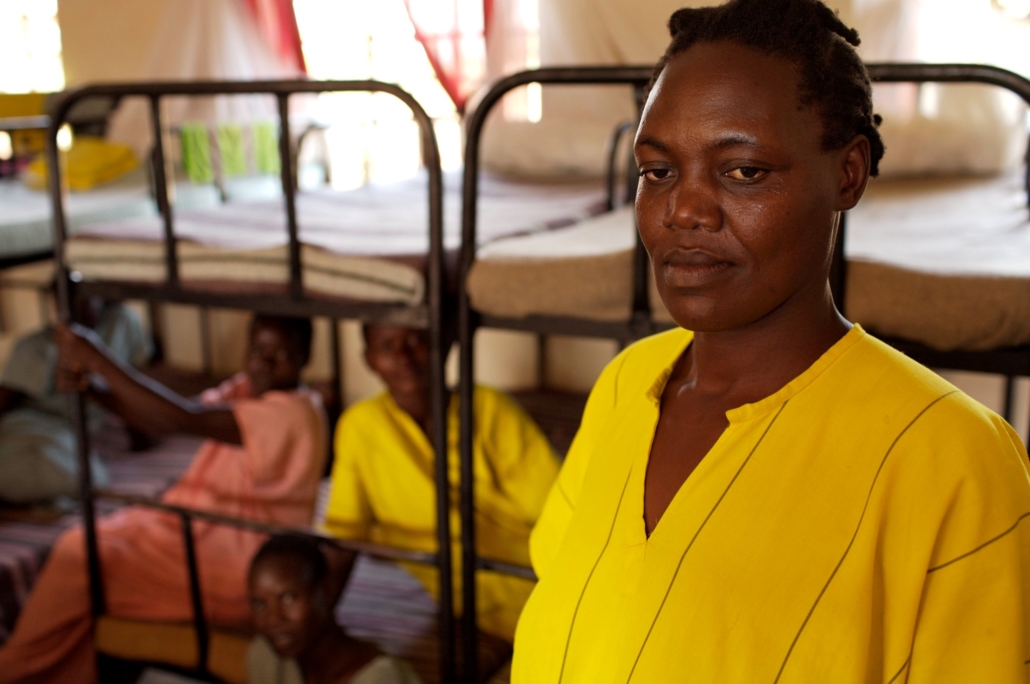
All over the world, people end up in prison in an act defined as “justice.” Over 10 million people represent the worldwide prison population. According to the NIC, its rates are highest in countries such as Seychelles, the United States, St. Kitts and Nevis, Turkmenistan and the U.S. Virgin Islands. All of these countries have class-based systems that produce poverty and subsequently an overrepresentation of their poor populations in prison. Prisons are such a normalized part of most of the world’s justice systems that many do not even question whether the institution is just or not. The African nonprofit Justice Defenders is fighting the very institution that people know as the “Prison Industrial Complex.”
Poverty and Prisons
Prison systems all over the world disproportionately target poor people and incarcerate them in horrendous conditions. In the prisons of Africa, which many consider the worst in the world, The International Journal on Human Rights has reported that “prisoners often lack space to sleep or sit, hygiene is poor, and food and clothing are inadequate.” This human rights violation is an injustice in a system supposedly designed to implement justice.
Additionally, the journal highlighted how all people, but specifically women, incarcerated in African prisons are “overwhelmingly poor and uneducated” and thus “sexism is apparent in the criminalization and sentencing of certain conducts.” This targeting and sentencing of all people, but disproportionately women, is again unjust to poor communities. The journal importantly noted how the poor often suffer detainment longer because they cannot pay for an early release. In other words, detained wealthy people often pay their way out of the system. This is a luxury that poor people do not have, therefore causing a higher representation in prison systems not only across Africa but across the world.
Defending Justice
There are, and have been, many efforts to combat the injustices of the Prison Industrial Complex globally. However, one nonprofit based in Uganda is providing education through the system in order to fight it. Justice Defenders, headquartered in Kampala, Uganda, includes a varied membership of all kinds of people related to the justice system, from judges and allies to prisoners and ex-convicts. According to Justice Defenders’ website, it strives to use education as a means to tackle the injustices of the system. Since poor people lacking education represent a larger population in prisons, providing imprisoned people with adequate education is imperative.
Justice Defenders creates social and faith groups for imprisoned people in addition to providing legal protection and representation in trials. While working against the injustices of Africa’s Prison Industrial Complex, Justice Defenders also strengthens this community by partnering globally. It is a registered charity in the United Kingdom and addresses mass incarceration in the United States. By creating a strong global movement, Justice Defenders attacks injustice at every level of the prison system and fights for a world free of poverty.
Hope for the Hopeless
Poor people disproportionately represent prison populations across the world, and Justice Defenders is working to right this injustice. One of the most profound statements that the nonprofit has shared is a quote from American lawyer Bryan Stevenson, who argued that “the opposite of poverty is not wealth. In too many places, the opposite of poverty is justice.” Luckily, groups like this nonprofit are on the front lines, fighting for justice.
– Sebastian Fell
Photo: Flickr
