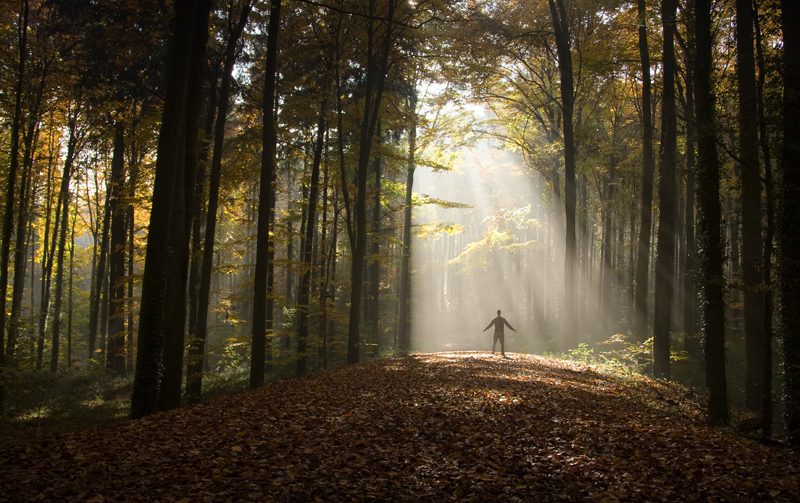
For the first time in human history, humans are increasingly turning away from wild spaces. By the year 2050, expectations have determined that nearly 7 billion people or two-thirds of the human population will live in urban areas. Meanwhile, half of the world’s poor already live in Earth’s most populous areas where access to natural space is dwindling. Re-imagining the value of nature is alleviating symptoms of urbanization that disproportionately impact the world’s poor. In Japan, the practice of forest bathing (shinrin-yoku) serves as a functional detox from the unnatural environment. The practice presents a fresh perspective on humanity’s relationship with nature and provides insight into the importance of nature in sustainable development.
The Environment and Health
Throughout human history, the natural world guided people in their daily lives. However, urbanization is reducing human exposure to nature and increasingly introducing citizens to harmful pollution that exacerbates illnesses that disproportionately affect the poor.
In developing nations, illnesses are most associated with hazards of the urban environment carries. In Dharavi, India’s most densely populated and poorest community, a lack of clean water and sanitation or trash disposal systems are among the issues contributing to a lower quality of living. Despite this one square mile area housing close to 1 million people, there are no parks, trees or wildlife besides disease-carrying rodents and stray pets. In addition, summer temperatures soar and monsoonal rainstorms find just enough room for flooding to spawn mosquito-borne illnesses. Neighborhoods such as Dharavi depict a negative relationship between the urban environment and health.
Health and Forest-Bathing
Poverty often has links to mental illness. This means many of the symptoms of a polluted urban environment contribute to a higher likelihood of stress. Socio-environmental factors as a whole play a large role in determining the health of individuals. However, studies often overlook the tangible effect that the physical environment plays in development. Shinrin-yoku, the Japanese term for forest-bathing, provides insight into what humans are missing in an absence of nature.
Japanese health officials examined the relationship that exposure to natural places has on human health. While studying the practice of forest-bathing and bodily responses to nature, scientists discovered a direct correlation between health and exposure to nature. For example, studies determined that exposure to nature promotes health benefits, including “lower levels of cortisol, lower pulse rate, lower blood pressure,” more than urban exposure. Responses often lead to a lower likelihood of developing serious illnesses that are too expensive for poor nations to address. This begs the question: Do the environments citizens live in hold them back?
The Economics of the Wild
Nature adds a quantifiable impact on economies across the globe. This is especially important for poorer communities that experience direct impacts from the environments they exist in. Singapore, one of the most urbanized nations in the world and previously home to poor communities comparable to Dharavi, is integrating various forms of nature into urban design through the Singapore Green Plan. Sustainable developments feature the city’s main attractions and are helping to alleviate poverty. This means more revenue for the local economy and higher incomes, coupled with an improved quality of life. Comparably, a modern appreciation of nature is proving rewarding across the globe in alleviating symptoms of urbanization. In terms of health, Singapore’s increased greenery also improves the quality of living by negating the urban heat effect and air quality.
For similar reasons, outdoor recreation constitutes one of the most rapidly growing industries worldwide. Japan’s forest bathing is a cultural phenomenon in which citizens escape to natural space. For the United States, hiking and action sports such as mountain biking and skiing are becoming increasingly popular. A whole economy centers around this type of recreation. According to the Outdoor Recreation Association, recreation centered around the U.S. outdoors generates $887 billion annually. The wild is a source of wellbeing, economic development and cultural significance for millions. However, for the developing world, nature is still largely inaccessible, especially for impoverished citizens in urban areas.
Sustainable Development
Uncontrolled development is not the only cause of the environment in poor nations. Rather, the environment in poor urban areas is often responsible for the area’s poverty in the first place. Unsustainable development exacerbates symptoms of poverty. The absence of nature in urban areas holds poor communities down.
Singapore is not the only one incorporating sustainable development into its future planning. The Organization for Economic Co-operation and Development (OECD) describes environmental aid as “necessary for improving economic, social and political conditions in developing countries.” Sustainable development and wellbeing increasingly look to nature as a fundamental aspect of development.
Increasing Access to Natural Spaces
Historically, access to nature by means of escape is recreational freedom for privileged, fully-developed nations. In developing nations, the environment is a determiner of the quality of life. Unfortunately, urban areas including Dharavi and Singapore do not have the same access to nature as Japan’s forests. This means that forest bathing is a distant dream for millions living in the most densely populated areas of the globe. Increasing accessible natural spaces and integrating nature into an urban design is fundamental to increasing the quality of life for developing nations.
Investing in poor communities is not separate from investing in the environment. The health, wealth and development of communities remain largely dependent on natural space. Regardless of status, forest-bathing in Japan presents an often overlooked benefit of nature that surrounds all of human life. Poverty and the environment are two heavily interconnected issues that can be and currently are receiving attention.
– Harrison Vogt
Photo: Flickr

The COVID-19 Vaccination in Hungary
In May, Hungarian prime minister Viktor Orban’s chief of staff Gergely Gulyas announced that Hungary will not join the new vaccination deal. As part of the deal, Pfizer and BioNTech will provide an additional 2.6 billion doses throughout the European Union (EU). Hungary is the only EU country that has opted out of the deal.
According to Gulyas, the Hungarian government is confident in its current supply. Gulyas stated that in the event a booster becomes necessary, “there are plenty of vaccines from Eastern and Western sources as well.” Orban used his strong ties with Russia and China to purchase and deploy vaccines from those countries even before the EU approved them.
Vaccination Campaign Successes
Since January, almost half of Hungarians have received their second dose of the COVID-19 vaccine. As a result, infection rates have declined rapidly across the country. Compared to the rest of the EU, Hungary had a relatively low infection rate throughout the pandemic. Hungary peaked at about 10,000 new cases per day. In the first week of July, there was an average of 41 new infections reported per day. That’s less than one percent of the daily average during the country’s peak on March 25. Furthermore, the country has seen fewer than one million COVID-19 cases overall.
Hungary has also expanded vaccine eligibility quickly. It is the first EU country to approve vaccination for citizens as young as 16, who are eligible to receive the Pfizer/BioNTech doses. Around 90,000 young people have already registered for the shot, accompanied by parental permission for those under 18. Euronews reported that “according to government plans, by mid-June, all Hungarians willing to get a Western-developed jab can be vaccinated.” Hungary is hoping to be able to vaccinate children as young as age six which would mean virtually all schoolchildren by early fall when school starts.
Low-Income Families and Vaccination
The percentage of Hungarians at risk of poverty has declined steadily in recent years, dropping around 3% from 2013 to 2020. Hungary’s at-risk poverty rate was 12.3 % in 2020. COVID-19 has been harsher on the at-risk population, especially the Roma population living in poor settlements. The Hungarian Civil Liberties Union (HCLU), a human rights non-governmental organization (NGO) advocates for targeted measures to protect the Roma from COVID. HCLU claims that the Hungarian government has overlooked the fact that the Roma have been more vulnerable to COVID’s economic consequences because they lack any financial reserves and rely on day-to-day odd jobs.
A Promising Start
With half of Hungarians vaccinated and many more eligible, working life is returning to normal, allowing the economy to thrive. As low-income citizens including the Roma get vaccinated, they will be able to return to work without fear of illness. Also, fewer people will lose their jobs due to business closures. This successful COVID-19 vaccination campaign is leading Hungary toward a safe return to life as it used to be. Furthermore, the government is confident that its current supply of vaccine doses can sustain the campaign’s success.
– Riley Prillwitz
Photo: Unsplash
What Japan’s Forest Bathing Teaches About Poverty
For the first time in human history, humans are increasingly turning away from wild spaces. By the year 2050, expectations have determined that nearly 7 billion people or two-thirds of the human population will live in urban areas. Meanwhile, half of the world’s poor already live in Earth’s most populous areas where access to natural space is dwindling. Re-imagining the value of nature is alleviating symptoms of urbanization that disproportionately impact the world’s poor. In Japan, the practice of forest bathing (shinrin-yoku) serves as a functional detox from the unnatural environment. The practice presents a fresh perspective on humanity’s relationship with nature and provides insight into the importance of nature in sustainable development.
The Environment and Health
Throughout human history, the natural world guided people in their daily lives. However, urbanization is reducing human exposure to nature and increasingly introducing citizens to harmful pollution that exacerbates illnesses that disproportionately affect the poor.
In developing nations, illnesses are most associated with hazards of the urban environment carries. In Dharavi, India’s most densely populated and poorest community, a lack of clean water and sanitation or trash disposal systems are among the issues contributing to a lower quality of living. Despite this one square mile area housing close to 1 million people, there are no parks, trees or wildlife besides disease-carrying rodents and stray pets. In addition, summer temperatures soar and monsoonal rainstorms find just enough room for flooding to spawn mosquito-borne illnesses. Neighborhoods such as Dharavi depict a negative relationship between the urban environment and health.
Health and Forest-Bathing
Poverty often has links to mental illness. This means many of the symptoms of a polluted urban environment contribute to a higher likelihood of stress. Socio-environmental factors as a whole play a large role in determining the health of individuals. However, studies often overlook the tangible effect that the physical environment plays in development. Shinrin-yoku, the Japanese term for forest-bathing, provides insight into what humans are missing in an absence of nature.
Japanese health officials examined the relationship that exposure to natural places has on human health. While studying the practice of forest-bathing and bodily responses to nature, scientists discovered a direct correlation between health and exposure to nature. For example, studies determined that exposure to nature promotes health benefits, including “lower levels of cortisol, lower pulse rate, lower blood pressure,” more than urban exposure. Responses often lead to a lower likelihood of developing serious illnesses that are too expensive for poor nations to address. This begs the question: Do the environments citizens live in hold them back?
The Economics of the Wild
Nature adds a quantifiable impact on economies across the globe. This is especially important for poorer communities that experience direct impacts from the environments they exist in. Singapore, one of the most urbanized nations in the world and previously home to poor communities comparable to Dharavi, is integrating various forms of nature into urban design through the Singapore Green Plan. Sustainable developments feature the city’s main attractions and are helping to alleviate poverty. This means more revenue for the local economy and higher incomes, coupled with an improved quality of life. Comparably, a modern appreciation of nature is proving rewarding across the globe in alleviating symptoms of urbanization. In terms of health, Singapore’s increased greenery also improves the quality of living by negating the urban heat effect and air quality.
For similar reasons, outdoor recreation constitutes one of the most rapidly growing industries worldwide. Japan’s forest bathing is a cultural phenomenon in which citizens escape to natural space. For the United States, hiking and action sports such as mountain biking and skiing are becoming increasingly popular. A whole economy centers around this type of recreation. According to the Outdoor Recreation Association, recreation centered around the U.S. outdoors generates $887 billion annually. The wild is a source of wellbeing, economic development and cultural significance for millions. However, for the developing world, nature is still largely inaccessible, especially for impoverished citizens in urban areas.
Sustainable Development
Uncontrolled development is not the only cause of the environment in poor nations. Rather, the environment in poor urban areas is often responsible for the area’s poverty in the first place. Unsustainable development exacerbates symptoms of poverty. The absence of nature in urban areas holds poor communities down.
Singapore is not the only one incorporating sustainable development into its future planning. The Organization for Economic Co-operation and Development (OECD) describes environmental aid as “necessary for improving economic, social and political conditions in developing countries.” Sustainable development and wellbeing increasingly look to nature as a fundamental aspect of development.
Increasing Access to Natural Spaces
Historically, access to nature by means of escape is recreational freedom for privileged, fully-developed nations. In developing nations, the environment is a determiner of the quality of life. Unfortunately, urban areas including Dharavi and Singapore do not have the same access to nature as Japan’s forests. This means that forest bathing is a distant dream for millions living in the most densely populated areas of the globe. Increasing accessible natural spaces and integrating nature into an urban design is fundamental to increasing the quality of life for developing nations.
Investing in poor communities is not separate from investing in the environment. The health, wealth and development of communities remain largely dependent on natural space. Regardless of status, forest-bathing in Japan presents an often overlooked benefit of nature that surrounds all of human life. Poverty and the environment are two heavily interconnected issues that can be and currently are receiving attention.
– Harrison Vogt
Photo: Flickr
How TB Affects Refugees
The Diffusion of TB
Although many refugees contract TB from their home countries, their journies worsen the disease’s effects. The malnutrition that many displaced peoples experience weakens the body’s ability to fight the disease, and underlying health conditions lead to more life-threatening effects.
TB affects refugees in camps. Currently, 2.6 million refugees live in refugee camps all around the world. Tens of thousands of individuals can cram into each camp. In fact, one camp in Jordan, for example, is home to about 80,000 Syrian refugees. Camps do not have an adequate amount of food, and sanitation is well below average. In fact, 30% of refugee camps do not have access to proper latrine systems. Additionally, TB affects refugees where HIV rates are high. For example, many refugees live in sub-Saharan Africa where the HIV rate is 9%, one of the highest in the world. Further, when those placed in camps leave, general community members are also at risk.
Access to Treatment
The majority of refugees today are living in a state of poverty. For example, a report by the United Nations High Commissioner for Refugees (UNHCR) and the World Bank Group shows that in 2014 90% of the Syrian refugees in Jordan and Lebanon are considered to be below the poverty line in each of those countries. Economic barriers prevent many refugees from TB treatment. Without money, displaced peoples have little defense against TB.
Although affordability plays a large factor in a refugee’s inability to access treatment, fear also plays a role in limiting refugee access to treatment. Particularly for undocumented refugees, the fear of deportation prevents many from receiving a diagnosis. For documented refugees, the legal technicalities of receiving such care are complex. Treatment is mainly available to those who are employed because employers provide insurance that covers treatment costs. However, approximately 65.1% of refugees around the world are currently unemployed and unable to receive these benefits. Financial and emotional walls are blocking refugees from receiving vital healthcare.
Global Response
The extreme ways in which TB is affecting refugees have garnered international attention. To combat its fatal consequences, the World Health Organization (WHO) has created a response called The End TB Strategy. The program’s ultimate goal is to reach an 80% drop in TB cases by 2030. One of the program’s main strategies is to implement screening, especially for high-risk groups. If a refugee arrives from a country such as India where TB rates are high, they will go through a screening process. Through these procedures, early detection of TB is possible, and the disease can be effectively treated.
Organizations like the Centers for Disease Control (CDC) have already implemented screening measures and require refugees to undergo TB tests before they can cross US borders. Proper understanding of the disease is also a focus of The End TB Strategy. The WHO is developing research on and treatment plans for TB that should lower infection rates. In general, the strategy emphasizes the importance of early detection, screening and proper treatment for all individuals.
Looking Forward
Tuberculosis is a deadly disease. It is one of the top ten causes of death in low-income countries. Refugees can become infected in their home countries, throughout their journeys or in refugee camps. TB easily spreads from person to person, and it can infect entire communities. Poverty and fear of deportation and unemployment prevent refugees from accessing and receiving treatment.
Fortunately, plans such as the WHO’s End TB Strategy are working on improving the current state of tuberculosis among refugee populations. Hopefully, these programs will reach their goals and protect refugees from TB’s deadly hands.
– Mariam Kazmi
Photo: Flickr
Celebrities Named New Crisis Ambassadors
Crisis and Homelessness in the U.K.
Crisis is a U.K.-based organization working to alleviate the issue of homelessness in England, Scotland and Wales through various services. Some of those services include one-on-one support, courses and advice. The organization also carries out research on homelessness and helps people find housing.
Homelessness has been a long-standing in the U.K.. It is estimated 280,000 people, or one in every 200, are homeless in England.
Crisis reports the COVID-19 pandemic clearly exacerbated the increase of homeless people in the country. As there are concerns that statistics surrounding homelessness are not accurately captured in official reports, Crisis carries out its own research to fully understand the scope of the problem.
Ambassadors
A Crisis Ambassador is a role that works to increase awareness and donations for the organization and its mission. Before the announcement, both Akinwolere and Staunton provided prior support to the organization.
Akinwolere supported the charity’s Christmas campaign last year by providing entertainment for the guests and appearing in their fundraising film. Staunton has supported the organization for ten years, becoming a regular at various events, fundraisers and services.
Both ambassadors experienced success in their respective careers. Staunton, popular for her role in the Harry Potter film franchise, has acted in numerous critically acclaimed films. Akinwolere has won awards for excellence in broadcasting. Both ambassadors share a large following and commitment to social justice. Therefore, the two fit the role because they can use their platform to increase awareness for the organization.
Akinwolere’s Q&A with Crisis
In a Q&A with Crisis, Akinwolere said he is looking forward to his role because he wants to help raise awareness for the organization and highlight the important work they are doing.
“To be able to highlight Crisis and its work clearly to audiences is so important to ensure those supporting Crisis through donations and campaigning can see the humanity within many of the journeys of people experiencing homelessness.,” Akinwolere said.
He said he has been supporting the charity for years, but their relationship blossomed in the last few years.
Akinwolere also noted the importance of continuing to help the nation’s poorest as the COVID-19 pandemic continues.
“Homelessness is a really complicated and complex situation across Great Britain and as coronavirus restrictions lift, we cannot see the levels of homelessness return to what they were previously,” he said. “With the right approach, we can really move forward to end it.”
He also said he is looking forward to moving forward “with a really modern and holistic approach to help end homelessness for good” as he becomes an ambassador.
Staunton and Akinwolere will join others in raising awareness for the work the charity is doing in ending homelessness in the U.K. and supporting those citizens as they transition out of the streets and into housing.
– Laya Neelakandan
Photo: Geograph
Lingering Effects of Hurricanes Eta and Iota on Honduras
Honduras is a Central American country bordering the Caribbean Sea. Because of its location, Honduras is able to produce valuable goods like textiles, sugar cane and coffee. However, 2020 proved to be a challenging year for the country and its economic output. COVID-19’s impact on Honduras was undoubtedly destructive but the added impact of Hurricanes Eta and Iota further affected Honduras’ economy and overall conditions in the nation.
COVID-19 in Honduras
Honduras confirmed its first official case of the SARS-CoV-2 virus in early March 2020. Schools closed shortly after March 13, 2021, and businesses were limited to 50% capacity per a nationwide mandate. These commissions stunted the economy and placed Honduras in a financial crisis. While the country’s GDP contracted, Honduras experienced a period of inflation. Prices of everyday items, like coffee, skyrocketed. In addition, a decrease in worldwide tourism led to growing economic instability. The World Bank reports about 45% of Honduran households facing income losses in the wake of the pandemic. Suspended operations and businesses put approximately half of Honduras’ citizens out of work. The emotional toll of the virus itself is equally notable. The significant number of deaths reflects COVID-19’s impact on Honduras. More than 9,000 citizens have died since the start of the pandemic.
Hurricanes Eta and Iota and Honduras
On November 3, 2020, Hurricane Eta made landfall in Honduras as a Category 4 storm, affecting more than 1.8 million people. Not even two weeks later, Hurricane Iota made landfall on November 17, 2020. An astounding number of vulnerable families experienced displacement, forcing many to relocate to crowded collective shelters. Helpful and necessary resources in shelters dwindled fast and the lack of proper social distancing mandates contributed to Honduras’ increase in COVID-19 infections. The devastating effects of Eta and Iota’s flooding had major impacts in the flooded San Pedro Sula airport, restricting people’s abilities to seek refuge elsewhere via flights.
Vaccine Rollout in Honduras
COVID-19’s presence was difficult for most countries to endure, but with the destructive addition of Hurricanes Eta and Iota, the year was undeniably life-threatening for Honduras. Honduras has vaccinated about 24% of its total population. Compared to other countries, it also has a decreasing number of peak cases. However, as of April 2021, COVID-19 vaccine rollouts have slowed in Honduras because of the United States’ own complicated vaccine rollout.
As newly mutated strains of the virus can easily prolong Honduras’ medical and economic ruin, COVID-19’s impact on Honduras is apparent. With the introduction of the COVAX initiative in August 2020, co-led by WHO, CEPI and Gavi, more developing countries will be able to access vaccines. However, with the United States’ slowed distribution and environmental challenges like Hurricanes Eta and Iota, it is difficult to ascertain how long it will take Honduras to rebuild itself. Addressing the country’s needs with sufficient funding and resources will, most likely, be an incredibly instrumental means of aiding Honduras.
The Road Ahead
Caritas Internationalis created a two-month-long emergency relief program to assist Honduras, Nicaragua and Guatemala in recovery. Each nation received €250,000 worth of aid for “food, hygiene kits, access to safe drinking water and ensuring people can protect themselves from COVID-19.” Caritas committed to aiding in the recovery and well-being of about 2,500 families in this period, which equates to 12,500 citizens. Additionally, increased congressional support of the COVAX initiative could help Honduras access more vaccines, stabilizing the nation and protecting it from further impacts of the virus.
– Maia Nuñez
Photo: Flickr
The Weeknd: Singer and Philanthropist
The Weeknd’s Background
Much of The Weeknd’s philanthropy ties back to his cultural roots. Born as Abel Tesfaye, The Weeknd’s parents are Ethiopian immigrants. Although Tesfaye grew up in Toronto, Canada, his first language was Amharic. Amharic is one of the two main languages of Ethiopia, further showing his connection to the region.
Ethiopian Philanthropy
A significant portion of The Weeknd’s philanthropy goes toward his parents’ home country of Ethiopia. In April 2021, he donated $1 million to World Food Program USA, which is the U.S. affiliate of the United Nations World Food Programme. This donation will fund two million meals in Ethiopia. Specifically, these meals will benefit people who do not have access to food in the northern Tigray region where there is an ongoing ethnic conflict with Ethiopia’s neighboring country, Eritrea. Civilians suffer the most from the conflict. They are often in danger, living in poor conditions and risk rape, violence and death.
When announcing his donation to World Food Program USA, The Weeknd stated in an Instagram post that, “My heart breaks for my people of Ethiopia as innocent civilians ranging from small children to the elderly are being senselessly murdered and entire villages are being displaced out of fear and destruction.”
Prior to The Weeknd’s donation, the World Food Programme provided corn, rice and vegetable oil to 60,000 people in the northern Tigray region. The program also began an initiative to support pregnant and breastfeeding women as well as children in the region, with the goal of reaching 875,000 people. The program also has two refugee camps in Tigray, open to people seeking safety and help.
Donations to Beirut
The Weeknd’s philanthropy extends beyond Ethiopia, as he donated to COVID-19 relief as well as relief for Beirut, Lebanon. Following an explosion at the Port of Beirut, The Weeknd donated $300,000 to Global Aid for Lebanon. The explosion damaged homes, infrastructure and hospitals. It injured 6,000 people and killed 180. The detonation also damaged the city’s main hospital and other clinics, making it difficult to treat victims. The explosion was also at the city’s port, which drastically affected their ability to trade and receive imports. Additionally, the poverty rate in Lebanon jumped from 33% to 45%. It came mainly as a result of both the COVID-19 pandemic and the explosion. Global Aid for Lebanon raised more than $1.2 million to provide food, treatment and infrastructure aid to those impacted by the explosion.
The Weeknd’s philanthropy has benefitted many lives and helped many get the assistance they needed following unsafe conditions. While he is a quiet philanthropist, he has been instrumental in helping vulnerable people in global poverty.
– Sana Mamtaney
Photo: Flickr
How Global Dental Relief is Improving Accessibility
Dental insurance operates differently around the world. A lack of proper dental care can result in serious health issues that have lasting impacts. In developing countries, where dental care may not be as accessible, the money to afford treatment may be difficult to obtain. However, Global Dental Relief (GDR) is improving accessibility to dental care.
How Global Dental Relief is Improving Accessibility to Dental Care
Global Dental Relief started as the Himalayan Dental Relief Project. Former Director of the Colorado State Parks Laurie Mathews and dentist Andrew Holacek are the founders of the organization. After the pair traveled to Nepal together, they noticed the dental crisis present in the country. Nepal had 120 dentists for a population of nearly 24 million people. In 2001, they began their project to bring free dental care and oral hygiene education to the people of Nepal. With the knowledge that the organization could change the lives of children and adults across the nation, Mathews and Holacek dedicated themselves fully to their cause.
In 2003, Mathews and Holacek joined forces with travel adventure expert Kim Troggio. With Troggio’s expertise, the team sought to help both native families and international travelers. They also aimed to connect with the local communities they aimed to help to make their cause more personal. A large portion of the organization’s funding in 2003 came from travelers who visited impoverished nations. After seeing the lack of care and with the Global Dental Relief’s support, donations became plentiful. Since then, Global Dental Relief has made a huge impact. The organization has accumulated over 2,600 volunteers. In addition, Mathews and Holacek have provided over $35 million in donated care to more than 170,000 children.
Trips Around the World
Global Dental Relief offers trips to Appalachia, Cambodia, Guatemala, India, Kenya, Mexico and Nepal. Dental hygienist Nour Shehadeh recently took a trip to Cambodia, where she treated more than 1,000 children with first-time dental care. These children had never seen a dentist before, making the experience life-changing. Shehadeh realized the immense power that a bright smile could have on a person’s confidence.
On another trip in 2018, several dentists and dental hygienists from Aspen Dental practices took a relief trip to Guatemala. During this time, they performed 1,500 dental procedures on the children of Antigua. These included 126 root planing and scaling procedures, and 596 fillings. By the end of the mission, dental professionals completed 488 fluoride varnishes and 195 extractions, showing how Global Dental Relief is improving accessibility to dental care.
How to Volunteer
Those who have participated in a trip described the experience as life-changing. Dentist Savannah Reynolds of Greenville, South Carolina explained that the experience was not only eye-opening but also intrinsically rewarding. Anyone is able to volunteer with the Global Dental Relief organization, as no prior dental experience is necessary. Global Dental Relief is also in need of non-dental volunteers to manage records, teach oral hygiene, manage the clinic flow and assist both dentists and dental hygienists. Applications to register to be a volunteer for Global Dental Relief are available on the organization’s website.
– Jessica Li
Photo: Flickr
Compassion: Share Birthday, Sponsor a Child
More than 8 million children living in poverty receive sponsorship from benefactors throughout their childhood. These relationships develop through donations, letters and sometimes visits and volunteering. Once these relationships occur, they often make an insurmountable impact on the child and last a lifetime. One of the ways to build a relationship with and sponsor a child in need across the world is through the organization Compassion.
What is Compassion?
Compassion is a religion-based organization that aims to support children globally with basic needs such as medical assistance, clean water and food, youth development and birthday gifts. Compassion has implemented various ways people can help and donate. One way it encourages people to do this is by giving a child a yearly birthday gift along with medical care and food. Many donors choose a child with the same birthday as their own and celebrate it by sharing it with a child across the world.
What Does the Organization Do?
The organization provides a platform to help children across the world. In particular, the sponsorship program aims for people to sponsor one or multiple children. With this program, 40% of children are more likely to finish their secondary education, and sponsored children are more likely to stay in school for almost two years longer than unsponsored children.
Compassion has also been working tirelessly to help families and children during the COVID-19 pandemic, which has become an increasing problem with poverty, as it mainly affects income loss, food shortages, rising prices and medical treatment. Compassion is helping families with cooking essentials, medical treatment and rent assistance. Much of the work the organization does, besides donating and volunteering, is based around churches and businesses. It fosters partnerships between churches and businesses to hold events, raise awareness and help people become advocates.
A Donation-based Organization
This program is mainly donation-based. There are plenty of ways that people donate on the organization’s website. In fact, donors can choose where, and often who, their donation goes to. Individuals are able to either help sponsor a child or direct their money toward areas such as COVID-19 or disaster relief. However, this organization does not only revolve around donations, it also provides other areas for people to help such as volunteering, writing to children and even visiting children. This can have a huge effect on the children from infancy to adulthood, as many children remain in contact with their benefactors their entire life. Because the organization originated from its religious beliefs, it also provides a prayer calendar, where many can say a prayer for children in poverty.
Poverty begins and ends with children. When children have access to higher education, clean food and water and proper healthcare, they are more likely to lift themselves out of poverty. By giving children around the world access to basic needs, sponsors are beginning to break the cycle of poverty. When a person sponsors a child, they are giving them more than just a birthday present, they are also giving them hope.
– Maddie Rhodes
Photo: Unsplash
Uncovering the Invisible Poverty in Japan
The History of Japan
During World War II, Japan’s fate changed for the worse. Tokyo sided with the Axis Powers and lost the war to the Allies in a devastating fashion. After the destruction of Hiroshima and Nagasaki from American atomic strikes, Japan had to rebuild in the interceding decades. By the 1980s, Japan once again emerged as a major world power and the second-largest economy. Pundits believed Japan was on track to overtake even the United States.
The arrival of the 1990s heralded a second collapse. The Japanese stock market burst and the country plunged into a recession known as the Lost Decade. Growth stagnated and has remained slow for the last 30 years. In 2020, COVID-19 added yet another factor of uncertainty to an already unstable fiscal situation.
Japan still remains a wealthy developed nation. But, its population is aging and a return to global preeminence is therefore unlikely. Meanwhile, poverty is festering, particularly among the young. Addressing these challenges is crucial as much of the global economy remains tied to Japan.
Invisible Poverty in Japan
In Japan, poverty is often invisible but no less severe. In an OECD report analyzing 34 countries, Japan ranked sixth from last in terms of the “share of the population living in poverty.” While these statistics might be shocking to ordinary Japanese citizens who mostly do not have to experience direct encounters with grinding poverty, the statistics are not surprising to researchers. Over the years, experts took notice of an alarming trend. Not only is the Japanese poverty level high (not unlike the United States) but it is also steadily increasing. In 2020, Japan’s poverty rate was almost 16%, defined as “people whose household income is less than half of the median of the entire population.”
Since the 1990s, growth has been almost non-existent. Across multiple governments, none have been able to restart the Japanese economic engine. In 2019, growth was a measly 0.3%. Although U.S. citizens often critique their own economy for being too slow, the U.S. economy is much faster than Japan’s. In 2019, the United States grew 2.2%. Amid COVID-19, the contraction of the economy exacerbated these challenges. A wider global recovery has sparked optimism in Tokyo, but uncertainty lies ahead.
Japan’s Strong Points
Second Harvest Alleviates the Impacts of Poverty
Despite high Japanese living standards, the often invisible poverty in Japan has galvanized a growing cross-section of Japanese nationals to build organizational structures to address the fundamental challenges the population faces. Addressing food insecurity in the nation is Second Harvest, “Japan’s first food bank” drawing from farmer and retailer donations across the country to distribute resources to underserved communities. In 2002, its first year of legal corporation, Second Harvest delivered 30 tons of food. Ten years later, the amount had grown to more than 3,000 tons of food. Since 2013, Second Harvest has been delivering food to “320 welfare agencies and organizations in the Kanto area as well as nationally.”
Such organizations lend an optimistic perspective to the future, one that the industrious and innovative people of Japan can capitalize on.
– Zachary Lee
Photo: Flickr
Poverty Eradication and South-South Cooperation
In June 2021, the United Nations High-level Committee on South-South Cooperation (BAPA+40) met for its 20th session to assess the progress on South-South cooperation and discuss progress regarding the 2030 Sustainable Development Goals (SDGs). South-South cooperation is the technical collaboration between developing countries of the southern hemisphere or Global South to improve economic development, human rights, climate change, health and other indicators of a thriving society. The Buenos Aires Plan of Action for Promoting and Implementing Technical Collaboration Among Developing Countries (BAPA), which emerged in 1978, launched the South-South cooperation initiative and, since then, 40 additional countries have joined the effort. At the June 2021 meeting, the group discussed progress regarding the COVID-19 pandemic.
Global Context and Trends
The period from 2016 to 2020 witnessed a combination of disastrous shocks and notable human progress. Between 1990 and 2016, poverty rates fell by 35%. By 2019, those living in excessive poverty (below $1.90 per day) decreased to 630 million from the 1990 figure of 2 billion. Nevertheless, by 2020, this situation had changed due to the serious effect of the COVID-19 pandemic which, up to April 2021, had resulted in more than 2.8 million deaths in the world, and also a disastrous economic impact. Experts were concerned that crises like the COVID-19 pandemic, environmental challenges and violent conflicts may negate the success in alleviating poverty over the past three decades.
Specifically, the United Nations Development Programme (UNDP) emphasized the necessity to consider human progress from a wider perspective than economics. This program, in cooperation with the University of Oxford, promoted the idea of “multidimensional poverty” as development practitioners and policymakers began tracing poverty to its origin as apparent in the different living conditions of destitute persons and communities. For example, the 2020 Global Multidimensional Poverty Index which the UNDP published, shows that 803 million multidimensionally poor persons dwell in undernourished households, 1.03 billion persons live in substandard housing and 476 million children are not receiving an education.
Developing nations also encountered multiple, interlinked climatic, financial and microeconomic challenges from 2016 to 2020. For that reason, they attempted to accelerate the attainment of the 2030 SDG goals. They viewed the South-South coordination as an important model for this effort.
Developing Countries: Africa
The South-South collaboration 2019 landmark Agreement Establishing the African Continental FreeTrade Area bolstered regional integration in Africa. Africa has an extensive single market of over 1.3 billion persons as well as a $2.2 trillion combined yearly output. The implementation of the Free Trade Area is likely to have a major socioeconomic effect. Some have anticipated that there will be further gains from intra-African trade which has the potential of increasing by 33% during the Free Trade Area transition stage. There has also been an increase in the number of African leaders who have slowly initiated terms of engagement with other nations. The High-Level Committee reports that it will be critical that these leaders avoid inequalities that would reduce the potential benefits that Africa could obtain from South-South collaboration on the continent.
Developing Countries: Asia and the Pacific
Asia’s high level of regional integration makes it an epicenter of economic South-South coordination. While Asian economies represented 80% of all South-South exports, China continued to be the instrument of growth in investment and trade, and 19 economies in the region “reported China as their first or second-largest export market in 2017.” Despite its excellent performance in South-South trade as well as in other exchanges, large infrastructure gaps have hampered Asia.
The small island developing nations in the Pacific area continued to be susceptible to climate shocks. Consequently, in the Southeast Asia and Pacific region, South-South collaboration is of critical importance for capacity building for economic resilience to natural shocks with Asia being a role model for public-private partnerships. For instance, in 2019, the Asian Infrastructure Investment Bank and Amundi announced a $500 million Asia Climate Bond Portfolio. This initiative’s objective has been to promote climate action on the part of bank members that involves increasing green leadership and climate resilience as well as considering the climate bond market’s underdevelopment. Despite a dramatic reduction in foreign direct investment (FDI) and trade in 2020 due to the pandemic, the Asia and Pacific area performed better than the remainder of the world because of more regional integration.
Developed Countries
Several developed nations and multilateral organizations remain supportive of South-South collaboration by triangular coordination. This triangular coordination combines the abilities of various development partners in order to introduce new and adaptable solutions to development challenges and to help to attain the 2030 SDG goals. Unfortunately, a 2019 study by the Organization for Economic Cooperation and Development (OECD) found that despite the increased focus on triangular coordination, no more than 30 nations or international institutions established guiding documents, strategies or cooperation policies. The study indicated a need for an attitude shift of developed nations from thinking of developing nations as “donor recipients” to considering them as partners.
Civil Society, Think Tanks and the Private Sector
In development cooperation, the private sector, think tanks and civil society are significant stakeholders who could be influential in increasing the application of the 2030 SDG Agenda through South-South and triangular coordination. The Alliance of Non-Governmental Organizations, the United Nations Office for South-South Cooperation and Civil Society Organizations for South-South Cooperation are collaborating to improve the understanding of the value of South-South cooperation in humanitarian development and related areas.
Moving Forward
The June High-level Committee on South-South Cooperation underlined the progress of the South-South cooperation and triangular coordination with developed countries. The committee reported that these strategies have been effective in reducing multidimensional poverty and associated problems in developing countries. Its report suggests that the introduction of the United Nations system-wide strategy on South-South and triangular cooperation has great potential for enhancing this progress moving forward.
– Aining Liang
Photo: Flickr