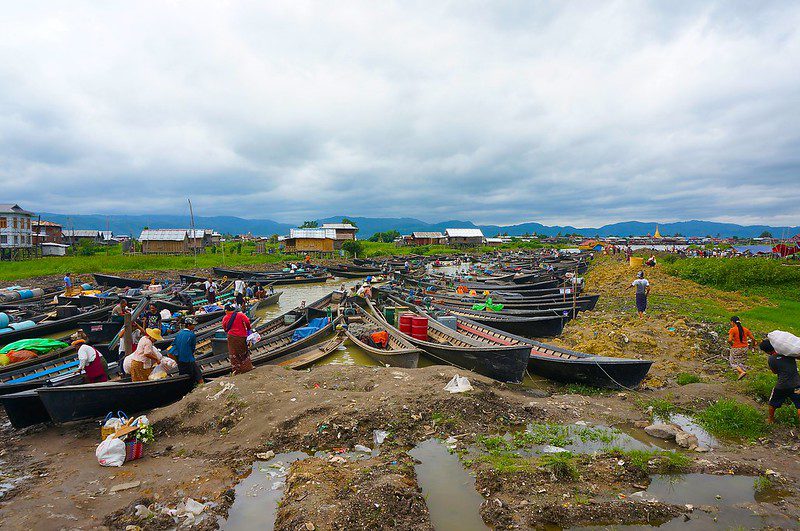
 Since the 2021 military coup, Myanmar, especially the Rohingya has faced severe restrictions on freedoms of speech and assembly and has witnessed mass killings, arbitrary arrests, torture, sexual violence and other crimes against humanity. Currently, more than 2.7 million citizens are internally displaced, with more than 2.3 million of those displaced since the coup. Additionally, 15 million people face food insecurity. In total, 18.6 million people across Myanmar struggle to meet basic needs. This crisis is the latest in nearly half a century of military control, extreme poverty and natural disasters that have plagued the country.
Deterioration of Public Services and Infrastructure
The military junta in Myanmar has deteriorated living conditions, increased food insecurity and obstructed humanitarian aid, resulting in the collapse of health care and public services in conflict-ridden regions. Conflict often disrupts communication and blocks transport routes, enforcing martial law in most parts of the country. Myanmar suffers from significant infrastructure damage, including prolonged communication and electricity blackouts. With a severe shortage of health care workers, many facilities are shut down. This leaves a large number of the 2.7 million internally displaced who reside in rural areas to take lengthy journeys to access basic and critical health care.
Intensifying Conflict and Climate Challenges
Violence escalated in Oct. 2023 when multiple nonstate groups attacked Myanmar’s central government in the Northern Shan State. Since then, the fighting has spread across the country, jeopardizing civilian safety. Poverty and inflation continue to worsen as Myanmar faces ongoing climate shocks to its agriculture sector. Cyclone Mocha in 2023 damaged crops and food production, affecting the livelihoods of more than 3.4 million people. Now, with the impact of El Niño, including erratic rainfall and high temperatures, the already stressed agriculture sector faces further challenges.
The Rohingya in Myanmar
The Rohingya people, a predominantly Muslim ethnic group of about 1.1 million, have resided in Buddhist-majority Myanmar for centuries but remain among the most vulnerable groups. Myanmar does not recognize the Rohingya as one of its 135 official ethnic groups and has denied them citizenship since 1982, rendering them stateless. Most Rohingya reside in Rakhine State, where they cannot leave without government permission. They live in one of the country’s poorest states, confined to ghetto-like camps with limited access to basic public services and opportunities.
When Myanmar gained independence from Great Britain in 1948, it enacted the Union Citizenship Act, which identified 135 ethnic groups eligible for citizenship. Although the Rohingya were omitted, families residing in Myanmar for two generations could apply for identity cards and, in some instances, citizenship. Following the first military coup in 1962, the government restricted Rohingyas from carrying foreign identity cards, severely limiting their access to employment and educational opportunities. A 1982 law further exacerbated their plight by officially declaring the Rohingya stateless.
Persecution and Exodus of the Rohingya
Rohingya people have been fleeing Myanmar since the ‘70s due to “government crackdowns,” which often include rape, torture, arson and murder, but many families remain in the country. Currently, much of the internal violence targets the Rohingya, who are often unfairly blamed by the government for violent acts carried out by nonstate groups. Accusations of ethnic cleansing against the Rohingya by the government persist, which the government denies. Residents and activists report troops firing unprovoked at unarmed Rohingya men, women and children.
In 2018, the Associated Press released a video showing a massacre and five undisclosed mass graves of Rohingya people in Myanmar. Due to ongoing violence and persecution, not only by the junta military but also by past government powers, hundreds of thousands of Rohingya have fled to neighboring countries such as Bangladesh. Recently, tens of thousands of Rohingya refugees in Bangladesh have started protesting, calling for an end to the violence and persecution in Myanmar.
Advocacy and Aid: The IRC’s Role
Communities rely on humanitarian aid and community networks for social services such as health care and education. The International Rescue Committee (IRC) is helping Myanmar by responding to the needs of the current coup, but the nongovernmental organization has been working in the country for far longer. In 2008, the IRC entered Myanmar after Cyclone Nargis for emergency response and recovery efforts. It has since stayed in the country and expanded to programs focused on improving health, protection, water, sanitation, hygiene, career training and support for community development projects.
The organization runs shelter programs for internally displaced and crisis-affected communities, significantly expanding since the 2021 coup. Currently, the IRC is particularly focused on supporting those affected by the escalating conflict, marginalized communities and individuals displaced before 2021. It emphasizes partnerships with local organizations to deliver support effectively and also operates in Bangladesh, where hundreds of thousands of Rohingya refugees from Myanmar have sought refuge.
Community Support and Developing Local Capabilities
The IRC is helping Myanmar to recover from ongoing conflict and natural disasters, focusing on the most remote areas, including Rakhine, Chin and Shan States. Across these regions, the IRC trains community health workers, supports mobile health clinics and partners with local communities to enhance access to clean drinking water, improve sanitation and prevent disease. It also educates farmers on modern agricultural techniques and technology, empowers communities to identify their own needs and develops unique recovery plans. Furthermore, the IRC operates skills training and support centers specifically for women and girls and manages nine refugee camps along the Thailand border, which provide shelter to nearly 140,000 refugees.
Looking Ahead
As conflict and displacement continue to escalate in Myanmar, the need for humanitarian assistance remains critical. Organizations like the IRC are working to address the urgent needs of displaced populations by providing health care, clean water and shelter. Their focus on local partnerships and community empowerment has helped deliver essential services to remote areas most affected by violence and natural disasters. With continued efforts, these ongoing initiatives aim to improve the lives of those impacted by ongoing conflict and instability.
– Anna Thibodeau
Anna is based in Omaha, NE, USA and focuses on Good News and Politics for The Borgen Project.
Photo: Flickr

Investing in the Future: Education in Burundi
This corruption is especially harmful for the 42.2% population which is below the age of 15, as a lack of government funding and resources has contributed to a poor quality or complete lack of education. Fortunately, both government initiatives and external organizations have recognized this problem and sprung into action, bolstering programs in Burundi to forge an educated generation of citizens and develop the nation’s struggling economy.
Government Initiatives
Recognizing the vitality of an educated citizenry in promoting the development of a recently united nation, in 2005, Burundi’s government made primary education completely free. By 2022, this measure had the effect of a 118.5% gross primary enrollment rate, meaning 118.5% of the theoretical primary school population was actually enrolled in school. Already, immense benefits are visible in fields like mathematics and language; for students in second grade, for example, language proficiency jumped from 46% in 2014 to 79% in 2019.
Furthermore, the program has completely changed the old system, which favored the education of boys. By 2011, primary education enrollment was equal by gender. This change has huge implications for Burundian development. As women become more literate and have fewer children, they are more capable of taking on jobs and contributing to the economy rather than staying home to care for a large family.
While government efforts have been instrumental in increasing enrollment, more resources are still required to improve the quality of education in Burundi. Luckily, international organizations have recognized this need and stepped up to boost educational infrastructure:
Libraries Without Borders
Since 2014, Libraries Without Borders has offered digital learning to the youth in Burundi in the form of “Ideas Boxes” and “Ideas Cubes.” Ideas boxes present digital content with an Internet connection. At the same time, the cubes provide an offline library to students in rural areas. In just six months of operation, the first two ideas boxes in Burundi saw more than 24,000 visits from eager young students, specifically Congolese refugees and Burundians themselves from the village of Makamba. With funding from organizations like the Global Partnership for Education, we can expect to see the expansion of this program and improved multimedia forms of education in classrooms throughout the nation.
The United Nations Children’s Fund
To combat the poor quality of education, which has historically resulted in elevated dropout rates among Burundi’s schoolchildren, The United Nations Children’s Fund (UNICEF) has worked with the nation’s Ministry of Education to both train teachers and build inclusive schools for children with disabilities. Furthermore, a yearly UNICEF “Back to School” campaign has sourced World Bank funding to provide teaching and learning materials such as notebooks and chalk to schools across Burundi. In 2022, for example, the campaign targeted six less-developed areas with higher dropout rates, successfully instilling the value of a quality education in students who had never experienced it before.
Final Note
Although the work is not done, government efforts and international assistance have made strides in education in Burundi. With further investment in education as the nation’s future, we can hope to see these generations mature to form a robust economy and lead Burundi toward more prosperous development.
– Cole Zickwolff
Photo: Flickr
Bahar Charity: Combating Child Poverty in Iran
This widespread poverty has far-reaching implications, including limited access to quality education, health care and social services, all of which are critical for the healthy development of children. Against this backdrop, organizations like Bahar Charity, a student-run group at the University of Toronto, Canada, have stepped in to make a tangible difference in the lives of disadvantaged children in Iran.
Bahar Charity
Founded in 2016, Bahar Charity was created by a group of friends in response to a natural disaster in Iran. This event spurred them to take action. They created a platform through which they could provide meaningful support to people back in their home country. As Nafiseh Ghoroghchian, the current president of Bahar Charity, explains, “Our vision is to build bridges between the North American, especially the Iranian community and Iran… to keep awareness of the challenges back home and provide help where we can.”
The charity aims to connect the Iranian diaspora in Canada, particularly the students and alums at the University of Toronto, with communities in Iran to support children who are struggling with poverty. The organization strives to foster a sense of solidarity and empathy among young Iranian Canadians while providing tangible assistance to those in need.
Partnerships and Collaborations
One of the most significant partnerships that Bahar Charity has developed is with Paradise Charity. This registered Canadian charity has been operating since 2001. Paradise Charity collaborates with nine nongovernmental organizations (NGOs) across different provinces in Iran, identifying underprivileged children and connecting them with sponsors in Canada. This partnership has allowed Bahar Charity to reach a wider audience and bring more support to the children in need.
Through this collaboration, Bahar Charity has established a child sponsorship program. It enables donors to sponsor a child in Iran for a minimum of $30 per month. The funds are primarily used to support the child’s education but can also be allocated for other necessities, such as health care, therapy or even household needs like repairing essential appliances. As of now, Bahar Charity has successfully gathered around 40 sponsors for approximately 60 children, ensuring that they receive continuous support for their education and well-being.
Key Initiatives and Programs
Bahar Charity has developed several initiatives to bridge the gap between the Iranian community in Canada and the underprivileged communities in Iran. Some of the key programs include:
The Future of Child Poverty in Iran
Bahar Charity has made remarkable progress since its inception. It has built a solid partnership with Paradise Charity, established successful fundraising campaigns and developed programs that directly benefit children in need. Looking ahead, it aims to increase its volunteer base and seek more collaborations with other organizations. With more hands-on projects, such as workshops and one-on-one tutoring sessions for Iranian children, it hopes to make a more direct and meaningful impact.
– Jennifer Lee
Photo: Flickr
The Rohingya: How the IRC is Helping Myanmar
Deterioration of Public Services and Infrastructure
The military junta in Myanmar has deteriorated living conditions, increased food insecurity and obstructed humanitarian aid, resulting in the collapse of health care and public services in conflict-ridden regions. Conflict often disrupts communication and blocks transport routes, enforcing martial law in most parts of the country. Myanmar suffers from significant infrastructure damage, including prolonged communication and electricity blackouts. With a severe shortage of health care workers, many facilities are shut down. This leaves a large number of the 2.7 million internally displaced who reside in rural areas to take lengthy journeys to access basic and critical health care.
Intensifying Conflict and Climate Challenges
Violence escalated in Oct. 2023 when multiple nonstate groups attacked Myanmar’s central government in the Northern Shan State. Since then, the fighting has spread across the country, jeopardizing civilian safety. Poverty and inflation continue to worsen as Myanmar faces ongoing climate shocks to its agriculture sector. Cyclone Mocha in 2023 damaged crops and food production, affecting the livelihoods of more than 3.4 million people. Now, with the impact of El Niño, including erratic rainfall and high temperatures, the already stressed agriculture sector faces further challenges.
The Rohingya in Myanmar
The Rohingya people, a predominantly Muslim ethnic group of about 1.1 million, have resided in Buddhist-majority Myanmar for centuries but remain among the most vulnerable groups. Myanmar does not recognize the Rohingya as one of its 135 official ethnic groups and has denied them citizenship since 1982, rendering them stateless. Most Rohingya reside in Rakhine State, where they cannot leave without government permission. They live in one of the country’s poorest states, confined to ghetto-like camps with limited access to basic public services and opportunities.
When Myanmar gained independence from Great Britain in 1948, it enacted the Union Citizenship Act, which identified 135 ethnic groups eligible for citizenship. Although the Rohingya were omitted, families residing in Myanmar for two generations could apply for identity cards and, in some instances, citizenship. Following the first military coup in 1962, the government restricted Rohingyas from carrying foreign identity cards, severely limiting their access to employment and educational opportunities. A 1982 law further exacerbated their plight by officially declaring the Rohingya stateless.
Persecution and Exodus of the Rohingya
Rohingya people have been fleeing Myanmar since the ‘70s due to “government crackdowns,” which often include rape, torture, arson and murder, but many families remain in the country. Currently, much of the internal violence targets the Rohingya, who are often unfairly blamed by the government for violent acts carried out by nonstate groups. Accusations of ethnic cleansing against the Rohingya by the government persist, which the government denies. Residents and activists report troops firing unprovoked at unarmed Rohingya men, women and children.
In 2018, the Associated Press released a video showing a massacre and five undisclosed mass graves of Rohingya people in Myanmar. Due to ongoing violence and persecution, not only by the junta military but also by past government powers, hundreds of thousands of Rohingya have fled to neighboring countries such as Bangladesh. Recently, tens of thousands of Rohingya refugees in Bangladesh have started protesting, calling for an end to the violence and persecution in Myanmar.
Advocacy and Aid: The IRC’s Role
Communities rely on humanitarian aid and community networks for social services such as health care and education. The International Rescue Committee (IRC) is helping Myanmar by responding to the needs of the current coup, but the nongovernmental organization has been working in the country for far longer. In 2008, the IRC entered Myanmar after Cyclone Nargis for emergency response and recovery efforts. It has since stayed in the country and expanded to programs focused on improving health, protection, water, sanitation, hygiene, career training and support for community development projects.
The organization runs shelter programs for internally displaced and crisis-affected communities, significantly expanding since the 2021 coup. Currently, the IRC is particularly focused on supporting those affected by the escalating conflict, marginalized communities and individuals displaced before 2021. It emphasizes partnerships with local organizations to deliver support effectively and also operates in Bangladesh, where hundreds of thousands of Rohingya refugees from Myanmar have sought refuge.
Community Support and Developing Local Capabilities
The IRC is helping Myanmar to recover from ongoing conflict and natural disasters, focusing on the most remote areas, including Rakhine, Chin and Shan States. Across these regions, the IRC trains community health workers, supports mobile health clinics and partners with local communities to enhance access to clean drinking water, improve sanitation and prevent disease. It also educates farmers on modern agricultural techniques and technology, empowers communities to identify their own needs and develops unique recovery plans. Furthermore, the IRC operates skills training and support centers specifically for women and girls and manages nine refugee camps along the Thailand border, which provide shelter to nearly 140,000 refugees.
Looking Ahead
As conflict and displacement continue to escalate in Myanmar, the need for humanitarian assistance remains critical. Organizations like the IRC are working to address the urgent needs of displaced populations by providing health care, clean water and shelter. Their focus on local partnerships and community empowerment has helped deliver essential services to remote areas most affected by violence and natural disasters. With continued efforts, these ongoing initiatives aim to improve the lives of those impacted by ongoing conflict and instability.
– Anna Thibodeau
Photo: Flickr
Hunger Amid Progress: Addressing Food Poverty in India
Comparisons With the National Family Health Survey
The National Family Health Survey (NFHS) provides additional context to the UNICEF findings. The NFHS-5 data indicates that India’s child wasting rate is the highest globally at 18.7% and the child stunting rate is 31.7%. These figures reflect the persistent challenges in addressing malnutrition despite various government initiatives like the National Nutrition Mission and the Public Distribution System.
Insights From the Global Health Index
The Global Health Index (GHI) further corroborates the severity of India’s hunger crisis. With a score of 28.7, India is categorized as having a “serious” hunger level. This index highlights the need for targeted interventions to address the root causes of malnutrition, including food insecurity, poor dietary diversity and inadequate health services.
Gaurav Dwivedi: Methodology and Challenges
In an interview with The Borgen Project, Gaurav Dwivedi, a data journalist from New Delhi Television (NDTV), emphasized the importance of data validation in assessing food poverty. Dwivedi noted that much of the available data is not validated by the government, resulting in discrepancies that hinder effective policy-making. He also highlighted the lack of awareness and educational programs on nutrition and motherhood, which further exacerbates the issue at the grassroots level.
Dwivedi noted that dietary diversity plays a crucial role in understanding food poverty. In India, ancestral knowledge rather than formal education often influences nutritional choices. This lack of formal nutritional education is particularly ironic in urban areas, where access to information is ostensibly better. Additionally, Dwivedi criticized the rigid criteria set by organizations like UNICEF, which may not accurately reflect the nutritional realities of different countries.
The Urgency of Addressing Food Poverty
Figures and insights from various reports highlight the urgent need for a multifaceted approach to tackle food poverty in India. This involves improving data validation, enhancing nutritional education and adapting policies for climate change and population growth. Additionally, more substantial political commitment and accountability are essential to ensure that economic progress improves nutritional well-being, particularly for vulnerable populations.
While India has made significant economic progress, the persistence of severe food poverty among children highlights the need for targeted interventions and policies. Addressing these challenges requires a concerted effort from the government, civil society and international organizations to ensure every child has access to a nutritious and diverse diet, paving the way for a healthier future.
– Malaikah Niyazi
Photo: Flickr
Project Mano: Ethiopia Uses Bitcoin to Fight Poverty
Project Mano
Project Mano aims to integrate intensive bitcoin mining into Ethiopia’s economy, powered by the country’s renewable energy resources, including the Grand Ethiopian Renaissance Dam (GERD), the largest dam in Africa. Led by the Russian bitcoin mining company Bitcluster, the project will support Ethiopia’s environmental goals of clean energy while also boosting technological infrastructure and growing the nation’s economy. If GERD is repurposed for bitcoin mining, it could generate billions of dollars annually for Ethiopia. At full capacity, the dam could power 200,000 similar machines, potentially yielding more than $2 billion per year.
Project Mano will establish a mining facility in Addis Ababa, strategically located near the GERD. Ethiopia’s climate is also a significant advantage for the facility’s construction. With temperatures ranging from 9°C to 24°C throughout the year, the country provides ideal conditions for bitcoin mining, as facilities are less likely to overheat or freeze. Additionally, Addis Ababa’s Bole International Airport, the largest on the continent, offers direct flights to most global capitals, making it a key transport hub and helping reduce the cost of importing equipment and materials.
The Benefits
Project Mano will offer significant benefits to Ethiopia’s population in the fight against poverty. Inflation remains high and the crises in Ukraine and Gaza have increased pressure on import prices. With 55% of the population unbanked, money circulation is limited, forcing the government to print more money and worsening inflation. One of Project Mano’s initiatives is to adopt Bitcoin as legal tender, allowing it to be used for purchases, employee salaries and taxes. Since bitcoin maintains its value, this could help reduce poverty by stabilizing Ethiopia’s economy and promoting fiscal security.
Furthermore, using the GERD for bitcoin mining will provide 24/7 electricity access, helping Ethiopia combat poverty. The “electrification” of rural areas will lead to the establishment of bitcoin mining substations, allowing remote communities to gain access to electricity while creating new tech-related job opportunities. This increase in employment will boost Ethiopia’s economy and significantly reduce the number of people struggling with food poverty.
Summary
Project Mano proposes bitcoin mining as a solution for securing a stable economy. It plans to establish a facility in Addis Ababa powered by Africa’s largest hydroelectric project and other renewable energy sources. The project aligns with Ethiopia’s renewable energy goals while having the potential to generate billions of dollars for the economy. By expanding technological infrastructure, bitcoin mining will create more employment opportunities, address the high unemployment rate among young adults and help alleviate food poverty. Additionally, the Bitcoin facilities present significant opportunities for foreign investment and access to foreign currency, improving the quality of life for average Ethiopians and stabilizing the economy on a larger scale.
– Chelsey Saya McLeod
Photo: Pexels
Youth Programs in Ghana
According to the Ghana Youth Barometer 2024 Report, around 42.9% of youth reported the system has begun to worsen, as 88.1% reported issues with limited financial resources. The Youth Opportunity and Transformation in Africa (YOTA) conducted a report that analyzes the perceptions and experiences of Ghanaian youth. Shining light to amplify the voices of the next generation. Restrictions and halts, like COVID-19, have caused issues slowing economic growth leading to job loss and a lack of opportunities. Fortunately, youth programs and organizations are empowering the next generation and lending a hand to strengthen their futures. Here are four youth programs in Ghana.
Youth Employment Agency
The Youth Employment Agency (YEA) was formed to tackle the country’s youth unemployment issues and relieve stress from those struggling. Starting as the National Youth Employment Programme (NYEP) in 2005, it transformed into GYEEDA in 2012 and became the YEA in 2015. The Agency aims to open up employment opportunities for youth through various programs like job placement programs and skills training. The YEA created Job Centre Ghana, an initiative to address youth unemployment and open up job placements. The center targets undergraduates and low-skilled workers while aiming to build and enhance those looking for work.
Youth Empowerment For Life – Ghana
The Youth Empowerment For Life officially became a nongovernmental organization in Jan. 2010. Its mission addresses the needs of the youth in Ghana through developmental and intellectual activities. It operates a variety of 22 youth projects reaching around 40,000 people with 10 youth centers. Some of its projects include Youth LIFE, which aims to provide vulnerable out-of-school youth in urban and peri-urban areas with opportunities for social and economic development. The project offers training and assistance so the youth can succeed. Some other projects include Youth Entrepreneurship and Youth Speak along with many others. Its Youth Centres are a tool for social empowerment and a space to share and learn information with one another. As the projects continue to make an impact, so do the youth involved.
Child Research and Resource Centre
Founded in 2004, the Child Research and Resource Centre (CRRECENT) is a civil society organization focused on child and youth initiatives. Its mission is to create a focused foundation for vulnerable children and young adults to have tools and an environment where they can thrive. Its target population is children (0 to 18 years), challenged youth (19 to 24 years) and adults working with children. It works to meet its goals by researching and implementing. CRRECENT current projects include Girls’ Empowerment and Child and Youth Policy. The projects strive not only to teach but also to make an impact on girls and children from different backgrounds. CRRECENT works with Child Protection Committees, developing School Performance and Improvement Plans (SPIP) and implementing activities that work toward improving school conditions. Asserting that education is key to change.
Youth Bridge Foundation
Committed to youth development, the Youth Bridge Foundation (YBF) is a nonprofit organization focused on providing resources to the youth. YBF has a variety of projects and programs aimed to enhance young adults’ lives and careers. Started in 2017, the Educate to Innovate with STEM was funded by Tullow Oil Ghana Limited. A program aimed at helping students improve their performance in math and science. YBF launched and implemented this initiative to address specific educational challenges. The Initiative not only promotes the project but also a handful of others like Youth Vote and the Duapa Youth Reforestation Project.
Looking Ahead
By 2030, African youth will constitute 42% of the global youth population. The support from these organizations and programs offers hope for the next generation. These youth programs in Ghana not only aim to nurture the youth but also help them achieve their fullest potential.
– Savannah Garza
Photo: Flickr
Fragility and Rule of Law in Afghanistan: Women’s Rights at Risk
The Current State of Women’s Rights
Women’s rights in the region have been eradicated. According to Amnesty International, Afghanistan ranks last for women’s rights globally, positioned at 177 out of 177 countries on the Women’s Peace and Security Index for 2023/2024. It is the only country that restricts girls’ access to education beyond the sixth grade and prohibits women from working for nongovernmental organizations.
The Ministry for the Promotion of Virtue and Prevention of Vice has expanded its authority to control personal behavior and enforce punishments rigorously. This expansion is based on a 114-page document with 35 articles dictating nearly every aspect of life in Afghanistan. “We assure you that this Islamic law will greatly aid in promoting virtue and eliminating vice,” said ministry spokesman Maulvi Abdul Ghafar Farooq. The ministry’s enforcers have the authority to detain and fine law violators.
Article 13, focused on avoiding temptation, mandates that women must conceal their figures, cover their faces and refrain from making eye contact with men who are not family members. Article 15 prohibits women from traveling without a male guardian or interacting with unrelated men. Acting Minister Mohammad Khalid Hanafi emphasized that there would be “no compromise in the enforcement of Islamic laws.”
Fragility and Rule of Law in Afghanistan
The collapse of the previous government has led to a significant breakdown in legal protections for women:
International Responses
The U.N. has been at the forefront of condemning the Taliban’s actions and advocating for women’s rights in Afghanistan:
Legal and Policy Initiatives
Several legal and policy initiatives are being pursued to address the fragility of the rule of law in Afghanistan.
Looking Ahead
The fragility of the rule of law in Afghanistan underscores the challenges of maintaining legal protections in unstable political environments. This situation highlights the need for robust international mechanisms to safeguard human rights and uphold the rule of law in fragile states.
– Hannah Ravariere-Moakes
Photo: Flickr
What You Need to Know about Child Marriage in Iraqi Kurdistan
Prevalence
Data from Iraq’s Central Bureau of Statistics showed that 5% of Iraqi girls were married before the age of 15, while approximately 22% of Iraqi girls married before they turned 18. Child marriage contracts in the Kurdistan region are often concluded informally outside the courts. The marriages are not formally registered, leading to the underreporting of actual rates. There are international legal instruments and local laws that set a minimum age for marriage and require registration. However, enforcement of these laws is often weak. This allows informal marriages to occur without legal repercussions.
Key Drivers of Child Marriage
Several factors contribute to child marriage in Iraqi Kurdistan.
Risks of Child Marriage
Young girls who marry as children face numerous risks. They are vulnerable to health issues as a consequence of rape, early pregnancy and premature childbirth. Psychologically, they may suffer from social isolation enforced by their families and domestic violence. Despite legal measures, violence and rape remain prevalent in child marriages due to inadequate official responses.
In Iraq, although rape is criminalized, charges can be dropped if the victim marries the perpetrator. Moreover, since spousal rape is not criminalized, domestic violence is seldom reported, with families often resolving issues privately.
Legal Contexts
“The Personal Status Law and Amendments 1987 sets the legal age for marriage at 18”. However, judges can permit girls as young as 15 to marry under certain circumstances, for example, parental consent if the marriage is deemed as being in the best interests of the girl. This contributes to the prevalence of child marriage in the region. Proposed bill changes to Iraq’s Personal Status Law recently alarmed women and children’s rights campaigners.
The proposed amendments would allow Muslim citizens to choose between secular and religious laws for family matters, potentially legalizing child marriage for girls as young as 9. Furthermore, these amendments would undermine existing protections for women regarding divorce and inheritance. These changes could institutionalize sectarianism in family law and empower religious authorities, raising significant concerns among women and children’s rights advocates. On July 28, 2024, a group of activists, including campaigners from the Organization of Women’s Freedom in Iraq (OWFI), gathered in Baghdad’s Tahrir Square in opposition to the bill.
Actions Taken
In 2016, an Inter-Ministerial committee in Kurdistan adopted a plan to change societal attitudes toward child marriage. The plan included launching a campaign called “Ensuring My Future.” The campaign emphasized the direct link between empowering young boys and girls and reducing child marriage rates. It also challenged the misconception that child marriage secures a girl’s future. The plan targets young girls, adolescent girls and parents by showcasing success stories of women in various professional fields to inspire girls to pursue education and careers. Additionally, religious and health arguments are used to persuade families to abandon the practice of marrying their daughters at a young age.
A Child Marriage Task Force was established in Kurdistan in 2016. The task force has representation from child protection and gender-based violence working groups to coordinate responses and provide guidance. It focuses on prevention strategies, policy recommendations, awareness raising, and improving data collection to address the issue in the region effectively.
There is also an increased collaboration between international organizations, local nongovernmental organizations and government bodies to address child marriage. Initiatives like the Global Programme to End Child Marriage, implemented by the United Nations Population Fund and the United Nations Children’s Fund (UNICEF), are working to create sustainable change by addressing the root causes of child marriage and supporting affected girls.
These include a comprehensive approach that empowers girls with education and life skills. Furthermore, it engages communities to challenge harmful norms, strengthens support systems and services, advocates for protective policies, and emphasizes data collection. UNICEF has reported that the collaborative efforts of various organizations fighting against child marriage, including Girls Not Brides, have successfully averted 25 million arranged child marriages.
Final Remark
Progress has been made to eradicate child marriage in Iraqi Kurdistan. However, continued efforts are needed to empower girls and shift societal norms to ensure a future where every child can enjoy their right to a safe and fulfilling childhood.
– Hannah Ravariere
Photo: Flickr
Initiatives of World Food Program in Ukraine
Hunger Crisis
Present-day food insecurity in Ukraine began with Russia’s occupation and annexation of Crimea in 2014. The crisis intensified significantly following Russia’s full-scale invasion in 2022, leading to severe disruptions and damage to Ukraine’s agrifood systems. As a result, approximately one in three Ukrainians—about 11 million people—are now food insecure.
The destruction of livelihoods and increased inflation due to war have further impeded access to nourishment for millions of Ukrainians. Additionally, as a major global grain producer, Ukraine plays a critical role in supplying more than half of its exports to low-income countries. The ongoing conflict has severely disrupted this supply chain, worsening global food security, amplifying pre-existing food insecurity and driving up food prices.
Foreign Aid to Ukraine by World Food Program
While there is a high density of food insecurity in Kyiv, the greatest proportion of people experiencing Ukraine’s hunger crisis are located close to the war’s frontlines to the north and east of Ukraine. Here, one in four households was discovered to experience severe food shortages. As of March 2022, WFP has provided aid in the form of food and cash, equal to 2.5 billion meals, to tackle hunger in Ukraine.
WFP currently provides food assistance to three million internally displaced and affected individuals in Ukraine on a monthly basis, dispensing food throughout frontline regions. Most of the food is locally sourced and distributed in collaboration with local responders. For example, the nonprofit empowers local female-led bakeries in Mykolaiv to produce bread that is later distributed to thousands of households residing on the frontlines.
WFP also extended its school lunch scheme. The scheme has provided around 100,000 children in more than 700 schools in Ukraine with food. Additionally, WFP schemes work with local organizations and farmers to aid future crop cultivation. This is being achieved by removing landmines and explosive residues from farmlands. Approximately 25,000 square kilometers of arable land may contain landmines and other hazardous debris from the ongoing war, which have already injured and claimed hundreds of lives.
These WFP initiatives aim to rehabilitate mined land into productive farmland, restore agricultural livelihoods and reduce hunger in Ukraine. However, for now, many Ukrainians have to rely on WFP food boxes until local farmers and agrifood systems recover.
Future Outlooks
The Ukraine Third Rapid Damage and Needs Assessment (RDNA3) conducted by the World Bank estimated that it would cost $56 billion to recover and reconstruct Ukraine’s agricultural sector. Humanitarian aid, therefore, will be crucial in preventing a more severe and extensive humanitarian crisis in Ukraine.
– Viola Cuthbertson
Photo: Flickr
Declining Poverty Rates in Indonesia
Significant Progress in Poverty Reduction
Currently, this trend has changed, with poverty rates in Indonesia at an all-time low. In March 2024, the Central Statistics Agency recorded a decrease in the number of people living in poverty to 25.22 million, with the poverty rate at 9.03%. A 0.33% decline compared to the previous year and a 2.22% decline compared to the past 10 years.
According to the Cabinet Secretariat of The Republic of Indonesia, poverty rates decreased in rural and urban areas. In March 2024, the poverty rate in rural areas decreased to 7.09%, a 20% decrease compared to March 2023. The poverty rate in rural areas dropped to 11.79%, compared to a drop of 12.22% from the previous year. With the government facing challenges given the country’s large population and increase in poverty rates during COVID-19, from 9.2% in 2019 to 9.7% in 2020, poverty reduction has become a national priority, needing different approaches and efforts.
Agricultural Services
Agriculture services were at the forefront in helping Indonesia reduce its poverty rates. A study by The Smeru Research Institute reveals that this was the largest factor in reducing poverty in Indonesia. Agriculture growth was responsible for 66% of overall poverty reduction, 55% of the reduction in urban poverty and 75% of the reduction in rural poverty. In contrast, the industrial sector, part of Indonesia’s development strategy, only reduced poverty in urban areas. These findings highlight that boosting productivity in agriculture is the most effective way for Indonesia to reduce poverty.
Passing New Economic Policies
To address high poverty rates in Indonesia, the government introduced financial and administrative changes, known as fiscal decentralization reforms. This change aims to shift the power from the central government to local governments.
According to Springer Link, the government passed village fund policies between 2014 and 2019 to support Indonesia’s villagers, successfully in reducing rural poverty. According to a report by the Central Bureau of Statistics, that compares the years 2015 and 2022, data reveals that the number of people in poverty has decreased from more than 28 million to 26 million. By improving infrastructure in rural areas, such as providing education, health care services and clean water, the Indonesian government effectively reduced poverty.
Social Protection Program
The Indonesian government continues prioritizing the social protection program as part of its 2045 vision. This includes cash transfers, food assistance and labor market programs. Social protection programs particularly benefit vulnerable people in Indonesia, such as the elderly, whose numbers are expected to rise to 25% of the population by 2045, making them highly susceptible to poverty.
The Program Keluarga Harapan (PKH) is a cash transfer program that helps low-income households alleviate financial pressure and access health care and education services. According to a report by the World Bank, this program led to a 13 to 17% increase in the number of births attended by medical professionals and a 5% increase in the number of children receiving vaccinations.
Moving Forward
Indonesia has made significant efforts that continually contribute to the decrease in poverty rates. Indonesia has taken major steps forward to help its people, while there have been fluctuations in poverty, the government has consistently prioritized different strategies to reduce it. Indonesia’s success in decreasing poverty rates is not just a national achievement but also a great contribution to global poverty reduction efforts. Acting as a blueprint for other nations that aim to help their populations and reduce poverty.
– Nouf Hunaiti
Photo: Flickr